
The Nedzvetsky apple tree is a wonderful ornamental gardening tool, used to create elegant hedges. This variety, distinguished by its purple coloring, has won acclaim not only in its homeland but also abroad, earning the epithet "immortal" from the renowned French breeder Tillier, who claimed that the Nedzvetsky apple tree had no equal in the world.
A bit of history
Russian naturalist Vladislav Nedzvetsky discovered the ancestor of this apple species during his research in the Tien Shan Mountains, where China and Kazakhstan meet, two centuries ago. He was drawn to the beauty of the flowering tree and took several specimens with him for further study.
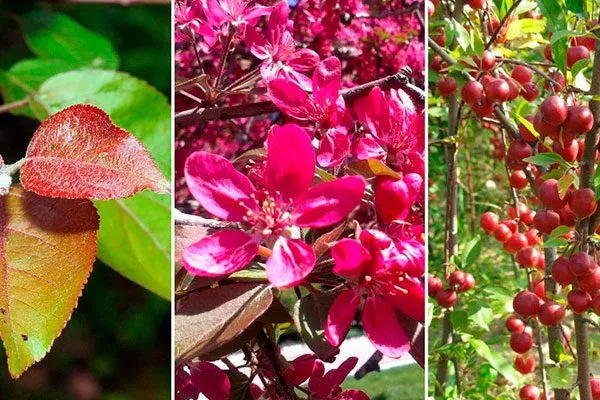
These specimens fell into the hands of Georg Dieck, a distinguished botanist from Prussia (modern Germany), who entered the species into an official catalogue, giving it the name of its discoverer.
Other historical facts:
- Over the next two centuries, many renowned scientists around the world devoted themselves to improving the Nedzvetsky apple variety, which led to the emergence of dozens of new varieties with unique characteristics, flowering times, and other features;
- Among the Russian scientists who contributed to this work, it is worth noting I. V. Michurin, an academician of the Soviet era;
- In the 1930s, several varieties based on the Nedzvetsky apple tree were developed – all of them inherit the bright, juicy red flowers from the parent, but may differ in other aspects.
Where can it be grown?
The Nedzvetsky apple tree is widespread throughout Russia, due to the presence of a large number of Michurin subspecies.
Historically, the variety originated in the mountainous regions of Central Asia, including:
- Kazakhstan;
- Kyrgyzstan;
- China;
- Mongolia.
The Nedzvetsky apple tree is successfully cultivated in the Kaliningrad region, where it was introduced from Western Europe. Particularly good results can be achieved in the Republic of Crimea and the North Caucasus regions, where the terrain is characterized by significant elevation changes.
Description of the apple tree
The Nedzvetsky apple tree stands out among other ornamental varieties for its dual purpose: it not only decorates the space but also produces delicious fruit. It has unique characteristics compared to other apple varieties.
Features of wood
The Nedzvetsky apple tree reaches a height of 300 to 550 cm, making it a medium-sized variety. However, under favorable conditions, with careful care and fertile soil, these trees can grow up to 800 cm.
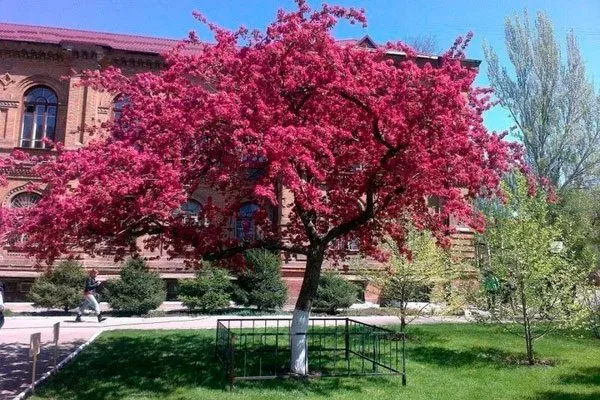
Features of the species include:
- large, spreading crown with a rounded outline;
- trunk bark with a purple tint;
- branches begin to grow at a height of about half the trunk;
- the shoots are straight and require regular pruning to maintain their decorative appearance;
- During the selection process, the natural pigment anthocyanin was introduced into the apple tree, which gives all parts of the tree a purple tint, especially noticeable during flowering.
The leaves of the Nedzvetsky apple tree, which begin to bloom as early as the beginning of April, have the following characteristics:
- Initially they are colored purple;
- after full formation, the leaves retain a purple hue only at the bottom, along the vein, and at the top they acquire a rich dark green tone;
- the bottom of the plates is covered with thick fluff;
- wedge-shaped with a noticeably protruding tip;
- The leaves have finely serrated edges.

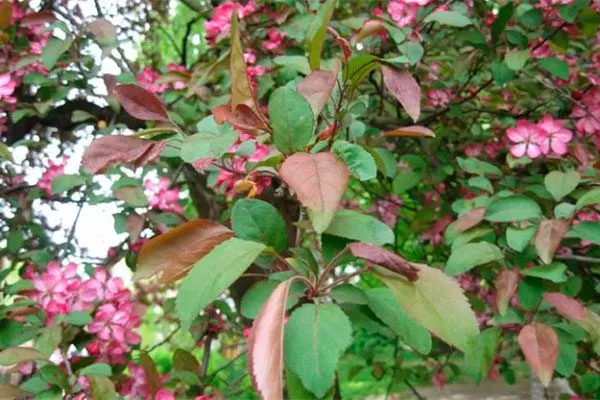
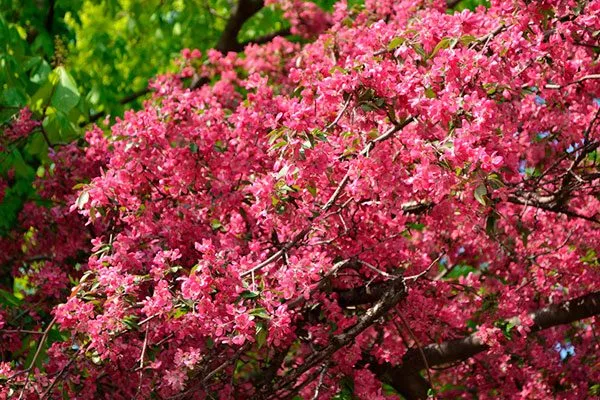
In late April, apple tree shoots begin to develop buds, which take on an ovoid shape with a pointed end. They are attached to the branches by thin petioles 4-5 cm long. The petals are a rich purple or crimson, and their calyxes reflect only the purple hue, thanks to the presence of anthocyanin.
Despite the Nedzvetsky apple tree's limited budding period, it remains striking in appearance for nearly two months. Blooming is extremely uneven, with new buds replacing faded flowers within a single day.
The buds have the following features:
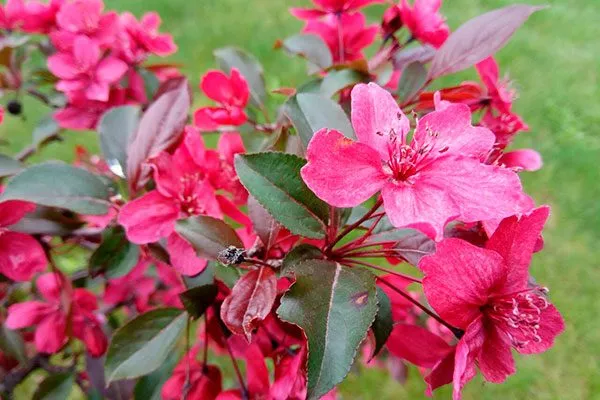
- after the bud opens, flowers with five large petals are formed, each of which unfolds completely, revealing yellowish stamens and a white style;
- the size of each petal reaches 7 cm, while the total length of the flower can be 10-12 cm;
- Depending on the subspecies and the climatic conditions of the region, the color of the petals can vary from soft pink to a rich violet or purple hue;
- sometimes the petals are not uniformly colored – the flowers can shimmer with several color schemes;
- At the peak of flowering, which occurs in the first two weeks of June, a properly pruned apple tree crown creates the impression of a purple ball shimmering in the sun's rays – this effect attracts attention and makes Nedzvetsky apple trees a popular choice for parks in major cities in Europe and Asia.
Fruit
The Nedzvetsky apple tree begins bearing fruit only 8-10 years after planting. This tree can live for 50-60 years, a remarkable lifespan for this group of plants.
The variety is distinguished by the following characteristics:
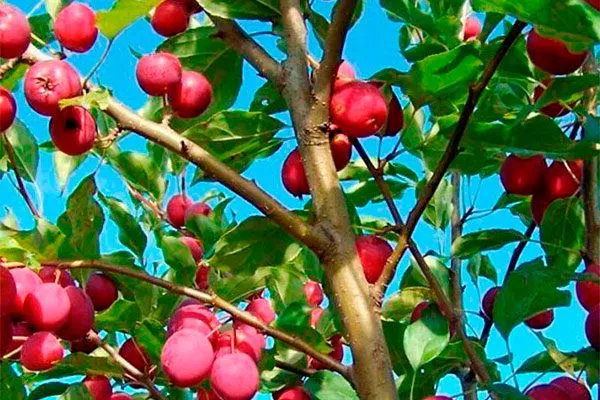
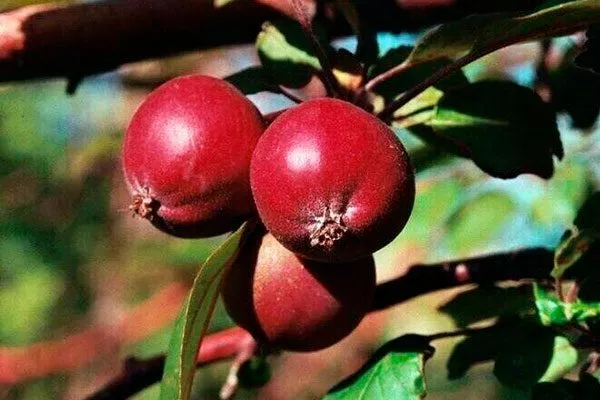
- the apples are shaped like a sphere and have clear contours;
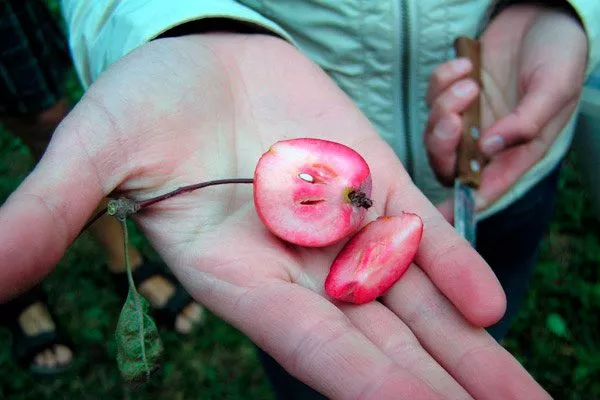
- the size of the fruits rarely exceeds 20-25 mm in diameter;
- the weight of each apple ranges from 10 to 15 g;
- due to the presence of anthocyanin, the apples are a rich purple color;
- the skin is covered with an impenetrable layer of wax, which helps to extend the shelf life;
- Nedzvetsky apples can be eaten fresh;
- the taste is reminiscent of wild fruits, with a sour and tart aroma, and a bitter aftertaste;
- The fruits are valued in folk medicine as a wound healing agent and a source of natural vitamin C;
- With the arrival of cold weather, the taste of apples becomes richer and more pleasant.
Application in landscape design and cooking
Cider and wine are made from wild apples, whose slight acidity and bitterness give them a unique flavor. To preserve all their beneficial properties, they are dried. Small apples are used to make pastilles and jellies.
The taste of fresh apples is not the most pleasant, but if you leave the fruits on the tree until frost sets in, the bitterness will disappear and they will acquire a more pleasant taste.
Nedzvetsky apple trees are striking in appearance, making them an ideal choice for landscape design. Many outdoor design experts claim that these apple trees are as beautiful as Japanese cherry trees and look magnificent both as single plants and in groups.
Frost resistance
While the original variety was discovered in the Tien Shan Mountains, where the climate is particularly harsh, modern representatives of this variety exhibit particular resistance to low temperatures:
- The apple tree retains its decorative qualities even after a winter with temperatures down to -30 degrees, and it is able to quickly recover from spring frosts.
- To protect against low temperatures, special measures are necessary when growing this variety in Siberia or the north of the country, where temperatures can drop to -40 degrees Celsius. In such conditions, the apple tree is protected with a layer of burlap, which prevents the risk of freezing and root death.
Pollination and yield
The variety is not self-pollinating, but its leaves and flowers cross flawlessly with pollen from other apple trees. In Moscow, it is pollinated by such well-known varieties as Antonovka, Melba, Bely Naliv, Korichnoye Polosatoye, and Bolotovskoye.
Although Nedzvetsky is most often chosen for its attractiveness rather than for its fruit production, the yield from one tree can range from 35 to 50 kg of apples.
The variety is sterile and requires pollinating trees within 50-100 m to achieve good flowering and fruiting.
Flowering and fruit ripening period
During the budding period, the Nedzvetsky apple tree resembles a spectacular Japanese cherry blossom, although this appearance is short-lived. Below is information on the flowering and fruiting periods of this tree:
- if there are no night frosts, the first buds on the apple tree begin to form as early as mid-May;
- the peak of flowering usually occurs in late May and early June;
- the total duration of flowering does not exceed 10-14 days;
- With proper care, the first apple fruits begin to form immediately after flowering ends, in early July, and they ripen until late autumn, with the onset of the first frosts;
- If the tree does not begin to bloom, the reason may be its age - some subspecies of the Nedzvetsky apple tree begin to bloom only 5-6 years after planting the seedling.
Storing the apple harvest
An apple left on the tree retains its aroma and flavor until the end of winter. The small fruits are durable and firm, allowing them to be stored in a cool place for up to six months without losing their appeal and flavor.
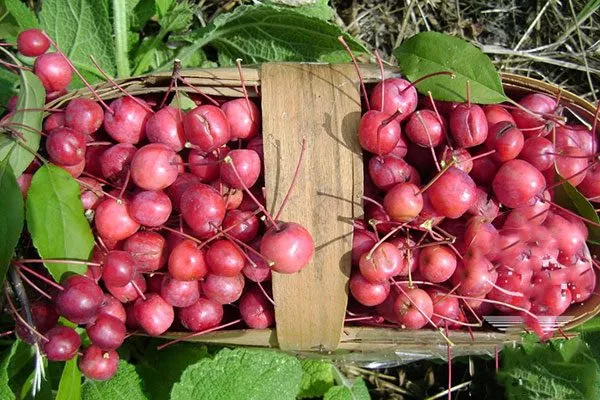
Before storing apples for a long time, you should not wash them, as the wax layer on their surface is a reliable protector against rotting.
Subspecies and variants
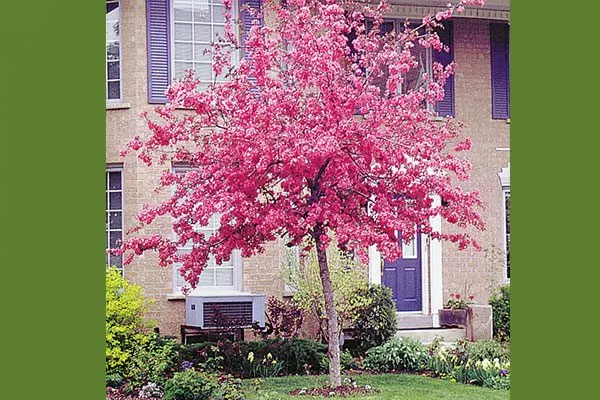
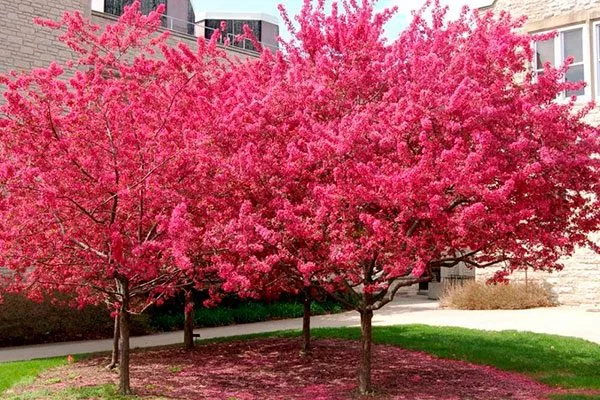
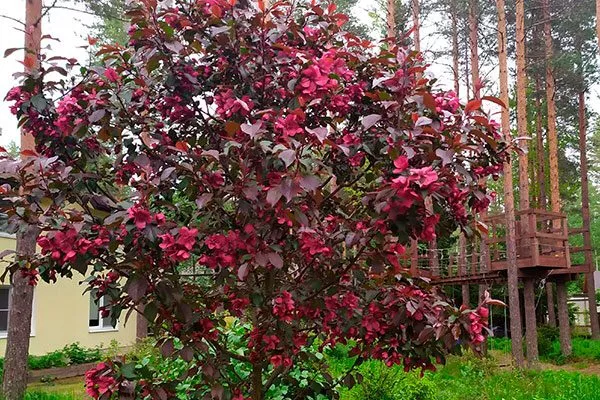
The Nedzvetsky apple tree comes in many variations and forms, each with unique qualities thanks to grafting:
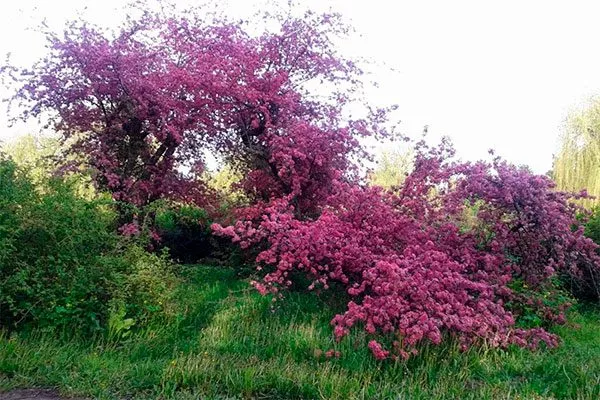
- On the standard. In its natural habitat, the Nedzvetsky apple tree often grows as a tall tree. However, to enhance parks and gardens, various varieties are often grafted onto its standard to create a unique appearance.
- Royalty. This is an ornamental subspecies of apple tree, reminiscent of the sakura. It grows to no more than 4 meters, with a dense crown and abundant foliage. The buds are eye-catching even before they open, and when they bloom, they create a true wonder. The leaves of the crown are large and crimson, and the apples are small, dark red, but not edible.
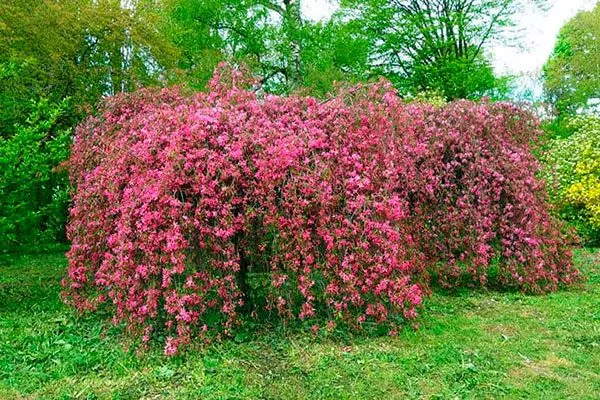
- Red-leaved. This variety of Nedzvetsky apple is most often grown as a wide-spreading shrub with a drooping crown. The foliage is purple and glossy, and the small, light pink flowers emit a captivating fragrance. The fruits resemble rowan berries, yellow-red.
- Weeping. The apple tree variety known as Prirechnaya is a tall, drooping-crowned fruit tree. Ideal for growing near bodies of water, it is easy to care for and resistant to a variety of weather conditions.
- Wild growing. The species was discovered in the Tien Shan Mountains. Its origin remains uncertain. Despite this, it can grow in unfavorable conditions but prefers good lighting.
Features of planting Nedzvetsky apple trees
The Nedzvetsky apple tree requires careful consideration when choosing a planting site and soil conditions. If the area has high seasonal groundwater levels and a risk of flooding, the tree's roots may begin to decompose, leading to the tree's death. It is recommended to choose elevated, well-lit, and ventilated sites.
Planting should be carried out in accordance with certain recommendations:
- the best time for planting is early spring, when the outside temperature is stable above zero;
- Some gardeners prefer to plant trees in the fall, after the main harvest has been collected. In this case, it is necessary to take additional measures to protect the seedling from frost during the winter;
- When choosing a seedling, you need to pay attention to the following factors:
- the seedling must have a graft and a document confirming its variety, subspecies and morphological characteristics;
- there should be no damage, fractures, cuts or signs of disease on the surface of the tree;
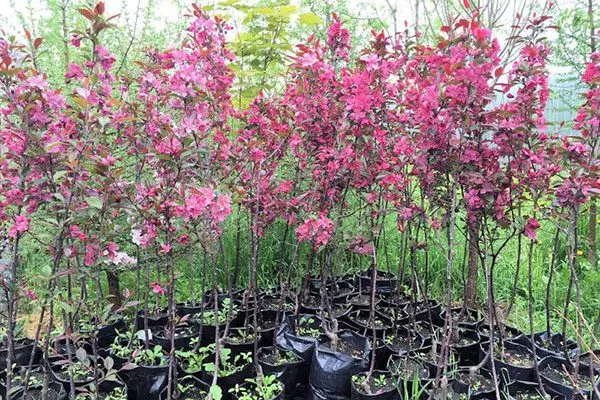
- The roots of the seedling have a well-developed system, with several taproots and a large number of fibrous shoots.
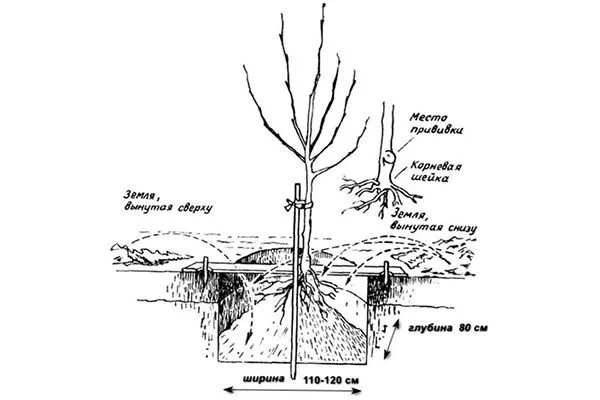
A few weeks before planting, prepare the soil by digging a hole. This will ensure adequate aeration and enrich the soil with natural nutrients. Hole dimensions: at least 60-70 cm deep and 75-85 cm in diameter.
The landing process:
- Add a nutrient-rich mixture consisting of humus, peat, garden soil, and ash to the base of the hole. To ensure drainage, add medium-grain sand under the plant's roots. The volume of this mixture should be no more than two 10-liter buckets. Then, spread the fertile soil evenly over the bottom of the hole.
- Before placing the seedling in the soil, install a steel or wooden stake 120 to 180 cm high in the center of the hole.
- Fix the seedling to this stake so that the root system is 5-6 cm above ground level.
- After the seedling is placed in the soil, fill the hole with loose soil.
- Carefully compact the soil and water it intensively around the trunk, using 30-50 liters of water.
Agricultural technology rules
To maintain the Nedzvetsky ornamental apple tree in excellent condition, it is important to perform a number of maintenance procedures:
- Young trees require regular watering—at least twice a month throughout the growing season. This is essential during dry, rainless conditions. For mature apple trees, a double watering is recommended in the spring—when temperatures rise above freezing and before budding begins. Watering is then continued in August, with a final watering in early October.
- To ensure healthy flower buds, apply high-nitrogen fertilizer to the apple tree's root system in early spring. Repeat this application no more than every two to three years.
- To protect the roots from drying out, it is necessary to mulch the soil around the trunk using peat with the addition of wood chips.
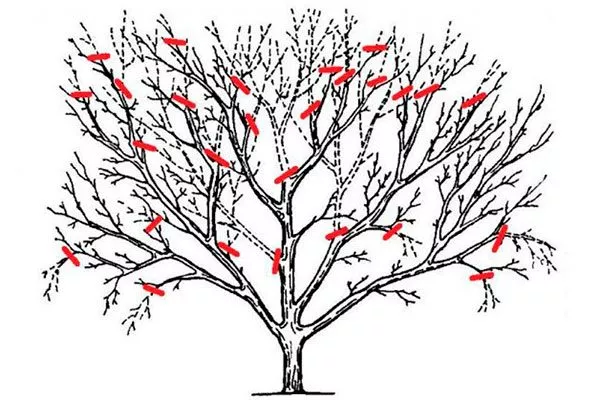
- One of the key operations in caring for Nedzvetsky apple trees is crown trimming by removing excess branches, young shoots, and foliage. The method and technique for this work are determined by the gardener's desired crown appearance. Typically, all branches that exceed the intended decorative outline are removed.
It's important to regularly prune dry and dead shoots to make room for the rapid growth of new green branches. Once the Nedzvetsky apple tree reaches 10 years of age, it should undergo a rejuvenation procedure, which is performed in the spring before the buds begin to expand.
- In harsh climates, even the frost-hardy Nedzvetsky apple tree requires frost protection. This primarily affects the root system. The plant's trunk is covered, and a layer of peat or compost is placed around it, then covered with spruce branches.
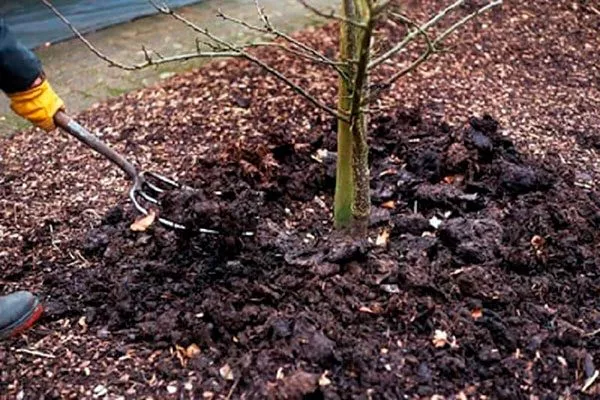
Frost isn't the only threat to ornamental apple trees. Mice and hares can also cause significant damage. To repel small rodents, poisoned baits can be applied to the surface of the compost. To protect against hares, wrap the trunks of Nedzvetsky apple trees in paper or protect them with netting stretched over young trees.
Diseases and pests
This species is not a traditional fruit tree, so its immunity is comparable to that of wild apple trees. This aesthetic variety has increased resistance to diseases common to fruit crops.
As for pests, they typically target fruits and leaves with a more appealing flavor. To prevent their appearance, a single treatment of the tree with a weak mixture of copper sulfate or Bordeaux mixture is sufficient – this is the only protection against diseases and insects for this species.
How to propagate an apple tree?
The Nedzvetskoye variety can be propagated by both seeds and vegetative methods: cuttings, grafting, or layering. Vegetative methods produce excellent results, quickly producing young apple trees with attractive foliage.
Seed propagation method
Nedzvetsky seeds have a high germination rate, but this method is best suited for wild varieties. For cultivated varieties, there is a risk of genetic changes in the offspring.
Seedlings must be carefully checked and those that do not match the varietal characteristics, for example, with leaves of a different color, must be removed.
Operating procedure:
- Remove seeds from ripening apples.
- Place in a damp cloth and store in the refrigerator. The stratification process can be continued for up to 60 days.
- Before sowing, warm the seeds to room temperature.
- Soak the material in warm water with the addition of a growth stimulator for at least 30 minutes.
- After this, sprinkle the seeds with moist soil, waiting for germination and the appearance of the first leaves.
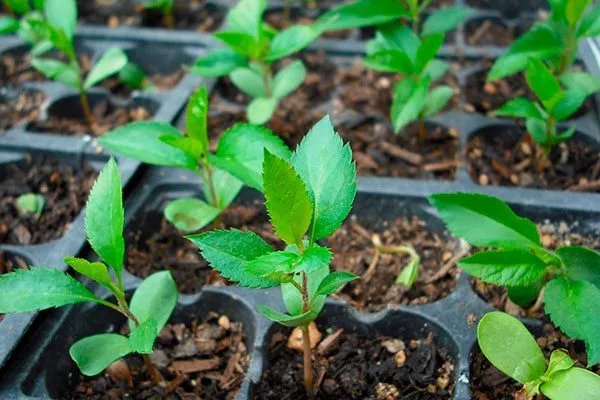
Then comes thinning of the seedlings and transplanting them into the garden at least a year later. This process is very time-consuming and is therefore rarely used. However, it is of interest to amateur breeders, as it can lead to a completely unusual variety.
The method of propagation by cuttings
The most effective way to obtain multiple seedlings from a single Nedzvetsky apple tree is by cuttings. It's also simple, minimally time-consuming, and popular with all gardeners.
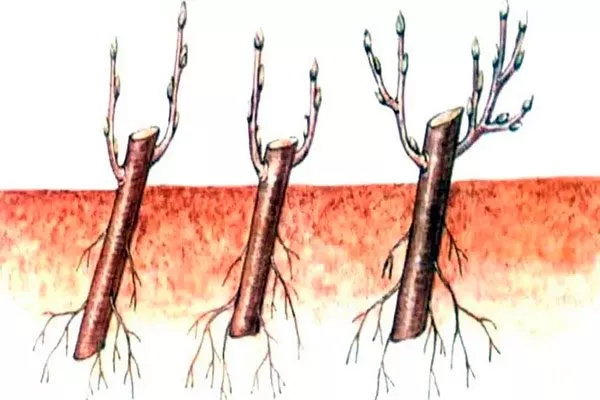
The process of preparation and rooting:
- For propagation, select several young branches from a healthy tree.
- Cut the selected shoots into cuttings 15-18 cm long.
- Dip the lower ends of the cuttings in a solution that stimulates root formation for 30-50 minutes.
- Then place the cuttings in warm water, where they will form roots.
Sprouted Nedzvetsky cuttings can be transplanted into open ground. Initially, they require intensive watering and support under plastic bottle covers. If weather conditions prevent this, the cuttings can be grown indoors, planted in individual containers.
Cultivation in different regions
Climate has a significant impact on the cultivation of the ornamental Nedzvetsky variety. In some regions, this apple tree requires special attention:
- In the Moscow region. The Moscow region's climate can be inhospitable, especially in winter, when temperatures drop sharply. However, the Nedzvetsky variety can easily withstand winter cold. The main problem can be recurrent frosts, which can interfere with the plant's normal growth and development.
- In the Leningrad region. St. Petersburg's climate is less stable, especially in winter, when thaws can be followed by sudden cold snaps. This can have a negative impact on apple trees.
To successfully grow ornamental varieties in the Northwest, use frost-resistant rootstocks and choose planting sites with elevated elevations to prevent cold air accumulation and ensure adequate sunlight. - In Ukraine. The country is renowned for its mild climate, with relatively warm winters and rare severe frosts. These favorable conditions make Ukraine an ideal place for growing the Nedzvetsky variety, which thrives particularly well here.
- In Siberia and the Urals. The climate in these zones is characterized by harsh winters, making cultivation of ornamental apple varieties more challenging. To successfully grow the Nedzvetsky variety, it is necessary to use frost-resistant rootstocks and provide maximum insulation. It is important to avoid areas where moisture and cold air can accumulate, and to protect the trees from strong winds.
The Nedzvetsky apple tree is actively cultivated throughout our country, from the southernmost corners (Crimea, Krasnodar Krai, etc.) to the northern regions.
Pros and cons
This variety boasts a wealth of advantages, but it also has its own drawbacks, which are important to recognize in advance. The advantages common to all Nedzvetsky apple subspecies are:
Reviews
The Nedzvetsky apple variety is an ornamental tree found throughout Europe. The tree grows tall, has a broad crown, and is distinguished by its purple hue. The apples are edible, have a unique flavor, and are used for drying, making jams and compotes, as well as for eating fresh. The apple pulp is rich in vitamin C.