
The Narodnoe apple tree combines excellent taste, low maintenance, and consistent yields. Its fruits are versatile: suitable for fresh consumption and processing. Thanks to its self-fertility and frost resistance, the apple tree adapts well to various climates, delivering high yields even in challenging weather conditions.
History and regions
The high-yielding Narodnoye apple variety was developed in 1937 at the I.V. Michurin All-Russian Research Institute of Fruit Crop Breeding through intervarietal crossing. The hybrid was developed by a team of breeders—M.K. Maksimova, Z.I. Ivanova, and M.P. Zayets—under the supervision of Professor S.I. Isaev.
The variety is based on two well-known representatives of apple crops: Bellefleur-Kitayka, from which many dessert hybrids were obtained, and Papirovka (White filling), adapted to the climate of the central regions of Russia.
In 1964, Narodnoye was included in the State Register and recommended for cultivation in regions with a continental climate. The crop shows its best results in the Central and Middle Volga regions, including the Saratov, Lipetsk, Voronezh, and Belgorod regions.
Features and specifications
Every beginning gardener strives to grow an apple tree that will not only be pleasing to the eye but also produce a reliable harvest. Those looking for a plant with versatile fruit should consider the Narodnoye variety.
The appearance of the tree
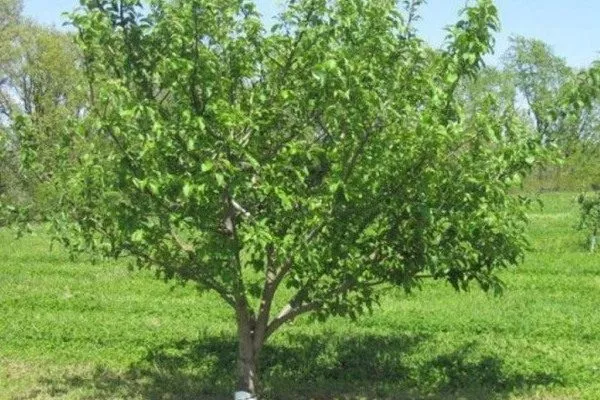
It belongs to the medium-sized varieties - the plant reaches 4-4.5 m in height, but to make care and harvesting easier, gardeners often train the apple tree to 3-3.5 m.
Main characteristics:
- Crown – Slightly oval when young, it becomes rounded and slightly spreading with age. The tree is not densely planted, and the ends of the branches are slightly raised.
- Bark - The skeletal branches have a brownish tint. The shoots are thick, straight, brownish-gray, and densely pubescent.
- Leaves - Medium-sized, broadly ovate or elongated, with a pointed tip and an oval base. The leaf blade is dense and leathery, matte, with distinct wrinkles, and a slight downiness is noticeable on the underside. The foliage is light green.
Description of fruits
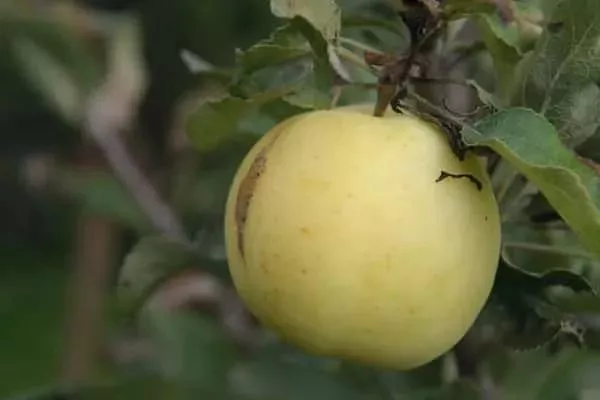
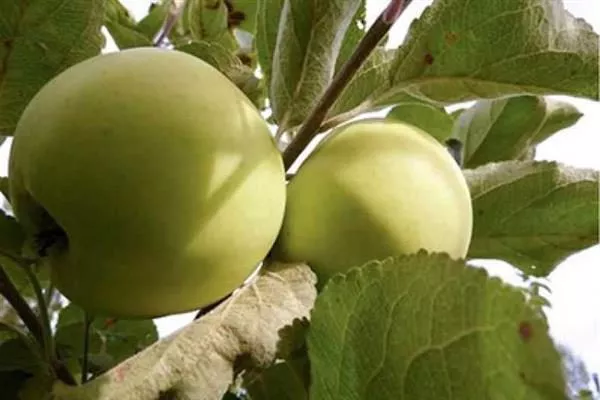
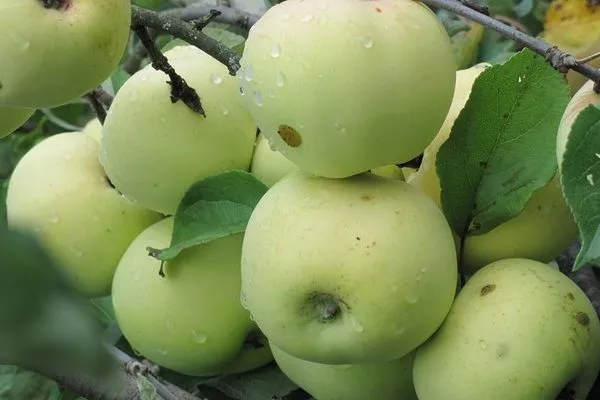
Apples are versatile and attractive. When fully ripe, they acquire a golden-yellow color without a blush.
Other distinctive features:
- form - rounded, with a slight cone and weakly defined ribs at the top;
- weight - varies from 110 to 135 g;
- pulp – tender, juicy, with a yellowish tint and a pleasant sweet and sour, refreshing taste;
- skin – When removed, it is greenish-yellow, strewn with many small grayish subcutaneous dots.
The variety is characterized by good shelf life: in refrigerated storage conditions, the apples do not lose freshness until January.
Apple tree pollinators and yield
The Narodnoye apple tree is characterized by high productivity. As early as 6-8 years after planting, the tree begins to bear fruit fully, yielding up to 140-170 kg of aromatic, delicious apples annually from a single mature plant.
The variety is distinguished by its stable self-fertility – it does not require the presence of other pollinators and does not lose yield even under unfavorable conditions:
- prolonged rains;
- cool spring;
- absence of pollinating insects.
Ripening and fruiting
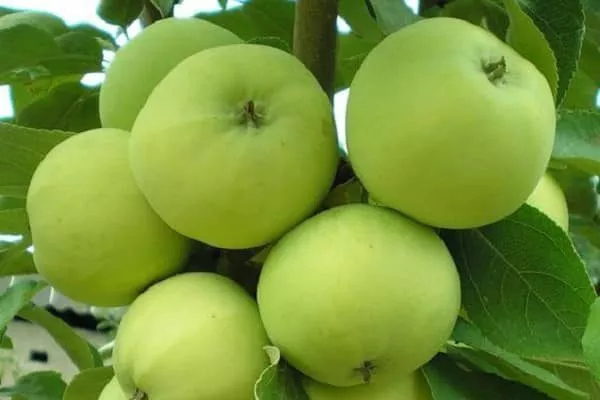
This late-summer apple variety with a long harvest period reaches maturity in 134 days. Harvesting begins as early as 2-4 years after planting, although in some cases, fruiting may begin as early as 5 years.
Sustainability
Although frost tolerance was not a priority during the variety's development, the Narodnoye apple tree demonstrates good winter hardiness. It easily withstands temperatures down to -28°C and -30°C without the need for shelter.
However, gardeners recommend insulating young or weakened trees as a precaution. In harsher climates, frost damage is possible, but plants recover quickly during the season.
This variety exhibits high resistance to fungal diseases, but in unfavorable weather or high humidity, it can be susceptible to scab and powdery mildew. With timely fungicide treatment, problems are generally avoided. Insecticides are helpful for pest control.
Storage of crops, harvesting
By the end of August, Narodnoye apples reach harvesting maturity—start harvesting them now. Basic requirements and recommendations:
- The light green fruits are already ready for harvesting, and they reach their full flavor closer to September, when the skin turns golden yellow. True connoisseurs of this variety advise not to rush into tasting, but to wait until this moment.
- The tree can produce its first fruits already in the second year, but a stable, abundant harvest is formed only in the 4th-5th season.
- Place the harvested apples in wooden boxes, lining the bottom with 1-2 cm of sawdust, then paper. Arrange them in 5-6 layers, interleaving each layer with a sheet of paper. The optimal storage temperature is around 0°C.
- Packing 3-4 kg in plastic bags allows you to extend the shelf life of fruits by several weeks longer.
The fruit's flesh is white, juicy, and smooth, with a pleasant aroma. They are versatile: suitable for making preserves, jellies, marmalades, compotes, as well as for drying and pickling. The jam is especially delicious—fragrant and rich.
Landing
To ensure the Narodnoye apple tree thrives and continues to yield a stable harvest, it's important to plant it correctly. Proper planting is key to the tree's healthy development.
Preparation
Choose a sunny location with good air circulation, but avoid strong drafts. The plant dislikes waterlogged areas and low-lying areas where moisture accumulates.
Basic requirements:
- The soil should be fertile, loose, and neutral in pH. Clayey and heavy soils should be amended with compost, humus, and sand.
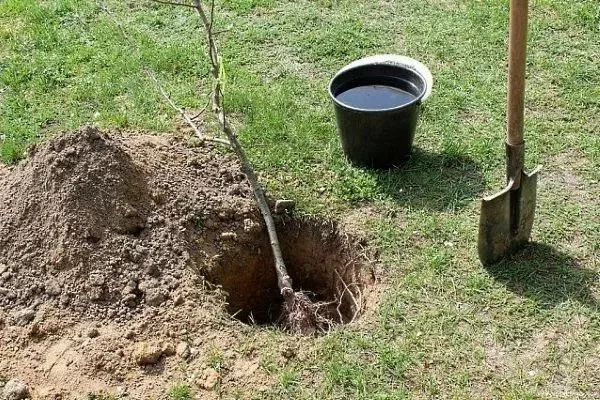
- Prepare the hole in advance, at least two weeks before planting, to allow the soil to settle. The hole size should be 60-70 cm deep and 80-100 cm in diameter.
- Place drainage (crushed stone, broken brick) on the bottom, then a fertile mixture of excavated soil, humus (10 kg), wood ash (200 g) and superphosphate (200 g).
Selecting a seedling
Quality planting material is key to successful tree growth. Follow these guidelines:
- Buy plants only from reputable nurseries with documents;
- one-year-old or two-year-old plants with a developed root system and healthy bark without cracks or spots are preferred;
- the seedling should have 1-2 strong lateral shoots and a central conductor;
- the roots are alive, without rot, light and moist when cut.
Before planting, soak the roots in water for 6-10 hours; you can add a stimulant (for example, Kornevin).
Dates and plan of disembarkation
Plant at the optimal time, following the correct placement pattern:
- In spring, begin this process before bud break, when the soil warms to +5…+7°C. In the central zone, this is late April to early May.
- In autumn, plant 3-4 weeks before frost – from late September to mid-October.
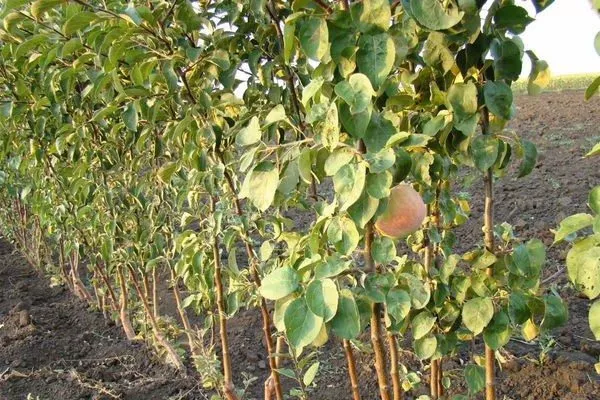
- The distance between trees should be at least 4 m, and between rows – 5 m, so that the tree does not experience a lack of light and nutrition.
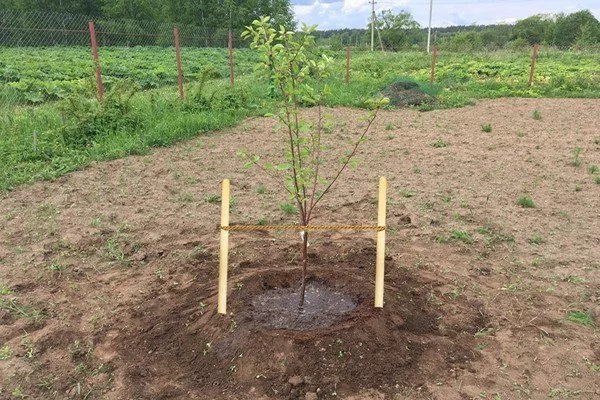
- Position the seedling so that the root collar is 4-5 cm above the soil level. Gently spread the roots, cover with soil, compact, and water thoroughly (20-30 liters of water).
- Once finished, install a support (stake) and tie the tree so that it does not swing in the wind.
Care Features
To ensure the Narodnoye apple tree produces fruit consistently and remains healthy for many years, it requires regular and competent care. It's important to follow standard agricultural practices.
Watering
The crop does not require excessive moisture, but is particularly sensitive to drought during growth and fruit formation. Follow these recommendations:
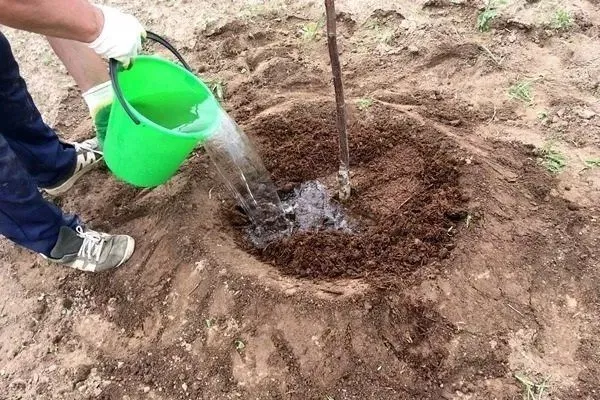
- Water young trees once every 7-10 days, using 20-30 liters per plant.
- Adult apple trees require 3-4 waterings per season: before flowering, during fruit setting, in mid-summer, and moisture-recharging in the fall.
- The water should be settled and warm (not lower than +15°C), pour it into the tree trunk furrows or holes.
- After each application of liquid, loosen the soil and mulch (sawdust, peat, mown grass) to retain moisture.
Crown formation and pruning
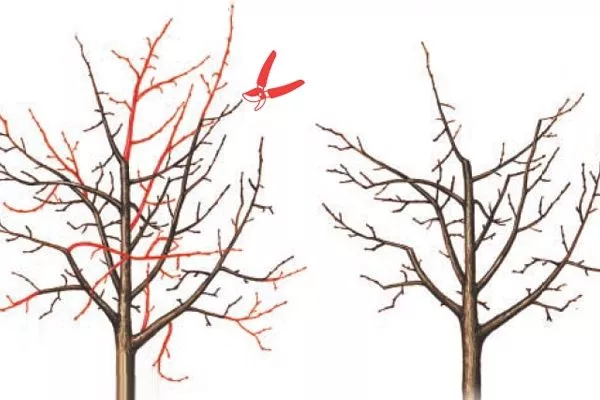
The tree's crown is moderately dense and requires regular pruning to improve light and ventilation. Key requirements:
- perform formative pruning in the spring (March-April) before the sap begins to flow, leaving 3-5 skeletal branches at an angle of 45-60°;
- In summer, pinch and remove suckers (thick shoots);
- Perform sanitary pruning in the fall or early spring, removing dry, diseased, broken and thickening branches.
Top dressing
For healthy growth and abundant fruiting, the tree requires regular fertilization. Follow the following schedule:
- in spring (April-May) add nitrogen substances: infusion of mullein (1:10), chicken manure (1:15), urea or ammonium nitrate;
- during flowering and ovary formation use complex mineral mixtures with a predominance of potassium and phosphorus;
- in July-August Feed with wood ash, superphosphate or potassium magnesium sulfate to improve the quality of the fruit;
- in the fall (after harvest) Phosphorus-potassium compounds without nitrogen are effective for preparing trees for winter.
Wintering
Despite its good winter hardiness, Narodnoe requires preparation for cold weather, especially when young. Follow these steps:
- At the end of October, carry out a moisture-recharging watering if the autumn is dry.
- Mulch the tree trunk circle with a 10-15 cm layer (compost, sawdust, dry grass) to protect the roots.
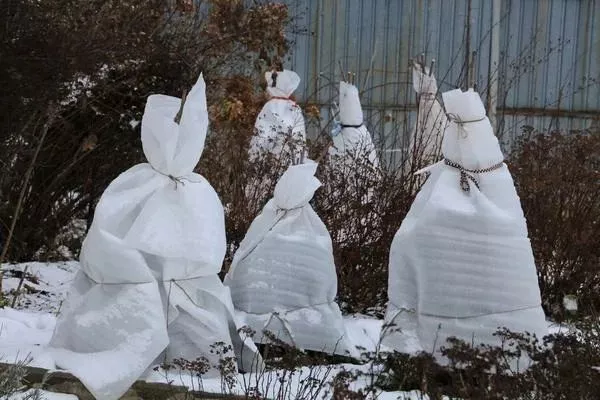
- Tie young trees (up to 5 years old) with burlap, spunbond or spruce branches to protect them from frost and rodents.
- Whitewash the trunk with lime solution (or ready-made whitewash) to protect it from sunburn and pests.
Diseases and pests
Years of experience among amateur gardeners show that late-season apple varieties, including Narodnoe, are characterized by strong immunity to pests. However, under unfavorable conditions—prolonged heat or prolonged rains—they can be susceptible to insect attacks and disease.
Common problems:
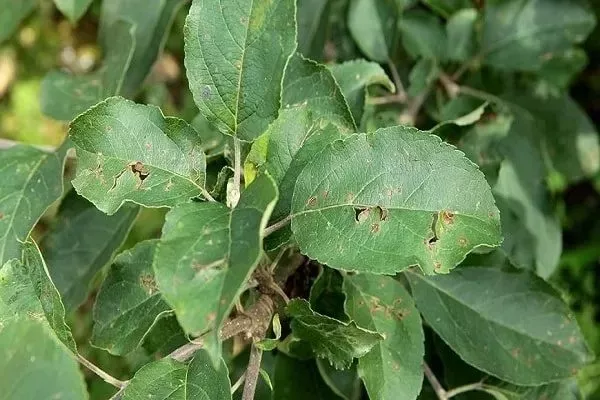
- Scab. This fungal disease manifests itself as a brown coating on the leaves, which leads to their drying out and fruit rot. Treat the tree with Topaz in the spring, and after flowering, with a colloidal sulfur solution or Hom.
- Powdery mildew. A fungal disease that affects all parts of the apple tree. Initially, a white, powdery coating appears on the leaves and branches, which darkens over time. Without treatment, the leaves dry out, the tree's growth slows, and fruit sets fail.
For prevention, spray the tree with Skor or Topaz in the spring, use copper oxychloride after flowering, and at the end of the season, use a 1% solution of Bordeaux mixture. - Bacterial burn. One of the most dangerous viral diseases of fruit trees. Symptoms appear in July: young shoots dry out, and leaves darken. Without treatment, the tree dies within 1-2 years, infecting neighboring plants. It is transmitted through infected planting material and pests.
To protect yourself, destroy pests and burn infected plants, disinfecting the soil with a solution of copper sulfate. - Codling moth. Caterpillars penetrate the fruit, chewing out the pulp, leaving dark passages and holes. The fruit begins to rot and falls prematurely. Use Inta-Vir (1 tablet per 10 liters of water) after flowering and at intervals of 10-14 days. A tincture of wormwood or pine needles with soap is effective.
In the fall, dig up the tree trunk area and collect fallen fruit. Hang traps for caterpillars and birds (birdhouses, containers of water). - Apple aphid. It sucks the sap from young shoots and leaves, causing them to curl and dry out, and growth to slow. A sticky coating appears. Treat the plant with a wood ash infusion (1 kg per 10 liters of water, leave for 24 hours, and add soap). Apply Inta-Vira or other insecticides at the bud break stage.
- Red fruit mite. It affects leaves, forming a whitish web. Leaves turn brown and fall prematurely, photosynthesis is disrupted, and the crop suffers. Before bud break, treat with Nitrafen (300 g per 10 liters of water). In summer, if widespread infestation occurs, treat with colloidal sulfur (40 g per 20 liters of water).
In the fall, collect and burn the affected leaves, and dig deep into the soil under the tree.
Pros and cons
Advantages:
Flaws:
Reviews
The Narodnoye apple tree is characterized by good productivity and early fruiting, beginning to yield fruit as early as 4-5 years after planting. The apples have a pleasant sweet and sour flavor, juicy flesh, and excellent shelf life, allowing them to be stored until January. High winter hardiness and disease resistance make this variety an excellent choice even for novice gardeners.