
Modi is the name of a winter apple variety suitable for commercial and amateur cultivation. Its hallmark is its exceptionally strong immunity, allowing for an environmentally friendly harvest of marketable quality. These beautiful and delicious fruits transport well and have a long shelf life.
History of selection
This apple variety was developed in 1982 by foreign specialists representing the Consortium Italiano Vivasiti (CIV). To create it, they crossed the following varieties:
- Liberty;
- Galu.
The goal of Italian breeders was to create a variety that would produce juicy, sweet-tasting red fruit with excellent environmental and consumer qualities, as well as shelf-stable and transportable qualities. Their goal was achieved.
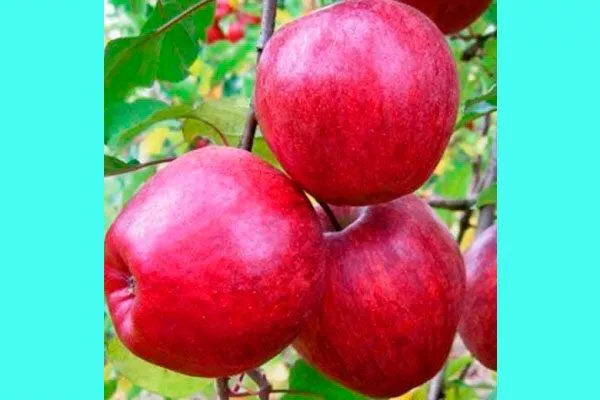
Named after the talented artist, this fruit variety has become widespread not only in Italy. Since 2014, it has become popular in many countries:
- USA;
- European;
- South American;
- New Zealand and Australia.
This foreign red apple variety is well known to domestic gardeners. However, it is not listed in the Russian Federation State Register and has not been officially zoned.
Description of the Modi apple tree variety
The tree and fruits of this cultivar are a delight to the eye with their beautiful appearance. Please read the full botanical description of this plant if you plan to grow it in your garden.
Height and appearance of the Modi apple tree
Trees of this Italian variety are medium-sized. Gardeners call them natural semi-dwarfs. Their height does not exceed 3.5-4 meters. With proper training, this height can be maintained at 3 meters, making them easy to care for and harvest.
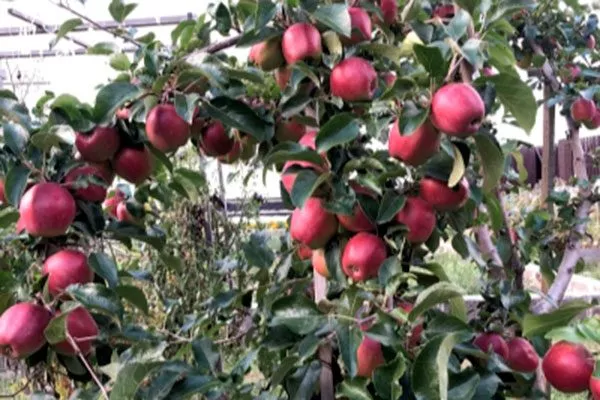
Modi's roots are shallow, located in the topsoil. They are well-developed and highly branched. The apple tree's description includes the following characteristics:
- strong trunk, to which the branches are attached at right angles;
- shoots: elongated, brown-green, not very thick, round cross-section;
- crown: pyramidal or conical (when shaping, gardeners try to give it a broad oval shape);
- foliage: large, rich green or emerald in color, dense, glossy, short-pointed, with a jagged edge, folded like a boat.
Description of fruits
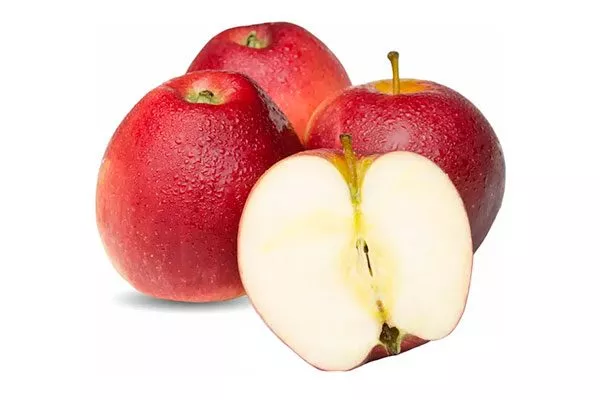
Modi apples are beautiful to look at. They are medium-sized, but with intensive cultivation, a large harvest is possible. Their characteristics are as follows:
- weight — 160-200 g (maximum weight — 300 g);
- form: correct, symmetrical, round-conical, without pronounced ribbing;
- funnel: medium in size;
- peel: dense, not very thick, smooth with a glossy sheen, with an oily surface, with multiple subcutaneous dots of a grayish-green color;
- colors: yellow-green, 98% hidden under a rich carmine blush (when the fruits are fully ripe, their skin appears red);
- pulp: creamy or pale yellow, dense, grainy, with a high juice content, crunchy, aromatic.
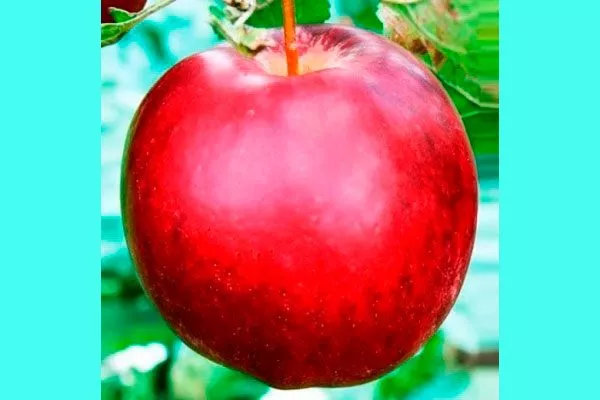
The fruits tend to cling firmly to the branches, not falling off when fully ripe. Their firm flesh allows for easy transportation and long shelf life. This is an excellent commercial variety. Refrigerated, the harvest will keep until May, and at room temperature, it remains juicy and crisp for several weeks.
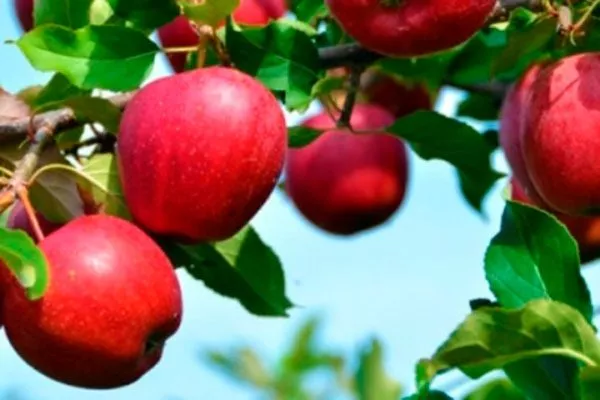
Characteristics of the Modi apple variety
This variety of fruit crop has many remarkable features, due to which its popularity is growing every day.
Taste, benefits, and uses of the Modi apple variety
Experts rate the tasting qualities of the fruits developed by Italian scientists as very good and even excellent:
- taste: dessert, balanced;
- pulp: juicy, crispy, very sweet;
- sourness: poorly expressed;
- aroma: pleasant, rich, fragrant;
- grade: 4.8-4.9 points out of 5.
The remarkable flavor of red apples is due to their high sugar content, particularly fructose (12.1%). The titratable acid content is no more than 0.47%. The sweetness of the Modi harvest increases with long-term storage.
The fruits of this Italian variety are not only delicious but also beneficial for the consumer's health. They are rich in many valuable nutrients:
- vitamins: ascorbic acid (14.3 mg/100 g), tocopherol, beta-carotene, niacin, biotin, pyridoxine, pantothenic acid, riboflavin, phylloquinone;
- minerals: potassium, phosphorus, calcium, copper, iron, manganese, magnesium, iodine, etc.;
- fiber, in particular pectin (its content in apples is at least 9.6%);
- antioxidants: polyphenols and flavonoids, including catechins (320 mg/100 g), quercetin;
- organic acids: apple, wine, lemon;
- sugars: glucose, fructose;
- tannins.
The fruit is low in calories (47 kcal). Its main source of energy is fructose. Its glycemic index is low (around 38), so it doesn't cause a sharp spike in blood sugar.
By incorporating Modi apples into your daily diet, you'll not only enjoy the wonderful taste of this natural delicacy, but also reap numerous health benefits:
- Strengthening the heart and blood vesselsThe benefits are due to the fruit's high content of potassium, magnesium, and polyphenols, which have anti-inflammatory properties.
Eating red fruits helps reduce bad cholesterol and blood pressure, and prevent the development of cardiovascular diseases. - Boosting immunity, which is facilitated by the rich vitamin composition of the fruit and its especially high content of ascorbic acid.
This product is recommended for those who are sick, suffer from chronic illnesses, or experience fatigue. It improves overall well-being. - Normalization of the digestive processThe fruit contains a large amount of fiber, which stimulates the gastrointestinal tract.
This product helps relieve constipation. It acts as a probiotic, promoting healthy intestinal flora. - Weight lossThe fruit is good for those on a diet. It's low in calories and provides a feeling of fullness, thanks to the abundance of fiber in the pulp.
- Antioxidant effectThe polyphenols and flavonoids found in apples protect cells from free radical damage. They help prevent cancer, diabetes, and neurodegenerative diseases.
The fruit's peel also contains quercetin, which has anti-inflammatory properties. This substance protects the brain, stimulates mental activity, and improves memory.
For maximum benefits, eat Modi apples fresh, without peeling them. The peel contains many vitamins, fiber, and flavonoids.
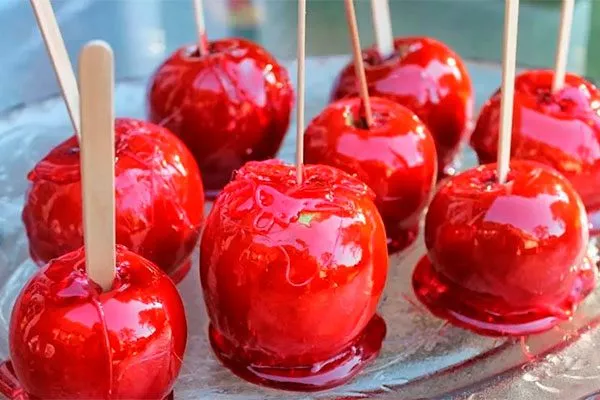
The Italian variety's harvest is versatile. It's most often eaten raw, allowing the sweet, crisp flesh to be fully enjoyed. The red fruits are also suitable for culinary purposes:
- They are used to make juice and puree for baby food;
- prepare healthy homemade treats such as jam, preserves, marshmallows, marmalade, and marshmallows;
- used as a filling for pies;
- they cook compote and jelly;
- canned for the winter;
- dry;
- make candied fruits.
Fruiting periods of the Modi apple tree
The plant reaches productive maturity in the third or fourth year after planting in its permanent location. When grown on a dwarf rootstock, this occurs earlier, in the second year. Buds can be seen for the first time on a one-year-old tree. Modi develops well. The annual growth of skeletal branches is 8 cm.
Apple trees bloom late, in the second half of May. The blooming period lasts 12-14 days. Numerous buds open simultaneously, transforming the crown into a fragrant cloud of white and pink. The flowers are large, dense, and clustered in inflorescences of 6-8.
The fruits ripen from September 15th to early October. This variety delights gardeners with its consistently abundant annual fruiting. Adverse weather conditions have little effect on it.
Productivity and pollinators
Modi is considered a commercial variety due to its excellent productivity, which is quite high for a semi-dwarf plant. Its characteristics are as follows:
- one adult tree produces at least 50-65 kg of apples;
- 80 kg – maximum yield of 1 trunk;
- 15,000-22,000 kg per 1 ha is the fruit yield of an apple tree plantation during industrial cultivation.
The Italian variety is self-sterile. Gardeners consider Gala, Fuji, and Golden Delicious among its best pollinators.
Winter hardiness and growing regions of the Modi apple tree
This variety, named after the famous Italian artist, can be grown almost anywhere in Russia. It is hardy and frost-resistant.
- trees can withstand temperatures down to -35°C if they are properly prepared for winter and insulated;
- the buds are not frozen and quickly open with the arrival of spring warmth;
- The buds do not suffer from recurrent frosts due to the late flowering period.
Disease resistance
Modi delights gardeners with its exceptionally strong immunity. The plants are resistant to fungal diseases, particularly scab and powdery mildew, and insect pests like aphids. If poorly cared for, they can suffer from rust and fruit rot. Adherence to proper agricultural practices helps prevent these problems.
Due to their resistance to parasites and infections, these apple trees can be grown without the use of chemicals (fungicides, insecticides), producing a beautiful and environmentally friendly harvest.
Planting the Modi apple tree
Plant the crop in October after the leaves have fallen or in early spring. If you do this in the fall, the roots damaged during uprooting will recover before the next season. Otherwise, do this before the buds open, allowing the plant to establish itself and become strong before the hot weather arrives.
Site selection and preparation
Select a flat, sunny or partially shaded location for your apple tree. It should also have the following characteristics:
- protection from gusts of wind and drafts;
- groundwater level is at least 2-3 m;
- with fertile soil (loam or sandy loam), loose, air- and moisture-permeable, well-drained, neutral or slightly acidic.
One to one and a half months before transplanting Modi to your dacha, dig a planting hole in the chosen area. Make it 60-80 cm deep and 80-100 cm in diameter. Add a solution of bird droppings and water to the hole.
Preparing the seedling
When purchasing an Italian apple tree from a nursery, choose one- or two-year-old specimens with a well-developed root system, strong, and healthy. The seedling should be free of the following defects:
- spots;
- damage;
- growths;
- raid;
- traces of decay and presence of pests.
Leave the tree in a bucket of water for 24 hours. Soak the roots in a growth stimulant solution (such as Agromix Epin Maxi) 1-2 hours before planting.
Technological process of landing
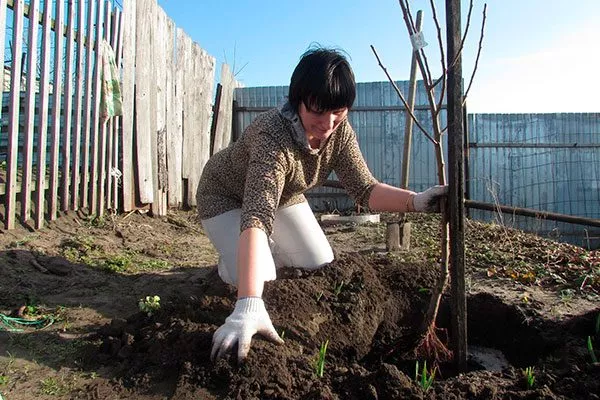
To help the Modi seedling establish itself quickly in its new location, plant it correctly. Follow these step-by-step instructions:
- Partially fill the hole with a mixture of garden soil, humus, peat, ash, and superphosphate. Form a mound at the bottom.
- Install support for the apple tree.
- Place the seedling in the hole on the mound. Spread out its roots.
- Fill the hole with fertile soil, ensuring that the root collar doesn't go too deep. It should be 3-5 cm above ground level.
- Water the plant using 10 liters of sun-warmed water.
- Tie it to a support.
Care instructions
Create favorable growing conditions for your apple tree. Follow proper agricultural practices to prevent tree diseases and ensure healthy growth. Pay special attention to watering, fertilizing, and formative and sanitary pruning.
Tree watering and fertilization scheme
Moisten the soil under your fruit tree at least once a month, using 10-20 liters of water at a time. In hot weather, water more frequently. Follow these instructions:
- young apple trees under 5 years of age are recommended to be irrigated in the summer period with a frequency of once every 7 days (if the weather is dry - 3-4 times a week);
- The first watering should be done before the buds open in the spring, the second – after flowering has ended to prevent the ovaries from falling off;
- Adult trees require 4 water treatments per season: before and after budding, during fruit ripening, and after harvesting;
- stop moistening the area around the trunk 20 days before harvesting to improve its taste;
- Pour water under the roots so that it penetrates deeper into the soil;
- moisten the soil under the apple tree in the morning or evening;
- during the flowering phase, do not water the plant to avoid damaging the ovaries;
- practice mulching to better retain moisture in the soil (use organic matter: sawdust, hay, straw, compost);
- Set up a drip irrigation system if you have one.
Starting in the second year of fruit tree life, begin fertilizing it. Apply liquid fertilizer after watering or incorporate dry fertilizers to a depth of 5 cm without irrigation. Follow this schedule:
- water the tree with a nitrophoska solution (20 g per 5 l of water) until the buds swell;
- after flowering, use a liquid mixture made from sodium humate (50 g), wood ash (600 g), and water (40 l);
- After harvesting the fruits, add superphosphate (to prepare a nutrient solution, you will need to take 400 g of mineral fertilizer and 40 liters of water).
Methods of crown formation
When growing the Modi variety, gardeners always prune the tree. This is done in March-April after the frosts have passed. It's best to do it before the buds open.
Gardeners pay special attention to the shaping process, which simplifies further care of the apple tree. The crown is shaped in various ways:
- sparsely tiered;
- sparse;
- spindle;
- bowl;
- broom-shaped, etc.
The most common option, considered fairly simple to implement, is the tiered, sparse design. It's suitable for any type of fruit tree, regardless of its vigor. To implement it, you'll need:
- shorten the conductor to a convenient height;
- reduce the number of skeletal branches to 4-5 if the distance between trees is 4 m (to 5-7 if this figure is greater).
Carry out crown shaping for this type of tree over several years, paying particular attention during the first two years after planting. Follow these instructions:
- In the first year Set the trunk height at 1.5–2 m. Leave one shoot level with the guide, and slightly lower, two more branches, directed in different directions at an angle of 120°. Trim them so that the guide rises 20 cm above them.
Completely remove branches growing at an acute angle or at a height of up to 50 cm from the ground. - In the second year Add two more skeletal branches, located at a height of 60 cm and 15 cm away from the main shoots from the previous year. Leave two branches on each of the formed main branches. Shorten them by a third.
- In the following years Remove all shoots that compete with the main shoot and are not part of the framework. Secure the central shoot at a height of 2.5–3 m.
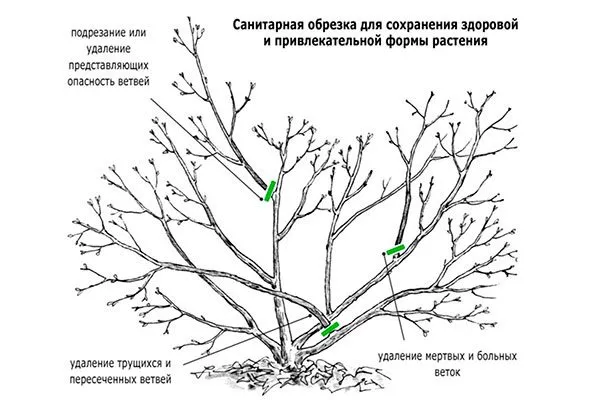
After winter and in the fall, after the leaves have fallen, carry out a sanitation procedure. Remove dried, infected, and broken shoots. Disinfect cut areas with copper sulfate and seal with garden pitch.
Pest and disease control
Despite the Modi apple tree's resistance to scab, powdery mildew, and aphids, in unfavorable years and with poor care, it may develop diseases such as:
- rust;

- fruit rot.
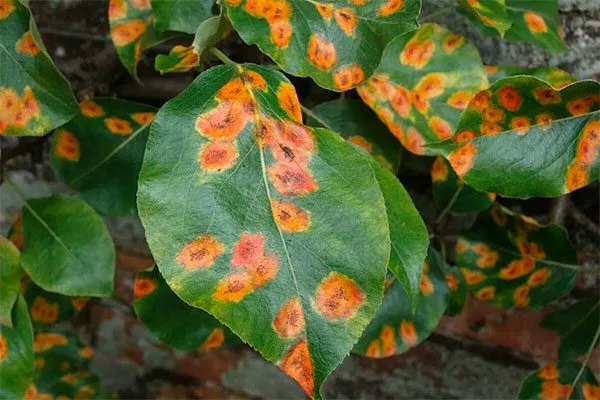
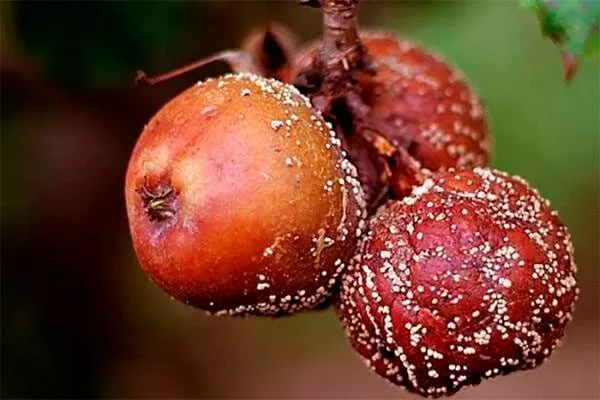
Strict adherence to crop cultivation practices and preventative measures will help prevent the problem:
- periodic inspection of the tree to promptly detect the first signs of its ill health;
- preventive garden treatments.
Fruit rot is promoted by high humidity, heat, and dense canopies. Gardeners are alerted to the disease by the appearance of small brown spots on the fruit that quickly grow larger. Over time, light-colored pads (fungal spores) form on the rotted apple. The flesh becomes dark and inedible.
To prevent apple tree diseases, don't neglect preventative treatments against diseases and pests. Follow these steps:
- when the buds begin to turn pink, spray the crown with Sporomax B or Skor against scab and fruit rot;
- after flowering repeat the treatment with the same means;
- when the fruits reach the size of a walnut use the biopreparations Imexab or Bacitoxin against codling moth;
- in June Spray the crop with a fungicide against scab and powdery mildew (this measure is not necessary due to the variety’s immunity to these diseases), and treat it against mites (spider mites, gall mites, brown mites) with the biological product Imexab;
- after July 15 Before harvesting, use Sporomax to combat foliar and fruit damage, and Bacitoxin to combat codling moths, spider mites, and leaf rollers.
Collection and storage periods
You'll be able to taste the first ripe Modi apples in late August or early September. Pick them en masse in the second half of the month, until early October. The fruits don't ripen all at once. Pick them from the branches in several stages.
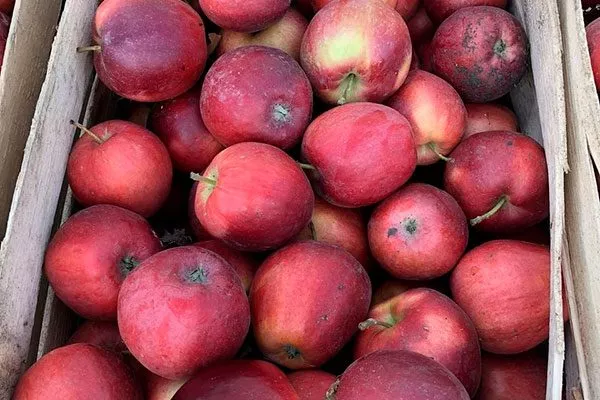
The harvest transports well and keeps well. In a cellar or refrigerator, it will retain its freshness and juiciness for six to eight months. Optimal conditions for long-term storage are as follows:
- air humidity - 80-85%;
- temperature — from 0⁰С to +3⁰С.
Pros and cons
Domestic gardeners have appreciated this Italian variety. It has won their hearts thanks to its decorative appearance, bright red fruits, and other inherent advantages:
The variety named after the famous Italian artist also has some disadvantages:
Reviews
Modi is a foreign apple variety intended for commercial and private cultivation. It wins the hearts of farmers around the world with its beautiful fruit, sweet flavor, and excellent shelf life. Its main advantage is the ability to produce an environmentally friendly harvest thanks to its resistance to scab, powdery mildew, and aphids.