
The Melba apple tree is considered a long-lived tree, with a minimum lifespan of 50-60 years. After 8-12 years, fruiting becomes intermittent, producing good harvests every other year. However, there are tricks to avoiding inconsistent yields.
Characteristics of the apple tree
This late-summer variety is intended for general-purpose (dessert) fruiting. It bears fruit at an average rate, with mixed fruiting, most often on the ringed stems. It is partially self-fertile and requires pollinators.
- ✓ To prevent the periodicity of fruiting, it is necessary to provide the tree with a sufficient amount of potassium and phosphorus during the period of formation of fruit buds.
- ✓ Regular pruning of old and diseased branches stimulates the formation of new fruit shoots.
A Brief History
Melba is found worldwide. It was developed in Canada in 1898 at the Ottawa Experimental Station through open pollination with the Mackintosh apple. The variety was named after the then-famous opera singer Melba Nellie, but the common name for the variety was Melba, which is how the name has stuck to this day.
The variety was brought to Russia in 1940, and testing was conducted for 7 years, as a result of which, in 1947, the apple tree was included in the State Register as a variety intended for cultivation in various regions except the North.
Growing regions
The Melba apple tree is recommended for cultivation in the following regions:
- North-West;
- Central Black Earth;
- Volga-Vyatka;
- Middle Volga;
- North Caucasian;
- West Siberian;
- Lower Volga;
- East Siberian;
- Southern.
Each lane in Russia has its own specific requirements that must be taken into account:
- in the South Melba grows successfully without any additional manipulations;
- in Siberia arrange winter shelter, plant on leeward sides;
- in the Urals for wintering, sprinkle the area around the trunk with humus, peat, leaves and snow; planting should be carried out mainly in late autumn;
- in the Leningrad region and the Moscow region Protect from frost and be sure to carry out preventative measures against scab infection, as prolonged rains and high humidity contribute to this;
- in the Southern Urals Agrotechnical requirements are standard.
Tree height
Melba is a medium-sized apple tree variety. The average height is 3 meters, although specimens reaching 4-5 meters are occasionally encountered. The tree's trunk has hard, dark-brown bark with red or yellow patches.
Crown width
The Melba apple tree has a rounded, well-foliated crown. Until the tree is three years old, the trunk is columnar with vertical shoots; later, the crown develops with thick, strong branches.
Characteristic:
- spreading - average;
- diameter – 1.5-2 times wider than height;
- branches - slightly lowered down;
- leaves – elongated-rounded shape, light green color, which becomes yellowish in August;
- leaf blades – flat when young, slightly curved upward when mature;
- leaf surface - smooth, shiny, a little pubescent, but it’s not noticeable;
- edges of foliage - uneven (crenate);
- flowers – white-pink, large, with overlapping petals.
If the season is rainy, the flowers gain more vibrant colors.
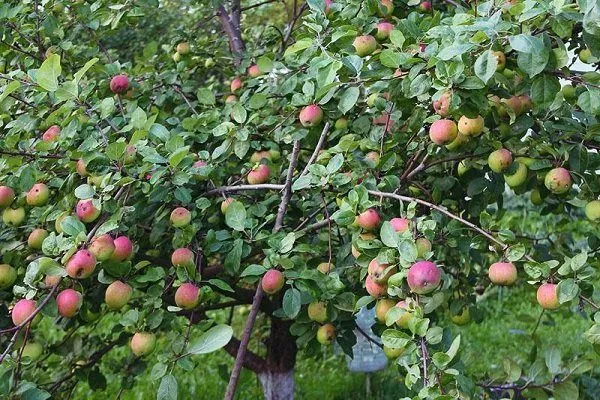
Description of fruits
Melba fruits are nutritious, considered beneficial, and used in dietary nutrition. 100 g of the product contains numerous vitamins and other substances, but especially vitamin C (up to 13.5 g).
Chemical composition indicators:
- fiber (pectins) – about 10%;
- titratable acids – up to 0.78%;
- fructose – maximum 10.5%;
- P-active elements – 297 mg.
Characteristic features of the fruits:
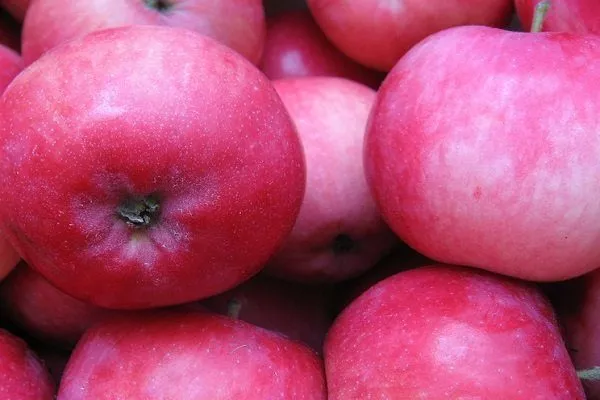
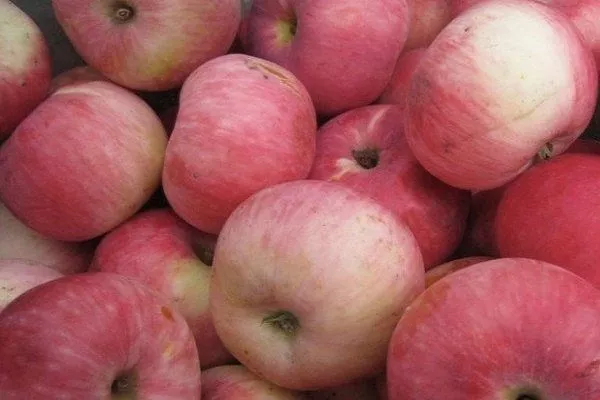
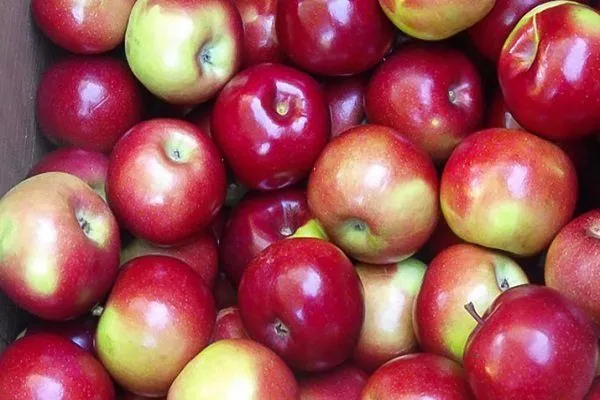
- form - round or round-conical;
- peduncle - slightly curved;
- weight – from 100 to 200 g;
- skin – compacted, easy to chew;
- surface – oily-shiny with a slight waxy coating;
- funnel – average width, no rust, deep;
- seed part - oblong-elongated, dark brown in color;
- pulp structure - delicate and fine-grained;
- density - average;
- pulp color - white;
- juiciness and aroma – have high performance;
- taste and smell - sweet and sour, with a hint of caramel.
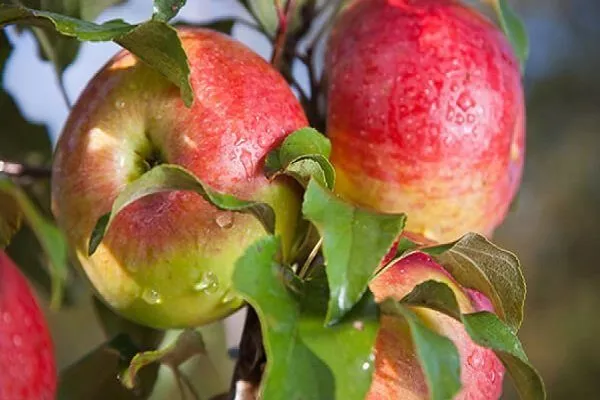
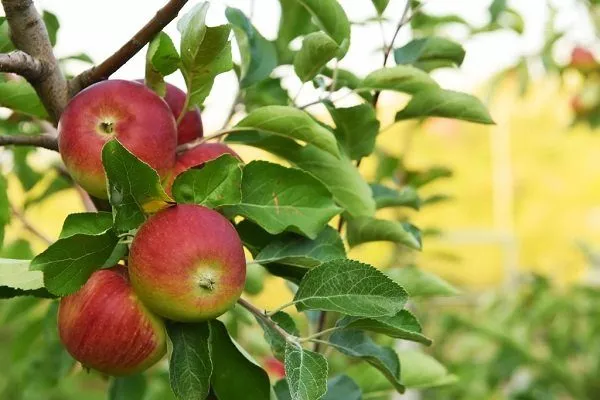
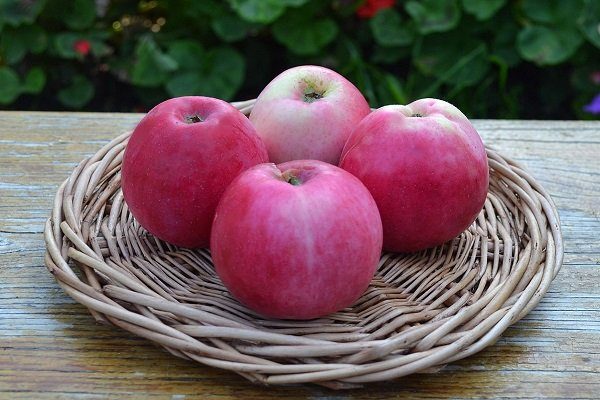
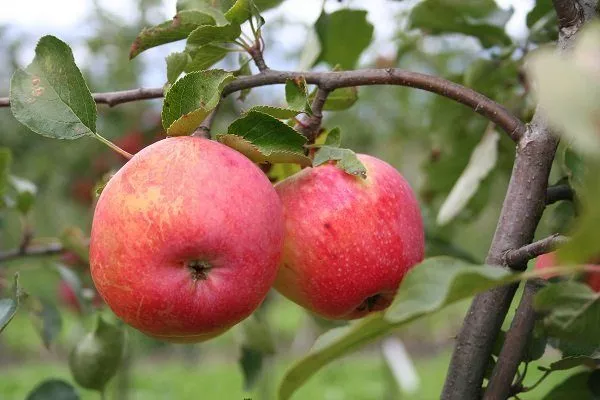
This variety differs from others in that the fruit's color varies: one half is yellow-green, the other is red, and always features pink-white stripes. Based on tasting scores, Melba apples scored 4.5-4.8 on a 5-point scale.
Productivity
A single mature tree can bear 80 to 120 kg per season. If you plant a one- or two-year-old sapling, the maximum yield is achieved in the 10th to 12th year. Before this period, the apple tree produces an average of 40 to 80 kg of fruit.
Winter hardiness and drought resistance
The Melba variety does not tolerate high humidity, as it is susceptible to fungal diseases. The apple tree thrives in arid zones (with occasional watering).
Frost resistance is average—the tree can withstand temperatures down to -25°C, and some gardeners claim even down to -30°C. If the thermometer readings exceed these limits, the apple tree begins to suffer from disease and dies. Breeders recommend providing winter shelter.
Pollinator varieties
This variety is partially self-fertile. It requires pollinators. Apple trees such as Antonovka, Borovinka, Suislepskoye, and Bellefleur-Kitayka are excellent for this purpose. Honey plants should be planted at a distance of up to 8-10 meters.
Cost of a seedling
The price of young Melba apple trees depends on various factors – region, age, and seller:
| Region | The age of the seedling is 3 years | The age of the seedling is 4 years |
| Leningrad and Moscow regions | 900-1000 rubles | 2400-2500 rub. |
| North-Western District | 300-320 rubles | 640-660 rubles |
| Krasnodar Krai | 200-220 rubles | 430-450 rubles |
| Ural Federal District | 280-300 rubles | 580-600 rubles |
Varieties of the variety
| Name | Ripening period | Disease resistance | Features of fruiting |
|---|---|---|---|
| Red Melba | Late summer | High | The fruits are bright red in color |
| Melba's daughter | Late summer | Average | Can be grown in cold climates |
| Cherished | Late summer | High | High level of resistance to low temperatures |
| Early scarlet | Early summer | Average | It does not rot or dry out without frequent watering. |
| Early red | Early summer | Low | Drought resistance is characterized by a high degree |
| Caravel | Late summer | High | Characterized by high frost resistance |
| Prima | Late summer | Very high | The first variety in the world that is completely resistant to scab |
Melba is popular among breeders. For many decades, scientists have attempted to develop other apple varieties based on it. The result was several hybrids, which have also become popular, as they inherited Melba's positive characteristics:
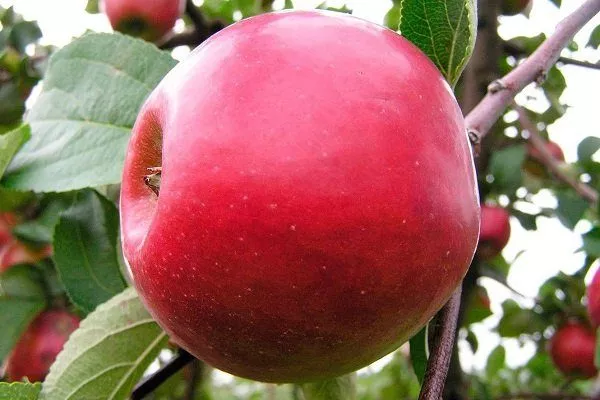
- Red Melba. Another name is Red Melba. It was bred by Canadian scientists. The fruits are bright red and larger. Additional advantages include high frost resistance and resistance to scab.

- Melba's daughter. The variety was developed in the Leningrad Region at the Pavlovsk Experimental Station. This apple tree can be grown in very cold climates and high humidity, but there are some drawbacks: its shelf life is reduced, and the tree is no longer self-fertile.
- Cherished. Siberian scientists (M.A. Lisavenko Research Institute) developed the hybrid. It is intended for Altai, Tyumen, Omsk, and Tomsk, as it is highly resistant to low temperatures. Other characteristics are identical to its parent variety.
- Early scarlet. This variety was developed in Russia and is grown in the central part of Russia. It is also used in the Northwest region. It differs from its parent strain in that it does not rot or dry out without frequent watering and is frost-tolerant, but requires pollination.
- Early red. Bred at the Michurin All-Russian Research Institute of Crop Genetics, it is zoned for the southern regions due to its high drought tolerance. Unlike its parent variety, it has a short shelf life and is almost impossible to transport.
- Caravel. Characterized by high frost resistance.
- Prima. The first variety in the world that is completely resistant to scab.
Advantages and disadvantages of Melba
Planting an apple tree
To ensure your apple tree takes root and thrives, learn the proper planting guidelines, consider the zoning and conditions considered most favorable for the variety.
It is important to carry out the preparatory activities correctly and adhere to the planting technology/scheme.
Deadlines
Experts recommend planting Melba seedlings in the fall, but spring is also acceptable. Therefore, consider the timing and conditions:
- In autumn. Regardless of the region, there should be at least 30-35 days before the first frost. Typically, this is early November in the South, early to mid-October in the Central Russian region, and late September in the Urals.
- In the spring. Planting takes place after the snow melts and warm weather stabilizes – the soil should warm to 6-10°C. In the South, this is the first days of March, in the Central Russian region – April, and in the Urals – early May.
If you bought seedlings in the fall, store them buried in the ground or in a cool cellar. Don't allow the trees to wake up.
Choosing a location
Since the Melba variety does not tolerate high humidity, choose a site with deep groundwater (at least 1.5-2 m). Also, make sure there is no rain or meltwater running into the garden. A high elevation is ideal.
There are other requirements:
- to ensure sunlight, the side should be south or southeast, which is especially important for wintering in cool climates;
- soil – loose and fertile (for example, sandy loam or loam);
- soil layer acidity is neutral (6-7.5 units);
- no drafts;
- the space is open (it is not allowed that there are buildings within a radius of 5-6 m that create shadow).
Selecting a seedling
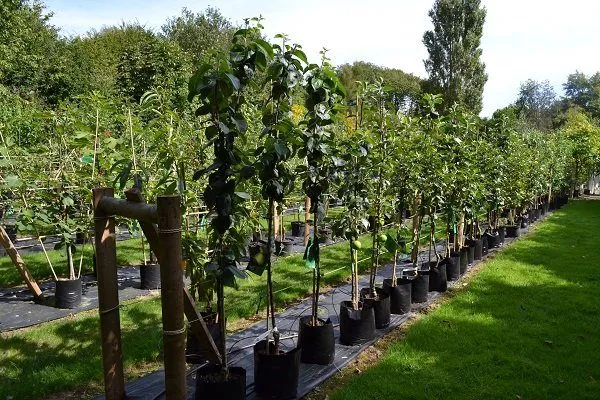
Not all Melba seedlings take root easily. This happens when gardeners buy the tree at a spontaneous market or don't pay attention to its condition. Here's how to choose healthy, high-quality planting material:
- age – 2 years;
- height – maximum 80 cm;
- number of lateral shoots – 3 pcs.;
- the root system is fully formed;
- the trunk is strong, straight, without knots or bumps;
- the bark is smooth and uniform in color;
- condition – no damage throughout the plant, no signs of disease or pest infestation.
Necessary conditions
Melba's planting conditions are almost identical to standard ones, which is why gardeners love this variety. Be sure to consider the following:
- If the site is located in a lowland, or groundwater flows nearby, be sure to create a drainage system - place walnut shells, pebbles, stones, etc. on the bottom of the hole;
- in this case, prepare a raised bed, but do it in advance, since the soil settles over time (if you plant in the spring, prepare in the fall);
- If young trees will lie for several days before being transferred to an open bed, sprinkle the roots with soil, moisten them, and wrap them in plastic film;
- If you have seedlings with dried roots or branches, place them in a bucket of water 24-48 hours before planting - this will allow them to absorb moisture and “come to their senses”;
- when deepening the hole, leave the root collar on the surface of the soil;
- If the tree is less than 2 years old, be sure to immediately drive in a support stake and tie it up;
- Never compact the soil, just press it down lightly, as the Melba apple tree requires the most loose soil possible.
Preparation
Preparatory activities include soil treatment and creation of a pit:
- Dig the area to the depth of a shovel blade.
- Level the surface, dig holes.
- Add the same amount of peat and humus mixture, 200 g of potassium sulfate, 400 g of superphosphate (if the soil is not fertile, use double superphosphate), and 1 kg of wood ash to the soil from the holes. Mix everything thoroughly to remove any lumps.
- If necessary, place a drainage layer on the bottom. In this case, dig the hole 20 cm deeper. Use available materials such as broken bricks, gravel, etc.
- Fill the soil mixture back in and leave it in this state for 1-2 weeks, after moistening it (with about 8-10 liters of water).
Schemes and technologies
Plant Melba apple trees relative to each other using a 7x7 m or 8x3-4 m spacing scheme. These guidelines are approved by the Federal State Budgetary Scientific Institution All-Russian Research Institute of Fruit Crops. While the trees take up a lot of space (especially with the first option), they also increase yield.
Pit parameters:
- depth – from 60 to 80 cm, depending on the age of the seedling;
- width – in all cases 100 cm.
Planting technology:
- Dig out half of the soil mixture from the prepared hole.
- From the remaining, form a mound in the center.
- Place the seedling on it and gently straighten the root system.
- Holding the trunk with one hand, fill the hole with the other, periodically pressing down the soil.
- Drive a stake into the ground at a distance of 10 cm. Its height should be at least 100 cm. Tie up the apple tree.
- Make grooves around the tree trunk in a radius of 50-60 cm.
- Water the seedling with 20 liters of water.
- Place mulch around the trunk.
Caring for Melba
This variety isn't particularly fussy, but proper care guarantees high yields. This requires following proper watering, pruning, fertilizing, maintenance, and preparing the trees for winter.
Watering
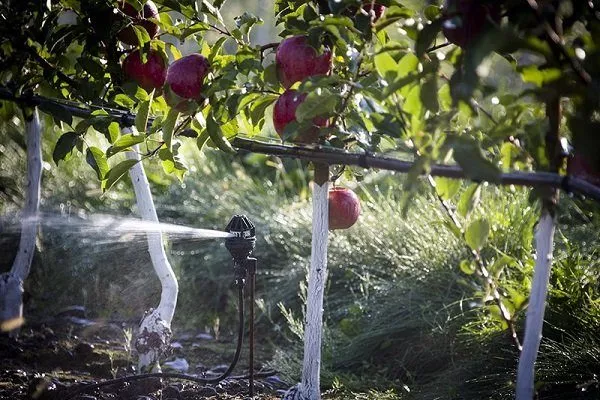
In spring, abundant watering isn't necessary, as meltwater still remains in the soil. Until summer, water only twice. Starting in June, when the sun is warm, water once a month, and if the summer is particularly dry, water twice a month.
How much water to add:
- before the formation of fruits, and if the tree does not yet bear fruit - 20 l;
- after the apples appear – 40 liters at a time.
Stop watering the soil completely 2-3 weeks before harvesting. Afterward, apply a layer of mulch and be sure to loosen the soil.
Top dressing
After planting the seedling, apply fertilizer in the fall. Do this along with digging. What to use:
- wood ash – 500-700 g;
- Superphosphate – 80-100 g;
- potassium sulfate – 40-50 g.
Subsequent feeding:
- In spring (before flowering). Fertilizers are needed every 2-3 years, but not annually. When digging the area, add 5 to 7 kg of compost or humus per square meter. Supplement the organic matter with minerals such as ammonium nitrate, urea, and nitroammophoska (30 to 40 g per square meter).
- In spring (during flowering). To increase the number of ovaries, spray the tree with a solution of boric acid (2 g of the substance per 10 liters of water).
- In summer (during apple formation). Use potassium chloride (40 to 50 g per apple tree) and compost (20 kg per tree).
- In summer (during fruit growth). Apple trees require potassium. In June, feed the tree with potassium sulfate or monopotassium phosphate (10 to 20 g per square meter).
If fruiting is excessive, add nitrogen, which will increase foliage and reduce fruit production (the more abundant the fruit, the smaller it will be). Suitable organic fertilizers include chicken manure (10 parts water, 1 part fertilizer) or mullein in a 2:10 ratio. Allow 15-20 days between applications.
Pruning and crown shaping
First pruning This is done the following year after planting a young tree, especially if it is two or more years old. Do this before the buds open:
- shorten the central branch by 1/3;
- On the main branches leave 3-4 buds, on the others 1 is enough, cut off everything else;
- Remove crooked and overlapping shoots.
The crown is formed depending on the height of the tree (based on the rootstock used):
- high - sparse-tiered scheme;
- medium-sized – cup-shaped formation;
- low - palmette.
General prevention against diseases and pests
Apple tree bark is a favorite target for pests such as bark beetles, scale insects, and spider mites, while the fruit is eaten by caterpillars and codling moths. Beetles and aphids also feast on the green mass. These can be controlled as they appear, but the tree will require chemical treatment, which is undesirable for edible fruit.
There is only one way out – preventative treatment:
- before flowering, spray the crown with Inta-vir (40 g per 10 liters of water) and copper oxychloride (1 tablet per 10 liters of water);
- In spring and autumn, and also during the summer (1 time), whitewash the trunks with a solution of lime (2-2.5 kg), copper sulfate (400-500 ml) and wood glue (180-200 g) - 8-10 liters of water.
Melba is disease-resistant, except for scab and powdery mildew. Be sure to take steps to prevent these diseases, especially if you live in a region with frequent rainfall. What to do:
- trim the crown;
- do not over-water when watering;
- apply fertilizer;
- promptly remove fallen leaves, branches, and weeds from the area;
- Treat the trunk area three times (at bud break, during flowering, and 21 days after the second stage) with a solution of ammonium nitrate (10 percent) and the crown and trunk with Bordeaux mixture (2 percent).
- In early spring, before the buds open, treat the tree with a 3% solution of Bordeaux mixture.
- After flowering, repeat the treatment with a 1% solution of Bordeaux mixture.
- In the fall, after harvesting, treat with copper sulfate.
Preparing for winter
To prevent your apple tree from freezing, carefully prepare it for winter. These same measures will prevent rodents from reaching the bark. What to do:
- cover with spruce branches;
- wrap with roofing felt, burlap, roofing felt;
- rake soil onto the rhizome area in a layer of up to 20-25 cm;
- mulch with manure, which gives off heat;
- lubricate with melted lard, solid oil.
Apple tree fruiting
Saplings planted at the age of 2-3 years begin to bear fruit in the 2-4 year, depending on growing conditions, climate, etc. Up until the 8th year, the apple tree produces small harvests.
Bloom
Melba buds bloom in late April or early May (depending on weather and climate). The flowers are large and beautiful. Occasionally, specimens with purple veins are found.
Fruit ripening time
Apples first ripen after August 10th. This doesn't happen all at once. Typically, gardeners harvest the fruit over a period of 35-45 days, allowing for a long period of freshly picked fruit to be enjoyed.
When and how to harvest?
It is not recommended to harvest Melba when it is fully ripe, as unripe apples have a longer shelf life. The fruits hang on the tree for a long time, even until they are overripe, as this variety does not tend to fall prematurely or quickly. Harvest 10-12 days before technical maturity.
How to pick apples:
- do not pull the fruits down, but lift them up, holding them with one hand at the base of the stalk;
- If desired, use pruning shears – leave a shoot of 1-1.5 cm, but such fruits do not store well.
Storage and uses of apples
Melba is a versatile apple, used for fresh consumption, making juices, compotes, jams, preserves, candied fruits, cider and vinegar.
Store the fruit in a dark place—they'll keep until January. However, if kept in damp, bright conditions, the shelf life will be only 2-3 months. The optimal temperature is 2-5°C, with a humidity level of no more than 85%.
Storage methods:
- in paper - wrap each apple;
- in sawdust - pour into a wooden box;
- in cardboard boxes, with layers of paper between them.
Dangerous diseases
Scab and powdery mildew are considered the most dangerous diseases for the Melba apple tree. Almost all preventative measures are aimed at combating these diseases. If the tree is infected, take immediate action. The key is to know how to recognize each disease.
Scab
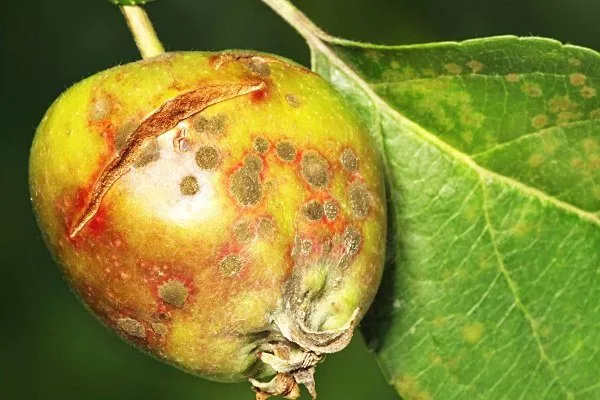
The main cause is high humidity and cold. The main symptom is the formation of brown spots on green foliage and fruit. As the disease progresses, these spots increase in size, the apples become deformed, and the leaves fall off.
What to spray (per 10 liters of water):
- 10 tablets of the bactericidal agent Gamair, number of treatments – 3 times;
- 2 ml Strobi (fungicide) – three times;
- 20 ml Fitolavin – spray 4 times for 2 months;
- 3 g of fungicide Horus – apply twice.
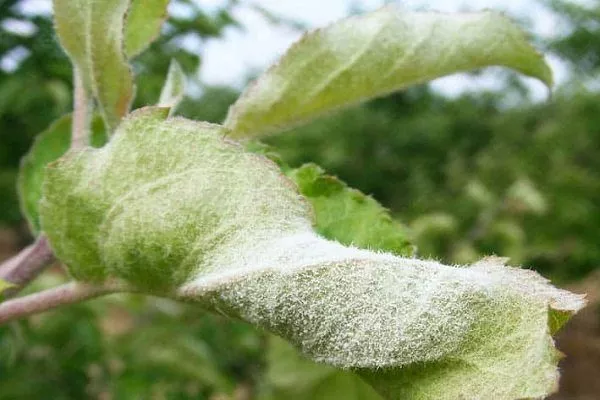
Powdery mildew
The disease occurs when the tree isn't properly watered, especially in extremely hot weather. The main symptom is the formation of a white coating on the leaves, causing the inflorescences and foliage to dry out, and the ovaries or fruits to fall off.
What to spray with:
- colloidal sulfur or Bordeaux mixture (concentration 2%);
- drug Impact (25%);
- fungicides – Topsin M 500 EC, Nimrod 250 EC, Topaz (in accordance with the instructions for use).
Common problems
Melba apple trees typically don't have any problems, but they can be caused by improper care or disease. In the former case, the most common causes are dense branches (the gardener ignores pruning and crown shaping rules), improper watering, and insufficient sunlight.
The most common problems:
- apples are falling:
- the tree does not bloom or bear fruit.
If the cause is a disease, determine the specific one (scab, black canker, powdery mildew, chlorosis, etc.) and treat the trees. If there are pests, destroy them. If the trees are not being cared for properly, adjust the watering schedule, thin out branches, etc.
Reviews
If you take good care of your Melba—applying fertilizer promptly, watering according to variety requirements, pruning, etc.—the tree will delight you with delicious, juicy fruit for decades to come. Don't forget the planting guidelines, and if you like, choose one of the variety's hybrids for variety.
Hello! Excuse me, but the "Melba" apple variety doesn't exist. The sellers simplified the name to make it less jarring. Just as the "Gold" apple variety doesn't exist; the same sellers shortened it to "Golden Delicious"! You can verify my words on the website of the Federal State Budgetary Institution "State Commission of the Russian Federation for Testing and Protection of Selection Achievements"; there's a State Register of Selection Achievements Approved for Use.