
Mars apples (alternatively known as Mars) enjoy incredible popularity and demand among apple lovers. This variety was developed by renowned breeders E. N. Sedov, Z. M. Serova, and G. A. Sedysheva. In 2017, it received official approval for cultivation. Mars is an innovative, immune-protected triploid variety that produces apples for winter consumption.
Description of the variety
The Mars apple variety was developed with a focus on disease resistance and consistently high yields. Its unique genetic traits allow it to be successfully grown in areas with uncertain winter conditions, where other fruit crops often suffer from frost damage.
Varietal characteristics:
- Crown It has a round shape and medium density, which creates ideal conditions for fruit formation and facilitates harvesting.
- Tree It is distinguished by an orderly distribution of branches and flexibility of skeletal branches, which leads to the formation of a crown of medium density.
The height of an adult plant ranges from 4 to 5 m, and the average annual growth is from 30 to 50 cm, depending on growing conditions. - Leaves bright green in color with a smooth surface and a barely noticeable shine, they remain attractive until late autumn.
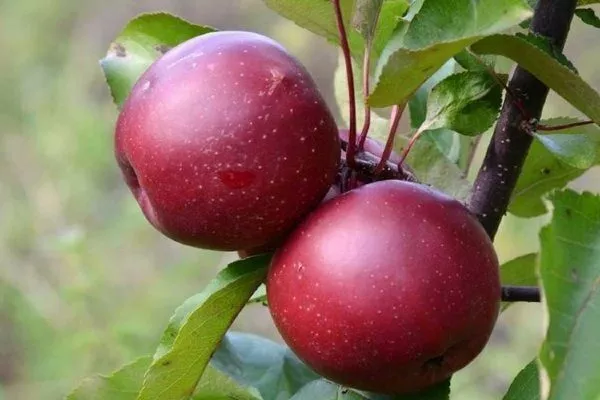
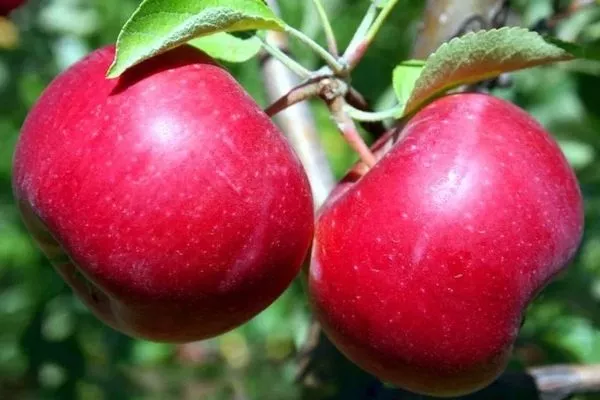
- Fruit Mars apples are characterized by a cylindrical shape with wide ribbed areas and a slightly tapered top. Each apple weighs between 170 and 200 grams, making them large compared to other varieties.
- Coloring The outer part of the fruit has a reddish blush on a greenish-yellow background, which gives it an attractive appearance.
- Pulp It has a greenish tint, medium density, and a fine-grained texture. It is very juicy, with a pleasant flavor without much aroma.
- Tasting evaluation This variety scores from 4.3 to 4.5 points, which confirms its high quality and pleasant taste.
Main characteristics
This apple tree has gained popularity thanks to its attractive crown and abundant fruit production, making it an ideal choice for mixed gardens where both practicality and beauty are important. It fits perfectly into group plantings with other fruit trees or stands out as a focal point in open spaces.
The lack of a strong aroma in the flowers makes it safe for allergy sufferers, and the large, tasty fruits attract birds, helping to preserve the garden's natural ecosystem.
Characteristic features:
- The first fruits can be harvested as early as September 15th, and the harvest season lasts from November to early March, allowing you to enjoy the freshness of Mars apples for a long time. To preserve them, they must be stored at low temperatures, typically between 0 and 4°C, with humidity between 90-95%.
- The Mars apple tree is characterized by high productivity, reaching 210 centners per hectare, making it often used for commercial cultivation. It is distinguished not only by the quality of its fruit but also by its competitive marketability.
- The Mars apple tree is renowned for its ability to produce fruit without the need for other varieties to be planted for pollination, making it ideal for both professional and amateur gardeners.
- This variety is frost-resistant to -33°C and has average winter hardiness, which allows it to be successfully grown in various climatic conditions.
- Scab resistance is one of the key characteristics of the Mars apple tree, which makes it possible to avoid the frequent use of chemicals to combat this disease.
- To prolong the life of this plant, which is usually 40-50 years, it is important to prevent waterlogging of the soil and promptly treat the cuts after pruning with garden pitch.
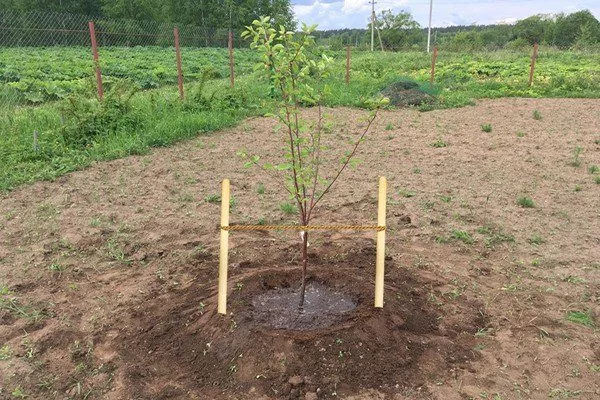
- During the initial period of their development, over the course of 4 years, young trees require support so that their trunks do not change shape.
- In areas where winters are characterized by insufficient snow cover, it is important to provide additional thermal insulation to the roots of trees, using, for example, spruce branches or straw to protect them from freezing.
Growing and care
These plants prefer bright, warm areas with nutrient-rich, well-drained soil and a neutral pH. They should be planted in early spring or fall, well before the onset of cold weather.
The subtleties of agricultural technology – the most important points:
- water is needed in moderation - two to three times a month during the dry period, and it is essential to improve root aeration by keeping the soil loose;
- pruning is necessary, which is carried out every year, helps to maintain the compact shape of the tree and stimulates fruiting;
- three applications of fertilizer are required per season: in the spring, nitrogen mixtures are preferred to stimulate shoot growth, in the summer - fertilizers with a potassium-phosphorus composition for the development of fruits, and in the fall - organic fertilizers (compost or humus) to strengthen the root system;
- It is useful to spray the foliage with micronutrient solutions during the flowering period, which usually occurs in May and is characterized by the appearance of beautiful white-pink buds collected in inflorescences.
Reviews
The Mars apple tree is a true miracle among apple varieties, boasting a number of attractive qualities: impressive yields, large and tasty fruits, the ability to bear fruit without the need for companion trees, and strong scab resistance. This variety is ideal for both amateur gardeners and large-scale farms.