
The Malukha apple tree attracts gardeners with its compact size and high winter hardiness. This columnar variety is easy to care for, disease and pest resistant, and produces large, juicy, long-storing fruits. This variety is ideal for small plots and makes apple harvesting easier.
How did the variety appear and where is it grown?
For many years, Soviet and Russian breeder Viktor Valerianovich Kichina was involved in the selection of columnar apple trees at the Federal State Budgetary Scientific Institution "All-Russian Selection and Technological Institute of Horticulture and Nursery".
Under his leadership, numerous new varieties were developed, including an unusual newcomer called Malyukha, whose testing began in 2008. L. F. Tulinova and N. G. Morozova were co-authors of this variety. The proven columnar donor KV-103 and the winter-hardy Brusnichnoe variety were used to create the variety.
It successfully passed trials and was added to the State Register of Breeding Achievements in 2015, allowing cultivation in eight regions of the Central Federal District. In practice, the variety also demonstrates excellent results in other climate zones, including more southern and northern regions, as well as certain areas of the Urals.
Features and specifications
Malyukha - A compact, easy-to-care-for plant characterized by high disease and frost resistance. Its small size and shape make harvesting easy. It's an ideal solution for small gardens.
The appearance of the tree
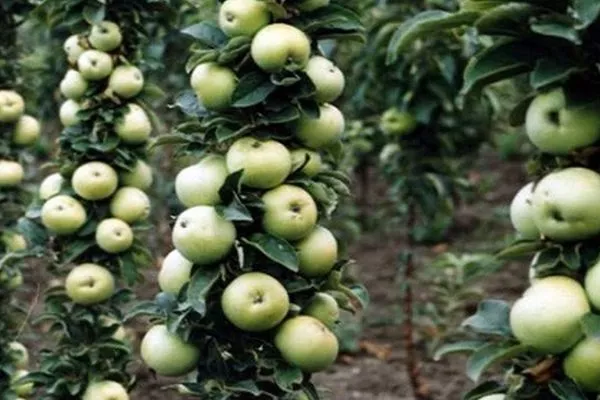
The columnar apple tree reaches a height of up to 2 m, but most often it is limited to 180 cm, adding about 15 cm annually.
Main characteristics:
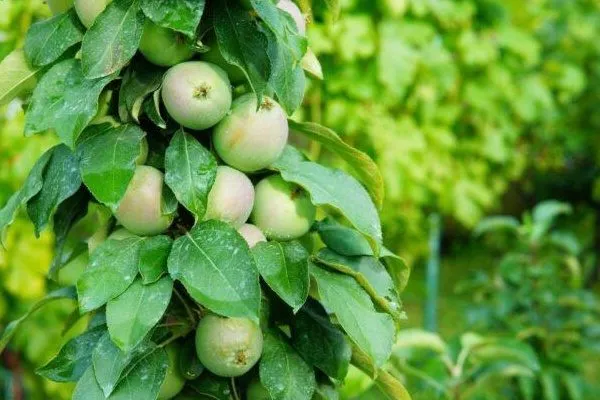
- The straight trunk with a dense, well-foliated crown is decorated with evenly spaced fruits, making the tree look decorative and well-groomed.
- The tree's leaves are medium-sized, wide, richly green in color, with a serrated edge and elongated petioles.
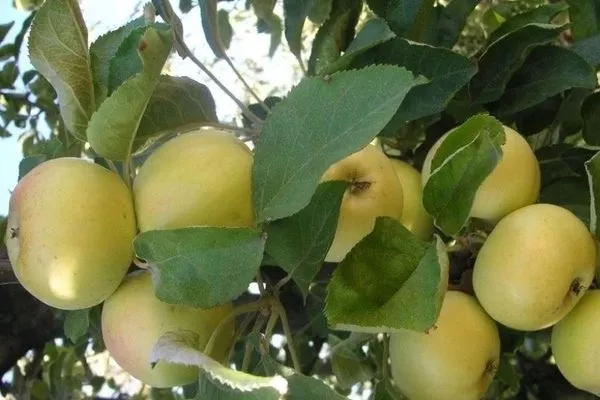
- Even when fully ripe, the apples do not fall off.
- The crown is compact, the leaf blades are medium-sized, rich green in color.
- With the onset of warm weather in May, the tree becomes covered with white buds, in place of which ovaries form.
Description of fruits
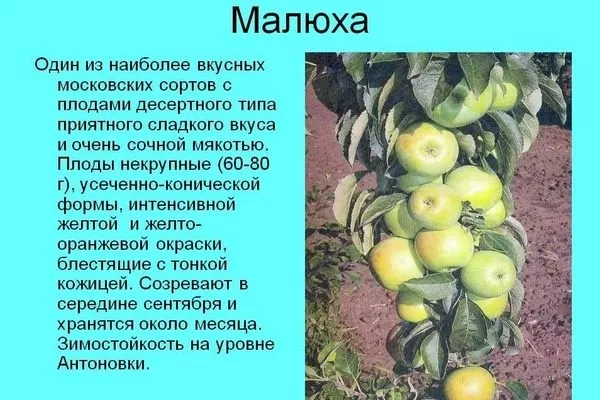
The Malyukha apples are large, weighing from 60 to 80 g, and resemble a turnip in shape due to their rounded-conical outline.
Distinguishing features:
- skin – smooth, shiny and elastic, it protects apples well from mechanical damage;
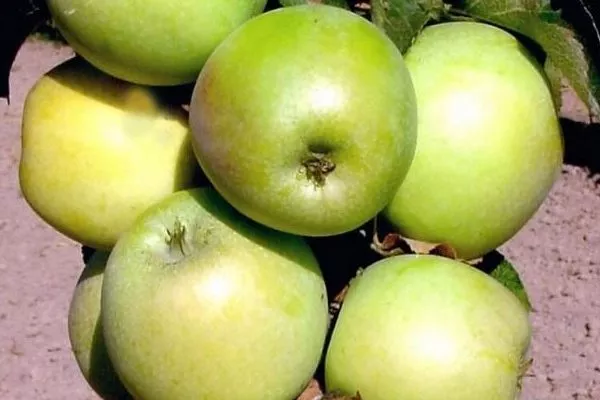
- main color – light yellow with a golden undertone, and on the sunny side, light pink or orange strokes may appear;
- subcutaneous points – rare and almost invisible;
- pulp – Light, with a creamy hue, it has a rich taste with a pleasant combination of sweetness and slight sourness.
The apples are juicy, with a delicate texture and distinct aroma, and contain virtually no starch.
Apple tree pollinators and yield
The Malukha attracts attention with its lush and uniform blooms in mid-season, usually in mid-May. The buds open simultaneously, densely covering the branches with large inflorescences with dense petals of white or pinkish hues.
The petals are slightly ruffled, and the bloom period lasts from 10 to 16 days, depending on climate and weather conditions. The variety is conditionally self-fertile and can bear fruit without additional pollinators.
But to increase the yield, it is recommended to plant varieties with a similar flowering period nearby:
- Chervonets;
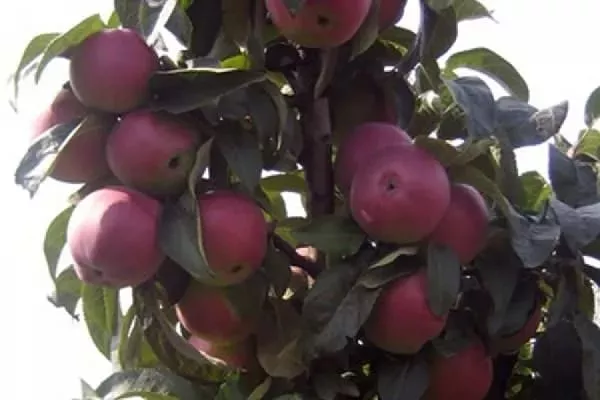
- Currency;
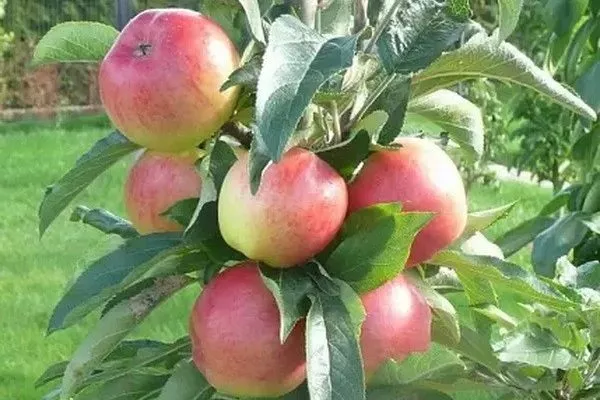
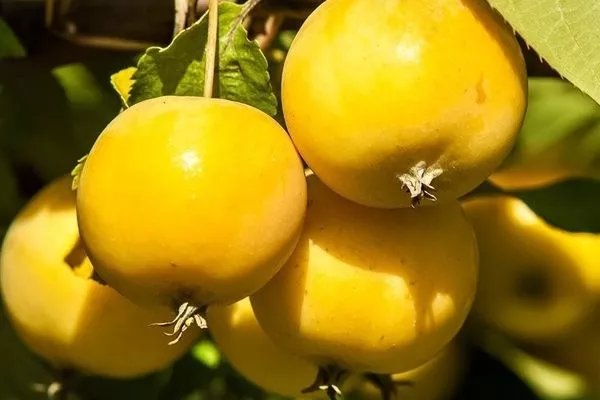
- Chinese gold or red.
Although Malukha's productivity is inferior to that of traditional apple trees, it performs well among columnar varieties. The tree begins bearing fruit as early as the second year after planting, yielding 2-3 kg of apples. By the fifth year, yields increase to 13-15 kg per plant.
Ripening and fruiting
The columnar Malukha apple tree begins to yield fruit as early as the second year after planting. Ripening takes about three months, and the harvest is in September.
One of the notable advantages of this variety is the excellent shelf life of the fruit – under the right storage conditions, they retain their flavor and juiciness until January without losing their marketable appearance.
Resistance to frost, diseases and insects
There's a common misconception that columnar apple trees are unsuitable for harsh climates, but this variety successfully defies this stereotype. It can withstand temperatures as low as -39°C to -42°C, provided it's properly winterized and its trunk is protected. However, these trees require care and preventative measures.
The variety has natural immunity to most diseases, but during years of severe epiphytotics, foliar damage of up to 2 points is possible. However, the fruits themselves generally remain suitable for consumption and processing.
Storage of crops, harvesting
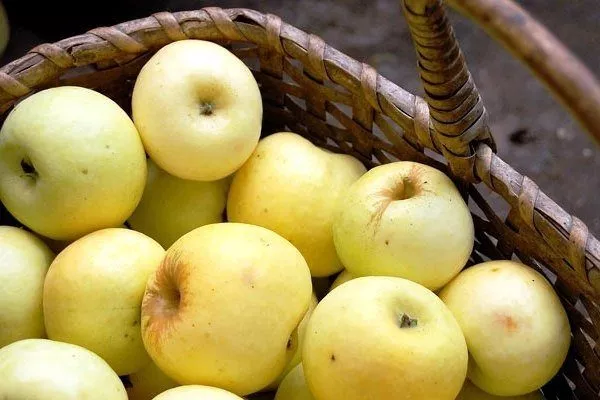
To improve the shelf life of the crop, it's important to follow the harvesting and storage guidelines. Pick the fruit in dry weather, carefully, with the stems intact, preferably wearing gloves to avoid damaging the skin.
Be sure to sort the harvest: select whole, undamaged apples and place them in clean containers. Store them in a basement or cellar at a temperature of 1 to 4°C and a humidity of 85-95%. Under these conditions, the apples will retain their flavor and juiciness until January. The fruits reach harvest maturity in September.
Landing
This variety has many advantages. Its compact size makes it easy to care for and doesn't require any special conditions. However, to ensure a bountiful and high-quality harvest, it's important to adhere to certain guidelines.
Preparing seedlings and optimal soil composition
For planting, choose one- or two-year-old apple trees. When purchasing, carefully inspect the planting material: check for damage or signs of rot, and ensure the root system is in good condition. To prevent the roots from drying out during transportation, soak them in a clay or soil mixture.
Apple trees prefer fertile soils with a neutral pH. Chernozem and slightly podzolic soils are considered the most suitable. Marshes, salt marshes, and rocky areas are not suitable for growing apples.
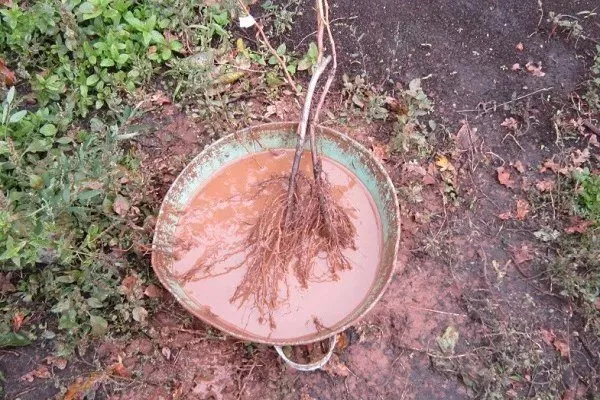
Dates and plan of disembarkation
It's recommended to plant the columnar Malukha apple tree in the spring, before the buds begin to open. Plant when the weather has settled in and the danger of frost has passed. The average daily air temperature should be at least 10°C, and the soil should warm to at least 3°C.
You can sow green manure between the rows: phacelia or cereals - they improve the soil structure and attract pollinators.
Basic requirements:
- Prepare the area for planting in the fall: clear it of weeds, level it, dig it to a depth of about 30 cm and disinfect it with a 3% solution of copper sulfate or Fitosporin (5:10 with water).
- After a week, add 10 kg of compost and sand (if needed to lighten the soil), 20 kg of manure, and 500 g of superphosphate per square meter. Cultivate the area again and leave it until spring.
- A month before planting, repeat the digging. Prepare planting holes measuring 50x60 cm, spaced 1-1.5 m apart.
Step-by-step instructions:
- Pour a 25 cm layer of drainage from a mixture of sand and crushed stone (in a 2:1 ratio) into the bottom of the pit.
- Add 4 kg of humus, 80 g of superphosphate and 40 g of potassium fertilizer to the top layer of soil.
- Place a stake in the center and form a small mound of soil nearby. Place the seedling on it, carefully spreading the roots so that the root collar remains 5 cm above the soil level after filling.
- Fill the hole with layers of soil, alternating clean and fertilized, while gently shaking the tree to eliminate voids.
- After planting, compact the soil and moisten it thoroughly – add 20 liters of water to the tree trunk circle.
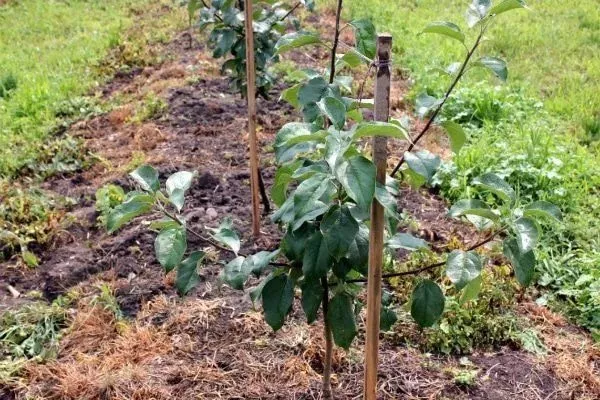
Features of caring for young and mature trees
Timely and proper care is the key to the healthy growth and development of the Malukha columnar apple tree. Although this variety doesn't require any special conditions, it's important to remember a few simple agricultural practices.
Frequency of irrigation and soil loosening
In the first year after planting, when the root system is still developing, proper watering is especially important. Weather conditions can affect irrigation schedules, but for comfortable tree growth, maintaining soil moisture at a depth of 4-5 cm is essential.
Under normal conditions, water about twice a week. Loosen the soil twice a year: in early spring before bud break and in late fall after the leaves fall. It's best to do this the day after watering or rain to prevent the soil from compacting into dense clumps.
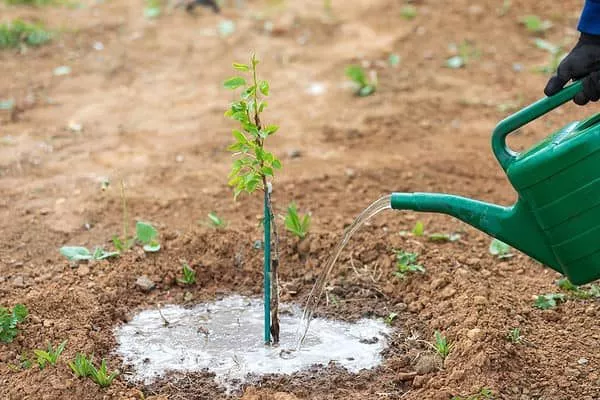
Foliar and root feeding
In the first year after planting, apply nitroammophoska (NAP) in early spring to provide young trees with the necessary macronutrients. A month later, apply a second fertilizer with a urea solution. Use the same fertilizers again a month later.
Once the apple tree begins to bear fruit, feed it three times per season:
- At the beginning of bud break – Sprinkle nitroammophoska around the root zone, lightly incorporate it into the soil, and moisten it thoroughly. In poor and depleted soils, it's more effective to use organic fertilizers such as humus or compost.
- During the flowering period – Use potassium sulfate and superphosphate or liquid manure.
Crown pruning
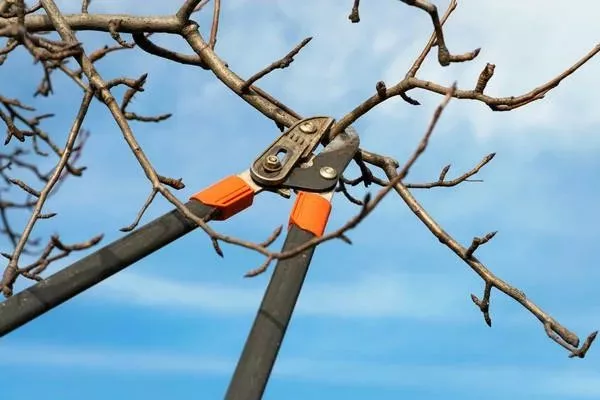
The Malukha apple tree requires regular pruning. You can shape the crown and remove excess horizontal branches as early as the second year after planting.
Don't prune the topmost, strongest vertical shoot; it's better to tie it up. Sometimes, columnar apple trees develop up to three main branches, forming a candelabra shape. In this case, leave only these branches and remove all other branches.
Recommended pruning scheme for fruit trees depending on age:
- two years – cut the side branches back to two buds – new shoots will grow from them in the summer;
- three years – annual shoots begin to bear fruit, and shorten the young growth again to two buds;
- four years – Cut off last year's fruiting branches, and continue working with the remaining shoots using the same method.
Preparing apple trees for winter
This variety is characterized by high frost resistance, but this doesn't mean the trees can be left unprotected in winds and temperatures below -30°C. The main thing is to stop watering from mid-September, and in colder regions, from the beginning of the month.
Basic requirements:
- Wrap the trunks with tights, burlap, rags, or agrofibre, and cover the area around the trunk with spruce branches, hay bales, or straw. The best method is to create mini-greenhouses around each trunk using a tent-like shelter made of tarpaulin or film.
- To repel rodents such as mice and hamsters that damage the bark and thin branches, lubricate the trunks with melted lard, grease, or drying oil.
Whitewashing with lime twice to a height of about 1-1.1 m is effective – in autumn and spring.

Pest and disease control
The Malyukha variety is characterized by average resistance to scab, however, in years of epiphytotics, damage to trees can reach 2 points on a 4-point scale, with the leaves being the main victims.
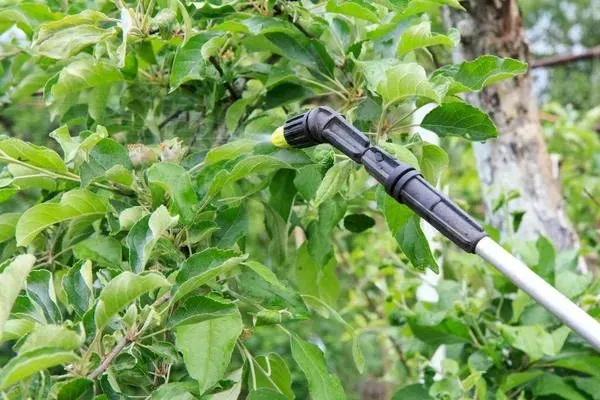
To prevent the spread of fungal diseases, carry out preventative treatments with copper-containing agents annually:
- copper sulfate;
- Bordeaux mixture;
- Abiga-Peak or Oxyhom drugs.
For environmentally safe suppression of phytopathogens, it is effective to use biofungicides:
- Fitosporin-M;
- Fitolavin;
- Gamair.
To protect against insect pests – aphids, flower beetles, codling moths, goldtails, moths, mites and leafhoppers – use biological products:
- Fitoverm;
- SBT-Pecilomycin;
- Prophylactic Bio.
Pros and cons
Advantages of the variety:
Flaws:
Reviews
The Malukha apple tree combines ornamental beauty with productivity, making it popular among gardeners. Its resistance to frost and disease, along with its compact form, means it requires minimal care. Its fruit remains fresh until early next year, providing a steady source of vitamins throughout the winter. With proper cultivation practices, bountiful harvests are guaranteed.