
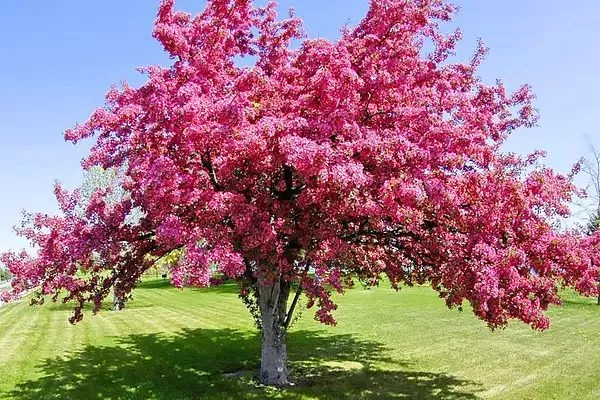
The Makovetsky apple tree (Makovetsky, Purple Makovetsky, Makovetskiana, Makowiecki) is the name of one of the ornamental varieties of this fruit tree popular with gardeners. It is prized for its beautiful appearance, lush blooms, and excellent winter hardiness. It is a suitable alternative to the cherry tree and the best choice for anyone looking to transform their property into a garden paradise.
History and distribution
Makovetsky is a hybrid whose parent is the famous purple Nedzvetsky apple tree, native to Central Asia. The latter has repeatedly served as a source for breeders to create new frost-resistant varieties intended for decorating urban gardens, parks, and summer cottages.
This fruit variety, like its hardy ancestor, has a beautiful appearance and is resistant to winter cold. It has no particular growing conditions, making it particularly suitable for central Russia and the south.
Features of the variety
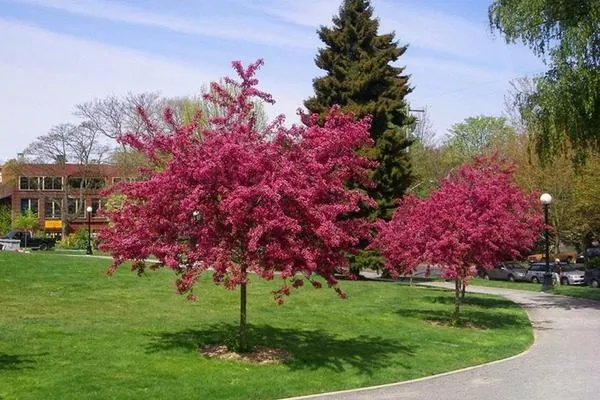
The Purple Makovetsky tree is characterized by a good growth rate. It produces 20-25 cm of growth per year. A mature plant reaches a height of 5-6 m. It has the following external characteristics:
- crown: wide-spreading, with a diameter of about 5 m, quite dense, drooping to the ground with age;
- barrel: strong, covered with dark brown bark;
- shoots: widely spreading, burgundy in color, reaching a length of 5 m;
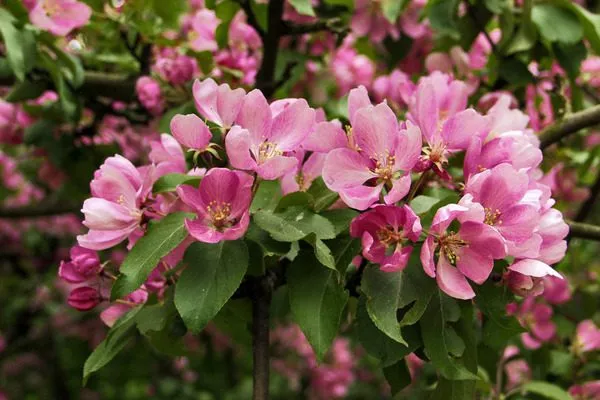
- foliage: solid, elliptical with a pointed tip and a serrated edge, changing color depending on the season (red when the buds open, green with brown veins in summer, orange-brown in autumn);
- flowers: large in size (their diameter is 5 cm), single, simple in structure, with petals of dark pink or lilac-red color.
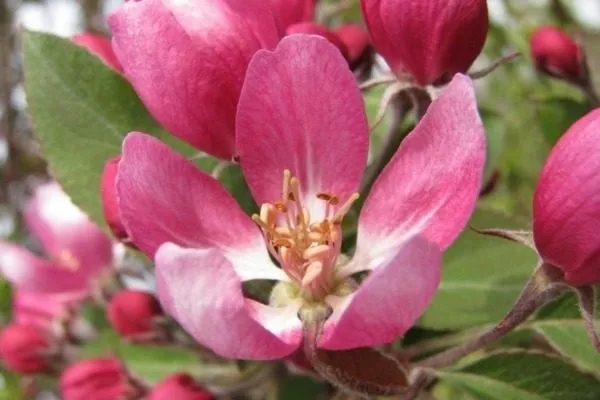
The graceful shape, rich foliage color, stunning blooms, and abundance of small red fruits make this plant attractive to gardeners. Due to its heightened ornamental value, it is called the paradise apple tree or paradise apple.
In May, the plant reaches its peak beauty. It transforms into a fragrant, purple-red cloud of numerous blossoming buds. Against the backdrop of the garden's greenery, the tree looks like an exotic bouquet, comparable in beauty to Japanese sakura. Blooming lasts for at least two weeks.
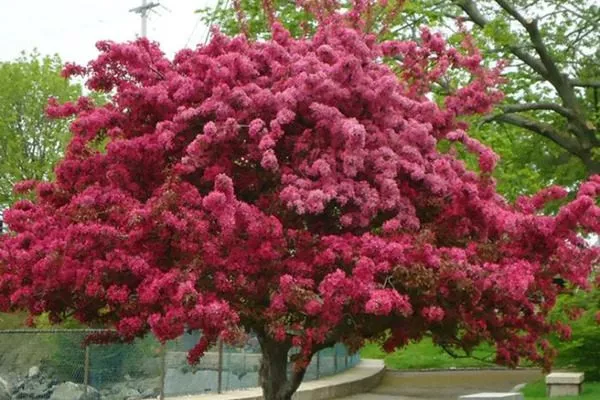
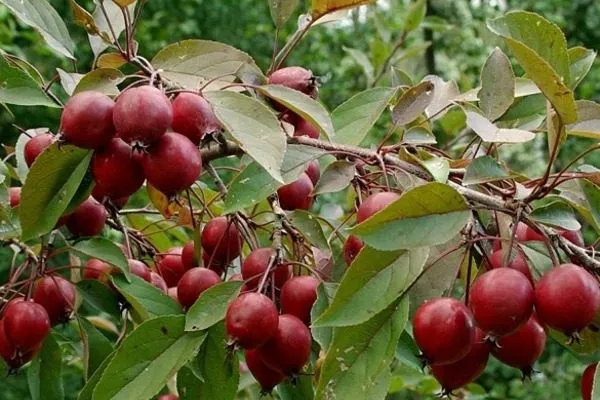
The Makovetsky hybrid produces large quantities of fruit that are not particularly high in consumer quality. A description of their appearance includes the following characteristics:
- miniature size (2-4 cm in diameter);
- round or ovoid shape;
- rich red color.
Paradise apples ripen in bunches of 3-6 (similar to cherries). They can be enjoyed in August-September. The flavor is tart and sour, not particularly sweet. The fruits are quite edible. They are rarely eaten fresh. Homemakers use the harvest to make jam, preserves, and compotes.
The fruits of this variety are rich in vitamins, minerals, and other beneficial substances. They have medicinal properties. In folk medicine, they are used for the following purposes:
- to improve well-being in case of anemia;
- as a laxative and bactericidal agent;
- to improve immunity and vitality.
Characteristics
This ornamental apple tree has many excellent qualities that make it popular among domestic gardeners. Besides its attractive appearance, it boasts exceptional hardiness:
- good frost resistance (in the southern and central regions of the Russian Federation, the plant can overwinter without insulation; in areas with a harsh climate, where the temperature during the cold season drops below -30°C, trees need to be wrapped in burlap, hilled, mulched, and covered with spruce branches);
- drought resistance;
- undemanding to soils;
- excellent tolerance to dust and air pollution, making the hybrid suitable for decorating city parks and squares;
- strong immunity (the fruit crop is rarely affected by diseases and pests, but in unfavorable years and with poor care it can suffer from scab and powdery mildew).
Makovetsky is an early-bearing variety, producing fruit in early autumn. It is characterized by consistently abundant yields, with productivity reaching up to 50 kg per stem.
Application in garden design
The main purpose of the Purple Makovetsky is to decorate gardens, parks, and squares. It is not grown specifically for its harvest, but rather used to enhance green spaces.
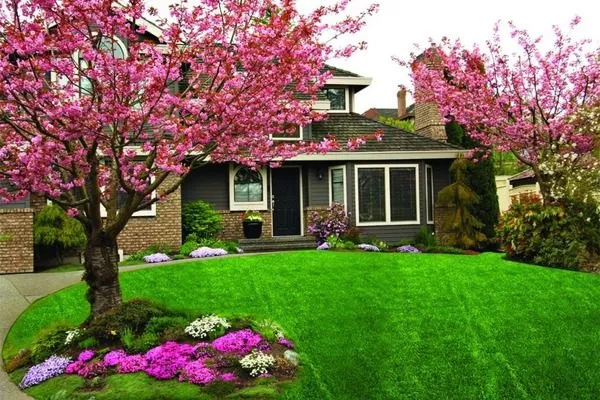
The use of the hybrid in landscape design is as follows:
- single and group plantings;
- hedge or trellis;
- alley design;
- use in plant compositions together with other crops (trees, shrubs, flowers).
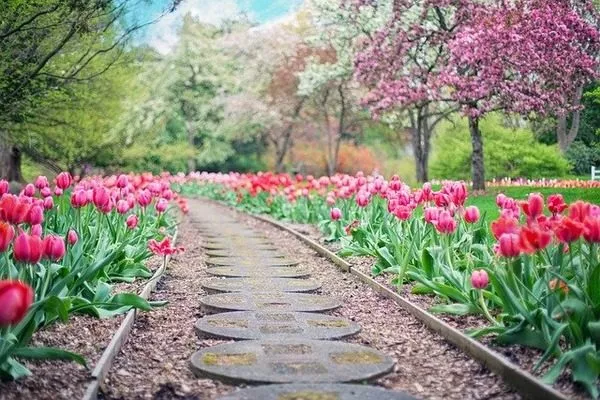
Apple trees look great in landscaped gardens. To enhance their beauty, consider providing a suitable background and planting companions:
- Place a tree with purple-red flowers next to apple trees that produce white or white-pink buds;
- it will be advantageously framed by thujas, blue spruces, and weeping willows;
- it will fit well into a composition of magnolias and bulbous flowers of the same color scheme;
- The combination of Makowiecki and Japanese spirea Golden Princess is considered spectacular.
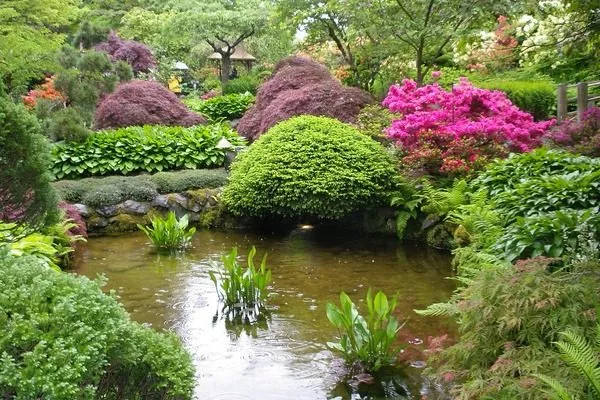
Plant a mature apple tree with a picturesque weeping crown next to a pond, where its graceful flowering branches will be reflected. Its beauty is only slightly inferior to that of the cherry blossom.
Agrotechnical techniques
Growing an ornamental apple tree is virtually no different from cultivating other fruit tree varieties. The Purple Makovetsky is hardy and undemanding, making its care significantly easier.
Landing
This variety of garden crop grows especially well in garden plots that meet a number of requirements:
- sunny (if the tree is placed in the shade, its development will not be affected, but the color of the flowers and foliage will be less rich and beautiful);
- protected from wind and drafts;
- not subject to flooding or waterlogging (stagnant moisture is harmful to plants, groundwater depth is from 2 m);
- with soil: sandy loam or loamy, fertile, moderately moist, well-drained.
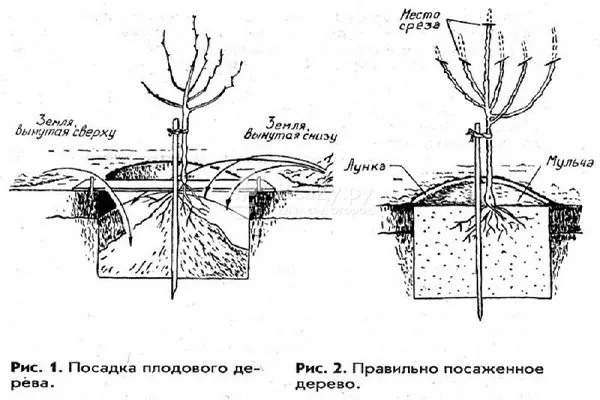
Begin planting in early spring or October, 30 days before the first frost. Follow these step-by-step instructions:
- Dig a hole in advance. Its dimensions are 80 x 100 cm. If you plan to plant several apple trees, maintain a distance of 5 m or more between them.
- Fill the hole 2/3 full with a soil mixture made by combining 3 parts compost, 1 part leaf mold, and 2 parts sand. Add double superphosphate (0.3 kg per hole).
- Form a mound of fertilized soil at the bottom of the hole.
- Place the seedling at the top of the mound. Spread out its roots.
- Cover them with soil. Compact the soil around the trunk.
- Water the tree. The recommended consumption is 20-30 liters of water.
A young tree requires regular watering, 2-3 times a month (adjust according to weather conditions). Stop watering when the fruit is ripening. It can cause cracking, which affects the plant's appearance and yield.
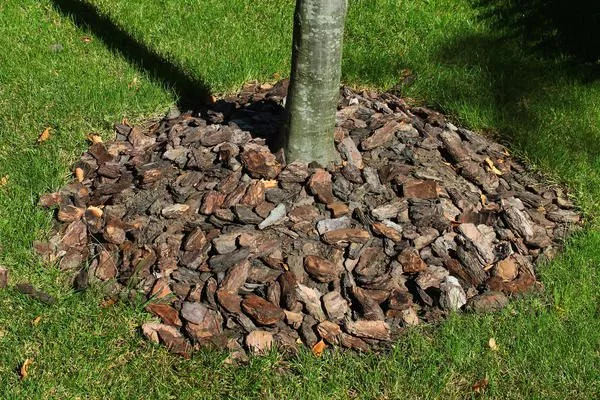
To enhance the decorative appearance of the Purple Poppy and improve soil moisture retention, consider mulching the area around the tree trunk. Use organic materials for this purpose:
- pine bark;
- fine gravel;
- nutshell.
Pruning and fertilizing
In addition to timely watering, Makovetsky apple trees require fertilization, formative care, and sanitation. Begin these procedures in early spring.
During the first years of the tree's life, take care of its design, which involves performing the following manipulations:
- removing 1/3 of the trunk height;
- the formation of 2-4 skeletal branches (they need to be placed at a large distance from each other and at different levels).
In subsequent years, the gardener won't need to devote much attention to shaping. Even without it, the variety maintains a beautiful, compact crown.
Perform sanitary treatments for a dormant tree. Pruning should be done in the spring, before the sap begins to flow. Remove branches damaged over the winter:
- frozen;
- dry;
- broken.
It is also necessary to remove branches growing into the crown and thickening it, affected by infection and insects.
Ornamental apple trees don't require frequent fertilizing. If you plant them in a well-fertilized hole, you won't need to apply fertilizer for the next few years. After that, apply urea every spring—it provides a source of nitrogen and prevents diseases and pests.
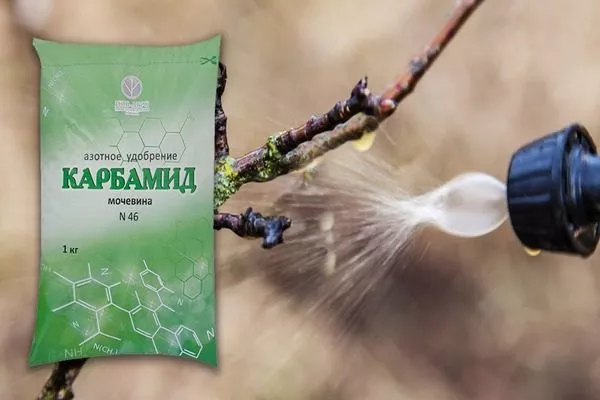
It is also recommended to resort to using this fertilizer if you notice the following symptoms in your garden crop:
- delayed growth and development;
- sparse flowering without formation of ovaries;
- yellowed and curled leaves;
- early fruit drop.
Pest control
The Makovetsky apple tree has a strong immune system, but in unfavorable years and under unsuitable growing conditions it can suffer from diseases:
- scabies;
- powdery mildew;
- fire blight.
If you don't plan to eat the crabapples growing on the tree, use broad-spectrum chemical fungicides to address the problem. Apply during and after flowering. For fungal infections, use the following products:
- Fast;
- Topaz;
- Bordeaux mixture;
- copper sulfate.
To protect apple trees from leaf-eating insects, mites and aphids, use any systemic insecticide.
Pros and cons
The Makovetsky variety has become popular with domestic gardeners due to its many undeniable advantages:
The beautiful apple tree intended to decorate the garden also has several flaws:
Reviews
The Purple Makovetsky is a unique apple variety that has captivated Russian gardeners with its beautiful appearance, hardiness, and ease of care. Thanks to its good frost resistance, it can be grown in areas where more heat-loving cherry trees or magnolias cannot be planted. Its ornamental value rivals that of the most popular garden trees and shrubs.