
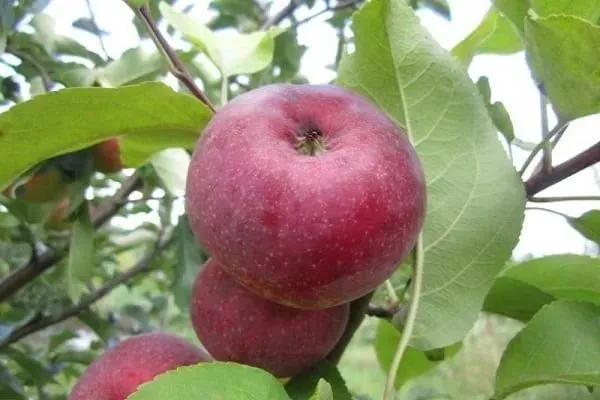
The Lobo apple tree is an old Canadian variety that has proven itself in Russia. It combines high frost resistance with beautiful apples and high yields. It is easy to grow, hardy, and adaptable to a wide range of growing conditions.
History of the variety's creation
The Lobo variety was developed at an experimental station in Ottawa, Canada, in 1906. It was obtained by open pollination of McIntosh apple seedlings. Having proven itself in Canada, the variety soon spread throughout the world.
In the USSR, the Lobo variety was included in the State Register in 1971 and was recommended for cultivation in the Central Black Earth Region (Voronezh Oblast, Kursk Oblast).
In 1972, the Lobo variety was also zoned for use in the Central Region of Russia, but this Canadian apple tree didn't gain widespread popularity in the USSR. That is, until frosts hit the Moscow region—down to -43°C. This happened in 1979. A huge number of apple trees perished after that winter, but the Lobo survived. Since then, this variety has been successfully cultivated in Russia and other countries with temperate climates.
Description of the Lobo apple tree
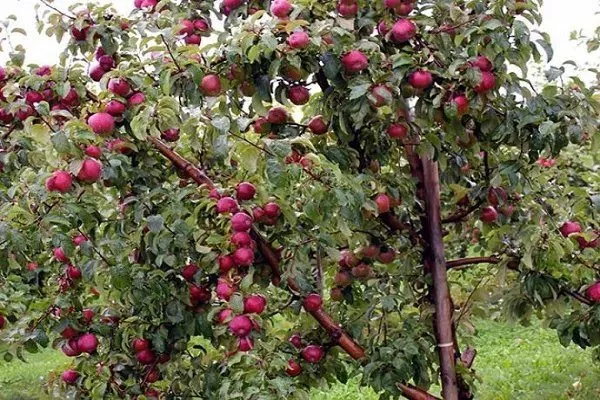
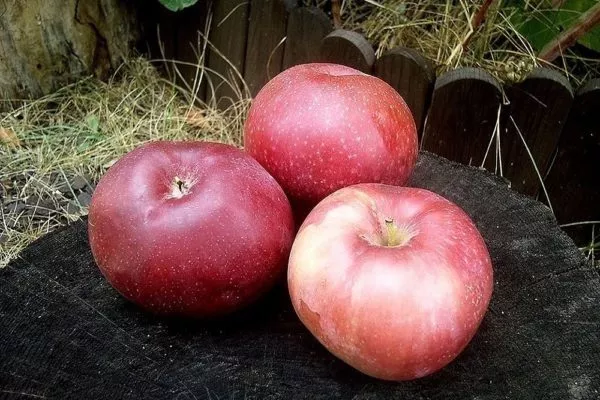
The Lobo apple tree is not only a source of apples but also a true garden ornament. When the apples are ripe, the tree is extremely attractive—the bright crimson fruits covering the tree stand out beautifully against the green foliage.
Tree
Lobo trees are tall and vigorous. Their crowns are sparse and broadly rounded, becoming upright and oval when young. Fruiting occurs on the rings and fruiting twigs.
Characteristics of the Lobo apple tree:
- Tree height — 3-4 m.
- Escapes - moderately thick, slightly curved, geniculate, dark brown with a cherry tint, medium pubescence.
- Leaves - green, large or medium-sized, oval or ovoid in shape.
- Flowers - white or with a pinkish tint, large.
Fruit
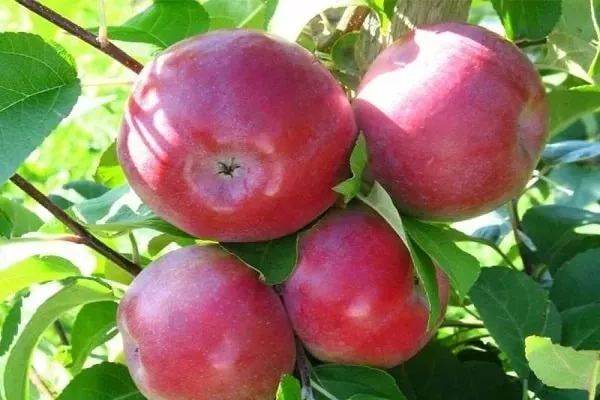
The Lobo apple tree produces medium-sized or larger fruits. They are very attractive, vibrant, and have excellent marketability.
Fruit characteristics:
- Color: the main one is yellowish-green, the covering one is raspberry-red, covering most of the fruit.
- Form: from flat-round to flat-round-conical shape, with slight ribbing.
- Weight: 100-200 g.
- Skin: smooth and dense, shiny, with a waxy coating.
- Pulp: white, juicy, fine-grained.
Characteristics
The Lobo apple tree has been grown in Russia for over half a century.
| Parameter | Indicator |
|---|---|
| Lifespan of a tree | 40-50 years old |
| The beginning of fruiting | In 4-5 years |
| Peak yield | 7-20 years |
| Fruiting periodicity | Annual |
| Transportability of fruits | High |
| Fruit shelf life | 3-4 months |
During this time, it has proven itself to be a reliable variety with excellent agronomic characteristics, allowing it to be grown even in regions with harsh winters.
Ripening time
The Lobo apple tree is a winter-bearing variety. Depending on the region (climate), the fruits ripen between late September and early October.
Productivity
The Lobo apple tree is a high-yielding variety. A single tree can yield up to 200 kg of apples. Yield depends on the growing region, care, and other factors.
The tree reaches full fruiting in the seventh year of cultivation, after which the yield begins to steadily increase. The tree bears fruit for 40-50 years.
Taste and purpose
Lobo apples have a sweet and sour taste, scoring 4.8 on a 5-point tasting scale.
Chemical composition:
- dry matter - 15.7-17.4%;
- sugars - 10.3-10.9%;
- titratable acids - 0.49-0.54%;
- ascorbic acid - 10.7 mg/100g;
- sugar to acid ratio is 21.4.
The fruit has a versatile purpose. Lobo apples are delicious fresh and processed. They are used to make juice, compotes, jam, and baking fillings.
Frost resistance
The Lobo apple tree can withstand prolonged frosts ranging from -35 to -37°C. In most regions of the central and southern regions of the country, the Lobo apple tree does not require additional winter protection, but in more northern latitudes it is essential.
Disease resistance
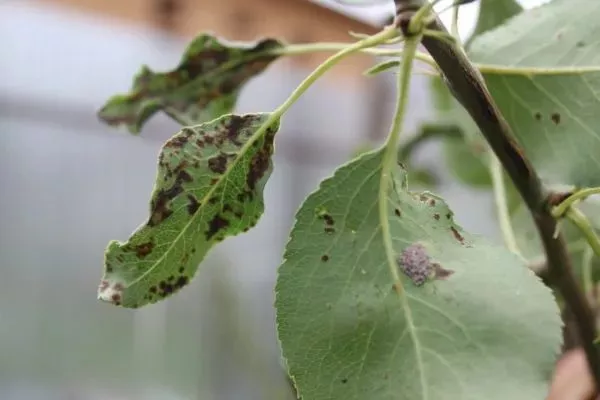
The Lobo apple tree's disease resistance is not very high, which is typical of most older varieties. The tree can be susceptible to scab, especially in damp and rainy summers.
Self-fertility
The Lobo apple tree is poorly self-fertile. To ensure high yields, the variety requires pollinators. The distance to pollinators should be no more than 50 meters to ensure proper pollination.
Pros and cons
Despite its long history and enduring popularity, the Lobo apple tree has its advantages and disadvantages. It's best to learn about all the pros and cons of this variety before planting.
Pros:
Cons:
Landing
To ensure the Lobo apple tree grows well and produces fruit for many years to come, it's important to give it a head start by planting it correctly. It's essential to find good planting material, select a suitable site, and plant it correctly, following the established technology.
Site selection and preparation
The Lobo apple tree grows best in open, well-lit areas on level ground or slightly elevated surfaces. Steep slopes, marshy areas, and low-lying areas with accumulated moisture are contraindicated. The site should be sheltered from strong gusts of wind, but well-ventilated.
Site requirements for planting the Lobo apple tree:
- The distance to buildings and trees should be at least 2 m, so that no shadow falls on the tree.
- The maximum depth of groundwater is no more than 1.5 m.
- The soils are loose chernozems, as well as loamy or sandy loam.
- The best neighbors are pear, quince, plum, and cherry. It is not recommended to plant the Lobo variety near conifers, elderberries, viburnum, or sea buckthorn.
It's best to prepare the planting site in advance. For spring planting, prepare it in the fall; for fall planting, prepare it a month or a month and a half in advance. Clear the soil of plant debris and dig it up to a spade depth, adding 10 kg of peat, 5-8 kg of peat, humus, or compost per square meter, as well as mineral fertilizers: 100 g of superphosphate, 40 g of potassium sulfide, and potassium salt.
If the soil is acidic, it is necessary to add lime (necessarily slaked) or dolomite flour, and in heavy, clayey soils, add 10 kg of river sand per 1 square meter.
Preparing the planting hole
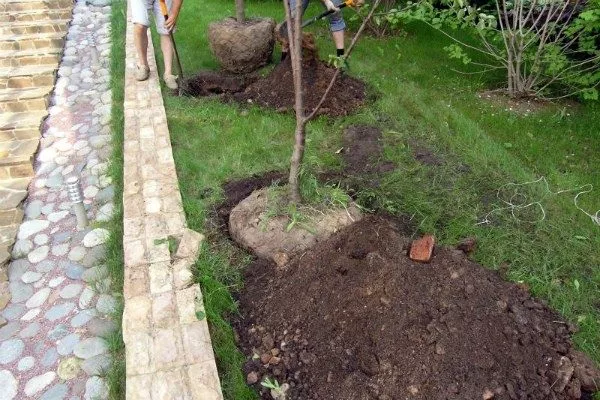
Planting holes are prepared in advance—2-3 months before planting. If planting is planned for spring, digging and filling the holes with nutritious soil mixture should begin in the fall.
Features of preparing planting holes for the Lobo apple tree:
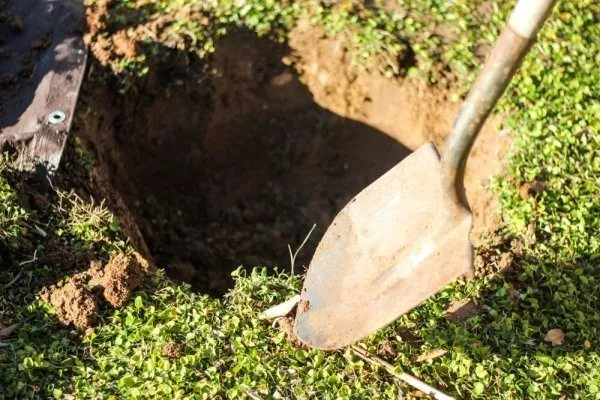
- The hole is 0.8 m deep and 1 m in diameter. These dimensions are approximate. They vary depending on the size of the seedling and its root system.
- When digging a hole, set the top fertile soil aside—it will be needed for preparing the potting mix. To avoid mixing up the soil, you can place two pieces of plastic sheeting near the hole being dug, so as to distinguish between the top and bottom layers.
- A drainage layer of broken brick or crushed stone (preferably limestone) is placed at the bottom of the pit. The drainage layer should be 8 cm thick.
- Fertile soil is mixed with 20-30 liters of organic matter—compost, manure, humus, or arable land. You can also add 800 g of wood ash and 1 kg of nitroammophoska to the mixture. Mix everything thoroughly and fill the hole to 2/3 of its capacity.
- A support is driven into the center of the hole, or rather at a distance of 10-15 cm from it.
If several Lobo apple tree seedlings are planted, a distance of 4.5 m is left between the rows and adjacent holes.
Planting dates
The Lobo apple tree is planted in the spring—March-April—or in the fall—in October, about a month before the onset of severe frosts, when the leaves have already fallen. It's important to allow the tree, planted before winter, time to establish itself and adapt to its new location.
Containerized seedlings—trees sold in containers—can be planted at any time, not only in spring and fall, but also in summer, as their roots are protected from overheating and drying out.
Planting a seedling
It is best to plant the Lobo apple tree in cloudy or rainy weather, as the scorching rays of the sun can negatively affect young, fragile seedlings.
Features of planting the Lobo apple tree:
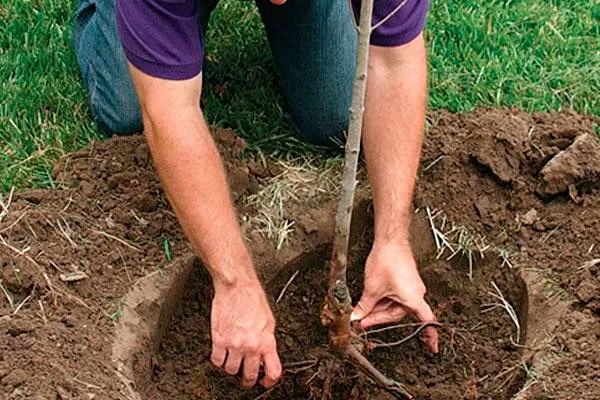
- It's easier to plant a tree with two people. One person holds the seedling upright and monitors the root collar, while the other straightens the roots and covers them with soil. The grafting site shouldn't be buried; it should be a few centimeters above the ground surface.
- The seedling is placed on top of an earthen mound (soil mixture poured into a hole) so that the root shoots lie on its slopes and should not bend.
- The free space and roots are filled with soil, periodically compacting it with your hands - this is necessary to eliminate air pockets between the roots.
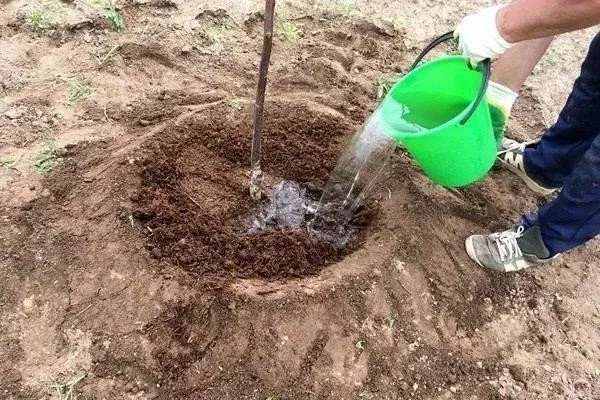
- After planting, water the newly planted apple tree with warm, settled water. For one seedling, 30-35 liters is sufficient. Once the water has been absorbed, it is recommended to mulch the soil to retain moisture and slow weed growth.
- The seedling is tied to the support with soft cord, twine, or ribbon. Hard materials, such as wire, are prohibited, as they will damage the young bark of the seedling.
Planting the Lobo apple tree with high groundwater levels
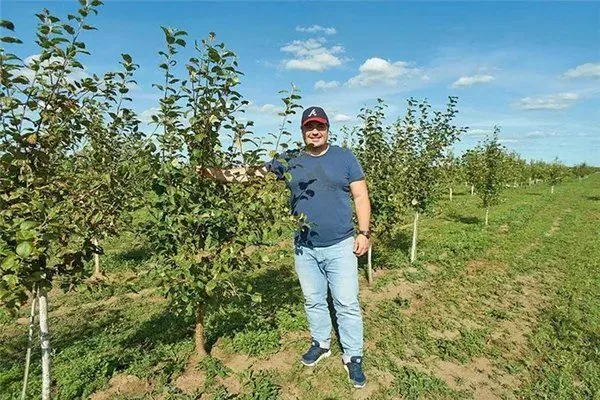
If the groundwater level in the area is too high, planting an apple tree using the traditional method is not recommended. Its roots will be constantly exposed to moisture, which will lead to root rot and ultimately the death of the tree.
In areas with high groundwater levels, the Lobo apple tree is planted on artificial mounds created from the soil. After planting, the mounds can be seeded with green manure, such as white mustard, which grows very quickly and prevents soil erosion.
After flowering, mustard is mown down, leaving its stalks near the apple trees. These plant remains, as they rot, enrich the soil around the tree with beneficial organic matter.
Care
The Lobo apple tree is unpretentious, so caring for it is not difficult.
Annual work plan
- March: sanitary pruning, disease control
- April: Application of nitrogen fertilizers
- May: pest prevention, watering
- June: application of complex fertilizers
- July: Soil moisture control
- August: Preparing for the harvest
- September-October: fruit harvest
- November: moisture-recharging watering, mulching
In order for the tree to be healthy and bear fruit well, it is important to feed, water and prune it on time.
Watering
This variety requires regular watering, especially during droughts and during the fruiting period. However, it's important to avoid stagnant water.
Features of watering the Lobo apple tree:
- A young tree is watered every two weeks, with 20 liters at a time. An adult tree is watered once a month, with 40 liters per watering.
- The following periods are also critical in terms of watering: before bud break, 3 weeks after flowering, 3-4 weeks before harvesting and during leaf fall.
- When harvesting begins, watering is stopped, as it can cause cracking of the fruit and impair its shelf life.
After each watering or heavy rain, it's recommended to loosen the soil around the tree trunks and remove any growing weeds. This prevents the formation of a hard soil crust and ensures oxygen supply to the roots. Regular loosening also prevents mold.
It's advisable to mulch the tree trunk area, for example, with straw, freshly cut grass, bark, sawdust, etc. This will make tree maintenance easier, reducing the amount of weeding and loosening.
Top dressing
The Lobo apple tree doesn't require fertilizing for several years after planting, as it receives sufficient nutrients from the planting hole. Only weakened or poorly growing trees require fertilization initially.
Approximate feeding schedule:
- In spring, before the buds open, 600 g of urea is applied under the tree at a distance of 25 cm from the trunk.
- After flowering, add organic matter, such as bird droppings, to the apple trees—a 1-liter jar diluted in 10 liters of water. The tree trunks are also sprinkled with wood ash.
- After harvesting, the tree is fertilized with superphosphate or potassium fertilizer—60 and 30 g per 10 liters of water, respectively. Prepare 30 liters of solution per tree.
- In the pre-winter period, instead of fertilizing, you can mulch the trunk areas with organic matter - compost or peat.
- Once every 4 years, manure is added under the Lobo apple tree - under digging, according to the diameter of the trunk circle.
Lack of fertilizer can slow down tree growth, reduce fruit quality and overall yield.
Trimming
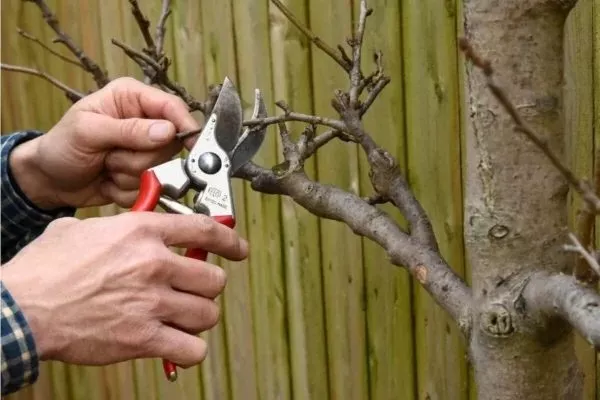
The Lobo apple tree requires two types of pruning: sanitary and formative. The former is performed twice a season—in spring and fall. During sanitary pruning, all damaged, broken, diseased, frost-damaged, and dead shoots are removed. After 10 years, it is recommended to prune 2-3 old branches per year to encourage new, young growth.
Recommendations for pruning the Lobo apple tree at different stages of life:
- During planting of seedlings. Pruning is done to create a proper standard. If a low, saucer-shaped crown is desired, the central stem is shortened to a height of 30–40 cm from the root collar. If a tall crown is desired, pruning is performed at a distance of 1–1.2 m from the ground.
- At the age of 2-5 years. The tree is pruned to properly shape the crown. The first tier is formed from 3-4 skeletal branches. The central conductor should be one and a half times longer than the branches of the tier. The next tier is formed at intervals of 0.4-0.45 m.
- 5-6 years after planting. By this time, the apple tree has become a young, fruit-bearing tree. At this time, remove excess branches growing inward, touching each other, and those growing vertically upward. If three branches grow close together, remove the middle one, as well as any branches that grow excessively low.
- Old apple tree. After 20-25 years, replacement pruning is performed. After 30 years, to prolong the tree's fruiting, rejuvenation pruning is performed.
Shelter for the winter
Although the Lobo variety has above-average winter hardiness, it requires shelter in harsh climates. The trunk area should be covered with a thick layer of mulch, approximately 10 cm thick. Hay, straw, or fallen leaves can be used for insulation. In the south, the Lobo apple tree does not require insulation.
Young apple trees in areas prone to severe frosts can be covered entirely, including their crowns, using covering materials. In regions with extremely low temperatures, trunks should be insulated with agrofibre, spunbond, or other breathable materials.
Fighting diseases
To prevent powdery mildew on the Lobo apple tree, spray it with a 1% Bordeaux mixture or universal fungicides such as Skor, Topaz, or similar products. The crown is treated before leaf out, before flowering, and one month after.
| Disease | Signs | Control measures |
|---|---|---|
| Scab | Olive spots on leaves, cracks on fruits | Treatment with 3% Bordeaux mixture in early spring |
| Powdery mildew | White coating on leaves and shoots | Spraying with Topaz (2 ml/10 l of water) |
| Fruit rot | Brown spots on fruits with concentric circles | Removal of affected fruits, treatment with Horus |
| Black crayfish | Dark ulcers on the bark, drying of branches | Cutting out the affected areas with the capture of healthy tissue |
If the tree is already affected by fungus, it is sprayed with copper-containing preparations - copper oxychloride, copper sulfate or a soda solution (40 g of soap and 50 g of soda ash diluted in 10 liters of water).
Fungicides such as Prestige, Rayok, Skor, HOM, Fitosporin-M, copper sulfate, etc. are used against scab. For greater effectiveness, spray not only the crown but also the surrounding tree trunks. To prevent scab, it is important to properly shape the crown, promptly remove affected areas, apply potassium and phosphorus fertilizers, and harvest the crop on time.
Pest control
The Lobo apple tree can be attacked by codling moths, blossom beetles, apple aphids, and other pests. A variety of preparations and folk remedies are used to combat them, including soap solutions, herbal decoctions, and infusions of onion peels or tobacco diluted in water.
Popular pest control products:
- Chemical insecticides - Fufanon-Nova, Decis, Aktara, etc.
- Biological products - Fitoverm, Actofit, Bitoxibacillin and others.
When using chemicals, it's important to take safety precautions. When working with chemicals, wear protective equipment: a respirator, goggles, rubber gloves, and heavy clothing.
Harvesting and storage
Harvesting takes place in late September in the south, while in more northern regions it occurs in October. Dry weather is chosen for harvesting. The fruits are picked without removing the stems or wiping off the natural waxy coating. Lobo apples can be picked all at once, as they ripen simultaneously.
Apples are stored in a dark, dry place. The optimal temperature is +3 to +7°C.
- ✓ Air humidity: 85-90%
- ✓ Packaging: wooden crates or cardboard boxes
- ✓ Laying: in 1-2 layers, sprinkled with sawdust
- ✓ Check frequency: every 2 weeks
- ✓ Culling: removal of rotten fruits
Under favorable conditions, fruits can retain their marketable appearance and taste for 3-4 months.
Reviews
The Lobo apple tree is a representative of old varieties characterized by a combination of excellent fruit flavor and low maintenance. However, this apple tree also suffers from a drawback typical of varieties developed at the beginning of the last century: vulnerability to fungal infections.