
The Ligol apple tree is a popular Polish variety, rightfully considered one of the best winter varieties. It produces beautiful fruits: large, bright, and delicious. To grow this apple tree in your garden and reap a rewarding harvest, it's important to provide it with proper care.
Description of the Ligol apple tree
When choosing an apple tree for their garden, the first things gardeners pay attention to are the tree's size and the characteristics of its fruit. The Polish Ligol variety exemplifies both, inspiring respect—the tree of this popular apple tree is strong and tall, and the fruit is large and beautiful. Other top apple varieties can be found here. here.
Tree
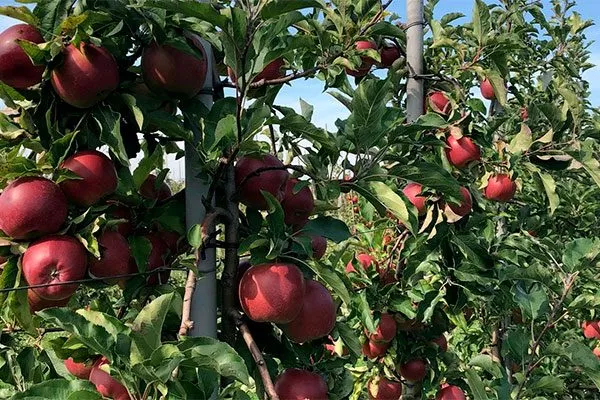
The tree is medium-sized, with strong skeletal branches. They droop slightly, creating large angles with the trunk and allowing the crown to develop into a spindle-shaped form.
Brief description of the tree:
- Crown - broadly pyramidal, medium density.
- Bark - brownish in color, smooth.
- Escapes - straight, medium thickness.
- Leaves — green, fairly large, elongated, and pointed. They are smooth, matte, with a concave blade and slightly raised edges.
- Petioles - medium thickness, long, slightly pubescent.
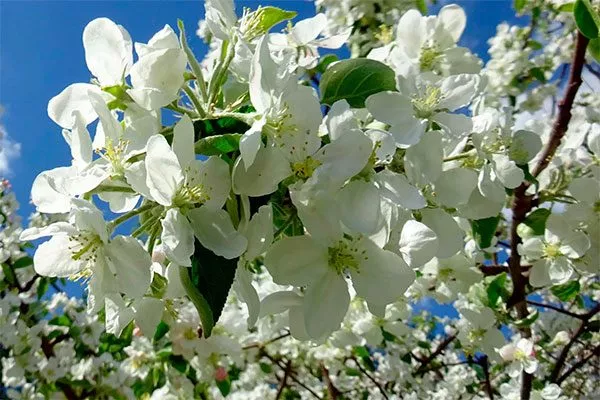
- Flowers - large, with pinkish-white petals, fragrant.
Fruit
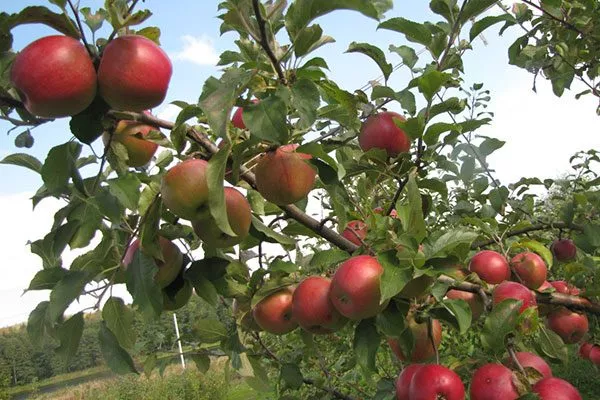
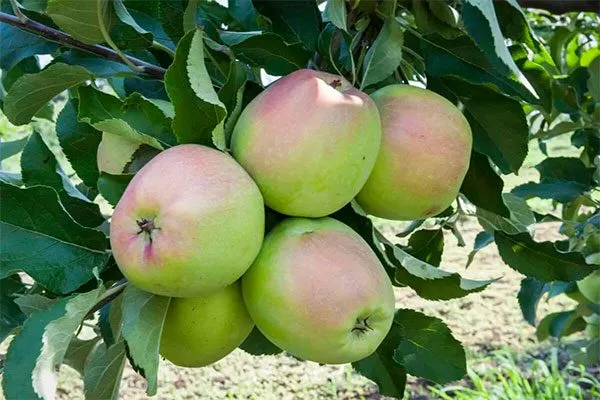
The Ligol variety's fruits are distinguished by their excellent marketability and uniformity. They are truly beautiful and very appetizing.
Main characteristics of fruits:
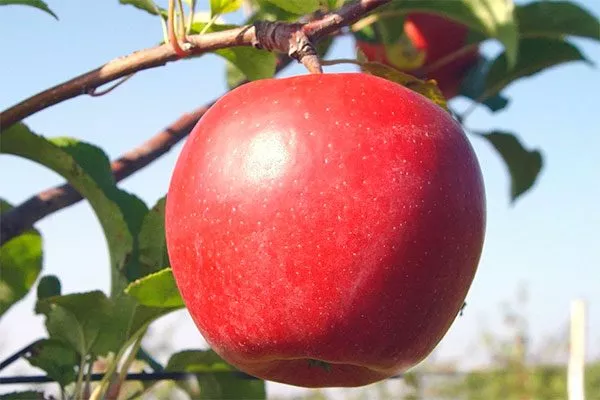
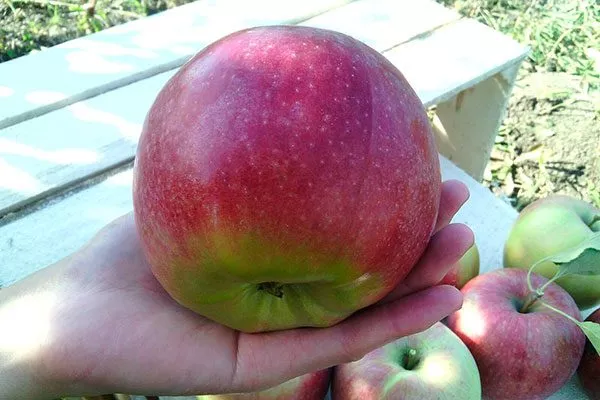
- Coloring — greenish-yellow, with a diffuse red-carmine blush spread across almost the entire surface of the fruit. Multiple subcutaneous gray spots are visible on the skin.
- Skin - dense, medium thickness, smooth and shiny.
- Form - round-conical, with a ribbed top.
- Weight — 200-300 g.
- Seeds - medium size, dark brown.
- Pulp — white or cream-colored, dense, with a fine-grained structure.
Who and when developed the Ligol variety?
The Ligol variety was developed at the Polish Institute of Horticulture and Floriculture (Skierniewice) in 1972.
The Ligol apple tree was created by crossing two popular varieties—Golden Delicious and Linda. This variety is often called Ligol.
Characteristics
The Ligol variety has good agronomic characteristics, but for many regions of our country, they are not ideal or even entirely unsuitable. Therefore, before planting a Ligol apple tree in your garden, it's important to familiarize yourself with all the characteristics of this variety.
Ripening time
The Ligol apple tree is a late-ripening variety. Harvesting maturity occurs between late September and mid-October—timeframes may vary depending on regional climate conditions.
Productivity
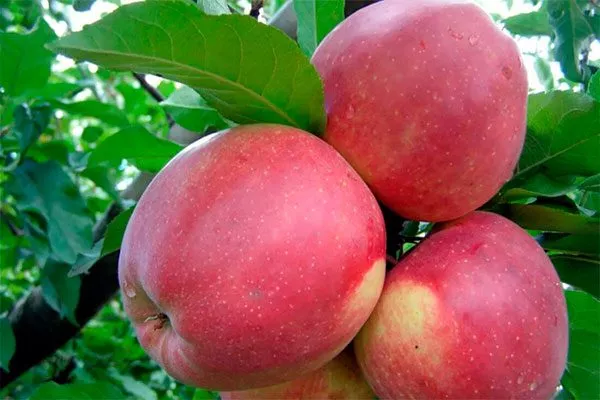
This variety is quite productive. A single tree, depending on age, care, and growing conditions, can yield between 40 and 80 kg of ripe apples. Peak yield occurs 6-7 years after planting.
Regionalism
In 2017, this Polish variety was added to the State Register of Russia and zoned for the Central Black Earth Region. However, it can also be grown in other regions of the country that meet the variety's frost and drought tolerance standards.
The variety grows especially well in the south of Russia, as well as in the Lipetsk, Tambov, Oryol, Kursk, Belgorod and Voronezh regions.
Frost resistance
An apple tree's ability to withstand frost depends largely on the rootstock used to grow the seedlings. Trees with vigorous rootstocks can withstand temperatures down to -30°C, while those with dwarf rootstocks can withstand temperatures down to -17°C. These temperatures are approximate, as the frost resistance of apple trees depends largely on their condition, previous weather, and other factors.
Taste and purpose of the variety
Ligol apples have a sweet and sour flavor, with crisp, juicy, creamy flesh. They have a tasting score of 4.6-4.8 (out of 5). While the Ligol variety is primarily used for desserts, it's versatile and suitable for a wide variety of uses.
Chemical composition of apples (pulp) Ligol:
- P-active substances (catechins) - 179 mg.
- Vitamin C (ascorbic acid) - 10.1 mg.
- Pectins - 12%.
- Titratable acids – 0.69%.
- Total sugars (fructose) – 12.8%.
Ligol apples are delicious fresh and also suitable for a variety of processing methods. They make excellent juices, jams, and compotes. However, if stored improperly, the fruit may develop a bitter taste.
Flowering and pollination
The Ligol apple tree is self-sterile and requires pollinators for pollination and subsequent fruiting. Without them, the tree will produce fruit, but only very few—no more than 3% of the normal amount. For pollination, select varieties that bloom at the same time as the Ligol apple tree.
Pollinator varieties
Suitable varieties for pollinating the Ligol apple tree are Spartan, Idared, Champion, McIntosh, Golden Delicious, Lobo, Empire and others.
Experienced gardeners advise having at least one beehive in the garden, and when creating a large garden with dozens or hundreds of trees, a small apiary.
Precocity
The Ligol apple tree is an early-fruiting variety. The first apples can be enjoyed as early as the third year after planting. However, at this age, the tree produces only about 5 kg of apples. High-quality seedlings on dwarf rootstock can bear fruit even in the first year after planting.
Pros and cons of the variety
It's no wonder Ligol is so popular among gardeners and apple lovers. This variety would hardly be so popular if it weren't for its many advantages—in comparison, some of its shortcomings pale in comparison and seem insignificant.
Subspecies of the Ligol variety
The Ligol apple tree is grown on a variety of rootstocks—vigorous, medium-sized, dwarf, and semi-dwarf. The choice of rootstock influences its frost resistance, as well as the subsequent nuances of growing and fruiting the apple tree.
On dwarf rootstocks
In Russia, gardeners most often grow the Ligol variety on M9 rootstock, while in Europe, they grow on P-60. Trees on dwarf rootstocks do not grow taller than 2.5 meters, so they can be completely covered for the winter (using the tent method).
Features of the M9 rootstock:
- Selected at the East Malling Experimental Station in England in 1914.
- Compatible with almost all apple varieties.
- Ensures fruiting in the 2nd-3rd year of planting, high yield and tree longevity of about 20 years.
The main drawback of the M9 is its low winter hardiness, which limits its distribution in Russia. Apple trees on the M9 rootstock must be heavily earthed up with soil during the winter, otherwise their roots will freeze during snowless winters.
Less popular in Russia, the P-60 rootstock is of Polish origin. Its vigor is comparable to that of the M9, and it boasts increased drought tolerance and winter hardiness.
On semi-dwarf rootstocks
The Ligol variety typically uses the 62-396 rootstock. Apple trees on this semi-dwarf rootstock reach a height of no more than 3 meters. They survive winter better than apple trees on dwarf rootstocks, and most importantly, they retain 100% of the qualities of the parent variety.
On vigorous rootstocks
Apple trees on vigorous rootstocks have higher frost resistance than their counterparts on dwarf and semi-dwarf rootstocks – down to -30°C.
The main drawback of the Ligol apple tree on a vigorous rootstock is its cyclical fruiting and variable yield. Regular crown and fruit thinning helps stabilize yields.
On columnar rootstocks
There's no such thing as a truly "columnar" Ligol. The only way to shape the tree is to form a spindle-shaped crown or a narrow pyramid.
If someone sells a "columnar Ligol", it is a variety grafted onto a dwarf clonal rootstock and subjected to formative pruning.
Landing
Successful cultivation of the Ligol apple tree begins with planting. Its growth and future fruiting depend on how well the tree is planted. It's important to choose the right planting site and plant the sapling in full compliance with the recommended planting techniques.
Selecting a site
For the Ligol apple tree, you need to select a site that meets the requirements of this variety. The tree's growth, development, and fruiting depend on the suitability of the site.
Features of choosing a site for planting the Ligol apple tree:
- The variety does not respond well to cold winds, so it is desirable that there be an obstacle on the northern and northwestern sides of the garden, for example, a blank fence, a house wall, or dense plantings.
- The best soils for the Ligol variety are considered to be chernozem, sandy loam, and loamy soils with a pH of 5.0-6.5. This apple tree will not grow or bear fruit in poor soils or arid areas.
- The Ligol variety thrives in areas with a groundwater depth of at least 2-3 meters. High groundwater levels cause root rot and tree death.
- The variety prefers well-lit areas, but can also grow in partial shade, if it is not very extensive and not constant throughout the day.
It is not recommended to plant a new apple tree in the same place as an old one. Over the course of many years of growth and fruiting, the tree depletes the soil, which becomes a breeding ground for pests that attack this fruit crop, as well as pathogens that are dangerous to apple trees.
Planting dates
The Ligol apple tree can be planted in the spring, around mid-April. The buds are the key—it's important to plant the tree before they begin to open. In the fall, the apple tree is planted after the leaves have fallen.
Experienced gardeners believe that autumn planting is preferable for the Ligol apple tree. The key is to allow at least a month before the onset of frost to allow the tree time to establish itself in its new location.
Site preparation
The planting area is prepared in the fall. First, remove all weeds, then dig the soil, adding organic fertilizers such as rotted manure or compost (10 kg per square meter). In low-fertility soils, it is also recommended to add mineral fertilizers, such as 1 tablespoon of nitroammophoska per square meter.
Add 500 g of wood ash to acidified soils, 10 kg of river sand per 1 sq. m to clayey soils, and 2-10 kg of clay to sandy soils.
In the spring, the soil is dug over again, adding complex mineral fertilizers. For example, you can use a solution of urea (20 g), potassium sulfate (15 g), superphosphate (20 g), and calcium nitrate (100 g).
How to prepare a planting hole?
The planting hole is prepared in advance to allow the fertilizer to dissolve and the soil to settle slightly. In the fall, planting holes are prepared about a month before planting, and in the spring, 1-2 weeks before.
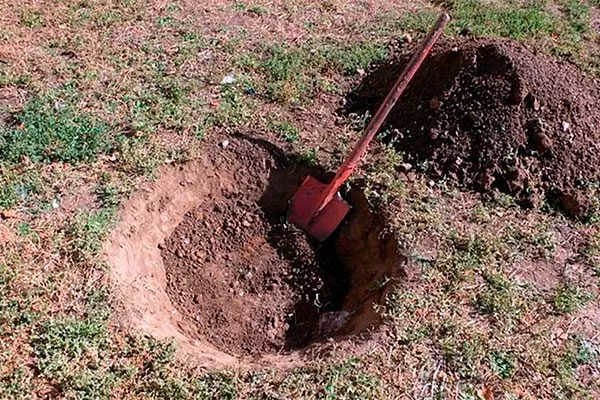
Features of preparing a planting hole:
- The optimal diameter is 1-1.1 m. The depth is 70 cm or more, depending on the size of the root system.
- Place a drainage layer at the bottom of the planting hole. The drainage layer should be approximately 10-15 cm thick. Small pebbles, broken brick, or expanded clay can be used for this purpose.
- Fill the hole 2/3 full with a nutritious soil mixture, which can be made from humus, black soil, coarse sand, and peat, mixed in a ratio of 2:2:1:1. It is recommended to add 250 ml of wood ash and 1 tbsp of superphosphate to the mixture.
The prepared hole is covered with roofing felt or roofing felt and left until planting.
Selection of seedlings
To ensure your apple tree grows strong, healthy, and produces good fruit, you need to select a good seedling. This should be done at specialized nurseries or other reliable suppliers. Buying seedlings from the market carries a high risk of growing a substandard tree.
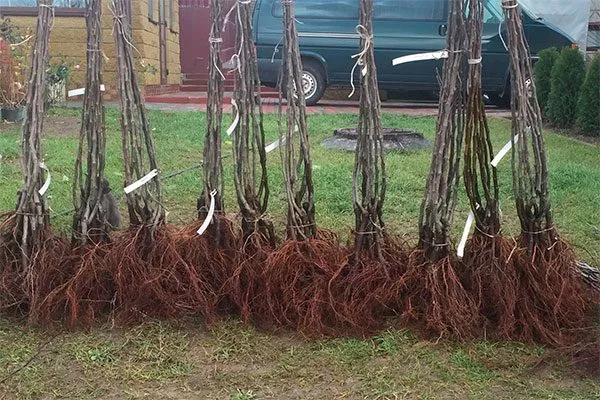
What to look for when choosing a seedling:
- The optimal age is 2-3 years. Older seedlings, 4-5 years old, are also suitable.
- The height of 2-year-old seedlings is 1.5-1.7 m, 3-year-old seedlings – 1.7-1.9 m, etc.
- Roots are well developed, 30-40 cm long.
- The bark is healthy, smooth, without damage, signs of disease or other defects.
Preparing the seedling
Before planting, soak the seedling in water for 4-24 hours to replenish lost moisture. A rooting stimulant, such as Epin or Zircon, can be added to the water. After treatment with this solution, the seedlings absorb nutrients better, grow more vigorously, and develop a well-developed root system.
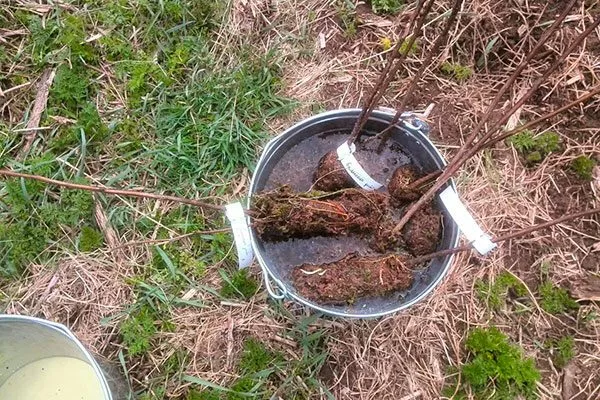
Immediately before planting, the roots of the seedlings are immersed in a clay slurry with Fundazol or another fungicide added. Biofungicides, such as Fitosporin-M, can also be used.
If seedlings were purchased in the fall and are planned for planting in the spring, it is recommended to soak the roots in a clay and mullein solution. In this condition, the seedlings can be safely stored until spring in a cool, dark place.
Planting in the ground
It's recommended to plant apple trees in cloudy weather, as the scorching sun is harmful to the seedlings, causing them to dry out and even burn. It's best to avoid wind, as strong gusts can break the delicate trees. It's best to plant in the evening, as the soil is cooler in the morning.
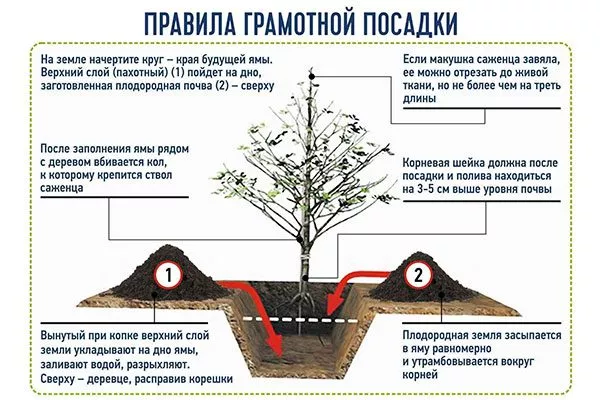
Features of planting the Ligol apple tree seedling:
- At a distance of 10-15 cm from the center, a support is driven into the hole - wooden or iron, about 1 m long.
- The seedling is placed on top of a mound of earth and the roots are carefully straightened out; they should lie flat, without bending to the sides or upwards.
- The free space is filled with the remains of the excavated soil and periodically compacted so that there are no air pockets between the roots.
- A tree trunk circle is formed around the trunk - a depression with a small ridge around the perimeter to prevent water from leaking out during watering.
- After planting, the root collar should be 5-10 cm above the soil level (for a freshly dug hole - 10-15 cm).
- The seedling is tied to the support with twine or fabric tape. Avoid using rigid materials such as wire, as this can damage the bark.
- The planted apple tree is watered generously with warm, settled water and pruned to a height of 1 m. Lateral shoots are shortened by 50%.
- When the water has been absorbed and the soil has dried out a little, it is loosened and mulched with straw, dry grass, etc.
Care
To get a good harvest of Ligol apples, you need to provide the tree with everything it needs—water, nutrition, and protection from diseases and pests. The variety isn't overly demanding or fussy, but without proper care, you shouldn't expect high-quality fruit.
Watering
The variety has good drought tolerance, so watering should be kept to a minimum throughout the season. Providing the tree with moisture is most important during flowering, fruit formation, and the growth of young shoots.
Young apple trees, up to 7 years old, are watered 8-10 times per season, mature ones - 4-5 times.
Approximate watering regime:
- First — carried out before flowering.
- Second - when the tree has finished blooming.
- Third - during fruit setting
- Fourth - at the stage of fruit ripening.
- Fifth - after fruiting.
Additional watering may be necessary during extreme heat and/or prolonged droughts.
Top dressing
For a tree to produce large, tasty fruit in sufficient quantities, it requires a lot of energy. Mineral and organic fertilizers help support this. Fertilizing begins in the third year after planting.
Approximate fertilization schedule:
- In the spring, before flowering, add organic matter to the tree—10 kg of compost or humus per square meter. The fertilizer is scattered around the trunk, which is then dug over. This feeding is done once every three years. Ammonium nitrate can also be added in the spring—30 g per square meter. During this period, the apple tree requires a lot of nitrogen for shoot and leaf growth.
- In summer, the tree requires potassium and phosphorus—they are necessary for the formation of ovaries and fruit. For example, you can feed the tree with monopotassium phosphate. Prepare a solution of 10-15 g of granules per 10 liters of water. The consumption of the working solution is 10-20 liters per tree.
- In autumn, superphosphate is added during digging - 40 g per 1 sq. m.
Periodic fertilization with complex fertilizers containing microelements is recommended. All fertilizing should be done on moist soil to avoid burning the roots.
Shelter for the winter
Apple trees grown on vigorous rootstocks don't require winter protection, as they easily tolerate frost and temperature fluctuations. Even if they do freeze, they quickly recover.
Trees on dwarf and semi-dwarf rootstocks are more susceptible to cold, so they need to be insulated for the winter. In the south, covering the area around the trunk is sufficient; in regions with harsh winters, it is recommended to build shelters over the trees.
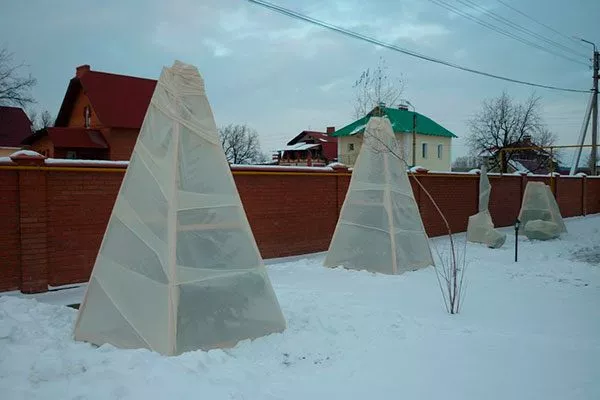
In anticipation of winter, it is recommended to wrap young seedlings with insulating material, as well as roofing felt or mesh, to protect the trunk from rodents. The area around the trunks should be mulched with humus. The layer should be at least 15 cm thick. This is essential because the high-lying roots can withstand temperatures no lower than -15 to -16°C.
Trimming
Primary pruning is done in the spring to shape the crown and increase the tree's yield. This process begins before the sap begins to flow. The first pruning is performed at 2-3 years of age. It is recommended to shape the crown into a bowl-shaped or spindle-shaped form.
The crown is thinned in the spring, removing all dry, broken, frozen, and damaged branches, as well as vertically growing ones. Sanitary pruning is also recommended in the fall, after the leaves have fallen.
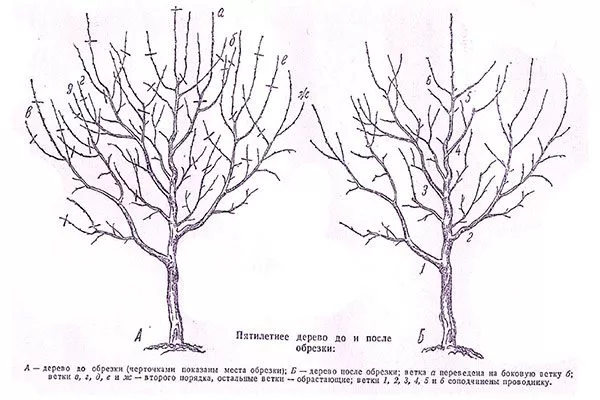
Features of pruning the Ligol apple tree:
- In the first year, no more than 30% of the branches are removed at a time.
- Skeletal branches should be 5-7 cm shorter than the central trunk, and as the tier decreases, they become shorter.
- A properly formed crown has 3 or 4 tiers with 3-4 thick branches evenly spaced. The branches in the lower tiers should be slightly longer than those in the upper tiers.
To reduce the tree's "resting" time, it's recommended to regularly prune the crown of inward-growing branches. Regulating flowering also helps reduce the frequency of inactive periods—in spring, it's recommended to remove 40 to 70% of the buds.
Fighting diseases
The Ligol apple tree is resistant to most diseases, including powdery mildew and scab. However, this variety is considered susceptible to fire blight and wood diseases.
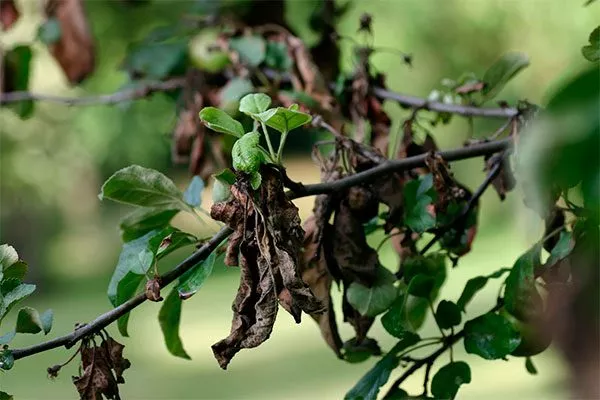
For disease prevention purposes, it is recommended:
- When symptoms of fire blight appear, all affected branches are pruned and destroyed (burned). The tree is then sprayed with a 1% copper sulfate solution. To kill pathogens, the apple tree is also treated with a 5% Azofos solution.
- During flowering, apple trees are sprayed several times with a solution of boric acid.
- In autumn, the crowns of trees and soil are treated with a 3% solution of copper sulfate or Bordeaux mixture.
- To protect trees from fungal diseases, fungicides are used: Horus, Skor, Ridomil Gold, etc.
Pest control
The Ligol apple tree can be affected by codling moth, apple blossom beetle, and gall aphid. To kill the larvae, treat the tree in the spring with the combined pesticide "Nitrafen" or "DNOC."
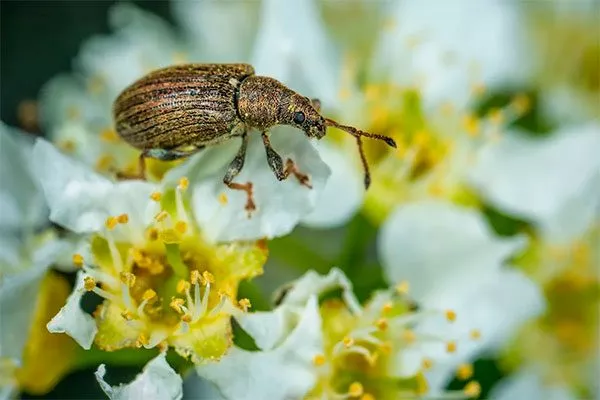
To combat pests attacking trees, use Decis, Fufanon, Iskra and other insecticides.
Harvesting and storage
The Ligol apple tree ripens in late September or later. Ripening is fairly uniform, with the apples holding well on the branches and not falling prematurely. They are harvested in dry weather, sorted immediately, and any damaged apples are set aside for processing.
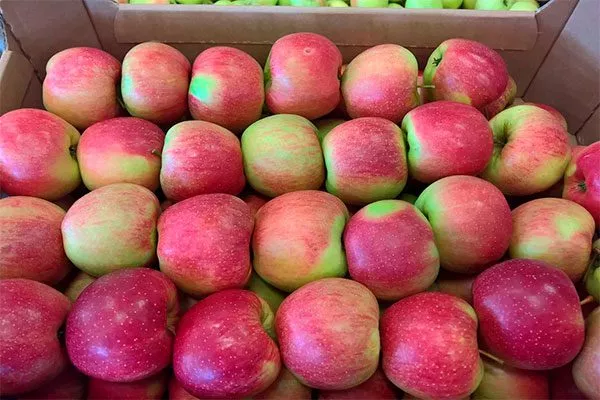
High-quality apples are stored in boxes—either cardboard or wooden. They can be stored in a single layer or in multiple layers, with sheets of paper interleaved between them. The optimal temperature for long-term storage is 0 to +5°C. Recommended humidity is at least 85%.
Apple boxes are stacked on top of each other, leaving 3-4 cm between them for ventilation. Under favorable conditions, the fruits will store for up to 4-6 months. They reach consumer maturity in November-December. Ligol apples can be stored in the refrigerator until March.
Reviews
The Ligol variety will be a stunning addition to any garden and a source of delicious apples that store and transport well. This variety is suitable not only for private gardens but is also recommended for commercial cultivation and industrial processing.