
The Legend apple variety has been recognized as one of the most outstanding new varieties. This hybrid boasts numerous advantages and is ideal for gardening in any location. To achieve excellent results growing Legend, it's important to master key cultivation techniques, understand its characteristics, and follow care guidelines and other important aspects.
History of apple tree breeding and regions for cultivation
Renowned Russian breeder Viktor Valerianovich Kichina, a pioneer in cultivating columnar apple trees in our country, created the Legend apple tree. In the late 1970s, he conducted pollination by crossing Fuji and Brusnichnoe apples, resulting in a tree with exceptional winter hardiness and productivity, while retaining the flavor and commercial value of its parents.
In 1982, the Legenda variety successfully passed agricultural trials and was recognized as elite and zoned, but its official recognition in the state register only occurred in 2008. The hybrid significantly surpasses its ancestors in many respects, as confirmed by numerous scientific studies.
The Legend culture is traditionally cultivated in:
- Moscow region;
- Leningrad District;
- Ural region;
- some areas of Siberia.
Farmers in the Moscow region generally don't need to employ complex agricultural techniques. The only exceptions are particularly cold or dry years. The same principles apply in the Urals and Siberia. The situation in the Leningrad region is somewhat different, but site selection is particularly important. Sites with stagnant water are unsuitable in the region's cold climate.
Features and specifications
The rounded and dense crown of Legend is characterized by compactness and evenly spaced shoots.
The variety is distinguished by its frost resistance and low susceptibility to disease. Even under unfavorable summer conditions, deterioration in fruit quality remains minimal.
The appearance of the tree
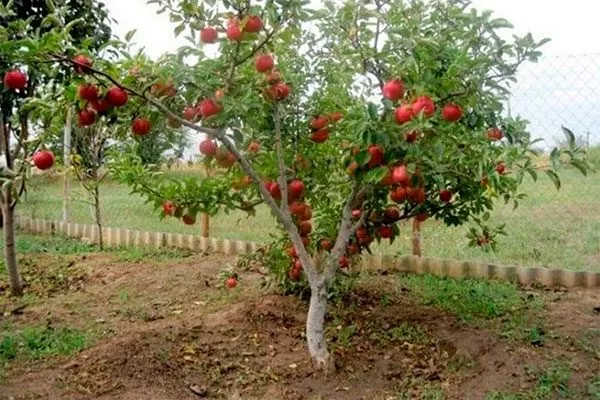
The trees are classified as medium-sized and can reach up to 300 cm in height, with a moderately sized, rounded crown that spreads slightly. It has a fairly dense structure, with moderate branch density.
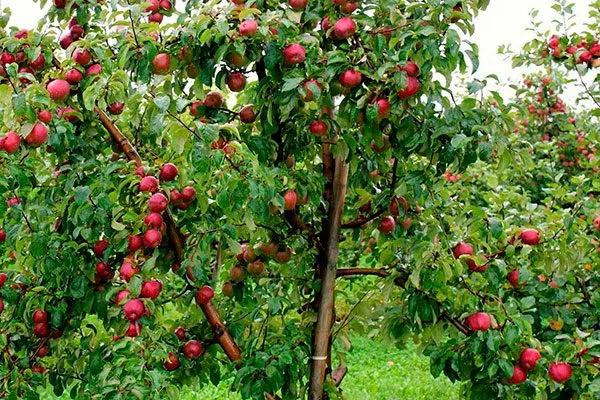
Varietal characteristics:
- The shoots grow from the trunk at a right angle and have a steel-gray bark. With age, the bark becomes rougher and more cracked.
- The medium-sized, ovate leaves with pointed tips are dark green with a glossy, smooth surface. The pubescence is faint on the undersides.
- The flowers of this variety are medium-sized, white-pink in color, and emit a pleasant aroma during flowering.
Description of fruits
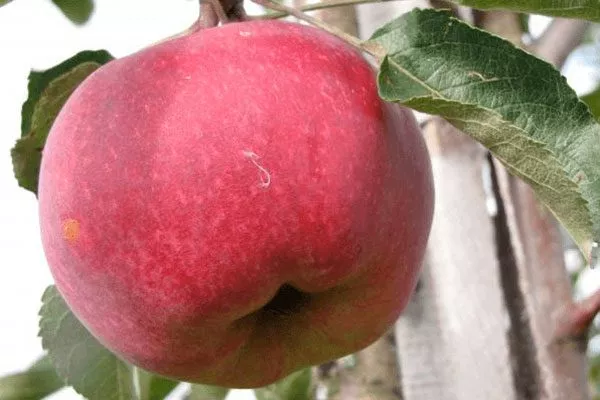
The Legend apple variety impresses with its majestic appearance – it is distinguished by its large size and shape, reminiscent of a truncated cone-shaped body.
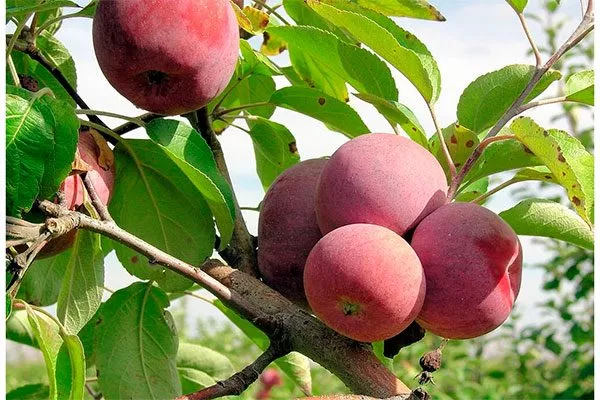
Other special features:
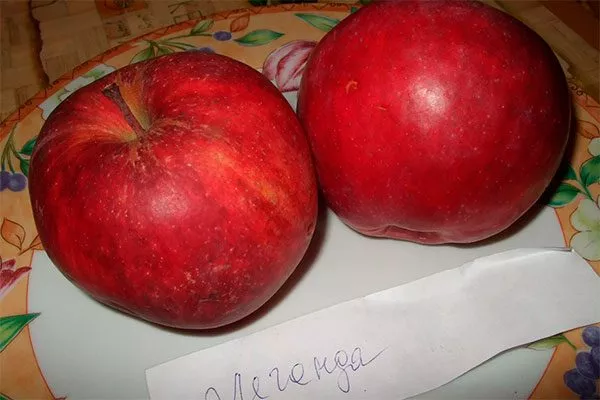
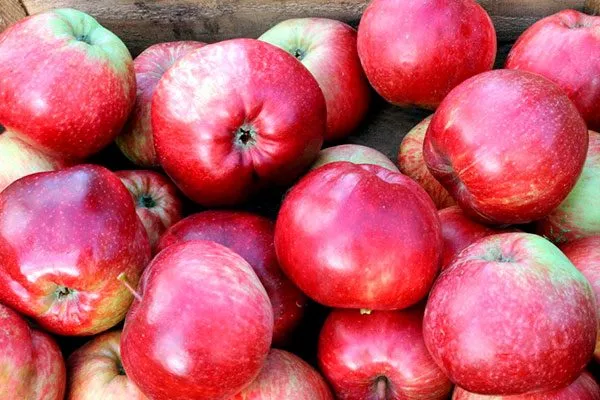
- the surface is smooth, with a rich dark red color that covers almost the entire surface;
- the skin is shiny, but sometimes with a light waxy coating;
- the yellow-green base is visible through the skin, the fruit funnel is deep, and the saucer is medium-sized;
- the shape of the apples is symmetrical, round, sometimes with a slight compression, without any special ribs;
- at a young age, the skin has a green tint, with age it acquires a yellowish color and only then becomes covered with redness over 75-90% of the area;
- The weight of the Legend varies from medium to large, amounting to about 170 g, in some cases reaching 200 and 250 g;
- the flesh of these apples is soft and dense, white with a slight greenish tint and a fine-grained structure;
- The preservation of the Legend is impressive – the fruits can be stored for a long time at low temperatures and in specialized refrigeration chambers, thanks to their strong skin, which allows them to withstand even long transportation;
- the taste of ripe apples with a sweet caramel aroma;
- The Legend's appearance is rated at 4.6 out of 5, while its taste deserves 4.9 (some sources indicate 4.2).
Apples have many valuable properties. They are rich in vitamin C and help protect the body from the negative effects of toxins. Moreover, they stimulate the appetite, making them a key element in dietary dishes.
The chemical composition of these apples per 100 g is as follows:
- P-active substances – 263 mg.
- Ascorbic acid (vitamin C) – 10.2 mg.
- Total sugars (fructose) – 11.4%.
- Titratable acids – 0.4%.
Pollinators of the Legend apple tree
Legenda doesn't require pollinators to bear fruit. However, if farmers create conditions for them to grow alongside varieties that bloom at the same time as Legenda, this will bring them significant benefits. Otherwise, 25 to 50% of Legenda's ovaries will fail to bear fruit, reducing the overall harvest.
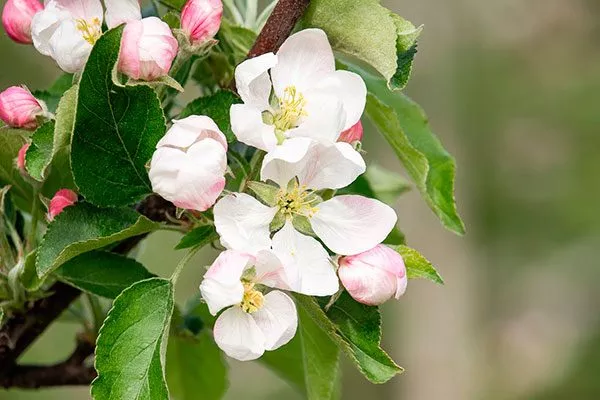
The following varieties can significantly increase yield: Borovinka, Melba, Severny Sinap Ranet, Bratchud, Charovnitsa, Alesya, Girlyanda, Rozhdestvenskoye, Imrus, and Spartan. They should be planted approximately 10-20 meters from Legenda.
Ripening and fruiting of the Legend apple tree
This apple hybrid has deservedly earned the nickname "early fruiting"—under favorable weather conditions, it can bloom in the first year after planting and even produce several fully ripe apples with a bright red hue.
However, experienced gardeners recommend removing all flowers during the first two years to allow the tree to develop, strengthen its roots, and adapt to the new conditions. Therefore, a real harvest can only be expected in the fourth or fifth year after planting.
Other parameters:
- Flowering period. Like most apple trees, the Legenda variety begins to open its flowers around mid-May. If spring arrives late and March frosts linger, budding may be delayed until June. Flowering is short-lived, but under cool and rainy conditions it can last 7-12 days.
- Fruitfulness and growth. The apple tree is characterized by stable fruiting without noticeable interruptions throughout its life, but the exact duration has not yet been definitively established.
Maximum yields can be expected from the ninth to tenth year, when the tree is fully formed and reaches the required height and volume of green mass. - Harvest timing. Apples ripen in September or even early October and hold firmly to the branches, so there's no reason to worry about them falling due to overripeness. However, to ensure best preservation, pick the fruit before frost sets in. Otherwise, all the apples will have to be processed at once.
Productivity
In five years, the apple trees will begin to produce their full harvest. Each Legenda plant is capable of producing at least 100 kg of apples.
Productivity nuances:
- The total yield per hectare can reach an impressive 35 tons. This level can be achieved using standard management methods.
- With careful care, private gardeners and professional planters can expect to yield 180-200 kg from each tree, according to some sources.
Resistance to frost, drought, diseases and insects
The hybrid demonstrates incredible frost resistance. Even young two-year-old plants can withstand temperatures as low as -29°C and withstand cold winds for extended periods.
Other factors of durability:
- The apple tree bears fruit well even in conditions of prolonged dry summers and lack of water. It is adapted to prolonged drought but responds gratefully to irrigation.
- Despite the lack of genetic protection against scab and other fungal diseases such as powdery mildew, Legenda exhibits high resistance to these diseases. If proper tree care is followed, the risk of fungal infections can be completely eliminated.
Storage of the harvest
Fruit should be picked only in cool, windless weather to ensure long-lasting freshness. When picking apples, handle them carefully to avoid damage, so remove them from the tree with the stems still attached.
Safety rules:
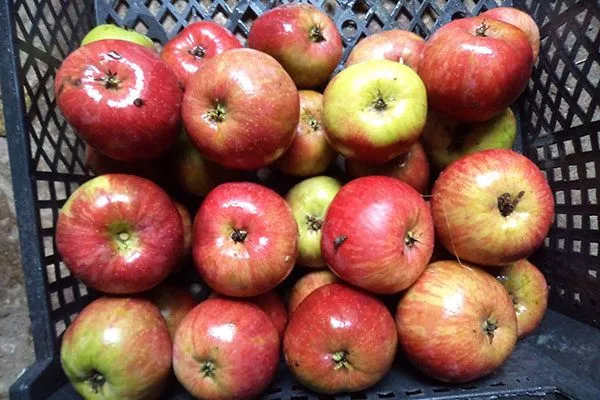
- To store the harvest, use wooden boxes that must be thoroughly cleaned and dried;
- Place sheets of newspaper as the first layer;
- Place apples in several rows, but no more than three, to avoid crushing and damage;
- the ideal place is a cool and dark room with a temperature in the range of +2-5 degrees Celsius and air humidity within 85-95%;
- Check the harvest periodically and remove any spoiled fruits from the general mass.
Apples not only preserve well, but can also be transported over long distances without losing their quality or nutritional value. They retain their freshness and flavor for up to three months.
Rootstocks and subspecies
To grow the Legend apple tree variety, Russian gardeners and summer residents use two main methods:
- Dwarf rootstock. To speed up fruit formation and achieve a more compact tree shape, many choose dwarf rootstock. However, this method has one significant drawback: it can shorten the tree's life cycle.

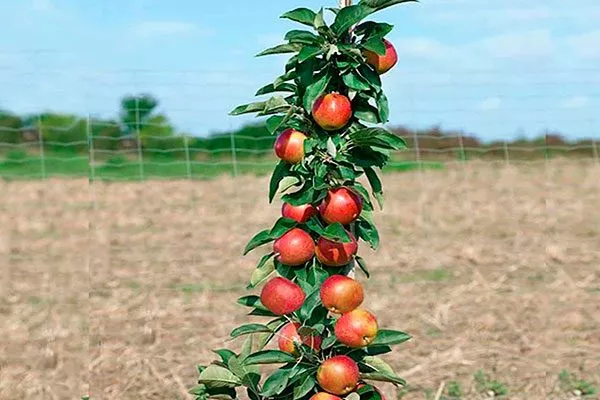
- Columnar crown shape. This technique is preferable for gardeners cultivating this variety on a large scale. Trees grown on columnar rootstocks don't take up much space, making them ideal for limited space. However, keep in mind that maintaining such a crown requires professional skills and experience.
Landing rules
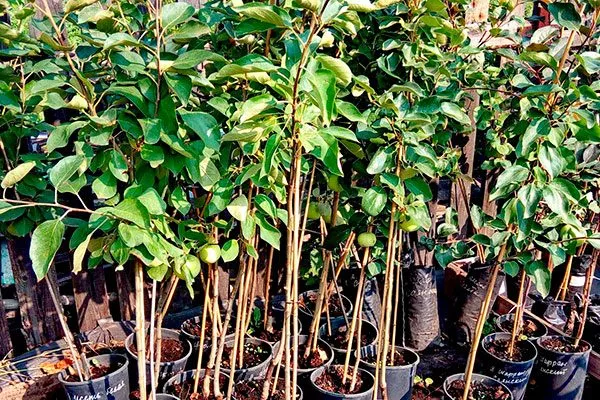
Selecting seedlings for planting should be done carefully: give preference to fresh, healthy trees. Carefully inspect each plant, checking for any damage or defects. Seedlings can be purchased with either open or closed root systems, meaning they come in special containers.
Territory selection criteria
- The best place is considered to be sunny areas with good air circulation;
- if the choice is limited by the slope, eastern or southern directions are preferable;
- A suitable substrate for seedlings is light, breathable loam, sandy loam, floodplain or black soil;
- The soil should not be too dense, so as not to create discomfort for the roots of the young tree.
It's best to begin preparing planting holes in the fall, but if that's not possible, then at least three to four weeks before the planned date. To do this, consider the following:
- Dig holes 75-85 cm deep and 95-105 cm in diameter. Mix the top fertile soil with fertilizer and add it to the bottom, fill with 20 liters of water and leave in the open air.
- The distance between trees varies depending on their size: for columnar and dwarf varieties, 100-150 cm is sufficient, and for larger ones – 300 cm.
- Immediately install a stake into the hole to support the seedling, which is not recommended to be removed during the first three years.
- The root collar should protrude 7-8 cm above the surface to avoid unwanted rooting of the tree above the level of the rootstock.
- Before planting, soak the seedlings in water for several hours to saturate the roots. Be sure to remove any damaged, dry, or rotten root shoots with pruning shears.
- It's crucial to carefully assess the depth of the groundwater table, as this is a key factor. Ideally, it should be at least 200 cm deep to prevent tree roots from reaching it and causing rot.
If this is not possible, create a protective barrier. To do this:- dig a hole 150 to 200 cm deep;
- place a sheet of slate or a layer of roofing felt on the bottom;
- fill to the required height and continue planting according to the standard algorithm.
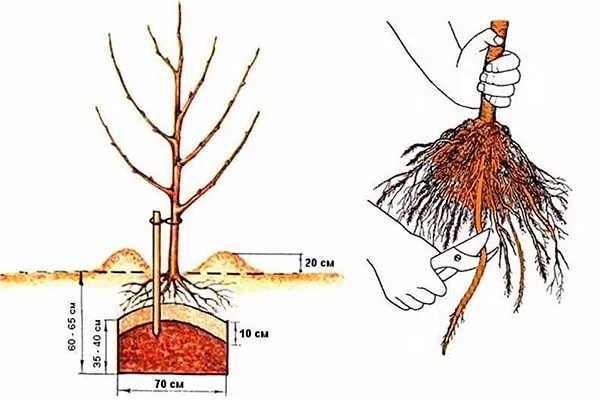
When planting a seedling, you should follow these steps:
- Place the seedling in the center of the hole.
- Gently distribute the roots.
- Cover the roots of the seedling with prepared fertile soil.
- Water the tree and then cover it with a thin layer of soil mixture.
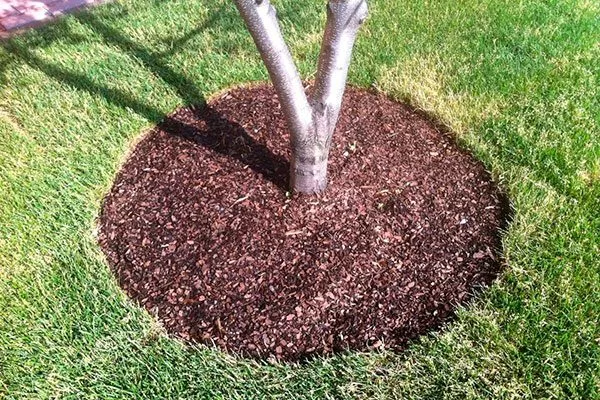
- Mulch the tree trunk circle with organic components - humus, chopped grass or manure.
- Fix the seedling to the stake.
Caring for the Legend apple tree
To achieve excellent growth and abundant harvests from Legenda trees, careful care is essential. The following steps are essential:
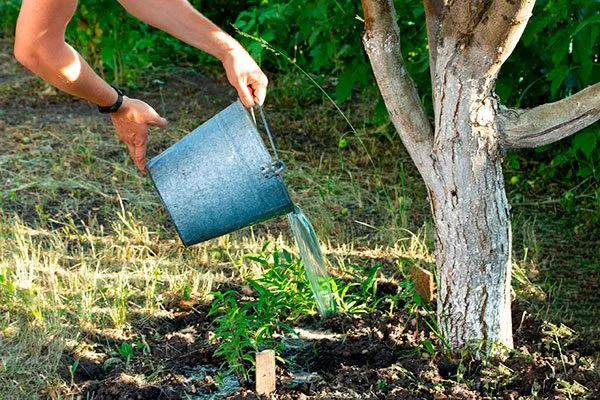
- Watering. If trees are newly planted, they need to be watered regularly. Young seedlings require 20 liters of water per week. Mature trees will require 40 liters of water twice a month. During hot summer days, watering can be increased.
- Top dressing. Annual plants require three fertilizing applications per season. Suitable fertilizers include urea and saltpeter solutions. For older trees, use nitrogen mixtures in the spring and phosphorus-potassium mixtures in the summer. After harvesting, it is recommended to apply only phosphorus fertilizer.
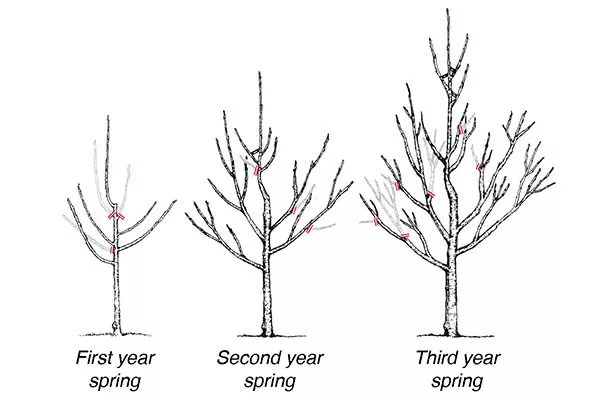
- Pruning and crown shaping. Pruning can be done as early as a year after planting, removing a third of all shoots. This will create a three-tiered crown structure, ensuring a specific growth pattern. Perform sanitary pruning once a season—before the sap begins to flow, remembering to remove old and diseased branches.
- Insulation. Although the Legenda variety tolerates frost well, in northern regions it is still recommended to insulate the trees before the winter months. To do this, remove some of the old bark from the trunk and then treat it with clay, lime, or copper sulfate.
The tree trunk can be covered with roofing felt, and spruce branches can be laid around the trunk to keep snow out. - Caring for the tree trunk circle. Equally important is caring for the area around the tree. To do this, remove weeds and loosen the soil to improve aeration.
Pest and disease control
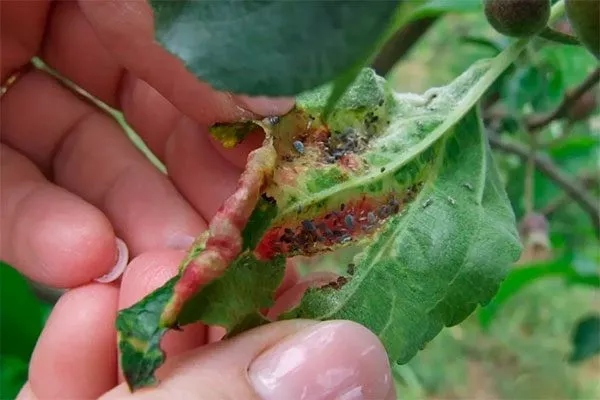
The Legend apple tree is disease-resistant, but even a hybrid isn't immune to problems like powdery mildew, cytosporosis, and scab. It's also susceptible to insects such as codling moths, leaf rollers, aphids, blossom beetles, and hawthorn moths.
To minimize risks, it's important to regularly treat and whitewash the tree trunk. To prevent fungal diseases, several sprayings are recommended in the fall, after fruit harvest, and in the spring. Fungicides such as Bordeaux mixture, Fundazol, Ordan, Skor, Tattu, and others can be used.
As for insects, insecticides such as Fitoverm, Decis, Match, Vertimek, Biotlin, and others are used to kill them. Treatments are applied in the evening, when the weather is dry and windless.
Pros and cons
The advantages of this variety significantly outweigh its disadvantages, which explains its popularity among a large number of gardeners.
Reviews
Legend is an early-winter or late-season apple variety that is just beginning to gain market share in our country. This hybrid is characterized by its resistance to low temperatures, drought, and heat, produces fruit quickly, and boasts decent productivity. This variety is recommended for growing in small garden plots and in intensive commercial orchards.