
The Cinnamon Striped apple is a winter-hardy and productive apple tree that adapts well to a variety of climates. Its fruits have excellent flavor and attractive appearance, making it a versatile variety for both fresh and processed consumption. These apples have excellent shelf life and can be transported over long distances without losing their appearance.
History of selection
The variety was developed in the early 19th century, presumably through open pollination. Between 1941 and 1947, it underwent official testing and was included in the State Register of the Russian Federation.
The crop is recommended for cultivation in the following regions of Russia:
- Northern;
- Northwestern;
- Central Black Earth.
The variety is successfully cultivated in the Central Federal District and the Middle Volga region. Breeders are currently actively using it to develop new apple varieties.
Description and characteristics
This variety has long been popular with domestic gardeners and is widely grown in various regions of Russia. Its popularity is due to its low maintenance requirements and the excellent taste of its fruits.
The appearance of the tree
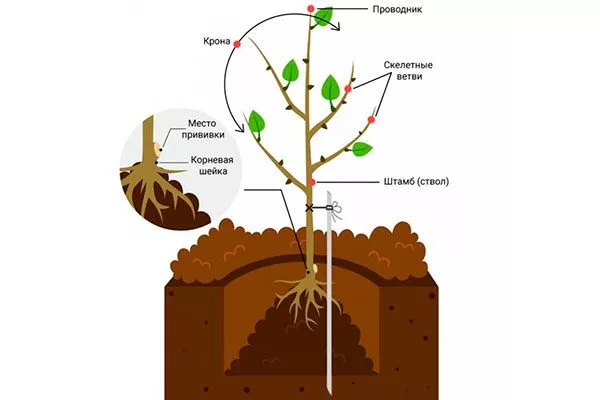
The Cinnamon Striped apple tree can have either a standard or tall form, determined by the rootstock used. In its natural habitat, the tree grows up to 10 meters, while on a dwarf rootstock, its height typically does not exceed 5 meters.
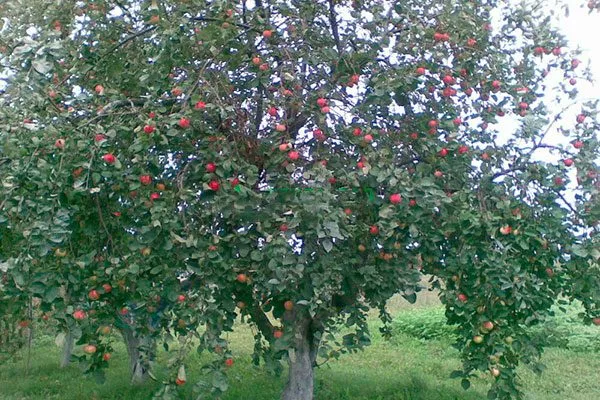
Distinctive features and characteristics:
- crown – broadly pyramidal, broom-shaped or broadly rounded, with characteristically drooping branches;
- skeletal branches – they extend from the trunk at an acute angle and are covered with reddish-brown bark; the growth of new shoots is small;
- foliage – weak: most of the leaves are concentrated at the tops, the lower parts of the branches remain bare;
- leaves - elongated, with a sharp, elongated tip, grayish-green or light green, slightly pubescent, with serrated edges;
- petioles – short, stipules have a lanceolate or awl-shaped form;
- vegetative buds – small, covered with soft villi.
Description of fruits
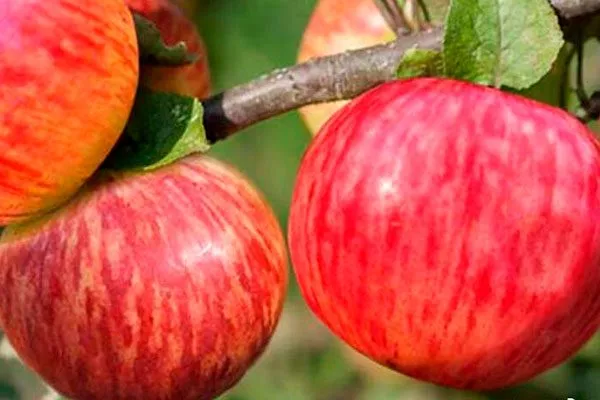
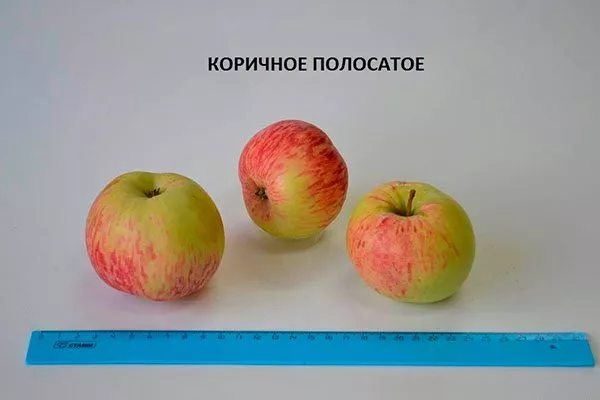
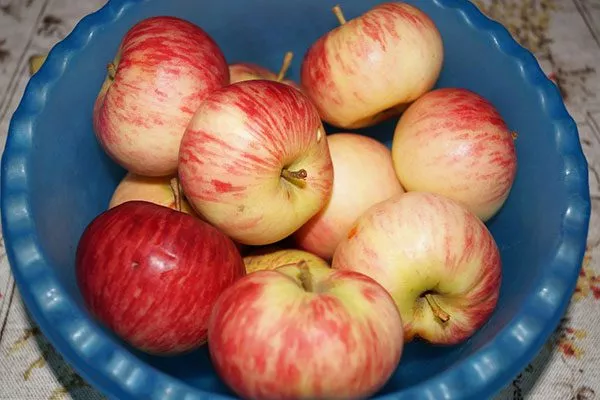
Ripe apples are of medium size – the weight of one varies from 70 to 90 g. Other characteristics of the fruit:
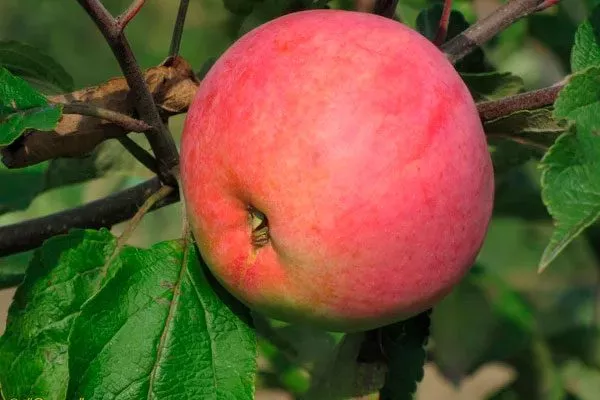
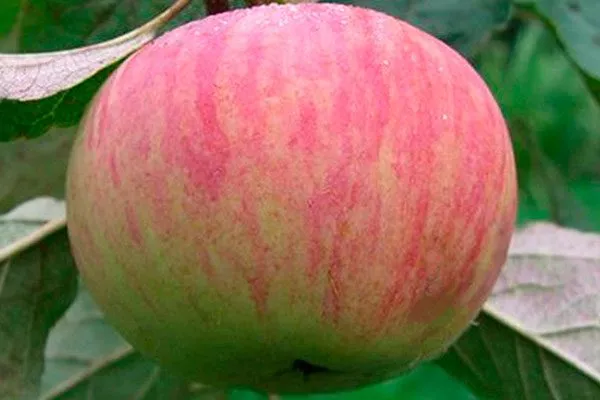
- form - flat-round;
- skin – thin and shiny;
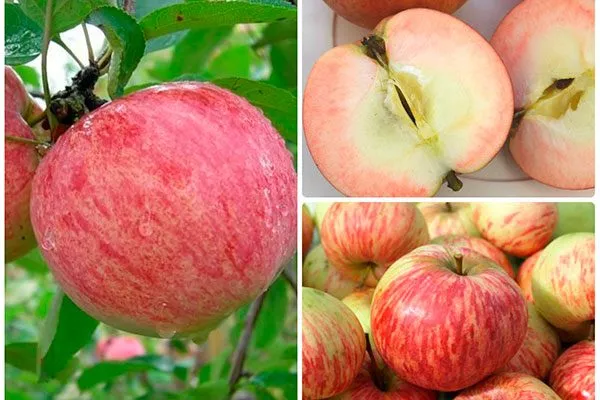
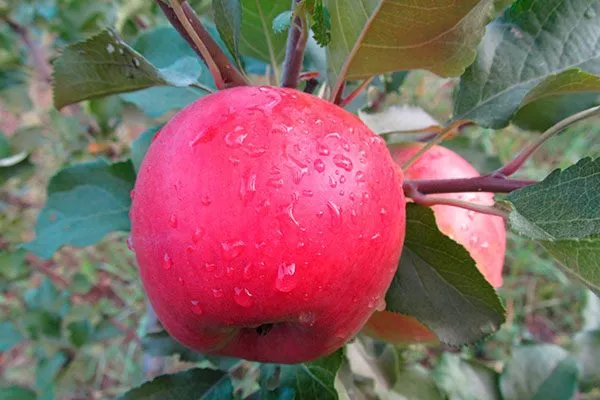
- main color – yellow, covered with dark red stripes and specks on the sunny side, in the phase of technical maturity they acquire a yellowish-green hue, and by the time of full ripening - a reddish blush;
- subcutaneous points – white, inconspicuous;
- peduncle – long and holds the apple firmly on the branch;
- pulp – juicy, tender, white-yellow, with a slight pinkish tint under the skin;
- taste - dessert, sweet and sour, with a characteristic spicy hint of cinnamon.
The tasting panel awarded the variety 4.8 points out of a possible 5. The apples' chemical composition includes:
- sugar – 10%;
- titratable acids – 0.54%;
- ascorbic acid – 4.9 mg/100 g;
- P-active substances – 131 mg/100 g;
- pectin – 9.5%.
Apples are suitable for fresh consumption, store well in cool conditions, and are used in home cooking – for compotes, desserts, baked goods, and winter preserves.
Flowering, fruiting
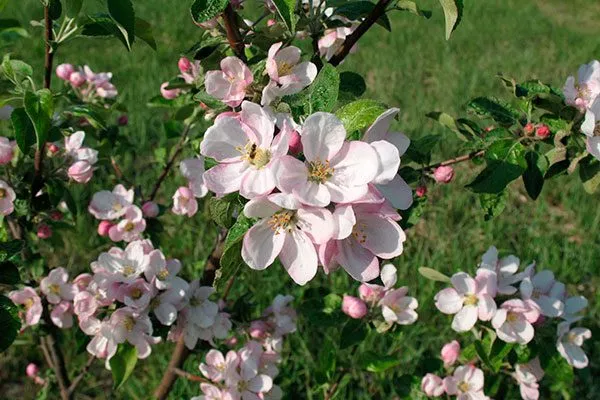
The Cinnamon Striped apple tree blooms in mid- to late May—the exact timing depends on the region's climate. The variety produces medium-sized, white-pink flowers with five petals. During this period, the plant exudes a rich, pleasant aroma that effectively attracts pollinating insects.
The variety is characterized by a mixed type of fruit ripening: the ovary is formed on all types of generative organs – rings, fruit twigs and on the tops of shoots from the previous year.
Self-fertility, pollinators
The plant is self-sterile, so it requires "neighbors" to produce fruit normally. The best varieties for cross-pollination are considered to be Grushovka Moskovskaya and Papirovka.
Plant pollinator trees no more than 5 m away from the Cinnamon Striped apple tree – this will ensure effective results and stable fruit set.
Ripening and storage periods, yield
This crop is an early autumn variety. Ripening begins in late August to early September, when the fruits reach technical maturity and are ready for harvesting.
This variety isn't known for its early fruiting—the first apples appear only seven years after planting. Moreover, the yield during the first year is modest. Gradually, productivity increases, and by the tenth year, the tree can produce up to 150 kg per season.
Winter hardiness, frost resistance, drought resistance
The tree can withstand temperatures down to -37°C. This tolerance makes it suitable for cultivation in cold regions, including Siberia. The variety tolerates recurrent spring frosts well, even during the budbreak phase, making it a reliable choice for regions with unstable climates.
The Cinnamon Striped variety shows satisfactory tolerance to short-term drought, but regular watering is essential for a stable harvest, especially during dry periods. Moisture is crucial during the period of active fruit growth; a lack of moisture can cause the apples to become smaller and the ovaries to fall off.
Resistance to diseases and pests
The variety has moderate resistance to scab and other fungal diseases. However, the tree is vulnerable to the following diseases:
- fruit rot;
- black crayfish;
- downy mildew.
The most dangerous pests are bud-damaging insects, particularly the apple blossom beetle and weevil. Preventative insecticide treatments during the larval stage can help prevent damage.
How to plant a Cinnamon Striped apple tree?
Although the plant is considered relatively easy to grow, experienced gardeners advise choosing seedlings grown in the same region where they are planned for planting. Planting material brought from warmer climates may be less resilient to local winter conditions and may not survive the cold well.
Time and place for landing
It's recommended to plant the Cinnamon Striped apple tree in spring or fall. In colder regions, it's best to plant the trees early in the growing season to allow them to develop a full root system before winter.
Basic rules:
- A sunny location is ideal for this variety. Planting the apple tree in the shade will impact yield and also reduce the fruit's flavor, making it less sweet.
- The soil should be sandy or loamy with a pH of 5.7-6. Sandy soils are also suitable for planting, but regular watering and timely fertilizing are essential.
- This variety does not tolerate low-lying areas with high groundwater levels. The ideal planting depth is 2-2.5 m; otherwise, seedlings should be planted on a mound with adequate drainage.
Preparatory work before planting
First, dig a hole the size of which corresponds to the volume of the seedling's root system. In sandy areas, the optimal hole size is 100x100 cm, as it will contain a significant amount of nutritious soil.
To create a fertile soil mixture, use 4 kg of vermicompost (or compost). This will help warm the roots during the first few years and provide the tree with the necessary nutrition.
Technology of planting seedlings
Proper cultivation gives the apple tree a good start and promotes long-term fruiting. Follow these step-by-step instructions to provide the best conditions for growth and adaptation:
- Place the tree in the center of the prepared hole.
- Carefully straighten the roots, avoiding bending or damaging them.
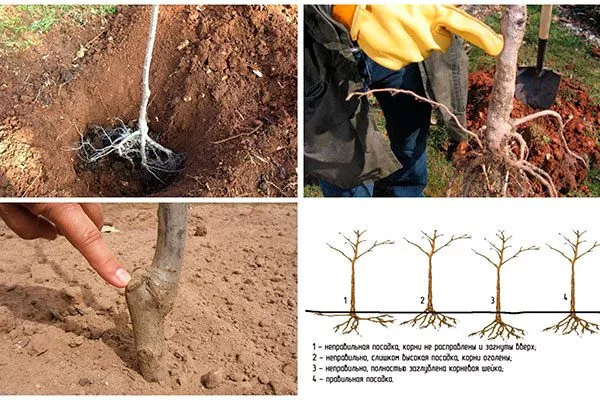
- Fill the hole with nutrient mixture, starting from the mound, so that the root collar is at ground level.
- Cover the roots with soil, distributing it evenly and compacting it gently around the trunk to avoid air pockets.
Generously moisten the tree trunk circle with water – 10-12 liters. Form a small ridge around the trunk to retain moisture.
Care
Caring for the Cinnamon Striped apple tree doesn't require much effort, but it significantly improves the tree's development. It's important to follow standard agricultural practices.
Watering
The plant requires regular watering. The recommended amount is 20 liters, every 7-10 days. During the hot summer months, especially on sandy soils, water more frequently. Water twice a day: 10 liters in the morning and 10 liters in the evening.
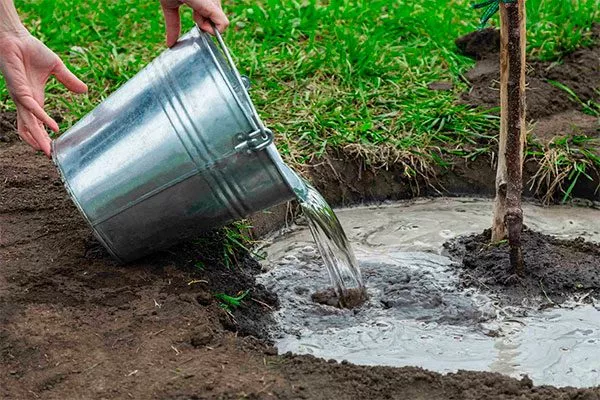
Keep the crop hydrated until early August, or until mid- or late August if the weather is dry. Insufficient moisture can reduce yield, which will be especially noticeable next season.
Top dressing
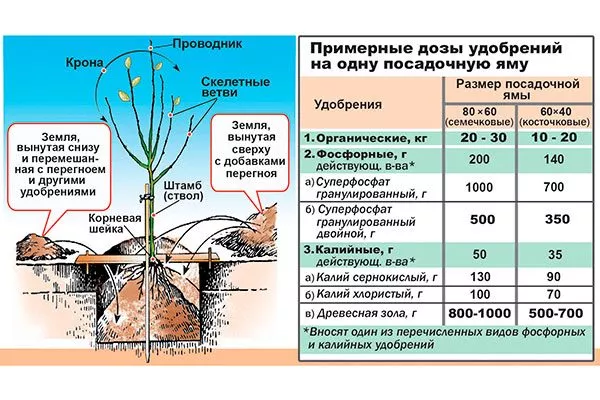
Fertilize in the spring to ensure good apple tree productivity. Use organic matter, such as horse manure and vermicompost (8-10 kg per square meter), and complex fertilizers, such as nitroammophoska (35 g) and urea (500 g).
Nitrogen fertilizers promote shoot growth and root development in apple trees. In the fall, use phosphorus and potassium solutions, excluding nitrogen. These elements help the tree prepare for winter.
Pruning and shaping
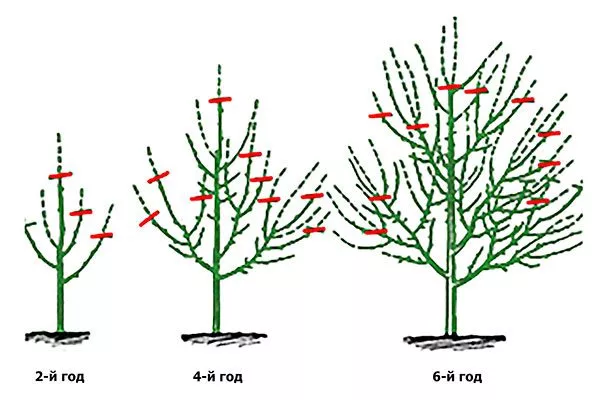
Removing excess shoots and properly structuring the crown helps to increase productivity, increase the size of the fruit, and improve its taste.
Follow these recommendations:
- For young trees, prune in the spring, shortening shoots by 1/3 of their length. Do this before the buds begin to swell, around April in the temperate zone. Pay special attention to branches hanging down to the ground.
- Be sure to prune suckers—those shoots growing vertically on the trunk or skeletal branches. They don't bear fruit and rob the tree of its nutrients. Cut them back to the ring.
- Thin out the crown, leaving large, upright specimens to improve light and air circulation.
Pest and disease control
The Cinnamon Striped apple tree has average disease resistance, so it sometimes has to contend with fungal infections and pests. Although rare, the tree can be attacked by parasites. It's important to address these issues promptly.
Main problems:
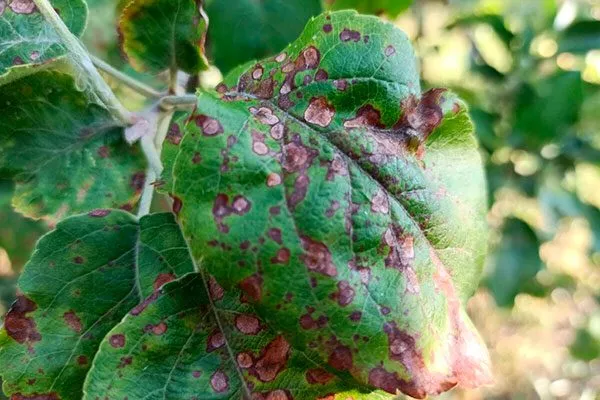
- Scab. A fungal infection that manifests as black spots on leaves and fruit. For treatment, use fungicides such as Fitosporin, Skor, or Topaz.

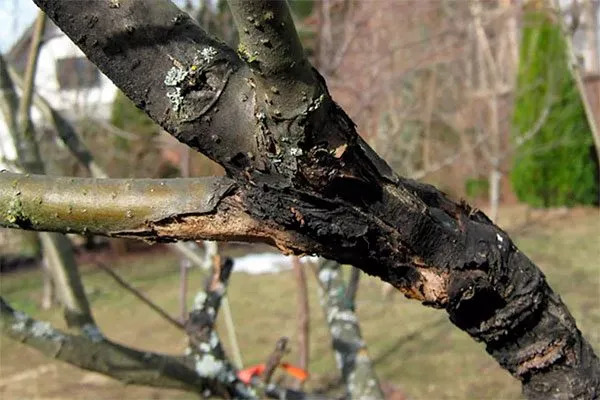
- Black crayfish. The progression of the disease can be recognized by the coal-black lesions that gradually enlarge on the trunk and shoots. To effectively combat the disease, it is important to remove the affected areas early and disinfect the fresh wounds with Horus, Skor, or Bordeaux mixture.
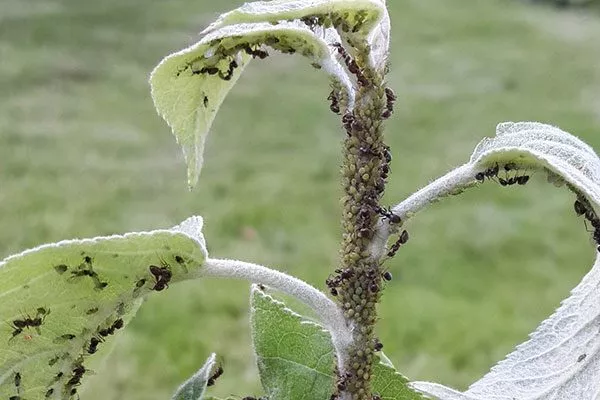
- Aphid. A small insect that feeds on the sap of leaves and shoots, it usually lives on the underside of leaves. Treating the crown and trunk with insecticides such as Aktara, Fufanon, or Bi-58 will help.
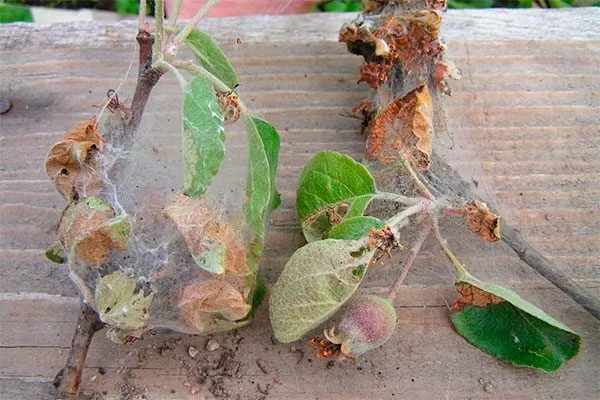
- Apple moth. The larvae of this butterfly begin to feed on leaves and young shoots immediately after hatching. Treat the trees with Nitrofen or Zolon.
Harvesting and storage
Pick apples when they're technically ripe and let them ripen. They'll reach full maturity in a few weeks. Choose a dry, well-ventilated area.
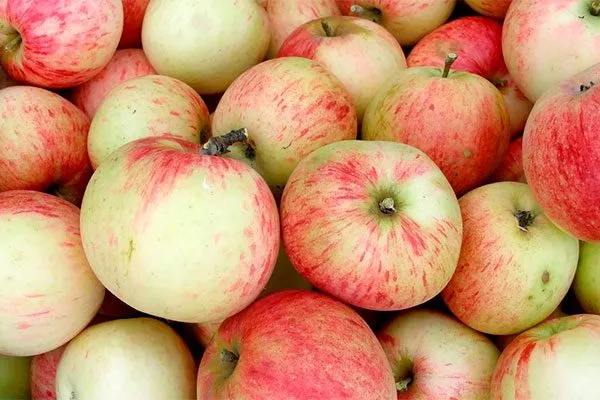
Store in wooden or cardboard boxes – fruit will stay fresh and marketable for up to three months. Fruit that has fallen to the ground will deteriorate much faster and therefore require immediate processing.
Varieties of the Cinnamon apple tree
There are several variations of this variety. Brief characteristics of the crop are provided below:
- New. Developed by crossing Cinnamon Striped and Welsh. It surpasses Cinnamon Striped in both fruit size and shelf life. This is a late-season variety, with fruits ripening in late September.
The tree has a broom-shaped crown when young, which later becomes rounded. The apples are large, with a sweet and sour flavor and dessert-like flesh. It has good resistance to scab and other diseases, but it is slow to produce fruit and does not bear fruit every year.
- Pineapple. This ancient Russian variety can be found in gardens in the northern and central regions of the country. Its fruits are well-suited for transportation. This late-summer variety ripens in late August and can remain on the branches for up to a month, becoming mealy when overripe.
The tree is vigorous, with a crown similar to the Cinnamon Striped: young plants have a broadly pyramidal shape, which later becomes rounded with branches hanging down. The fruits are medium-sized, flat-spherical, with firm yellow-white flesh. The flavor is sweet and sour with a spicy cinnamon note.
- Smoky. This variety differs only in the appearance of the apples: the red stripes merge into a blush, and a bluish coating forms on the surface.
Pros and cons
Reviews
The Cinnamon Striped apple tree is prized by both experienced gardeners and novices. It boasts a strong immune system, good productivity, and many other positive qualities. With proper care and regular fertilizing, it will become a true gem in your garden and provide a steady harvest of delicious apples.