
Dwarf apple trees are a real find for summer cottages and garden plots. These low-growing trees take up very little space, are easy to maintain, and still delight their owners with bountiful harvests.
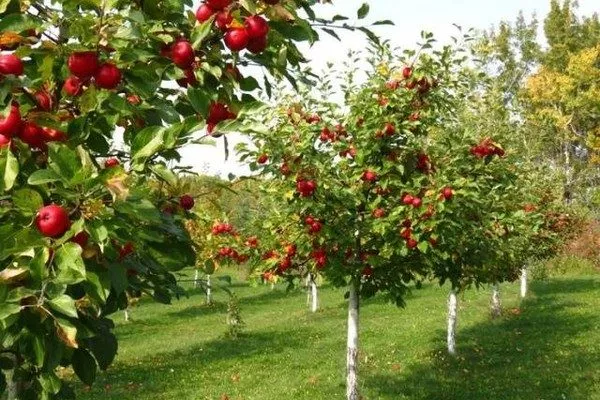
Characteristics of dwarf apple trees
These are low-growing trees, reaching a height of 2-2.5 m. Dwarf trees come in various varieties, but are not considered a separate botanical species.
Thus, the same variety can grow as a tall tree or as a dwarf one. Small apple trees not only save space but also time—they begin bearing fruit in the second or third year after planting. On average, a dwarf apple tree lives 25-30 years.
Pros and cons
Low-growing apple trees grown on dwarf rootstocks, along with their advantages, also have a number of disadvantages that must be taken into account when planting such trees.
Landing
When planting dwarf apple trees, it's important to consider the characteristics of low-growing apple trees. The trees' subsequent development and fruiting duration will depend on the planting method.
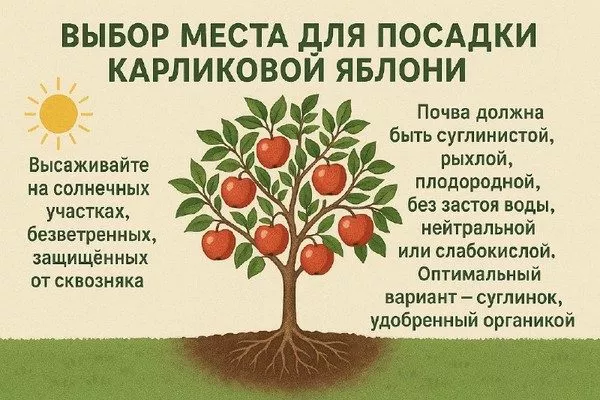
Choosing a location
It's important to remember that the roots of small apple trees are very close to the surface. They cannot extract water and nutrients from deeper soil layers.
Site requirements:
- lots of light;
- absence of gusty winds;
- groundwater - up to 1.5 m;
- For planting, it is better to choose slopes on the eastern and south-eastern sides of the site;
- intervals to outbuildings or other trees - from 3 m.
Soggy or marshy soils are not suitable for planting. If the site is located in a low-lying area, a mound of earth can be built where the apple trees will be planted. Once the mound has settled naturally, a hole can be dug in it for planting.
Shaded areas are also unsuitable. A lack of light negatively impacts tree development and reduces their yield. If partial shade is unavoidable, it's important to create conditions for the trees to receive more light during the fruiting period.
Soil preparation
For dwarfs to grow quickly, they require loose, fertile soil. Light to medium loams are ideal. They should be neutral (pH 5.6-6) or slightly acidic (pH 5.1-5.5).
It's recommended to add sand to clay soil, and slaked lime to overly acidic soil. Prepare the holes two weeks before planting. If planting is planned for spring, the holes can be dug in the fall.
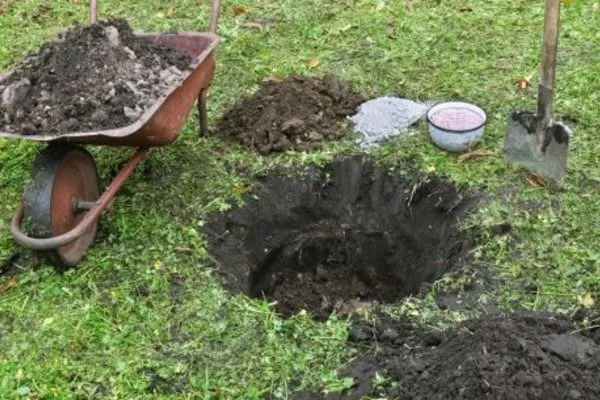
Preparing the planting hole:
- The width of the pit is 60-70 cm, the depth is 70 cm.
- The distance between the holes is from 2 to 3 m.
- The topsoil obtained from digging the hole is then used to prepare a nutritious soil mixture. Humus/compost, rotted manure, peat, and wood ash are added to it.
- A drainage layer of broken brick, pebbles, crushed stone, etc. is placed at the bottom of the planting hole. The layer thickness is 10-12 cm. The prepared mixture is poured on top.
When to plant?
Apple trees are planted in early spring, before the buds open, or in the fall, after the leaves have fallen. Closed-root seedlings can be planted at any time, even in summer.
The exact timing of planting apple trees on dwarf rootstocks depends on the region and its climate:
- Northern regionsDwarfs are planted from late April to mid-May. Spring planting is preferable, as young seedlings have a hard time surviving the harsh winter once they've established roots.
- Middle zonePlanting is suitable in spring and autumn, but the former option is more attractive, as winters here are harsh, with temperature fluctuations and cold winds.
- South. Autumn planting is preferable here. Approximate dates are from the first ten days of September to the end of October.
In spring, apple trees are planted when the outside temperature reaches above zero. The soil should be completely thawed and warmed. In autumn, trees should be planted a month before the onset of persistent cold weather. Daytime temperatures should be between 10 and 15°C, and nighttime temperatures between 3 and 5°C.
Step-by-step landing
Planting should be done when there is no wind or sun. It is advisable to protect young trees from scorching UV rays.
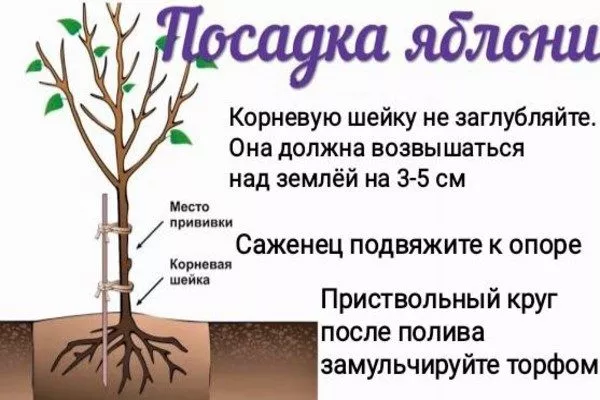
Planting dwarf apple trees:
- A small mound of nutrient-rich soil is poured into the hole. This is necessary to ensure the roots are properly positioned when planting. Avoid allowing them to bend upward or sideways.
- A support - a wooden peg - is installed in the center of the hole.
- The seedling is placed in a hole on top of a mound of earth.
- The seedling's roots and the empty space in the planting hole are filled with soil, which is periodically compacted. The seedling itself is shaken occasionally to prevent air pockets from forming between the roots.
- After planting, the root collar should be 3 cm above ground level.
- A tree ring is formed around the apple tree trunk. The height of the ring around the perimeter is approximately 15 cm. The tree is then watered with warm, settled water—25-30 liters is required. Once the water has soaked in, the soil is covered with mulch, and the tree is tied to a stake.
The roots of apple trees should not come into contact with the soil mixture - fertilizers can burn the root system.
Care
To ensure healthy growth and fruit production, dwarf apple trees require regular care. If they aren't watered, fertilized, or sprayed regularly, they won't produce a good harvest.
Watering
The frequency and amount of watering depend on the apple tree's development stage and age. When watering, consider the shallow root system—dwarf apple trees suffer from moisture stress more quickly than larger ones.
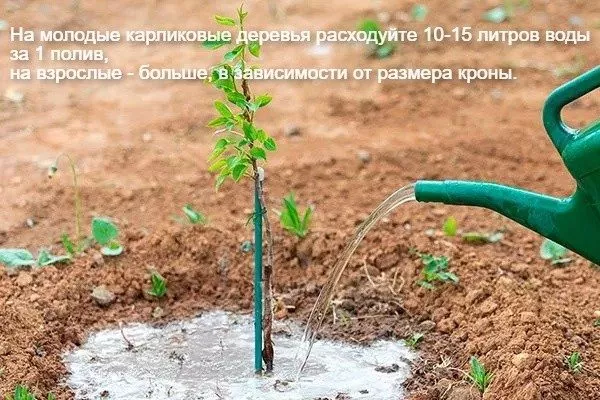
Watering:
- The trees are watered three times a year—50 liters per tree. The final watering occurs in August.
- Fruit-bearing apple trees are watered 3-5 times a year—before and during flowering, before the buds fall (in June), and until fruiting. The amount of water used depends on the soil. On sandy loam soils, one tree requires 40 liters of water, while on loamy soils, 60 liters.
- During dry seasons, pre-winter watering is performed, ensuring the soil is moistened to a depth of 0.5-1 m. The recommended water rate is 10-12 liters per square meter. If the area has a high groundwater level, recharge irrigation is not necessary.
Drip irrigation is ideal for watering dwarf plants—it allows for careful use of water and even distribution. During hot and dry weather, foliar spraying can be added to drip irrigation to create a humid microclimate.
Top dressing
Dwarf trees have few roots, but they produce abundant fruit. Fertilizing is necessary throughout the season, except in winter.
Features of fertilizing dwarf apple trees:
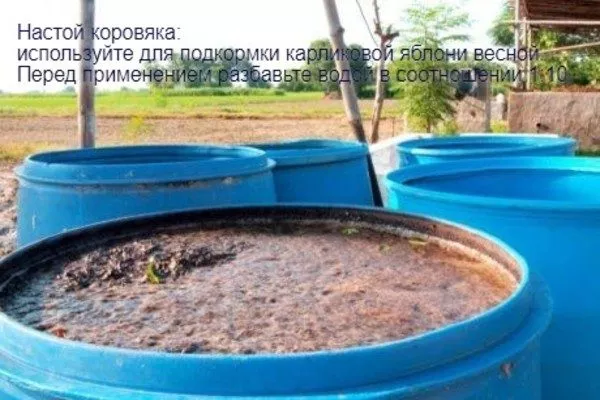
- In the springDuring the sap flow and bud swelling stages, nitrogen and complex fertilizers are applied. For example, urea or saltpeter (30-40 g per 10 liters of water) are suitable. It is also recommended to apply a diluted mullein infusion (1:10) or chicken manure (1:20) twice per season at a rate of 10 liters of solution per tree.
- In summerDuring this period, foliar feeding is recommended, using foliar sprays. Treatment should be carried out in dry, windless weather. The best time for spraying is early morning or late evening. The last foliar feeding should be carried out in September. Suitable fertilizers for foliar feeding:
- Potassium monophosphate - 5 g per 10 liters of water.
- Potassium/magnesium sulfate - 10-15 g per 10 l of water.
- Wood ash solution: 400-500 ml per 10 liters of hot water. Infuse for 2 days and strain.
- Boric acid - 2-3 g (0.5 tsp) per 10 liters of water, dilute with hot water, and then add cold water to the required volume.
- In the fallAt this time, fertilizers should not contain nitrogen, as it stimulates new shoot growth, delaying the trees' preparation for winter. At this stage, apple trees require potassium and phosphorus. For example, you can apply double superphosphate at a rate of 2 tablespoons per 10 liters of water. The fertilizer is applied to the roots.
Loosening
Regularly loosen the soil around the tree trunks to allow oxygen to reach the roots. The recommended loosening depth after watering is 5-7 cm. At the same time, remove any growing weeds—they not only absorb nutrients intended for the apple trees but can also attract insect pests.
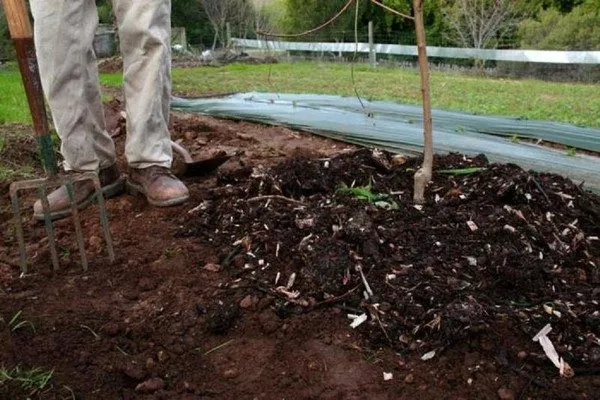
Loosen the soil with a rake. After loosening, it's advisable to mulch the soil with straw, peat, humus, grass clippings, etc. Apply a 7-8 cm layer. Mulch retains moisture in the soil, prevents weed growth, and reduces the need for loosening, watering, and weeding.
In August, soil loosening is stopped to prevent shoots from becoming overgrown and to ensure proper woodiness for winter. In the fall, the soil around the tree trunks is cleared of plant debris and loosened again to prevent insect pests from overwintering.
Trimming
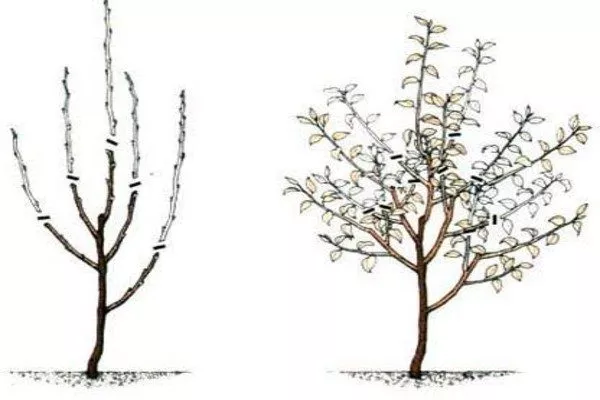
Dwarf apple trees are pruned annually—in early spring or late fall, starting in their second year. Pruning these trees requires a special approach due to their growth habits and compact size. The intensity of pruning depends on the tree's age. On young trees, no more than 15-20% of shoots are removed, while on mature trees, up to 30% is removed.
Features of pruning:
- SanitaryRemove all damaged, diseased, dry, broken, competing, improperly growing, pest-damaged, or diseased branches, and in the spring, any branches that have frozen over the winter.
- Formative. Young apple trees have their tops and side shoots removed to shape the crown. In the first spring after planting, the tree is pruned to 50 cm. By the end of the season, the apple tree should have formed 4 to 5 strong shoots. The topmost shoot (the future conductor) grows almost vertically.
To ensure the crown maintains its shape and does not become too dense, the tree is regularly pruned in subsequent years, removing all vertical and crossing shoots.
Diseases
Dwarf apple trees are susceptible to the same diseases as regular trees. To prevent infections, before bud swelling and after leaf fall, apple trees are sprayed with Bordeaux mixture and fungicides, either chemical or biological.
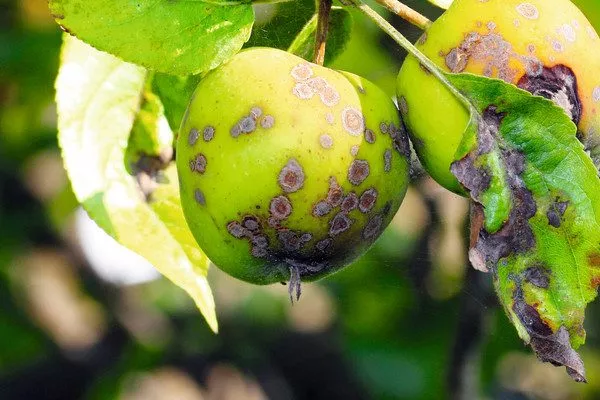
Most often, "dwarfs" are affected by:
- Scab. It is controlled using systemic medications, such as spraying apple trees with Skor, Horus, and other insecticides. Treatment is carried out when signs of the disease appear and repeated after 10-12 days. Biological preparations such as Fitosporin-M, Gamair, and Alirin-B can also be used for treatment; they effectively suppress the scab pathogen.
- Powdery mildew. If the characteristic plaque appears, trees are treated with systemic fungicides. Suitable products include Topaz, Skor, and Rayok.
- Rust. This fungal disease often occurs when the canopy becomes dense and agricultural practices are poor. Trees are treated with Bordeaux mixture as a preventative measure and Strobi and Topaz as a treatment.
Read more about the diseases that affect dwarf apple trees and how to treat them. Here.
Pests
The most dangerous insect pests for dwarf apple trees are aphids, leaf rollers, and codling moths. A range of protective measures are used to combat these pests, including installing trapping belts on the trunks and spraying the trees with insecticides. Dwarf apple trees can also be attacked by spider mites, scale insects, and the apple blossom beetle.
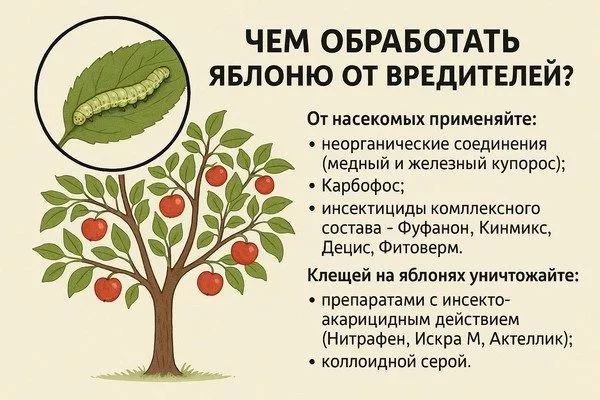
How to spray apple trees:
- Chemical preparations. In the spring, before bud break, apple trees are treated with mineral oil-based products (Profilaktin or Preparat 30+) to kill overwintered pest eggs. Insecticides such as Confidor, Decis, and Iskra are also used for pest control.
- Biological drugs. After flowering, the crown is sprayed with Fitoverm, Akarin, etc. These products, unlike chemical ones, do not harm bees and other pollinating insects.
- Folk remedies. Trees can be treated for prevention:
- Soap solution. Dissolve 200–300 g of laundry, tar, or green soap in 10 liters of water, and use the resulting solution for spraying.
- Ash infusion. Add 300 g of wood ash to 10 liters of hot water, let it steep for 24 hours, strain, and add a little soap to help the solution adhere to the leaves.
- Garlic infusion. 200 g of crushed garlic is poured into 10 liters of water, infused for 24 hours, strained, and sprayed.
- Onion peel infusion. 200 g of peel is steeped in 10 liters of hot water for 5 days, strained, and sprayed.
Varieties
In addition to apple trees on dwarf rootstocks, there are also natural “dwarfs” - varieties in which trees on regular (non-dwarf) rootstocks do not exceed 3 m.
Brotherchud
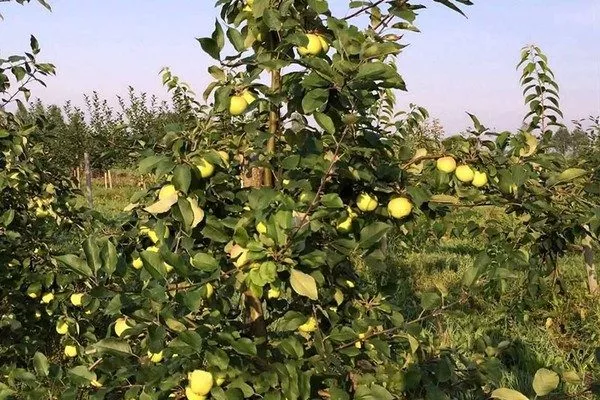
This variety is distinguished by its exceptional hardiness and frost resistance. This natural "dwarf" with a flattened, rounded crown (up to 3 m in diameter) was added to the State Register in 2002.
The fruits are medium-sized, weighing 140-160 g. The tree height is 1.5-2 m. The fruit is primarily greenish-yellow in color. As they ripen, a crimson blush appears on the sides.
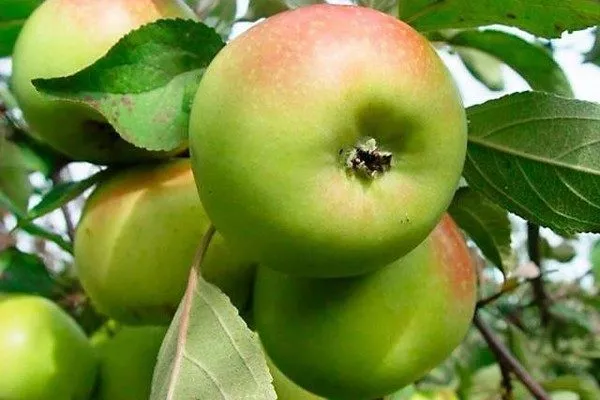
The fruit's skin is glossy, and the flesh is white, coarse-grained, and medium juicy. The flavor is pleasant, sweet and sour. The yield is 120-150 kg per tree. The tree begins bearing fruit in the third or fourth year after planting.
Zhigulevskoye
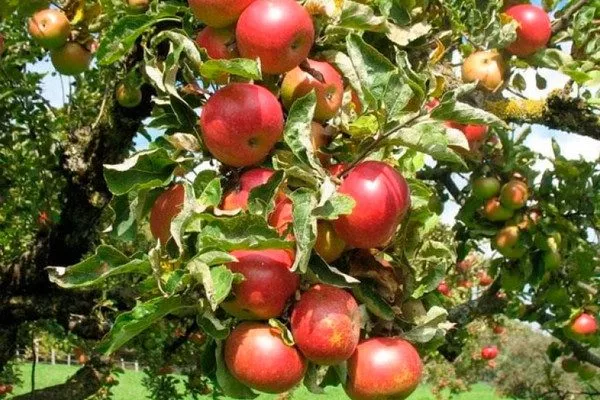
This non-self-fertile variety requires cross-pollination. It ripens early and late in the fall. The tree height is 2-2.5 m. It begins bearing fruit in the fourth or fifth year after planting. Its yield is 40-50 kg of apples per tree.
The apples are coral-red, sweet and sour. Each fruit weighs 120-200 g, with some specimens reaching 350 g. The skin is glossy and oily, and the flesh is tender, juicy, and coarse-grained. These apples store well, for up to six months.
Candy
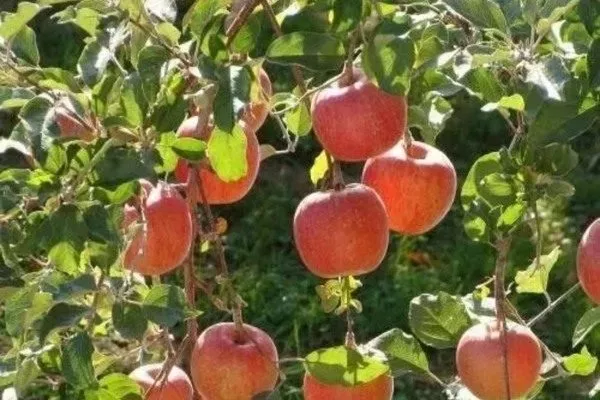
An early summer variety, it is partially self-fertile. For pollination, you can use varieties such as "Melba," "Papirovka," and "Slava Pobeditelyam." Fruiting begins 3-4 years after planting. The tree grows to a height of 2-3 m.
A single tree yields up to 25 kg of apples. The fruits are sweet and very tasty. They are yellow, with a red or dark orange blush. The flesh is juicy and firm, with a honey aroma. Each fruit weighs 120-130 g, with some specimens weighing up to 200 g.
Carpet
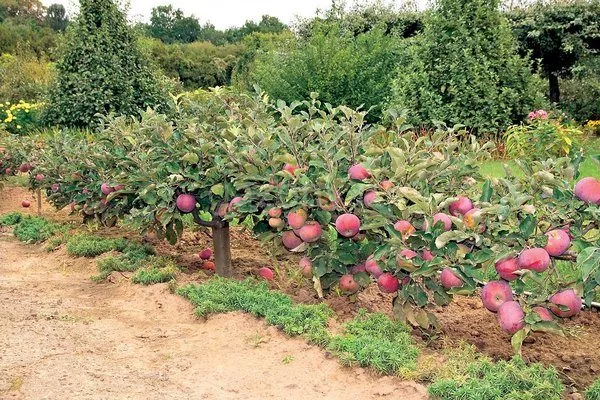
This summer variety is self-sterile, so it requires pollinators. The fruits ripen in August-September. Suitable pollinators include the varieties "Podsnezhnik," "Prizemlyonnoye," and "Sokolovskoye." The variety begins bearing fruit in the third or fourth year after planting.
The apples are greenish-yellow, flattened and round, with a red blush. The flesh is creamy, slightly juicy, and coarse-grained. Each fruit weighs 150-170 g. The flavor is pleasant, sweet and sour. Up to 60 kg of fruit can be harvested from a single tree. The variety is frost-resistant and virtually immune to scab. The fruit can be stored for up to two months.
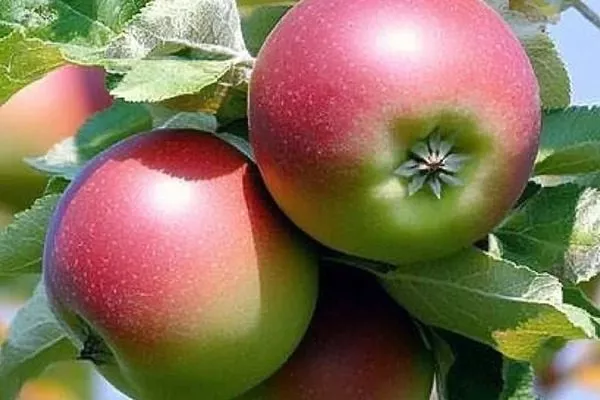
Legend
A self-sterile variety with early winter ripening and high yields—up to 100 kg per tree. The tree begins bearing fruit as early as 2-3 years after planting. The apple tree grows to 2-3 m tall. Its crown is spherical, with compactly arranged shoots.
The variety was obtained by crossing the Fuji and Brusnichnoe apple trees.
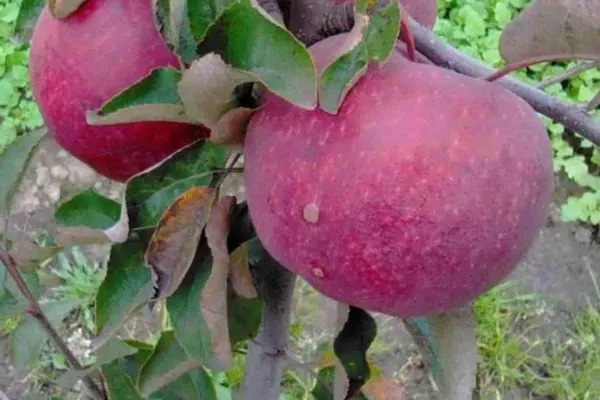
The fruits are gently ribbed, large, and truncated cone-shaped. The base color is greenish with a yellow tint, turning red as they ripen. Burgundy stripes may sometimes appear on the surface.
The fruits have a sweet, caramel-like taste. The variety is distinguished by its high frost resistance and strong immunity.
Melba
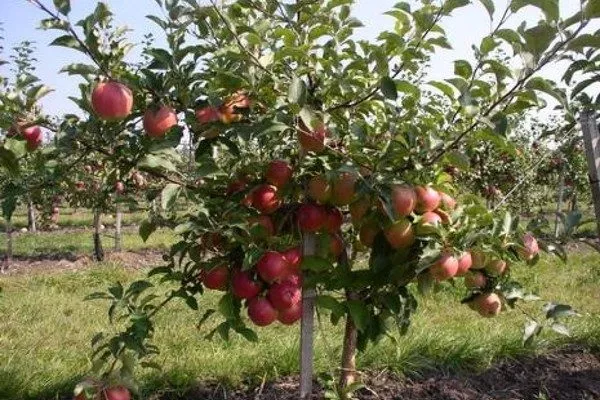
This apple tree can be grown on both standard and dwarf rootstocks. The tree's yield depends on its age and ranges from 40 to 120 kg of apples.
This very old variety, developed in the 19th century in Canada, remains very popular. It is partially self-fertile, so pollinator varieties such as 'Antonovka,' 'Suslepskoye,' 'Bellefleur-Kitayka,' or 'Borovinka' are planted nearby.
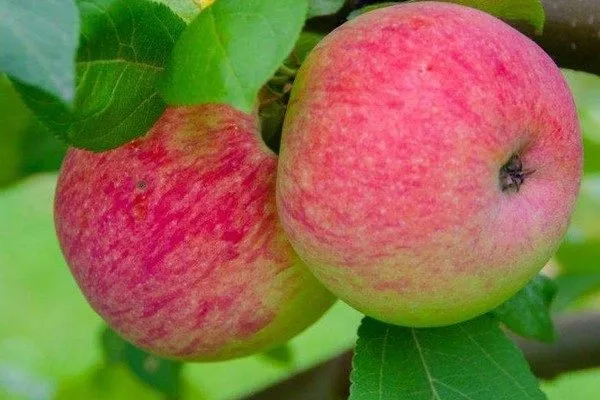
The apples are whitish-yellow with bright red stripes. The average weight of one fruit is 120-140 g. The flesh is tender and juicy, white. The tree begins bearing fruit in the 4th or 5th year after planting. Like many old varieties, Melba is susceptible to scab and powdery mildew. The tree grows to a height of about 3 m.
Ripening period: early or mid-season, depending on the region.
Moscow Red
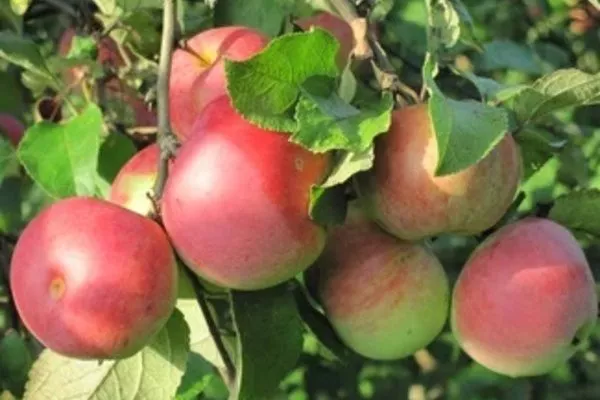
This mid-season winter variety yields up to 70 kg of apples per tree. It is highly resistant to scab and other diseases. It was created by crossing the Brown Striped and Saffron Pepin apple trees. It begins bearing fruit in the third year after planting. The tree reaches a height of 2-3 m.
The crown is spherical and compact. The apples are primarily greenish-yellow, becoming bright yellow over time. As they ripen, a reddish blush develops. Each fruit weighs 130-190 g. The fruits are round, ribbed, and ripen in late August-September.
Down to earth
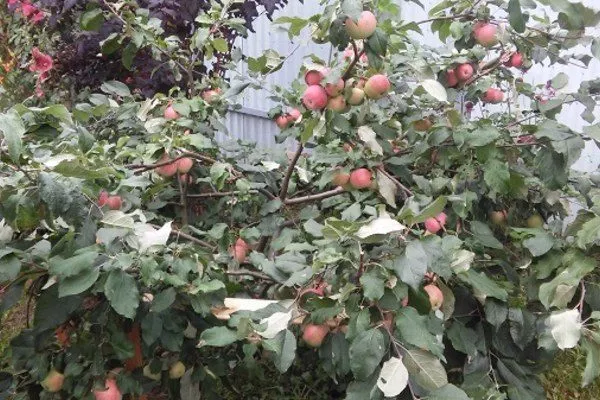
The branches of this apple tree begin growing horizontally, with their ends curving upward. The apples ripen from mid-September to late October. The tree begins bearing fruit in the second or third year after planting. It reaches a height of no more than 2 meters.
The fruits are round, small, and greenish-yellow. As they ripen, they become almost completely covered with a red blush. The flesh is juicy and firm, with a rich, sweet-tart flavor. The tree yields 80-130 kg.
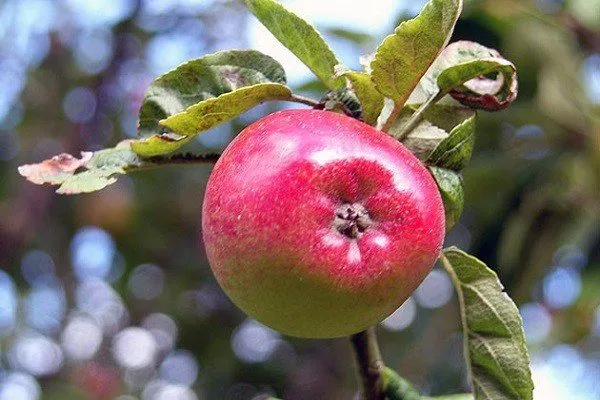
The Prizmnenoye apple tree bears fruit annually, and its purpose is universal: the fruits are eaten fresh, but they are also ideal for jams and preserves.
Northern Sinap
This mid-winter ripening variety, grown on a dwarf rootstock, begins bearing fruit in the second to third year after planting. A single tree can yield 100-150 kg of apples. The tree grows to 3 m tall. The variety is partially self-fertile; the Antonovka Obyknovennaya and Orlik varieties can be used as pollinators.
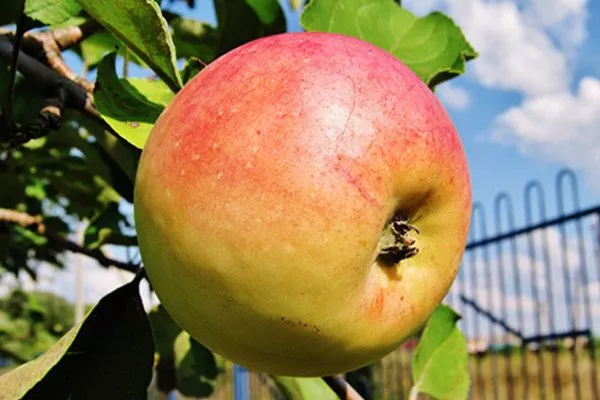
The fruits are round-conical, yellow-green with a brownish-red blush. Each fruit weighs 110-130 g. The flesh is slightly greenish, with a sweet and sour taste and spicy notes. The apples can be stored until summer. They are suitable for fresh consumption and any type of processing.
Snowdrop
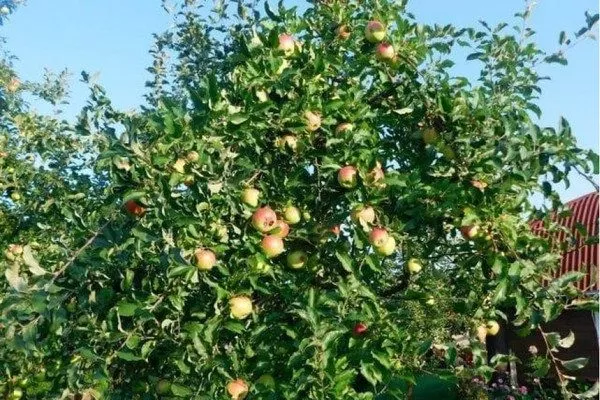
This creeping variety with horizontal branches is highly resistant to drought and frost. A single apple tree yields up to 80–90 kg. The tree height is 1.5–2 m.
Apples ripen uniformly, in the southern regions in mid-September, and in the northern regions until mid-October. Young trees bear fruit annually.
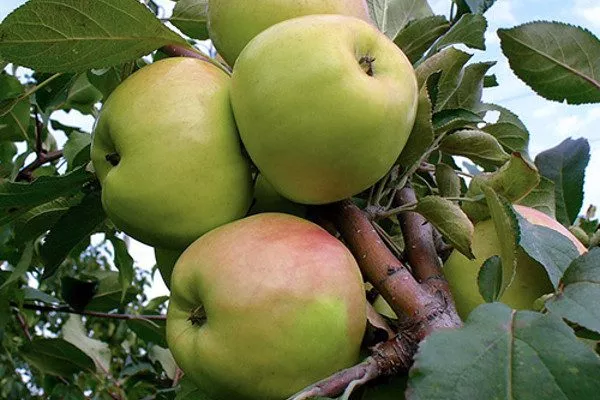
The apples are medium-sized, light yellow, round-conical, and slightly ribbed. The average weight of a single fruit is 140-170 g. When ripe, the fruits develop a dark red blush. The flesh is white, very tasty, and juicy.
Differences from columnar
Dwarf and columnar apple trees They differ in their small height, which is why they are often confused. However, these are completely different forms of fruit trees.
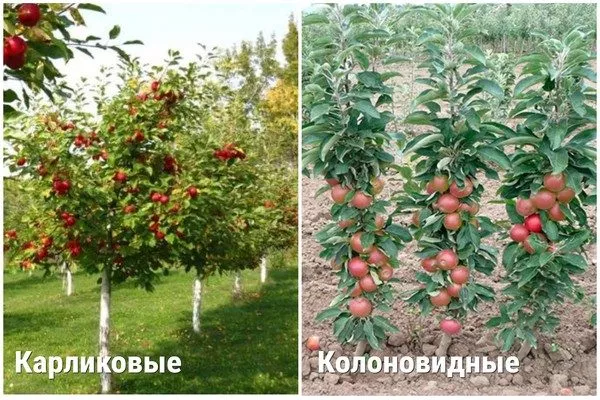
Comparative characteristics:
- Crown shape. In dwarf apple trees it is spreading, and in columnar apple trees it is vertical, compact, with short lateral branches, resembling a column or pillar in shape.
- Root systemDwarf apple trees have fibrous branches, while columnar apple trees have taproot branches.
- Lateral skeletal branchesDwarf apple trees have them, but columnar apple trees do not.
If you have a small plot or find it difficult to maintain large trees, dwarf apple trees are perfect for you. These full-sized trees produce good yields while taking up minimal space, are easy to care for, and harvesting is also straightforward.