
Most summer residents and amateur gardeners grow apple trees from grafted seedlings—it's the fastest and easiest way to obtain a varietal, fruit-bearing tree. But it turns out you can also grow a full-fledged tree from a simple apple seed. Let's explore why it's necessary to grow apple trees through such a long and labor-intensive process, and, most importantly, the pros and cons of growing from seeds.
Why do people grow apple trees from seeds?
The usual method of growing apple trees is through grafted seedlings. If you plant an apple seed, it will take many years for it to grow into a tree. These apple trees are called own-rooted seedlings; unlike varietal seedlings obtained vegetatively, they are completely unpredictable in terms of transmitting varietal traits.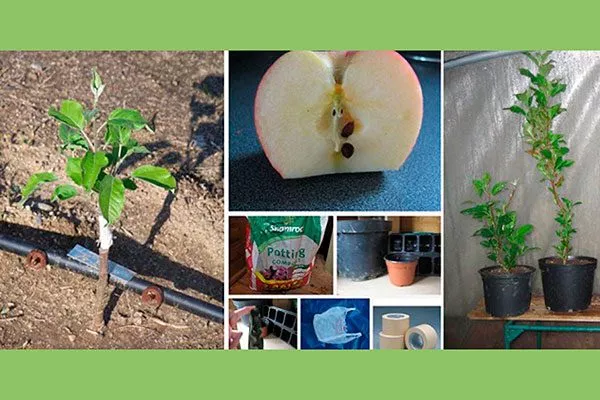
Reasons why apple trees are grown from seeds:
- To develop new varieties.
- To grow rootstocks for cultivated varieties, scions from varietal trees will be grafted onto them.
- To obtain a large number of trees for landscaping, when the size, taste and other qualities of the fruit are not of particular importance.

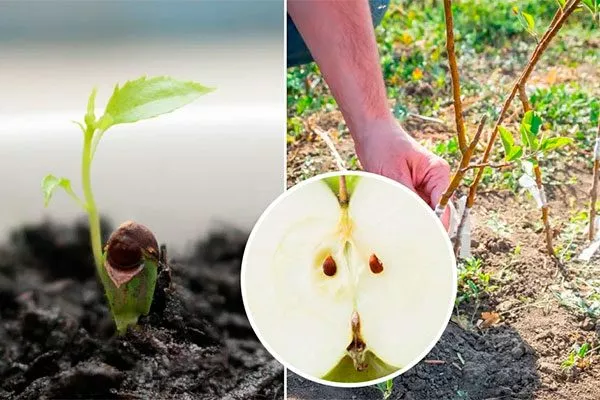
Growing apple trees from seeds to obtain a harvest of tasty and varietal apples is a completely pointless undertaking.
Selection of planting material
The process of growing an apple tree from seed is very long and painstaking, so it is extremely important to use high-quality planting material that will not let the gardener down.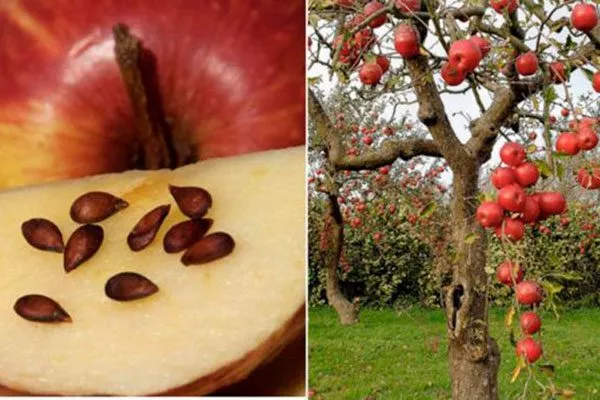
How to choose seeds:
- They should only be taken from fully ripe apples.
- If you choose apples straight from the tree, choose those growing on the outer branches—they receive more sun and nutrients.
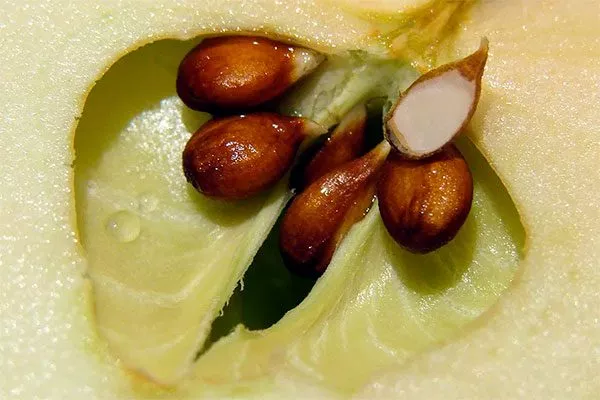
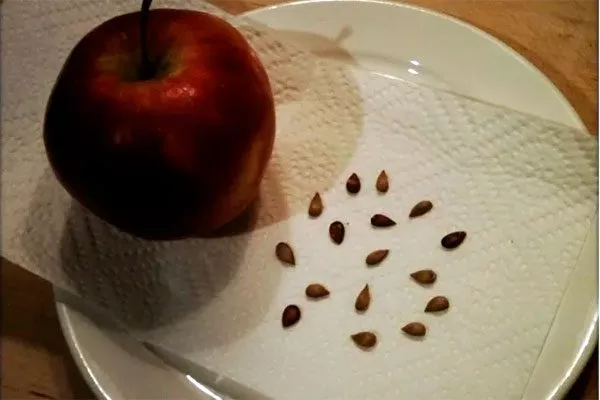
- The seeds selected for planting must be perfect—large, smooth, dark brown, and free of any defects. Soft seeds are unsuitable—discard them immediately.
Preparing seeds for planting
Apple seeds, like any other seeds, are recommended to be prepared before planting to increase germination rates and the chances of getting healthy plants.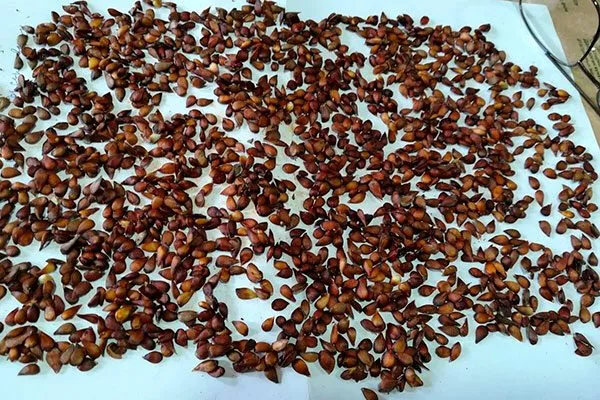
Stages of seed preparation:
- StratificationThis process must simulate winter conditions. Otherwise, the seeds will not swell and germinate. There are two options:
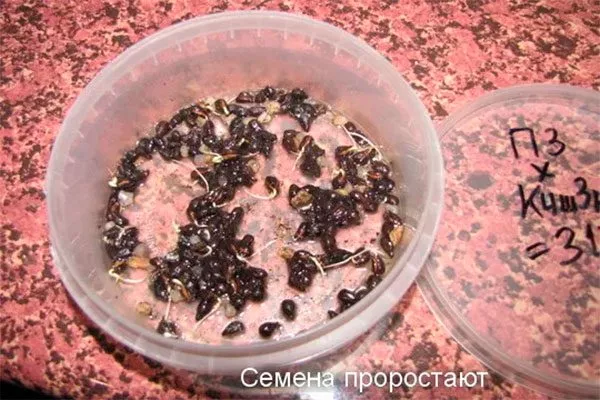
- Artificial stratification. To prepare the seeds for germination, they are wrapped in a damp cloth or buried in a sand-peat mixture. Activated charcoal, sand, or moss with sawdust can also be used for this purpose. The seeds are then placed in the refrigerator, where they are kept at a temperature of 2 to 5°C for 2-3 months.
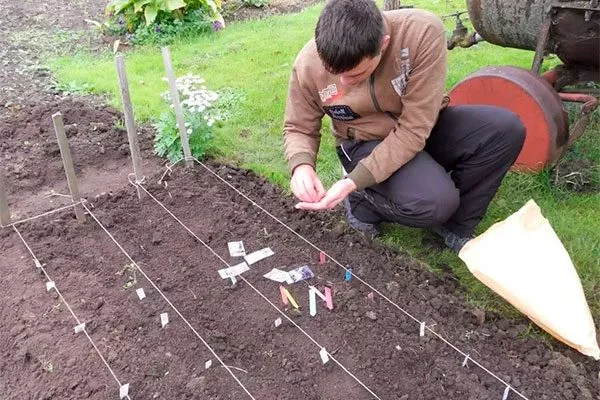
- Natural stratification. The seeds are washed, dried, and planted in open ground at a depth of 2 cm in the fall. If stratification is successful, seedlings will appear in the spring.
- Artificial stratification. To prepare the seeds for germination, they are wrapped in a damp cloth or buried in a sand-peat mixture. Activated charcoal, sand, or moss with sawdust can also be used for this purpose. The seeds are then placed in the refrigerator, where they are kept at a temperature of 2 to 5°C for 2-3 months.
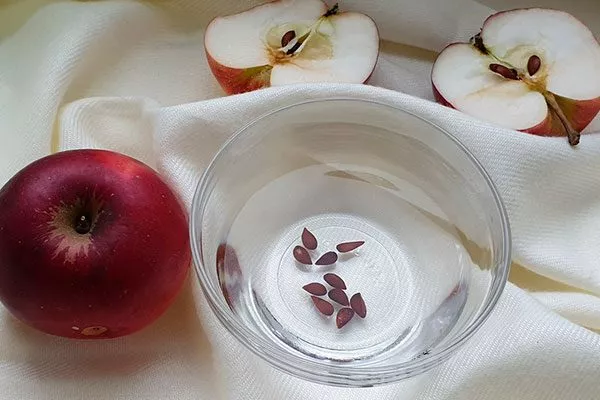
- Washing. The seeds extracted from the apples are washed several times under running water to remove the substance that prevents germination.
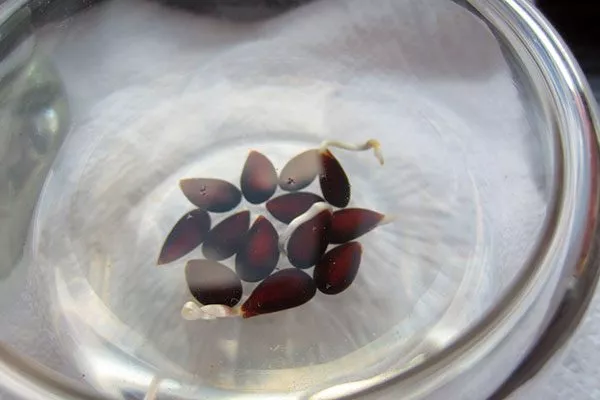
- Soak. The seeds are covered with water. This process lasts 3-4 days. The water must be changed daily, otherwise it will stagnate and become moldy. On the third day, it is recommended to add a couple of drops of growth stimulant to the water to speed up germination.
Sowing seeds
Prepared seeds—soaked and sprouted—are sown like seedlings in individual pots or larger containers. The seeds can also be sown directly into open ground.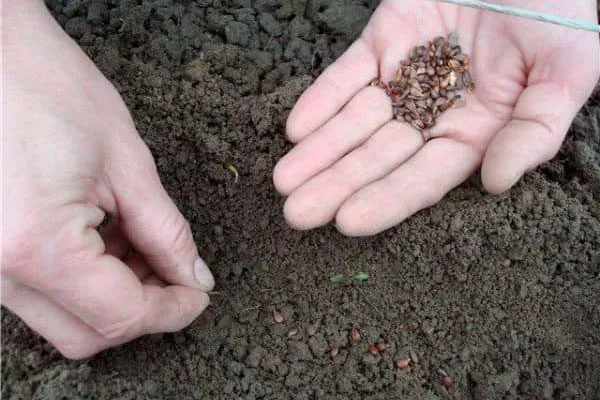
How to sow apple seeds in pots:
- Wooden or plastic containers with a capacity of 1-1.5 liters can be used as planting containers. Drainage holes should be made in the bottom of the containers to allow excess moisture to escape. A drainage layer of pebbles, expanded clay, or broken brick should be placed on the bottom.
- Cover the drainage layer with nutrient-rich substrate. For planting, use a nutrient-rich mixture with a neutral pH. No need to add mineral fertilizers to the soil mixture, but compost or leaf mulch is a good idea.
- Make holes in the soil—they should be twice as large as the sprouted seeds. Place the seeds in the holes and cover them with soil. Immediately water the crops with warm, settled water.
- Keep the pots with the seeds in a room with room temperature. Place them on a windowsill to ensure the seeds receive sufficient light.
Seedlings typically emerge within 2–3 weeks after sowing. However, the process can take up to several months.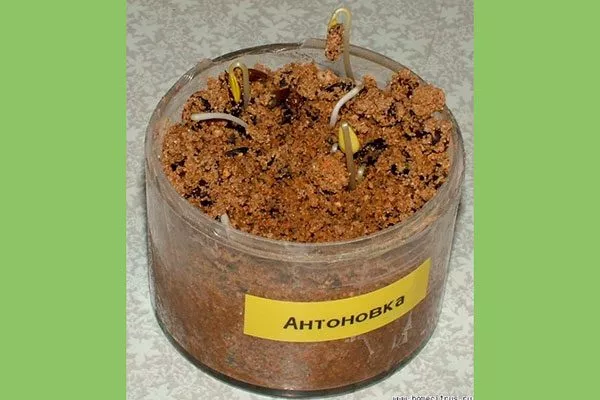
The rate of germination of apple seeds depends on the variety, as well as:
- From temperature. Optimal range: +18…..+22 °C.
- From humidity. The soil must be kept constantly moist.
- From the quality of the seeds. Fresh seeds germinate faster than those that have been stored for a long time.
Caring for seedlings
In a couple of weeks, the seedlings will develop small leaves, grow taller, and become stronger. They can be planted outdoors only after the danger of frost has passed. If it's too early to plant the seedlings and they feel cramped in their pots, transplant them into larger containers.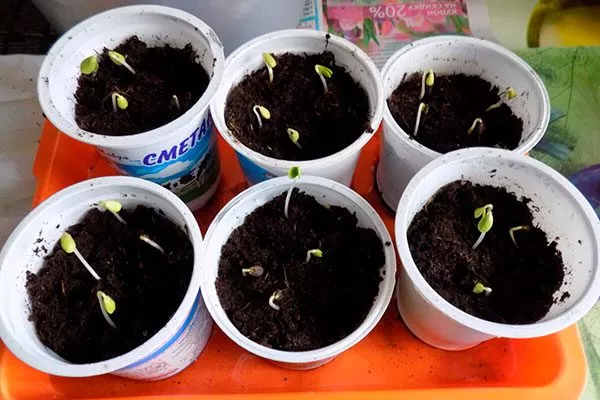
Plants are repotted when their roots have completely encased the soil. This typically occurs six months after planting. The new pot should be 2-3 cm larger in diameter than the previous one. Transplanting is done by transshipment to avoid damaging the root system.
While the seedlings are growing in pots, they need to be carefully looked after:
- Lighting — at least 6-8 hours per day. If daylight hours are short, artificial lighting, such as phytolamps, is used.
- Air humidity — 50-70%. Regular spraying with water is also recommended.
- Watering — as the top layer dries. Use only warm, settled water.
- Top dressing. The seedlings are fed for the first time 2-3 weeks after germination. A complex mineral fertilizer is applied to the roots at half the recommended dosage. This procedure is repeated every 2-3 weeks.
It is important to remember that organic matter such as manure and chicken manure should not be added to apple seedlings during the first year of life, to prevent the roots from getting burned.
Selecting a site
The site for planting own-rooted seedlings is selected in advance. First, it must meet certain requirements, and second, it must be prepared if the soil is not good enough for the growth and development of apple trees.
Site requirements:
- Good light throughout the day. Apple trees do not tolerate shade well. It is advisable to choose east- or north-facing slopes for planting.
- The site should be flat or slightly elevated; lowlands are not suitable, as meltwater and rainwater accumulate in them.
- Groundwater levels should be no higher than 1.5 meters above the soil surface. If the water table is higher, choose apple trees with short roots—dwarf varieties up to 2.5 meters tall. Alternatively, plant the trees on a raised platform, either natural or artificial (man-made).
- The site should have natural ventilation, but no drafts. It should also have protection from strong winds—this could be through outbuildings, rows of trees or dense shrubs, hills, etc. You can even plant a windbreak of birch or coniferous trees in advance.
- The distance from trees (apple trees) to buildings is 3-4 m.
- The best soils for apple trees are fertile, water- and air-permeable. Black earth with some sand is ideal. Heavy clay soils, as well as overly acidic ones, are absolutely unsuitable for apple trees.
Transplant timing
Own-rooted seedlings grown from seed can be transplanted into open ground in spring or fall, just like regular grafted trees. The exact timing of transplanting depends on the climate in the region.
Landing features:
- In the spring. Young apple tree seedlings are transplanted into the ground when their buds begin to open. The outside temperature should be consistently warm, and the soil should also be warm (at least 9°C).
In temperate climates, for example, seedlings are planted from the first ten days of April to early May. The best time for planting is a cloudy day, morning, or evening. - In autumn. Autumn planting is common in southern regions. It's important for the seedlings to establish themselves before the first frost—planting occurs 3-4 weeks before it sets in. During this period, the weather is still warm, reaching up to 15°C during the day and 5°C at night. Bare-rooted seedlings should shed their leaves by the time of planting.
Transplanting seedlings into soil
In the area where you will plant young apple trees, remove all the weeds and begin preparing the planting hole.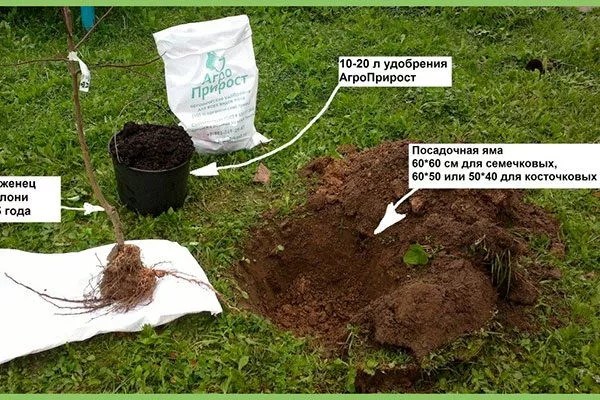
Landing features:
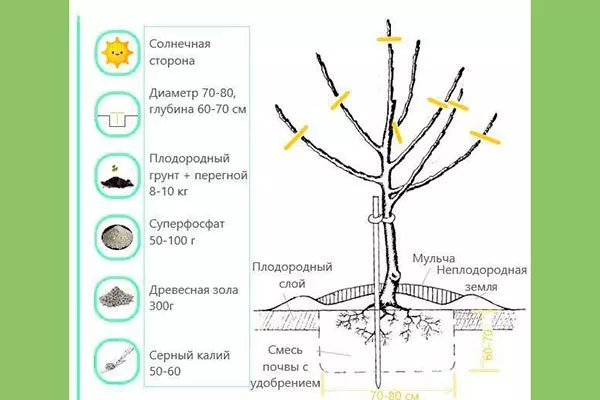
- Dig a hole twice the diameter of the tree's root system, about 60 cm deep. Loosen the soil thoroughly to make it easier for the tree's roots to penetrate.
- Set aside the topsoil from digging the hole—you'll need it to prepare a nutritious potting mix. This can be made, for example, by mixing compost 1:1—approximately 3 kg of each—with superphosphate and potassium chloride added—100 g and 70 g, respectively.
- Before adding the potting soil, add a layer of drainage material, such as broken brick or nut shells, to a depth of 10-15 cm. Then fill the hole 1/2 full with the nutrient-rich potting soil.
- Prepare a support for the young tree in advance. Install a 1.5-2 m high stake 15-20 cm from the center of the hole.
- Transfer the seedling from its container to the hole. Water the tree first, then it will be easy to remove from the pot. Carefully straighten the apple tree roots so they don't bend or become tangled.
- Cover the roots of the seedling with soil and compact it to remove any air pockets that may remain between the roots.
- The planted seedling is watered with warm, settled water, and when it is absorbed, the trunk circle is mulched.
- After planting, the root collar should be 2–5 cm above ground level.
It's worth noting that a seedling grown from a seed, like a grafted one, has a root collar. This represents the transition zone between the underground and aboveground parts, as it develops from beneath the cotyledon. Vegetatively propagated cuttings have a more diffuse root collar.
Further care
Apple trees grown from seeds and transplanted from pots into open ground require certain care. Like regular seedlings, they require watering, fertilizing, and other agricultural practices necessary for their successful growth and development.
Watering
Immediately after planting—for the first few weeks—the trees are watered every 10-12 days. Watering should be moderate, and the best times are morning and evening. As the tree grows, watering is reduced, but the soil should always be slightly moist, but not soggy. The older the tree gets, the less frequent the watering will be.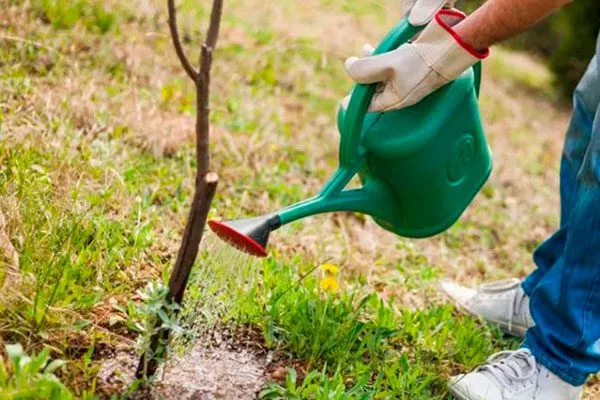
During the summer heat, trees need to be watered more frequently. During other seasons, rainfall may be sufficient, but this depends largely on the climate. In arid regions, apple trees need to be watered even in the fall. The soil should be well saturated after watering. Specifically, during the tree's first year, the top 3-5 cm of soil should be moist.
Top dressing
For top dressing, alternately use complex mineral fertilizers and organic matter—manure, compost, and bird droppings (these should not be added in the first year after planting, as they can burn the roots). Trees also desperately need micronutrient fertilizers containing boron, zinc, manganese, and other minerals.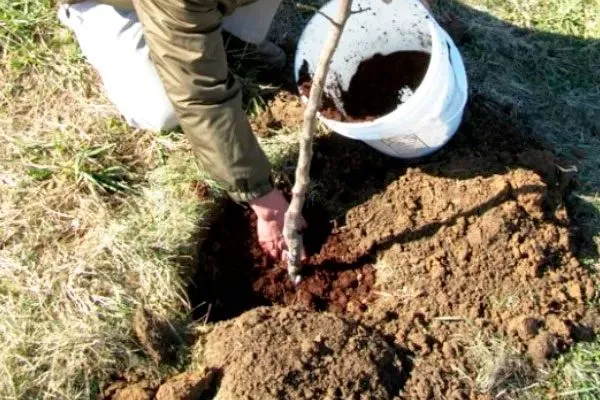
Loosening
The tree trunk area should be regularly loosened, while weeding. Loosening improves oxygen access to the roots. Afterward, it is recommended to mulch the soil with peat, humus, or sawdust. The mulch should be about 5 cm thick and should not touch the tree bark.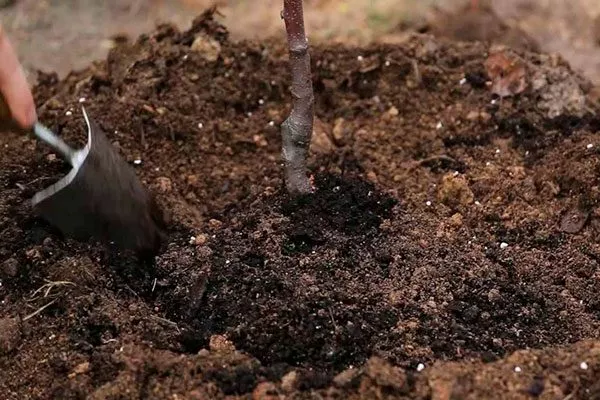
Mulching helps slow moisture evaporation. In the fall, before frost sets in, soil loosening is stopped. The mulch layer is then increased to 30 cm. This is especially important in regions with harsh winters. The soil loosening depth is 3–5 cm.
Trimming
Pruning an apple tree grown from seed is aimed at shaping the crown and removing all damaged branches—those that are frozen, diseased, or broken. The goal of pruning is to create a strong and well-lit crown, which is crucial for consistent fruiting.
Features of formative pruning:
- It is carried out in early spring, before the buds begin to swell.
- In the first year, the main trunk is shortened and 3-5 lateral branches are left, evenly distributed and in different directions.
- From the second to the fourth year, work on shaping the subsequent tiers, pruning branches that compete with the main ones. Branches that thicken the crown, grow inward, or grow vertically are also removed. The central leader should always be higher than the lateral shoots.
- Don't remove too many branches at once. The maximum is 25% of the total annual growth.
In the fall, when the leaves fall and all life processes slow down, sanitary pruning is carried out. This work is usually carried out in October; the exact timing depends on climate conditions.
Follow the pruning rules:
- Use sharp and disinfected tools (pruning shears, hacksaws, garden knives).
- Make the cut smooth - this will reduce the risk of diseases.
- When removing dry branches without shoots, cut them off completely. If there are shoots at the base of the branch, cut them above an outward-facing bud.
- Prune all crossing branches to prevent branches from growing that touch each other and damage the outer bark.
- Remove all branches that grow inward from the crown—this will ensure the tree has good ventilation, and the branches located deeper in the tree will receive the necessary amount of light.
Protection from diseases
Propagation by seed does not guarantee apple tree resistance to major diseases, so it is crucial to implement all preventative measures promptly. And if signs of disease are detected, begin treatment immediately.
How to spray apple trees:
- Apple cider vinegar solution. It's used to prevent scab, black spot, and gray mold. Dilute 1 tablespoon of vinegar in 1 liter of water. Spray trees only in the morning to prevent acid and sunburn.
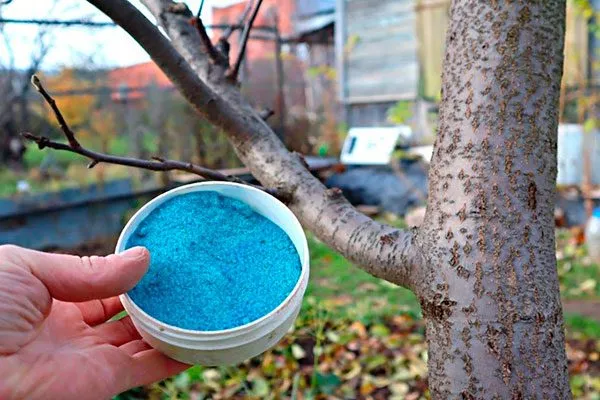
- Copper sulfate 2%. 200 g of the preparation is diluted in 10 liters of water. It helps combat dormant and active fungal infections.
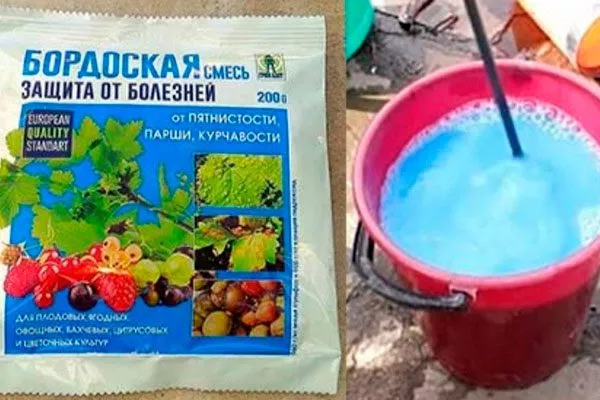
- Bordeaux mixture 1%. Dissolve 100 g in 10 liters of water. The solution is used against all fungal infections.
- Speed. Dilute 2 ml of the product in 10 liters of water. This fungicide is used for the prevention and treatment of trees affected by fungal infections.
- Abiga PeakDissolve 30 g of the product in 10 liters of water. This contact fungicide is effective against a wide variety of fungal infections.



Apple trees grown from seeds can be affected by a wide variety of pathogens. These include scab, powdery mildew, moniliosis, fire blight, and others.
To prevent diseases you need to:
- observe the feeding regime;
- When planting, maintain intervals between adjacent trees of at least 4-5 m;
- collect and then destroy fallen leaves and mummified fruits;
- whitewash tree trunks in the spring to protect the tree from sunburn and cracks, through which pathogens can penetrate;
- cut off dry, broken and diseased branches;
- in the spring, before the buds open, apple trees are treated with 3% Bordeaux mixture or other copper-containing preparations;
- In the fall, when the leaves fall, apple trees are sprayed with a 5% solution of urea (carbamide) or 3% Bordeaux mixture.
Spraying should be done in calm weather to prevent the product from spilling onto neighboring plants. Apple trees should not be sprayed during flowering, as this will kill bees and other pollinating insects. It's also important to remember that biological products used against various diseases are only effective at temperatures above 15°C.
Pest control
To combat pests such as apple aphids, codling moths, and apple blossom weevils, various insecticides are used, such as BI-58, Aktofit, Aktarin, and many others. Spraying trees during flowering is prohibited.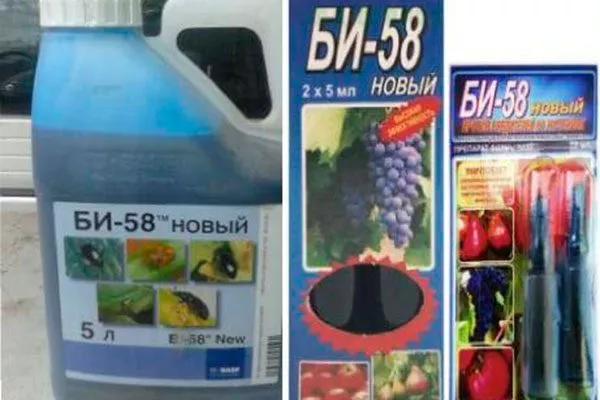
Spray trees in dry, windless weather. Rain will wash away the product, and the wind will blow it away. It's best to spray trees early in the morning or evening to prevent sunlight from shining through the droplets and burning the leaves.
Pros and cons
Growing apple trees from seed is a labor-intensive process, and such trees produce their first harvest 5-10 years after transplanting. Clearly, this method of producing fruit trees has both advantages and disadvantages.
Growing apple trees from seeds is something any gardener, even a beginner, can handle. However, when planting seeds in the ground, be prepared for a long wait—growing trees this way, and even producing fruit, requires patience and effort.