
Comprehensive apple tree preparation for winter involves a combination of simple yet effective measures. Each procedure plays a vital role in maintaining the tree's vitality. A little attention in the fall will ensure the tree's strong immunity, early emergence from dormancy, and a stable harvest next season.
When to prepare apple trees for winter?
Autumn is a busy time for gardeners. Not only do ripe apples need to be picked, but they also need to be prepared for long-term storage and some of the harvest needs to be processed.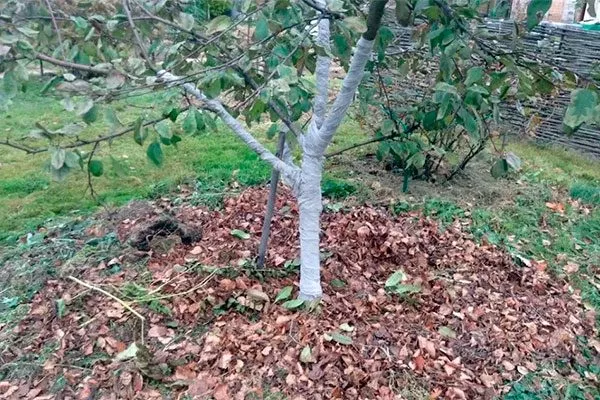
There are no specific dates for autumn apple tree care. The key is to complete all necessary procedures before persistent subzero temperatures set in.
General requirements
Preparing an apple tree for winter is the key to a future harvest and a healthy tree. Autumn care helps the tree build strength, survive frosts, and resist pests and diseases. It's especially important to properly insulate young seedlings, and to protect mature trees' roots, bark, and crown.
The main stages include several activities:
- watering;
- pruning;
- top dressing;
- mulching;
- whitewash;
- shelter;
- cleaning the tree trunk circle.
These simple but important steps will help keep the tree strong and ready for spring awakening.
Timing of apple tree sheltering in different regions
The time it takes to prepare apple trees for winter varies significantly depending on the climate zone. It's important to consider the weather conditions in your region:
- In the northern regions (Siberia, the Urals, the Northwest) With harsh and snowy winters, begin covering the trees as early as September or early October. Carefully protect the root system with a thick layer of mulch, wrap the trunks to protect them from rodents, and insulate the crown with spruce branches or agrotextile.
After a snowfall, it is useful to pile snow around the tree trunk for additional insulation. - In the Central Belt, including the Moscow Region, Where winters are mild, cover the trees in mid-October. Focus on protecting the roots with mulch and the trunks from sunburn and rodents by wrapping them with agrofibre or burlap and installing netting or spruce branches.
Cover the crown only of young, 1-2 year old seedlings. - In the southern regions (Kuban, Rostov region, Stavropol) With mild winters, covering apple trees is done the latest – in November, and is often limited to only young trees aged 1-3 years.
Here, it's especially important to protect the trunks from sunburn and wind drying using a light-colored covering material (agrofibre). Mulching and rodent protection are also essential. Mature apple trees in the south usually don't require covering.
Moisture-charging irrigation
In the event of a dry end to summer, abundant watering of the area around the tree trunk, reaching the depth of the main roots (usually 50-70 cm for young seedlings), becomes critical.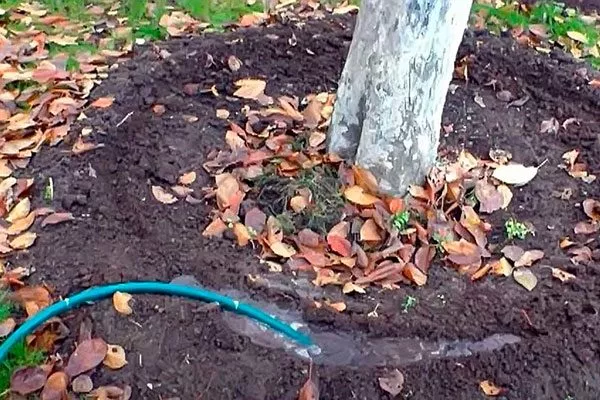
Moist soil retains significantly more heat than dehydrated soil. Consequently, the root system will be more reliably protected from sudden temperature fluctuations and severe frosts at the beginning of winter, as well as during periods without snow cover.
Proper soil moisture before the onset of cold weather increases its heat capacity, which is crucial for a tree's survival in adverse weather conditions. This is especially important for young trees whose roots are not yet established and require additional protection from extreme temperatures.
The last feeding
Proper nutrition is the foundation for healthy growth and abundant fruiting of an apple tree. Not only the composition of the fertilizer is important, but also the method of application. The way you feed your tree determines how quickly and effectively the roots and leaves absorb the nutrients.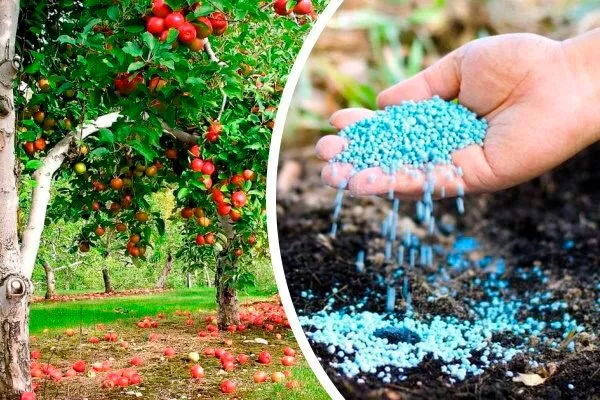
How to fertilize?
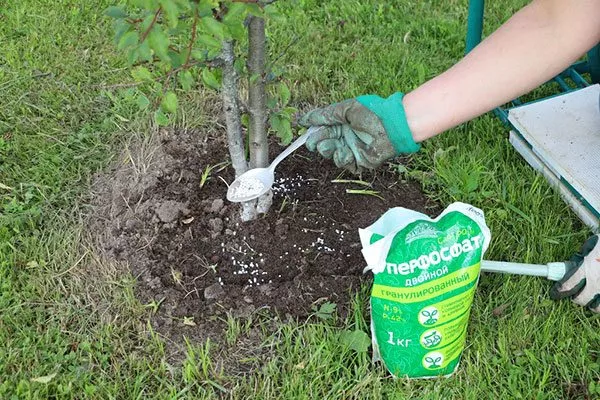
To enrich 1 square meter of soil, it is recommended to use 5 to 6 kg of humus or compost and approximately 100 g each of superphosphate and potassium fertilizers. Autumn fertilizing of apple trees is extremely important for their health and fruiting.
Add the following fertilizers to the soil in advance:
- Superphosphate;
- ash;
- potassium chloride.
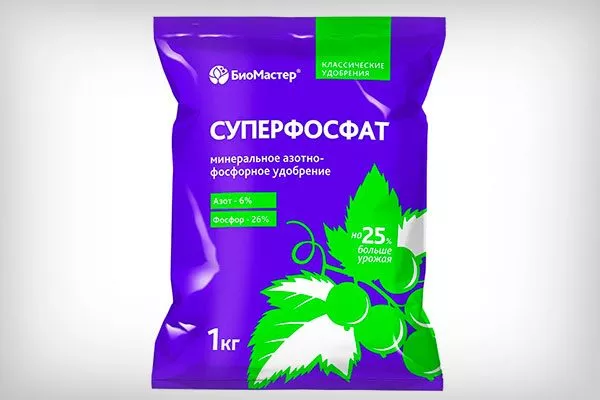
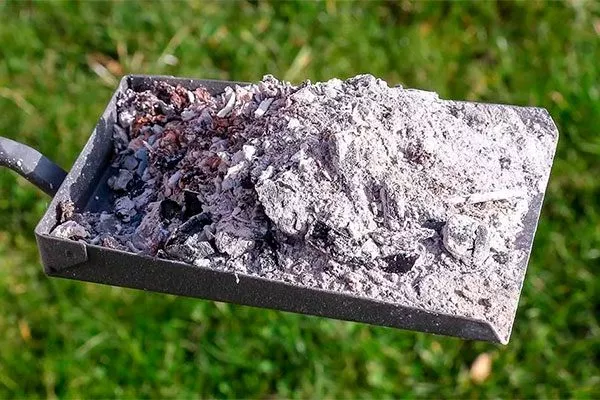
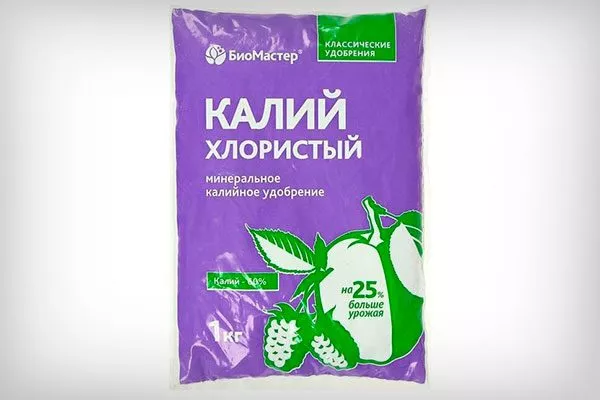
An alternative method is to simply incorporate the fertilizer into the soil when digging. However, using nitrogen mixtures in the fall is strictly not recommended, as they negatively impact the trees' frost resistance.
There are several basic methods of fertilizing: foliar feeding, root feeding, and fertilizing in holes – each has its own purpose and characteristics.
By sheet
Use this method to quickly deliver micronutrients to tree tissue. Spray the fertilizer onto the foliage as a solution using a sprayer.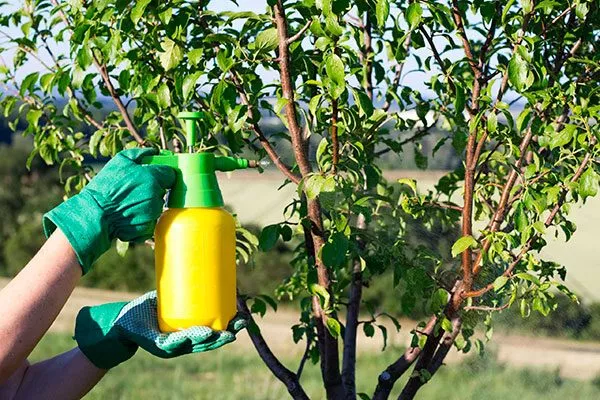
Key Features:
- the event is effective in cases of deficiency of iron, magnesium, boron and other microelements;
- Spray in dry, windless weather, in the morning or evening;
- The solution should be of weak concentration so as not to burn the leaves.
Under the root
The classic method of fertilizing involves applying fertilizer directly to the soil around the trunk. Follow these guidelines:
- use both organic (mullein infusion, bird droppings) and mineral compounds (nitrophoska, superphosphate);
- Apply fertilizer after watering or together with it to avoid burning the roots;
- Distribute fertilizers evenly around the tree trunk and lightly work them into the soil.
Into the holes
This method helps deliver nutrients directly to the area where the absorptive roots are located. Helpful tips:
- around the apple tree, make several holes 20-30 cm deep (at a distance of 30-50 cm from the trunk);
- Pour a fertilizer solution or add granules into the holes and water.
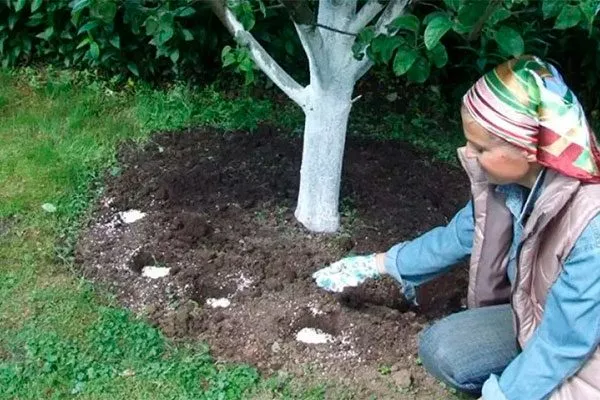
The method is especially good on dense or poor soils where fertilizers do not penetrate deeply.
Tree pruning
To prepare your tree for winter, begin with a sanitary pruning, removing dead, damaged, diseased, and inward-growing branches. Proper pruning is crucial for the tree's health.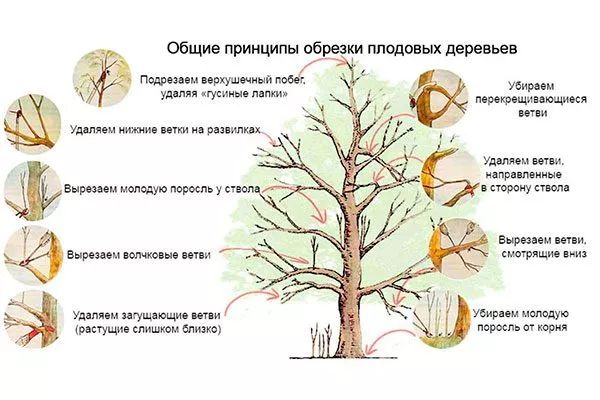
Basic requirements:
- The cuts should be as even and smooth as possible to avoid damaging the bark.
- After pruning, be sure to treat the cut areas with a solution of copper sulfate (1 teaspoon per 1 liter of water) and garden pitch. This is necessary to prevent the development of wood fungi in a humid environment.
- Use garden pitch to seal all cracks, scratches and other damage on the tree trunk.
Barrel processing
The trunk is one of the most vulnerable parts of the tree: it suffers from sudden temperature changes, sunburn, pest infestations, and fungal diseases. Without proper protection, the bark can crack, peel, and become a gateway for infection. It's important to maintain the health of the apple tree and ensure its longevity.
Removal of moss and lichen
Before wintering, carefully inspect the apple tree's trunk and main skeletal branches for damage, cracks, moss, lichen, and remnants of old bark. Such areas can become a haven for pests and a breeding ground for fungal diseases.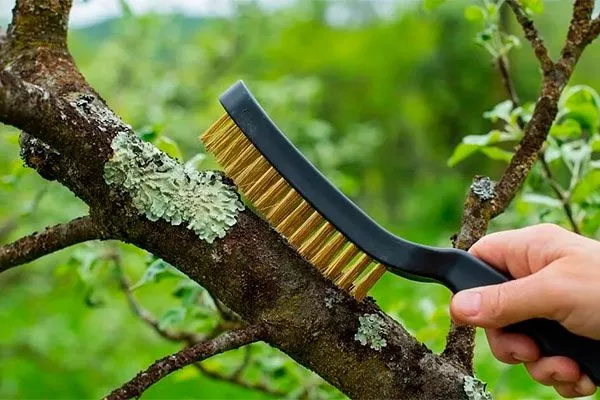
Follow the rules:
- Begin cleaning by removing dead, loose bark. Use a wooden or plastic scraper (metal tools can damage living tissue). Work carefully, being careful not to damage healthy bark.
You can use a mixture of equal parts slaked lime and clay, diluted with water to the consistency of thick sour cream. Apply this mixture to the affected areas, let it dry, and carefully remove it. After the bark has dried, treat it with garden pitch, and then spray the entire trunk with a 3% solution of ferrous sulfate.
After removing plaque and moss, the trunk can be treated with a weak solution of copper sulfate (3-5%) or another antiseptic for disinfection. - Take care to repair wounds and cracks. If the tree has deep damage or signs of rot, thoroughly clean them down to healthy tissue, disinfect them with copper sulfate, and then seal them with garden pitch, a clay slurry with manure, or a special bark healing paste.
This measure helps prevent the spread of infection and promotes healing.
Identification and control of harmful insects
Carefully inspect the apple tree for pests, paying particular attention to the old bark where they often hide. Carefully peel back the bark. If you find any insects, remove them along with the bark and destroy them immediately. To protect the tree from pests, use effective insecticides such as Karbofos or Aktara.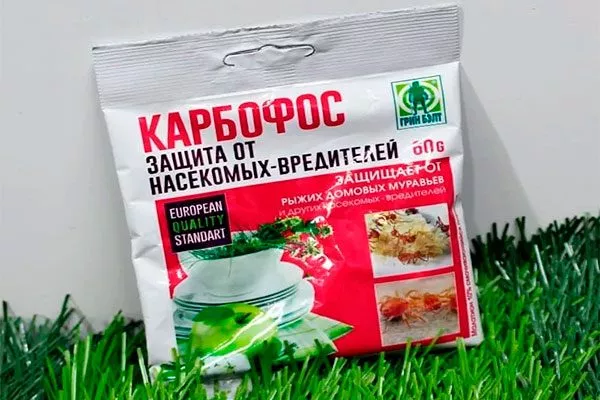
To combat scab and powdery mildew, spray the trunk with a urea solution (0.5 kg per 10 liters of water). Alternatively, use a copper sulfate solution (300 g per 10 liters of water) or a mixture of washing soda and laundry soap (400 g of soda and 50 g of soap per 10 liters of water). Ready-made fungicides, such as Horus, are also effective.
Whitewashing the trunk of an apple tree
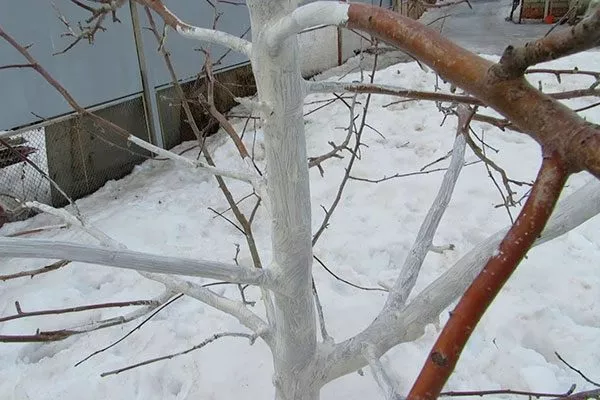
Whitewashing apple tree trunks in the fall is an effective way to protect the bark not only from rodents but also from the damaging effects of the winter sun. Apply the whitewash to the base of the lower branches, or better yet, just above.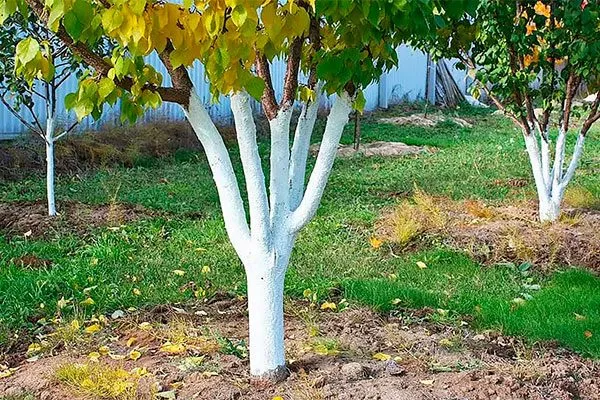
To prepare a special solution, use a mixture of:
- 10 liters of water;
- 0.5 kg copper sulfate;
- 3 kg of slaked lime;
- 200 g wood glue.
Taking care of the tree trunk area
After pruning and whitewashing the trees, the next step is soil cultivation. This process involves several important steps: removing fallen fruit and wilted leaves, digging the soil, and mulching.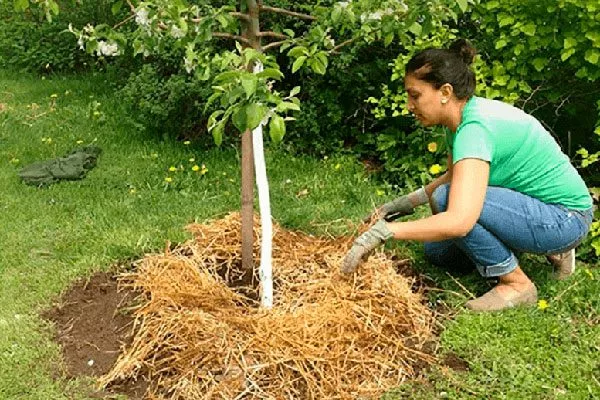
Cleaning
The first step in cleaning up the area under your tree is to remove fallen leaves and rotten fruit, as these provide ideal overwintering areas for pests and diseases.
Place collected leaves and spoiled fruit in a compost bin, after sprinkling them with a small amount of lime. This simple method not only effectively disposes of vegetation but also provides valuable fertilizer for next spring.
Digging
Loosen the soil to destroy pests' wintering sites, depriving them of protection from the cold. Most insects left without shelter will not survive the frost.
Digging up the soil under your apple tree is an important step in preparing your garden for winter. Follow these guidelines:
- Within the projection of the apple tree crown, cultivate the soil carefully, to a depth of approximately 20 cm.
- Use a shovel, positioning it horizontally, or a pitchfork to avoid damaging the tree roots.
This method ensures loosening without risking the root system. Outside the crown, digging can be deeper—about 25-30 cm.
Mulching
The vulnerability of young apple trees' root systems to frost is a common problem, as roots, unlike the above-ground portion, lack the ability to harden off. This is especially true for seedlings in their first years of life. Mulching the root area is the most effective and environmentally friendly method of protection.
Mulch provides thermal insulation, reduces temperature fluctuations, retains moisture, and improves soil structure through decomposition. This is crucial for young apple trees.
Consider the following factors:
- Coating diameter. It should correspond to the projection of the crown plus 30 cm around the perimeter, since it is in this zone that the main suction roots are located.
- Layer thickness. Optimally, 10-15 cm. A smaller thickness will not provide sufficient protection, and a larger one can cause root collar rot.
To mulch apple trees, use various materials:
- humus/compost – nutritious and insulating material (only rotted);
- Peat is a good heat insulator and can acidify the soil (use with compost or sand);
- sawdust/shavings – require nitrogen enrichment in spring;
- pine needles/spruce branches – provide insulation, repel rodents, and moderately acidify the soil;
- Foliage – available, but may cake (mix with loose materials, do not use leaves from fruit trees).
Shelter rules for mature and young trees
The plant requires winter protection to withstand frost, sunburn, rodent attacks, and sudden temperature changes. Seedlings with thin bark and weak root systems are particularly susceptible to adverse conditions, but mature plants are also at risk.
The best covering materials
To ensure reliable protection for young plantings, both natural and artificial covers are used. Natural components retain heat and act as a barrier against strong gusts of wind, while specialized coverings provide enhanced protection from extreme cold.
Natural
Since ancient times, accessible natural covering materials have been used in gardening, valued for their effectiveness and environmental safety. The most common are:
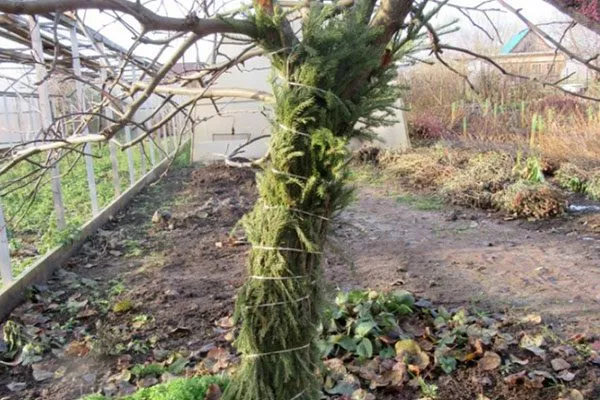
- Coniferous branches. One of the most affordable and effective options. Coniferous tree branches effectively trap snow, thereby providing natural protection for the root system and trunks of plants.
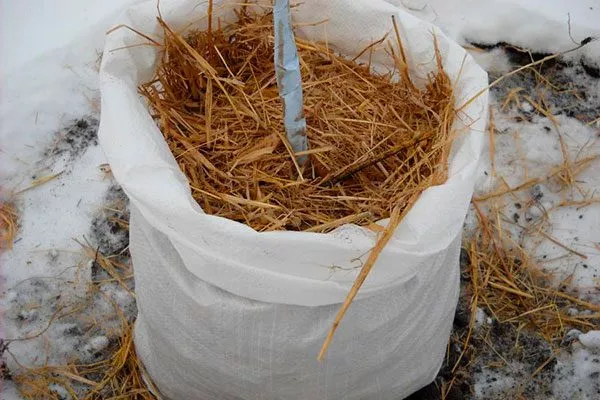
Spruce branches provide air circulation, preventing rotting, and repel hares and rodents that can damage the bark of young fruit trees. - Straw. A widely used covering material. It retains heat well and is suitable for protecting roots from frost. It is less susceptible to moisture and fungal attack than hay.
It's important to avoid packing the straw too tightly to prevent it from rotting. Be aware that straw can become a breeding ground for rodents. - Fallen leaves. They are suitable for covering roots, but it is necessary to ensure that they are dry and free from rot.
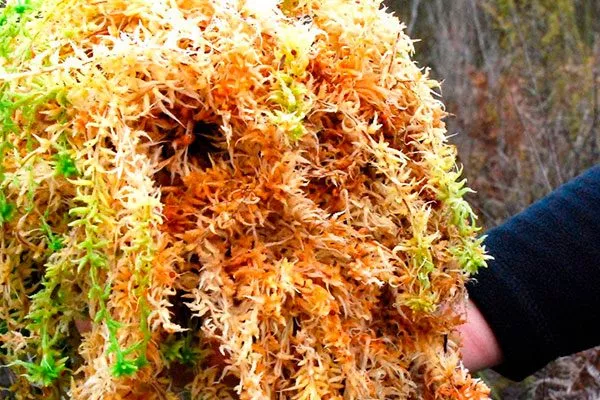
- Sphagnum moss. It's often used to cover perennial plants and ornamental shrubs. It not only provides thermal insulation but also prevents the development of diseases and fungi thanks to its bactericidal properties.
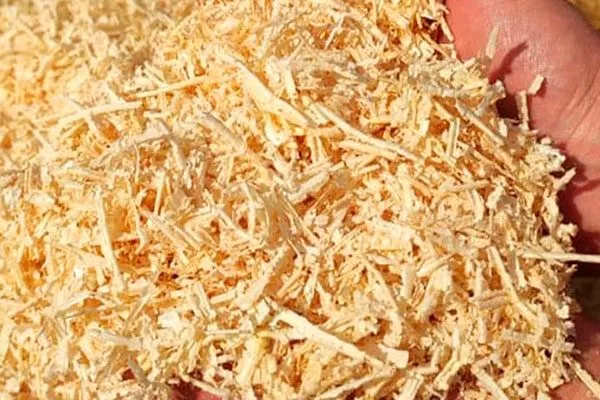
- Hardwood sawdust. Suitable for mulching and covering seedlings. It's important to use last year's dry sawdust.
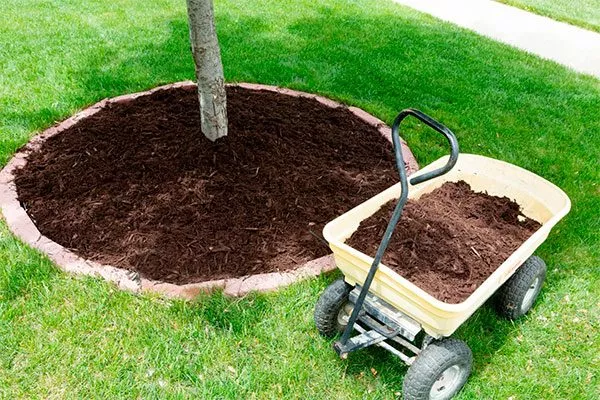
- Peat. An affordable natural material used for mulching fruit seedlings. Thanks to its thermal insulation properties, peat retains heat in the soil, creating favorable conditions for the root development of young plants.
Handy tools
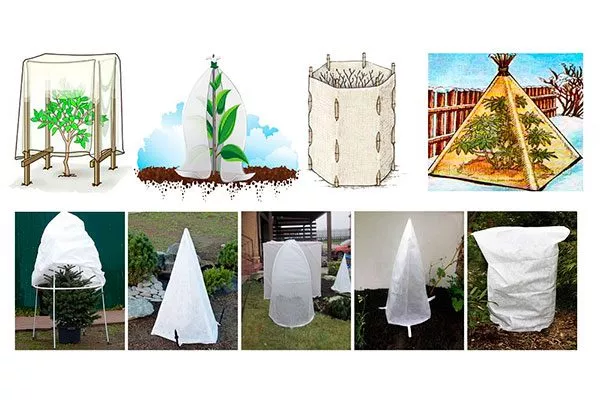
To ensure successful overwintering of seedlings, various covering materials are used to provide protection from the cold and air circulation. The following are the most optimal:
- Caps. Made from non-woven material, such as agrofibre, they create an additional layer of thermal insulation, protecting plants from wind and frost. Good ventilation prevents condensation.
- Covers. Bags made of thick materials or insulating materials reliably protect seedlings from low temperatures. They are especially effective for roses, hydrangeas, and other ornamental plants.
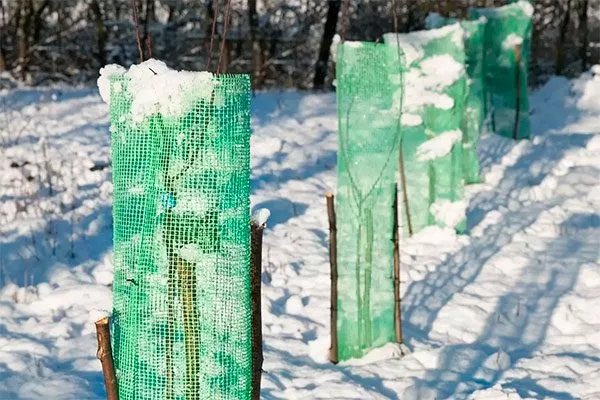
- Grids. Mesh structures protect plants from the negative effects of snow and wind. Metal or plastic nets installed around the trunks protect young fruit trees from rodents.
- Film. Recommended for use as a supplement to natural shelters to enhance protection from moisture and frost. Do not use the film alone, as condensation may accumulate underneath.

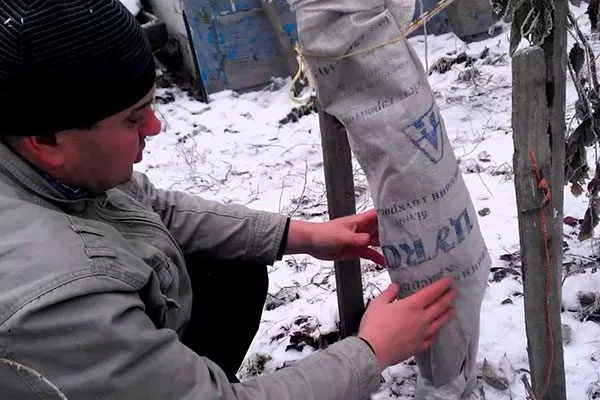
Technique for wrapping apple tree trunks for the winter
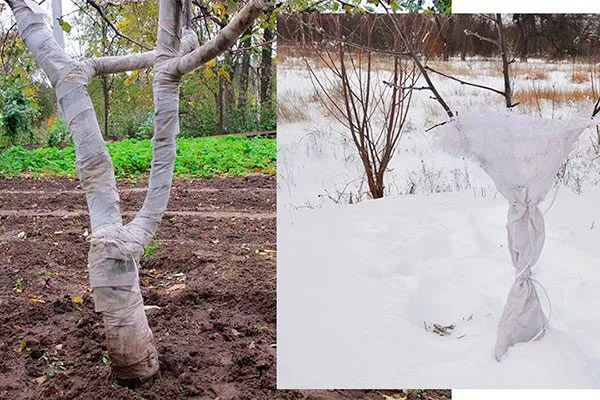
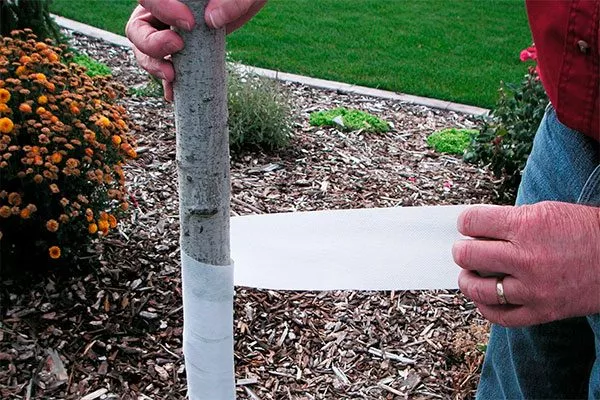
Begin the process from the base of the tree, including some mulch to prevent rodents from entering from below. Follow these basic guidelines:
- Ensure that each wrapping overlaps by a third to half its width. It's important that the wrapping be tight enough, but not too tight, to avoid damaging the bark and preventing the trunk from growing naturally.
- Continue wrapping up to the first main branches, and in the case of young seedlings, you can cover an area a little higher.
- For young, non-standard trees, especially in the first few years, it is recommended to carefully gather the crown and wrap it in the same material (such as agrofibre or burlap), creating a protective "cocoon." Alternatively, you can use a bag made of a similar material and secure it to the tree trunk.
How to wrap an apple tree trunk to protect it from rodents?
To protect trees from adverse weather conditions, breathable covering fabrics are preferred, allowing air circulation and preventing moisture accumulation, which can lead to rot.
Popular protective materials:
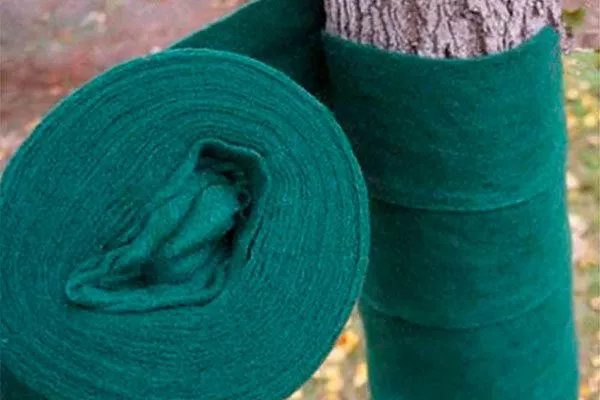
- Agrofibre (spunbond) with a density of 42-60 g per 1 sq. m – A modern synthetic material characterized by its lightness, durability, and good breathability. It effectively protects against wind and frost, diffuses sunlight, and prevents sunburn.
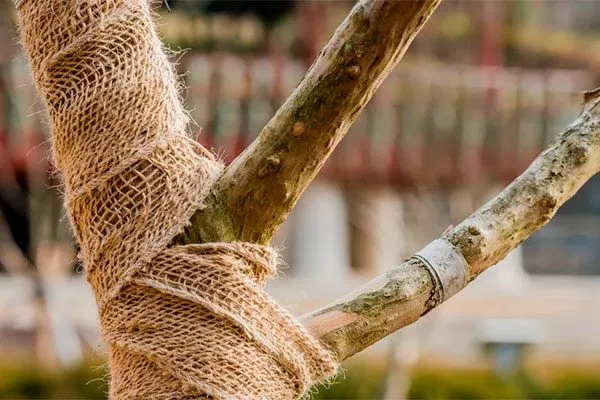
Can be applied in multiple layers and is easily removed in the spring. Ideal for wrapping trunks and covering the crowns of dwarf and columnar apple trees. - Burlap - A traditional natural material that has proven itself over many years. It provides protection from the sun and wind while allowing air to circulate. However, when wet, it can freeze in severe frosts, becoming stiff. It requires careful removal in the spring.
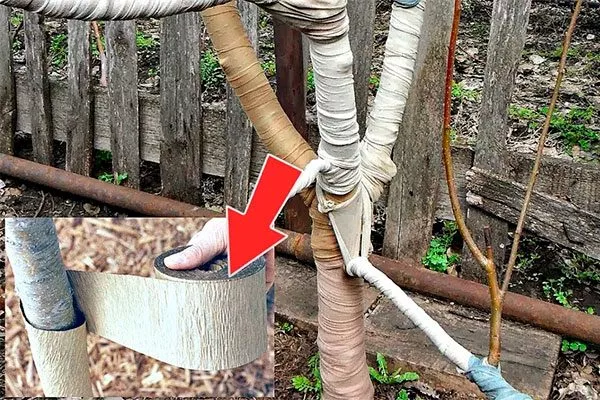
Before using, it's recommended to soak and dry new burlap to remove any chemicals. Reusing old, used burlap is often the preferred option. - Specialized garden bandages or tapes – They are typically made from spunbond or jute and are easy to use.
What should you not cover an apple tree with and how can you avoid damping off?
To prevent tree death from bark rot, it's crucial to avoid using airtight covering materials such as polyethylene, roofing felt, and thick cardboard. These create a greenhouse effect, promoting overheating and bark rot.
Protection from sunburn
Preventing sunburn on apple trees in spring requires a careful approach. Follow these recommendations:
- To protect the bark, wrap the trunk with a light-colored covering material, such as agrofibre, or use burlap. Whitewashing the trunk with lime also provides additional protection.
- When uncovering your apple tree after winter, proceed carefully and gradually. Start on a cloudy day to avoid harsh sunlight. Loosen the ties slightly at first, then remove them completely after a few days.
- To speed up soil warming, remove mulch from the base of the trunk.
- Avoid using wire to secure the wrapping. Use soft twine or special clips to avoid damaging the tree bark.
Common mistakes when covering seedlings for the winter
The key to preparing young plants for winter is ensuring an optimal balance between thermal insulation and air circulation. A common mistake gardeners make is using airtight covers, which can cause plant rot.
Below are some typical omissions:
- premature covering, which can lead to seedlings rotting;
- ignoring measures to protect against rodents that can damage the bark;
- careless removal of cover in the spring, which can lead to sunburn or dehydration;
- improper storage of covering materials, which causes them to rot, wear out, or break faster.
Preparing an apple tree for winter is a crucial step in orchard care, directly impacting the tree's health and next year's harvest. Winter frosts, temperature fluctuations, rodents, and infections can cause serious damage, especially to young seedlings and weakened plants. To minimize the risks, it's essential to take precautions to protect the crop in advance.