
The Imant apple tree is a variety prized for its high yield and early maturity. Its compact crown makes it easy to maintain, and its strong immune system protects it from many diseases. The fruit is distinguished by its bright, attractive coloring, good shelf life, and excellent transportability. It is frost-resistant, quickly established, and suitable for growing in temperate climates.
History of selection
This variety was developed by specialists at the Belarusian Research Institute in 1999 by crossing the American winter variety Liberty and the Belarusian variety Antey. The result was a hybrid with numerous positive qualities.
Characteristics
Imanta is a popular apple tree, a favorite choice even for novice gardeners. Its widespread popularity stems from its low maintenance requirements and the rich flavor of its aromatic fruit.
Growing regions
The apple tree's origins are considered to be in Belarus, but it has also become widespread abroad, in Moldova, Ukraine, and Russia. In the Russian Federation, apple tree cultivation is limited by climate conditions: due to its moderate winter hardiness, the variety is unsuitable for harsh regions.
- Siberia;
- Urals;
- Far East.
However, Imanta thrives in milder climates. This variety is successfully cultivated in the Moscow region, the Northwest, the Volga region, and the Black Sea region.
The appearance of the tree
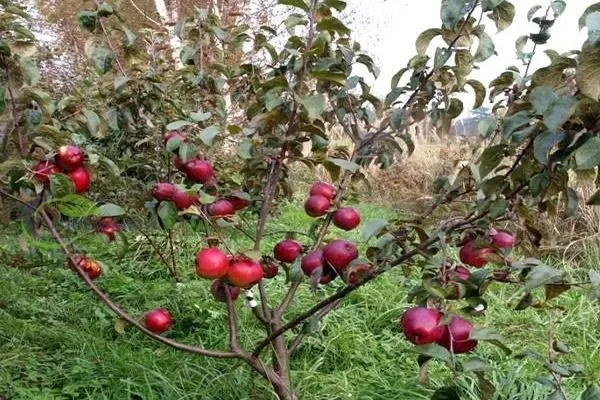
The plant reaches up to 3 m in height, but when grown on a dwarf rootstock its dimensions can be noticeably more modest.
Distinguishing features:
- crown – compact, neat in shape and not prone to thickening, which simplifies care and makes the variety in demand for industrial cultivation;
- branches – straight, of medium length and thickness, extending from the trunk almost at a right angle, and their tips pointing upwards;
- bark on shoots – pubescent, with a brownish-brown or brown tint;
- root system – well-branched, fibrous, located at medium depth and forming many small roots;
- leaves - large, dense and leathery, rich dark green in colour, their shape is oblong-ovoid with a pointed tip, the edges are finely serrated and slightly wavy, the surface is matte with a slight sheen.
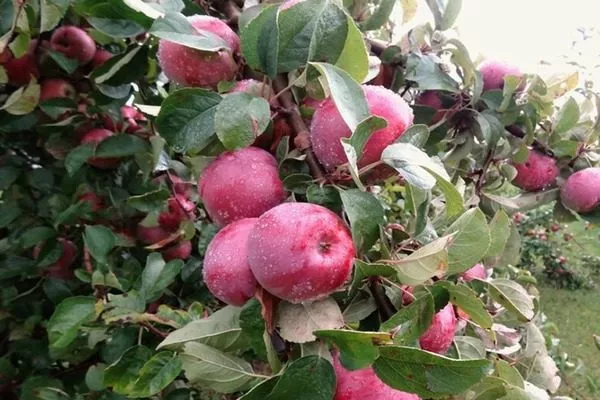
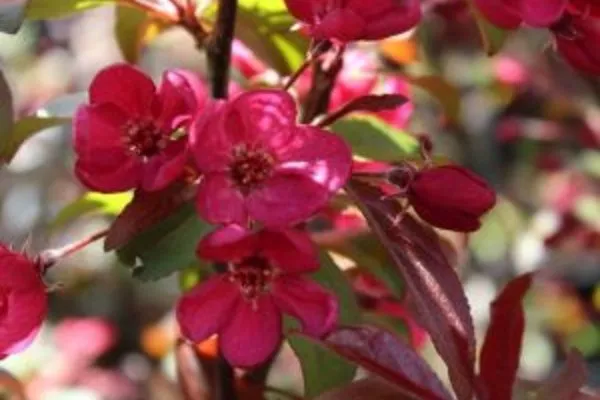
Flowering begins in late May and lasts for about 8-10 days. During this time, the tree is densely covered with small flowers. The buds are pink, and the petals open to a white color with a slight pinkish tint. Fruiting is mixed—the crop is formed on the ringlets, spears, and growth from the previous year.
Fruit
Apples have an attractive appearance and high consumer qualities. Their main characteristics are:
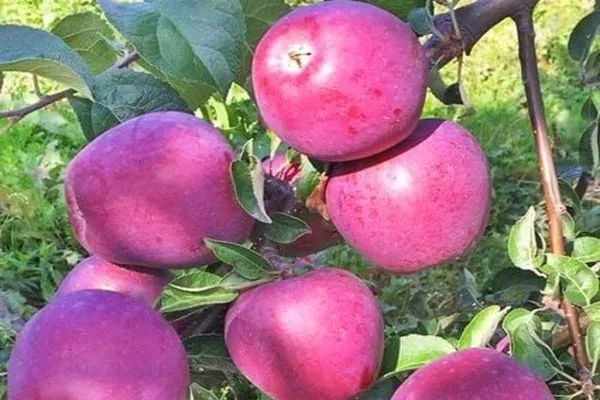
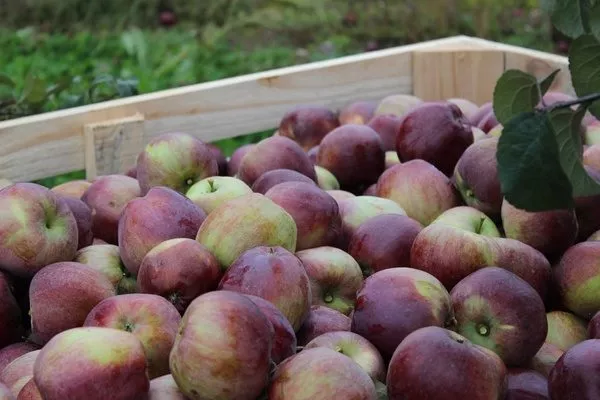
- The fruits are large, uniform in size, with a round-conical shape and slightly beveled sides.
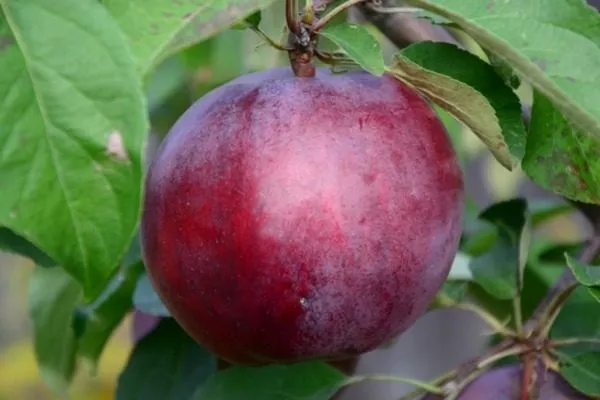
- The surface is gently ribbed, the skin smooth, dry, and shiny. The underlying green background is almost completely covered with a diffuse dark red blush with a violet tint. Subcutaneous dots are small, gray, and barely noticeable.
- The weight varies from 150 to 200 g, but there are also larger specimens – up to 300 g.
- The flesh is greenish-cream in color, juicy, medium-dense, and crispy.
- The flavor is sweet and sour, with its full flavor developing in winter. On a tasting scale, the apples received a rating of 4.3 out of 5, but many gardeners consider the variety worthy of a higher rating.
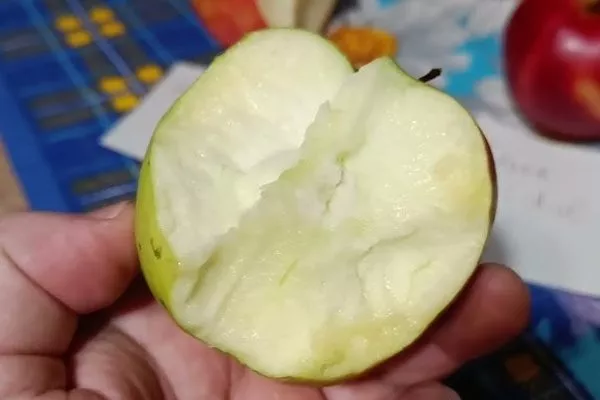
The shelf life is until April, and even longer under optimal conditions, without losing flavor or appearance. The calorie content of 100 g of apple is 47 kcal.
Chemical composition:
- sugar – 11.2%;
- acids – 0.67%;
- pectins – 7.3%;
- Vitamin C – 8.8 mg;
- P-active compounds – 117 mg.
Imanta is a dessert variety: the apples are suitable for both fresh consumption and processing – they are especially good for making jam, pastilles, and cider.
Frost resistance and pollination
This variety is characterized by moderate winter hardiness. With proper cultivation and care, it can withstand temperatures down to -25°C, especially in the Central District. Frost resistance is influenced by precipitation levels and the quality of the tree's winter preparation.
Imanta is a partially self-fertile variety, meaning it can produce fruit without pollinators, but the yield will be minimal. To ensure consistent and abundant fruiting, it is recommended to plant pollinator varieties nearby.
Best neighbors:
- Belarusian sweet;
- Alesya;
- Antaeus.
Ripening, growth, fruiting and yield of Imanta
The yields are modest at first, only a few kilograms, but the tree grows quickly, adding 45-60 cm annually, and increases its fruit production with each season.
Specifications:
- The crop reaches its maximum productivity in about 7-8 years.
- There is no regularity in yield, but after particularly harsh winters, minor decreases are possible.
- The fruit is typically harvested between late September and mid-October. Apples are ripe when they separate easily from the branch and develop dents when lightly pressed.
- The fruit transports well—it can be packed in boxes up to four layers deep, layered with dry sawdust. Apples can be stored in a regular cellar until spring without losing their flavor or appearance.
Imants begins producing fruit early: on dwarf rootstock, the first apples appear as early as the second year after planting, and on seed rootstock, by the third or fourth year. In the fifth year, the variety enters its full fruiting phase: productivity increases to 20-30 kg per tree. In commercial cultivation, yields reach 17-18 tons per hectare.
Storing the apple harvest
Apples are harvested in late September or early October—the exact timing depends on the region and weather conditions. Thanks to their short, strong stems, the apples remain on the branches for a long time and do not fall off.
The fruits have excellent shelf life and retain their flavor from October to the end of April. To ensure long-term storage, follow these guidelines:
- in the cellar or basement – select only healthy, undamaged specimens and place them in wooden boxes;
- in the refrigerator – At stable temperature and humidity, apples can be stored until the beginning of June without losing freshness and taste.
Subspecies and variants
Currently, the variety has no subspecies, but new forms may emerge in the future. Breeders are already working on creating a columnar version of Imanta. Read more about what a columnar apple tree is. Here.
The variety grows successfully on both standard and dwarf rootstocks. Trees on dwarf rootstocks grow to 1.8-2 m and begin bearing fruit in the second year, but are more susceptible to frost.
Planting technology
For successful rooting and full growth of an apple tree, it's important to adhere to certain requirements. The tree will thrive and develop well if you approach cultivation responsibly and provide proper care.
Selecting and preparing a seedling
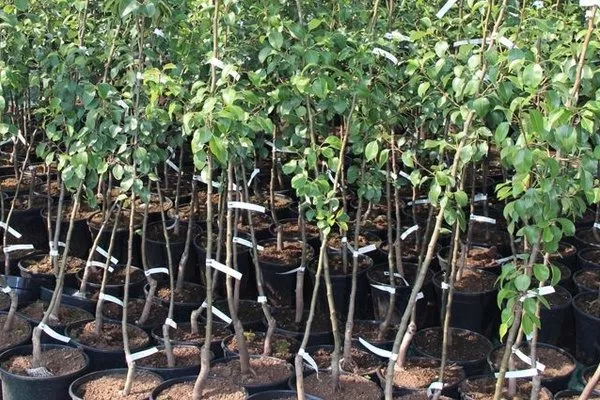
Purchase planting material from nurseries or specialty stores where you can be sure of the tree's variety. Ideally, choose plants grown in the same region where you plan to plant them—they're already adapted to the local climate and thrive better.
When choosing, pay attention to the following criteria:
- root system – well developed and fibrous;
- bark – uniform color, elastic, smooth, without dark spots or growths.
If the seedling has already developed leaves, refuse to purchase it.
How to choose a place?
The Imanta apple tree is undemanding regarding soil type, but it requires sufficient sunlight and warmth to thrive. Insufficient sun will negatively impact yield.
Basic requirements:
- Plant the tree in light, loose soil. If the site has predominantly heavy clay soil, mix it with coarse river sand in a 1:1 ratio.
- Check the soil's acidity in advance. Neutral or slightly acidic soil is preferred. If the soil is too acidic, add sifted wood ash or dolomite flour to the planting hole to neutralize it.
- Monitor the groundwater level—it should be no higher than 1.5-2 meters below the surface. If the site is low and the water is close to the surface, create a 60-70 cm high earthen embankment for planting the apple tree.
Deadlines
The Imanta apple tree can be planted in either spring or fall. Spring planting is more suitable for temperate climates, while fall planting is more suitable for southern regions.
When cultivating in the fall, it's important to allow at least two months before the first frost. This will allow the crop to establish itself well.
Landing rules
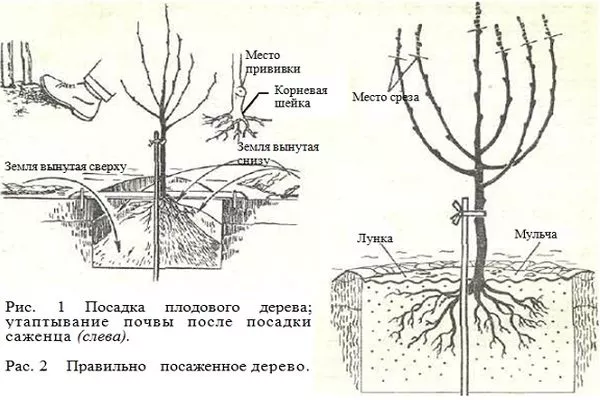
If you plan to plant the Imanta apple tree in the spring, prepare the hole in the fall; otherwise, prepare it a few weeks in advance. The optimal hole depth is 80-90 cm and diameter 60-75 cm. When planting multiple trees, maintain a minimum spacing of 3.5 m between them.
Helpful tips:
- Set aside the top 15-20 cm of soil, the most fertile layer. Mix it with 30-40 kg of humus, 150 g of superphosphate, and 80 g of potassium nitrate. Instead of mineral fertilizers, you can use 150 g of wood ash, bone meal, or a mixture of the two.
- For drainage, line the bottom of the hole with broken brick, expanded clay or pebbles and cover with a waterproof material to prevent the mixture from washing away.
- Before planting, form a mound of prepared soil mixture into the hole. Place the seedling on it, carefully spread the roots, and cover with soil.
- After planting, shorten the side shoots by about a third, water the tree generously (20-25 liters of water), and mulch the trunk circle with a diameter of about 50 cm.
Care
Caring for an apple tree involves following standard agricultural practices. These practices determine the plant's development and productivity.
Watering and loosening the soil
If the summer is moderately warm, water the tree approximately once every 25-30 days, using 60-70 liters of water. Don't pour it directly at the roots; instead, dig circular furrows 10-15 cm deep at a certain distance from the trunk—usually two or three furrows, with the last one matching the diameter of the crown.
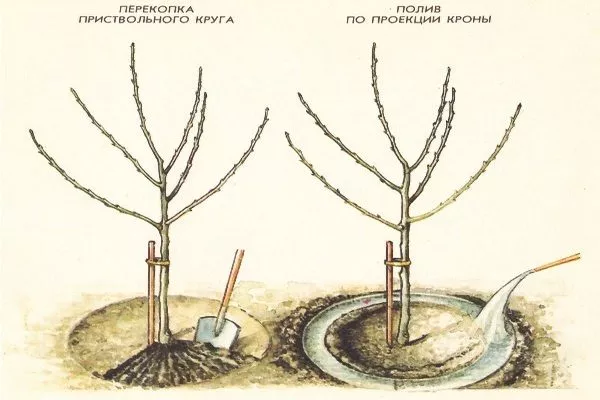
During periods of extreme heat, increase watering to once every 10-15 days. The water should soak the soil to a depth of 80 cm.
Perform mandatory irrigation during the following periods:
- when leaf buds open;
- 15-20 days after the end of flowering;
- about a month before harvest.
After this, stop watering, as excess moisture reduces the sweetness of the fruit, reduces its shelf life, and can cause cracking and rot. Only a couple of weeks after fruiting has finished should you water the plant—this is important for winter preparation, especially during dry and warm autumns.
Dig the soil at least twice a year – in spring and fall. In summer, loosen the soil with a hoe, removing weeds and root suckers. Regularly clear the area around the tree trunk of fallen leaves and rotting apples.
Top dressing
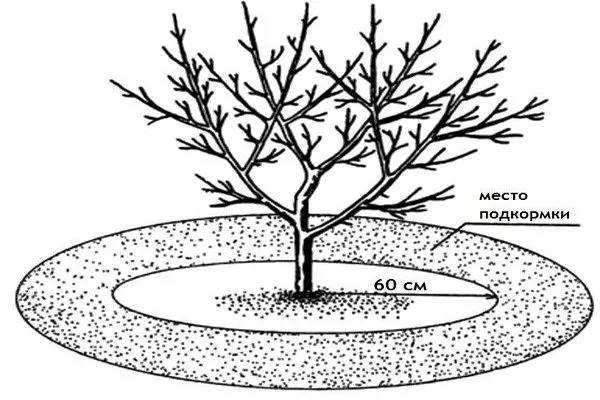
If the planting hole is properly prepared, the Imanta apple tree will not require fertilizer the following season. Begin applying fertilizer the second spring after planting, following these steps:
- as soon as the soil thaws, loosen it thoroughly, add humus or rotted compost at the rate of 8-10 liters per 1 sq. m;
- after a week, feed the plant with nitrogen substances - mineral (urea, ammonium sulfate) or natural (infusion of fresh cow manure or bird droppings);
- Use nitrogen solutions only in the spring, as excess nitrogen stimulates the growth of green mass to the detriment of fruiting;
- During flowering, it is recommended to use compositions containing phosphorus and potassium for feeding, watering with a solution of simple superphosphate (50-70 g per 10 l of water) and potassium nitrate (25-30 g per 10 l);
- Alternatively, you can use an infusion of nettle leaves, dandelion and other weeds;
- 2-3 weeks after the buds fall, spray the crop with a complex fertilizer for fruit trees, prepared according to the instructions;
- last feeding carry out the treatment before the cold weather, using complex preparations containing potassium and phosphorus (for example, AVA, Autumn, Agricola).
Trimming
The imant has a compact crown, so it doesn't require heavy pruning. However, it is recommended to structure the tree's crown annually into a layered form—this is considered the optimal shape.
In each tier, leave no more than five skeletal branches, on which retain approximately the same number of first- and second-order shoots. Remove all remaining branches later. Additionally, prune shoots growing downward or inward.
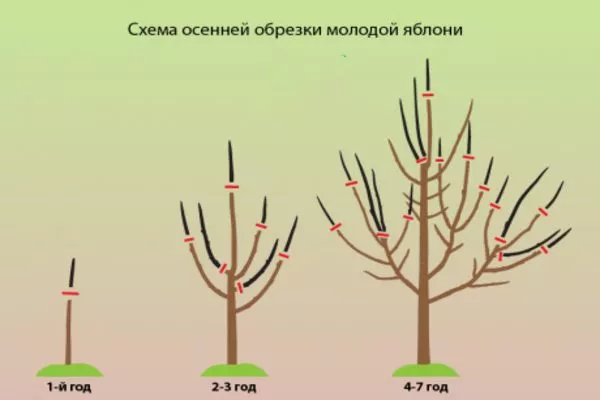
Perform regular sanitary pruning. In spring or fall, remove the following branches:
- frozen;
- dry;
- broken;
- damaged;
- sick.
Learn about the intricacies of autumn pruning of apple trees Here.
Protection from frost and rodents
In the North Caucasus and Crimea, even young trees generally don't require additional winter protection. However, in colder and harsher climates, it's best to take precautions against frosts in advance.
Follow these recommendations:
- Stop watering in the second half of August, or at the latest in early September.
- Wrap low-growing trees with burlap or tarpaulin from the root collar to the top. For larger plants, use agrofibre, toluene, spunbond, or even old tights at the base of the trunk.
- Additionally, cover the roots with hay mats, straw bales or spruce branches.
To repel rodents, treat the trunks with old lard, fuel oil, grease, or drying oil. Commercial pest control products are available at gardening and farm supply stores, but many farmers are wary of them, fearing potential health and environmental damage.
Pest and disease control
The crop is characterized by good resistance to scab, but can occasionally be affected by other diseases, although this is quite rare. Read about apple tree diseases and their treatments. Here.
The main and most dangerous ones include:
- Powdery mildew - The disease manifests itself as a white coating on the leaves, which darkens and thickens over time. The shoots are then affected, and they may dry out. For prevention and treatment, spray with copper-based products, such as copper oxychloride or Bordeaux mixture.
- Cytosporosis - A bark disease characterized by the appearance of dark brown cankers on the trunk and skeletal branches. If left untreated, the bark dies and the branches dry out. To prevent the disease, use copper oxychloride.
The treatment is long-term: remove the affected bark, clean the wounds, treat with copper sulfate and cover with garden pitch.
As for pests, the Imant variety is susceptible to attacks by insects common to apple trees:
- apple blossom weevil;
- codling moth;
- aphid;
- spider mite;
- leaf roller.
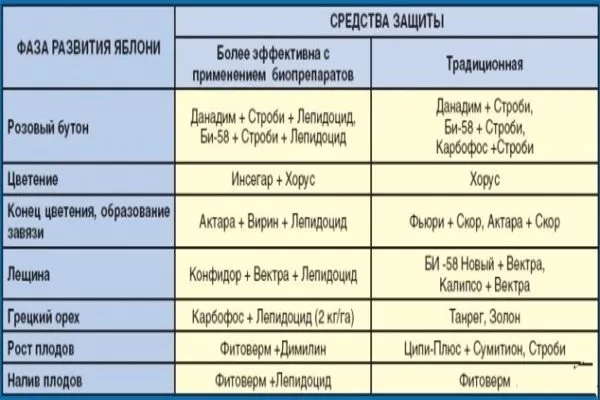
To reduce the risk of pest infestations, follow these steps:
- regularly clear the trunk of dry bark;
- remove fallen leaves from the tree trunk circle;
- loosen the soil;
- remove weeds;
- Inspect the tree systematically.
Pros and cons
One of the advantages of this crop is its high productivity and early fruiting. The apples have a unique and attractive color, which significantly increases their commercial value.
Other advantages of the variety:
Flaws:
Reviews
Imanta combines ease of cultivation with consistent fruiting, making it an excellent choice for both novice and experienced gardeners. Its reliability, disease resistance, and high-quality fruit ensure a decent harvest with minimal effort. This apple tree boasts good productivity and thrives in regions with variable weather.