
The Helena variety is a true garden gem. Although its apples are not intended for consumption, they add a special charm to the garden. These trees are often used both in group plantings and as stand-alone design elements. With its exquisite color, this variety can transform even the most inconspicuous corner of the garden into a picturesque landscape.
Characteristics of the variety
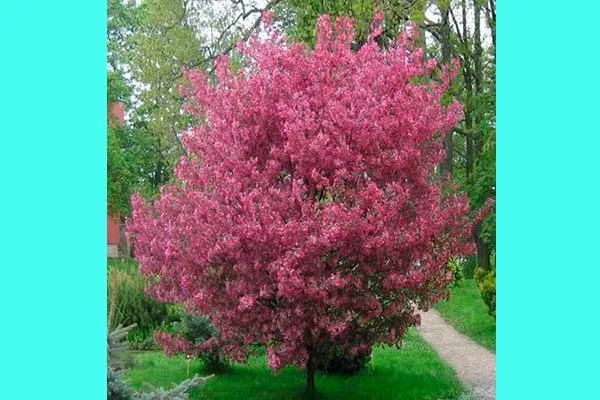
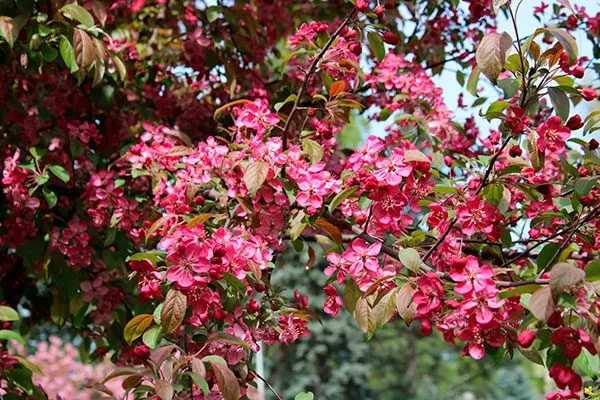
The plant possesses unique ornamental qualities—its beauty remains undiminished throughout the year. In the spring, it dazzles with pink buds, then, turning purple in its foliage, the tree retains its beauty until late autumn. In winter, it is adorned with reddish, velvety fruits that look magnificent against the snow.
Historical background, regionality
The Helena apple tree is the result of meticulous work by Canadian breeders in the mid-20th century. This variety was developed as an ornamental plant capable of withstanding the harsh climatic conditions of North America.
The hybrid's creation is based on the famous Nedzvetsky apple tree. "Canadian" combines two key characteristics: unique ornamental beauty that persists throughout the growing season and compactness. It is not included in the State Register of Breeding Achievements and has no official zoning.
The variety has proven its effectiveness in the moderate climates of Ukraine and Belarus. It is successfully cultivated both in the hotter southern regions and in the colder northern regions of Russia, including the Urals, Siberia, and the Far East.
Description of the tree
The apple tree is medium-sized, not exceeding 370-400 cm in height, and is distinguished by the following characteristics:
- The root system is multi-branched, compacted and has dense filaments, which allows it to effectively extract moisture from the soil.
- The tree's crown is broad and robust, rounded or oval in shape, reaching 300-400 cm in diameter. Its shape can become drooping over time. Branches extend from the main axis at an acute angle and point upward, but may become more relaxed over time.
The tree's crown is dense, so pruning is necessary to maintain its neatness and decorative appearance. - Young shoots are purple, then turn brown.
- The leaves are bright, glossy, purple-tinted, oval-shaped, and feature trilobate elements at the branch tips. The leaf surface is glossy, dense, and highly lustrous. The leaf margin is serrated, jagged, and sharply serrated. The veins are prominent.
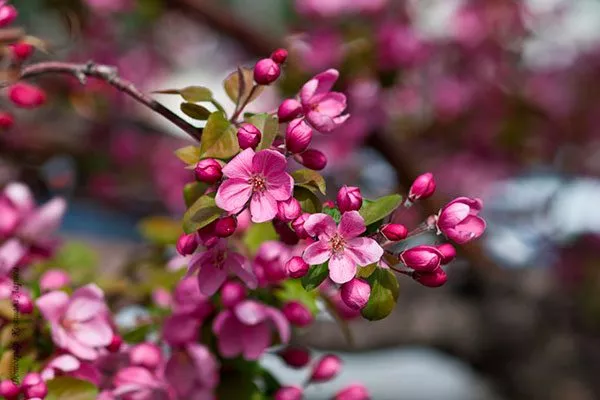
The color of the leaf blades changes from dark red at blooming to dark green later, their size is about 6-8 cm. - The flowers are large, saucer-shaped, come in shades of pink and purple and have a mild aroma.
Flowering begins at the end of April and continues until the first ten days of May, but can be extended up to a month under favorable weather conditions and depending on the growing region.
Fruit characteristics
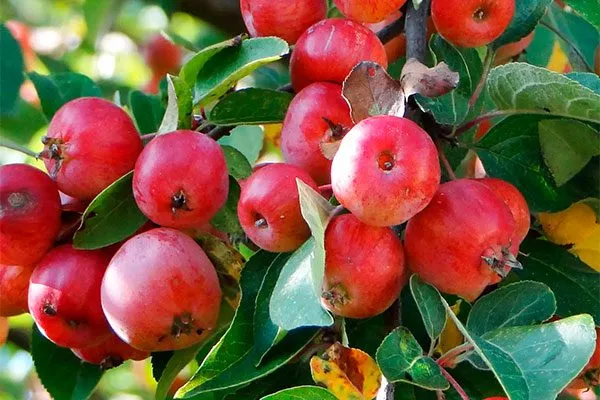
The fruits of this ornamental plant attract the eye with their unique shape: they have a slightly flattened roundness with prominent ribbing.
Other varietal characteristics:
- the skin is golden-yellow, decorated with red spots and a silvery waxy coating;
- there are almost invisible green dots under the skin;
- The stalks of these apples are long and thin;
- the pulp is compact, white-yellow, fine-grained;
- the taste is characterized as viscous, spicy, sour-bitter;
- the weight of each fruit is 2-5 g with a diameter of 1-1.3 cm;
- inside the fruit there are 5 seed pods, surrounded by leathery valves;
- The pulp is formed due to the growth of the fleshy receptacle.
Although Helena apples don't have the flavor or size to be suitable for culinary use, some home cooks find a use for them. They use them to add a piquant flavor to winter preserves, including not only fruit but also vegetable ones.
Productivity and pollinators
When the apple tree enters the budding phase, it begins to fill the garden with a stunning aroma, which inevitably attracts bees, bumblebees, and other pollinators, which fertilize its flowers. This ensures successful fertilization.
In addition, some apple varieties are ideal partners for ornamental apple trees, including:
- Idared;
- Gala;;
- Champion;
- Golden Delicious and others.
A single mature tree can yield up to 8-10 kg of small fruits, which, unfortunately, are not suitable for raw consumption. Harvesting is not the primary purpose of growing the Helena apple tree.
The subtleties of ripening and fruiting
Beginning in its second or third year, the tree begins to bear its first small apples. Initially, the number of fruit ovaries may be limited, but with each passing year their number steadily increases. By the age of five, the tree begins to bear fruit quite abundantly.
Apple tree budding peaks in late April or early May. However, the growing season can vary greatly depending on weather conditions. In cooler weather, flowering can last for a full month.
Small apples reach maturity by the end of summer and are highly resistant to shedding, decorating the branches both in autumn and winter.
Winter hardiness, disease resistance
The apple tree is characterized by high frost resistance—it can withstand temperatures down to -35°C without any damage to its overall health. Mature specimens require no additional protective treatments in winter, making them an ideal choice for growing in areas with harsh climates.
Although the Helena variety is renowned for its strong immunity, this does not preclude the possibility of infection by fungal diseases and pests. During epidemics or in high humidity, trees are at risk of infection.
To ensure plant protection, preventative treatments with copper-containing products are recommended in the spring and fall. These treatments require regularity and attention.
Subspecies
Breeders haven't ignored this stunning ornamental plant. From the original species, they've developed two subspecies, each with its own unique beauty:
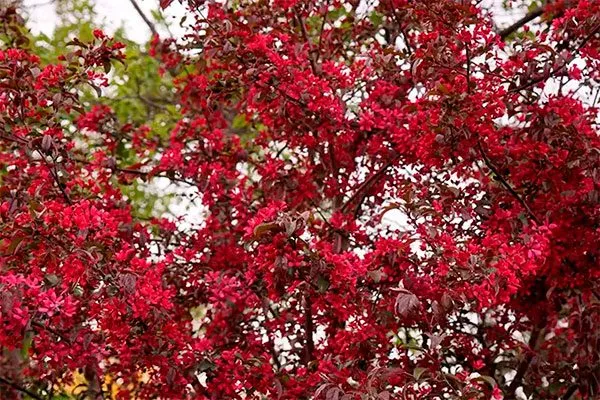
- Red-leaved hybrid. It differs from the original variety only in the color of its foliage. Initially, it is a rich, dark red, which persists until fruiting begins. After this, the foliage turns an emerald green, which remains vibrant until autumn.

- Canadian variety. In Canada, Helena's native land, another unique subspecies was developed. It is distinguished by its three-lobed leaves with a glossy surface. This tree is short but wide, with a graceful, mesh-like crown.
It has the ability to withstand even the harshest and most severe environmental conditions with ease.
Growing apple trees
Successfully planting the Helena apple tree doesn't require any special skills or experience. Simply read the instructions carefully and follow them closely.
Site requirements
The best time to begin planting is early spring or fall. Spring is considered the most favorable season. It's recommended to plant seedlings before they begin to leaf out, when the soil has warmed up well and the weather has become consistently warm. This will ensure more effective rooting and protect the plants from unfavorable low temperatures.
When choosing a place for growing, you should take into account all the necessary conditions for this ornamental tree:
- It is preferable to choose a flat area to avoid stagnation of water and, as a result, slow growth and the risk of death of the tree;
- opportunities for maximum illumination of the area;
- protection from drafts and gusts of wind;
- the depth of groundwater is not less than 2.5 m;
- soil with slightly acidic or neutral acidity and nutrient content.
Selection of seedlings
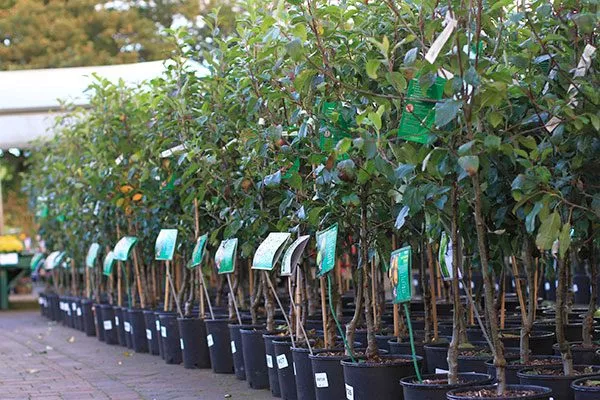
To select a high-quality Helena apple tree seedling, you should pay attention to the following indicators:
- the trunk is clean and free from any damage to the bark, growths or swellings;
- the root system looks healthy and well developed;
- There should be no signs of disease, dry leaves or broken branches.
- The optimal age for planting a tree is 1-2 years, which will ensure its confident adaptation to new soil conditions.
Technology of planting operations
If you're just starting out with gardening, planting a Helena apple tree won't be a difficult task. Before planting, clear the area of any remaining vegetation to protect the young tree from overwintering insect pests.
To improve the quality of the soil, add fertilizers to the planting hole:
- 5 kg of manure and humus;
- 20-25 g of ammonium nitrate and superphosphate.
The planting process includes the following steps:
- Dig a hole 80-85 cm deep and 75-80 cm in diameter.
- Level the bottom of the hole and fill it with a soil mixture containing mineral fertilizers and organic matter.
- In the center of the hole, install a stake that will serve as a support for the young apple tree.
- Place the seedling in the center of the hole, carefully spreading the roots so that they are not damaged, and fill it with soil mixture.
- Shake the plant several times to fill the soil voids around the roots, and gently compact the soil around the trunk.
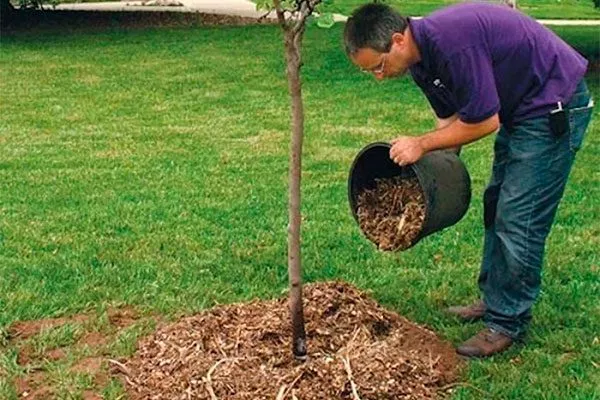
- Water the plant and mulch the area around the trunk with peat or sawdust.
- Tie the apple tree to a stake. The support should be left in place for 4-5 years.
Apple tree care
To achieve success in agricultural cultivation, it is necessary not only to carefully study the planting recommendations but also to provide the plant with adequate care, which is quite accessible to any gardener striving for success.
Watering
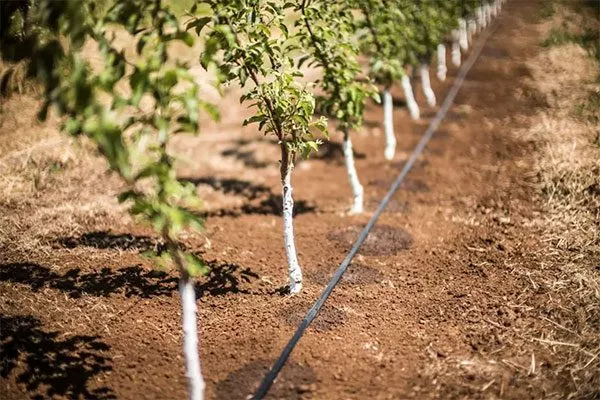
When growing the Helena apple tree, it's crucial to maintain the required humidity level for this variety. It's important to regularly mist the young tree after planting, every 7-10 days, to allow the seedling to quickly adapt and begin developing.
Peculiarities:
- Mature trees should be watered according to local climate conditions and current weather forecasts. Frequent watering of Helena is undesirable and sometimes harmful. It is capable of independently seeking water sources in the soil layers.
- During periods of drought, the tree may need watering several times per season, with 30 to 40 liters of water being poured under each.
- After moistening, it's advisable to loosen the soil layer without pushing garden tools too deeply into it. At the same time, remove root weeds and unwanted plants.
Top dressing
To ensure that trees maintain their blooming beauty, they require regular nutrition:
- Spring fertilization is carried out immediately after the soil freezes. Urea should be evenly distributed over the soil surface (50 g per square meter).
- In August, the garden is fertilized with organic matter such as manure or chicken droppings.
- To successfully survive the winter cold, trees need to replenish their nutrients in the fall. During this period, they require mineral supplements. Fertilizing should be done not once, but twice, spaced 10-15 days apart, for best results.
Pruning rules
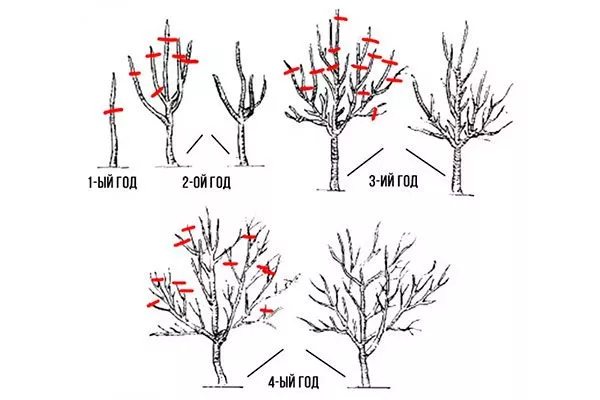
Helena doesn't require any special branch shaping, but to give it a unique and clean look, it's recommended to prune or trim young shoots in early spring. This will help renew and rejuvenate the crown and ensure even sunlight exposure to all nodes, which is important for the tree's health and disease protection.
Preparing for winter
The hybrid has good winter hardiness – it can survive even the harshest winters without special shelter, if we are talking about mature trees.
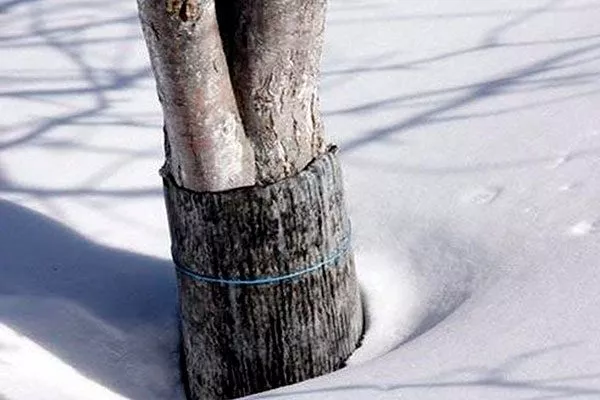
For young apple trees, more thorough preparation for winter is necessary, which includes the following steps:
- wrap the plant trunk using agrofibre or burlap;
- protect the base of the young tree from rodents with a metal mesh;
- Mulch the tree trunk circle with a layer of humus, sawdust or peat to prevent moisture evaporation and maintain the water and temperature balance of the soil.
Diseases and pests
The ornamental apple tree has good resistance to many diseases, but is at risk of infection by fungal pathogens, especially during widespread epidemics or in prolonged humid climates.
To protect the plant from various diseases, it is necessary to carry out the following preventive measures:
- removal of dry wood;
- removal of fallen leaves;
- periodic chemical treatments;
- feeding the root system with essential elements.
The use of chemicals must strictly follow the manufacturer's instructions and take into account the recommended dosage when mixing solutions. Timely preventative measures can help avoid more complex problems associated with treating existing infections. Insecticides are used against potential pests.
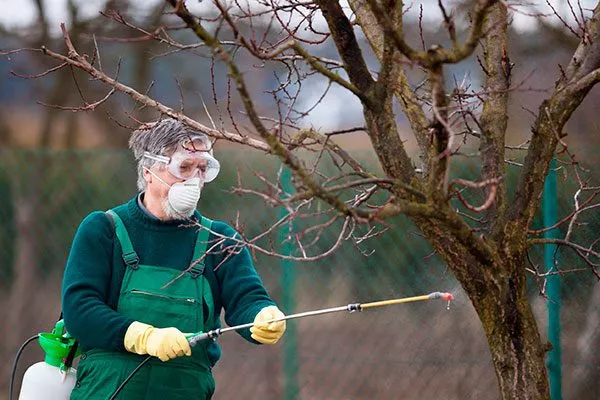
To protect apple trees from rodents such as hares, mice, and hamsters, which tend to damage the bark during the winter, it is recommended to treat the lower parts of the trunks with aggressive-smelling chemicals, such as grease, fuel oil, or drying oil.
Harvesting and storage
When harvesting Helena apple trees, it's important to remember that these apples reach maturity in late September - early October. To ensure the fruit is sweet and flavorful, choose dry weather for harvesting. Apples are carefully picked from the branches, taking care not to damage neighboring fruits or branches.
It's best to store harvested apples in a cool, dark, and ventilated area where the temperature does not exceed 4-5 degrees Celsius. This will help preserve their freshness and prevent rotting.
Pros and cons
The hybrid has won the favor of gardeners due to its numerous advantages:
Reviews
If you value frost-hardy and low-maintenance planting, the Helena apple tree is an ideal choice for your garden. Unfortunately, the fruit is inedible due to its distinctive flavor, but it serves as food for birds during the winter.