
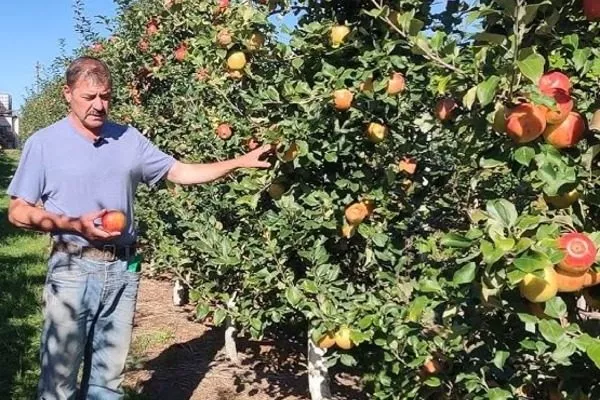
Honeycrisp is an American apple variety that captivates with its competitive productivity and delicate fruit aroma. This variety has only recently become known in Russia, but has already earned a high reputation in commercial gardening for its numerous qualities.
History of apple breeding and growing regions
In the early 1970s, American breeders working at the University of Minnesota created an apple variety called Honey Crisp. They used two varieties: Honey Gold and Macan.
Historical background:
- The variety immediately became popular in the USA due to its excellent taste, excellent transportability and long-term storage capabilities.
- In the 1980s, it successfully passed testing and began to conquer global markets, and by the early 2000s, it was possible to buy seedlings of this apple tree in Russia and Ukraine.
- According to published research, the Honey Crisp hybrid was created by crossing the Keepsake variety with an unknown specimen numbered 1627. This specimen's parents were later identified—the famous Golden Delicious and Duchess of Oldenburg, which were already famous in the 18th century.
- Honey Crisp was obtained through natural pollination, which excludes any connection with genetically modified organisms.
- Honey Crisp is known as Honey Freshness, Honey Crunch, in Belarus it is called Arnabel, and in Russia it is registered in the State Register under the name Honey Crisp.
This variety is ideal for growing in harsh weather conditions, but its fruits have a unique flavor profile with more acidity, which differs from apples grown in milder climates (the latter are sweeter).
Description
The excellent fruit quality of the Honey Crisp apple variety has made it one of the most popular winter varieties. Equally important to its success is its resistance to transportation and the ability to extend the shelf life of the apples.
Tree
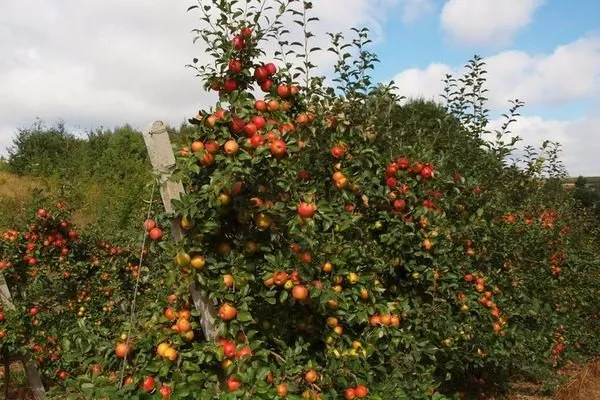
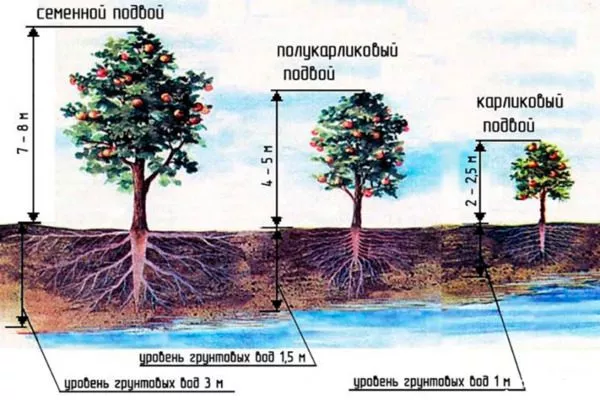
The Honey Crisp apple tree is a medium-sized tree, reaching a height of no more than 450 cm. For ease of care and harvesting, it is recommended to grow this variety on a dwarf or semi-dwarf rootstock. With the former, the tree will not exceed 250 cm, while with the latter, it will reach 350 cm.
Varietal characteristics of the plant:
- Thin, long branches are positioned at right angles to the trunk. Due to the active growth of shoots, the tree's crown quickly fills out early in its life, requiring regular pruning. With proper pruning, the crown acquires a broad oval shape by the fifth year.
- The bark of a young Honey Crisp tree is brownish-green in color, which turns brownish-brown over time and begins to crack.
- The medium-sized apple tree leaves are a rich green color and oval in shape. The leaf tip is pointed, the base is smoothly rounded, and the edges are slightly wavy.
The leaf blade surface is smooth and slightly sheen. The petiole is normal, and the stipules are spine-shaped.
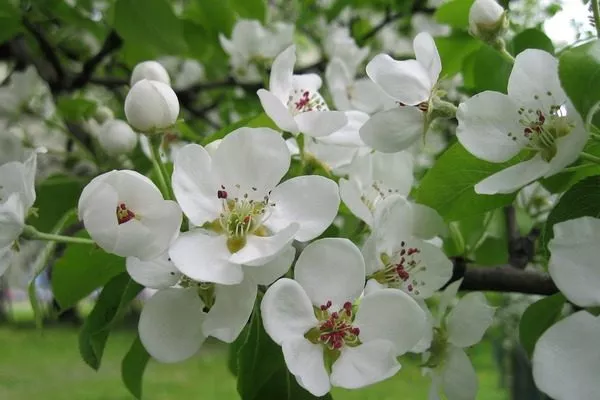
- Apple tree flowers are small and pure white. Blooming lasts no more than three weeks and depends on the climate of the region where the tree grows. In southern regions, blooming usually occurs in April.
- The root system extends through the upper soil layers. The presence of a central root is determined by cultivation methods (when cultivating on rootstock, it is recommended to remove the central root).
Fruit
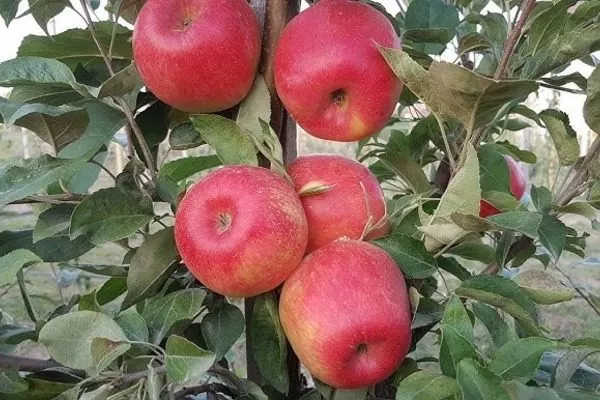
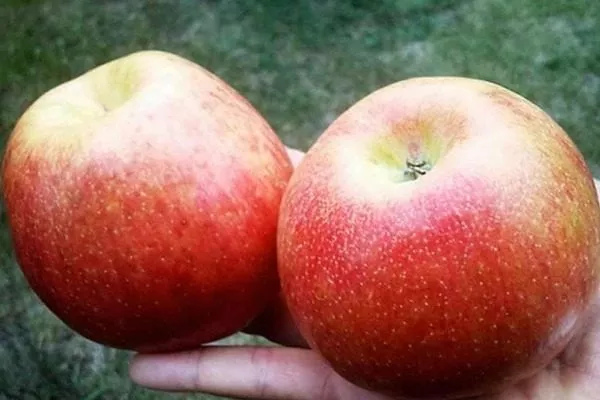
Honey Crisp apples have oval-elliptical symmetrical shapes, sometimes slightly compressed, but they are quite large – the weight of one specimen ranges from 180 to 250 g.
Other characteristic features:
- At the beginning of ripening, when the apples are still green, they gradually acquire a honey-yellow color with a bright blush, sometimes red-burgundy, and light spots on the smooth, shiny skin.
- When the apples are fully ripe, their dense, juicy flesh takes on a creamy or slightly yellowish tint, and when bitten, it breaks with a crunch, which is what gives the variety its second name – Honey Crunch.
- These apples have a pleasant flavor, with a hint of honey and a subtle tartness, and a delicate, fruity aroma. They have a tasting score of 4.8 out of 5. Calories: 52 kcal per 100 g.
Chemical composition includes:
- ascorbic acid – up to 12.3 mg;
- sugar – up to 15 g;
- pectins – 13.2 g;
- acids – up to 1 year
The consumer period for these apples begins in November, and if stored properly, they remain fresh and tasty for up to six months.
Pollination and productivity
In order for the Honey Crisp apple variety to bear fruit, it must be pollinated, as without this, ovaries will not form on the tree.
A number of varieties are suitable for this:
- Idared;
- Gloucester;
- Askold;
- Everest;
- Golden Delicious.
If the Honey Crisp apple tree pollinates itself, the number of ovaries will not exceed 3% of the total number of flowers. On an industrial scale, some farmers use artificial pollination.
The yield is estimated to be average. The Honey Crisp apple tree begins bearing fruit early, especially when grown on vegetative rootstock. The yield will be small in the first two years after planting, but with favorable weather conditions and proper care, a four-year-old tree can yield up to 10 kg of ripe apples. The apple tree will produce a full harvest (35-40 kg) in its eighth year.
Flowering, ripening time and fruiting
Flowering begins at various times: early, mid, or late May, depending on the climate of the region and the current weather. A key factor is the ambient temperature: the flowers open when the temperature reaches 15 degrees Celsius, emitting a rich and pleasant scent.
The Honey Crispy apple tree has a long fruiting cycle. The first apples reach maturity in the second half of September, while the last are ready for harvest in mid-October.
Frost resistance
Honey Crisp has good frost resistance. Mature trees grown on standard vegetative rootstocks can withstand temperatures as low as -35°C without harm. However, dwarf and semi-dwarf varieties may have somewhat less tolerance to low temperatures.
Deterioration of frost resistance may be caused by the following factors:
- excess fruiting in the current year;
- weakening of the tree's health due to disease or insect damage;
- mechanical damage;
- nutrient deficiencies, especially possible in drought conditions.
To prevent damage, young seedlings should be covered before winter.
Storage of the harvest
Some characteristics of this apple variety can be considered its weaknesses, particularly when it comes to ripening. Apple trees are prone to dropping fruit, making it crucial for the cultivar owner to harvest the crop in time to avoid missing the optimal ripening period. Fruit that has fallen to the ground is not suitable for long-term storage.
Honey Crisp apples are suitable for a variety of culinary purposes, but they are especially prized fresh, so gardeners strive to extend their shelf life. With proper storage, apples can retain their flavor and nutritional value for up to six months.
For long-term storage of apples, it is recommended to maintain:
- temperature within the range from 0 to +5 degrees Celsius;
- humidity about 85%.
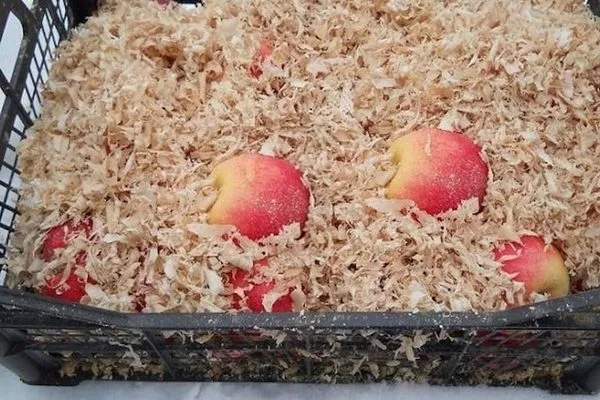
Containers must be carefully prepared (cleaned), and provided with sawdust, clean paper, or river sand to protect the fruit. Apples of the same size should be placed in the boxes, excluding damaged, infected, or spoiled specimens.
Landing rules
The best time to plant Honey Crisp apple trees is early fall or late spring, when sap flow in bare-root seedlings is not active. For young trees grown in containers with closed root systems, the appropriate time for transplanting is determined by the gardener.
Preparing the seedling and the site
To plant Honey Crisp, dig holes up to 100 cm in diameter and 50-55 cm deep. The variety grows well in soils with predominantly loam and sand, but requires high moisture capacity, good air permeability, and sufficient fertility.
Selection Features:
- When choosing a planting location, it is important to consider good lighting and monitor the groundwater level – it is desirable that it be at a depth of more than 2-2.5 m.
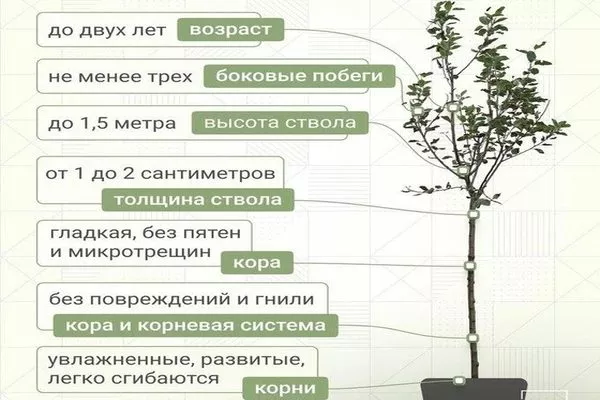
- The best seedlings are one- or two-year-old, with a well-developed root system, when their survival rate is at its peak. Before planting, carefully inspect the root system and branches of the young tree, ensuring there are no damage or signs of disease, as well as their elasticity.
Damaged root sections are cut off with a sharp knife, and the skeletal roots are slightly shortened. If the root system is dry, place the apple tree in water for a couple of days.
To plant Honey Crisp, prepare the site a month before the main work begins. To do this, dig a hole and prepare a soil mixture containing:
- humus;
- wood ash;
- potassium sulfate;
- Superphosphate.
Landing technology
The process of planting apple trees can be carried out in two time periods of the year: when the soil warms up to 10 degrees in the spring or in the fall, when there are at least 3 weeks left before frost.
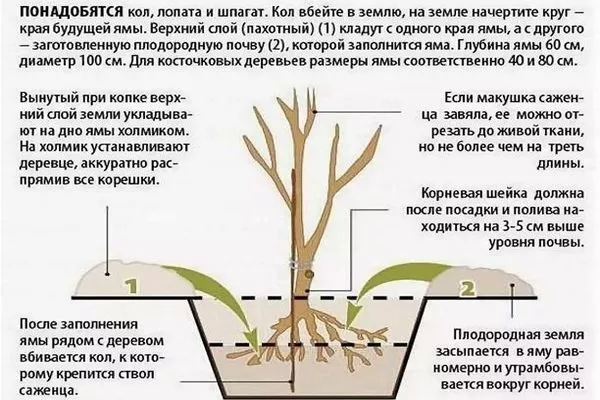
To plant a seedling, you need to follow the step-by-step instructions:
- Dig a hole.
- Place drainage at the bottom.
- Then fill it with soil substrate.
- Pour water over it.
- Carefully place the seedling in the hole and fill it with soil so that the root collar remains 2-3 cm above the soil level.
- Using light pressure, compact the soil around the seedling and moisten it again with water.
- Then, to provide support for the young apple tree, drive a wooden stake into the ground and tie the tree's shoots to it.
Care instructions
Honey Crisp apple trees require little care. Mature trees can survive without regular watering, but during periods of extreme drought and before winter, it's important to pay attention to watering.
Features of cultivating the variety:
- Watering can be combined with fertilizing: after the water has been absorbed into the soil, add a fertilizer solution, then water again. Fertilizing can be in the form of ammonium nitrate, urea, or nitroammophoska solutions.
- Before winter frosts, apple trees require not only ample watering, especially if the soil is dry, but also other measures. This includes clearing the tree trunks, adding organic matter, and mulching the top layer of soil.
Mature trees can survive the winter without cover, while young seedlings are recommended to be protected with a layer of burlap or special material, and the trunk circle should be covered with mulch or spruce branches. - Loosening the soil and removing weeds is desirable, but not mandatory.
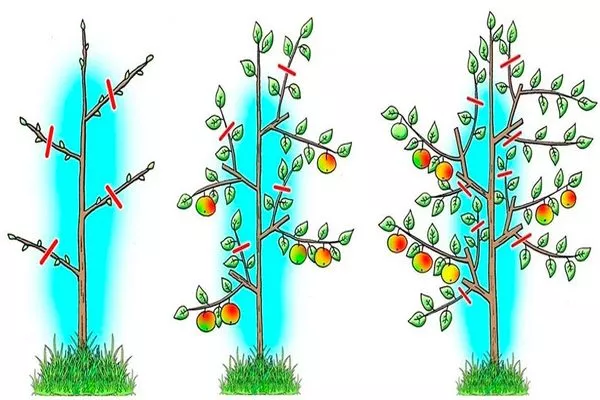
- Pruning Honey Crispy is recommended annually. First, shorten the central stem by a third, as well as the lateral branches. Each year, remove suckers and densely growing branches. Dry and damaged parts should be pruned.
- If the winter is snowless, watering is recommended in early spring, but first, carefully inspect the trees for cracks in the trunk and branches. If there were severe frosts during the winter, cracks may appear in the bark and lead to gum flow. Carefully clean any damaged areas and treat with a copper sulfate solution, followed by garden pitch. Remove any frozen branches.
Diseases and pests
Poor weather conditions and poor tree care can lead to various diseases. The Honey Crisp apple tree is no exception, and is also susceptible to certain problems:
- Powdery mildew. It is recognized by a white coating that first appears on the leaves and then spreads to shoots and apples. Treatment is carried out with fungicides such as Fundazol, Strazha, and Thiovita Jet. Failure to treat powdery mildew can lead to the death of the apple tree.
- Green aphid. These almost invisible insects can cause serious damage to the tree if not controlled promptly. Insecticides such as Karbofos and Fitoverm are effective. Aphids are often found on the undersides of Honey Crisp apple tree leaves.
- Flower beetle. These small brown beetles, no more than 0.5 cm long, pose a threat because they burrow into flower buds and eat their cores, preventing ovary formation. After flowering, the flower beetles move on to the leaves.
These insects not only destroy flowers and foliage but also pose a threat to apple trees. To get rid of them and other pests, treating apple trees with insecticides is recommended.
Pros and cons
Honey Crisp apples are excellent for canning and drying, and when eaten fresh, they're rich in vitamin C and pectin. Other benefits of this variety include:
The disadvantages include:
Reviews
The Honey Crisp apple tree is a low-maintenance plant capable of providing delicious, fresh apples all winter long. Thanks to its good frost resistance, the variety can be grown almost anywhere in the country. Some owners note that Honey Crisp is prone to excessive crown growth, requiring regular thinning, especially during the initial period.