
The Moscow Pear is one of the oldest and most well-known apple varieties, widely grown throughout Russia. This variety is prized for its high winter hardiness, early fruiting, and pleasant sweet-and-tart flavor. Even in harsh conditions, the tree demonstrates the ability to bear fruit for extended periods without losing its varietal qualities.
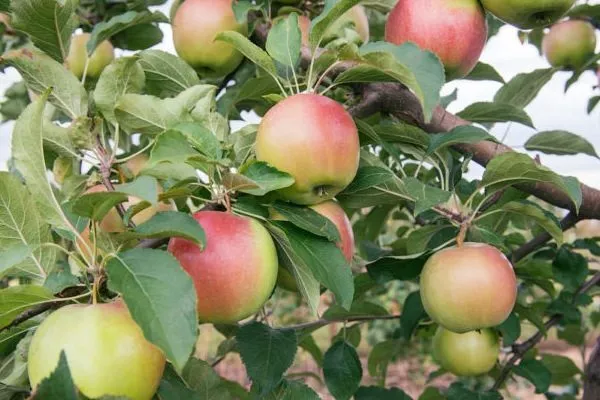
History of apple tree breeding and regions for cultivation
The first documented mention of the Moskovskaya Grushovka variety dates back to 1797 and belongs to Russian naturalist A. T. Bolotov. It originated in the Tula province, where it developed as a result of the natural crossing of various apple and pear varieties.
This variety is suitable for most regions of Russia, with the exception of arid areas. It is widely distributed:
- in Altai;
- in the Far East;
- in the Urals;
- in the Volga region;
- in the Moscow region.
Its early fruiting earned it the nickname "early ripening." In different regions, the cultivar is called "Spasovka" or "Red Pear." The tree is highly winter-hardy and can withstand temperatures as low as -50°C thanks to its thick, durable bark.
Features and specifications
The apple tree is one of the most popular fruit trees, found in almost every garden plot. Its fruits are not only tasty and juicy, but also rich in nutrients. Apples are widely used in cooking: they are used to make jams, preserves, juices, and other preserves.
The appearance of the tree
The Moscow pear tree is a tall apple variety, growing up to 6-8 meters. The plant inherited this size from pears, of which tall specimens predominate.
Distinctive features:
- Crown – The tree is broad, pyramidal, spreading, reaching 2-2.5 m in width, with a medium density. With age, the branches begin to droop slightly under the weight of the fruit.
- Root system – powerful and goes deep into the soil.
- Bark - Brown with a reddish tint, with large branches tinged with yellow. The apple tree bears fruit for up to 60 years.
- Leaves - The leaves are bright green, with a smooth surface and slight wavy edges. The reverse side is slightly darker. The veins are clearly visible and slightly recessed. The leaves are oval, elongated, with finely serrated edges and a slight curve.
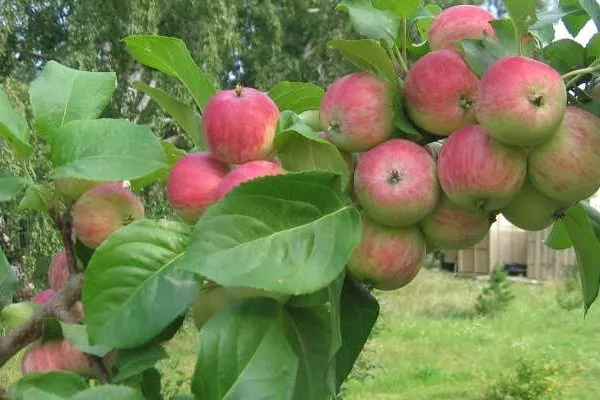
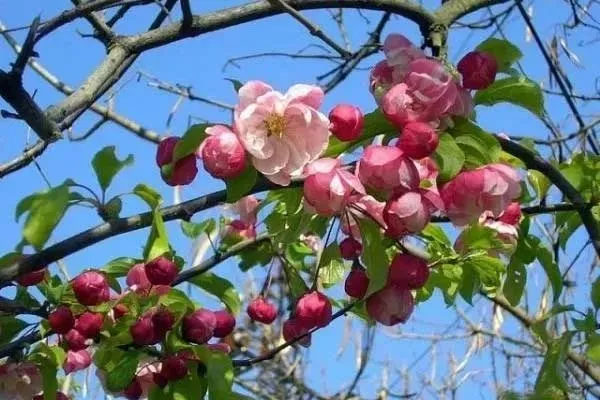
- Flowers – At first, the petals are pink with a rich fragrance, then lighten to white. The buds are saucer-shaped. The first flowering occurs as early as the fourth year of life.
Description of fruits
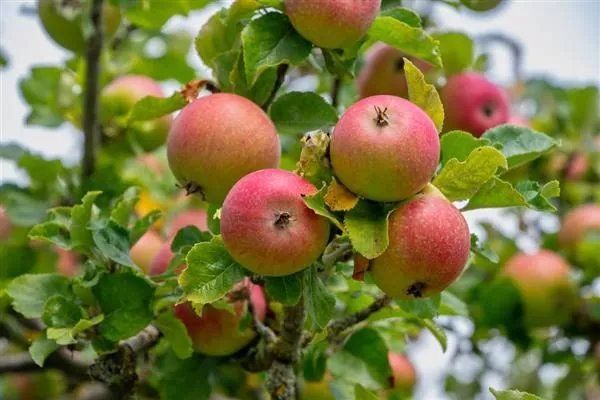
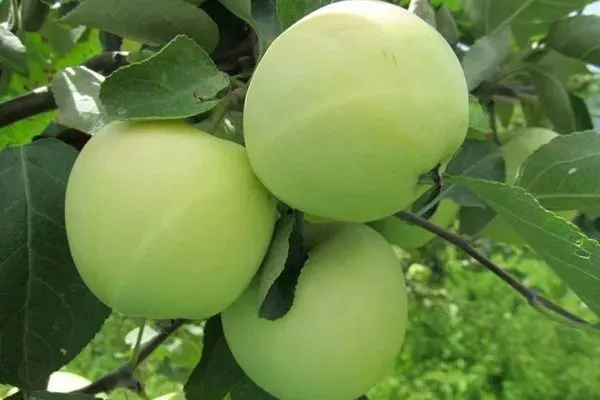
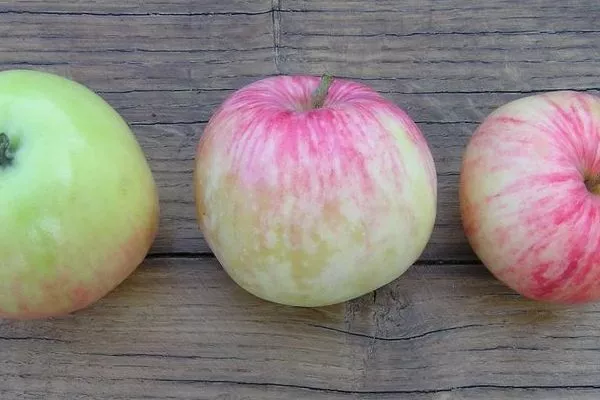
Apples of this variety are distinguished by their small size – the average weight of one fruit is about 80 g. Other characteristic features:
- form - onion-shaped, slightly ribbed;
- main color – yellowish-green, becoming lighter as it ripens, often with a blurred pink blush with specks appearing on the skin;
- subcutaneous points – noticeable, bright and numerous;
- peduncle – short, medium or extra thick;
- funnel – wide and deep, without signs of rust;
- saucer – flat, wide, closed cup;
- heart – onion-shaped;
- seminal chambers – closed;
- seeds – small, light brown in color;
- pulp – white with a yellowish tint, tender, aromatic;
- taste - refreshing, sweet and sour, often with a distinct sourness.
Composition of apples:
- sugar – about 9.2%;
- acidity – 0.89%;
- Vitamin C – more than 9 mg per 100 g;
- P-active substances – almost 130 mg per 100 g.
Apple pollinators and productivity
The crop is not self-pollinating, so suitable pollinator varieties should be planted nearby to ensure fruit set. The following varieties make the best neighbors:
- Antonovka;
- Anise;
- Folder;
- White filling;
- Candy.
Gardeners believe pollination is virtually unproblematic, as compatible varieties that attract insects are usually already growing nearby. To stimulate pollination, you can spray the flowers with a honey solution.
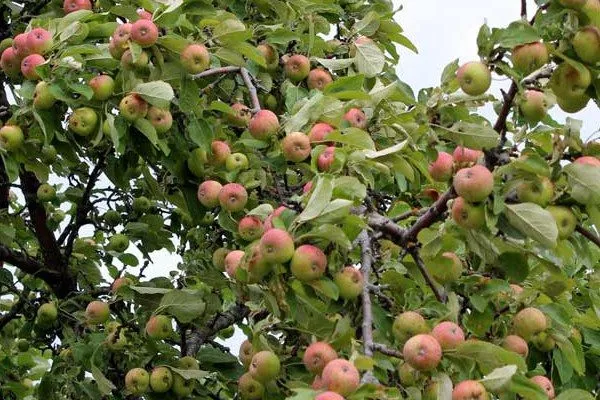
The Moscow pear tree is a high-yielding variety. The first apples appear in the third or fourth year after planting. A mature tree can produce up to 150 kg of fruit per season, with the typical yield being 50-80 kg.
Ripening and fruiting
The Moskovskaya Grushovka apple tree is distinguished by its early ripening period, with fruits ripening around August 15th. Later-ripening varieties, known as spur mutants, also exist, including autumn and winter varieties of the Grushovka.
The variety is considered early-bearing: the first harvest can be obtained as early as 3-4 years after planting. With proper care, a young tree can produce approximately 10 kg of fruit.
Resistance to frost, diseases and insects
One of the main advantages of this plant is its exceptional frost resistance. This is due to its descent from wild apple trees, which gave the plant a resistance developed through natural selection. The tree can withstand temperatures as low as -50°C.
With proper care, apple trees rarely get sick, but the variety doesn't have significant resistance to scab. There's a high risk of attack by certain pests:
- aphids;
- bark beetle;
- spider mites, etc.
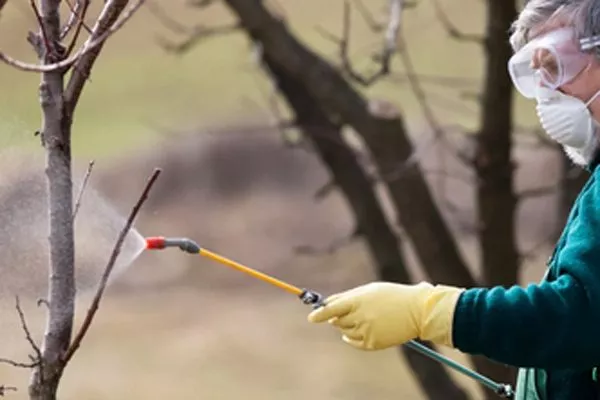
To protect crops, regular treatments with fungicides and insecticides are carried out. Safe folk remedies are often used during the fruiting period and for preventative purposes.
Storage of the harvest
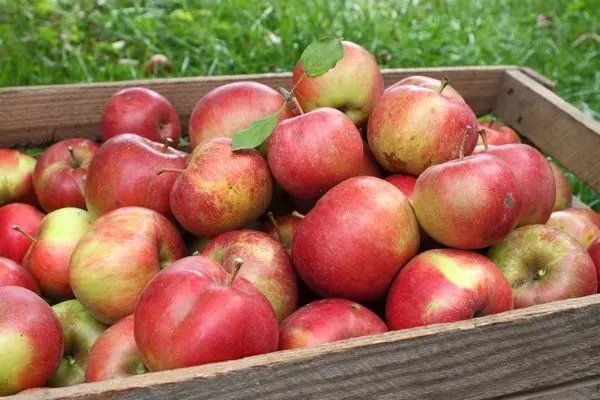
It is recommended to harvest the Moscow pear fruit gradually, as it ripens. The main harvest occurs during the Apple Savior Festival, so the fruit is often eaten fresh immediately after picking.
Apples don't have a long shelf life—no more than two weeks. To extend their shelf life, they can be made into compotes, preserves, or jams, preserving their flavor and nutritional benefits for the winter.
Rootstock options
There are several varieties of the Grushovka apple tree, differing in cultivation methods, propagation, and other characteristics. However, not all of them have been officially certified by breeders.
Popular rootstocks:
- Columnar. Some gardeners mention the columnar form of the Grushovka. These trees are considered more frost-hardy, and their fruits are small, lemon-colored, and have pinkish sides. The flavor has a noticeable tartness.
- Late. This is what Grushovka is called in northern regions, such as the Leningrad region. Due to the short summer, the fruits ripen closer to autumn, although the variety itself remains classic in its characteristics.
- Summer. This name is more common in southern regions, where climate conditions make it difficult for the tree to thrive. In such cases, sellers may change the variety's name to increase market interest.
- Semi-dwarf form. It is an unclasped hybrid apple tree. It has limited growth and is not suitable for commercial plantings, as it produces an inconsistent harvest.
- Dwarf. Compact trees, especially those grown on vegetative rootstocks, exhibit reduced frost resistance, and the apples are often sour and of lower quality.
The yield of such plants is lower—two to three times lower than that of conventional varieties, most often due to improper agricultural practices. Therefore, establishing large garden plots based on them is considered risky.
Subtypes of the Moscow Pear variety
Thanks to its unique varietal properties, this variety has become the source material for the creation of several popular subtypes. Their main characteristics are described below.
Early pear
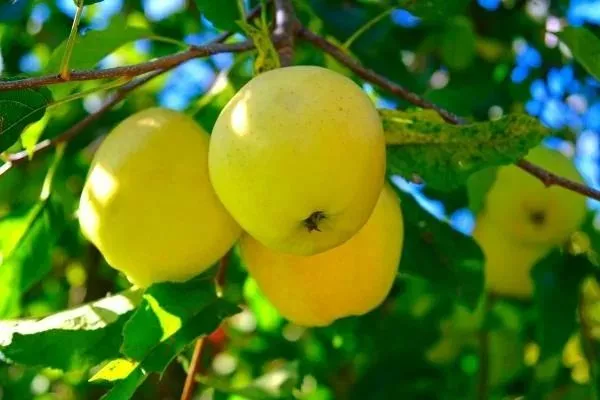
About 70 years ago, breeders crossed the Moskovskaya Grushovka with the Bely Naliv variety, resulting in the Rannyaya Grushovka apple tree. This variety quickly gained recognition due to its lack of typical flaws, such as small fruit and poor disease resistance.
Distinguishing characteristics:
- The plant has a compact form with an even crown and large fruits.
- The yield is quite high – on average up to 150 kg, which significantly exceeds the yield of the parent variety.
- The variety's name speaks for itself: the apples ripen early – already by mid-August, about two weeks earlier than the Moscow Pear.
- The fruits of this subtype are large (up to 100 g), round in shape and have a distinct apple aroma, although less sweet than those of the Moscow Grushovka.
Important qualities have been preserved: high frost resistance and the ability to produce fruit in bursts. However, the yield peaks only every two years, and the fruits ripen at different times, making this variety less suitable for commercial cultivation but attractive to private gardeners.
Winter pear
Winter Pear is the second most popular variety, developed in the late 1950s by crossing the Moscow Pear with the Kronselskaya Transparent Apple.
Features and positive qualities:
- The fruits are large, reaching 120 g, and the yield can reach up to 200 kg per season.
- Winter Pear is less resistant to frost and pests, so it is less widespread than the early variety.
- This subtype is most often cultivated in Moscow, Tambov, Kaliningrad, Leningrad, as well as in the south of Belarus and Ukraine.
- The harvest takes place in mid-autumn, and thanks to their excellent shelf life, the apples last until the end of May. During this time, their flavor becomes sweeter.
- The fruits are slightly elongated, with a thin, creamy skin and vibrant scarlet stripes. The flesh is juicy and has a sweet and sour flavor.
- Like the parent variety, it bears fruit once a year. For good apple set, planting near pollinators is recommended.
Landing rules
The Moscow Pear doesn't require any special growing conditions, as this variety descends from wild apple trees and quickly adapts to various environments. However, there are a few recommendations worth following:
- The planting site should be level, windless, with good access to sunlight – the apple tree needs constant light to bear fruit.
- Suitable soil is loamy, turfy or sandy.
- Due to its long root system, it is not recommended to plant the crop close to houses and roads, as there is a high risk of damage to building structures.
- Groundwater must be deep enough to prevent roots from reaching it, otherwise there is a risk of rotting.
- Plant apple trees within a strictly defined timeframe—this affects the ripening time and shelf life of the fruit (no more than 14 days of storage after harvest). For southern regions, the optimal planting date is late September, and for the central and northern regions, it's during warmer days from late April to early May.
- Prepare the hole in advance—a month before planting—to allow the soil to settle. If you plant immediately after digging, the soil will compact later, along with the tree, which will negatively impact development and may lead to the death of the seedling.
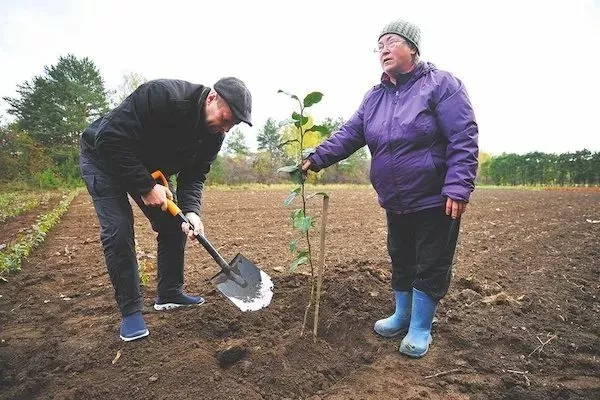
- The hole should be about 80 cm deep and 100 cm wide. Place a layer of fertile soil mixed with humus at the bottom, along with drainage made from broken brick, gravel, or similar materials.
- The root collar should remain 5-7 cm above ground level. After planting, form a small mound of soil around the trunk and apply mulch.
- Since the trunk of a young tree is thin, it should be tied to a stake for the first 1-2 years - this will help prevent damage in winter and curvature.
Apple tree care
Crop care involves a number of agricultural practices that significantly impact productivity. Preventive measures against diseases and pests are also essential.
Watering and fertilizing apple trees
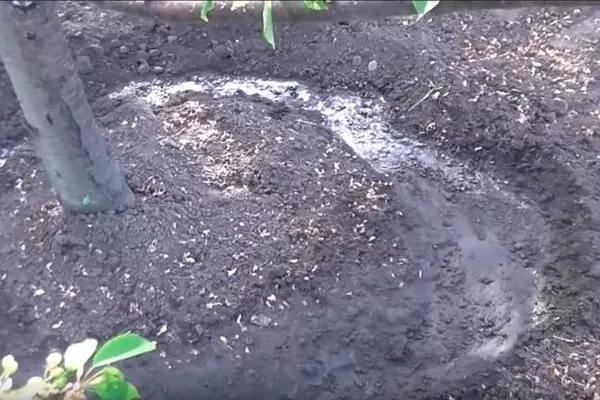
From early spring to August, water young seedlings three times a week, then stop. Water mature apple trees several times a month, more often during hot summers. Don't allow the soil to dry out.
Apply fertilizer four times per season:
- in April – apply nitrogen-rich fertilizers to stimulate growth;
- during flowering – add nitrogen preparations, ash and manure;
- during the formation of ovaries – use potassium and phosphorus substances, as well as organic matter;
- in autumn – Prepare the tree for winter using compost, ash and manure, excluding nitrogen components.
Pruning the variety
Apple tree pruning is an important part of tree care, determining the tree's health, longevity, and fruitfulness. Perform it annually in the spring and, if necessary, in the fall.
Types of pruning:
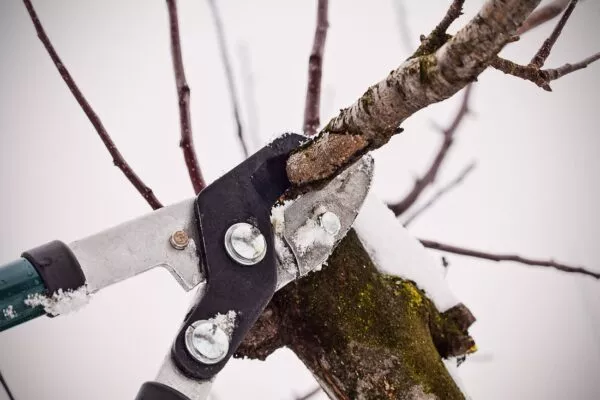
- Formative – Use during the first 4-5 years to create a strong crown. Remove excess and abnormally growing shoots, leaving 3-5 skeletal branches evenly spaced around the trunk.
- Sanitary – Carried out in spring or autumn. Cut off dry, diseased, damaged, or frostbitten specimens.
- Rejuvenating – Suitable for older trees, it stimulates new growth and increases yield. Prune main branches and remove any shoots that are crowding the crown.
Follow the rules:
- Make all cuts “to the ring” or “to the bud”, without stumps;
- use sharp pruning shears or a garden saw;
- treat cuts with a diameter of more than 1 cm with garden pitch;
- Carry out work in dry weather at temperatures not lower than -5°C in spring or in September-early October in autumn.
Pruning improves illumination and ventilation of the crown, reduces the risk of disease and promotes the formation of large, juicy fruits.
Pest and disease control
The Moscow Pear apple tree has moderate disease resistance, but is particularly vulnerable to scab and other fungal infections in cool and damp weather. Regular preventative maintenance and timely treatment with fungicides are recommended to protect the tree:
- Ordan;
- Horus;
- Bordeaux mixture;
- Topaz;
- Tattoo.
If aphids, bark beetles and other pests appear, spray with insecticides:
- Biotlin;
- Fufanon;
- Match;
- Vertimek;
- Inta-Vir and others.
Why are there no fruits on the Grushovka apple tree?
Sometimes gardeners notice that their crop blooms profusely but produces no harvest. This may be due to the following reasons:
- excess of nitrogen fertilizers, which stimulates the growth of green mass at the expense of fruiting;
- lack of a suitable pollinator nearby;
- too hot weather during the flowering period;
- damage to flower buds by pests.
Most of these factors can be eliminated. In hot weather, it's recommended to increase watering and mist the crown in the evenings—this will help preserve the fruit. Even if there's no harvest one year, once conditions are restored, the tree will surely produce apples the following season.
Pros and cons
The Moscow Pear is one of the oldest and most reliable apple varieties, successfully grown in orchards in the Central Russian region, the Urals, and Siberia. This variety is prized for its abundant fruiting and excellent winter hardiness. Although small, the fruits have a good flavor and are produced in large quantities.
Advantages:
Flaws:
Reviews
The Moscow pear remains a popular variety due to its low maintenance, hardiness, and consistent yield. It is considered an excellent choice for cultivation in cold climates. This variety is considered ideal for home gardening and will appeal to both experienced fruit growers and beginners.