
The Gloucester apple tree is deservedly popular among gardening enthusiasts thanks to its abundant fruit production and exquisite sweet-tart flavor. Just four years after planting, you can enjoy the first fruits, which are distinguished by their long shelf life and disease resistance.
Characteristics of the variety
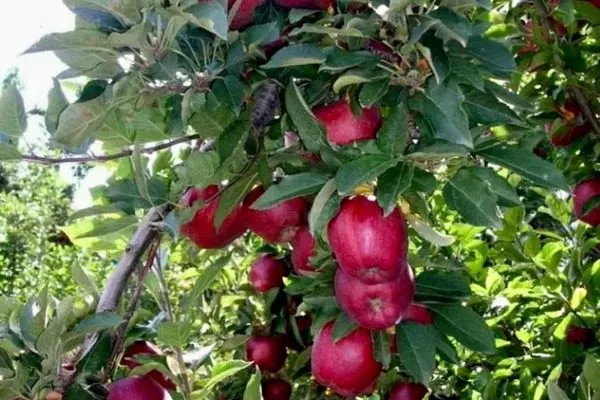
Gloucester's fruits impress with a delicate sweet-tart aroma and a rich blush. Additional characteristics of the variety include a tall trunk with smooth bark, small but vibrant leaves, and abundant inflorescences consisting of four buds. To fully appreciate all its advantages, it is important to understand the specifics of cultivation and care.
Historical background and regionality
This variety is ideal for cultivation in the southern regions of Russia and the North Caucasus, where favorable climate conditions favor its growth. Although gardeners in the central part of the country can also try planting Gloucester, the tree will require additional shelter for successful growth.
Briefly about the origin:
- The origins of the Gloster variety date back to the 1950s, when scientists in Germany created a new apple variety by crossing Delicious Richard and Glockenapfel. This hybrid inherited the best traits of its parents. The delicious fruits were named Gloster.
- The first official presentation of the variety took place in 1969 at a fair, where it was received with delight.
- Gloster appeared in the Soviet Union in 1989 and immediately won the hearts of Soviet citizens not only with its exquisite taste, but also with its ease of care.
- Today it is popular in Western European countries and former Soviet territories.
Description of the tree and fruits
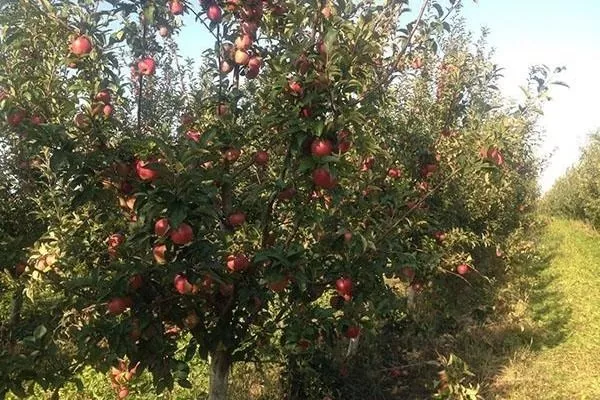
This tree grows to a considerable height, reaching up to 9 m, so regular pruning is necessary to prevent excessive growth, which can complicate the process of care and harvesting of fruits.
Other varietal characteristics:
- When young, the tree's crown is rounded, but with age it takes on a pyramidal shape and can expand up to 300 cm in diameter. The tree's bark is smooth and glossy. Its color is green with a reddish tint, becoming rougher with age.
- The apple tree grows very quickly, its roots branching extensively but not deeply, extending superficially. Several shoots extend from the main trunk, angled toward it and curling upward.
- The leaves are a rich green and rounded. They are small in size and have a compact structure with numerous wrinkles on the surface. The leaves are matte on the outside and downy on the inside, with serrated edges and a slightly rounded tip.
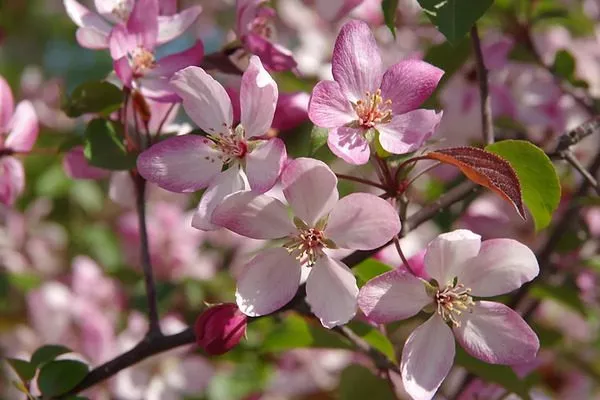
- Apple blossoms are a delicate pink and richly fragrant, attracting numerous insects for pollination. Each inflorescence contains up to four buds, which open gradually.
Budding begins in mid-May and lasts about two weeks.
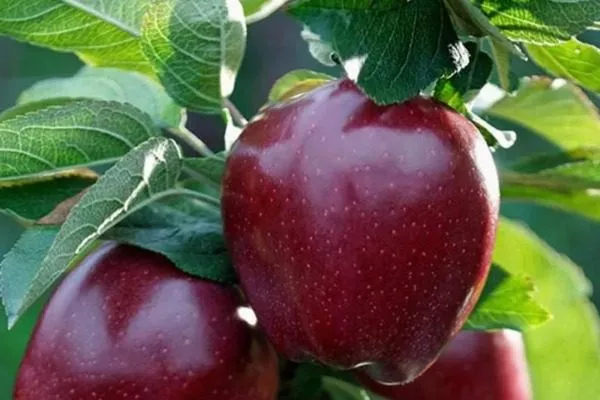
- The fruits are round, reaching considerable sizes, sometimes with slightly beveled sides and distinct ribs. The average apple weight is 170 g, but specimens weighing up to 200 g or more are occasionally encountered, with the maximum being 300 g.
- The skin is shiny and fairly thick. The fruits are initially green, then turn yellow, but their true color is obscured by the red or crimson blush that covers them.
The skin is covered with a waxy coating, and around each fruit there are light-grey subcutaneous dots that are impossible to miss due to their large size.
- The pulp is saturated with juice, crisp, and creamy yellow with a subtle greenish tint. The interior is firm but not rough. The seeds are small and oval.
- If storage rules are followed, apples can remain fresh until the summer of the following year.
The bark of the Gloucester apple tree is very vulnerable to UV radiation and is prone to sunburn. To protect the tree from this, experienced gardeners recommend periodically treating the trunk and skeletal branches with a special protective compound, available at specialty gardening stores.
Taste, benefits and harms
Gloucester apples are characterized by a rich flavor with a sweet and sour dessert aroma, with a tasting score of 4.7 points.
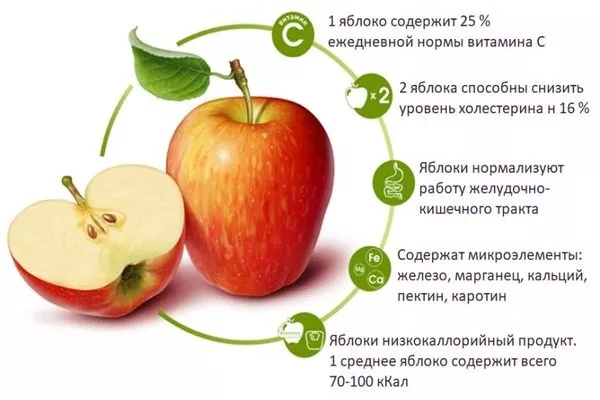
100 g of pulp contains:
- 10.6 mg vitamin C;
- 11.6% fiber;
- 268 mg dietary fiber;
- 13.4% fructose.
Productivity and pollinators
Gloucester is one of the apple varieties that can self-pollinate, allowing for a rich harvest without the need for neighboring fruit trees.
Under self-fertilization conditions, the fruit set rate can reach 60%. For maximum productivity, apple trees still require proximity to other species. The most effective varieties for this purpose include:
- Gala.
- Jonathan.
- Idared.
- Spartan.
Gloucester's yield can reach 75 kg in favorable years, while the average tree yields around 42 kg per season. The hybrid begins producing full fruit at 10 years of age.
Features of ripening and fruiting
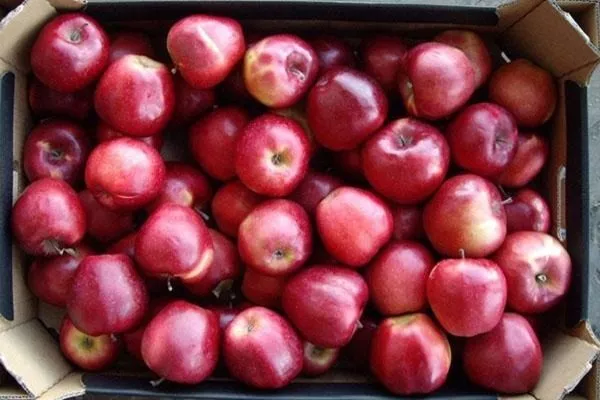
Apples reach technical maturity in September and November. To ensure their excellent flavor, they are stored until January. In a cellar, the fruits will keep until February or March, and in a refrigerator until May. This variety has moderate transport requirements.
Gloster is a hybrid that is propagated commercially for winter and spring consumption. Features:
- The first harvest from Gloucester can be expected four years after planting the seedling, and when using a dwarf rootstock, the harvest ripens even faster - in just two to three years;
- In the tenth year of life, the apple tree reaches full productivity, but already in the fifth year it is possible to harvest about 30 kg of apples.
Winter hardiness
The hybrid is reasonably resistant to low temperatures. However, it's worth considering that it was developed in Germany, where the climate is significantly milder than in Russia. Therefore, a more accurate definition of frost resistance for this apple tree would be average—the tree can be susceptible to freezing and even die at temperatures down to -22 degrees Celsius.
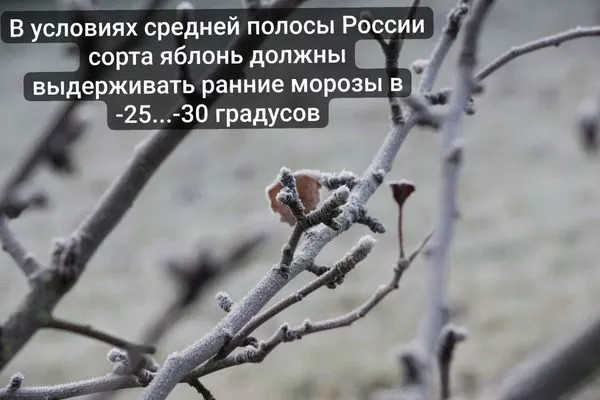
To prevent such negative consequences, it's essential to carefully prepare the plant for winter. With the proper use of protective materials, apple trees can survive even colder temperatures—down to -30°C—for an entire month.
Cultivation in different regions
Cultivation of Gloucester requires specific conditions depending on the location:
- Moscow region. For successful cultivation of this variety, regular watering in the summer is essential, as is fertilizing to increase yield. In winter, the apple tree requires no additional shelter, as its natural resilience allows it to withstand cold temperatures.
- Siberia. Here, where winter is particularly harsh, it is necessary to take measures to protect the apple tree:
- cover it with protective material;
- insulate the soil around the tree with humus to a depth of 5 cm;
- wrap the trunk with spruce branches to protect it from the cold and rodents.
- Ural. In this region, there is a high risk of wind damage to the tree, so it is important to stake the sapling after planting. To protect against sunburn, staking twice a year is recommended. they are whitewashing the trunkBefore planting Gloucester in the Urals, it is recommended to improve the soil with:
- compost;
- sand;
- organic fertilizers.
- Belarus. Favorable Belarusian conditions for the development of scab require regular inspections and timely treatment of fruit crops to preserve the harvest and prevent plant death.
- Ukraine. Before planting Gloucester in Ukraine, the soil should be thoroughly fertilized with organic and mineral fertilizers. It is not recommended to plant trees near forest clearings or in valleys, where the risk of night frosts is particularly high.
Gloucester is a reliable winter apple variety with excellent flavor and aroma, characterized by its low demands, high yield, and long shelf life. These qualities make it increasingly popular and superior to its competitors.
Subspecies and variants
Gloster is an excellent material for creating new apple varieties or can be used as a grafting material for combining with other trees.
Dwarf rootstock
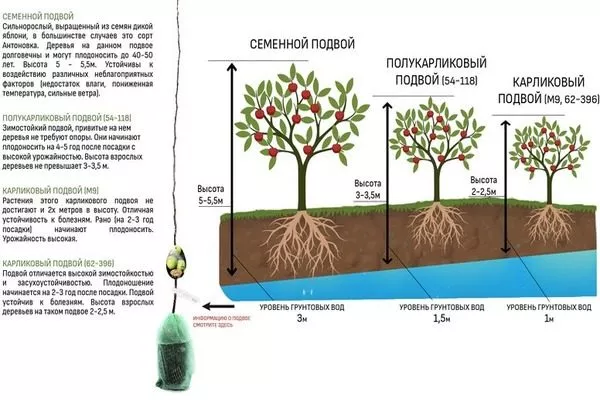
When using Gloucester as a dwarf rootstock for low-growing fruit crops, the tree acquires a number of unique properties:
- the height of the tree does not exceed 250 cm;
- the crown width reaches 300 cm;
- early harvest.
The advantages of dwarf rootstocks include increased resistance to spring frosts and ease of planting and care. One disadvantage is the root system's proximity to the ground, making the tree more vulnerable to cold weather and requiring increased moisture during hot periods.
Columnar tree
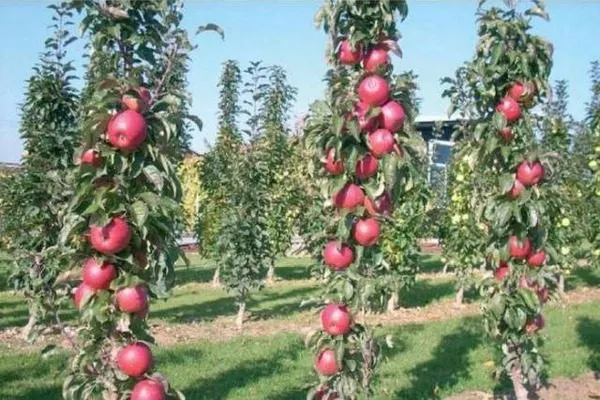
Gloster, grown on a columnar rootstock, is a semi-dwarf variety. This propagation technique produces a more compact and dense crown, reaching 200 cm in height.
The advantages of columnar rootstock include:
- excellent survival rate;
- earlier onset of fruiting (two years earlier);
- competitive yield.
This method has a drawback: it shortens the harvest period. For more information on columnar apple trees, read Here.
Growing Gloucester Apple Trees
Planting procedures vary depending on the specific needs of the cultivar. Therefore, adhere to the established guidelines for Gloucester to ensure maximum tree productivity.
How to choose a seedling?
When choosing seedlings, look for two-year-old plants, which take root best. They can be planted between mid-April and early October, provided there are no frosts expected for the next 30-40 days, which could damage the immature tree.
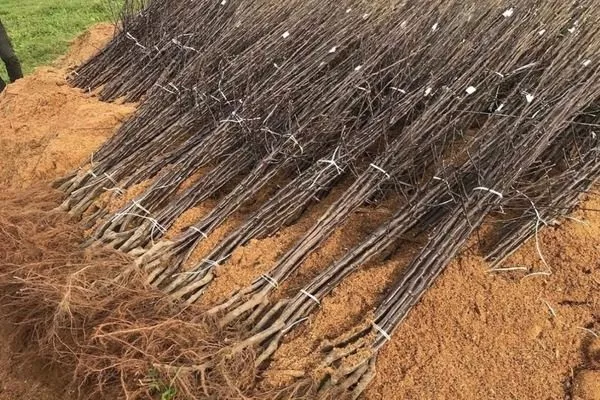
Purchase seedlings from official nurseries. Such a tree should have:
- at least two or three developed branches over 20 cm long;
- well-developed network of fibrous roots.
Place and time of landing
Spring is considered the optimal time for planting apple trees. It's important for the soil to warm up well and for the buds to be fully open. In the fall, the hole for the future seedling is prepared. In southern regions of Russia, it's common to plant trees in the fall, a month before the cold weather sets in.
For Gloucester, choose a location with adequate sunlight and airflow, but avoid strong winds. This variety prefers fertile soil with moderate acidity. It is not recommended to plant apple trees in overly compacted soil; it should be airy and well-oxygenated.
Planting technology
Before planting, carefully inspect the root system. If damaged roots are found, they should be removed and the lower part of the seedling immersed in water. It's best to prepare the hole in advance (in the fall), ensuring it's at least 80-85 cm deep and 90-100 cm wide.
Peculiarities:
- the top layer of soil is mixed with organic fertilizers and poured into the hole, adding a bucket of water to it;
- for drainage, a layer 12-15 cm high is created;
- The distance from other trees to Gloucester should be at least 5 m.
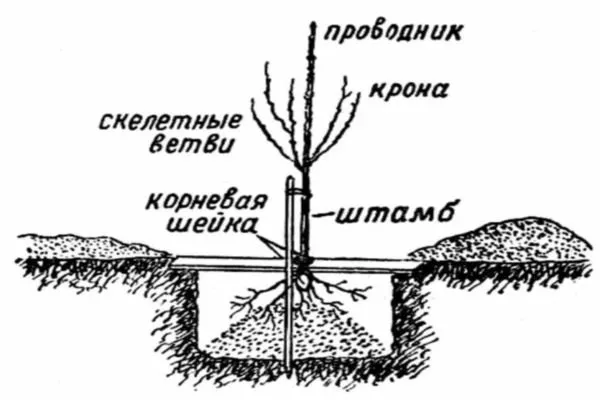
The planting operations are carried out as follows:
- Place the seedling in a pre-dug hole.
- Carefully fill the soil around the plant.
- Compact the soil.
- Spray the plant with warm water.
- Cover the planting area with a layer of mulch.
Apple tree care
The Gloster apple tree, distinguished by its ease of care, requires little attention from the gardener to ensure a bountiful harvest. Regardless of how much hands-on time the gardener takes, the tree promises sweet fruit.
Watering rules
Apple trees are particularly fond of moisture, so they require careful watering. This is done at least four times throughout the season:
- during budding;
- three weeks after flowering;
- two weeks before harvesting;
- in October, if the weather is dry.
The amount of water used for irrigation depends on the age of the tree:
- for a young seedling, 3-5 liters of water is enough;
- Trees from three to five years old consume up to 70-80 liters;
- Apple trees from six to ten years old – up to 120-150 liters of liquid.
After each irrigation, it is necessary to thoroughly weed and loosen the soil to maintain optimal conditions for growth.
Shelter for the winter
Because the variety lacks strong frost resistance and Russian winters can be extremely unpredictable, preparatory measures before winter frosts are critical for this apple tree.
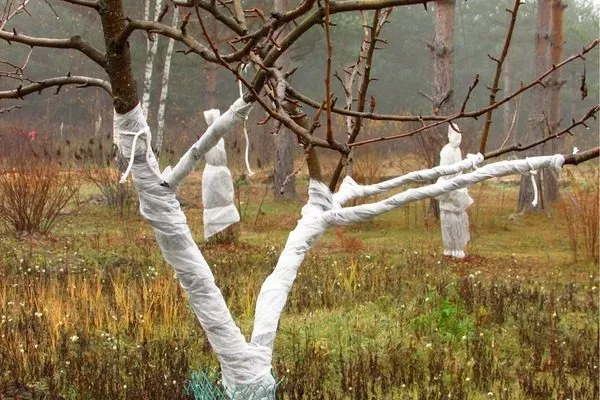
Nuances:
- Particular attention should be paid to young trees no more than five years old. They can be covered with cardboard boxes filled with hay or wood shavings.
- Snow can serve as additional protection from the cold; it can be carefully placed against the trunk, forming a snow carpet.
During the winter, this snow cover should be renewed several times. - To protect against rodents, apply a mixture of quicklime, powdered clay, copper sulfate, and office glue to the trunk and skeletal branches. Then wrap it in several layers of breathable material, such as burlap, acrylic, spunbond, or even nylon tights.
- Peat or humus should be placed under the tree, creating a mound 25 cm high around the trunk.
Top dressing
In the spring, when the soil layer under the tree has warmed up sufficiently, it is carefully loosened, adding organic fertilizers such as humus or rotted compost (8-12 kg per 1 sq. m).
Then proceed as follows:
- After a week, add nitrogen-containing granules to the soil or pour a solution around the tree trunk. Prepare the solution according to the package instructions. You can substitute it with an infusion of manure or bird droppings, diluted at a ratio of 1:10 or 1:16.
Nitrogen stimulates trees to awaken after winter and actively develop green mass. Urea is one of the most common nitrogen-containing fertilizers, but its use over time becomes harmful. - Uncontrolled foliage growth can lead to a lack of energy for fruit formation and nutrition. Therefore, before flowering, water the trunk area and spray the leaves with a solution of superphosphate (40 g) and potassium sulfate (30 g) diluted in 10 liters of water.
Natural substitutes include infusions of nettle, dandelion or other weeds, as well as wood ash. - After the buds fall, apple trees are treated with a solution of fertilizer intended for this crop or for fruit trees in general.
- In the fall, a couple of weeks after harvesting, the soil is again fertilized with phosphorus and potassium mixtures, after clearing the tree trunk area of debris. The debris is immediately burned to prevent the accumulation of harmful insects and fungi.
Crown shaping and pruning
Annual sanitary pruning of apple trees is an important procedure. During spring and fall, it's necessary to remove shoots damaged by cold, damage, drying out, and the effects of diseases and pests.
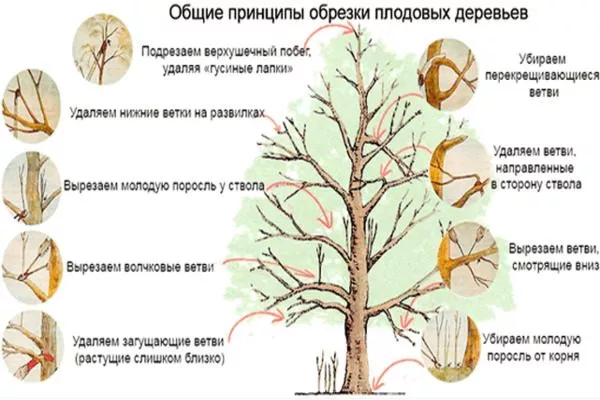
When it comes to crown formation, the Gloucester apple tree often demonstrates a capacity for “self-organization,” requiring only minimal intervention from the gardener, as the number of new shoots is minimal.
Protection from diseases and pests
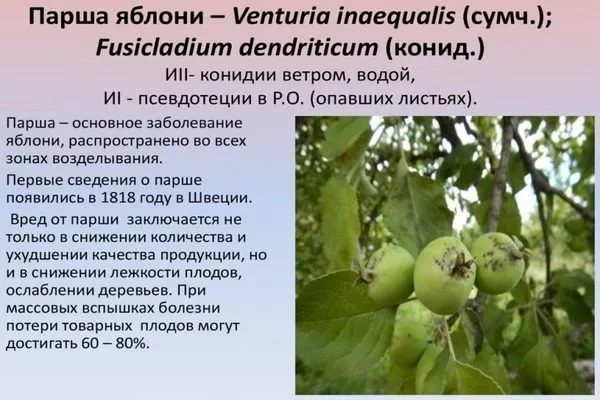
Gloucester has good resistance to common diseases thanks to its innate immunity. However, it is not resistant to scab, which requires careful monitoring.
In case of defeat:
- the fruits will not be able to fully ripen, will become deformed and covered with dark spots;
- Fruits that have time to ripen lose their flavor and become less stable in storage.
How does scab manifest itself:
- The first symptoms of the disease can be seen as barely noticeable spots on young leaves, slightly lighter than the base color. This usually occurs in mid-May, 3-3.5 weeks after the leaves emerge.
- Over time, they become brownish and olive, and then become denser and darker.
- Then, grey-black round spots appear on the fruit, which lead to deep cracks in the pulp, making it dry and reminiscent of wood.
As preventative measures, do the following:
- Every year in spring and autumn, loosen the soil around the apple trees to a depth of 20-30 cm. Afterwards, treat the trunk area with a urea solution, using 100 g per 1 liter of water.
- If the leaf buds have not yet opened, spray them with Zircon, Horus or Skor.
- Treat trees that were severely damaged by scab last season with a 3% Bordeaux mixture solution. After a few weeks, the bark will take on a bluish tint, which is a normal reaction.
- In the tree trunk circle, you can water with a 2% solution of ferrous sulfate.
Folk remedies are also effective as a preventative measure. During the summer, it is recommended to spray trees every 10 days. If the season is wet, it may be necessary to increase the frequency of treatments:
- Saline solution - Prepared from 1 kg of salt and 10 liters of water. The first spraying of trees is done in early spring. This procedure somewhat delays the awakening of leaf buds, reducing the risk of damage during possible spring frosts.
- Soda liquid - To prepare a soda ash solution, use 150-200 g per 10 liters of water. Dissolve the soda in the hot solution and let it sit for 30 minutes. To improve the solution's adhesion to the bark and leaves, add finely shredded laundry or green potassium soap (approximately 50-70 g).
- Herbal infusion - Take 3 kg of horsetail rhizome, chop it, add 10 liters of water, and let it steep for three to four days. Strain the infusion before using.
- Wood ash solution – It's prepared from wood ash and boiling water in equal parts. The solution is ready for use in two to three days.
If signs of scab are detected, trees should be sprayed three times, at two-week intervals, with a solution of Raek, Strobi, or Abiga-Peak. However, treatments should be avoided during flowering. Read more about apple tree diseases and their treatment. Here.
Among the most active pests that visit Gloucester are:
- aphids;
- codling moth;
- moth;
- copperhead;
- larvae of slime sawfly and leaf roller.
To prevent this, spray with a 0.3% solution of Karbofos or Nitrafen before the leaf buds open. After the buds fall, repeat the treatment using a 1% solution of copper sulfate or Bordeaux mixture.
These methods are the most common, but you can use any other fungicides - Oleokuprit, Kuprozan, Abiga-Peak, Topaz or Skor, following the manufacturer's instructions for their preparation.

Growing various herbs around apple trees can help prevent pest infestations, as their distinctive aroma repels many insects. These herbs include wormwood, nasturtium, calendula, and marigold.
Harvesting and storage
Gloucester apples are harvested in late September, but they don't reach consumer maturity until midwinter. It's best to pick a cool, dry day. It's important to wait until the dew has dried on the apples, as it significantly reduces their shelf life and leads to rapid rotting.
For storing apples at home, a well-ventilated cellar or basement with a temperature of 4-7ºC and humidity of 65-75% is suitable. Apples should be stored in small boxes or crates, carefully stacked so they don't touch each other. Straw, sawdust, fine sand, or wood shavings can be used for this purpose.
Pros and cons
Gloster apple trees are distinguished by their decorative appearance and high level of taste characteristics, making them an ideal choice for mass cultivation.
Other benefits of the variety include:
There are also disadvantages:
Reviews
The Gloster apple tree boasts sweet, slightly tart fruits and a juicy texture. This variety is not only popular with consumers but also with industrial growers and small farmers due to its undemanding nature and excellent transportability, allowing it to be delivered to even the most remote northern regions while maintaining its attractiveness.