
Apple trees, with their dense foliage, lush blossoms, and delicious fruit, attract insects. Trees that are neglected by gardeners are particularly susceptible to infestation. Poor care and poor agricultural practices increase the risk of pest infestation. This article will explain which garden enemies can ruin your harvest and how to combat them.
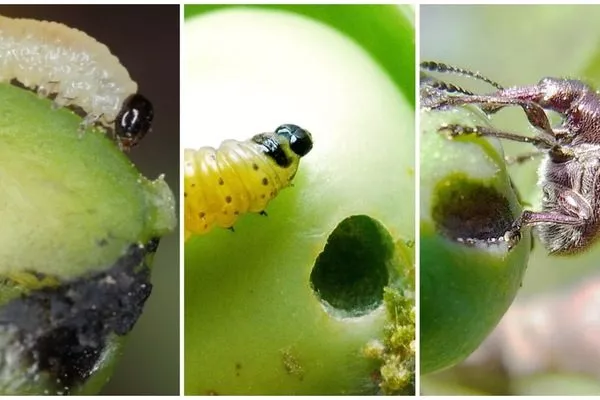
Types of pests on apple trees
Experts have divided insects that cause damage to fruit crops into two large groups based on their feeding habits:
- SuckingThey puncture the plant and suck the sap through it. By sucking the liquid from the green organism, the pests deprive it of nutrients. Without these nutrients, normal development, abundant fruiting, and a strong immune system are impossible.
This category includes aphids, mites, leafhoppers, and spittlebugs. All of them tend to form large colonies that densely cover leafy branches. - GnawingThey damage buds, leaves, ovaries, flowers, young shoots, and roots by gnawing at the tissues that form them. They also cause damage to the vegetative and reproductive organs of the plant.
The group includes caterpillars of various butterflies, cockchafers and weevils, click beetles, longhorn beetles, etc. A massive invasion of these parasites can leave a tree devoid of foliage.
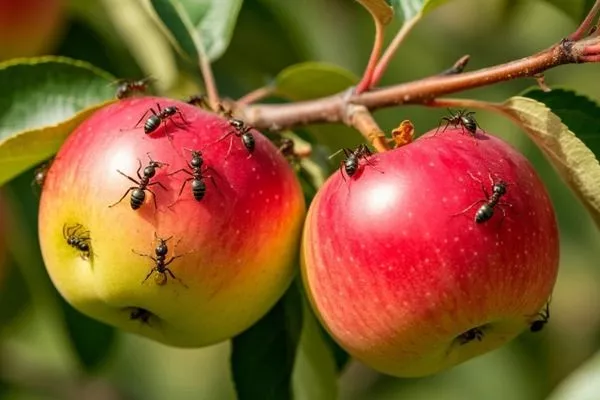
Some pests are omnivorous, posing a threat to many crops in the garden. Others target only apple trees. Many of them secrete a sweet, sticky honeydew that attracts ants and provides a favorable environment for fungal growth, further exacerbating the problem.
Codling moth
This is a dangerous enemy of fruit crops, capable of robbing you of up to 80-90% of your apples in a season. It has the appearance of a gray-brown butterfly with a wavy pattern on its wings. It measures up to 2 cm in size.
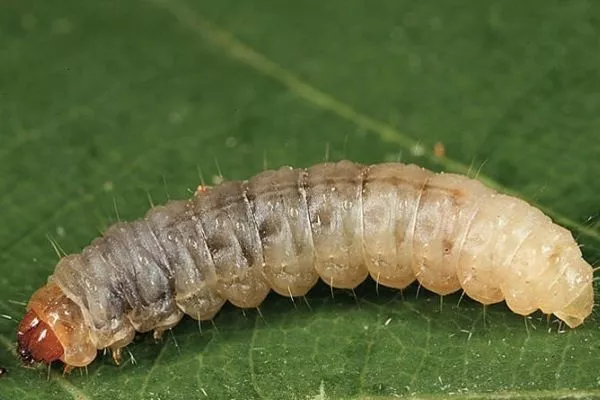
The greatest threat to the tree is the voracious pink larva, which emerges after flowering. Signs of its presence include:
- curling of the leaf, its weaving with a web;
- fruit spoilage, which can be detected in July (worms make passages in the fruit pulp and eat out the seeds);
- apple shedding.
Apple sawfly
This flying insect has transparent wings. It measures 0.5-0.7 cm. Its coloration is black with a brown tint (above) and yellow (below). The larva, which reaches 1 cm in length and has 10 pairs of legs, causes damage to apple trees, resulting in reduced yields.
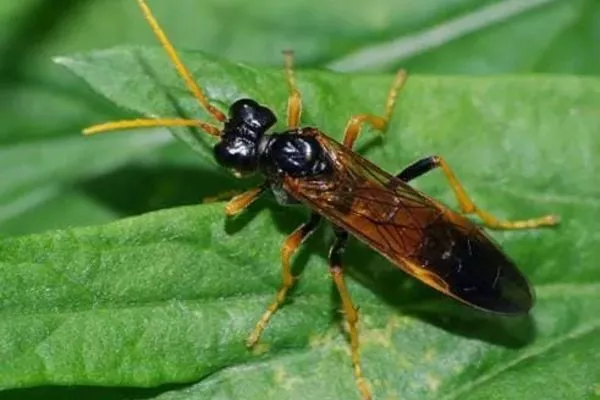
The pest's flight occurs during the flowering phase. Females lay eggs in buds. After the larvae hatch, they migrate to the fruit. They penetrate by making a hole near the receptacle. The parasite then chews out the seed chamber. The main symptom of sawfly infestation is the mass shedding of unripe apples.
Hawthorn
The butterfly known by this name is feared by many garden crops, which it harms:
- hawthorn;
- apple;
- pear;
- plum;
- cherry;
- rose hip;
- raspberries, etc.
It has rounded white wings with black veins in males and brown in females. They measure 0.7 cm. Damage to the apple tree is caused by the larvae, which feed on buds and newly opened leaves.
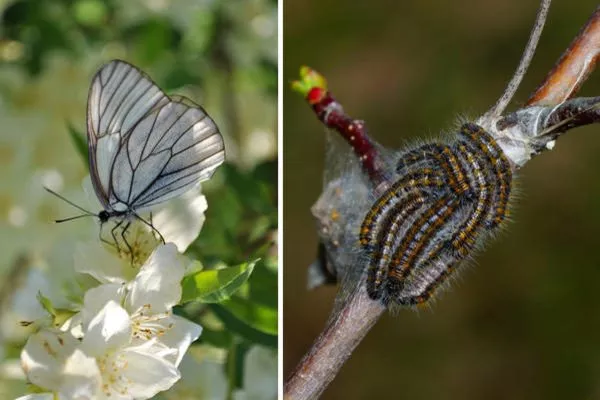
Signs of tree damage are as follows:
- mass appearance of caterpillars in early July;
- eaten leaf pulp (the parasite does not eat the veins and lower skin);
- the presence of cobwebs at the site of damage;
- the appearance of nests for future wintering of the pest (a twisted leaf fastened with a web).
If the problem is left untreated, the apple tree's foliage will be completely eaten away, which will negatively impact the crop's fruiting and winter hardiness.
Apple psyllid
This small parasite (3-3.7 mm in size) is characterized by a green color with a yellow tint. In addition to transparent wings, it has hind legs adapted for jumping. It attacks both cultivated and wild apple trees, sucking the sap from their leaves, buds, and fruits. The greatest danger comes from the nymphs.
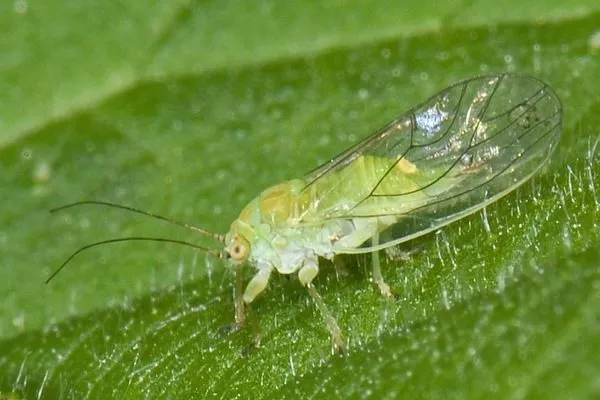
You can identify a planting that is suffering from psyllid attacks by the following signs:
- the appearance of underdeveloped leaves;
- deformed foliage and fruits;
- the presence of honeydew on them;
- the appearance of sooty fungi on the tree;
- yellowing and shedding of green decoration;
- ovary shedding.
The productivity of crops infected with leafhopper is sharply reduced. The plant fails to form fruit buds for the following year's harvest.
Gypsy moth
This insect belongs to the order Lepidoptera. It is omnivorous, attacking fruit orchards (apple, pear, plum, etc.) and forests. It has the appearance of a butterfly. Its description includes:
- size - 7.5-9 cm in wingspan for females, up to 4.5 cm for males;
- coloration - white and yellowish with a barely noticeable zigzag pattern (females), brown-gray with a clear pattern (males);
- the presence of hairs and warts on the body.
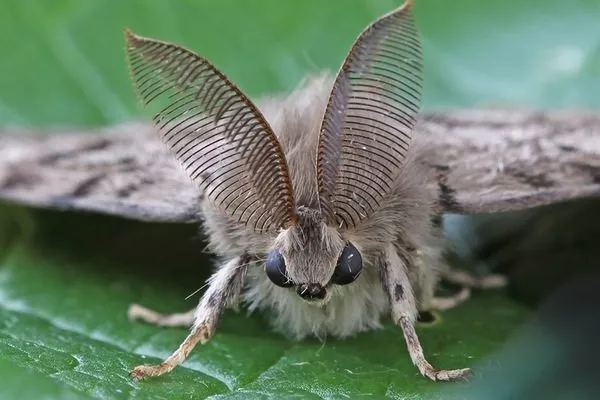
The greatest threat to apple trees comes from gypsy moth caterpillars. They feed on leaves, leaving behind only the veins. When a tree is infested en masse, its crown becomes completely bare.
The rapid proliferation of this parasite affects many fruit trees in the garden. It causes damage, including decreased immunity and winter hardiness, and reduced yields.
Leaf roller
This small, nocturnal butterfly is one of the most common apple tree pests. It has a furry body and gray-brown wings (with a wingspan of 2.5 cm) with a dark pattern. Its larvae attack buds, foliage, and fruit. Signs of a leaf roller infestation include:
- curling of leaves into a tube;
- the presence of cobwebs on it.
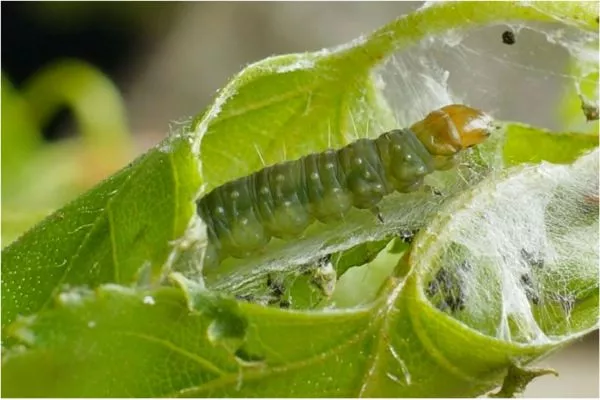
There are many species of this insect. In the garden, you can find the rose, omnivorous, currant, fruit, carnation, and willow leaf rollers, as well as the bud roller and the budworm.
It's not the adults that damage apple trees, but their larvae—dark-headed caterpillars. Their smooth bodies come in a variety of colors, ranging from translucent to dark green or brown with a yellow tint. They appear in the spring after the buds swell. Signs of damage become visible as early as June.
Three generations of the pest emerge per season. The consequences of its infestation for apple orchards are dire. Failure to take control measures leads to the following problems:
- deprivation of decorativeness;
- reduction in the quality and quantity of the harvest;
- weakening of the tree.
Leaf rollers affect not only apple trees, but also other fruit and berry crops, coniferous plantings, as well as flowers and vegetables in garden beds.
California scale insect
A distinctive feature of this pest is the presence of a shell-like shield that protects its body from external influences. The female appears as a small dark bump on a tree. She attaches herself to a leaf or branch and remains motionless. Males resemble mosquitoes. The larvae are the most active and harmful.
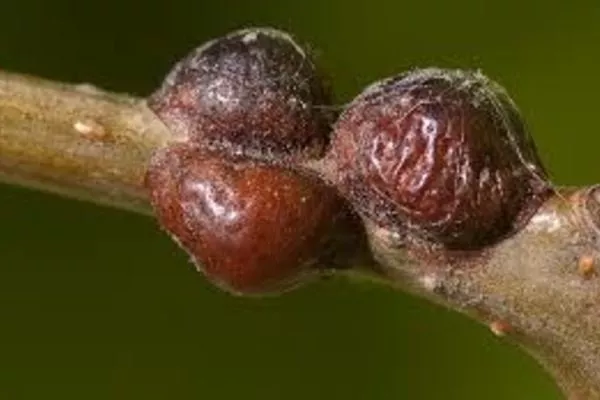
Fighting scale insects is difficult for many reasons:
- the parasite can withstand frost down to –42°C during wintering;
- its early detection is difficult due to its similarity to growths;
- Thanks to the shell, the pest is reliably protected from the effects of many drugs, and folk remedies are powerless against it.
The insect emerges in the spring after hibernation. It sucks the plant's sap, beginning with the bud swelling phase. In August, it lays a clutch of hundreds of eggs. If left untreated, the tree weakens, bears little fruit, and may even die.
Apple blossom weevil
These dark-brown beetles (0.5 cm in size), members of the weevil family, attack the flower stalks of apple trees. They lay eggs in flower buds in early spring. After seven days, the eggs hatch into larvae, which consume their "house" from the inside.
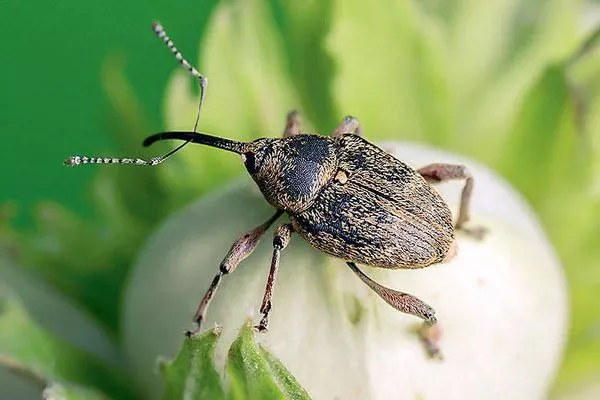
As a result of their activity, the tree suffers:
- his buds dry up and fall off;
- flowers do not bloom or die as soon as they open.
Seven to 14 days after flowering (late May), the insects begin their flight. They migrate to foliage and fruit buds, feeding on their sap. With the onset of autumn, they hide in the bark close to the ground. The damage they cause includes reduced yields due to sparse flowering and weakened plant immunity.
Leaf weevils
The gray bud weevil, the oblong leaf weevil, and the hairy leaf weevil are varieties of this pest with a distinctive proboscis. Adult beetles can be brown, slate, or black. Larvae are found inside fruit or in the soil beneath the tree.
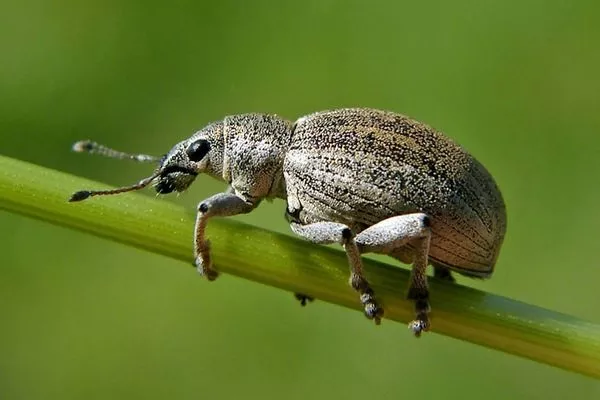
Parasites cause damage to apple trees. Adults feed on buds and foliage, leaving characteristic lesions:
- gnawed edges;
- perforation.
Leaves damaged by weevils wilt, turn brown, and dry out. Fruit damaged by larvae shows darkened holes covered with corky tissue. The damage caused by beetle attacks is severe:
- they damage up to 30-50% of fruit buds and 70-80% of leaves;
- the crop falls prematurely;
- the culture becomes weak and its productivity decreases.
Apple glasshouse
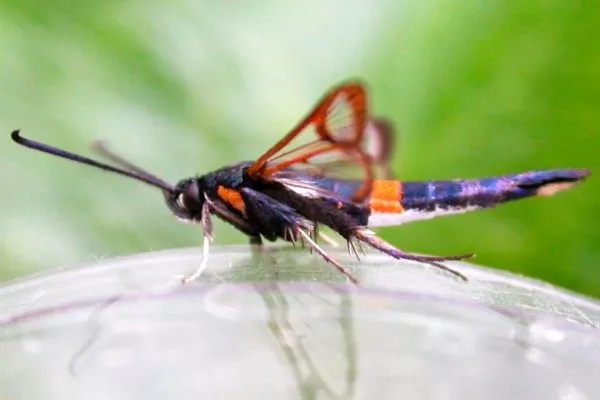
This is a small, dark-blue butterfly with orange or yellow stripes and transparent wings (their wingspan is 1.5-2.2 cm). It feeds on flower nectar. It lays eggs in cracks and damaged areas of the trunk. The main signs of the parasite's presence are winding tunnels directed toward the crown and oozing holes in the bark.
Bukarka
This small beetle (3 mm long) is characterized by a greenish-blue coloration with a metallic sheen on its back. Its infestation causes damage, damaging 25% of foliage during the growing season. Adults are the most dangerous. The female chews a hole in the underside of a leaf to lay a single egg, camouflaging it with excrement.
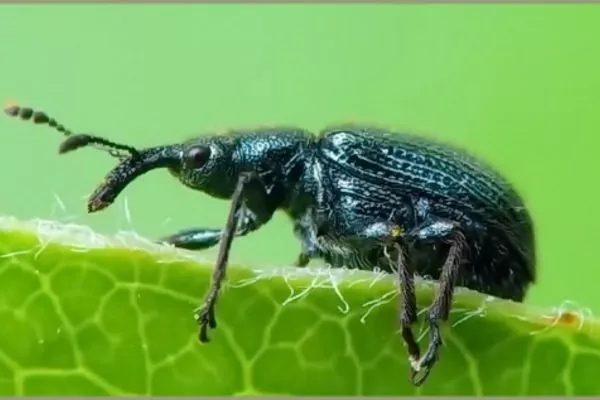
Gardeners notice signs of the insect's presence in mid-June:
- leaf fall;
- shedding of fruits before they ripen.
Goose
This crimson-red or purple-green beetle has a proboscis. It measures 4-6 mm. It attacks apple, plum, and pear trees. Its mass infestation occurs in late May or early June.
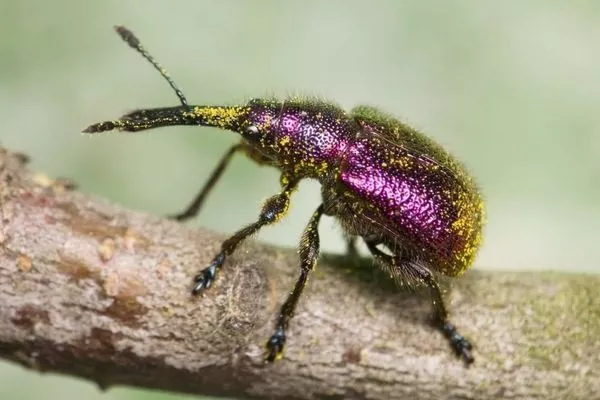
The pest feeds on buds and fruit pulp. Its presence can be identified by the appearance of pits and bumps on apples. Females lay eggs in these pits and introduce fungal spores, then seal the pits with excrement. They gnaw at the fruit stalks, causing the fruit to fall off. Damage caused by the goose includes:
- reduction in the marketability and taste of fruits;
- decline in crop yields;
- weakening of the tree's immunity.
Leaf miners
They damage apple trees by gnawing out cavities within the leaf blades. These include species such as:
- apple white moth;
- apple moth;
- circle leaf miner;
- upper-sided and lower-sided moth.
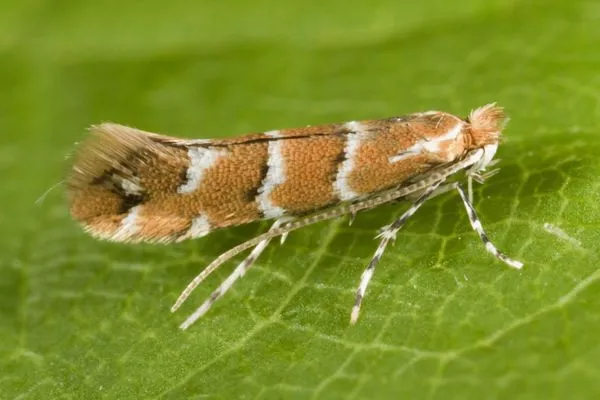
These are small gray or brown butterflies. It's their larvae that are dangerous. The caterpillars create mines (characteristic, winding tunnels) in the leaves. At first, these mines are transparent, then darken and dry out. In severe infestations, the foliage turns brown, dries up, and falls off. A web appears on the tree.
Harm from the leaf miner moth reduces productivity by up to 63%. Crop quality is reduced:
- the apples are small;
- unsweetened (sucrose content is 2-6 times lower than normal);
- They contain little vitamin C (5-6 times less than healthy fruits).
Spider mites
This arachnid parasite is miniature (up to 0.5 mm in length) and has 8 legs. Males and young females are yellowish-gray, while egg-laying females are greenish-black.
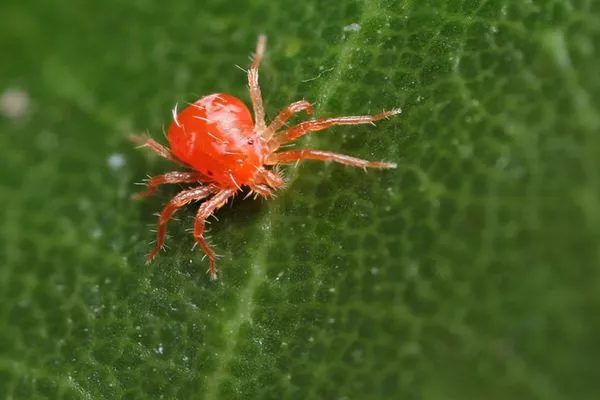
You can recognize an apple tree affected by mites by the following signs:
- spoiled fruits;
- cobwebs on shoots;
- drying foliage.
The pest invasion provokes a decline in crop productivity and contributes to its infestation by thrips, aphids, and whiteflies.
Spittlebug
This is a stocky leafhopper (body length 5-6 mm), covered with hairs on top. Its coloration varies from pale brown to black, and can sometimes be gray, reddish, or greenish. Its body may have longitudinal stripes.
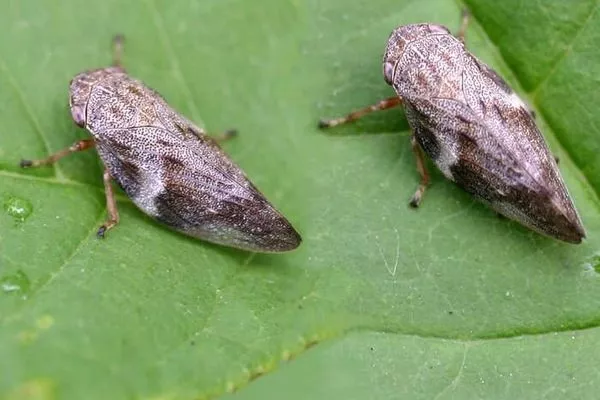
The larvae secrete foam for protection. They feed on sap. Gardeners detect their presence by the following signs:
- wrinkled foliage;
- deformed ovaries;
- foamy secretions on the stems and leaves.
A parasite infestation causes stunted crop growth, reduced yield, and reduced immunity. It also increases the risk of apple tree infections by viruses and bacteria.
Bark beetle
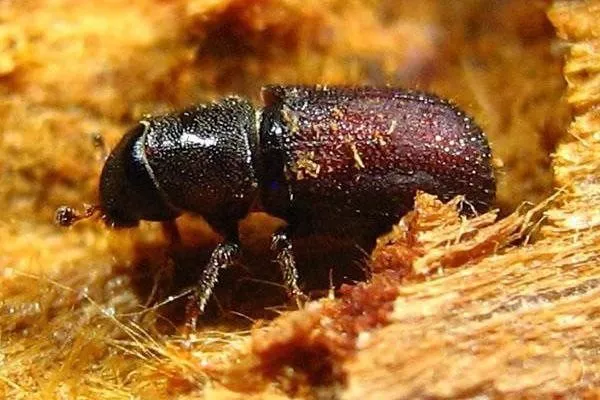
This small insect (3-4 mm) is dark brown in color with brown or reddish elytra. Adults and larvae feed on living wood tissue (bast and sapwood), weakening it.
The presence of bark beetles can be identified by small holes in the trunk and branches from which debris pours out. An apple tree affected by the pest loses its leaves, and the trunk and large branches beneath the bark are damaged. In severe cases, the tree dies.
Rugospermum
This is a black beetle with a hairy body (up to 3 mm), a convex forehead, and brown elytra. Its flight is observed in mid-May. It attacks injured and weakened apple trees:
- with mechanical damage to the bark;
- with sunburn;
- with frost cracks.
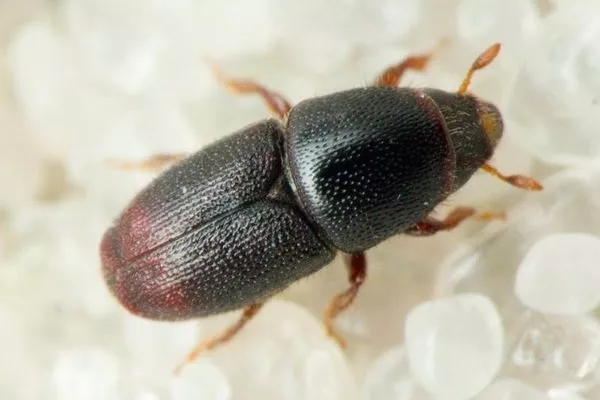
The pest chews small holes at the base of buds and in the forks of shoots. It and its larvae tunnel under the bark. Feeding on the tree's tissue, they weaken it. In severe cases, the apple tree dies.
Western bark beetle
This is a small brown beetle (2-3.5 mm long) that damages the wood of the trunk and branches. It overwinters in tunnels under the bark. Its presence is indicated by small holes in the apple tree and the dust that falls from them.
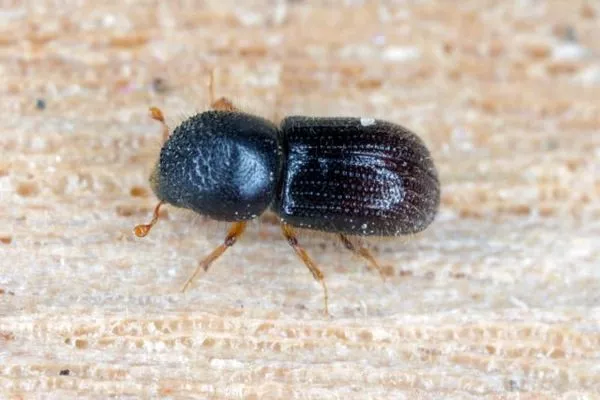
Apple trees heavily infested by the pest exhibit the following symptoms:
- drying of branches;
- the appearance of tinder fungi.
Trees become weakened and susceptible to infection by fungi and other parasites.
Methods of controlling sucking pests on apple trees
To protect fruit trees from sap-sucking parasites, various agricultural practices are used. When apple trees are severely infested, gardeners use chemical and biological insecticides; when the insect infestation is minimal, they resort to folk remedies.
System of application of chemical preparations against sucking pests
Spraying the crown of a tree with pesticides requires safety precautions. To avoid harming the plant, follow the manufacturer's instructions, timing, and frequency of applications. Perform the procedure on a windless day, wearing protective clothing and a gas mask. Afterward, take a shower.
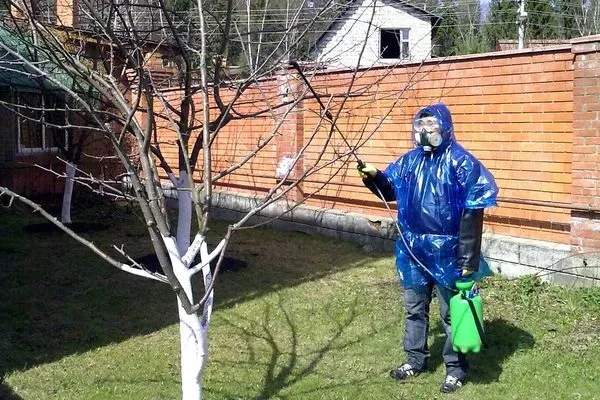
To obtain positive results, follow this apple tree treatment scheme in the spring:
- Before bud breakTo kill parasite eggs laid in the fall, spray the trunk and crown with Nitrafen dissolved in water (200 g per 10 l). Alternatively, you can use DNOC (100 g per 10 l of water).
- When the buds swell, before and after floweringApply a tank mixture of HOM and Fufanon.
Rovikurt, Karbofos, and Fazalon (benzophosphate) have proven highly effective against pests such as aphids, psyllids, and scale insects. Systemic agents destroy the gastrointestinal tract of sucking pests. Other products are also available, both selectively and for all insects:
- Sanmite - against spider mites and whiteflies;
- Aktaru and Confidor - from aphids;
- Stirran - against spider mites;
- Mospilan, Prestige - destroy larvae, eggs and adults.
Use of biological preparations against sucking pests
These products are preferable for use in the garden. They are harmless to humans, pets, and beneficial insects. They can be used throughout the growing season, including the final stage of fruit ripening. They contain live cultures (beneficial microflora) that kill parasites.

Gardeners consider the following to be the most effective bioinsecticides for treating apple trees:
- Boverin;
- Verticillin;
- Fitoverm;
- Actofit;
- Bitoxybacillin;
- Lepidocide;
- Bicol.
Bioinsecticides have both systemic and contact effects. They kill sucking parasites, causing paralysis and death of adult insects. Their disadvantages include short-term effects and the need for frequent crown treatments.
Methods of protection against gnawing pests
These insects cause physical damage to the plant. This category includes bud beetles, blossom beetles, leaf beetles, codling moths, leaf miners, weevils, click beetles, and longhorn beetles. Depending on the severity of the apple tree infestation, gardeners use poisons and bioinsecticides to control them.
Chemicals
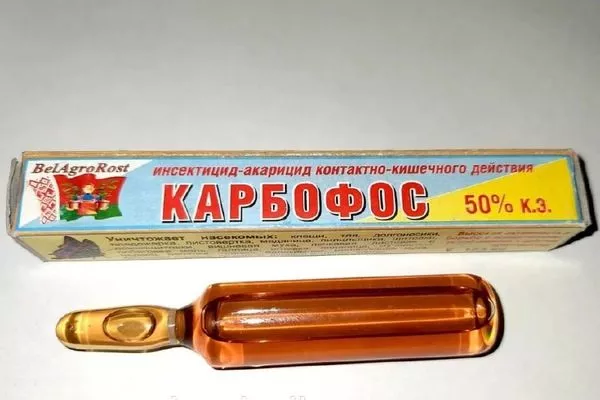
To solve the problem, the same commercial pesticides can be used as for killing sucking insects:
- Karbofos;
- Benzophosphate;
- Aktara;
- Decis;
- Fastak.
Trichlormetaphos-3 has proven highly effective against sawflies and leaf miners. Rovikurt and Zolon are effective against codling moths.
Biopreparations
Fitoverm is rightfully considered the most popular bioinsecticide. It produces good results against chewing pests, particularly codling moths and leaf rollers.
Among the selective drugs, the following deserve special attention:
- Actofit;
- Aversectin-C;
- Avertin-N.
Gardeners successfully use them against nematodes, caterpillars (at the initial stage of development), and ticks.
Methods of fighting beetles
You can solve the problem of beetle infestations on your apple tree by implementing a full range of measures. This includes:
- manual collection and destruction of insects;
- pruning of branches damaged by them;
- stripping the bark in places where they may be hiding;
- cleaning of fallen leaves and fruits;
- digging up the soil in the tree trunk area;
- attracting birds to the garden;
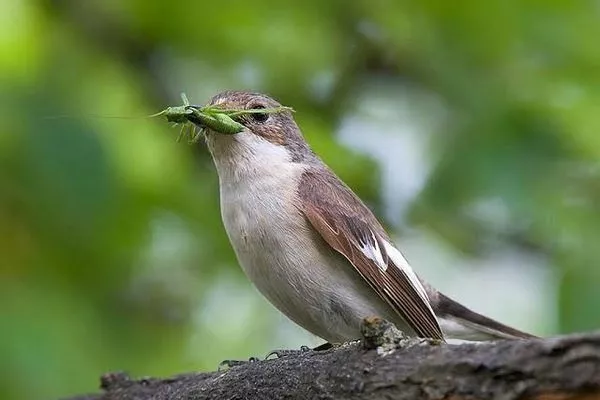
- use of traps;
- the use of biological preparations such as Lepidocide and Fitoverm;
- Use chemical insecticides during a massive beetle infestation: Aktara, Fufanon, Decis, Kinmix (spray the apple tree planting with them before and after flowering, as well as during the period of fruit formation).
Folk remedies against various pests
If you're not a fan of using poisons on your property, consider using methods and tools that are environmentally friendly and allow you to harvest an environmentally friendly crop:
- treating the crown with herbal decoctions (yarrow, wormwood, potato or tomato tops), tobacco infusion, ash or garlic, soapy water - against codling moths, leaf rollers, aphids, small caterpillars, weevils, moths, ants;
- manual collection of pests (for example, apple moth caterpillars);
- scraping off eggs from the bark in autumn (to combat gypsy moth);
- washing away parasites with a stream of water - from aphids, mites;
- shaking pests off branches onto a film spread under the tree - from weevils, flower beetles, various beetles;
- the use of trapping belts coated with glue to catch caterpillars and ants;
- planting plants near the apple tree that repel pests with their smell: garlic, onions, wormwood, chamomile, tobacco, marigolds, calendula (they can be picked and scattered under the tree, or used in dried form);
- attracting birds and other natural enemies of harmful insects (ladybugs, lacewings, etc.) to your site.
In the spring, before flowering, use a tobacco infusion to treat apple trees. To prepare it, pour 400 g of the plant material into water (10 liters) and let it steep for 2 days. Strain before use and add 40 ml of liquid soap. It is especially effective against leaf rollers and aphids.

Spray the crown with herbal infusions once a week. To make them, take 100 g of chopped herbs and 1 liter of boiling water. Let it steep for 3 hours. Don't forget to add a few soap shavings for better adhesion to the foliage.
Autumn and winter work to protect apple trees from pests
Once you've harvested your crops, start taking steps to help protect your garden from unwanted guests:
- At the beginning of leaf fall (before the pests go into hibernation), treat the apple tree with one of the following: copper sulfate at a concentration of 1% - against blossom beetles, spider mites, aphids, overwintering eggs and larvae; sulfur suspension (1%) - against spider mites; Aktara or Karbofos - against aphids and caterpillars.
- Carry out sanitary pruning of the tree (you will find more details about autumn pruning of apple trees Here). Clear the tree trunk area of weeds. Collect all fallen leaves and debris (parasites love to overwinter in them). Take them and the cuttings out of the garden and burn them.
- To kill insects hiding in the soil, loosen it. Add fertilizers rich in phosphorus and potassium.
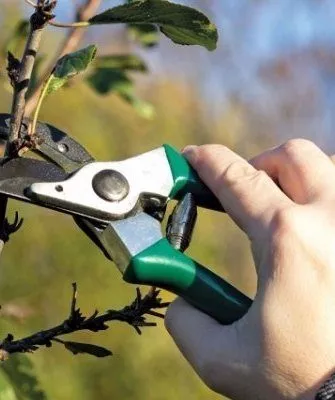
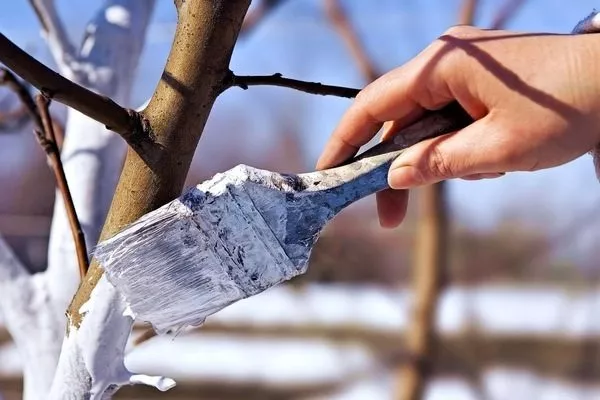
- Whitewash the trunk and branches with slaked lime mixed with clay, copper sulfate, or any insecticide. The older the apple tree, the thicker the whitewash layer. This will protect the tree from burns, mice, and rabbits, and kill parasites.
- Protect the bark from cracking by wrapping the trunk and skeletal branches with burlap, non-woven fabric, or roofing felt. Create a rodent-proof barrier using wire mesh (at least 1 m high). For information on what to do with a damaged apple tree trunk, read Here.
- In winter, after heavy rainfall, compact the snow in the area around the tree trunk to make the crop less accessible to mice and hares (they will not be able to gnaw the bark above the installed net).
Spring and summer work to protect apple trees from pests
With the arrival of spring warmth, apple trees become the target of attacks by overwintered pests. Pests that emerge before flowering (aphids, flea beetles, and mite larvae) are soon joined by spittlebugs and scale insects. If left untreated, mature trees will begin to experience the drying out of their perennial branches, while young seedlings will wilt and may even die from starvation.
General and preventive measures
The list of mandatory spring works aimed at combating the enemies of apple trees includes:
- Inspect the tree after winter to detect pest nests. These must be destroyed.
- Cleaning trunks from loose bark, sealing cracks and hollows.
- Removing insulation from the apple tree and treating it with insecticide to kill parasites.
- Removing old trapping belts and burning them.
- Whitewash the bark of young apple trees with water-based paint or chalk. Whitewash older trees with the same mixture as in the fall (it's recommended to add Nitrafen, 200 g per 10 l). Perform the procedure before the buds open. For more details on what and how to whitewash a tree, read on. Here.
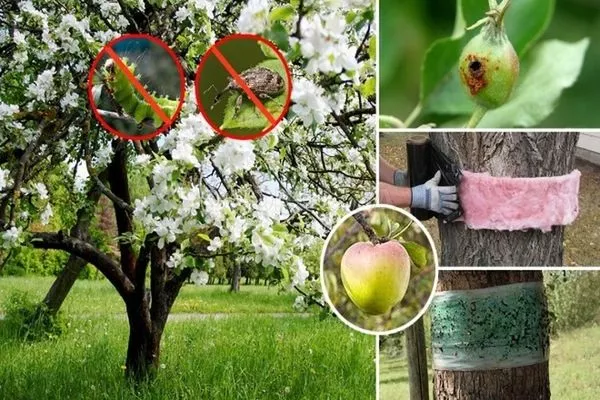
- Install new insect adhesive traps, apply anti-caterpillar glue with a pesticide (ant repellent) to the trunk. In the spring, replace the traps every 10-14 days.
- Hanging bird feeders to attract birds.
- Shaking off weevils and sawflies from the apple tree before the leaves open onto film.
- Carrying out preventive treatments of the crown with insecticidal preparations before bud break, before flowering and after it.
Apple trees are plagued by a variety of pests. They feed on the tree's sap, damaging buds, foliage, flowers, fruit, bark, and wood. Ignoring them can reduce the quantity and quality of the harvest, weakening the tree, and even kill it (if neglected). Proper care, preventative measures, and the use of chemical and biological insecticides will help you solve the problem.