
Gin is the name of a columnar apple variety characterized by its autumn-ripening fruit, fruitfulness, ease of maintenance, and frost resistance. It is prized for its compact size, rapid onset of productive growth, and resistance to scab. It is an ideal choice for a small plot, allowing for a bountiful harvest with minimal effort.
Origin
This variety of fruit crop was born in 1967 thanks to the efforts of a group of Soviet breeders working under the leadership of V.V. Kichin. Thanks to their joint efforts, a new type of columnar apple tree was developed that is resistant to cold and fungus, highly productive, and produces beautiful and tasty fruits.
Description and characteristics
Check out the full botanical description of the Gin variety and its key technical characteristics if you plan to grow it in your garden.
Tree
This creation of Soviet breeders, like other columnar apple trees, is characterized by a compact, columnar shape. It lacks well-developed lateral branches and does not spread outward. The fruit ripens on the rings. The tree's appearance is described by the following characteristics:
- height - up to 2 m;
- width - 0.2 m;
- narrow crown;
- thickened and durable barrel;
- shoots: forming an acute angle when branching off from the trunk, strong and thick, greenish-brown, supporting the weight of numerous fruits without breaking;
- foliage: bright green, large, with a wedge-shaped base and a sharp tip, smooth, slightly shiny;
- Flowers: large, white.
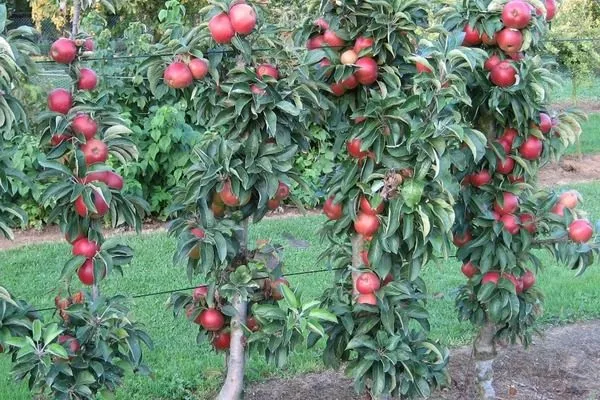
The Gin variety is a medium-sized tree. This columnar apple tree produces no more than 15-20 cm of growth per year.
Fruit
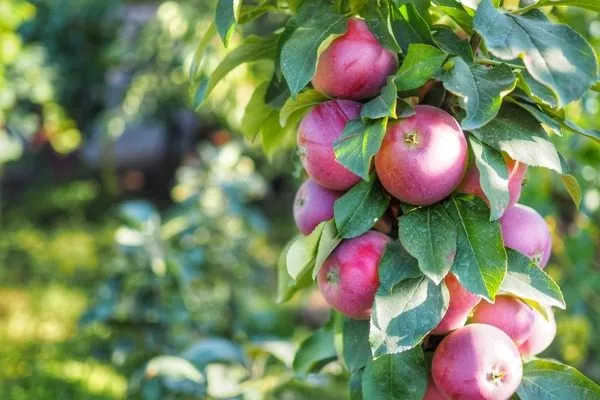
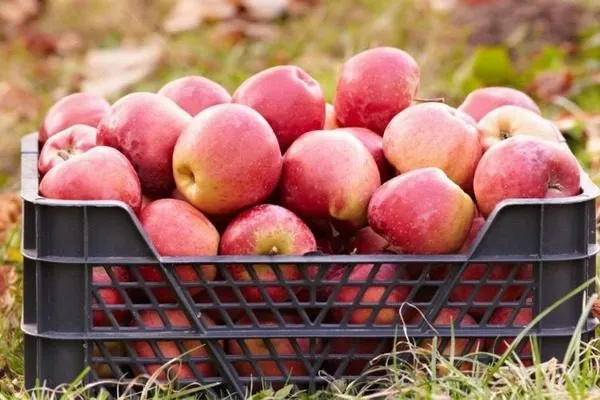
The fruits of the Gin variety are pleasing to the eye. They are beautiful, uniform in size and shape, and possess the following characteristics:
- medium sizes;
- weight - 120-150 g;
- neat ball-shaped form;
- greenish-yellow color, almost completely hidden under a bright raspberry-red blush;
- thin glossy skin, from under which light spots are almost invisible;
- dense, creamy flesh, very juicy and crispy.
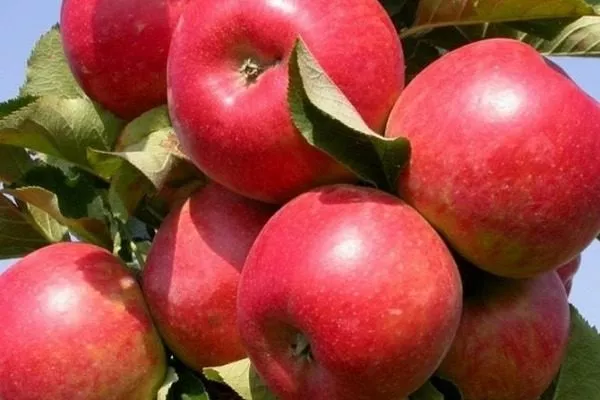
The fruits of this cultivar do not tend to fall from the tree when fully ripe. They cling firmly to short shoots until harvest.
The harvest has excellent tasting qualities. It has a rich, dessert-like flavor, harmoniously balancing sweetness with tartness, similar to the Melba and Lobo varieties. The Gin apples are rated 4.7 out of 5.
The variety is suitable for commercial cultivation due to the attractive appearance of the fruits and their other excellent qualities:
- good keeping quality (the fruits can be stored for six months after harvesting in cool, dry places, and remain beautiful and juicy until February);
- transportability (the fruits are strong and can be transported well over long distances without losing their marketability).
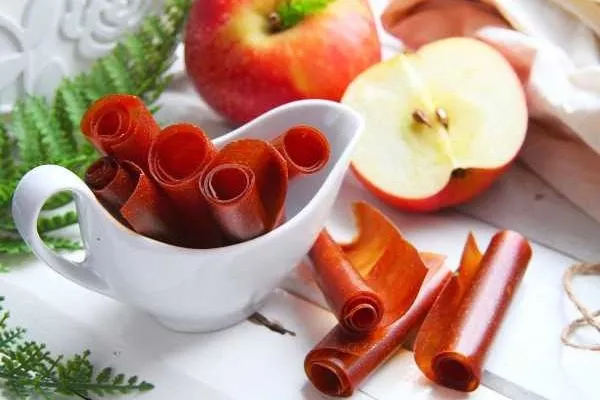
The columnar apple tree's fruits are versatile. They are eaten fresh as a healthy, vitamin-rich treat, and used to make jam, preserves, marmalade, and compote. They are also suitable for juice production due to the rich liquid content of their pulp.
Ripening time, fruiting
The Gin variety delights gardeners with its early fruiting. If you plant it in your garden, you won't have to wait long for fruit. As early as the following year, you'll see a few apples on short branches. You'll be able to harvest a full crop starting in the second or third year of the plant's life.
This garden variety belongs to the winter cultivars category. Fruit ripening occurs in the fall:
- apples reach the state of picking ripeness after September 10;
- The harvest period falls in the second half of the month and lasts until the first days of October.
Winter hardiness and growing regions
The columnar apple tree tolerates cold weather well. It is distinguished by its high frost resistance. It can withstand temperatures down to -35°C without freezing (provided it is properly insulated for the winter). Thanks to its hardiness, it can grow not only in the central part of the Russian Far East but also in the Urals.
The Gin variety owes its remarkable ability to withstand harsh and frosty winters to several factors:
- genetically inherent cold resistance, passed on to it from the parent variety (we are talking about Antonovka ordinary);
- the small height of the tree, due to which it is almost completely hidden under the snow;
- strong and well-wooded bark on the trunk and branches, which has a positive effect on the frost resistance of the garden crop.
This variety is suitable for cultivation throughout the central part of Russia. It is approved by the State Register for the following regions of the country:
- Central;
- Ural.
Pollination
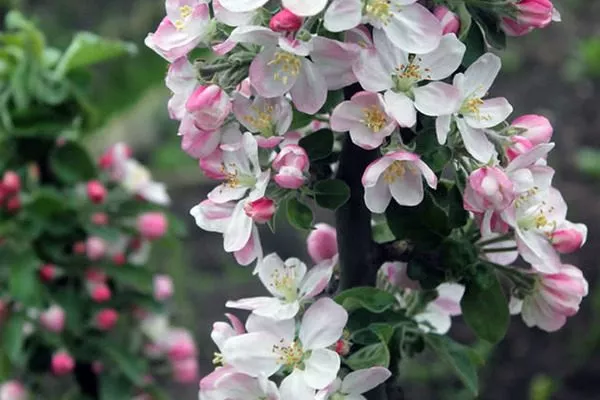
The Gin apple tree is self-sterile. To produce fruit, it requires pollen donors. Trees that bloom at the same time as it are best suited for this purpose. Gardeners consider the following species to be ideal pollinators:
- Antonovka;
- White filling.
Productivity
Despite its small size, this columnar tree is quite productive. Its short branches are literally laden with apples. Its yield increases rapidly in the first five years after planting:
- A crop aged 3-4 years produces 4-5 kg of fruit;
- 10-15 kg - over 5 years;
- 20 kg is the maximum fertility rate achieved through enhanced agricultural technology and the presence of the right pollinators in the garden plot;
- 12 kg is the average amount of fruit a gardener gets from one mature tree trunk, even in unfavorable years.
The variety has the ability to shed excess fruit on its own, preventing the tree from becoming overloaded with fruit, allowing them to develop fully. This results in a high-quality harvest.
Disease resistance
This garden variety boasts a strong immune system. It's resistant to fungal infections and pests such as aphids, leaf rollers, and codling moths.
Subspecies and rootstocks
This columnar variety is popular with gardeners due to its compact size and suitability for smaller gardens. It has no subspecies, but can be grown on various rootstocks:
- dwarf (M9, M26), used to form a miniature tree;
- semi-dwarf (MM106), which allows to obtain a medium-sized apple tree with increased resistance to drought and diseases.
However, no changes in the variety's key technical characteristics are observed. Seed rootstocks can also be used to increase the crop's winter hardiness (in this case, the yield is somewhat smaller).
Planting an apple tree
To ensure your columnar apple tree quickly establishes itself and begins to thrive, transplant it to its permanent location correctly. Choose the right site carefully and learn all the intricacies of the planting procedure.
Requirements for the location

Thanks to the plant's compact size, you can easily grow it even in a small plot of land. You can fit an entire garden in a small space. The site allocated for apple tree planting should meet the following requirements:
- be sunny;
- protected from drafts and not blown through (due to the peculiarities of its structure, it is difficult for the tree to withstand strong gusts of wind);
- located on a plain or elevated area (avoid lowlands with close groundwater, where snow does not melt for a long time and is always damp).
Selecting and preparing soil
The fruit crop of the Jin variety grows and develops well, bearing fruit abundantly in soils that meet the following requirements:
- fertile;
- sandy loam or loamy;
- loose;
- moderately moistened;
- well drained;
- with neutral or slightly acidic acidity (pH 6.5-7.0).
Before you begin planting, prepare the area you have chosen for apple tree planting:
- Dig it over. Clear it of weeds and their roots, debris, and plant debris.
- If the soil is heavy and dense, improve its structure by adding sand.
- Find out the pH of your garden soil. If it's acidic, add lime, ash, dolomite, and chalk.
- Two to three weeks before transplanting the tree to your site, dig a planting hole up to 70 cm deep and 60 cm in diameter. Line the bottom of the hole with crushed stone, broken brick, or expanded clay. Top the drainage layer with a mixture of garden soil, sand, and compost (or humus), enriched with superphosphate and potassium sulfate.
Preparation of planting material
Buy a one- or two-year-old Jin seedling from a nursery. Experienced gardeners prefer the first option, as these plants take root better. Carefully inspect the tree. It should be strong and healthy, free of defects, and with well-developed roots.
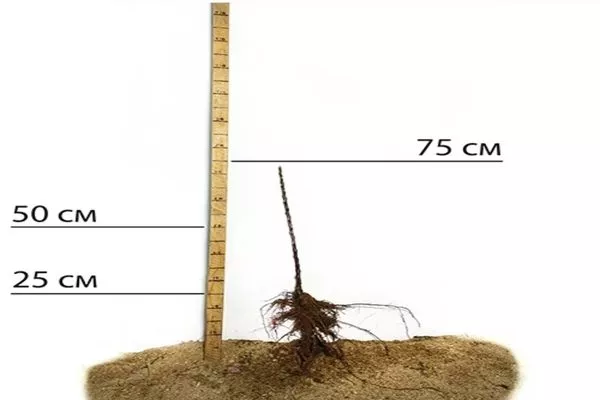
Soak the bottom of the apple tree in water for several hours (preferably overnight). To improve the plant's survival, add a rooting stimulant:
- Kornevin;
- Epin;
- Zircon.
Landing rules
Plant columnar trees in rows, spacing them 70-80 cm apart. This will simplify care and harvesting. When planting, strictly follow these step-by-step instructions:
- At the bottom of the hole, form a mound of nutritious soil mixture.
- Install a stake to support the apple tree.
- Place a seedling on top of the mound. Carefully spread out its roots.
- Fill the hole with soil. Make sure the root collar is slightly above the hole (not buried deep). Gently compact the soil around the trunk.
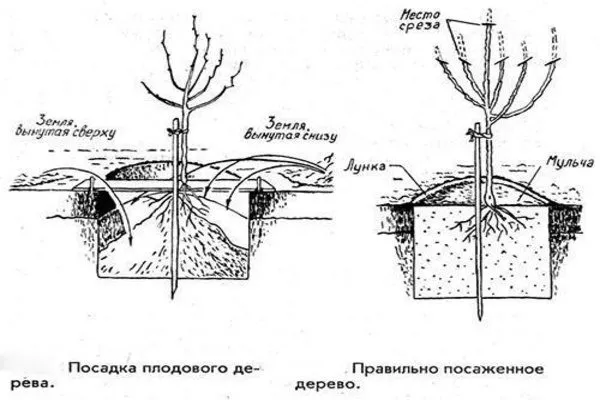
After planting, water the fruit tree generously, using at least 20 liters per trunk. Mulch the area around the trunk with organic matter (sawdust, grass clippings, or compost) to better retain moisture.
Care Features
Provide your Jin columnar apple tree with good growing conditions. It will reward you with abundant fruiting for good care. Regularly irrigate the fruit trees, fertilize, loosen the soil around the trunk, and prune.
Watering and fertilizing
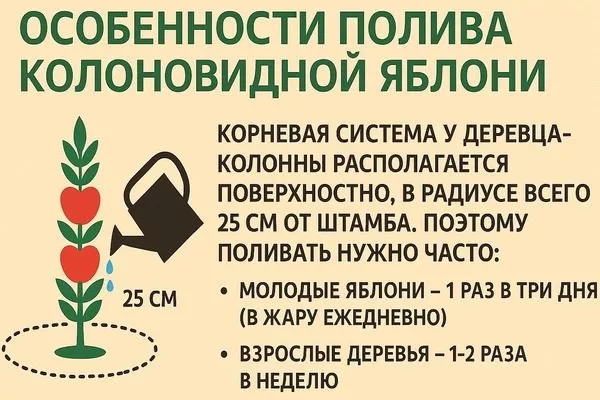
Columnar varieties have a different root system structure than other apple tree species. They don't have a main taproot extending deep into the soil. Their roots are located superficially, no more than 25 cm from the trunk. Because of these characteristics, the tree requires frequent watering:
- Once every 3 days - for young plants (in normal summer weather, in hot weather they are “watered” every other day);
- 1-2 times a week - for adult apple trees, using 10 liters for each meter of tree growth.
From mid-June, water the fruit planting less frequently, and in August, stop watering the soil under the crop so that it has time to form flower buds and prepare for winter.
Don't forget to take care of the trunk circle of your garden crop, which includes the following activities:
- removing weeds (pests and pathogens breed in them);
- loosening (to increase the air permeability of the soil);
- mulching using organic matter: straw, sawdust, crushed bark, etc.
To increase the yield of the Jin apple tree, use fertilizer. Apply nutrients three times per season. The tree responds particularly well to ash infusion or a solution of cow manure (200 g per 10 liters of water) enriched with urea (20 g).

Mineral compounds such as superphosphate and potassium sulfate, as well as NPK complexes, can also be used as fertilizer for fruit trees.
Pruning and shaping
The Jin variety doesn't require any shaping due to its columnar structure. It consists of a trunk and short, ringed branches that form a narrow crown. It doesn't tend to spread outward.
The columnar tree requires only sanitary pruning. This should be done in early spring or fall. This involves removing unproductive shoots:
- dry;
- damaged;
- showing signs of infection and insect damage.
Preparing for winter
This variety is renowned for its high frost resistance, making it suitable for cultivation not only in central Russia but also in the Urals and Siberia. A well-cared-for tree will overwinter successfully and produce a bountiful harvest the following season.

When growing the Gin apple tree in a harsh climate, be sure to thoroughly prepare it for the cold season (this is especially true for young specimens):
- perform moisture-recharging watering in the fall;
- Apply phosphorus-potassium compounds to accelerate wood maturation and increase the winter hardiness of the crop
- Preventively treat the crown with fungicidal and insecticidal preparations to destroy parasites and pathogens;
- mulch the root zone generously with compost or humus;
- wrap the trunk with non-woven material in 3-4 layers;
- Cover the tree thoroughly with snow so that it is mostly hidden under it (preferably completely).

Rodents pose a major threat to apple trees during winter. To prevent them from damaging the root collar, use spruce branches or a special net (wrapped around the trunk).
Collection and storage
Begin harvesting ripe fruits from the columnar tree in September. When harvesting, be careful not to damage the skin. Carefully harvested Gin fruits have excellent shelf life (up to six months) and are easy to transport.
Store fruit in a dry, cool, well-ventilated area. A well-ventilated basement or cellar is suitable for this purpose. Maintain favorable storage conditions:
- air temperature - from +1°С to +4°С;
- humidity level - 85-90%.
Inspect the apples periodically. Immediately remove any rotten or damaged apples from the rest of the bunch.
Pest and disease control, prevention
The Dzhin apple tree was bred by Soviet breeders to be resistant to diseases and pests, particularly scab. Even during epidemics, the well-cared-for tree remains healthy.

Experienced gardeners, despite the plant's strong immunity, don't neglect preventative treatments. For this purpose, they use the following products:
- copper sulfate;
- Bordeaux mixture;
- Abiga Peak;
- Oxychom;
- biopreparations.
If pests attack your apple tree, use insecticides. To reduce the likelihood of attacks, weed regularly and promptly remove plant debris from the area.
Pros and cons
Gin is popular among Russian gardeners. They enjoy growing it in their gardens, recognizing the numerous advantages of the columnar apple tree:
This variety has virtually no downsides. Minor drawbacks noted by gardeners include its poor wind resistance (requiring support) and its need for pollinators.
Reviews
Gin is a columnar apple variety popular with gardeners, developed by Soviet breeders. Its robust immunity and high frost resistance make it suitable for cultivation in many regions of Russia, including the Moscow region and the Urals. Its fruits are beautiful in appearance and delicious in flavor, transport well, and can be stored for up to six months in cool, dry conditions.