
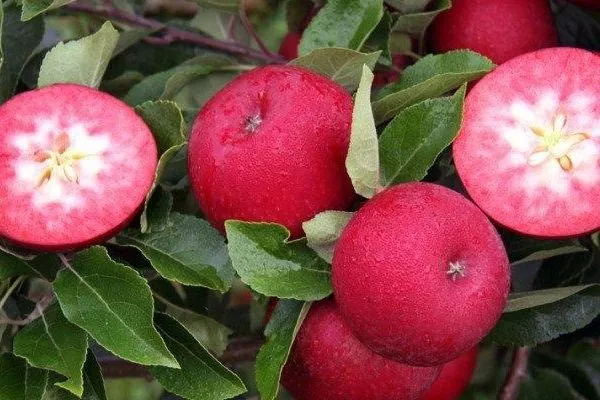
The Geromini apple variety, distinguished by its bright red flesh, is gaining popularity not only in Russia but has already captured the hearts of Europe as well. It belongs to the Delicious Red apple tree classification, and its uniqueness lies in the fruits' reddish or pinkish interiors. Thanks to the tree's low stature, harvesting is comfortable, eliminating the need for a ladder.
History of apple tree breeding and regions for cultivation
French breeders from Mondial Fruit Selection SARL developed the Geromini variety, which is part of the Delicious Red family. Its progenitors are Early Red and Erowan. These apples have a striking red flesh, but it can also be raspberry or light pink.
The variety has gained popularity throughout Europe, especially in Poland, where it is grown commercially. In Russia, Geromini is not yet included in the State Register, but it can be found in certain regions.
Growing area:
- Middle Urals.
- Crimean Peninsula.
- North Caucasus.
- Some areas in the north.
Features and specifications
This apple variety is compact and produces a bountiful harvest. The fruits are juicy and rich in flavor, making them ideal for jam and other preserves. The apples exude a unique aroma rarely found in other varieties.
The appearance of the tree
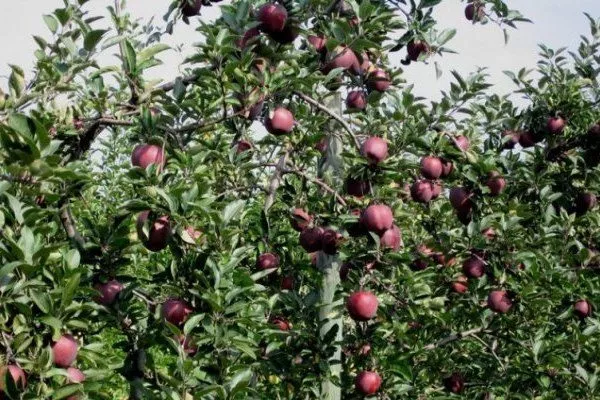
While there is currently no information on this variety's subspecies, it can be successfully grown on a variety of rootstocks: dwarf, semi-dwarf, vegetative, and wilding. The MM-106 and M-9 rootstocks have proven particularly successful.
Features of the tree:
- This variety is considered medium-sized, although it may appear semi-dwarf. If left unattended, it can reach a height of 250-300 cm.
- The branches have grey-brown bark, are thickened and have a small pubescence.
- The root system is well developed, lies at an average depth and is excellent at extracting water on its own.
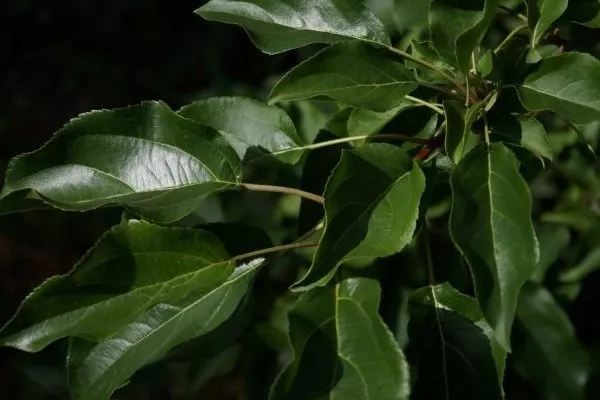
- The tree's leaves are medium to large in size, elongated, and richly dark green, taking on an emerald-green sheen in sunlight. The veins are fine, and the leaf edges are wavy or finely serrated. The leaves are smooth and glossy on the outside, with no down on the underside.
- The first flowers appear on the tree 2-5 years after planting, although sometimes within the first year. Budding begins earlier than with Golden Delicious.
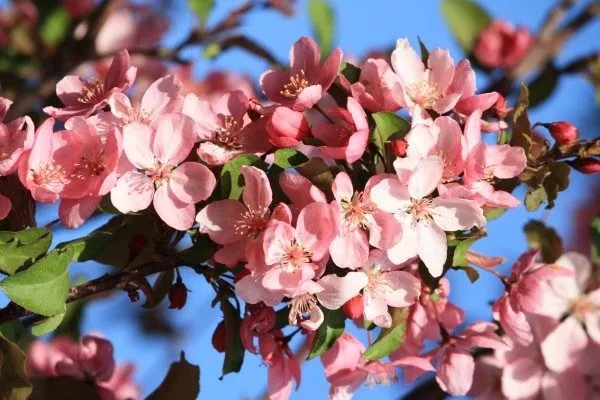
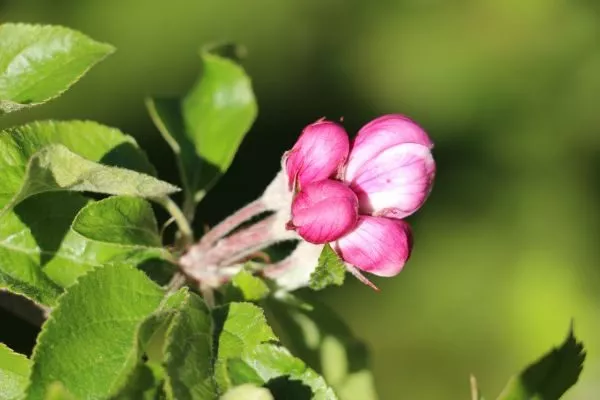
- The tree bears large flowers with pink petals. The apple tree exudes a rich fragrance during bloom, attracting pollinating insects.
Description of fruits
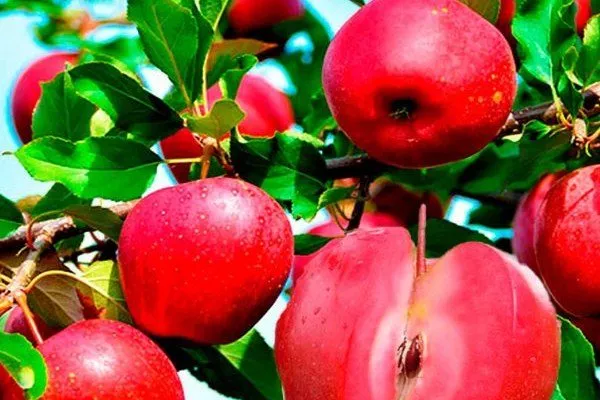
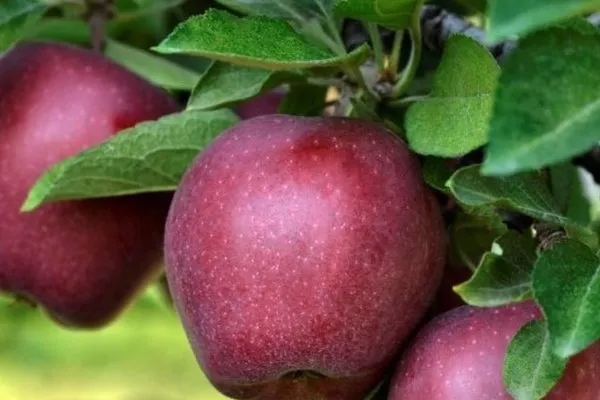
Geromini apples are striking in appearance: their color is deep cherry, their skin is opaque. Their shape is perfectly round, tapering slightly toward the base.
Other characteristics:
- The skin of these apples is smooth and thin, covered with a light wax. It has light spots, especially numerous on the underside;
- apples have perfect symmetry, are identical in size and shape;
- their funnel is shallow, the saucer is folded and of medium depth;
- the weight of one fruit varies from 170 to 200 g;
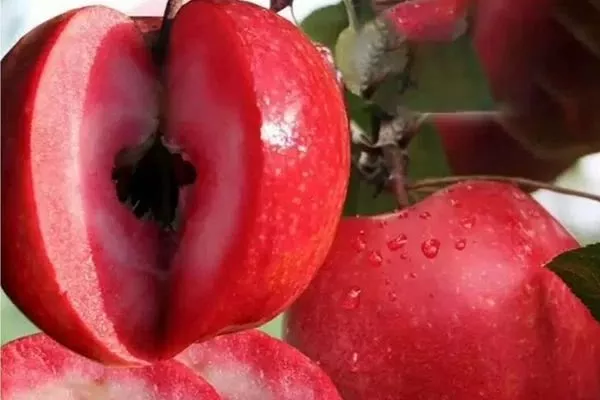
- the flesh is very crisp, with a pinkish or bright red hue that gradually becomes lighter towards the core and completely white in the center;
- the fruit is medium firm, with a small amount of fiber;
- Apples contain about 14.1 carbohydrates per 100 g, caloric content is about 60 kcal, fats 0.2 g, proteins - 0.27 g, catechins - 326 mg, pectins - 8.7%, vitamin C - 5 mg, fructose - 13.8%.
The bright red color of apple flesh is due to the presence of anthocyanin, a pigment with antimicrobial properties that boosts the immune system and protects against colds. Anthocyanin also promotes cell renewal, giving red-fleshed apples a reputation for rejuvenation.
Taste, application, storage
It boasts long-lasting flavor and quality, and can be stored until February or March without losing its original properties. For extended storage, special chambers with a controlled gas environment at temperatures ranging from 0 to -1 degrees Celsius are used.
Peculiarities:
- The fruits are most often consumed fresh, but they are also excellent for making juices.
- The fruits show good results during transportation.
- The pulp has a pleasant flavor, rich aroma, and a fine-grained texture. The taste is balanced—not sour, with a slight sweetness. This variety is considered a dessert variety.
- Experts award it scores of 4.5 to 4.8 for appearance and taste. It imparts a pinkish hue to dishes and drinks, adding an aesthetic element.
Apple tree pollinators and yield
One of the key limitations of the Geromini variety is its inability to self-pollinate. Successful pollination requires planting other apple varieties at a distance of 20 to 100 meters.
As neighbors for Geromini, preference is given to varieties that bloom at the same time:
- Everest;
- Golden Delicious;
- Granny Smith;
- Gala;
- Fuji.
Productivity Subtleties:
- Geromini's productivity is impressive even given its small size, reaching 90-100 kg from one tree per season;
- To get the maximum benefit from a tree, it is necessary to properly care for it and apply all agricultural practices;
- Young trees aged 4-5 years can produce up to 15 kg of apples per year, increasing the yield with age.
Ripening and fruiting
This variety is known for its rapid fruiting, with the first flowers appearing on the tree as early as the second or third year after planting. However, to ensure high productivity in the future, it's best to remove the flowers.
Harvesting can begin after 4-5 years, when the tree will yield 15 to 20 kg of aromatic, exquisite-looking apples with a unique flesh texture.
The most important thing about fruiting:
- Jeromini is classified as an autumn variety, so the apples ripen in September. Harvesting should begin within a month after the first apples reach maturity.
- Apple trees begin to bud in May, but the exact timing depends on local climate conditions and the current weather. In warmer regions, flowering begins in the first half of the month, from May 5th to 10th, while in colder areas, this process is delayed until the second half or even the end of the month.
- The tree blooms all at once, its flowers covering the branches so densely that the plant looks especially festive.
- Growth is moderate—the tree can increase in height by 25-35 cm per year. The plant grows more rapidly until fruiting begins, after which the growth rate slows.
- Fruit yield also increases gradually. By the seventh to ninth year, you can expect to receive approximately half of the maximum yield, and the coveted 80-100 kg of apples can be harvested by the tenth to fourteenth year.
- Apples reach ripeness in mid-September, signaling the start of harvest. They remain firmly attached to the branches for about a month, after which they begin to fall. Therefore, it's important to monitor the condition of the fruit and not miss the optimal moment for picking.
Resistance to frost, diseases and insects
This variety isn't considered particularly frost-hardy, but it can withstand temperatures down to -27-30°C. In particularly cold climates, it's recommended to protect it and prepare it for winter.
Sudden temperature fluctuations and cold winds have a negative impact, as they can seriously damage the tree. Geromini thrives best in conditions where temperatures do not drop below -10 degrees Celsius.
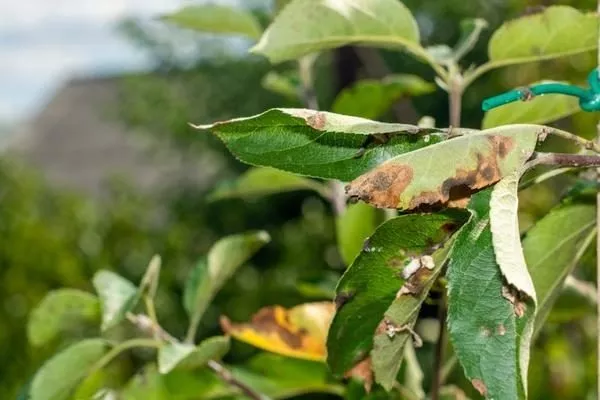
Delicious trees are particularly susceptible to bacterial canker, scab, and other fungal diseases, requiring special attention to preventative measures. It's important to promptly clear the area around the trees of fallen leaves, fruit, and branches, as well as treat them with fungicides and insecticides to protect against pests.
Landing rules
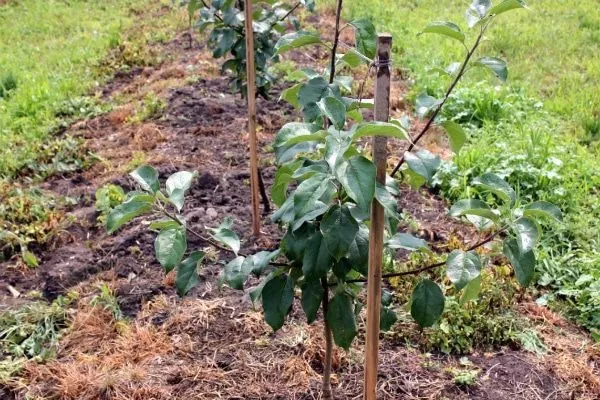
When choosing a location for Geromini, it's important to consider its preference for sunlight and spacious areas. Key requirements:
- It is best to plant it on a flat surface, and the area should be protected from gusts of wind.
- The tree's root system does not tolerate contact with groundwater, and its roots are located at a depth of at least 2 meters. Therefore, it is not recommended to plant the tree near bodies of water, wells, or groundwater sources to avoid root rot and the death of the tree.
- Soil conditions do not have any special requirements, the main thing is regular loosening and fertilizing.
- To prevent trees from interfering with each other, they should be placed at least 2-4 m apart.
The planting hole should be prepared 3-5 weeks before planting, or better yet, earlier in the season. The planting process is simple:
- Remove all debris and vegetation from the area, dig it thoroughly, and simultaneously fertilize it with organic matter. If preparing the soil in the fall, use fresh manure.
If you use it in the spring (immediately before planting), make sure it's well-rotted. Otherwise, the young root shoots will get burned. - Dig a hole 70-90 cm deep and the same width.
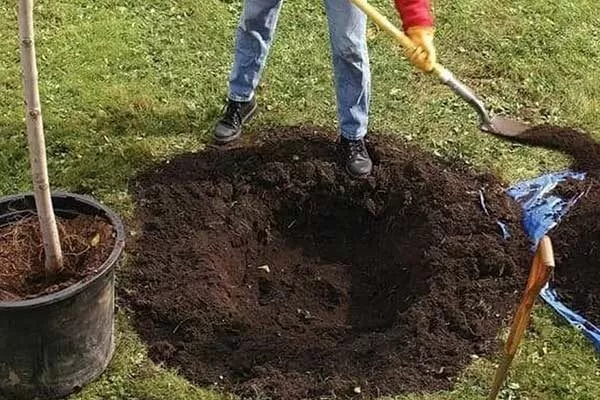
- Place one and a half 10-liter buckets of fertile soil, previously fertilized with organic components, in its center.
- Create a drainage layer of vermiculite, coarse gravel or brick chips.
- To support the tree, stakes are needed, so drive them into the hole immediately, slightly away from the center.
- Before planting, carefully inspect the tree's roots, removing any diseased or dead parts. Then soak them in water for 5-6 hours or in a mixture of water and clay.
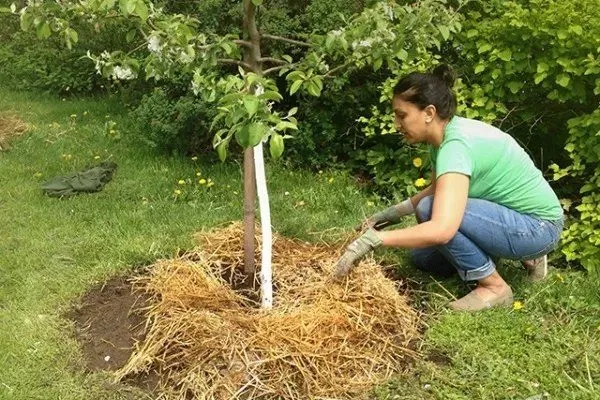
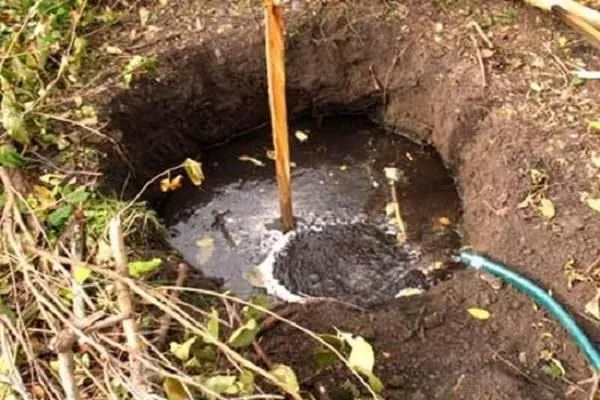
- Place the tree directly on the drainage trench, carefully unrolling the roots and filling with soil, tamping it lightly to prevent air pockets. The root collar should be 10 cm above the soil level. Form a small earthen mound around the tree at a distance of 30-40 cm and pour 45-50 liters of water into it, then mulch the entire trunk circle.
Apple tree care
Caring for the Geromini apple tree is not difficult, but there are a few things to consider:
- Loosen the soil around the trunk no more than twice a year, and do so with extreme caution. Weeds should also be removed periodically.
- To maintain an optimal height, trees should be pruned. Apple tree branches are not prone to excessive spreading, so they don't require complex trimming. However, please note the following:
- Every year in spring and autumn, inspect the trees for dried and diseased branches and remove them completely;
- two years after planting, shorten the central trunk by 1/3, leaving 2-3 lateral branches, which should also be shortened by about 7 cm;
- In the future, it is only necessary to maintain the shape of the tree.
- Young apple trees require a lot of water, so water them every two weeks. Mature trees require irrigation three times a season: during flowering, during fruit set, and before winter.
- Fertilize the soil 3 times:
- after the first leaves appear (for example, using nitrogen-containing components);
- after the first flowers (you need potassium sulfate, superphosphate, urea and manure);
- after flowering (using sodium glutamate, nitrophoska and water or superphosphate and potassium sulfate).
- Before the onset of cold weather, it is recommended to cover the soil around the roots with a layer of dry grass, and the tree trunk with a cold-resistant material, such as burlap. This covering is mandatory for young trees up to 1.5 m tall.
What else to do before winter:- apply the final fertilizer: a mixture of potassium and double superphosphate in a solution with water, and in case of wet conditions it is better to scatter the components under the tree in dry form;
- To protect against rodents and insects, the trunk must be treated with lime at a height of 100 to 150 cm.
Pest and disease control
This variety is susceptible to fungal attack. To ensure healthy trees, regularly remove fallen leaves and branches near the roots and treat with copper sulfate and Bordeaux mixture.
What else to do and how:
- To prevent insect attacks, it is important to use insecticides;
- If dark growths appear on the trunk and fruit rot, use a sulfur solution;
- If lichen is found on a tree, destroy it by spraying with a solution of copper sulfate and water, and after a week, remove the lichen with a metal brush, having first placed paper or cloth under the tree to collect the falling parts.
Pros and cons
This variety is deservedly loved due to its numerous advantages, which gardeners talk about.
They note:
But this baggage of advantages also has a few minor disadvantages:
Similar varieties
In Russia, apples with aromatic red flesh, which attract attention with their appetizing appearance, are gaining popularity, so Geromini already has its own equivalents:
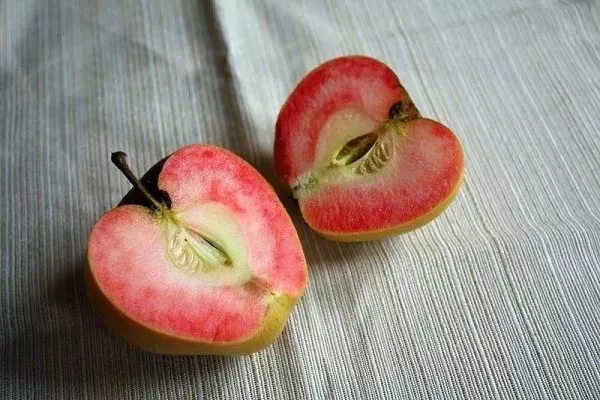
- Pink Pearl – This is a variety with reddish flesh protected by a green skin;
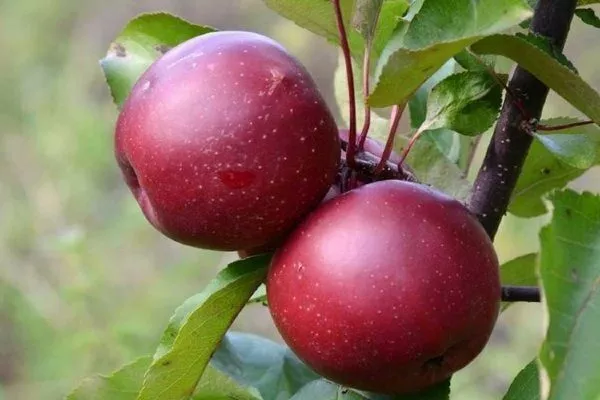
- Baya Marisa – a frost-resistant variety with bright red skin, similar in appearance to the Geromini variety;
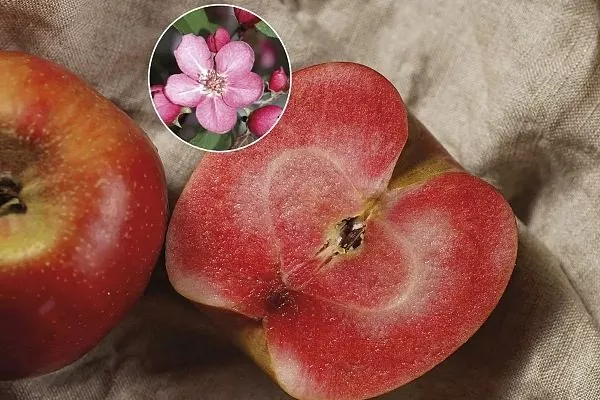
- Redlove Odysso – The fruits of this variety are large in size and have rich pulp, and the flowers and leaves have a pink tint;
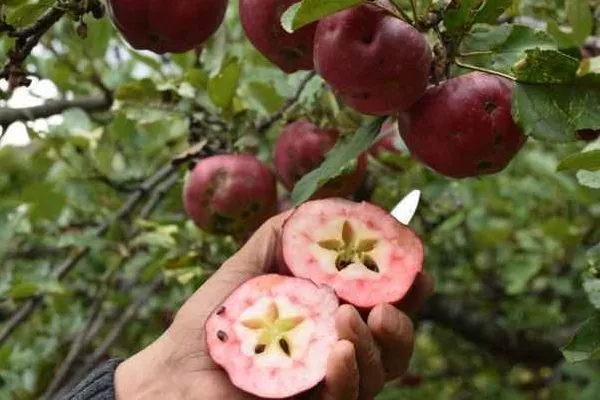
- Redlove Era – Bright red apples, raspberry flowers and leaves with a reddish tint make this variety original and attractive;
- Vinerpo – This is an early winter variety whose fruits are purple in color with possible violet inclusions.
Reviews
The Geromini apple tree doesn't require complex care or frequent watering. This variety is ideal for growing in small spaces, as it maintains a manageable size while delivering high yields. In addition to its high productivity and longevity, the Geromini variety is also characterized by good adaptability to a variety of climatic conditions.