
Champion is in high demand on the European market—in Poland, this variety ranks among the top export crops. Although it has not yet been added to the Russian State Register, regular testing is conducted to ensure its adaptation to various climatic conditions. It is used both for domestic use and for commercial sale.
Subtleties of origin
Poland is the main exporter, but the story begins in another country, then known as Czechoslovakia. In 1970, a new variety was developed at the Golovousy research station, combining the best traits of the Orange Reinette and Golden Delicious.
Description and characteristics of the Champion variety
A tree's growth is directly related to the type of rootstock it's grafted onto. For example, a Champion tree can grow up to 4-5 meters tall if a medium-sized rootstock is used, but not exceed 3 meters if a dwarf rootstock is used.
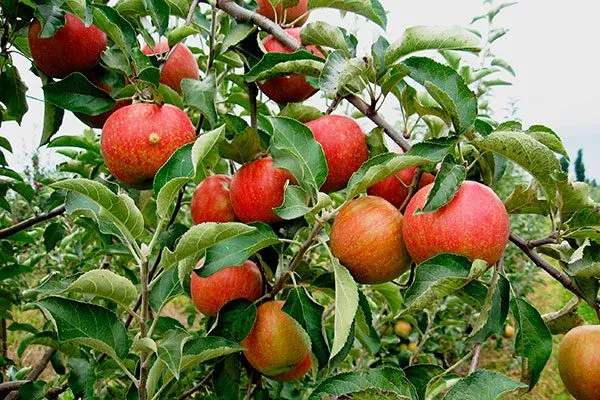
What does a tree look like?
The tree is characterized as medium-sized or slightly below average. Without regular pruning, it can reach up to 5 meters, but in gardens, its growth is usually limited to prevent it from spreading too much. As a result, the tree typically reaches a height of 2.5-3.5 meters.
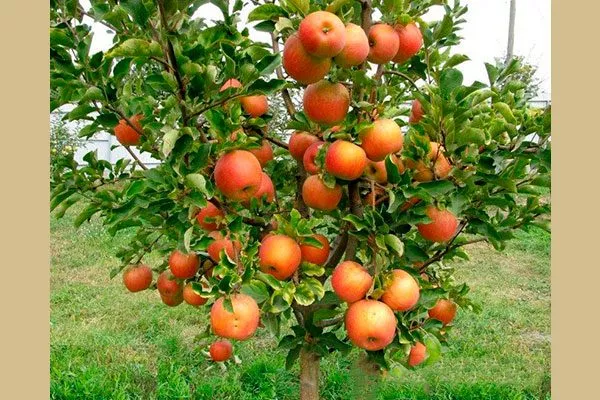
Other varietal characteristics:
- The crown is medium-dense, not prone to becoming dense, and pyramidal or oval in shape when young. Over time, it becomes wide, spreading, and sometimes even "weeping," with long branches drooping downward.
- The main shoots grow at an angle of 50-70 degrees relative to the trunk and are not prone to excessive branching. The branches are evenly distributed, making the tree easy to maintain.
- The leaves are a rich, dark green, smooth and leathery on top and pubescent underneath. They are rounded at the base, but taper toward the edges, and the tips can even be curled. The edges are serrated and jagged.
- The root system is well branched, but predominantly superficial, which reduces the tree's resistance to frost.
Fruit characteristics
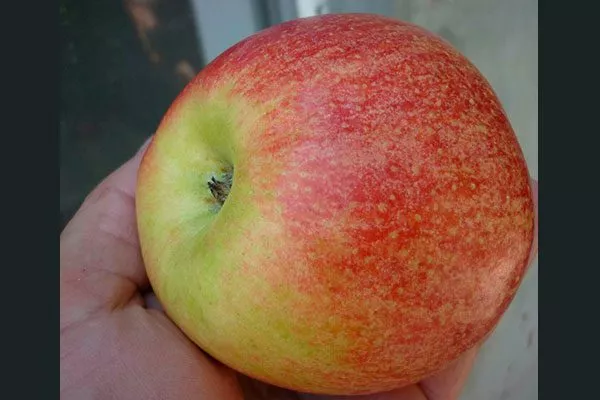
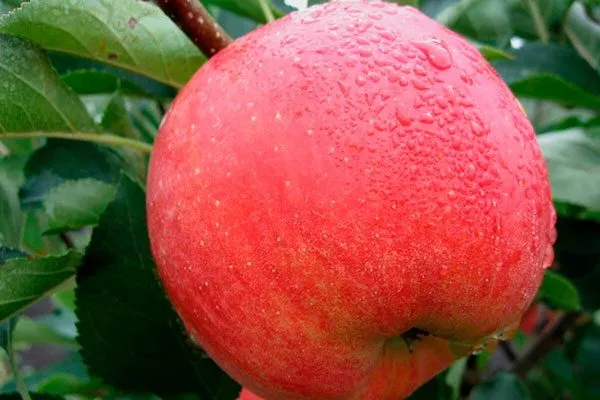
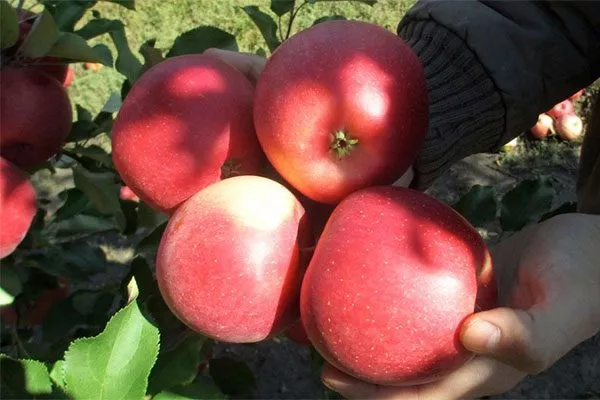
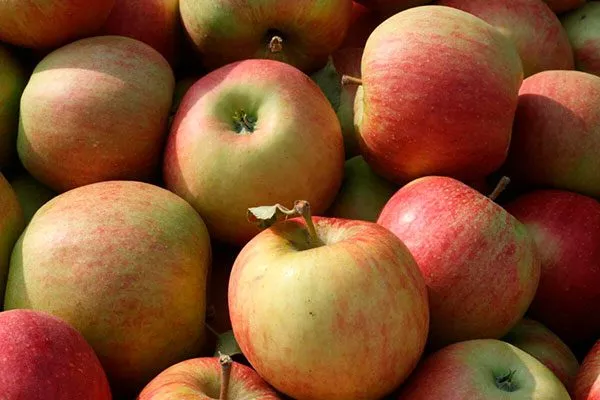
The apples are round and weigh between 170 and 260 grams. They are nearly identical in size, covered in a thin but firm yellowish skin, covered with a rich orange-red blush that sometimes covers the entire fruit. The blush can be blurred or streaked, especially on the sun-exposed side.
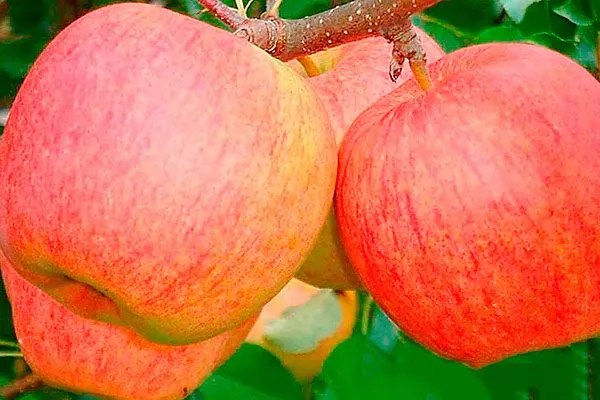
The chemical composition of these fruits includes:
- P-active substances – 287 mg.
- Vitamin C (ascorbic acid) – 8.2 mg.
- Total sugars (fructose) – 13-14%.
- Pectins (fiber) – 12.5%.
- Titratable acids – 0.69%.
The flesh is not very firm, but has a certain looseness, although it remains juicy. Its color varies from cream to slightly yellowish.
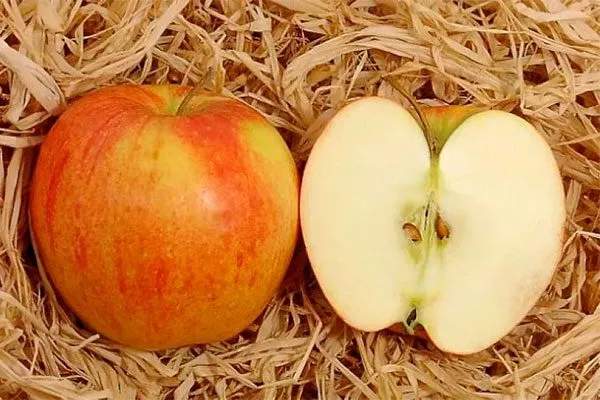
The taste of Champion apples is characterized as dessert-like, balanced and harmonious, and the aroma is rich and bright.
Frost resistance
Champion is characterized by moderate winter hardiness, making it ideal for cultivation in the southern regions of our country, where the climate is milder. In more northern regions, this variety requires enhanced care, especially for young trees. Even with minimal frost, they require winter protection, including the trunk, crown, and surrounding area.
Fruiting and growth
The first apples can be enjoyed within 2-3 years after planting, and full fruiting begins in the 4th-5th year. Although the yield during this period does not exceed 5-15 kg, this is quite a good start. As the tree matures, around the 6th-7th year, it begins to produce abundant harvests.
The tree grows vigorously, reaching 15-25 cm per year, and continues to do so until the trunk reaches its full height (5-7 years). After this, it begins to spread outward and become more spreading.
Peculiarities:
- During the first few years of life, the tree grows faster—25-40 cm before fruiting begins. But after that, growth slows.
- Unfavorable weather conditions or excessive fruiting may result in temporary growth cessation or minimal growth.
The lifespan of Champion apple trees has not yet been determined, as this selected variety is relatively young and cannot be compared to the standard 100-year lifespan. Rejuvenation techniques, such as pruning with consideration of replacement branches, can extend the life of the plant.
Ripening and flowering
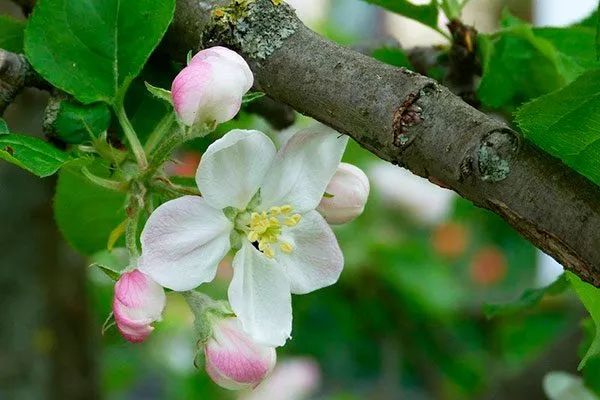
The tree begins to bloom in May, and this spectacle is accompanied by a profusion of blossoms. Like all winter varieties, Champion blooms around mid-month, although the timing can shift depending on climate conditions and extend until early June. The blooming period is short-lived—about 10 days—after which the buds quickly fall off.
The Champion variety is a winter apple tree—fruit is harvested in the second half of September. However, the exact timing may vary.
Scope of application
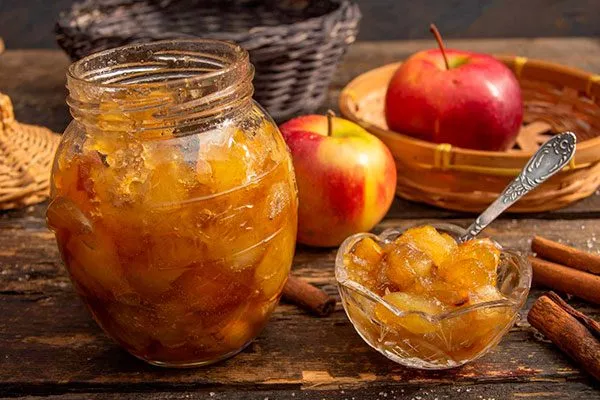
The fruits are versatile in use. They are equally good fresh or for winter preservation. Experienced home cooks use them for:
- preparation of various preserves (compotes, jam, preserves and marmalade);
- drying for compote mixture.
Regionalism
Champion is an ideal choice for gardens in central Russia, although it is also suitable for more southern regions of the country, where winters are milder. North of central Russia, opportunities for growing Champion outdoors are virtually nonexistent.
Productivity and Pollinators
Champion is a partially self-fertile apple variety. With natural pollination, a single tree produces 30-35% of its fruit. To increase yield, it is recommended to use donor varieties, including:
- Florin;
- Idared;
- James Grieve;
- Pilot;
- Pinova.
Champion produces fruit not only on the ringed and fruit branches, but also on the spears, which results in high productivity with a small crown size:
- by the seventh year of life the tree can produce a harvest of 15 kg, and by the age of ten years – about 25-27 kg;
- The average productivity over four years of testing in the ideal conditions of the Nikitsky Botanical Garden was 30 tons per hectare;
- If apple trees are grown on super-dwarf rootstocks, the yield can reach 43.3 tons, and on dwarf rootstocks – 27.7 tons.
Trees grown on such rootstocks require the installation of permanent support from the first year, as early fruit loading, combined with a fragile root system, can lead to plant tilting and damage, which complicates crown formation.
Subspecies and rootstocks
Following the example of their predecessors, Polish botanists have achieved success by creating their own variations of the Champion variety, which have some unique features compared to the original cultivar type.
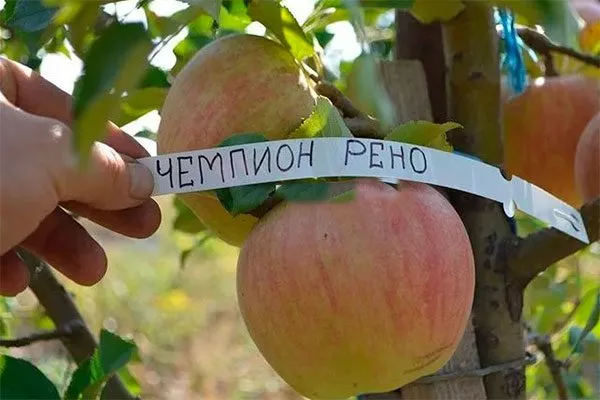
- Renault. The cultivar was developed in 1992 thanks to the efforts of scientists A. Reitman and A. Novakovsky, whose names inspired the clone's name. Unlike the original cultivar, Reno exhibits increased resistance to low temperatures, able to withstand temperatures as low as -20°C. The tree is not as tall, but has a broad crown.

The apples are no different in size from the Champion, but their flavor is sweeter. They are considered a dessert fruit and are rated 4.7 for flavor. They have a more intense pink-red color. - Arno. This clone is grafted onto the semi-dwarf rootstock 545-118, which promotes faster establishment and better growth, reaching a height of 3.5 m. Arno is resistant to strong winds thanks to its powerful root system.
Overall, the variety matches the original Champion in characteristics, but the fruits are brightly colored, have a light waxy coating, and are sweet in taste. The flesh is juicy and crisp.
- Giant. An unusual subspecies of the Champion, the fruits of which reach truly gigantic sizes. They can weigh up to 900 g, placing a heavy burden on the branches. Giant trees are not frost-hardy, so they are grown primarily in botanical gardens or greenhouses.
Champion is divided into types depending on the rootstock:
- Dwarf - It doesn't exceed 2 m in height, making tree care and harvesting easy. It retains all the advantages of its ancestor.
- Semi-dwarf – The height of this tree ranges from 2 to 3 meters, and it is grown on the MM-106 rootstock. This variety is highly resistant to scab, powdery mildew, and other fungal diseases. Its apples are sweet, large (up to 250 g), have a rich, almost burgundy color, and are covered with a waxy film.
- Columnar - A tree on this rootstock reaches a height of 3 m. This variety is particularly popular due to the lack of lateral branches, which makes its crown very narrow – only 30-40 cm wide. This helps save space in the garden.
Growing
Despite its compact size, Champion requires ample space to grow comfortably. To ensure easy care and fruit harvesting, follow these guidelines when choosing a planting site: 1.5 m between trees and up to 4 m between rows.
How are seedlings selected?
Selecting healthy planting material is key. Champion apple tree seedlings should be carefully inspected, from the roots to the top, to detect any potential problems and assess the overall health of the plant:
- The root system should be free of damage, growths, spots, rot, or other signs of disease. The roots should be healthy, and to ensure this, a small cut is made in the rootlet—fresh, moist wood indicates health.
- Avoid buying bare-root seedlings. It's better to choose those grown in containers with soil or with clay-treated shoots.
- The seedling height should be no more than half a meter. Seedlings taller than this are more susceptible to transplantation, which makes it more difficult for them to adapt to the new location and may impact future yields. It is recommended to purchase one- or two-year-old plants.
- The trunk should be straight, free of damage, wounds, and growths. Under the bark, the wood should be green and have a fresh aroma.
- The main branches should grow at an angle greater than 45 degrees, and there should be no more than five of them.
- Seedlings should be purchased when the leaves have already fallen or the buds have not yet blossomed.
To avoid purchasing low-quality planting material, buy from specialized nurseries rather than from the street or at the market. They sell high-quality seedlings that match the stated variety and are properly grafted.
When to plant an apple tree?
It is recommended to plant Champion in the fall or spring. If you purchase a seedling in the fall, it should be planted in the ground a month before the first frost to allow the tree time to establish roots and prepare for winter. In central Russia, the optimal time is September, and in the southern and central regions, early October.
Spring is considered the most favorable time. Planting should be done after the snow melts, when the soil has warmed under the sun's rays. This way, the seedling will not only take root well but also have time to strengthen over the summer and prepare for lower temperatures.
- in Primorye and Eastern Siberia – mid-May;
- in warmer regions – early or mid-April.
If the seedling is purchased in a container, it can be planted throughout the warm season, regardless of the time of year.
The best place for an apple tree
Apple trees require locations with adequate light and reliable protection from northern winds. If planted in rows, the trees should face north to south.
Excessive soil moisture can lead to tree death. Therefore, it is important to select sites where the groundwater level does not exceed 3 meters.
Low-lying areas should be avoided. The key requirements are fertile soil, free of rocks, excess oxygen, and surface water.
Planting technology
Prepare the apple tree planting site in advance by digging a hole. It should be 50 to 75 cm deep and 80 to 95 cm in diameter, with smaller diameters for dwarf varieties.
Work process:
- Level the bottom of the hole by laying a drainage layer of expanded clay or broken brick.
- Combine the soil with compost, humus and ash, add mineral fertilizers (superphosphate or potassium chloride).
- Pour the resulting mixture into the hole, then cover it with a plastic "blanket" and leave it for a while to create an optimal microclimate. It is not recommended to use nitrogen-rich mixtures during planting, as they can burn immature roots.
- Remove some soil from the hole and form it into a cone.
- Place the seedling in the center and carefully spread the roots so that they freely descend along the entire mound.
- Holding the plant by the trunk, begin filling the hole with the soil mixture, shaking the seedling periodically to evenly distribute the soil over the roots.
- As the hole fills, compact the soil, more gently around the seedling and more roughly around the perimeter.
- After planting, attach the plant to a supporting post, but not too tightly.
- Create a watering circle by surrounding the planting site with an earthen rampart and fill it with 20 liters of water.
- Once the water has been completely absorbed, be sure to compact the root zone.
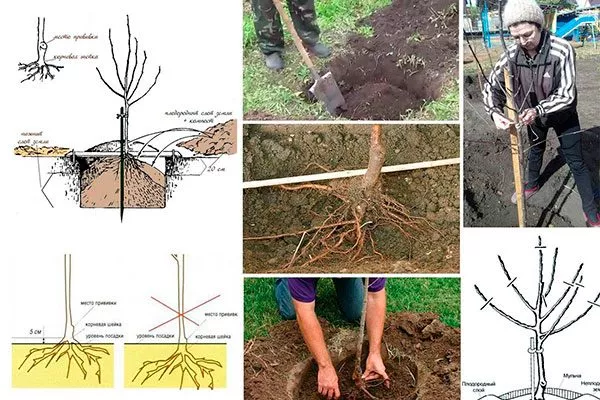
Pay special attention to ensuring that the root collar or grafting point is 5–7 cm below ground level. This is necessary to compensate for the decrease in soil height after planting.
Proper care
Growth regulation is especially important for the Champion, as the tree barely increases in size once fruiting begins. Removing some branches has a positive effect on the quality of the apples, which grow on young shoots until they are three years old. This procedure is performed in the spring, before the tree begins actively pumping sap.
Shaping, pruning
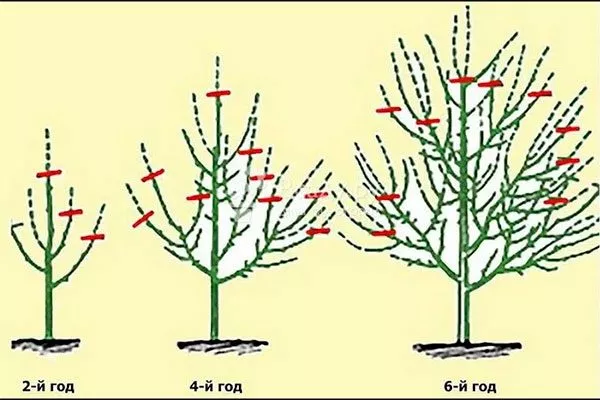
The main goal of pruning young trees is to form a proper crown. Crown formation stages:
- To treat the trunk area, it is necessary to remove all stems growing at a height of 50 cm from the ground:
- During the first stage of seedling growth, select three of the most developed shoots, located at the same level and 15 cm apart. The removed branches form a central conductor.
- The first tier of the crown is shortened by a third of the total length so that the ends are located at the same height.
- After pruning, the central shoot should be 15–20 cm higher than the first tier. The remaining shoots are pruned to the ring.
- In subsequent years, second- and third-tier branches are formed. Their number is limited to 2-3 well-developed shoots, which are also shortened by a third. Weak and competing branches are cut back to the ring. The distance between tiers should be at least 50 cm.
- When the tree reaches the desired height, the central leader is cut and transferred to a lateral branch.
- Regular thinning and sanitary pruning are carried out as needed. However, excessive branch removal can cause shock to the plant, as fruit-bearing apple trees are not prone to extensive branching.
Having too many fruits forming on a tree is undesirable—Champion, especially at a young age, won't be able to handle such a load. Therefore, it's necessary to remove excess fruit to allow the remaining ones more light and nutrients.
Diseases and pests
The variety boasts excellent pest resistance and is virtually immune to scab, having been bred for its resistance to this disease. Powdery mildew is a serious problem, as Champion has weak resistance to fungus.
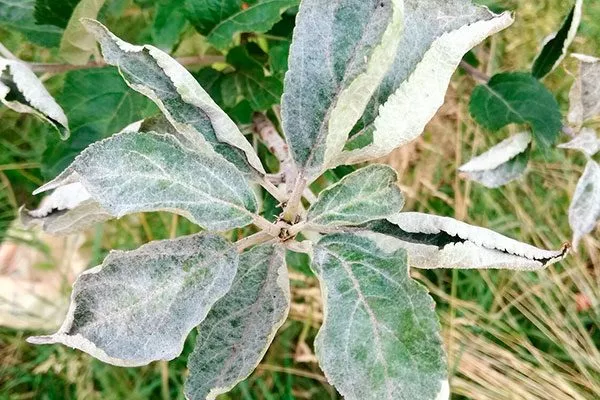
To prevent the spread diseases Spring pruning is an important step. Additionally, there are several effective means for combating pathogens:
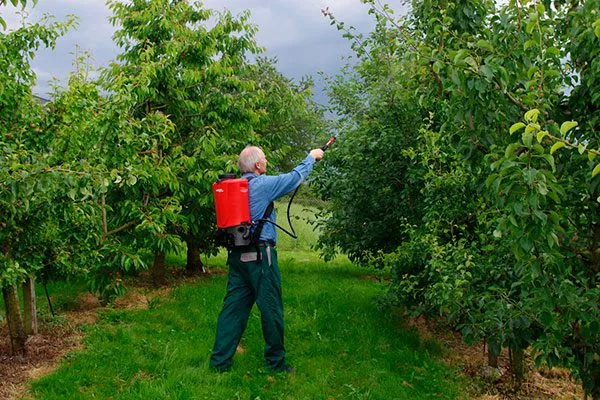
- copper sulfate is used for disinfection, sprayed in the fall and during bud development;
- Bordeaux mixture is used for spring irrigation, the entire tree is treated, including the trunk;
- Colloidal sulfur is a universal remedy against various diseases and insect pests;
- Soda ash and laundry soap are used to combat powdery mildew.
In addition to the above mentioned products, there are specialized fungicides for the treatment and prevention of diseases – Topaz, Albit and Skor.
The Champion is also at risk from another serious disease: fire blight, a severe infectious condition that spreads from the top to the root collar and causes the tree to slowly die without shedding its leaves or fruit.
The following means are used during the treatment:
- copper sulfate and lime;
- fungicides;
- antibiotics, including streptomycin, tetracycline, Fitosporin and Ofloxacin.
Champion apples are prone to developing bitter pit, a physiological disorder associated with calcium deficiency. This condition causes small dark pits to appear on the fruit. It is recommended to treat the tree with a calcium chloride solution 8-10 times from June until harvest.
Top dressing
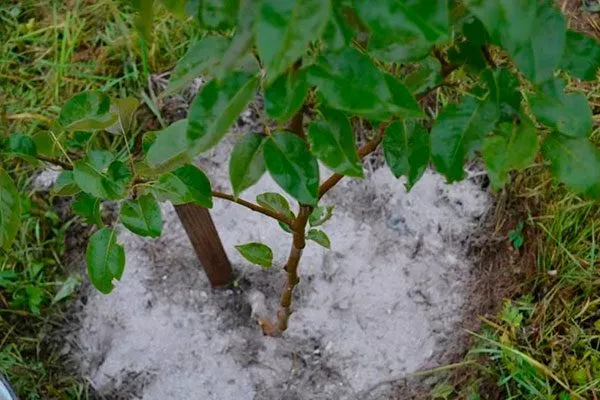
In the third year after planting, they begin to fertilize the soil, taking into account the nutrients previously added.
This variety is particularly sensitive to changes in organic and mineral compositions. Two methods are used to introduce them:
- Root feeding. In spring and autumn, add organic matter to the soil to a depth of 20 cm. Liquid mixtures can be used, dissolving them in water at a ratio of 1:10, with the exception of chicken manure, which should be diluted 1:20.
It is recommended to add phosphorus and potassium salts to organic mixtures. Apply nitrogen in the spring and early summer.
- Foliar option. This method of feeding is used with caution and as a supplement to root feeding, which is considered essential:
- After flowering, treat with Bordeaux mixture, adding 5 g of urea or 2.5 g of ammonium nitrate to 1 liter of solution.
- In the second half of summer, it is recommended to fertilize with a solution of potassium sulfate or superphosphate. Spray in the evening or morning. In hot and dry weather, use a less concentrated solution to prevent leaf scorching.
Watering
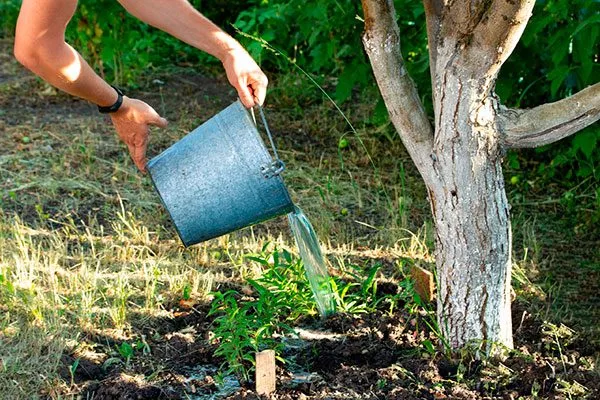
The Champion apple tree has some resistance to lack of moisture, but a prolonged period of drought can harm the tree.
Rules:
- each tree requires 25-30 liters of water;
- To ensure that water evenly penetrates the soil to the desired depth, it is recommended to divide watering into two stages – morning and evening.
- Key points for apple tree moistening:
- before budding begins;
- after flowering is complete;
- until the first ovaries fall;
- during the fruit ripening period.
- In November, the last watering is carried out, which will help increase the heat capacity of the soil and protect the roots from severe frosts, but in areas with a high groundwater level, such irrigation is not recommended;
- The process is carried out in shallow grooves (up to 15 cm), located at a distance of 1 m from the tree trunk, and the next groove is formed 0.5 m further from the previous one.
Care after watering
To avoid crust formation, which can impede proper gas exchange in the root system, it's important to loosen the soil after watering. To avoid overloading yourself with additional care around the tree trunk, consider mulching.
This method solves several problems at once: it retains moisture, prevents weed growth, and prevents crust formation.
Protection from frost and rodents
To ensure the Champion apple tree survives winter frosts, careful preparation for the winter is essential. This is especially important for young trees and those growing in climates with cold winters.
The preparation process includes a number of key steps:
- Keep the area around the trunk clean by removing all weeds and unwanted plants;
- treat the trunk and bases of large branches, first removing old bark and covering the damaged areas with garden pitch;
- spray against insects and pathogens;
- dig up the soil in the tree trunk area;
- In case of dry autumn, water generously to provide the soil with moisture.
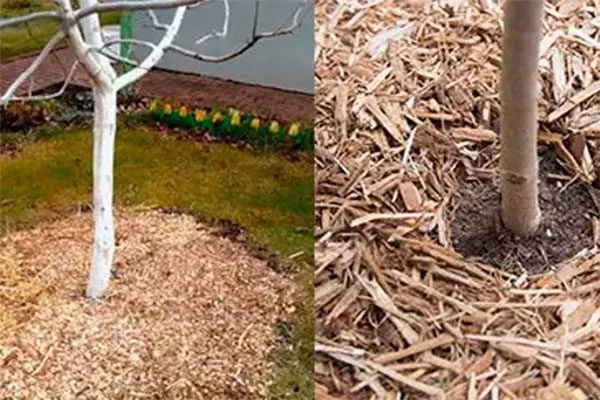
- Protect the soil around the roots by applying a thick layer of mulch.
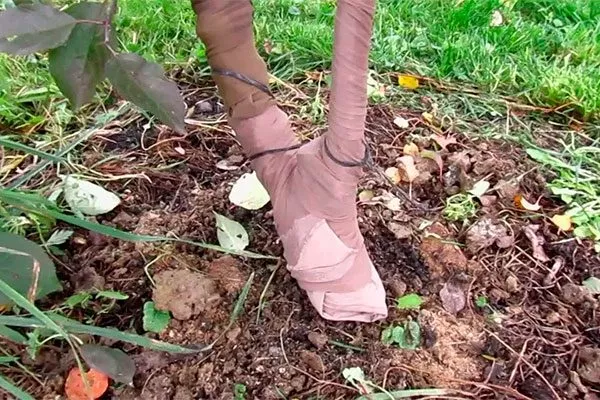
The trunks of young trees are wrapped using any permeable fabric, paper or cardboard to prevent damage from low temperatures.
Harvesting and storing fruits
When picking apples, be careful to avoid damage, stacking them carefully rather than throwing them into the basket. Sort the fruits, setting aside any damaged ones.
It is recommended to harvest during the day and in dry weather. Apples should be stored for about two weeks after picking to allow the sugars to accumulate.
The shelf life is up to 5-6 months in specialized refrigeration facilities. Champion apples have average transportability, so they must be carefully packaged. If you sell this variety, it's best to sell the harvest immediately after harvesting to preserve its original quality.
What to do if it doesn’t bloom?
To prevent problems with apple trees, several measures must be taken:
- Transfer: If a tree grows in a place that is too damp, it is transplanted to a dry area.
- Pest inspection: Check the tree regularly.
- Watering correction: If there is too much moisture, you should stop watering or reduce its frequency.
- Checking for frostbite: If the tree has been exposed to frost or other adverse weather conditions, it is important to prune it thoroughly in the spring.
- Soil fertilization: To maintain the health of the tree, it is necessary to regularly fertilize the soil.
Why do apples fall?
The variety is prone to fruit drop during technical ripening, especially on older trees. The entire crop can fall in a short period, so constant monitoring of ripening is necessary.
Other reasons:
- pests and diseases;
- influence of wind, hail, rain.
Pros and cons
The variety is actively used as a donor for the transfer of such valuable characteristics as large size and exquisite dessert taste of apples.
Reviews
Although the Champion variety isn't particularly disease-resistant, gardeners appreciate its stable and consistent harvest. The apple tree grows quickly and can produce its first crop of ripe apples as early as its third year.