
Early spring is a crucial time to prepare your apple orchard for the new season. This is the time to stop the emergence of overwintering pests and prevent diseases before they can spread. Treating apple trees at this time helps maintain the trees' health and lay the foundation for a bountiful harvest.
What is the difference between autumn and spring treatments?
They vary in purpose, timing, and means used. Key features of spring work:
- The gardener's main task during this period is to protect the tree from pests and pathogens waking up after winter. During this time, preventing scab, powdery mildew, and other fungal infections is especially important.
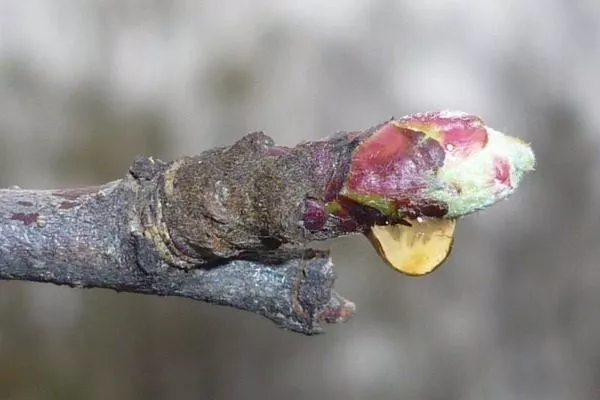
- The first treatment is carried out very early – as soon as the snow melts and the temperature returns above freezing, but before the buds begin to open. Copper sulfate or Bordeaux mixture are typically used, as well as special oil-based preparations that kill pest eggs that have overwintered on the branches.
- When the buds begin to swell, repeat treatments are carried out with milder products. At this time, systemic fungicides and insecticides are used to prevent disease infestations and kill active insects. Spring protection is especially important for preserving the future harvest.
In autumn, the goal is different: to help the tree recover after fruiting, clear the garden of diseases and pests that may linger over the winter, and prepare the plants for the cold weather. Different principles apply here:
- Treatment is carried out after leaf fall, when the tree has already entered dormancy. Disinfections are primarily used, such as copper or iron sulfate, or Bordeaux mixture. These kill fungal spores and insect larvae that hide in bark crevices and in the soil beneath the tree.
- In the fall, tree trunks are whitewashed with lime with the addition of copper sulfate – this protects the bark from temperature fluctuations and sunburn in late winter and early spring.
The main threats to the garden
The apple tree is one of the most common and beloved fruit trees in gardens. It is prized for its delicious, aromatic fruit, abundant yield, and relative ease of maintenance. But even the most resilient varieties are susceptible to numerous external threats that can reduce yields or even destroy the trees.
Pests
Insects pose one of the most serious threats to crops. They damage leaves, buds, ovaries, fruits, bark, and the root system. These pests are most often active in spring and summer, although overwintering stages (eggs, pupae, larvae) can survive the winter under the bark or in the soil, only to attack the tree again in the following season.
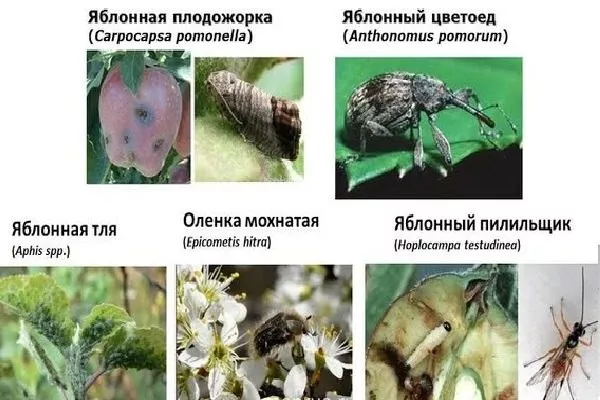
Common pests:
- Codling moth – One of the most dangerous enemies. Its caterpillars burrow into apples and eat out the core, leaving behind tunnels and excrement. This causes the fruit to quickly rot and fall off.
- Aphids - It settles on young shoots and the underside of leaves, sucking out the sap, causing the leaves to curl, the tree's growth to slow down, and the yield to fall.
- Apple moth, leaf rollers, sawflies, weevils, mites, scale insects – Each of these pests weakens the plant in its own way. They disrupt metabolism, open the door to infection, and lead to the premature death of tree parts.
You will find more details about apple tree pests and ways to control them. Here.
A massive spread of insects is possible due to untimely pruning, dense plantings, lack of sanitary treatment, or an excessively warm winter.
Diseases
Apple trees are susceptible to a variety of fungal, bacterial, and viral diseases, especially if garden maintenance is irregular or climate conditions are conducive to infection. You can find more details about what diseases affect trees here. Here.
The most common dangerous diseases:
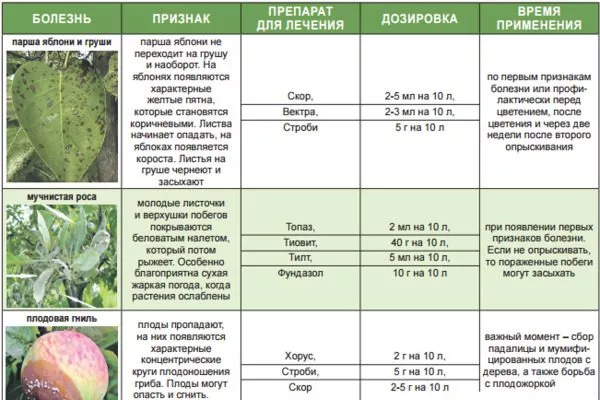
- Scab - A fungal disease that attacks leaves and fruits. It leaves brown spots and a coating on them. The fruits become deformed, bitter, and store poorly.
- Powdery mildew - It appears as a white, powdery coating on leaves, shoots, and fruit buds. It weakens the tree and reduces yield, especially in warm and humid weather.
- Fruit rot (moniliosis) - Infects fruits: first, brown spots appear, then the fruit rots and mummifies right on the branch. This is one of the main sources of infection the following year.
Black cancer, cytosporosis, bacterial burn - More serious diseases affect the bark and wood. They cause branch dieback, cracks, and ulcers, and in severe cases can lead to the death of the entire tree.
Diseases are spread through infected foliage, rainwater, insects, and improper pruning.
Unfavorable conditions
Even in seemingly healthy orchards, apple trees can suffer from stress factors not directly related to pests or diseases. These conditions weaken the trees, make them more vulnerable, and can trigger the development of other problems.
Main difficulties:
- Frosts and sudden temperature changes These are especially dangerous in late winter and early spring. The bark heats up during the day and cools sharply at night, leading to frost cracks and fissures. These cracks are a perfect gateway for infection.
- Drought In the summer months it causes deformation of fruits, premature falling, slow growth and drying out of branches.
- Excess moisture and waterlogging of the soil can lead to root rot, the development of fungal infections and disruption of root system respiration.
- Strong wind and hail can damage young shoots, break branches and cause damage to apples, especially during their formation period.
- Violation of agricultural technology (too dense planting, improper watering, lack of pruning and fertilizing) are factors related to unfavorable conditions that create an imbalance and weaken trees.
Why is pest and disease control mandatory in early spring?
With the arrival of spring and the awakening of fruit crops, pests that survived the winter in various shelters become active. It is important to treat plants promptly to prevent their spread.
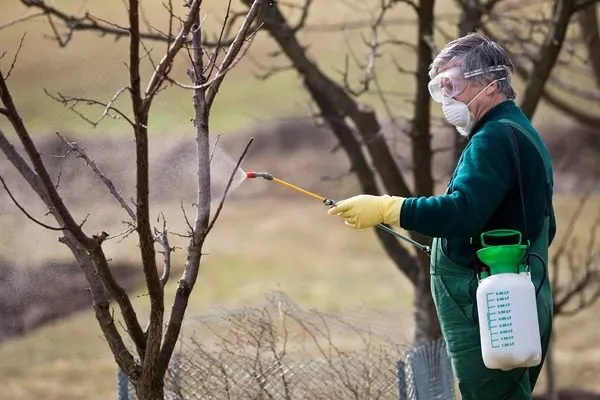
Winter apartments of pests are varied:
- The larvae of sawflies (cherry slime and currant fruit sawflies), raspberry beetles, strawberry-raspberry weevils, strawberry mites and gooseberry moth pupae find shelter in the soil, where the apple blossom beetle also overwinters.
- The crowns of trees and shrubs serve as a refuge for the caterpillars of the codling moth and the woodworm, the larvae of the bark beetle, as well as the eggs of aphids and leafhoppers.
- Some pests, such as cabbage white butterfly pupae, overwinter in shelters on fences, under eaves and trim, and in wall cracks.
Early spring treatment of fruit trees is aimed at destroying parasites before they leave their winter shelters and begin to damage the crop.
When to carry out the treatment?
There's no standard plant spraying schedule due to climatic differences between regions: timing varies from early March to April. Instead of blindly following the calendar, focus on the current weather and the plant's development stage.
Optimal conditions for starting work:
- almost complete absence of snow cover;
- daytime air temperature within +4°C;
- Nighttime temperatures not below -1°C.
What needs to be done before processing?
In early spring, when the winter cold has receded but the orchards have not yet awakened, it's critical to thoroughly inspect your fruit trees and berry bushes. Follow these recommendations:
- Remove all mummified fruit from last year and carefully inspect the trunks and branches for damage. Any dry or cancerous parts found should be pruned.
- Carefully remove dead bark with a brush, and treat all damaged areas down to healthy wood and cover with garden pitch.
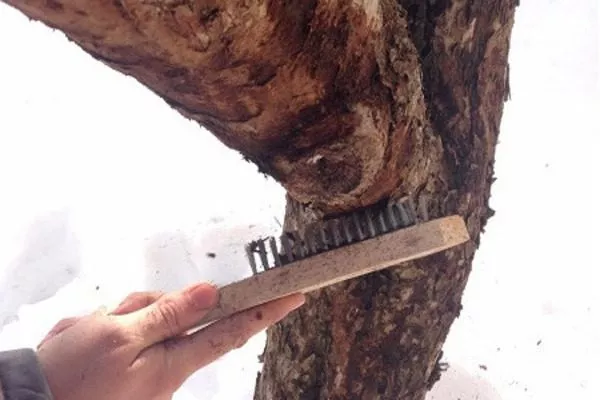
- Destroy pest egg clutches to prevent them from spreading throughout the area.
- If necessary, renew the protective coating on the trunks to prevent sunburn and frost cracks.
- If autumn pruning was not carried out, perform spring pruning: remove old and dry branches, curved shoot tips that indicate the presence of aphids, and buds affected by spider mites.
Stages of spring processing
Preventative crown spraying on a schedule is the key to strong apple tree immunity and reliable preparation of the orchard for the warm season. Spring treatment is carried out in several stages, each with its own timing, specific features, and products.
First
Plan the treatment for early spring—mid- to late March. Apply the treatment before bud break, while the tree is dormant. The best time is a dry, windless day with no precipitation.
Second
When buds on garden trees begin to swell, the second important stage of protection begins. During this time, reduce the concentration of treatments to avoid damaging the delicate leaves.
Key recommendations:
- Use a 1% solution of Bordeaux mixture, or modern complex products that simultaneously combat pests, fungi, and diseases of fruit trees.
- The optimal time for the second spraying is when the buds begin to open. During this period, trees are especially vulnerable to pests; for example, the apple blossom beetle can destroy a significant portion of the future harvest.
- Experts advise carrying out pest and disease control treatments on different days, avoiding mixing treatments.
Third
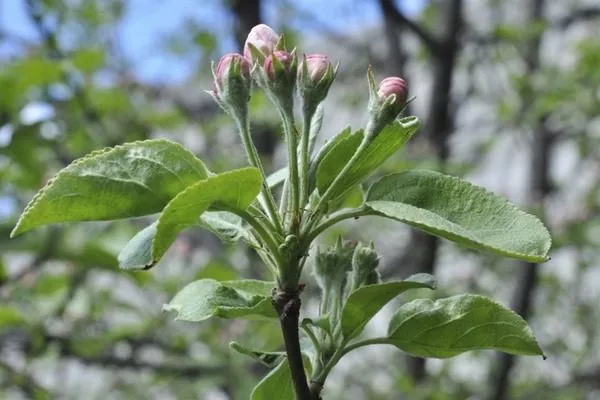
The third treatment of the garden is carried out during the bud formation stage, immediately before flowering. During this period, it is critical to protect the trees from caterpillars and leaf rollers, which can cause serious damage to the crop. Use copper sulfate or Bordeaux mixture.
Recommended medications:
- fungicides (for example, Skor – 2 ml per 10 l of water or Abiga-Peak – 30 g per 10 l of water);
- insecticides (for example, Aktara - 5 g per 10 l of water).
Fourth
Perform the final spring treatment of fruit trees and shrubs after flowering has finished. At this time, use milder pesticides.
The periods for treating plants are determined by the stage of development and may vary depending on weather conditions in different regions.
What preparations are suitable for spring treatment of apple trees?
A wide range of products are available for spring crop spraying. They are primarily divided into several groups, each with numerous advantages.
Insecticides
For comprehensive protection of garden plants from harmful insects, we recommend using the powerful Confidor product. To prepare a solution, dilute 1 g of the product in 10 liters of water.
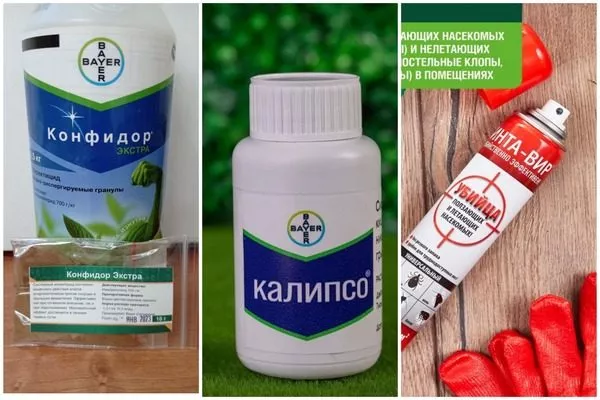
Other popular remedies:
- Calypso - An effective, broad-spectrum product that combats a range of apple tree pests in the spring. Recommended concentration: 2 ml per 10 liters of water.
- Inta-Vir – Apply at a rate of 100 g per 500 square meters of treated area. The product is effective against insects at various stages of their life cycle.
Fungicides
To combat fungal diseases of plants, use a number of fungicides.
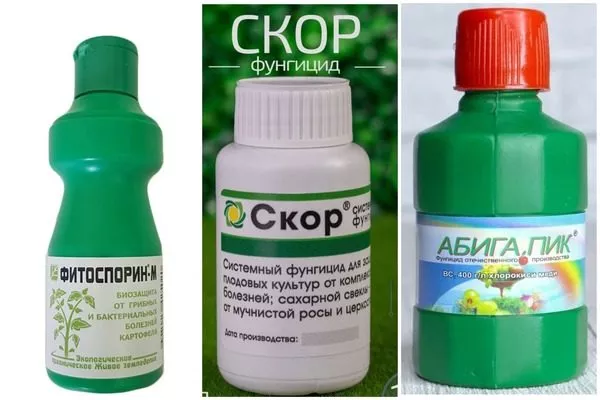
The most popular remedies:
- Fitosporin – A well-known biofungicide that effectively combats a range of fungal infections. Recommended dosage: 5 g per 10 liters of water.
- Skor – A Class III fungicide used for the prevention and treatment of plants affected by fungus. It is resistant to precipitation. Dilution rate: 2 ml per 10 liters of water.
- Abiga Peak – A contact fungicide designed to protect and prevent fungal diseases. Effective for up to 10 days in favorable weather. Recommended dosage: 30 g per 10 liters of water.
Insecto-fungicides
Due to their multifunctionality, insectofungicides are popular because they can destroy both harmful insects and pathogens in just one treatment.
Use the following means:
- Copper sulfate - Time-tested and proven by generations of gardeners, this product is easy to use. To treat apple trees, simply dissolve 300 g of the product in 10 liters of water and spray thoroughly.
- Bordeaux mixture – Another affordable and easy-to-prepare solution. The proportions are similar to those for copper sulfate – 300 g per 10 liters of water.
- Ammonium nitrate - It also has a similar effect, but the concentration of the solution should be significantly lower – no more than 60 g per 10 liters of water.
- DNOC – A highly effective, but rather aggressive product. It is recommended to use it no more than once every three years and only before bud break in the spring. The solution concentration is 50 g per 10 liters of water.
Treatment with folk remedies
In addition to industrial products, some gardeners use folk remedies to protect apple trees from diseases and pests in the spring. These remedies have also proven effective and deserve attention.
Salt
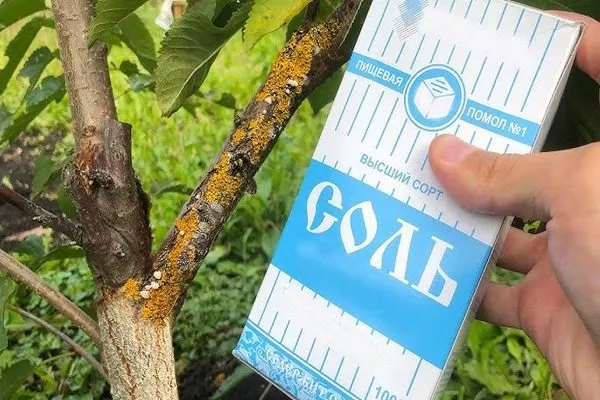
To protect apple trees from fungal diseases, use a saline solution as an alternative to fungicides. However, keep in mind that rain easily washes this solution off the trees, reducing its effectiveness.
To prepare, use 1 kg of table salt – dissolve it in 10 liters of lukewarm water. This promotes faster and more complete breakdown of the salt. Thoroughly spray the apple trees with the resulting mixture, treating the leaves, trunk, and branches.
Tar soap
Treating apple trees with tar soap in the spring is a popular method of controlling diseases and pests. Its pungent aroma effectively repels harmful insects, especially aphids and ants. The soap also stimulates tissue regeneration, promoting faster healing of damaged leaves and bark.
To prepare the solution:
- Grate two bars of tar soap on a coarse grater.
- Dissolve in 2 liters of water until smooth.
- Dilute the concentrated composition: pour 2 liters into 10 liters of water.
- Dilute the resulting spray concentrate again – 1 liter per 10 liters of water.
Spray the trees with a spray bottle, repeating the procedure every 2-3 weeks.
Diesel fuel
Regular diesel fuel can be a useful tool in the fight against pests and diseases in the garden. Its smell repels insects and can also slow the progression of decay in trees.
Diesel fuel cannot be used in its pure form; it must be diluted with water. The recommended ratio is 500 ml of diesel fuel per 10 liters of water.
Neem oil
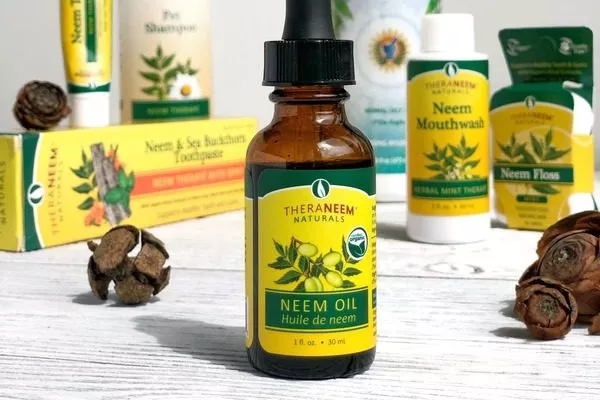
This natural plant-based remedy is derived from the seeds of the Azadirachta indica tree. It is effective against a variety of pests, including aphids, mites, codling moths, leaf rollers, whiteflies, and other insects. It also has fungicidal properties, helping inhibit the development of scab and powdery mildew.
Treat the crop at different times:
- early spring – before bud break (for preventive purposes);
- before flowering – to suppress pests that awaken at the beginning of the season;
- after flowering – if parasites or signs of disease appear;
- in summer - if necessary, especially after hail or drought;
- in autumn – after harvesting, to destroy the overwintering stages of pests.
To prepare the mixture, mix 30 ml of neem oil, 1 teaspoon of liquid laundry soap (as an adhesive), and 10 liters of warm water. Apply the mixture not only to the leaves, but also to the branches, the undersides of the leaves, and even the tree trunk area. Repeat the process every 7-10 days.
Garlic infusion
Spraying with garlic infusion is effective for combating bacterial blight, scab, and gray mold. It can be prepared as follows:
- Pour 150 g of crushed garlic heads (including partitions and peel) into 10 liters of water.
- Let it steep for 24 hours, then strain.
- Treat the affected plants with the resulting solution.
Ash infusion
To combat aphids and powdery mildew, use a wood ash infusion. Dissolve 40-50 g of ash in 1 liter of water. Place the solution on the stove, heat to a boil, and let cool. Add half a bar of finely chopped laundry soap.
Spray the affected plants and areas where aphids are seen with the resulting solution.
Clay-lime mash
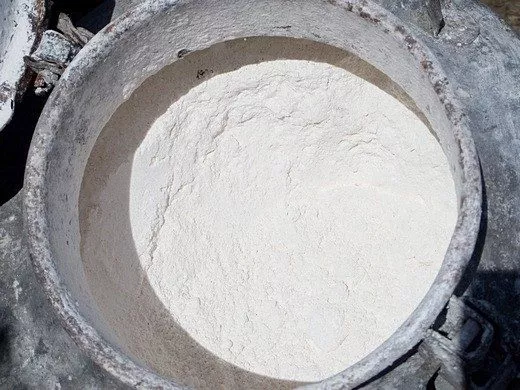
To heal apple tree wounds, treat cuts, and protect against frost cracks, use a safe and effective alternative to garden pitch. This mixture is prepared by mixing equal parts garden clay and slaked lime, with a small amount of vegetable oil added.
Helpful tips
It's important to carry out any garden treatments in dry, calm weather. Rain will reduce the effectiveness of the work. The best time to spray is morning or evening.
Please observe other requirements:
- Avoid spraying during hot weather in direct sunlight. This can cause sunburn on the bark and foliage.
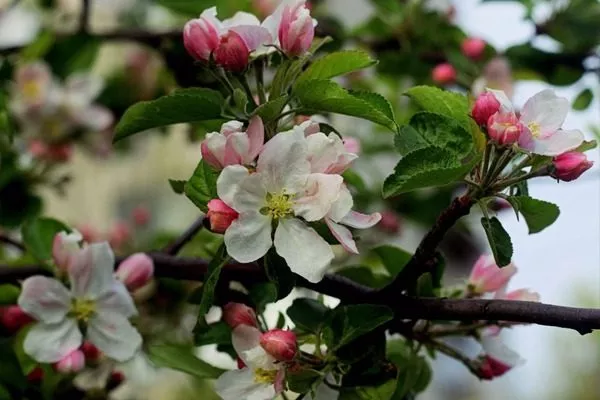
- Avoid treating trees during flowering to avoid harming beneficial pollinating insects. Their death will negatively impact pollination and, consequently, the harvest.
- Use only safe, natural pest repellents. When spraying, thoroughly cover all parts of the tree, moving the sprayer slowly.
- After completing the work, thoroughly wash and dry the garden tools.
- Be sure to wear gardening equipment, including gloves and a mask to protect your eyes and breathing passages.
Common mistakes
Inexperienced gardeners without sufficient knowledge can damage apple trees with spring treatments. The most common mistakes include:
- Premature application of insecticides and fungicides reduces their effectiveness due to precipitation. As a result, pests are not adequately controlled, and diseases spread unchecked.
- To achieve optimal results, it's important to maintain a two- to three-week interval between sprayings.
- Incorrect dilution of pesticides can lead to burns of foliage and fruits.
- Treatment with pesticides should be stopped after fruits appear on the branches.
Treating apple trees early in the spring isn't just the first step in garden maintenance; it's the foundation for its health throughout the season. Timely spraying reliably protects trees from fungal diseases and insect infestations, avoids crop losses, and maintains the plant's vigor.