
The Bryanskoye apple tree is distinguished by its high frost resistance and excellent adaptation to climate fluctuations. This self-fertile variety is characterized by high scab resistance and rarely suffers from pest attacks. The apples are bright, juicy, and aromatic, and do not fall off when fully ripe, ensuring their marketable appearance and long shelf life.
How did the variety appear and where is it grown?
This variety was created by Russian breeder A. I. Astakhov at the Bryansk State Agricultural Experimental Station (Lupin Research Institute). The primary goal was to produce an apple tree with excellent flavor, resistance to frost, and scab, a disease that often destroys crops.
To develop this variety, a cross was made between the Pobeditel variety, popular in the late 20th century, and the SR0523 hybrid, which possesses genetic resistance to the disease. This combination gave the new variety strong immunity.
The Bryanskoye variety was registered in 1993, and was added to the State Register in 2001. The crop is recommended for cultivation in the Central District, Uralsky District, and Volga-Vyatka District.
Features and specifications
Among early winter apple trees, the domestic Bryanskoye variety deserves special attention. Its bright, attractive fruits with a delicate aroma and balanced flavor are highly prized by both gardeners and commercial farmers.
The appearance of the tree
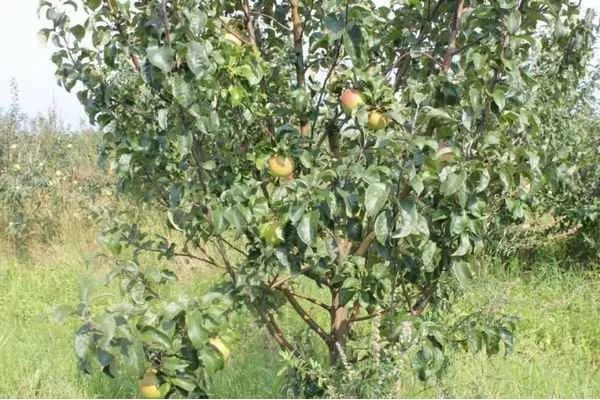
The plant develops quickly – the annual crown growth reaches 70 cm, but its height rarely exceeds 5 m, so the variety is considered medium-sized.
Distinguishing characteristics:
- crown – initially has an elongated shape, but over time it becomes rounded;
- branches – straight, grow to the sides, forming an even and moderately dense crown;
- bark – smooth, brown-red with a slight bluish tint;
- leaves - large and dense, rich green on top and lighter on the bottom;
- leaf blade – oval-shaped with a serrated edge, the sides are slightly raised;
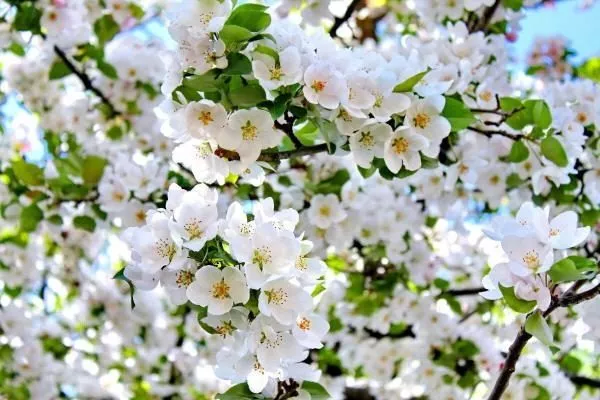
- flowers – bisexual, large, white, with five petals, collected in inflorescences;
- root system – well developed: it is fibrous and grows in width, supplemented by central roots that go deep.
Description of fruits
Apples have good marketability and taste. They are rich in vitamins and nutrients: they contain approximately 10% ascorbic acid, 9% sugars, and 0.45% acids. The caloric value is approximately 59 kcal per 100 g.
Key Features:
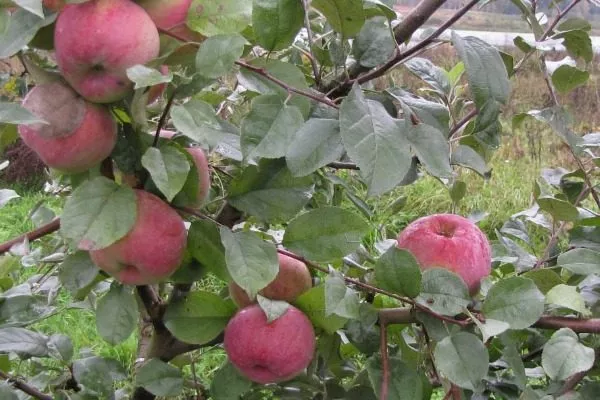
- weight - on average about 150 g, but individual specimens can reach 300 g;
- form - rounded, sometimes slightly ribbed;
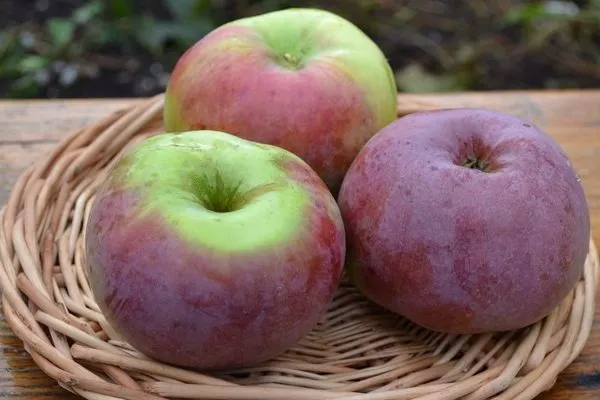
- skin – thin, smooth and shiny, with a green base and a rich dark crimson blush covering most of the surface;
- pulp – white, medium density, juicy, with a pronounced aroma and harmonious sweet and sour taste;
- cup – closed, shallow saucer, with grooves;
- funnel – narrow, smooth, without rust;
- heart – bulbous in shape, the seeds are large, round, dark brown, located in open chambers.
Apple tree pollinators and yield
Bryanskoe is a self-fertile variety, meaning it doesn't require nearby trees with similar flowering and fruiting times. However, to increase yield, it's recommended to plant several more nearby.
On average, 27-35 tons of apples are harvested per hectare, with peak yields reaching 60 tons. The variety reaches stable productivity in its sixth year. Growers can obtain over 200 kg of apples from a single tree.
Ripening and fruiting
Fruiting is regular and abundant. Key characteristics:
- Beginning of fruiting. On a vigorous rootstock, a tree begins to produce fruit in the third or fourth year. When grafted onto scaffold branches, this period can be reduced by almost half, but it is advisable to remove flower buds during the first three years to ensure a strong tree.
Bryanskoye is an early winter variety: the fruits ripen in the second ten days of September. In warmer regions, the ripening period may shift. - Flowering time. The tree typically blooms in mid-May, but this can occur somewhat later due to weather conditions. The flowers are large and saucer-shaped. They have a distinct, spicy aroma. The petals are pure white, but sometimes have a slight pinkish tint.
- Fruiting and growth. The tree grows vigorously, with annual growth of 45-60 cm or more. Young seedlings develop rapidly, reaching their final size by the seventh year. Productivity increases gradually—by the ninth or tenth year, the apple tree is capable of producing a full, abundant harvest.
Resistance to frost, diseases and insects
Bryanskoye is a variety that can withstand temperatures down to -32°C to -35°C. It adapts well to sudden changes in weather conditions and tolerates short-term fluctuations.
The apple tree has a high level of immunity. The variety is particularly distinguished by its resistance to scab, thanks to the presence of a gene Vm and a complex of polygenes responsible for resistance. This makes the crop a reliable option for cultivation in regions with a high risk of fungal infections.
The greatest threat to the plant is moniliosis (fruit rot). Regular preventative treatments with fungicides are recommended to prevent the disease. It's equally important to control pests such as codling moths and wasps, which can carry spores of pathogenic fungi.
Storage of crops, harvesting
Apples can be stored until February, but in regions with earlier ripening periods, this period is reduced to December. Due to the medium-density of the flesh, the fruits require careful harvesting; if damaged, they lose their shelf life.
To extend the shelf life, please observe a number of conditions:
- harvest in dry weather;
- Store only whole apples picked from the tree (use fallen apples immediately - for food or processing);
- keep the stalks;
- Sort fruits by size before storing.
Compliance with these rules allows you to preserve the marketable appearance and taste of the fruit for as long as possible.
Subspecies
The Bryanskoye apple variety has several variations, all created by breeder A.I. Astakhov in a single region. The main differences between them relate to the fruit's appearance and ripening time:
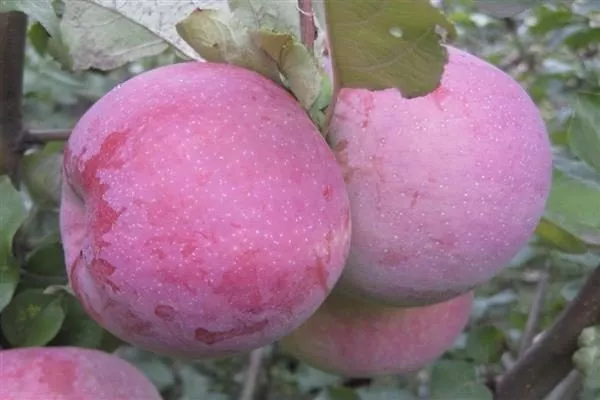
- Bryansk aloe - A late-summer variety with a dark scarlet blush that almost completely covers the fruit. Beneath the skin is pinkish flesh, and a light silvery waxy coating is visible on the surface. Added to the State Register of the Russian Federation in 2015.
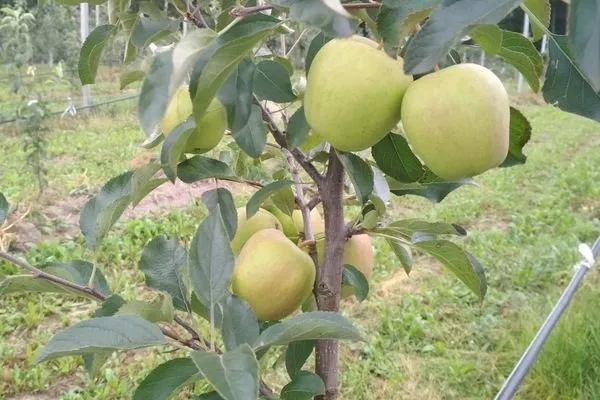
- Bryansk golden - A late-winter variety, ripening by the end of September. The fruits are oblong, golden-yellow, with large, multicolored subcutaneous spots. The flesh is creamy-white, dense, with a distinct spicy aroma.
It differs from other subspecies in its origin: it was obtained by crossing the Antonovka with the Golden Delicious. It was included in the State Register in 2005.
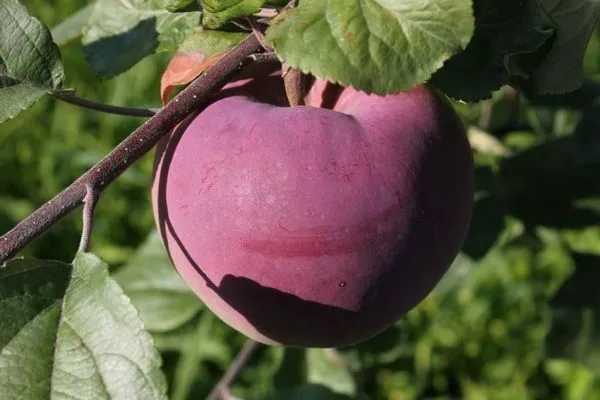
- Bryansk pink - A late-winter subspecies with oblong-round fruits. The flesh is dense and crisp, with a subtle aroma. The characteristic pink blush is covered with a bluish bloom that rubs off easily.
Each of these variants retains the main advantages of the base variety, but has its own visual and taste characteristics.
Landing rules
The Bryanskoye apple tree can be planted in either spring or fall. Spring planting occurs before the buds begin to open, and in fall, the tree is planted at least four weeks before the onset of frost.
Selecting a seedling
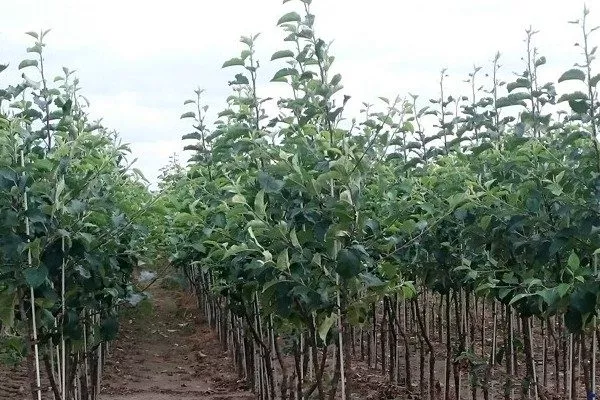
It's best to purchase apple tree seedlings from reputable nurseries, always asking the seller for documentation. When choosing, pay attention to several important details:
- bark and wood – without damage or growths;
- root system – healthy, well developed and moderately moist;
- lower branches – are located at a height of 40-60 cm.
Site requirements, landing algorithm
An apple tree prefers a level site with fertile, neutral soil. It's important that the groundwater level be at least 2 meters above sea level. The site should be protected from strong winds and receive good light.
Begin preparing the soil for spring planting in the fall, and for fall planting, 2-3 months before planting. Step-by-step plan:
- Dig up the area and remove all weeds.
- Add organic fertilizers (manure) and complex potassium-phosphorus preparations.
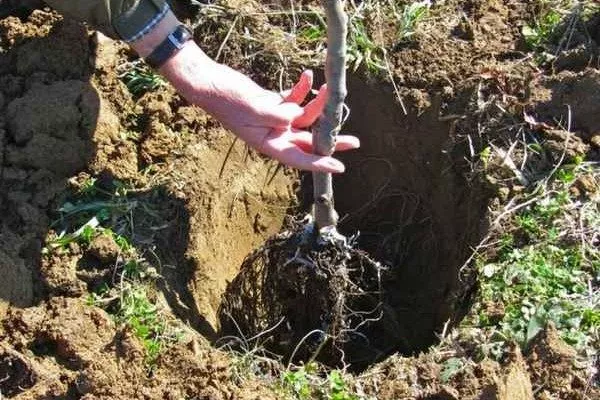
- Dig a hole approximately 1 m in diameter and 70 cm or more deep. Fill it one-third full with fertile soil, add 20 kg of humus, 200 g of superphosphate, and 50 g of potassium salt, and mix thoroughly.
- Drive in a stake for tying.
- Carefully place the seedling, spreading out the roots. Tie the tree to the support.
- Fill the hole with soil and compact it.
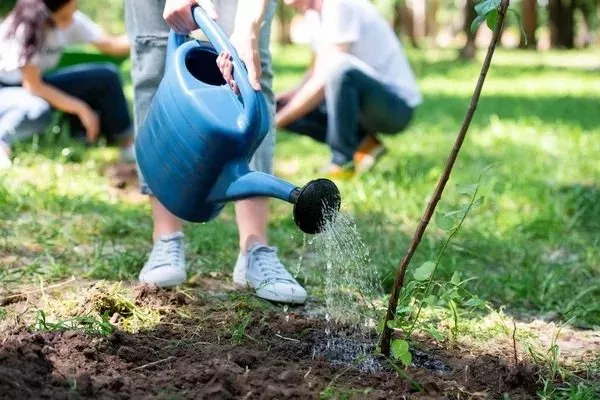
- Make a watering furrow around the tree's trunk. Water generously (25-30 liters of water per tree). Mulch.
Further care of the apple tree
Proper knowledge of agricultural techniques will allow even a novice gardener not only to reap a bountiful harvest but also to keep their apple trees strong and healthy. It's important to follow standard care procedures.
Watering
During the first year after planting, water the apple tree at least six times, applying 6-7 liters of water per tree. If the summer was rainy, gently loosen the soil around the trunk.
Follow these other recommendations:
- In the second year, four waterings are sufficient. For mature trees, increase the water volume; for example, a 10-year-old tree should use 10 liters of water.
- Carry out the procedure according to the crown projection, while the soil should be wet to a depth of approximately 50 cm.
- In the first year, be sure to mulch the tree trunk circle with manure or humus.
Tree fertilizing
Fertilize the Bryanskoye apple tree several times per season. Follow this schedule:
- before the formation of flower buds – add potassium-phosphorus substances;
- after flowering ends – Feed with a solution of 10 liters of water, 5 g of potassium salt and 10 g of ammonium nitrate;
- in autumn – use 2 kg of humus, 12 g of potassium salt and 25 g of superphosphate.
Pruning, shaping
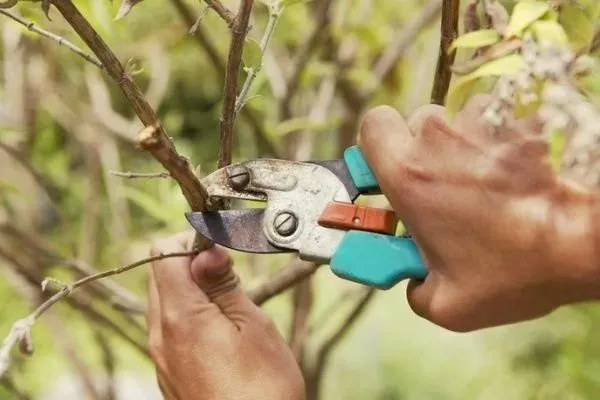
Typically, nursery-grown seedlings already have a formed crown, most often with a sparse, tiered structure. It's best to maintain this configuration by encouraging the development of useful branches and removing unwanted ones. Any shoots growing inward or protruding vertically should be pruned.
Perform sanitary pruning throughout the growing season, promptly removing diseased, dead, or broken branches. Treat cut areas with garden pitch, RanNet paste, or oil paint made with natural drying oil.
Pest and disease control
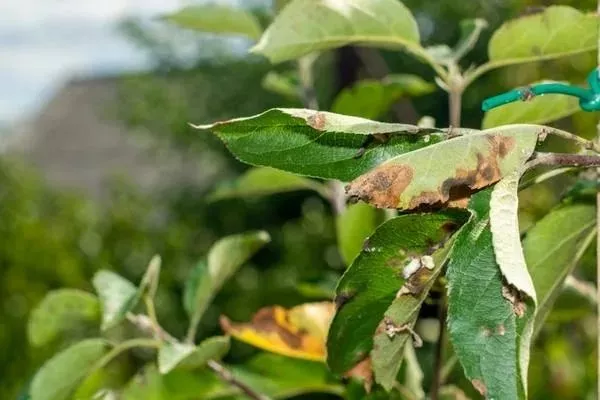
The crop is characterized by high resistance to scab and most fungal diseases, but the risk of fruit rot remains. The following preventative measures are recommended:
- regular sanitary pruning and thinning of the crown;
- timely and systematic feeding;
- removal and disposal of rotten fruits;
- collection and burning of fallen leaves and apples.
Bryansk is also susceptible to pests such as aphids, codling moths, caterpillars, and mites. For protection, use:
- trapping belts on trunks;
- treatment with copper and iron sulfate, Bordeaux mixture, urea, as well as insecticides - Karbofos, Fufanon, Decis, Actellic;
- folk remedies - tobacco dust and solutions of laundry soap.
Pros and cons
Advantages:
Flaws:
Similar varieties
The Bryanskoye apple tree shares a number of characteristics with certain varieties. Similar varieties include:
- Alesya – A late-winter hybrid, resistant to scab. The apples weigh 140-180 g and are greenish-yellow with a diffuse red blush over the entire surface. The flesh is white, juicy, and sweet and sour.
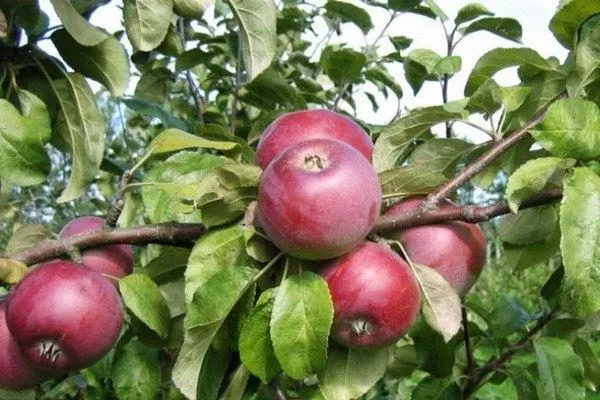
- Belarusian sweets – A late-winter variety with medium-sized trees and large fruits. The fruits are round, yellow with a diffuse, continuous blush. The flesh is firm, white, and sweet.
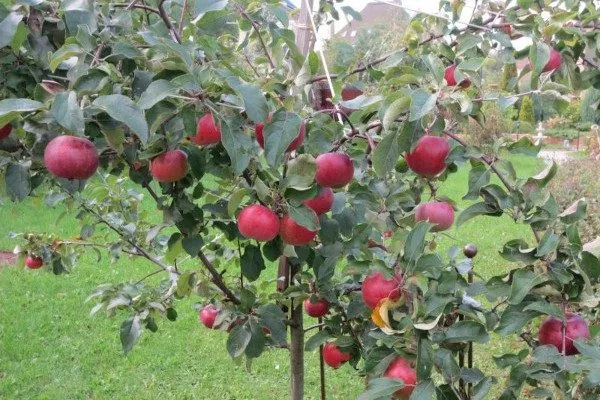
- Palm - A medium-sized winter hybrid with strong immunity. Fruits weigh 150-300 g, green with a red coating, and are sweet and sour.
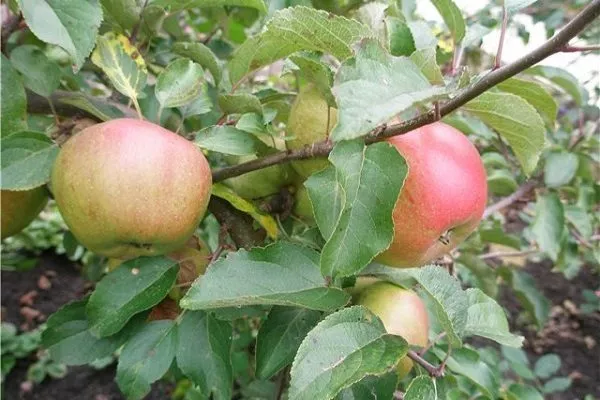
- Bylina – A winter-hardy variety with immunity to scab. The apples are large, green with red skin, sweet and sour, and juicy.
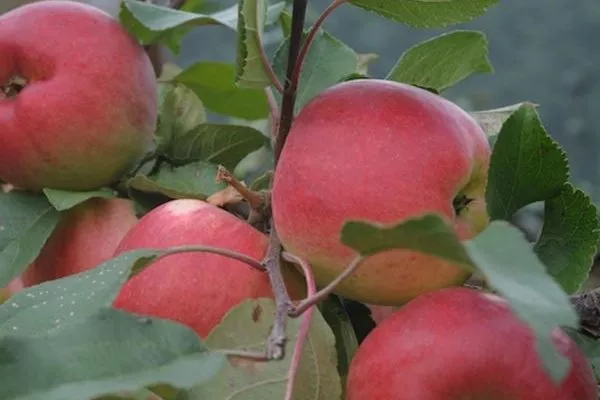
- Zhigulevskoe – A late-autumn variety with average winter hardiness. The fruits are large, 200-350 g, round, yellowish, with a red-striped skin.
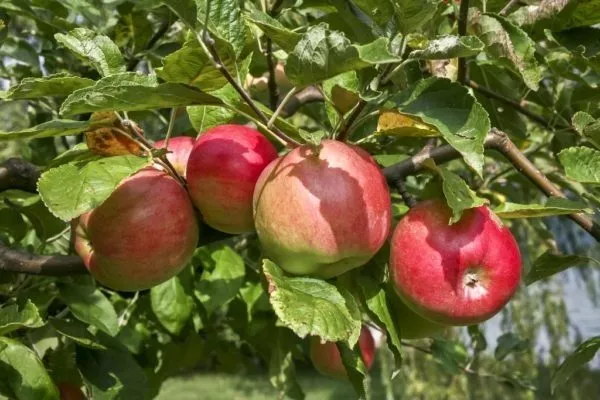
- Zaslavskoe – A late-winter variety with high frost resistance, producing a bountiful and regular harvest. Fruits weigh over 200 g, are green with a deep red blush, juicy, and have a sweet and sour taste. Shelf life: up to 4 months.
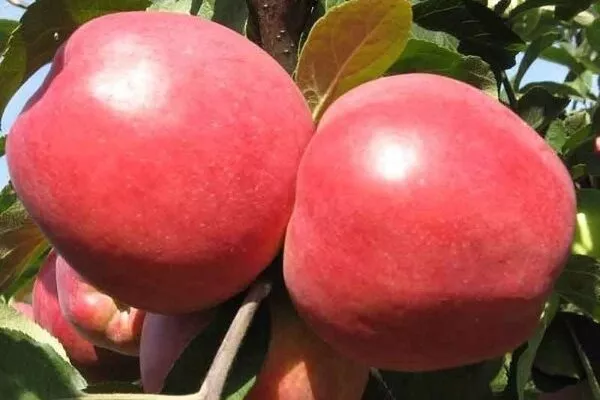
- Morozovskoye – An early winter, frost-hardy hybrid. Apples weigh 160 grams each, with a dark red, fuzzy skin over the entire surface, and juicy, sweet-tart flesh.
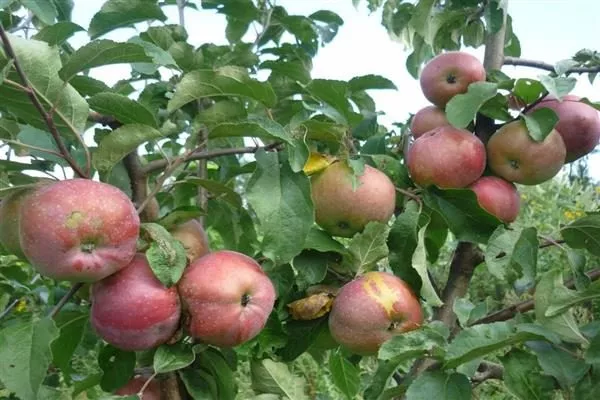
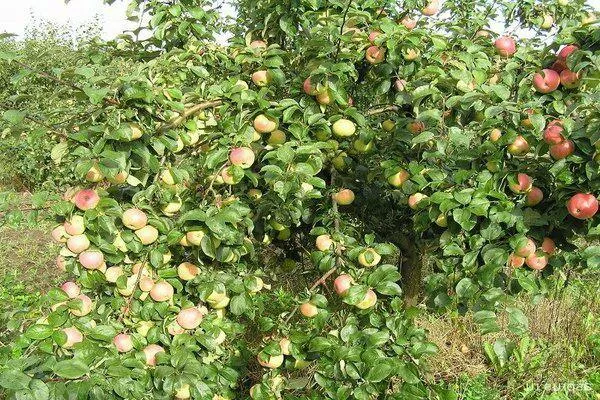
- Slav - A winter variety with fruits weighing 160-230 g, greenish-yellow with a raspberry-red cover, the flesh is sweet and sour, the aroma is weak.
Reviews
Bryanskoye combines stable productivity and strong immunity to most diseases, keeping apples juicy and tasty until late winter. Its ease of cultivation and excellent quality make this variety deservedly popular among both novice and experienced fruit growers. With proper farming practices, bountiful harvests are guaranteed.