
The Brandy Magic apple tree is eye-catching due to its striking, decorative foliage with a bronze hue. This frost-hardy tree, with a beautiful, loose crown and vibrant autumn coloring, easily adapts to a variety of climates. The small, aromatic fruits are ideal for both fresh eating and culinary use.
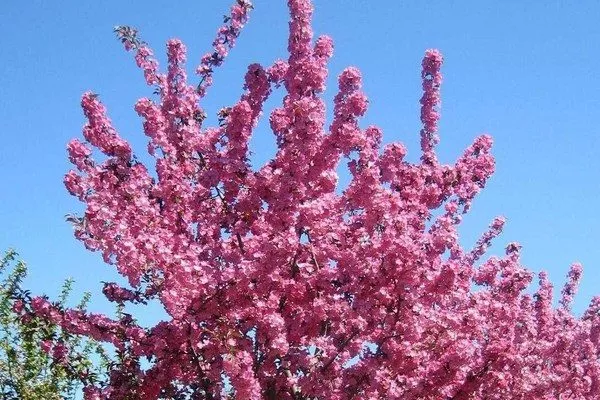
Description of the variety
The plant is tall, reaching up to 6 m in height, with smooth, tan-brown bark. Distinguishing characteristics:
- Leaves: Elongated, dark green with a bronze sheen, the leaves are arranged alternately on the branches, forming a wide, loose, oval-shaped crown. In autumn, the foliage turns reddish-brown or orange.
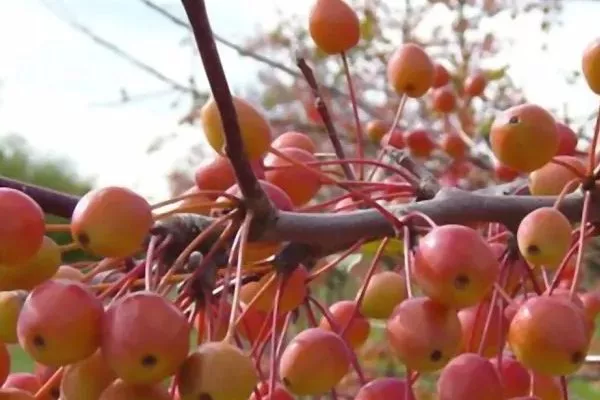
- Fruit: small, flat-round, 4-6 cm in diameter, with yellow skin and a bright orange blush.
Main characteristics and history
Information about the origin and breeding date of this variety is not available in open sources. The first flowers on the tree bloom in late spring, around mid-May. Small, slightly flattened apples begin to appear in August and remain on the branches until frost, without falling off.
Features and characteristics:
- This tree with its vibrant flowers, striking foliage, and attractive fruit grows successfully in any climate – the variety is highly winter-hardy and tolerates heat well. The key is to choose the right planting site and prepare suitable soil.
- The crop yields quite decently, especially considering its decorative purpose – the plant is perfect for landscaping.
- The variety is resistant to scab and other common diseases, but to maintain the health of the tree, preventative treatments are recommended several times per season.
Scope of application
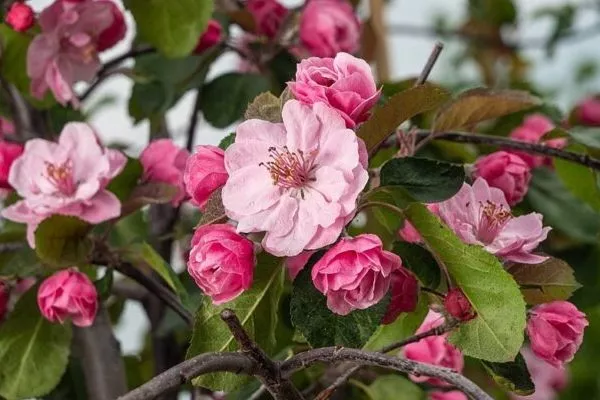
The Brandy Magic apple tree is prized as an accent plant in gardens, parks, walkways, and residential areas. With its striking foliage, beautiful blossoms, and vibrant fruit, the tree attracts attention from spring until late fall.
Other areas of use:
- Decoration of public and commercial spaces. The variety is often planted near administrative buildings, in squares, on boulevards, near schools and offices as a stable, unpretentious tree with a decorative function.
- Culinary purpose. Although small, the apples are aromatic and suitable for processing—they're used to make compotes, preserves, and are added to baked goods and desserts. Their rich flavor and pleasant aroma add a unique touch to dishes.
- Attracting pollinators. During flowering, the tree actively attracts bees and other pollinating insects, making it a useful neighbor for fruit crops.
Brandy Magic is a versatile variety that combines decorative appeal and practicality, fitting perfectly into a wide range of landscape and utility applications.
Landing
To ensure a successful apple tree planting and its development, it's important to follow a few simple but essential rules. The soil should be loose, fertile, and well-drained, and the planting hole should be prepared in advance to ensure ample space for the roots. This is a task that even a novice can easily handle.
Comparison of planting dates
| Season | Optimal timing | Soil temperature | Adaptation period |
|---|---|---|---|
| Spring | April-May | +5°C at a depth of 20 cm | 3-4 weeks |
| Autumn | September-October | Before freezing | Until spring |
Selecting Brandy Magic apple tree seedlings
Pay special attention to the quality of the planting material. A healthy plant has a strong root system and a straight stem, showing no signs of disease or pests. Plants with an already formed crown are recommended – this will speed up adaptation and bring the first fruiting closer.
What to look for when buying:
- roots – elastic, without signs of rot, dryness or damage;
- stem – durable, smooth, without cracks or wounds;
- leaves - green, clean, without spots or insects;
- crown – evenly developed, symmetrical.
Quality criteria for seedlings
| Parameter | 1 year old | 2-year-old |
|---|---|---|
| Height | 1.2-1.5 m | 1.8-2.1 m |
| Barrel diameter | 1.2-1.5 cm | 2-2.5 cm |
| Root system | 3-4 main roots | 5-7 main roots |
| Number of branches | No | 3-5 skeletal |
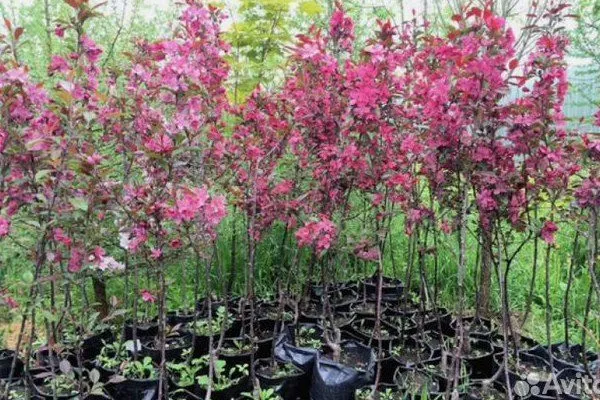
When and how to plant Brandy Magic apple tree seedlings?
The ideal time for cultivation is spring or fall. Carry out the procedure from April to May, when the soil at a depth of 20 cm warms up to +5°C, or from September until the weather cools down steadily, before the ground freezes.
Before planting, properly prepare the seedlings and select a suitable location. Apple trees prefer well-lit areas with fertile, loose, and well-drained soil. Shaded or damp areas are unsuitable, as this will slow the plant's growth and development.
Step-by-step algorithm:
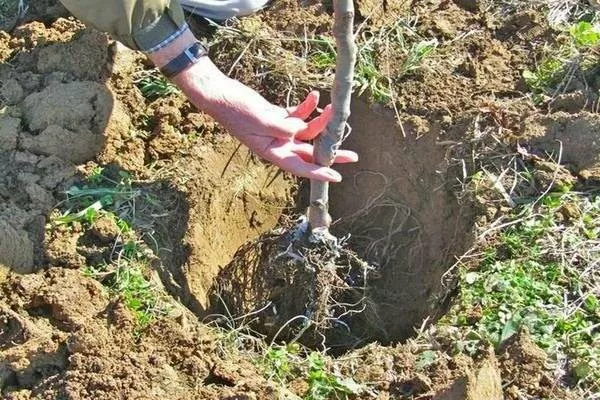
- Dig a hole about 60 cm deep and wide. If the soil is heavy, add sand, compost, or humus to improve the structure.
- Place the seedling at the bottom of a lightly compacted hole, spread out the roots and cover with soil without burying the root collar.
- Gently press the soil with your hands and moisten it thoroughly.
Properly planted and cared for, the Brandy Magic apple tree will quickly take root and become not only a garden decoration, but also a source of delicious, aromatic fruit.
Caring for the Brandy Magic apple tree
Once planted correctly, Brandy Magic apple tree seedlings require regular care – this will help the tree establish itself quickly, gain strength, and delight you with its decorative appearance and fragrant fruit in the future.
Care includes a number of standard agricultural practices:
- Watering. Young seedlings require stable soil moisture. Water the apple tree once a week, thoroughly moistening the soil around the trunk, but avoid stagnant water. During dry weather, increase the frequency of watering, but be sure to monitor the soil conditions—overwatering can lead to root rot.
- Fertilizer. Fertilizing is essential for vigorous plant growth. Use fertilizers designed for fruit trees, containing nitrogen, potassium, phosphorus, and trace elements.
Fertilize twice per season – in spring and midsummer. Avoid overdosing to avoid damaging the root system.
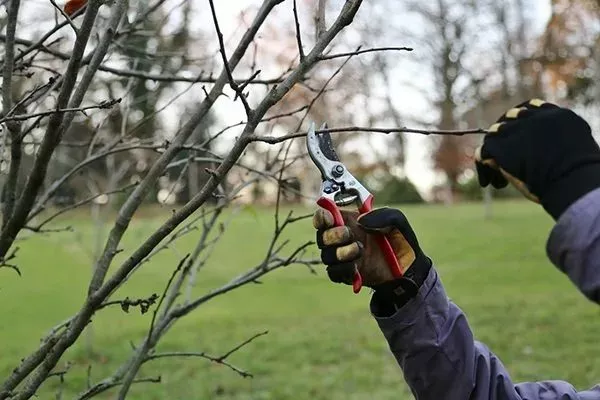
- Trimming. This procedure promotes the formation of a beautiful and balanced crown and also prevents overgrowth. Perform sanitary and formative pruning in the spring, before active sap flow begins, or in the fall, after the end of the growing season. Remove all dry, damaged, and underdeveloped branches.
Disease treatment schedule
- Early spring: 3% Bordeaux mixture
- Before flowering: Fundazol (10 g/10 l)
- After flowering: Skor (2 ml/10 l)
- July: Fitosporin-M (5 g/10 l)
- Autumn: Copper sulfate (100 g/10 l)
- Protection from pests and diseases. Regularly inspect the tree and carry out preventative treatments against pests such as Spanish flies and spider mites.
At the first signs of disease (e.g. leaf spots, curling, blanching), immediately begin treatment using suitable biological products or fungicides.
By following these simple care guidelines for Brandy Magic apple tree seedlings, you'll create conditions for their vigorous growth and resilience, laying the foundation for a healthy and beautiful garden.
Pros and cons
Reviews
Brandy Magic combines disease and climate resistance with an attractive appearance and excellent apple flavor. This variety is ideal for landscaping and creating cozy gardens, delighting owners with a consistent harvest and striking beauty throughout the season.