
To protect your apple tree from various diseases and pests in a timely manner, you need to know the symptoms to recognize the "enemy" and the measures to take to save the tree. Proper care is essential. This article discusses apple tree diseases and how to combat them.
Fungal diseases
Fungal diseases of apple trees occur when the plant is infected by spore-forming pathogens or phytopathogenic microorganisms. These pathogens cause mycelium and spore-forming conidia to grow within the plant. Several common fungal diseases are identified.
| Name | Type of disease | Symptoms | Treatment methods |
|---|---|---|---|
| Powdery mildew | Fungal | White coating, yellowing leaves | Fungicides, Bordeaux mixture |
| Scab | Fungal | Olive-brown bloom, cracks on fruits | Biofungicides, Bordeaux mixture |
| Rust | Fungal | Brown spots, black inclusions | Bordeaux mixture, copper sulfate |
| Brown spot | Fungal | Brown spots with a dark border | Bordeaux mixture, urea |
| Cytosporosis | Fungal | Dark ulcers on the bark | Fungicides, copper sulfate |
| Black crayfish | Fungal | Black spots, fruit rot | Copper sulfate, garden var |
| Fruit rot | Fungal | Brown spots on fruits | Bordeaux mixture, fungicides |
| Milky shine | Fungal | White and silver stripes on the leaves | Bordeaux mixture, garden varnish |
Powdery mildew
The disease affects the bark, leaves, buds, and shoots. A dark white coating appears on affected areas, later turning brown. Leaves turn yellow, dry, and then fall off. New shoots fail to emerge, and fruiting ceases.
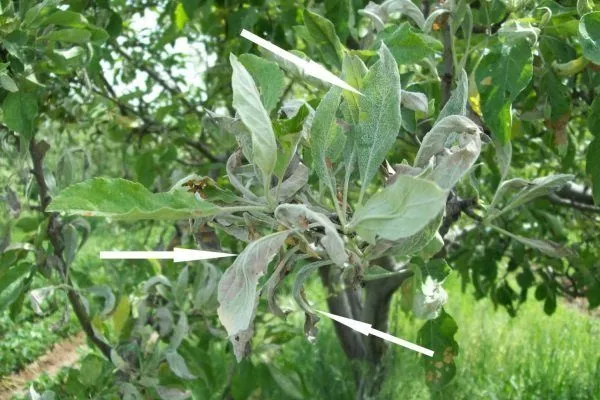
In the spring, carry out preventative and therapeutic measures. Before flowering, spray the plant with a fungicide solution at a rate of 2 ml per 10 liters of water. Topaz or Skor are recommended. After flowering, treat with a copper oxychloride solution (40 g per 10 liters of water) or Hom in the same ratio. In the fall, spray the apple tree with 1% Bordeaux mixture. An equally effective spray is: 10 liters of water, 50 g of copper sulfate, and 20 g of liquid soap.
Scab
The main symptom of scab is the appearance of an olive-brown coating on the plant's leaves, which begin to fall off. Cracks and dark gray spots then appear on the fruit.
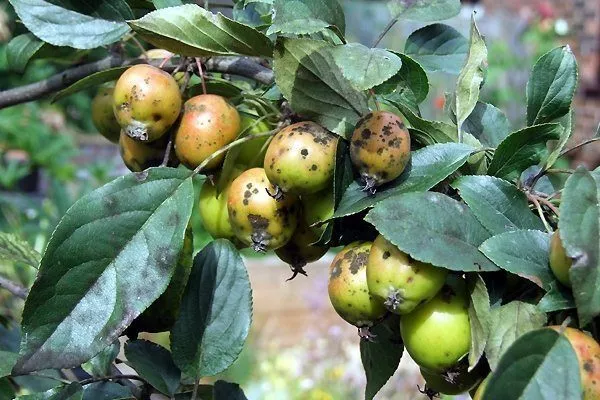
For treatment, spray with biofungicides (Gamair, Fitosporin-M, Horus, Fitolavin). The first treatment is carried out before bud break. Throughout the season, carry out 2-4 sprays at 2-week intervals. Spraying with Bordeaux mixture is considered an effective method for scab control. Two treatments are carried out:
- Before the buds open. Use 3% solution.
- After the leaves appear. For treatment, use a solution with a concentration of 1%.
The interval between sprayings is 2 weeks. Perform up to seven treatments per season.
It is recommended to carry out additional work, which includes pruning dry branches, cleaning affected bark, and whitewashing treated areas.
Rust
Rust causes stripes and brown spots to form on leaves, with black specks—clusters of spores—visible within them. The fungus then spreads to branches, fruits, and bark. Most young shoots die. The bark cracks at the affected areas, and unripe fruits fall off.
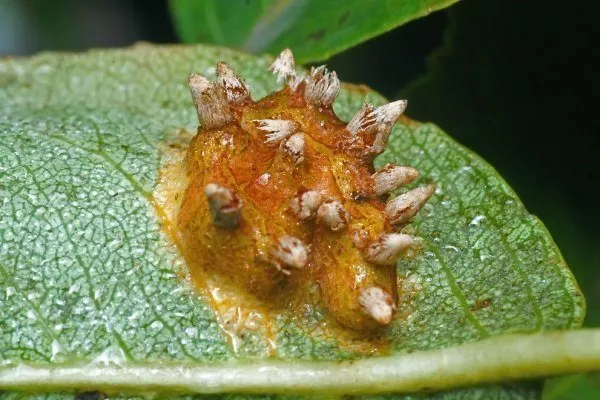
Begin treatment in early spring, before bud break. Remove affected leaves. Trim branches 10 cm below diseased areas. Disinfect the cuts with a 5% copper sulfate solution, then treat the plants with a 1% Bordeaux mixture. Apply three sprays, spaced three weeks apart.
Brown spot (phyllostictosis)
Phyllosticta leaf spot manifests as small brown spots with a dark brown border on the leaves. Fungal spores (black dots) are visible in the center. The spots can cover the entire leaf blade.
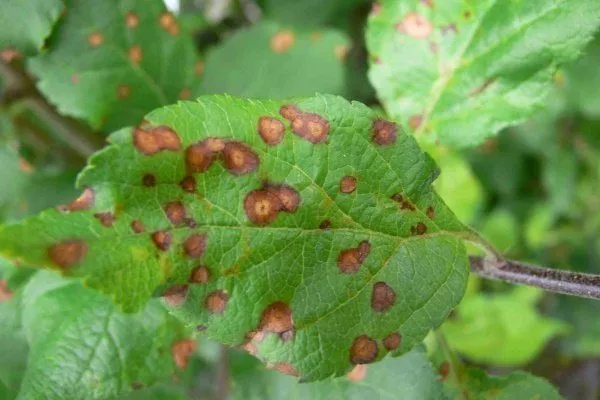
For prevention (in the spring before flowering), spray the trees with a 3-4% Bordeaux mixture. After flowering, apply the same solution at a 1% concentration. Apply a third treatment three weeks before harvesting. Begin treatment in the fall: remove fallen leaves, dig around the tree trunks, prune the crown, spray the plants with a 5% urea solution, and treat the soil with a 7% solution.
Cytosporosis
Cytosporosis affects the bark, causing dark ulcers to appear. These ulcers then penetrate the trunk, grow larger, and take on a brownish-red hue. Gradually, the bark and branches die.
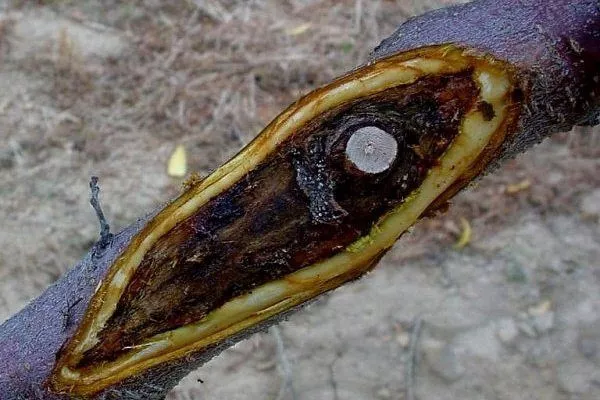
Treatment consists of three treatments in the spring:
- During the period of bud swelling, use the fungicide Hom at a rate of 40 g per 10 liters of water.
- Before flowering, spray the tree with a solution of copper sulfate - 50 g per 10 liters of water.
- After flowering has finished, repeat the first treatment.
In late fall, remove affected branches and burn them. Clean the wounds, removing up to 2 cm of healthy tissue. Disinfect the cuts with 3% copper sulfate, and treat the tree trunks with lime. Apply fertilizer, preferably mineral fertilizers (potassium or phosphorus).
Black crayfish
Black canker is a serious fungal disease that causes black spots to form on leaves and black rot to develop on fruit. Additionally, the bark darkens, cracks appear on the surface, and the bark begins to turn inside out.
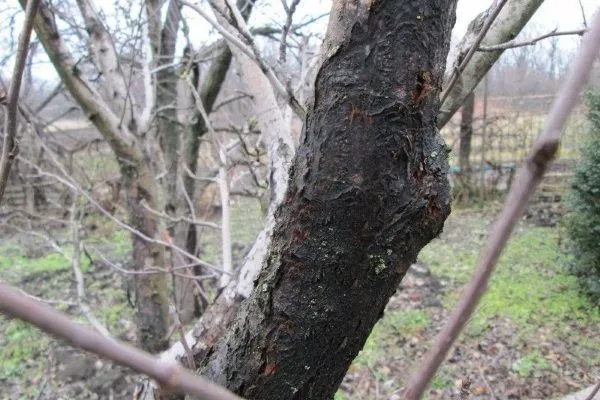
Begin treatment in the spring, when the air temperature reaches 15 degrees Celsius or higher. Use a sharp knife to remove the affected areas, removing about 1.5-2 cm of healthy bark. Disinfect the wounds with 1-2% copper sulfate and apply garden pitch. After flowering, spray the plant with 1% Bordeaux mixture. If the disease reappears after 1-2 years, cut down and burn the tree.
Fruit rot (moniliosis)
Fruit rot is dangerous because ripening fruit develops brown spots on the surface. These spots eventually become larger, causing the fruit to lose its flavor. The disease spreads rapidly, ruining the entire harvest. It's virtually impossible to detect the disease in its early stages.
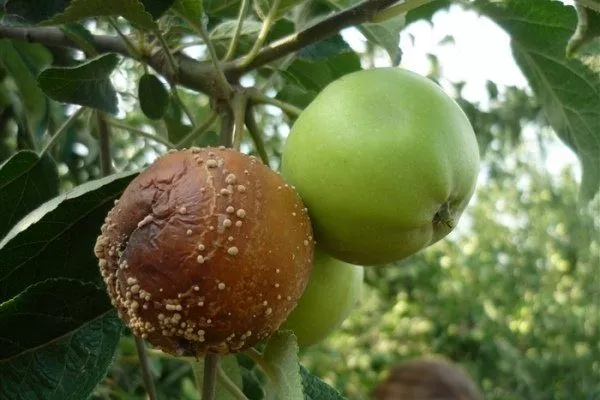
If a tree is sick for a long time, it cannot be cured. You can prevent the disease by taking preventative measures: in early spring, treat the plant with 3% Bordeaux mixture and fungicides. Apply a second treatment before flowering, using 1% Bordeaux mixture. After harvesting, spray the tree with a copper sulfate solution at a rate of 100 g per 10 liters of water. Each plant requires approximately 3 liters of solution. Remove any affected fruit.
Milky shine
This is a disease that affects the plant's bark. The first symptoms appear on the foliage. The leaves begin to turn yellow, with white-silver stripes visible on their surface. This leads to leaf drop. As the disease progresses, dark spots appear on the bark.
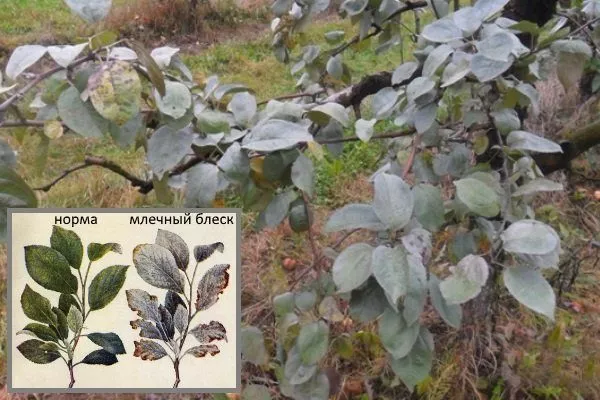
To treat, remove diseased areas of the tree bark, then treat the cuts with a 1% copper sulfate solution and garden pitch. Spray the tree with a 1% Bordeaux mixture. Perform two treatments in the spring, before and after flowering.
Bacterial diseases
Bacterial diseases are caused by single-celled microorganisms. All bacterial infections are called bacterioses. Apple trees are often susceptible to these diseases.
- ✓ The concentration of the solution must strictly comply with the manufacturer’s recommendations; exceeding it may cause leaf burns.
- ✓ The air temperature during treatment should be no lower than +10°C and no higher than +25°C for optimal absorption of the drug.
Bacterial burn (bacteriosis, necrosis)
Fire blight is caused by specialized gram-negative bacteria that infect both young and mature plants. The infection is often introduced via newly purchased planting material. Heat and warm rains favor the disease's development. Due to fire blight, the tree loses its primary color, dark spots appear on the plant, the leaves darken and begin to curl, and the fruit takes on a dark, unnatural appearance.
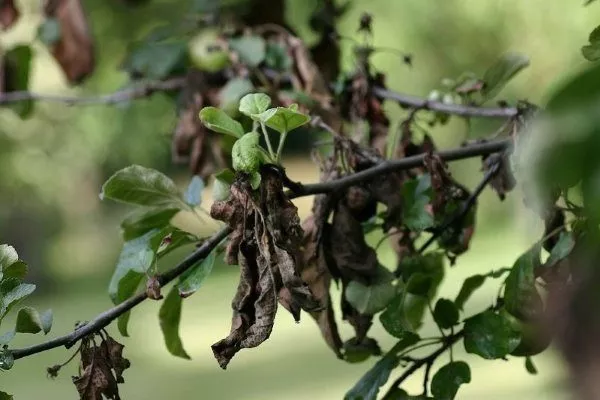
To prevent infection, carefully inspect new seedlings. Take measures against pests and parasites that cause diseases. Water the soil with copper sulfate at a rate of 60 g per bucket of water. In the fall, remove diseased branches, making sure the cut is 20 cm below the infestation. Disinfect. During the growing season, spray the apple trees with Bordeaux mixture – this increases resistance to disease.
Bacterial root canker
Bacterial root canker is caused by the bacterium Agrobacterium tumefaciens stevens, which penetrates tree roots through wounds. After a couple of months, numerous growths appear on the roots, which begin to rot, releasing large quantities of bacteria. As the disease progresses, the plant usually dies.
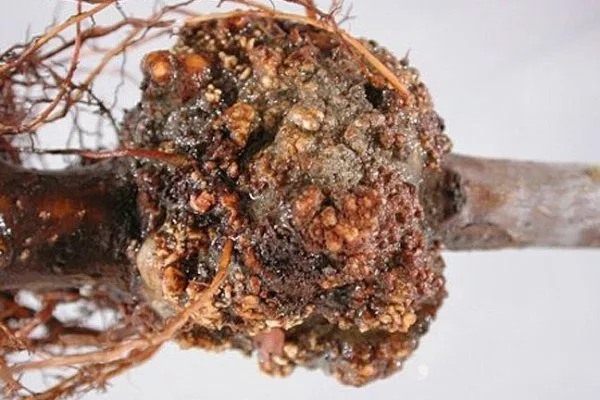
Bacterial root canker is virtually incurable, but it can be treated in its early stages. Disinfect the soil using a weak formalin solution at a rate of 1 liter per 100 liters of water. Apply the solution to the soil in the fall on warm, dry days. Approximately 20 liters of solution are needed per square meter. Alternatively, you can use bleach: apply 200 grams of the solution per square meter of area, then level the soil with a rake.
Viral diseases of apple trees
Viral diseases are usually caused by tiny particles of living protein, which parasitize plant cells, causing the plant to lose its ability to grow and possibly die.
| Name | Type of disease | Symptoms | Treatment methods |
|---|---|---|---|
| Mosaic | Viral | Yellow-green mosaic on leaves | Thermotherapy, insulation |
| Star cracking of fruits | Viral | Star-shaped cracks on fruits | Destruction of the plant |
| Paniculation | Viral | Red shoots, yellowing leaves | Destruction of the plant |
| Rosetteness | Viral | Small, stiff leaves | Zinc sulfate, removal of affected parts |
| Grooving of wood | Viral | Furrows and spots on the bark | Destruction of the plant |
Mosaic
Mosaic is a common disease affecting apple trees. On one tree, the disease may be less pronounced, with a faint yellow-green mosaic pattern, while on another, a bright yellow mosaic pattern appears on the leaves. In summer, the mosaic is almost impossible to detect. When affected, leaves become smaller, as if they are starved of nutrients. Fruit also becomes small, losing flavor, and the plant itself appears weakened and exhausted.
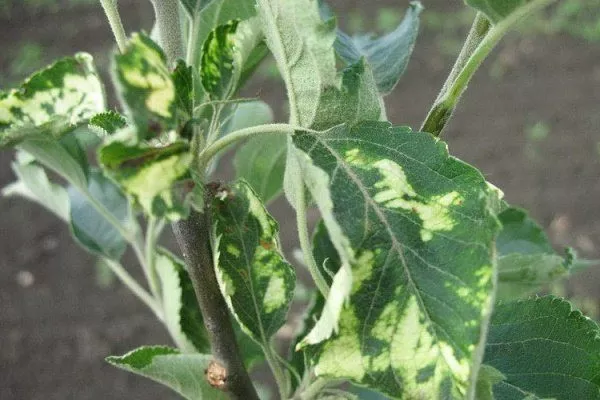
To treat the disease, try to ensure spatial isolation between new seedlings and old, diseased orchards. Use healthy planting material. Heat therapy at 37-38 degrees Celsius (98-100 degrees Fahrenheit) for a month, followed by apical regeneration, is effective in limiting the disease. If the disease is in its advanced stages, dig up the tree and burn it.
Star cracking of fruits
The pathogen responsible for the spread of the disease remains unknown. The virus is highly harmful; when infected, plants experience significant yield reductions, fruit loses its attractiveness, and its weight decreases significantly. The disease typically manifests itself on young, unripe fruits, where shapeless spots form with star-shaped cracks in the center. The skin around the cracks turns dark brown, almost black. Leaves on the upper branches become lighter in color.
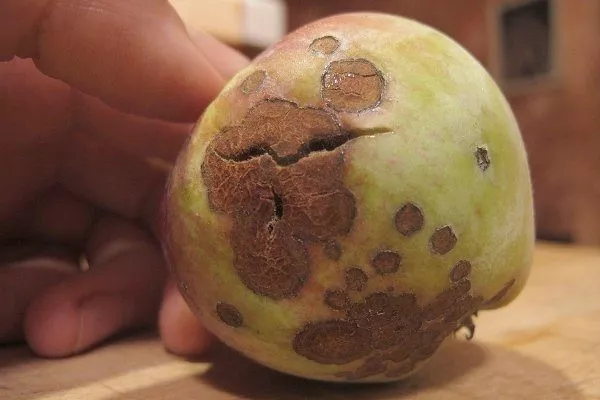
To combat the disease, dig up and destroy the plant. As a preventative measure, it's advisable to use healthy planting material and treat the plant for pests, which can transmit the disease. Remove weeds promptly, and treat the apple tree with specialized preparations every spring.
Paniculation (proliferation)
Plants suffer from this disease in the second half of summer, affecting thin lateral shoots and even root suckers from dormant buds. Overgrown stipules become large, young shoots take on a red tint, leaves turn yellow prematurely and fall off, and fruits appear unripe. The root system is unable to cope with the excessive growth, causing the plant's life cycle to end before seed formation.
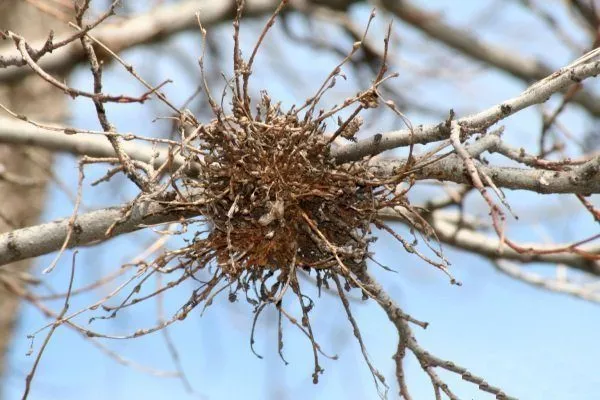
Paniculata is not treatable. You need to uproot and burn the plants as soon as possible. As a preventative measure, experienced gardeners recommend spraying the plants to protect them from sucking pests, which carry viruses.
Rosette (small-leaved)
Rosette disease is a viral disease that causes leaves to become smaller, stiffer, yellowish-green, and deformed. Leaf edges curl, and the leaflets themselves become cup-shaped. Affected apple trees bear fruit, but the fruit becomes small and loses its apple flavor. Internodes on shoots become severely shortened, and rosettes of healthy and deformed leaves appear at the tips.
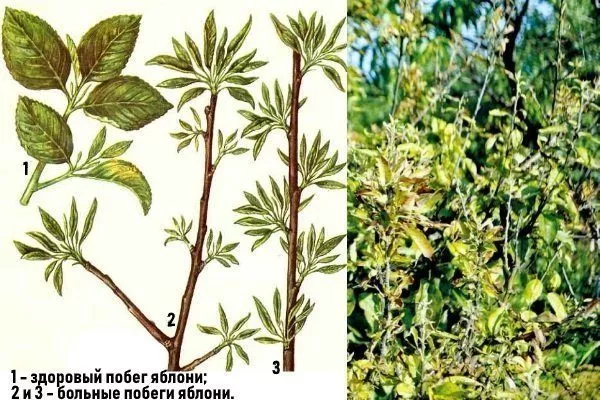
To treat, promptly remove and destroy any plant parts showing signs of the disease. Treat the cuts with oil paint mixed with zinc sulfate. If the disease has reached its final stage, use the same solution at a 5% concentration; for moderate damage, use an 8% solution. If multiple areas of the plant are affected, use a 12% solution. For prevention, it's recommended to fertilize the plant in the spring and remove weeds promptly.
Grooving of wood
The disease is caused by the apple stem grooving virus. Wide grooves, pitting, and isolated brown necrotic spots or lines form at the junction of the scion and rootstock. The bark of the trunk begins to swell, developing scars and dark spots or brown lines with a dark tint. Infected plants bear fruit prematurely, which is bright red. Shoots grow slowly, and the tree usually dies.
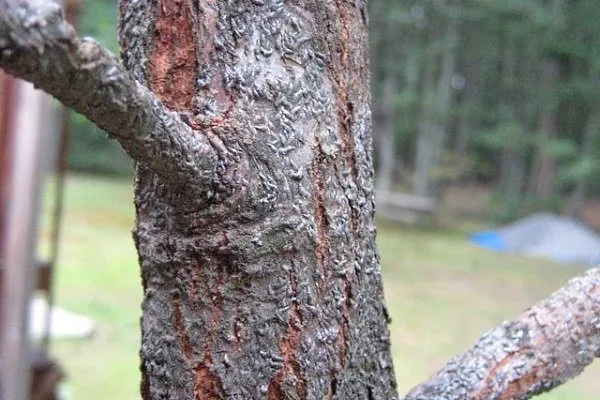
There are no treatments for the disease. Gardeners recommend not wasting time waiting for other plants to become infected. Simply uproot the tree and burn it.
Other diseases
Apple trees often suffer from poor care, mechanical damage, and thermal damage. The plant may also be attacked by insects. It's important to know what to do in these situations to preserve the plant and ensure a good harvest.
- ✓ The duration of exposure to a temperature of 37-38°C must be strictly observed to achieve the effect.
- ✓ After thermotherapy, it is necessary to provide the plant with a recovery period in optimal conditions.
Tree damage
The tree may be damaged by rodents, broken as a result of natural disasters, or branches may begin to break due to improper crown formation.
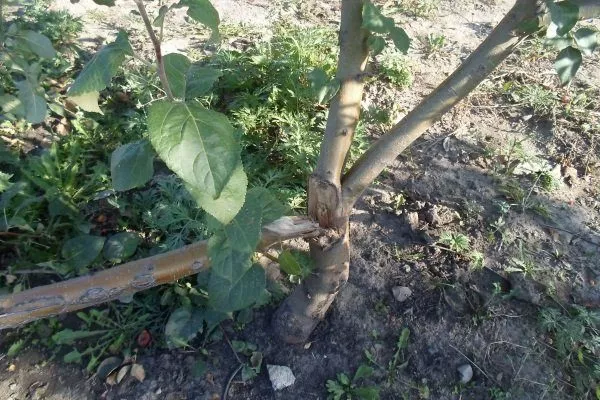
To prevent rodent attacks, prepare a mat of branches or shrubs and wrap them around the central trunk and lower branches. Corn "shields," reeds, and spruce branches are also acceptable. The main thing is to remove the mat after the frost has passed.
Since pests can overwinter under the covering material, remove and burn any clusters when warm weather arrives. Cover any minor damage to the trunk with garden pitch. Small bite marks usually disappear by the end of summer. Trim broken branches at the base and apply garden pitch or a 1:1 mixture of regular yellow clay and mullein.
Excess or lack of moisture
If you manage to properly water your tree, it will grow and develop normally. Apple trees don't like either too little or too much moisture. Most of the water comes from the soil through the root system. However, in dry and hot weather, regular watering is essential. Insufficient moisture can cause the tree to age, which will negatively impact yield. Fruiting will be irregular, and ripe fruits will not only lose their marketable appearance but also their flavor.
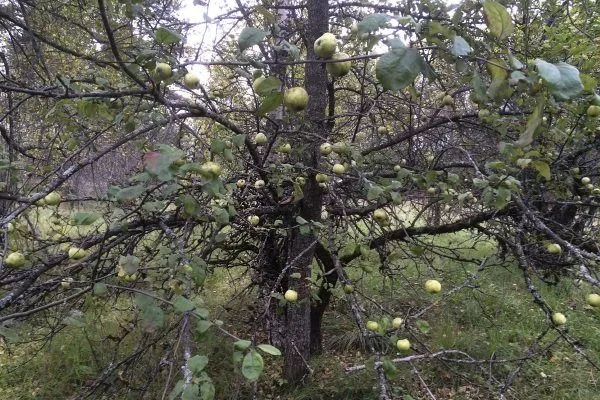
Excess moisture can negatively impact a tree's immune system, exposing the plant to various diseases. If moisture isn't absorbed into the soil and water stagnates, there's a risk of root rot.
Thermal damage
Thermal damage is often caused by exposure to low temperatures. Severe frosts can damage branches, bark, and even the root system. Frosty days, as well as sunny ones, are equally dangerous for the plant. The bark warms up, sap begins to flow, but as dusk approaches, the temperature drops, and the cambium freezes. This leads to cracks in the fruit tree's bark.
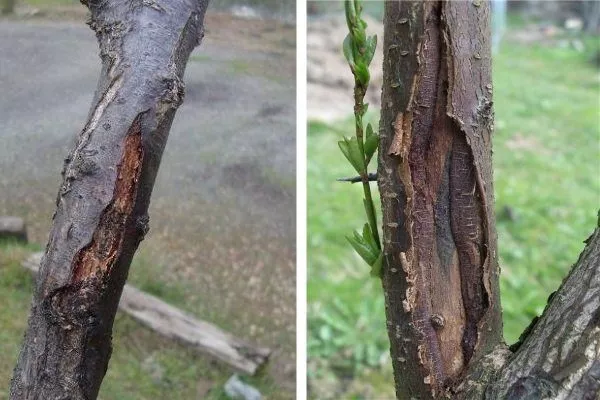
If frost occurs in the spring, when buds and leaves are forming, the plant may stop producing fruit or even die. To prevent this, cover the apple tree for the winter using spruce branches or covering material. A hot summer with high temperatures can negatively affect the leaves and bark. Be sure to water the tree, especially by sprinkling the crown and trunk.
Parasitic insects
Apple trees are often a target for various insect pests. They can cause significant damage to the tree's leaves, flowers, and fruit. The most dangerous insects include the apple blossom beetle, spider mites, apple ants, aphids, bark beetles, fruit moths, and codling moths.
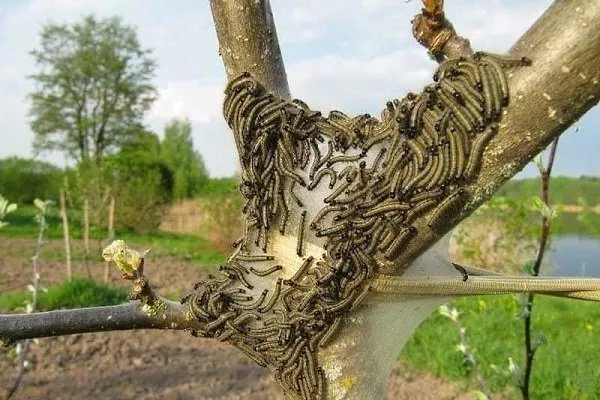
To combat pests, modern insecticides are recommended—they are effective against insects. The key is to start treating the plant promptly.
Poor care
If a plant is poorly cared for, it can suffer greatly. In addition to watering it well, ensure it receives proper nutrition. Fruit plants require micronutrients. A deficiency of these micronutrients can cause the following problems:
- Manganese. The leaves become variegated, their veins are clearly visible.
- Nitrogen. The tree grows slowly, the leaves acquire a pale shade.
- Copper. Brown spots appear on the leaves.
- Phosphorus. The shoots and petioles turn red.
- Bor. The fruit ovary cannot fully develop.
- Potassium. The leaves are turning brown.
With excess nitrogen, branches and crowns grow vigorously, but fruit production declines. For this reason, limit nitrogen application during fruit ripening. In this case, it is recommended to increase phosphorus and potassium fertilizer applications.
Apple trees are fruit trees susceptible to various diseases. To prevent or treat illness in time, it's important to understand the symptoms and treatment methods. Only proper care, regular watering, fertilizing, and preventative measures can help protect the tree from disease.