
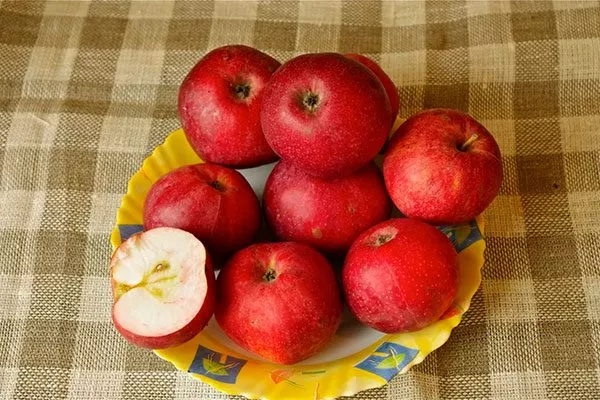
Belorusskoe Sladkoe is a winter apple variety with excellent consumer characteristics. It's easy to guess that it was bred in Belarus. The large, red-blushed fruits look very attractive and appetizing—like the apples of youth from a fairy tale.
Description of the Belarusian Sweet apple tree
When choosing apple trees or any other fruit trees for their gardens, gardeners pay special attention to their appearance. Before planting the Belorusskoe Sladkoe variety, find out what its tree and fruit look like.
Tree
The Belorusskoye Sweet apple tree is a medium-sized tree with a mixed fruiting pattern (ring-shaped fruiting predominates).
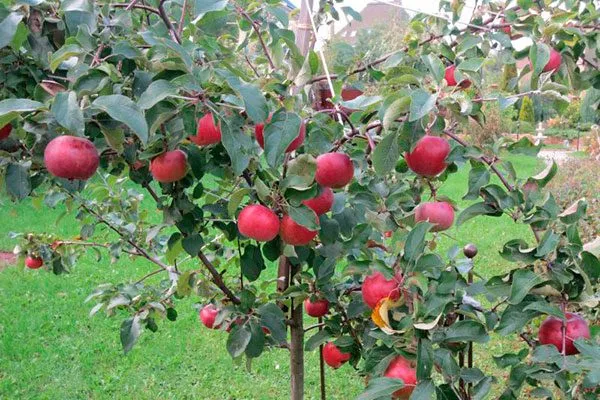
Brief description of the tree:
- Tree height — 3-4 m.
- Crown Rounded, not dense. The shape is close to conical, slightly drooping.
- Branches Crooked, sparse, and extending from the trunk at almost a right angle. The shoots are straight, brown, and of medium thickness.
- Bark on the stem it is smooth and grey in colour.
- Leaves Medium-sized or large, with pointed tips. Their surface is matte, wrinkled, and hairless.
- Kidneys small, conical in shape, pubescent.
- Flowers White, with rounded petals and a faint aroma. The buds are dark pink.
Fruit
The Belorusskoe Sladkoe variety produces fairly large fruits. The apples grow uniformly, with stems of medium length and thickness.
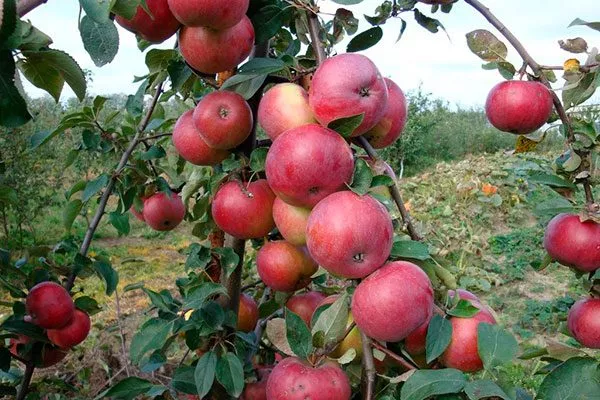
Main characteristics of fruits:
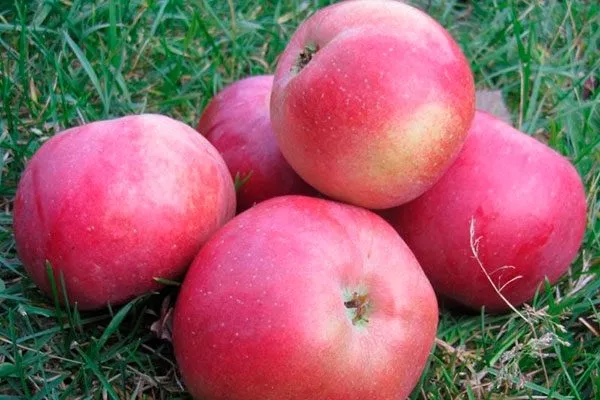
- Coloring — the base color is green, the cover color is red, washed out. When fruits reach consumer maturity, the color becomes light yellow with a red blush.
- Skin - medium thickness, smooth and oily.
- Form - rounded, slightly ribbed.
- Seeds - conical, medium-sized, dark brown in color.
- Pulp - greenish tint, medium density, with a moderate aroma.
- Average weight - 180 g.
History of the variety's creation
The Belorusskoe Sladkoe variety was developed at the Institute of Fruit Growing of the National Academy of Sciences of Belarus. The new variety was obtained by crossing BM 41497 × K BM F2. Authors: Kovalenko G.K., Grakovich D.V., Evdokimenko V.M., Marudo G.M.
The variety was added to the State Register of Belarus in 2005 and to the State Register of the Russian Federation in 2006. Recommended for the Central and Northwestern regions.
Characteristics
The Belorusskoe Sladkoe apple tree has excellent agronomic characteristics, allowing it to be grown in a wide range of climatic conditions. The variety adapts well and produces excellent yields in both private and commercial cultivation.
Growing areas
The variety is zoned for the Northwestern and Central regions. According to some reports, the Belorusskoye Sladkoye apple tree is also successfully cultivated in other regions, including the Urals and Siberia.
Productivity
The variety's yield depends largely on growing conditions and the tree's age. A five-year-old tree produces an average of 30-35 kg of apples.
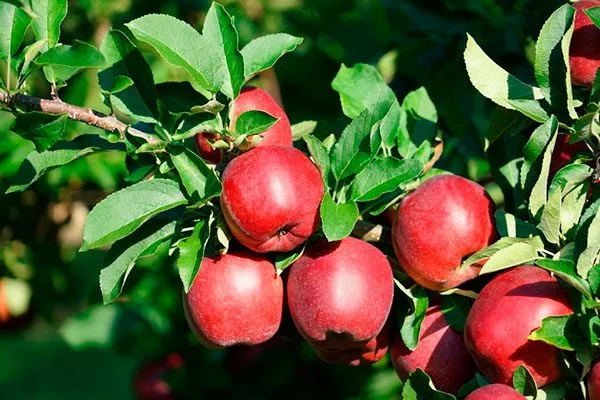
To increase yields, pollinator varieties are planted nearby. When grown on a large scale, yields can range from 20 to 30 tons per hectare.
Taste and application
Ripe apples have a very sweet flavor with a subtle acidity. Tasting scores range from 4 to 4.6 on a 5-point scale. The flesh is very juicy, with a fine-grained texture.
Chemical composition:
- soluble solids - 12%;
- titratable acids - 0.16%;
- sugars - 9.4%;
- ascorbic acid - 0.5 mg/100 g.
The fruits are versatile, suitable for both fresh consumption and processing. Apples are used to make juices, compotes, jams, and preserves, and are used in cooking.
Winter hardiness
The Belorusskoye Sladkoye variety has fairly high frost resistance. The tree can withstand temperatures down to -36°C. This apple tree is quite winter-hardy for central Russia. In regions where temperatures drop below this mark, the variety is moderately winter-hardy and requires winter protection.
Disease resistance
The variety is distinguished by increased resistance to scab, which reduces the tree's need for chemical treatment and simplifies maintenance.
At the same time, the Belarusian Sweet apple tree requires regular preventative treatments to help prevent potential problems.
Pollinator varieties
The Belorusskoe Sladkoe variety is self-fertile. It produces fruit successfully without pollinators, but with one, according to gardeners, the yield almost doubles.
Pollinators bloom at the same time as the Belorusskoe Sladkoe apple tree. Suitable varieties include Bogatyr, Golub Mira, Veteran, Antonovka, Melba, and Idared.
Pros and cons
The Belorusskoe Sladkoe apple tree has many advantages and almost no disadvantages. Before planting this variety in your garden, it's important to familiarize yourself with all its advantages and disadvantages.
Landing
To ensure a tree takes root well and grows quickly, it's important to plant it correctly. First, you need to purchase healthy seedlings, then prepare a site for them and plant them according to the prescribed technique.
Selection and preparation of seedlings
To ensure a healthy and strong tree grows from a seedling, regular care is required. But all this care can be wasted if you plant an unhealthy and weakened seedling. It's important to choose high-quality planting material, pay attention to the condition of the roots and bark, and accurately assess the seedlings' external characteristics.
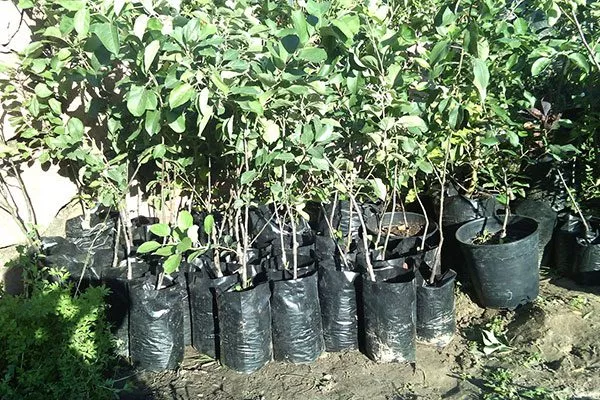
Recommended specifications:
- The trunk is even, smooth, straight, without cracks or bends, growths, deformations or mechanical damage.
- Branches (if any) - flexible, without frost cracks or signs of disease, with live, tightly fitting buds.
- The roots should show no signs of drying out or rotting. If the seedling has a closed root system, the root ball should be firm and not crumble when removed from the planting container.
- The optimal age for seedlings is 1 or 2 years. They should have 3 to 5 well-developed lateral shoots.
- If a seedling is purchased in the fall, it should not have any leaves - this indicates the end of the growing season and readiness for winter.
The day before planting, soak the roots of the seedlings in water to restore lost moisture. Water the seedlings with closed roots before planting to facilitate removal of the root ball from the container.
To ensure faster and better rooting of the seedling, it's best to soak the roots in a growth stimulant solution rather than in water. For example, a solution of "Kornerost" (2 tablets or capsules per 10 liters of water). Immediately before planting, the roots of the seedlings are dipped in a nutritious slurry of manure and clay.
Selecting a site
Choose a sunny, well-lit site for planting, protected from drafts and gusty northerly winds. Apple trees require at least 6-8 hours of sunlight per day for normal growth and fruiting. The groundwater level should be no higher than 2 meters below the ground surface.
Planting requires chernozem, fertile loamy, or sandy loam soils. Dry sandy soils and swampy areas, as well as areas with a close deposit of lime, crushed stone, or dense clay, are unsuitable.
Site preparation
The apple tree plot is prepared six months before planting. The soil is cleared of plant debris and weeds, dug to the depth of a spade, and rotted manure or compost is added at a rate of 5-10 kg per square meter. Superphosphate (30-40 g per square meter), potassium salt (30-40 g), or potassium sulfate (35-45 g) can also be added.
It is recommended to spray the soil with a disinfectant solution to kill pathogenic microflora. For example, you can use Fitosporin or copper sulfate.
Acidic soils should be amended with slaked lime or meadow marl. The optimal pH for apple trees is 5.5–6.5.
Preparing the planting hole
Planting holes for the Belorusskoe Sladkoe apple tree are prepared in advance. This can be done in the fall if spring planting is planned.
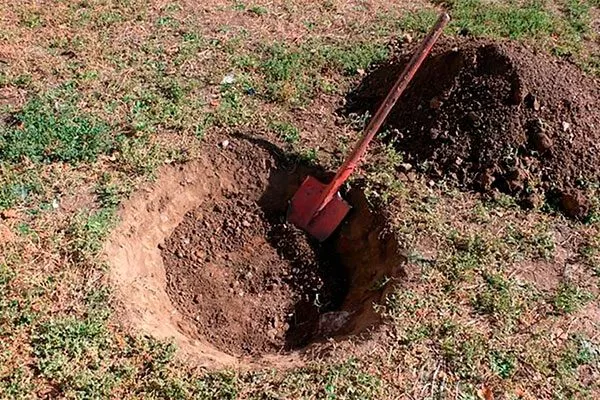
Features of preparing a planting hole:
- The hole should be sized to accommodate the root system—it should accommodate it freely, without allowing the roots to bend sideways or upward. The hole's depth and width are typically 0.6-1 x 0.6-1 m.
- Drainage material is placed at the bottom of the pit - broken brick, small pebbles, expanded clay.
- Fill the hole 2/3 full with potting soil. It's made from topsoil obtained during digging, humus (rotted manure or compost), and coarse river sand in a ratio of 1:2:1.
- The hole is filled in a specific order: topsoil is added to the bottom, followed by the potting mix. This is then formed into a mound 15-20 cm high. The hole is left for a period of time—from 1-2 weeks to 2-3 months—to allow it to settle and the fertilizer to dissolve.
- A support approximately 1.5 m high is driven into the center of the hole. The seedling will subsequently be tied to it.
Planting dates
Apple trees can be planted in spring or fall. Seedlings with closed root systems can also be planted in summer. Spring planting is primarily practiced in regions where temperatures drop significantly during the winter.
Planting times depend on climate conditions. Gardeners rely on air and soil temperatures, which should reach 10–15°C.
You can check the soil's readiness with a shovel—if it goes in without resistance, you're ready to plant. If the shovel starts to bend, the soil hasn't thawed enough. Apple trees shouldn't be planted in frozen soil.
Approximate spring planting dates depending on the region:
- Central and northern regions of the country - end of April - beginning of May.
- South - from the beginning to the end of March.
In the fall, apple trees are planted in central Russia from early September to mid-October. In the south, fall planting continues until early November. It's important to plant the apple tree at least four weeks before the onset of sustained ground frost.
Planting a seedling
Plant apple trees in cloudy, windless weather, early in the morning or late in the evening. The scorching sun can damage young trees; at first, you may even want to shade them during midday to prevent sunburn.
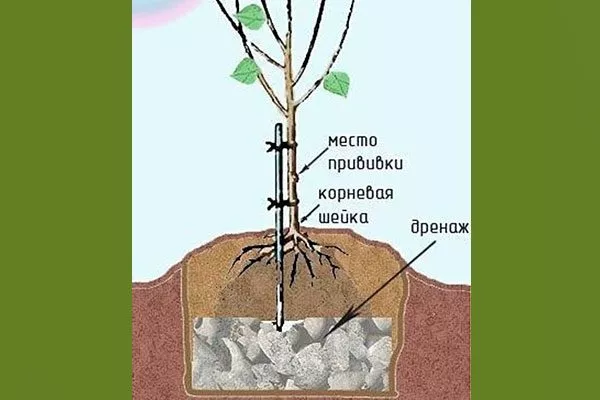
Landing features:
- The seedling is placed on a mound of soil, its roots are straightened, and the free space is filled with soil and compacted.
- After planting, the root collar should rise above the ground by approximately 10 cm.
- The planted tree is watered with warm, settled water. The first watering should be the heaviest—30-40 liters.
Care
To ensure a good harvest, the Belorusskoe Sladkoe apple tree requires proper care. The tree needs regular watering, fertilizing, timely spraying, and, if necessary, winter insulation.
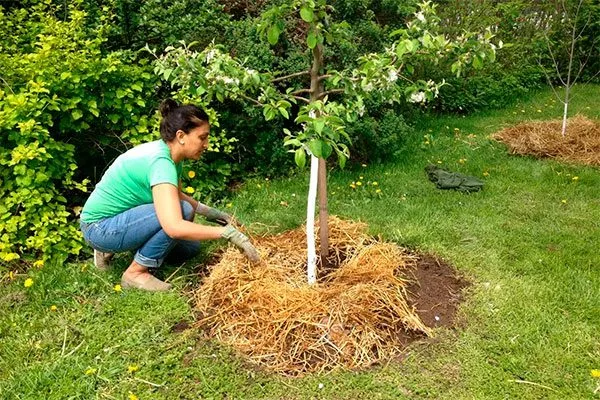
Watering
If the summer is moderately hot, a mature tree is watered once a month. During the dry season, the frequency of watering doubles, with the apple tree watered every two weeks. The recommended watering rate for a mature tree is 50-60 liters.
The apple tree especially needs watering in early spring - before the buds open, after flowering, 3-4 weeks before harvesting and during leaf fall.
Top dressing
If all the necessary fertilizers have been added to the planting hole, fertilizing the apple tree begins in the third year after planting. A mature tree is fertilized two or three times per season.
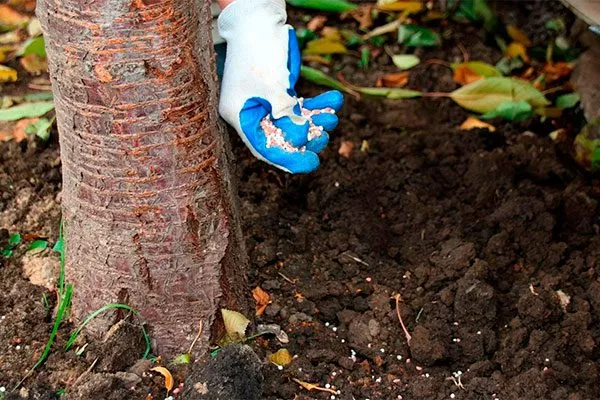
Approximate feeding regime:
- In spring, apply urea, nitroammophoska, or ammonium nitrate (approximately 30-40 g per apple tree) to the roots. These are scattered around the tree's trunk, and then the tree is watered.
- During fruit formation, phosphorus-potassium fertilizers are applied. Superphosphate and potassium sulfate can be applied under the roots at a rate of 100 g and 60-70 g per 10 liters of water, respectively.
- After fruiting, ready-made complex compositions with macro- and microelements are added - this is the guarantee of a future harvest.
To prevent fertilizer from burning the roots, water the tree generously. It's best to do this in the morning or evening to prevent the roots from overheating.
Trimming
The Belorusskoe Sladkoe apple tree requires regular pruning in spring and fall. It is not pruned during the summer.
Approximate cutting order:
- After the first winter, shorten the central conductor by 20%, and all shoots by a third. The trunk should be 0.4 m taller than the skeletal branches.
- The following year, only three side shoots in different directions are left, and the rest are cut back to the ring. All other branches are shortened so that they are lower than the central conductor—by approximately 15 cm. All cuts with a diameter of 2 cm or more are treated with garden pitch.
- In the third year, a second tier of 3-4 branches is formed. It is located 0.4-0.5 m above the first.
- A year later, the third tier is laid. It should also be 0.4-0.5 m higher than the previous one.
In subsequent years, only sanitary pruning is carried out, removing all damaged and dry shoots, as well as branches that grow inward and thicken the crown.
Shelter for the winter
Young apple trees grown in temperate or northern climates must be covered. This prevents trunk freezing and bark damage. Winter shelter installation begins shortly before the first frost.
Straw, spruce branches, foam rubber, and other covering materials are used as cover around the apple tree trunk. The area around the tree trunk is covered with a thick layer of peat, sawdust, or straw. The tree trunk is additionally wrapped with fine-mesh wire mesh to protect it from rodents.
Fighting diseases
The Belorusskoye Sladkoye apple tree is resistant not only to scab but also to most bark and wood diseases. However, adverse environmental factors can trigger the development of fungal and bacterial infections, which can be prevented with preventative spraying.
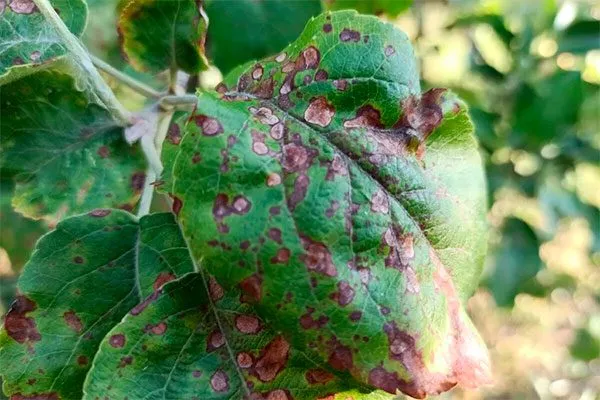
Peculiarities of fighting diseases and pests of the Belarusian Sweet apple tree:
- Twice a season, in spring and autumn, all damaged and dry branches are removed - they provide a favorable environment for the development of diseases/pests and a source of danger for the entire tree.
- In the spring, whitewash the trunk with lime. Copper sulfate can be mixed in—it improves the tree's antiseptic properties and repels bark beetles and other pests.
- In spring, the tree must be sprayed with systemic fungicides, for example, Fitosporin or Topaz.
- To combat pests, the crowns and soil in the tree trunk circles are treated with insecticidal preparations, for example, Karbofos or Zircon.
- It is recommended to use trap hoops made of corrugated paper, which help prevent the spread of insect pests.
The most dangerous pests affecting the Belorusskoye Sladkoye apple tree include spider mites, aphids, apple leafhoppers, blossom beetles, and codling moths. To control them, regularly spray with insecticides such as Inta-Vir, Karbofos, Zircon, or similar products.
For mild infestations, folk remedies are used. For example, you can spray the tree with an infusion of garlic or onion peels, a sulfur-soap solution, a decoction of black henbane, or an infusion of horseradish roots.
Harvesting and storage
The Belorusskoye Sladkoye variety ripens in late September or early October, depending on the regional climate. It's important to harvest the apples early, otherwise they won't store well.
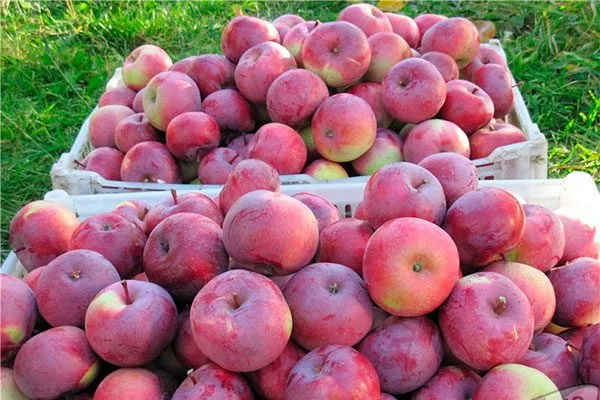
How to know when apples are ready to be picked:
- The ripeness of apples is determined by taste - the flesh of ripe apples becomes juicy and sweet.
- When pressed, the skin of ripe apples sags and does not straighten out.
- Fallen fruit is appearing on the ground. If five or more large, red apples have fallen from the tree, it's time to harvest.
The fruits are carefully removed from the branches, stems included. This is best done in dry weather, wearing gloves. The harvested apples are placed in breathable wooden boxes, which are then transferred to a dark, cool, and well-ventilated area. The optimal temperature is 0 to +7°C, and the humidity is 75-80%.
Reviews
The Belorusskoe Sladkoe apple tree is a reliable variety with a consistent yield. It's a good choice for commercial cultivation, as its apples are attractive, large, and delicious. However, those growing apples for food should be aware of their increased sweetness, as this may not appeal to those who prefer a balanced sweet-and-tart apple flavor.