
The Bellefleur-Kitayka apple tree is a late-ripening variety with large, juicy fruits with a rich, sweet-tart flavor and distinctive aroma. The trees are noted for their high yield and early maturity, and the apples store well and withstand transportation. Many gardeners choose this variety for its consistent fruit production and decorative appearance.
History of selection
The variety has a long history—references to it appear in sources dating back to the 18th and 19th centuries. This apple tree appeared in Russian orchards at the beginning of the 20th century, approximately between 1906 and 1908.
Renowned breeder Ivan Vladimirovich Michurin worked on the project. He succeeded in creating a hybrid by crossing the Yellow Bellefleur with the Large-fruited Kitayka.
The first apples of the new variety appeared seven years later, in 1914. The crop immediately became popular due to its ability to adapt to harsh climates. In 1947, the Chinese Bellefleur was officially included in the State Register of Breeding Achievements, with zoning for the following regions:
- Middle zone;
- North Caucasus;
- Crimea;
- Moscow region;
- Leningrad region
Features and specifications
The Bellefleur-Kitaika apple tree has long earned the trust of gardeners. It's easy to grow and consistently delivers abundant yields of aromatic fruit with a pleasant sweet-and-tart flavor. The variety is prized for its early fruiting, self-fertility, and a number of other significant advantages.
The appearance of the tree
The plant is medium to vigorous. Without training, it typically reaches 5-7 m in height, and under favorable conditions, it can exceed this height. However, the trunk is most often limited to 4-5 m to facilitate care and fruit harvesting.
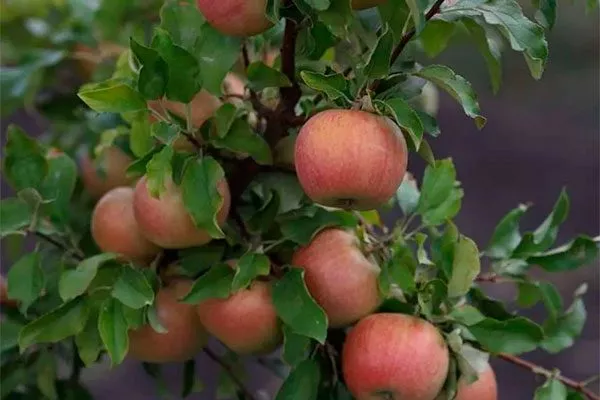
Key Features:
- The young crown is oval in shape, becoming rounded with age. It is dense, with strong shoots covered in dark green or brownish-green bark, which turns brown with age.
- The leaves are large, dense, and wrinkled, with prominent veins. They are oblong, lanceolate, leathery, and matte, with dense pubescence on the underside. The color is rich green or emerald, with coarsely toothed margins, with a serrate-crenate outline.
- The root system is predominantly fibrous, depending on the rootstock. It is well-branched and extends deep into the soil, providing the plant with moisture even from the lower layers, although some roots are located close to the surface.
Description of fruits
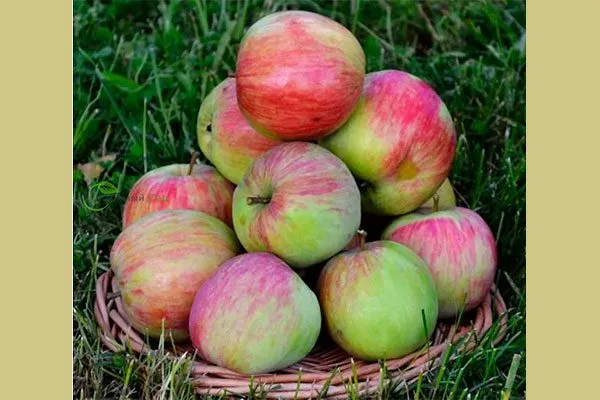
The apples are large. Even without special care, they reach a weight of 200-230 g, and with good agricultural practices, they can reach more than 300-340 g. On young trees, specimens weighing 450-500 g are sometimes found, although this is rare.
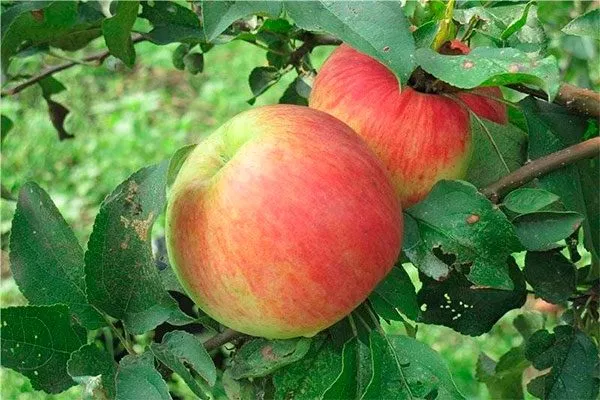
Main distinguishing features:
- Form - Rounded or slightly flattened, they are smooth, even, uniform, and symmetrical, with well-defined but not pronounced ribbing. The side seam is usually invisible.
- Peel - Firm and elastic, yet thin and easily separated by biting. When ripe, the peel is a rich green, lightening to a whitish-yellow as it ripens.
- Blush - speckled-striped, blurred, crimson, pinkish-red or with a carmine tint.
- Subcutaneous points - small, light green or greyish, almost invisible against the variegated background.
- Pulp – medium density, fine-grained, very juicy, crispy, may have a slight tingle.
- Taste - A dessert-like, sweet wine with a distinct apple tartness and a spicy, wine-lemonade aroma. According to tasters, this variety scored 4.6 points for taste and 4.7 for appearance (out of a possible 5).
Content of main substances:
- sugar – 12.8%;
- Vitamin C – 11.2 mg;
- pectins – 14%;
- P-active substances – 184 mg;
- titratable acids – 0.18%.
Lifespan and yield
In theory, an apple tree can live up to 100 years, but in practice, such long-lived trees are rare. In most cases, the lifespan of a fruit tree is 50-60 years, of which active fruiting lasts for about 20-40 years.
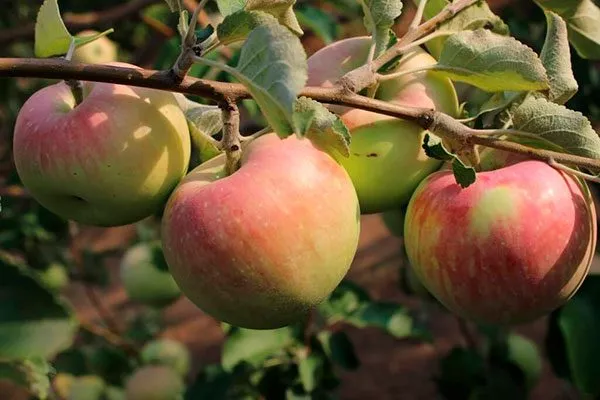
The Bellefleur-Kitaika variety is known for its high yield. Young trees produce fruit annually, but with age, irregularities may occur. The harvest volume depends on the growing region: in the south, the yield is higher, while in the central part of the country, it is moderate. Gardeners harvest 15-20 kg of apples per square meter of area.
Resistance to frost, diseases and pests
The variety's winter hardiness is rated as average. In regions with harsh climates, especially in the northern and central regions, trees may freeze during cold winters, and in damp weather they become vulnerable to fungal diseases.
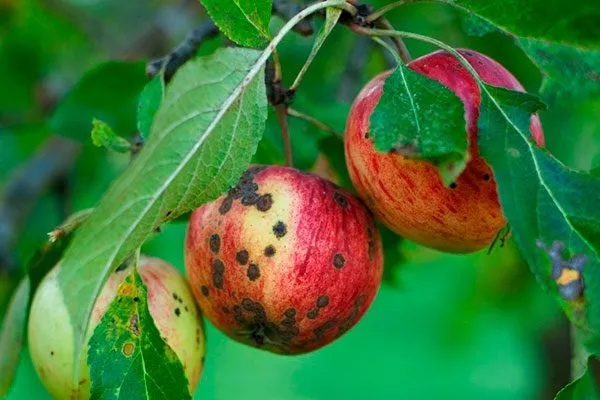
The variety is not very resistant to scab: leaves are moderately affected, but fruits are severely affected. However, the Bellefleur-Kitayika variety has good resistance to various types of fruit rot, allowing it to preserve some of its harvest even in unfavorable years.
Flowering period, ripening and fruiting characteristics
The plant blooms in late April or May—the exact timing depends on weather conditions. Flowering lasts about 7-10 days, sometimes a little longer in cool weather.
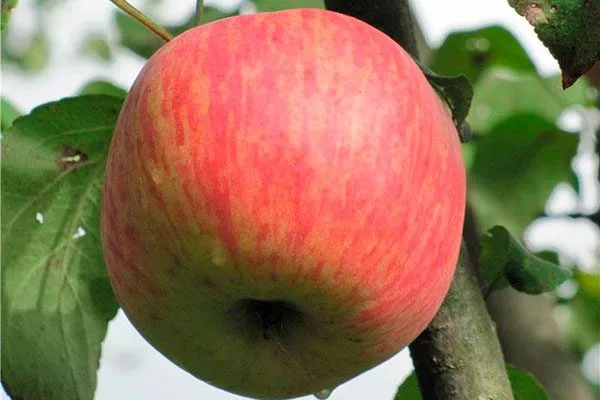
This variety ripens late in the fall. Harvesting begins in early October. The tree produces its first apples in the fifth year after planting, but subsequently produces fruit regularly, especially when young.
Pollinators and self-fertility
To achieve a stable harvest, the Bellefleur-Kitayka apple tree requires cross-pollination—the tree cannot produce fruit properly without pollen from other varieties. One common cause of low yields is insufficient or poor pollination.
The optimal solution is to plant one or more similar varieties that bloom at the same time next to the Chinese Bellefleur. The distance between trees should not exceed 15 meters, otherwise it will be more difficult for bees and other pollinators to transfer pollen.
It's important for the tree to develop not only leaf buds but also fruit buds. These are formed the summer of the previous year. Gardeners can stimulate the formation of these buds by tying young branches horizontally—this promotes the shoots' transition from the vegetative to the generative stage.
Transportation and shelf life
Apples of this variety are characterized by high transportability—they withstand long-distance shipping well. However, their shelf life is relatively short: they remain fresh for only 1-1.5 months.
For this reason, it is recommended to use the harvest immediately after picking or process it. The fruits are eaten fresh or used to make compotes, added to baked goods, etc.
Subspecies, rootstocks
The Chinese Bellefleur is an excellent rootstock. More than ten new, unusual apple varieties have been developed using it, including the Altai Velvet, Autumn Joy, Rossoshanskoe, and Izbrannitsa.
Subspecies and their characteristics:
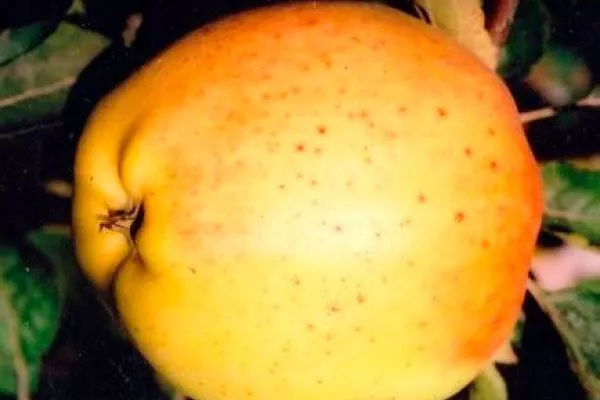
- Yellow. This is an ancient variety with medium-sized fruits and bright yellow skin. The apples are usually devoid of blush or have a light, washed-out orange hue.
They ripen earlier than the Chinese Bellefleur grapes, but have a shorter shelf life and transportability. However, their flavor and aroma are more intense.

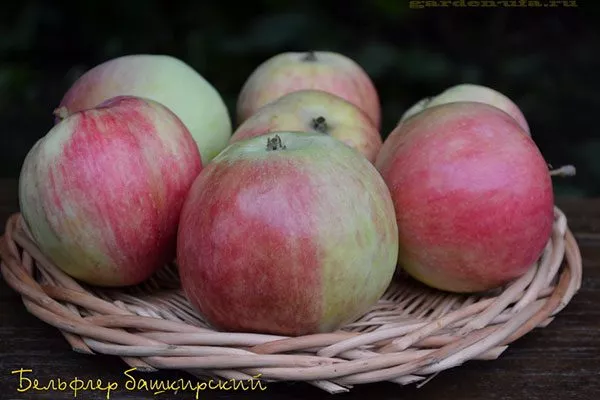
- Bashkir. Developed in the early 1990s from the Bellefleur and Bashkir Krasavets varieties by breeders Mansurov, Bolotina, and Demina at the Bashkir Research Institute of Agriculture, it was included in the State Register in 2008.
The tree is more compact, reaching a height of 4-5 meters. The apples are smaller than those of the Chinese variety, yields are similar, and winter hardiness is above average, making it suitable for cultivation even in the Urals and Siberia. Its main advantage is its high drought tolerance—the trees require virtually no watering.
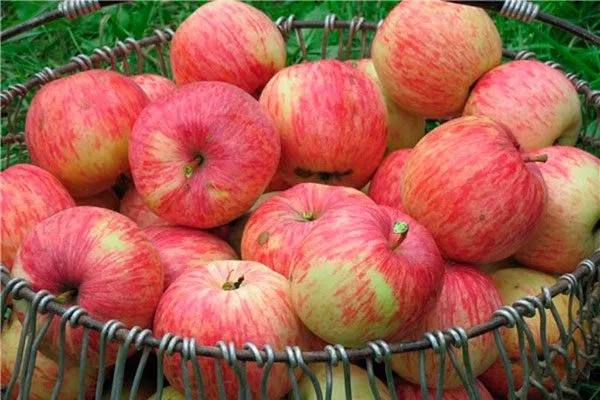
- Kuibyshevsky. A hybrid developed at the Kuibyshev Experimental Station. It is characterized by its resistance to cold and drought, undemanding nature, and high yield. It matures early, yielding 6-10 kg of aromatic fruit with a spicy, sweet flavor in just 4-5 years.
Developed by crossing with the Borovinka variety, the apples have a shelf life of 45-60 days.
Growing characteristics in different regions
The Bellefleur-Kitaika variety was originally developed for cultivation in the central and southern regions of Russia. In Russia, it is widely distributed in the Central Black Earth Region, the North Caucasus, and the Lower Volga region.
Apple trees of this variety are also found in private gardens in Ukraine, Belarus, and Armenia. It is most often used for commercial production in the North Caucasus.
Rules for planting seedlings
Plant Bellefleur chinensis seedlings in spring or fall. The preparation and work procedure are standard: before planting, trim off any dry root tips and soak the roots in a rooting stimulant solution for 24 hours.
Basic requirements:
- For planting, choose a warm day in spring or fall.
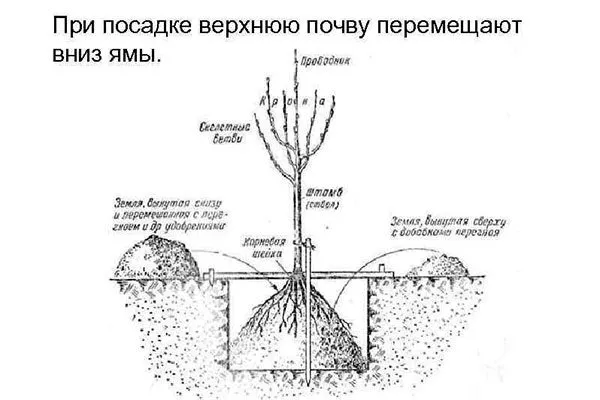
- First, prepare a planting hole at least 50x50 cm in size. If the seedling's root system is larger, make the hole wider and deeper.
- Place a drainage layer of broken brick, slate, or small stones on the bottom. Top with a fertile soil mixture—thoroughly mix equal parts of excavated soil and compost, then add 1-2 kg of wood ash.
Step-by-step algorithm:
- Place the seedling in the center of the hole.
- Carefully straighten the roots so that they spread evenly in all directions.
- Cover with soil and water thoroughly.
- After the moisture has been absorbed, lay mulch on top - straw, old hay or sawdust.
- Drive a stake nearby and tie the trunk to it for support so that the young tree grows straight until it takes root.
Care instructions
To ensure a bountiful harvest, it's important to take care of your apple tree by regularly performing standard agricultural practices. This will strengthen the plant's immunity, maintain its vigor, and improve the quality of its fruit.
Trimming
During the first year after planting, leave the tree alone, but from the second year onward, begin shaping the crown. The Bellefleur-Kitayka apple tree is prone to becoming dense and growing excessively, so timely pruning is especially important. Without proper shaping, the plant may become diseased and reduce fruit production.
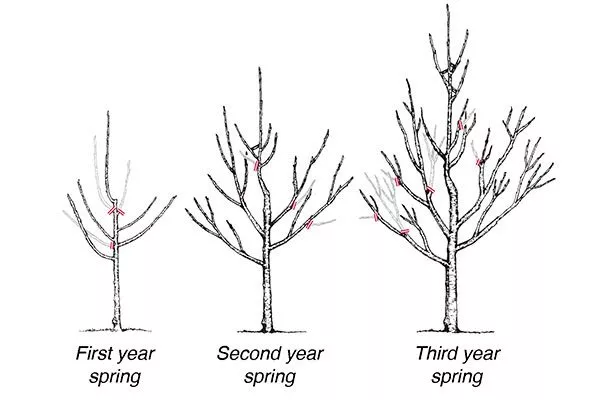
Remove diseased, broken, and frost-damaged branches, as well as suckers, duplicate shoots, and shoots growing inward that interfere with the growth of other branches. Treat all cuts with garden pitch or oil paint to protect against infection.
Fertilizing and watering
To ensure a good harvest and healthy crop growth, maintain proper care, especially in terms of moisture and nutrition. Key recommendations:
- During the first month after planting, water the plants approximately once a week, adjusting the frequency depending on weather conditions. Keep the soil consistently moist, but not overwatered or dry.
- After the tree has taken root (after about 1.5 months), reduce watering to a few times per season, depending on the condition of the soil and its moisture content.
- Apple trees need fertilizers, which can be either mineral or organic (compost, old or rotted manure).
- For good fruiting, the soil must contain macronutrients:
- nitrogen (N) – stimulates the growth of leaves and branches;
- phosphorus (P) – promotes the development of roots and flowers;
- potassium (K) – increases resistance to diseases.
- You don't need to add fertilizer to fertile soil until fruiting begins (usually 2-4 years), but if there is no new green growth, use fertilizer starting in the spring of the following year.
- Feed the crop throughout the growing season, beginning in early spring as soon as the soil becomes workable and ending by July 1.
- When using prepared food, be sure to follow the instructions on the package for proper application.
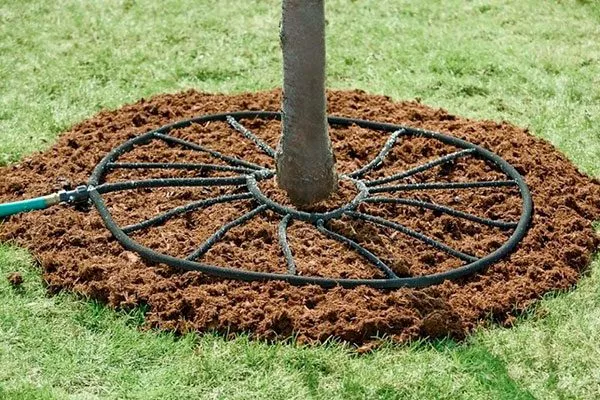
Diseases and pests
The culture has good immunity, but under unfavorable conditions or improper care it can be subject to a number of problemsIt is important to start treatment promptly:
- Late blight - A bacterial disease that causes branches to turn black, giving them a scorched appearance and ultimately leading to the tree's death. To control the disease, it's important to promptly remove affected branches.
- Rust - A fungal disease that causes rusty spots on leaves. Small yellow spots appear on the foliage in late spring, and as the infection progresses, leaves and fruits drop prematurely. Unfortunately, rust is difficult to completely control.
- Scab - The most dangerous disease, characterized by the appearance of dark, velvety spots on apple tree leaves and fruit, is caused by a fungus and reduces the yield and quality of apples. This variety has very low resistance to scab.
For protection, it is recommended to use fungicides, which reduces the risk of spreading infection, especially if junipers, cedars and other apple trees grow nearby.
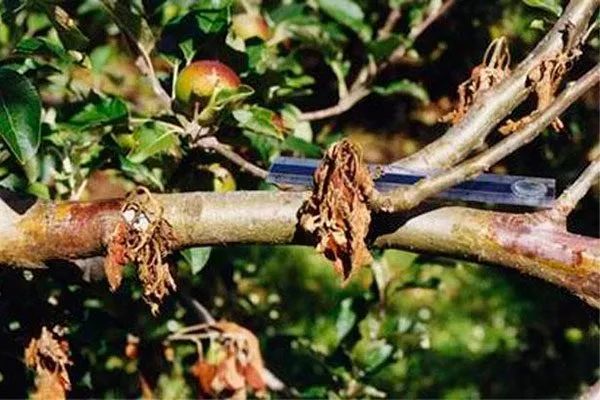
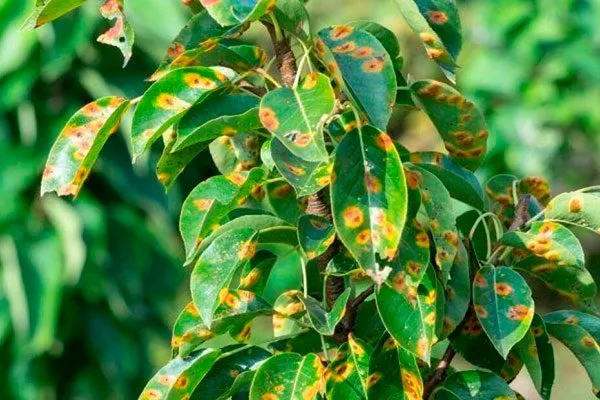
A mandatory part of care is the removal of dead, damaged, and diseased branches, as well as shoots growing from the roots or base of the trunk. If necessary, treat with insecticides to protect against pests.
Collection and storage
Harvest Bellefleur-Kitaika apples in September. The fruits are firmly attached to the branches and do not fall off, allowing them to be picked whole and undamaged. For storage, use a cellar or basement at temperatures between 0 and 10°C and humidity around 70%.
Pros and cons
The Bellefleur-Kitaika variety has long been popular among gardeners due to its numerous advantages. Key benefits:
Despite these disadvantages, the variety is in demand in many regions, although in some cases it requires winter shelter.
Reviews
The Bellefleur-Kitayka apple tree is characterized by large, beautiful fruits with a rich flavor and aroma. They store and transport well. Despite its average winter hardiness and susceptibility to some diseases, this variety remains popular due to its high yield and early maturity. With proper care, the tree enjoys consistent fruiting.