
Gardeners who enjoy growing exotic and unusual plants will never pass by the White Rose apple. Let's find out what this plant is, its characteristics, and whether it can be grown in our climate.
Description and characteristics of the variety
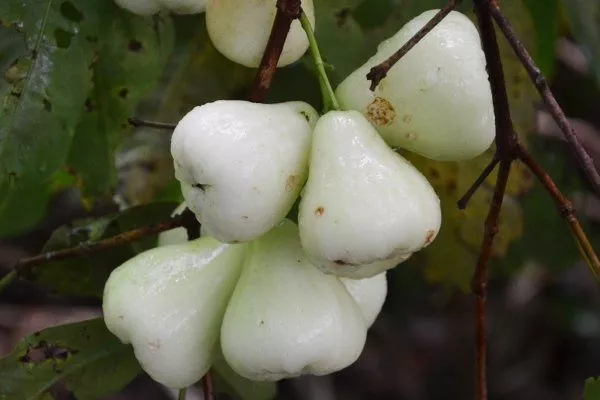
White Rose apples (or Water Apples, Jambu Air) are the fruit of an evergreen tree, a subspecies of the Malabar plum (Chompu), in the Myrtaceae family. They resemble pears more than apples.
This fruit tree's homeland is Malaysia. From there, the crop spread throughout the tropics: it grows in India, Indochina, and the Pacific islands.
Fruit
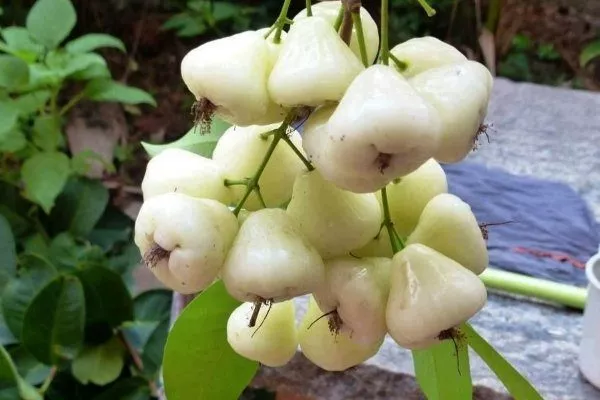
White Rose fruits have an unusual shape and a unique flavor. There are several subspecies of this fruit, each with its own distinct color, shape, and flavor.
Those who have tried this fruit describe it as juicy, watery, crisp, slightly sweet (almost tasteless), and aromatic. Some fruits can be slightly sour or tart.
Fruit characteristics:
- the pulp is juicy, white, crispy, moderately dense;
- the skin is smooth and thin, waxy, and increases its shine as the fruit ripens;
- color – white;
- shape - similar to a bell;
- bones - usually one or two or absent;
- diameter – about 5 cm;
- the weight of one fruit is 150 g.
In its native land, the White Rose, like watermelon, is used as a source of liquid. The fruit is eaten fresh and used in cooking (to make sweets and compotes), added to salads and meat dishes, and preserved.
Composition (per 100 g): water - 93%, proteins - 0.3 g, fats - no, carbohydrates - 3.9 g, fiber - 1 g, vitamin A - 253 IU, vitamin C - 0.1 mg, energy value - 80 kJ.
The appearance of the tree
External features of the tree:
- height – 3-5 m (but can grow higher, reaching 10 m);
- trunk – short and curved, 30-50 cm in diameter;
- leaves are elliptical in shape, large, green on one side and yellow-green on the other;
- roots are powerful, branched, and absorb moisture well;
- Flowers are white with 4 petals and many long stamens.
Flowers collected in large inflorescences give the plant a decorative appearance during the flowering period.
Flowering and pollination
Flowering, like fruiting, occurs twice a year (in spring, sometimes in summer, and sometimes in autumn). The timing of flowering varies from year to year, but the key is a warm, dry season with no precipitation. Fruiting occurs 30-40 days after flowering.
It's an excellent honey plant, whose flowers attract bees, bumblebees, and other insects to the garden. However, since the flowers are hermaphrodites (meaning they contain the reproductive organs of both sexes), not only cross-pollination but also self-pollination occurs.
Productivity
Even a mature White Rose tree doesn't produce large harvests. However, gardeners grow this exotic plant more for its curiosity and ornamental value than for its high yield. Yields are up to 85 kg per tree, but only with proper care and in a suitable climate.
A potted tree produces 100 to 200 fruits. A higher yield is achieved in open ground. The highest yield is obtained in Crimea. Five-year-old trees grown on the southern coast can produce up to 500 fruits in a single season.
Winter hardiness
White roses, being a tropical plant, are completely unsuited to frost. Planting them in temperate climates without protection is impossible. Even in southern regions, there's no guarantee the tree will be safe. The ideal conditions for this plant in Russia are greenhouse cultivation.
The optimal temperature for growing is 22 to 28°C. If the thermometer drops below 0°C, the tree will simply die.
Disease resistance
In our climate, the White Rose has few enemies—traditional fungal and bacterial infections bypass it. Diseases that commonly affect regular apple trees (such as scab and powdery mildew) pose no threat to this tropical guest. It does have its own diseases, which are introduced to our latitudes by imported plants. Currently, there are no specific recommendations for protecting and treating this crop.
Advantages and disadvantages of the species
Despite its low popularity, this crop has every chance of becoming a favorite among our gardeners, as it has many advantages and useful features.
- exotic commercial appearance of fruits;
- The tree is evergreen and is therefore grown as an ornamental.
- the fruits have a short shelf life (only a few days);
- The plant is not frost-resistant.
Where can I get a seedling?
Planting material is obtained in two ways:
- From the bone. The fruit contains a seed that can be planted in a pot with sphagnum moss. The seed is pressed into the moss, covered with it, and watered. The pot is covered with plastic wrap. After 4-6 weeks, the seed will sprout. It is then cared for like a regular seedling.
Seeds quickly lose their viability. The sooner they are planted after being removed from the fruit, the better the germination rate will be.
- They buy at a nursery or on the Internet. Such a seedling is usually rooted and completely ready for planting. It can be planted directly in the ground, like a regular fruit tree, but it's better to plant it in a large container that can be stored outdoors for the winter. This is the optimal growing option for water apples in most regions of Russia.
Peculiarities of growing White Rose apples
This heat-loving plant requires specific growing conditions, which must be taken into account when planting. Only gardeners with mild winters should take the risk of planting the White Rose outdoors.
- ✓ The air temperature should not drop below 0°C even for a short time.
- ✓ Air humidity should be maintained at 75-85% to simulate natural growing conditions.
It's recommended to plant water apples in the spring to avoid exposing the seedling to cold. However, if the plant is grown in a greenhouse or conservatory, planting timing is irrelevant.
Selecting a site and preparing the soil
White Roses are planted in open ground or in containers (at least 60 cm in diameter). In Russia, the latter option is much more common.
Preparing a container for planting a seedling:
- Place drainage from pieces of expanded clay, brick, or crushed stone on the bottom.
- Fill the container with fertile loamy soil or prepare the following mixture: mix humus (well-rotted compost will also work) with river sand and turf soil.
For the container, select a spot on a south-facing window—this tropical plant will require maximum light and warmth. If planting the seedling outdoors, choose a site that suits the needs of the tropical plant.
The water apple requires at least 8 hours of light per day, otherwise the tree will not bloom.
Soil and growing site requirements:
- The culture prefers heavy soils and constant access to water.
- The optimal soil acidity is pH 5.5-6.5 (the maximum acceptable pH is 7.5). Adding manure promotes acidification, so it's recommended to add lime to the soil along with it to ensure deacidification.
- The plant prefers to grow in well-drained areas. Areas with a high water table and locations near bodies of water are suitable.
- The tree's growing location should be free of drafts, as the water apple reacts extremely negatively to them. However, ventilation is essential—this should be taken into account when growing the plant in a greenhouse.
Site preparation:
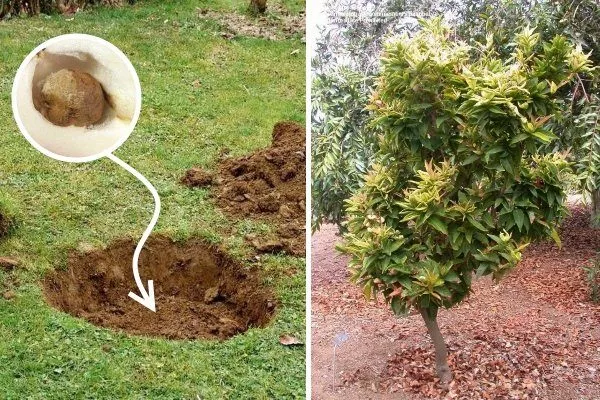
- In autumn, dig a hole 60x60 cm.
- Place a 10 cm layer of drainage on the bottom.
- Add soil to the holemixture from humus,peat And top fertile layer(1:1:1).
- Add superphosphate (50 g) and potassium chloride (15 g).
- Cover the hole with roofing felt. By spring, the fertilizer will dissolve and be absorbed into the soil.
Landing
Planting takes place in the spring. But first, the seedlings need to be prepared. To ensure that this heat-loving plant thrives in an unfamiliar climate, it needs to be hardened off first. To acclimate, the pots with the seedlings are taken outside daily – first for 20 minutes, then for half an hour, then forty minutes, and so on. Hardening off continues for two weeks.
Next, the hole prepared in the fall is opened and the seedling is planted in it:
- Make a mound at the bottom of the hole.
- Step back 10 cm from the center of the hole and drive in a small support.
- Place the seedling on a mound of earth and spread the roots evenly over it.
- Cover the roots of the seedling with fertile soil and compact it with your hands.
- Tie the seedling to the support and water it generously.
The water apple thrives in open spaces. It's recommended to plant it away from other trees and shrubs. The optimal distance from neighboring trees is 8 meters.
The tree begins to bear fruit in the 3rd year after planting (sometimes in the 4th).
Tree care rules
Growing the White Rose doesn't require any special care. Despite its exotic appearance, this plant isn't fussy: all it requires is watering, fertilizing, and timely pruning.
During the first two years of the tree's life, it's necessary to carefully weed, water, and mulch the soil, as well as regularly apply manure and complex fertilizer. After that, the plant requires minimal care (only regular watering).
Watering and fertilizing
In nature, the White Rose grows in conditions of high humidity (75-85%), so when grown artificially, the main requirement is regular watering.
Watering features:
- the optimal method is drip irrigation;
- water for irrigation – rainwater or settled;
- optimal temperature – +16…+20°С;
- watering frequency – once every 5-6 days;
- When watering, focus on the dryness of the soil - if it has dried out by 2-3 cm, then it is time to water the tree.
You should not take breaks in watering, otherwise the plant will experience stress, which will negatively affect its health.
How to feed White Rose:
- During the formation of inflorescences, humus or manure is added, and after fruiting and harvesting, complex fertilizers are added;
- It is recommended to water and fertilize simultaneously;
- apply fertilizer under the root, moving away from the trunk - it is recommended to make a groove around the perimeter and sprinkle or pour fertilizer into it;
- Before application, organic matter is diluted with water or rotted leaves.
Loosening the soil
After watering, the area around the White Rose apple tree's trunk is thoroughly loosened to ensure air flow to the roots. Loosening should be done to a depth of 2-3 cm. Care must be taken to avoid damaging the trunk or the roots.
Pruning and crown shaping
The water apple requires primarily formative pruning to shape the crown. Pruning is performed only during the dormant period, after the growing season.
Gardeners who have tried to prune the White Rose in early spring (before flowering) claim that this causes the plant to shed its leaves, not bloom, and not bear fruit.
Leaf shedding occurs when gardeners mistime pruning and perform it after the growing season has begun. In tropical plants, pruning can begin unnoticed by the gardener, and only an experienced botanist can discern this issue.
Features of pruning:
- The center conductor should not be restricted to more than 1/4 of the plant's height.
- In the fall, sanitary pruning is carried out. Dry and damaged branches are removed.
- Formative pruning is performed in the fall, after the harvest. Fertilizer is applied immediately afterward to help the tree gain strength and recover more quickly.
The better lit the area where the Water Apple grows, the less dense the crown becomes, and the less pruning needs to be done.
Reproduction
To propagate the White Rose apple, you can use any of three methods: cuttings, growing from seeds, or air layering. Seeds are planted immediately after being removed from the fruit, and cuttings can be prepared in the fall for spring grafting.
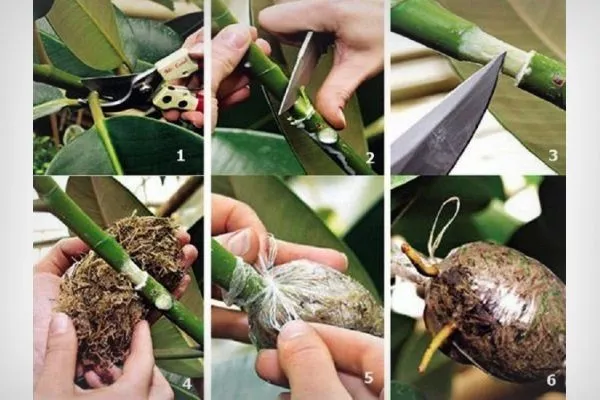
To grow a seedling from an air layer, locate a woody shoot on a branch of the mother plant. Make a circular cut in the bark 20 centimeters from its tip. Cover this area with damp sphagnum moss and wrap it in plastic to block out light. Once the shoot has rooted, trim it and plant it in the ground.
Diseases and pests
The leaves of this plant are thick and dense, making them completely unsuitable as food for sucking insects, which are accustomed to feeding on the sap of softer, more delicate leaves. However, thrips can sometimes attack the plant's flowers. Insecticides such as Aktara or Vertimek are used to control these pests.
Myrtle rust is the biggest problem for this plant. This fungal infection, which spreads rapidly between plants, is controlled with effective fungicides. This disease manifests itself as rusty spots covering the leaves and shoots.
How to spray White Rose:
- The first treatment is carried out in May, before flowering, with 1% Bordeaux mixture, Zineba, and Kulumus.
- The second spraying is carried out after flowering with the same preparations.
- The plant is sprayed for the third time after the first wave of harvest has been fully collected.
Preparing for winter
Insulation should be carried out immediately after autumn pruning. Tropical apple trees are very sensitive to low temperatures, so it's not worth risking them. The first frost will kill them.
- Carry out autumn pruning after harvesting.
- Mulch the tree trunk circle with a layer of at least 5 cm.
- Cover the trunk with a breathable material, avoiding polyethylene.
How to prepare White Rose for winter:
- If the tree is growing in a portable container, move it to a warm, bright, ventilated area.
- When growing crops in open ground, insulate them for the winter:
- Mulch the tree trunk area with wood chips, straw, leaves, or other natural material. The minimum layer thickness is 5 cm.
- Cover the trunk with a protective material, such as burlap. Don't wrap the tree in plastic, as it may rot, as plastic is impermeable to air.
The White Rose's temperature threshold is 0°C. If the temperature drops below this level, the plant stops growing and developing. If the tree is exposed to such conditions for an extended period, there is a high risk of death.
Harvesting and storage
White Rose apples are harvested several times per season if the plant is grown in greenhouse conditions. The fruits are picked ripe so they can be eaten fresh. They are not stored for long periods, as they are too delicate and spoil quickly even in the refrigerator.
The water apple is of no commercial or industrial interest to our gardeners. This exotic plant is planted more out of curiosity—it's exciting to grow an apple tree with fruit that's completely different from ordinary apples.