
The Idared apple tree is an old American variety that has long been popular in the southern regions of Russia. It produces delicious and attractive apples suitable for a wide variety of purposes. It produces good yields, has excellent resistance to disease, and is easy to maintain.
History of the variety's creation
The Idared variety was developed by American breeders in 1935. Jonathan and Wagner apple trees were used to create the new variety. The latter is often used as a pollen donor—a pollinator.
The primary commercial production area for the Idared variety in Russia is the Krasnodar Krai. The variety can also be grown in the North Caucasus and Lower Volga regions.
Description of the tree
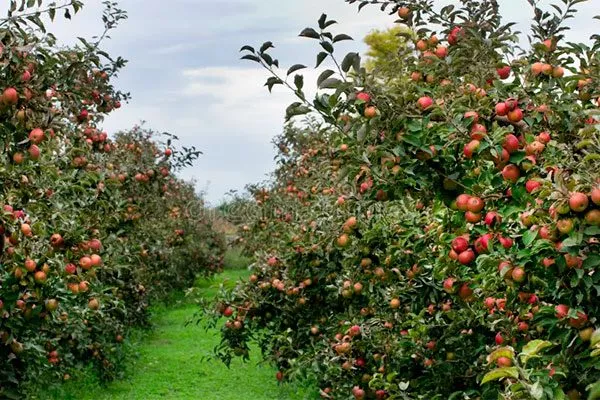
Idared apple trees are quite vigorous. They grow actively for about 10 years. The height of a mature tree depends on the rootstock: on a semi-dwarf rootstock, it's 2.5-3.5 m, while on a vigorous rootstock, it's 5-6 m.
Brief description of the tree:
- Crown - spherical, thickened.
- Branches — skeletal branches depart at an angle of 45°. The bark is smooth, gray-brown in color.
- Fruiting type — mixed. Fruiting occurs along the entire length of the branches.
- Escapes - medium thickness, straight, round in cross-section, grayish-brown, with slight pubescence, with elongated lenticels
- Leaves — dark green, with a glaucous tint, oblong, oval, or elongated-ovate, with a pointed tip. The leaf blade forms an angle of approximately 90° with the shoot. It has serrated edges, is medium in size, and is densely pubescent beneath, with a slightly glossy surface.
- Flowers - pinkish, saucer-shaped.
Description of fruits
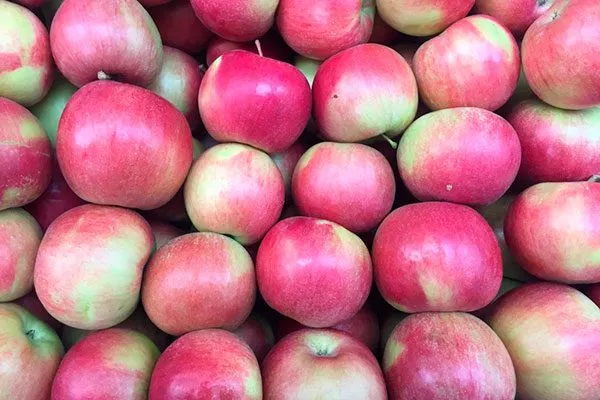
The apple tree produces fairly large, attractive fruits. Idared apples have excellent characteristics, allowing them to be used for a wide variety of purposes.
Brief description of fruits:
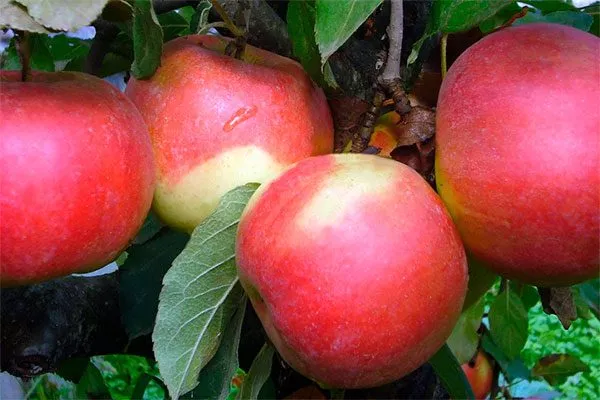
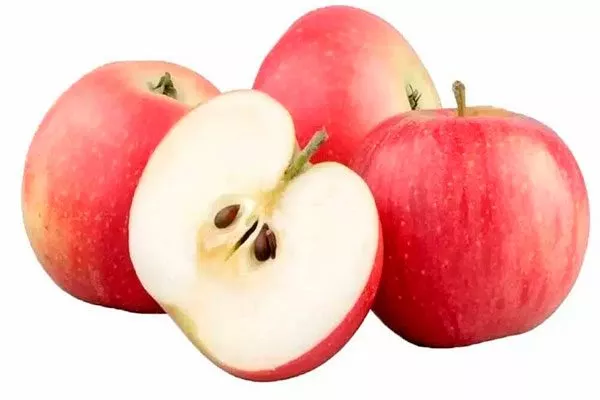
- Colour: light green. The base color is blurred by the cover color - bright crimson or dark carmine. Fruits of pcovered with a blush consisting of thick stripes and strokes.
- Form: Round, slightly flattened. The fruits are slightly conical in the upper part, with blunt ribs.
- Weight: 150-190 g
- Skin: thin and smooth, with a thin layer of waxy coating and large subcutaneous dots.
- Pulp: creamy, juicy, dense when picked, becoming fine-grained and then loose during storage.
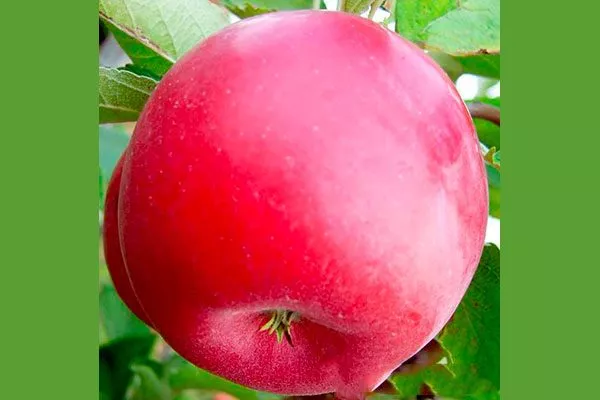
The weight and size of Idared apples may vary depending on their ripening characteristics, climate and weather conditions.
Characteristics
Idared is an old, time-tested variety. Its enduring popularity is based not only on the excellent commercial and flavor qualities of its fruits, but also on its excellent agronomic characteristics.
Ripening time and yield
The Idared apple tree is a late-ripening variety. The apples ripen in the last ten days of September or early October—the exact timing depends on the regional climate.
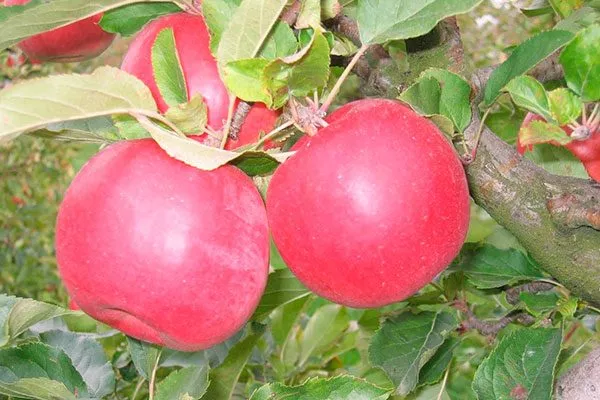
The Idared variety produces high and consistent yields. Average yields are 400-500 centners per hectare. This depends not only on growing conditions and care, but also on the tree's age. A young apple tree produces at least 30 kg of apples, while a mature tree (over 10 years old) produces up to 100 kg.
The marketability of fruits is high - 88-92%, including 10-15% of premium fruits and 40-50% of first grade.
Frost resistance and stability
The Idared variety, developed in the USA, is not designed for severe frosts. Its frost hardiness is around -20°C, so it is planted only in regions with moderately cold winters, as severe frosts can damage the trees.
The Idared apple tree has average disease resistance. It is particularly susceptible to scab and powdery mildew. However, this variety is resistant to brown spot.
Early fruiting and pollinating varieties
The Idared variety is early-bearing. On semi-dwarf rootstocks, harvest occurs 3-4 years after planting, while on vigorous rootstocks, it occurs 5-6 years later.
It is partially self-fertile. To increase yield, it is recommended to plant pollinators—one or more trees. Suitable varieties for pollination include Wagner, Gloucester, Red Delicious, and Jonagold.
The Idared variety itself can be used as a pollinator to increase the yield of apple trees that bloom at the same time as it – in late April-early May.
Taste and application
The flavor is balanced, sweet and sour. The flesh is juicy, with a pleasant, subtle aroma. The fruits have a versatile use. They are eaten fresh, used to make compotes, jams, preserves, marmalades, and other preserves, and are also used for dried fruit.
Chemical composition of fruits:
- Dry matter - 13.5%.
- Sugar - 10.5%.
- Titratable acids - 0.6%.
- Sugar-acid index - 17.2.
- Ascorbic acid - 11.5 mg/100 g.
- P-active substances - 120 mg/100 g.
Pros and cons
The Idared apple tree has both positive and negative aspects. Before planting this variety in your garden, you should familiarize yourself with its full range of advantages and disadvantages.
It's also worth noting that the apples have a slightly sour taste immediately after picking—they need to sit for a while to develop their sweetness. This isn't so much a drawback as it is a characteristic of winter varieties.
Landing
To ensure a good harvest of Idared apples in a few years, it's important to plant the tree correctly. Every detail matters, from the chosen planting site to the nuances of the planting hole.
Selecting a seedling
It's best to purchase seedlings for planting from reputable nurseries that specialize in fruit trees. It's not recommended to buy planting material from the market, as it's easy to buy substandard or diseased seedlings that could introduce dangerous diseases to your plot.
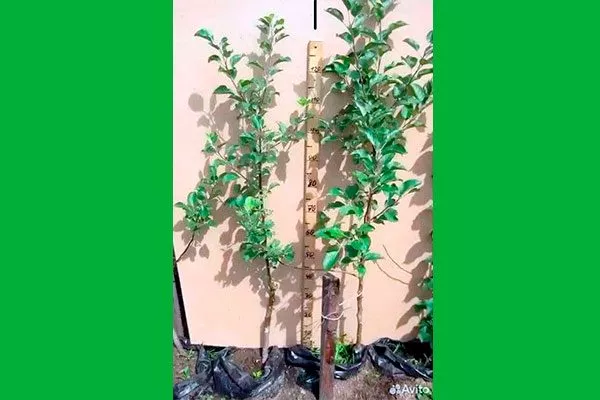
Regardless of where exactly the seedling is purchased, it is important to pay attention to the following points:
- Age. You need 1-2 year old seedlings. Older trees have a harder time taking root.
- Place of origin. Preference should be given to seedlings grown in the climate zone where they will grow in the future.
- Root system. Exposed roots are moist, well-developed, and approximately 30 cm long. It is advisable to keep the root system in a moist substrate mixture or at least wrapped in damp paper/film to retain moisture.
- Bark. It must be smooth, without defects, mechanical damage or signs of disease.
When purchasing seedlings online, from online stores and nurseries, it is recommended to clarify how the seller guarantees the safety of the product during delivery.
Planting dates
The Idared apple tree is grown only in regions with a mild climate. The optimal planting time here is early April or late September to early October.
Selecting a site
For a tree to grow and develop well, it is important to choose a suitable location for it.
Conditions for good growth of the Idared apple tree:
- Groundwater levels are 1.5-2 m. Higher levels pose a risk of root rot, which can lead to tree death.
- Lighting should be good, without shade from taller trees. The distance to tall trees should be at least 5-6 meters. A location on the south or southeast side of the plot is best.
- The Idared variety grows best on chernozems, fertile sandy loam and loamy soils with a neutral or slightly acidic reaction (pH 6.0-7.0).
- The site should be protected from strong gusty winds. It's preferable for the planting site to be sheltered on the north side by buildings or a solid fence.
- Planting sites on gentle elevations, hills, and slopes are best, as they prevent moisture from accumulating after snowmelt and heavy rains. Steep slopes and swampy areas are avoided.
Site preparation
The plot is prepared in the fall. It's important to dig up the soil and adjust its quality: improve its structure, increase fertility, and adjust its acidity.
Features of planting the Idared apple tree:
- The area is cleared of weeds and plant debris, and then dug to the depth of a shovel blade, removing the rhizomes of perennial weeds.
- Organic fertilizers—well-rotted compost or humus—are added during digging at a rate of 10 kg per square meter. If the soil is low in fertility, it is also recommended to add mineral fertilizers, such as nitroammophoska (50 g) and wood ash (500 g per square meter).
- For heavy and clayey soils, add an additional 10 kg of river sand to loosen the soil. For sandy soils, it's recommended to add clay in the same quantities.
- Before digging, it's a good idea to measure the soil's acidity. This can be done using special test strips. If the soil is acidic (below pH 5.5), add slaked lime or dolomite flour—approximately 300 g per square meter. If the soil is alkaline (pH above 7.0), it's recommended to add high-moor peat or pine litter.
Preparing the planting hole
The apple tree plot can be prepared in the fall for spring planting, or several weeks in advance—at least 7-10 days. The soil needs to settle slightly, otherwise the root collar will become deeply embedded, which is unacceptable for a fruit tree—the grafting site could rot and kill the tree.
Features of the planting hole for the Idared apple tree:
- The hole should be large enough to accommodate the seedling's roots without bending. On average, the hole should be 100-120 cm in diameter and 60-80 cm deep.
- If several seedlings are being planted, leave intervals of 2-4 m between adjacent holes.
- Drainage material—expanded clay, crushed stone, broken brick, pebbles, etc.—is placed at the bottom of the hole. Drainage is especially necessary in clay soils and on plots; it allows water to flow away from the roots. The drainage layer should be 15 cm thick.
- Drainage isn't necessary on sandy soils. Instead, water retention is essential, and this is accomplished by adding clay to the bottom of the hole. This will help retain water near the roots and prevent them from drying out.
- The top layer of soil (approximately 20 cm) obtained while digging the hole is set aside for preparing the potting mix. Once the hole is dug, the topsoil is mixed with organic matter—humus or compost—and sand in a ratio of 1:2:1.
- Fill the hole one-third full with the prepared soil mixture. It is recommended to add 2 tablespoons of superphosphate, the same amount of potassium sulfate, 1 liter of wood ash, and 250 ml of dolomite flour (if the soil is acidic). Mix everything thoroughly and let it sit until the soil settles and the fertilizer begins to dissolve.
- At a distance of 10-15 cm from the center of the hole, a support 1.5 m high is driven in.
Do not add rotting, unrotted, debris, grass, or weeds to the planting hole. Glass or broken slate should also not be used as drainage material.
Planting a seedling
It's recommended to plant seedlings in cloudy, windless weather. Avoid direct sunlight. Therefore, you can plant apple trees in the morning or evening.
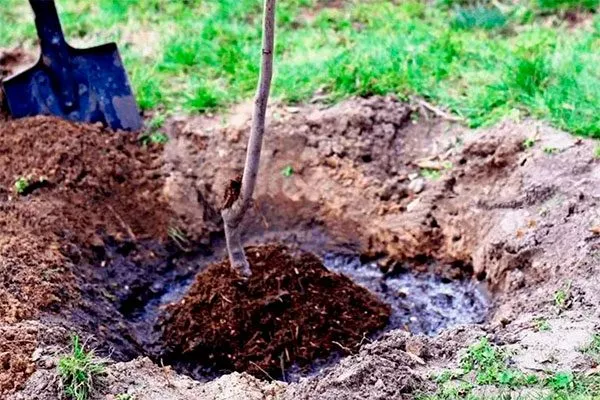
Landing features:
- Before planting, trim the seedling's roots slightly and soak them in water for 24 hours. You can also soak them in a growth stimulant solution to help the seedling take root faster and better.
- The tree is placed in the hole in such a way that its root shoots lie on the slopes of the earthen mound.
- The seedling must be placed in the hole so that its root collar is 3-4 cm above the ground surface after the soil has settled.
- The seedling's roots are covered with fertile soil. The soil is periodically compacted and the seedling is shaken—this helps remove air pockets between the roots.
- The planted apple tree is tied to a support and pruned to a height of 70 cm from the ground. For two-year-old seedlings, the branches are shortened by 1/3.
- A tree trunk circle is formed around the trunk, with a small earthen rim raking around the perimeter of the hole to prevent water from spreading during watering.
- The planted seedling is watered with warm, settled water. The recommended watering rate is 20-30 liters.
- Once the water has been absorbed, the area around the trunk is mulched with peat, humus, straw, tree bark, etc. Mulch prevents rapid evaporation of water and the formation of a hard earth crust, which impedes the flow of oxygen to the roots.
Care
The Idared apple tree is moderately difficult to care for. It requires nothing special, except watering, fertilizing, and pruning. It's important to do everything not only on time, but also regularly.
Watering
For the first two weeks, a planted apple tree doesn't require watering. The tree receives enough moisture from the planting process. After that, water it once a week—20 liters of water per root. A mature tree requires 40-50 liters of water. Water them as the soil dries out, or about once or twice a week in hot weather.
Watering is especially important during periods of active growth and fruiting. The soil should be kept moist, avoiding drying out or becoming overwatered. The best time to water is in the morning. Water should be applied directly to the roots; after watering, the soil should be loosened and mulched.
Fertilizers
Apple trees are fertilized 3-4 times per season. The choice and composition of fertilizers depends on the growing season. In the spring, nitrogen fertilizers are applied to stimulate foliage growth. For example, you can fertilize the tree with ammonium nitrate at a rate of 10-15 g.
During flowering and early fruit ripening, apple trees require phosphorus-potassium fertilizers. Superphosphate and potassium salt can be applied at a rate of 30 g per tree. In autumn, the tree also requires potassium and phosphorus—these elements will help it prepare for winter.
Trimming
In early spring, before the sap begins to flow, sanitary pruning is performed, removing all diseased, dead, broken, frost-damaged, and damaged branches. Crown shaping and thinning are also done in the spring. Every few years, the tree is rejuvenated by removing old branches, stimulating new growth.
Spring pruning aims to thin the crown and remove excess shoots, while fall pruning prepares the tree for winter, including pruning dead and diseased branches. Crown shaping is done in layers, with a layer of 2-3 skeletal branches being formed each year.
Shelter for the winter
It is recommended to cover the Idared apple tree for the winter, especially in regions where there is a risk of temperature drops that are critical for this variety. Mature trees grown in the Idared's favorable growing zone do not require winter insulation, but young apple trees under three years old should be covered for the winter.
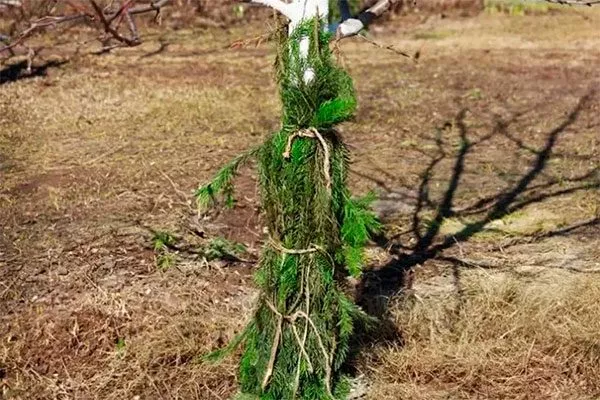
All parts of the tree are covered: the roots are insulated with sawdust, straw, and spruce branches, and the trunk is wrapped in plastic sheets or car tires, secured with wire. The crown of young apple trees is covered with non-woven fabric, spunbond, or agrofibre. These materials are suffocating, allowing air and moisture to pass through. Film should not be used.
Pest and disease control
The variety is most often affected by scab, powdery mildew, rust, and fire blight. The Idared apple tree is regularly sprayed preventatively, for example, with Bordeaux mixture and copper sulfate. When symptoms of disease appear, systemic fungicides such as Aktara, Fundazol, and others are used.
The Idared apple tree can be attacked by aphids, leafhoppers, red spider mites, apple sawflies, and codling moths. Pest control involves using trapping belts and special caterpillar traps.
Trees are usually sprayed with biological products or folk remedies; chemicals are best avoided. In case of widespread attacks, Aktara, Iskra, and Inta-Vir are used.
Harvesting and storage
Apples are harvested in dry weather and stored in cellars or special storage facilities. The optimal temperature is +2 to +5°C, with a humidity of 85%. Under these conditions, Idared apples can be stored for about six months without losing their marketability or flavor.
Reviews
The Idared apple tree is deservedly popular with gardeners in our southern regions and is one of the most popular winter varieties. These long-lasting and delicious apples are in demand, making them popular for commercial cultivation.