
The Aport apple tree is one of the oldest varieties known to gardeners. The first mention of it dates back to 1175. Its enduring popularity stems from its excellent taste and ease of cultivation. Aport has long been recognized as one of the best varieties for both amateur and commercial cultivation.
Who and when developed the Aport variety?
The Aport apple tree was first mentioned in the 12th century. Specifically, during this period, it was grown in Poland, where, according to one theory, it arrived from the Ottoman Empire.
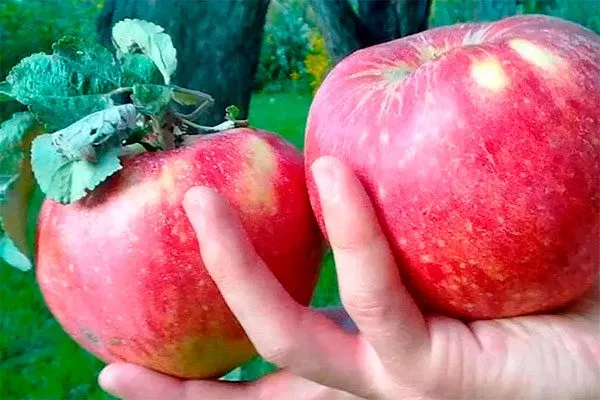
The variety quickly and widely spread throughout Europe, the United States, and Canada. The Aport apple tree appeared in Russia in the 15th century, brought there from the Balkans. In Russia, the variety was named in honor of the tsar—"Aport Alexander."
During the Soviet era, the Aport fruit became a true treasure of the Kazakh Republic and a symbol of its capital, Almaty. It was first cultivated there in the 19th century.
The history of this variety began in Kazakhstan with a few seedlings brought to the area around Verny (today Almaty) in 1865 by gardener Yegor Redko. Endless apple orchards subsequently grew there, and the capital became known as Alma-Ata, which translates as "Apple Grandfather."
Description of the Aport tree
The Aport tree is tall to medium-sized, reaching a height of 5-6 meters. Its crown is robust, broadly rounded, well-branched, but not dense. It reaches 10 meters in diameter. The branches are long and strong, of medium thickness and with a small number of lenticels, extending from the trunk at a fairly steep angle.
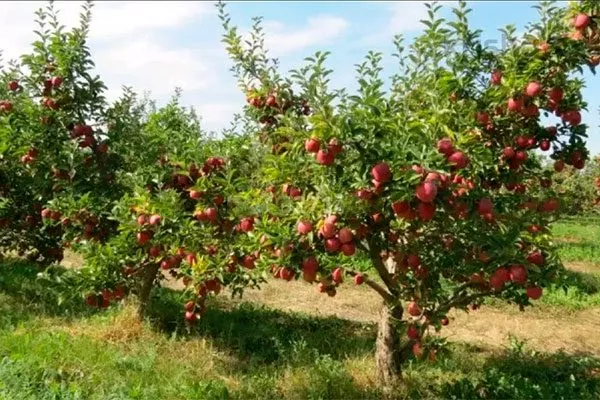
The leaves are rounded, medium-sized, dark green, and flattened to rounded, located at the ends of small shoots. The leaf blades are lightly pubescent. The petioles are 4 cm long.
Description of fruits
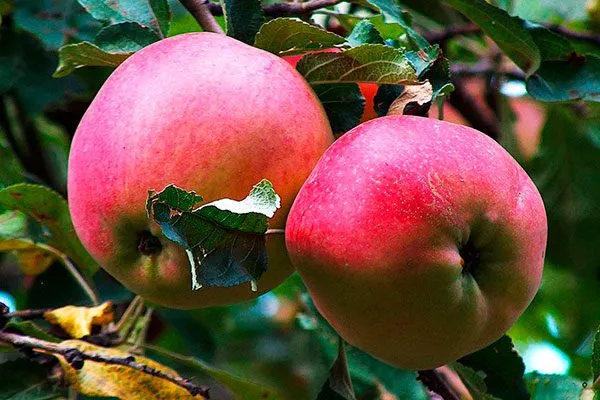
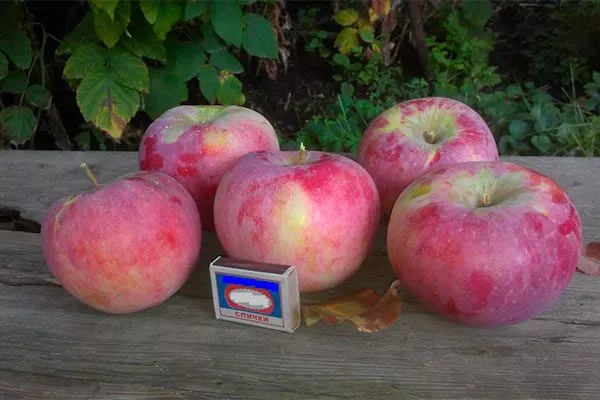
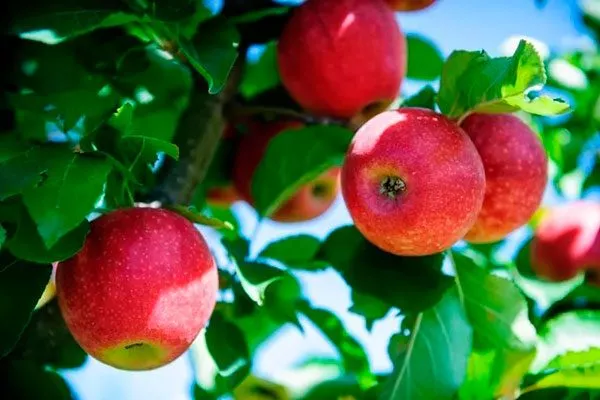
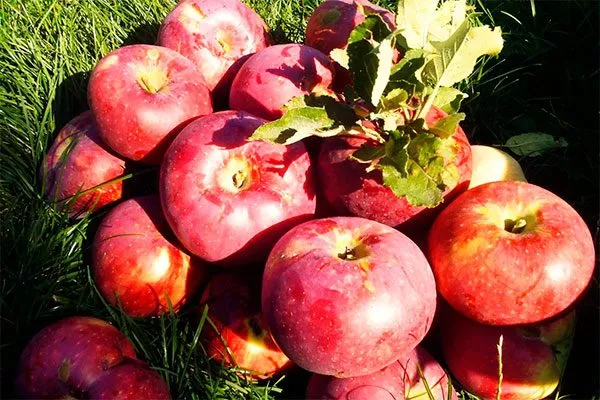
The fruits of the Aport variety are very large and beautiful. Individual specimens can weigh 600 and even 900 grams. The brightness and intensity of the blush covering the apples' sides is largely influenced by weather and climate conditions, as well as the degree of illumination of each fruit.
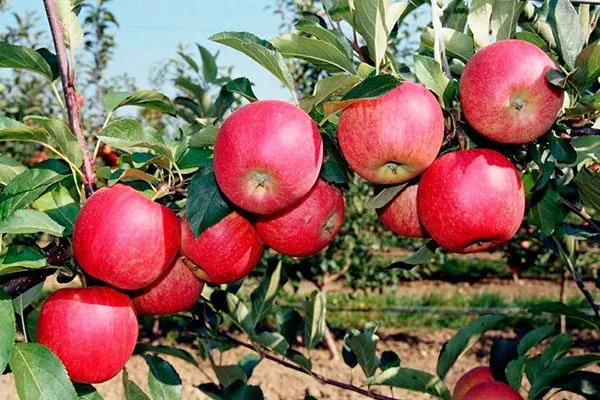
Fruit characteristics:
- Coloring: the base color is yellow-green, the cover color is a rich carmine-red with dark strokes, stripes and spots.
- Form: flattened-conical, slight ribbing is possible.
- Weight: 270-300 g
- Skin: glossy, with a light oily coating, medium density and thickness.
- Pulp: white, fine-grained, with a slight greenish-yellow tint, medium density.
Varieties of the variety
Today, Aport can be considered a cultivar with many "clones." Breeders have developed numerous different varieties of Aport, each with distinct adaptive characteristics, regional distribution, and quality attributes.
Some varieties of the Aport variety:
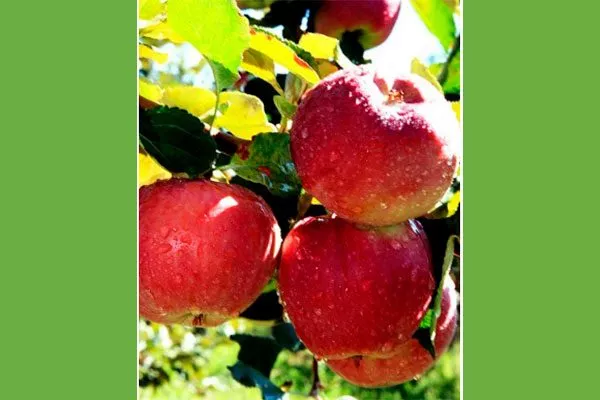
- "Aport Alexander". Its fruit has a more speckled and striped surface, and the flesh is slightly yellower than that of the regular Aport. Gardeners say this variety is more susceptible to scab and fire blight.

- "Fetch blood-red." It's almost identical to its "progenitor." However, its flesh is less acidic, and its flavor has a hint of spice. The fruit has a more even blush, covering almost the entire surface.
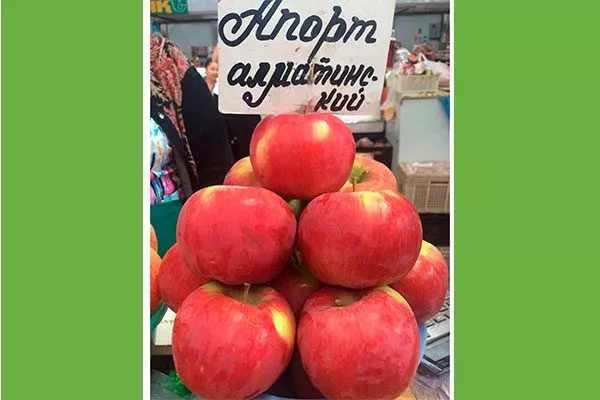
- "Aport Almaty". Similar in appearance to the main variety, it is more demanding in terms of growing conditions. It exhibits its best qualities when grown at an altitude of 1-1.2 km above sea level. Here, they reach a weight of 900 g and gain sweetness. These apples retain their flavor until late spring.
- "Kuban Aport". It was bred in Kuban, and it's here that it demonstrates its best qualities. It differs from the main variety by its earlier ripening time.
Taste and purpose of fruits
Aport apples have a balanced flavor; the flesh is very tender, fine-grained, sweet and tart, with a light aroma and a pleasant wine-like aftertaste. The average tasting score is 4.7 on a 5-point scale.
It's important to note that flavor depends largely on growing conditions. For example, in temperate climates, due to a lack of warmth and sun, the fruit's flavor is not fully developed. Aport apples are rich in vitamins and microelements.
Biochemical composition of fruits, per 100 g of product:
- Vitamin C (ascorbic acid) - 10-12 mg.
- Sugar - 10.4-14.0 g.
- Acids - 0.6-0.8 g.
- P-active substances - 85-120 mg.
- Dry matter - 11-16.55 g.
Aport apples are delicious fresh and processed. They make excellent jams and preserves. The fruit is also used to make juices, fresh juices, compotes, marmalades, candied fruits, and wine.
Characteristics
For an old variety, Aport has more than good characteristics. These, along with the apples' excellent flavor, have contributed to its enduring popularity. The variety does have some characteristics that limit its use, but this is typical of most fruit crops.
Ripening time
The Aport apple tree is an early winter variety. Harvesting maturity occurs around the second ten days of September, depending on the region's climate.
Apples are ready for consumption in October. The consumption period lasts until the end of January and beginning of February.
Productivity
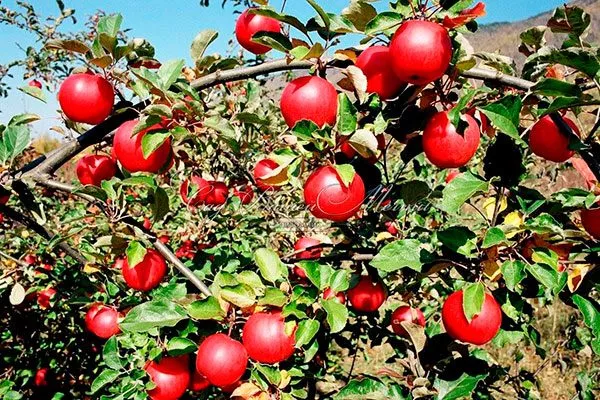
This variety is considered high-yielding. Gardeners can harvest 40 to 80 kg of apples from a single young tree, and up to 150 kg from a mature tree.
Fruiting of a mature Aport apple tree occurs in a four-year cycle:
- After a bountiful harvest - rest.
- The following year, the second year of the cycle, the tree produces a small harvest - up to 40 kg.
- In the third year - 60 kg.
- In the fourth year, a full harvest can be collected from an apple tree - up to 150, and in some cases up to 180 kg of apples.
Frost resistance and growing regions
The Aport variety is easy to grow in the south of the central zone, Crimea, and the North Caucasus. Here, the tree requires no shelter, as it can withstand temperatures down to -22–25°C. This frost resistance isn't sufficient for other regions; the Aport apple tree requires insulation.
In general, the variety prefers a warm climate and is extremely sensitive to sudden temperature changes. In winter, the tree's buds can freeze, after which it takes several years to recover. Therefore, even in the Moscow region, and especially in the Urals and Siberia, growing the Aport variety is not recommended.
Self-fertility
The Aport variety is self-sterile, so without pollinating apple trees, there's no chance of a harvest. To ensure fruiting, plant two to three apple trees of a different variety near the tree.
Suitable pollinators: ‘Shield’, ‘Memory of Esaul’, ‘Prikubanskoye’.
Precocity
This variety is not known for its early fruiting. Fruiting begins 6-8 years after planting. After the first fruiting, the apple tree continues to produce fruit for forty years.
Pros and cons
Even if the Aport apple tree has some shortcomings, they are offset by its clear and numerous advantages. This is confirmed by the centuries-long cultivation history of this remarkable variety.
Landing
To consistently yield a hundredweight to one and a half hundredweight from each Aport apple tree, it's crucial to plant it correctly, taking every detail into account. It's crucial to choose the right site and planting material, and strictly adhere to the planting instructions.
Selecting a seedling
Considering that the Aport apple tree must grow and bear fruit for about a hundred years, it is extremely important to acquire truly high-quality planting material.
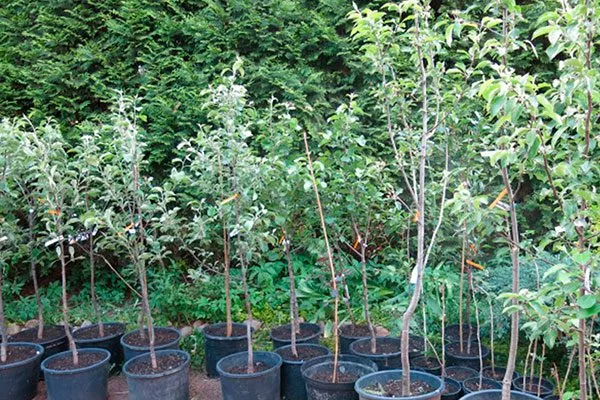
What to look for when choosing a seedling:
- The optimal age is 2-3 years.
- The height of a two-year-old seedling is 1.5-1.7 m, a three-year-old seedling is 1.7-1.9 m.
- Root system – it's best to choose closed-root plants (such as seedlings in containers). If the roots are exposed, they should be well-developed, at least 20 cm long, and free of dry or rotted areas.
- The bark is smooth, without damage, signs of disease or other defects.
The seedling should have 2-3 lateral shoots. It's best to purchase planting material from a professional nursery, as non-varietal seedlings can be found on the market.
Selecting a site
For the Aport apple tree to grow well and bear fruit, it needs certain growing conditions.
Site requirements:
- Apple trees require 6-8 hours of sunlight per day. They are best planted on the south or southwest side of the plot.
- The Aport apple tree's location should be free from gusty northerly winds. It's recommended to plant the tree downwind of buildings or fences. It's also important to keep in mind that young trees will require some shade initially.
- The maximum groundwater level is 2 meters above the ground surface. If the level is higher, a drainage system must be installed or a different planting location selected.
- The minimum distance to a residential building is 4-5 m, to the boundaries of the site - 2-3 m, to trees - 3-4 m.
Soil preparation
The Aport apple tree requires fertile, light, loose soil rich in organic matter. The soil should be neutral or slightly acidic (pH 6.5–7.0). During soil preparation, it's important to improve its quality if it's not good enough for the Aport variety.
Features of site preparation:
- The area allocated for planting the apple tree is cleared of plant debris and weeds, after which it is dug up to the depth of a spade.
- Organic matter is added during digging to improve soil fertility. For example, rotted manure, compost, or humus can be added at a rate of 10 kg per square meter.
- If the soil is heavy clay, add 10 liters of coarse river sand per 1 square meter. Clay should be added to sandy soil in the same proportion.
- If the soil is poor, in addition to organic matter, it is recommended to add mineral fertilizers such as superphosphate and potassium sulfate. It is important to adhere to the recommended dosage when applying, as overdosing can kill beneficial bacteria.
- Before digging, it's recommended to measure the soil's acidity. This can be done using special litmus strips, which can be purchased at a local farm supply store. If the soil is excessively acidic, add slaked lime, dolomite flour, or wood ash—approximately 300 g per square meter.
Preparing the planting hole
Prepare the planting hole in advance. At least 2-3 weeks before planting, but preferably 2-3 months. For spring planting, prepare the hole in the fall.
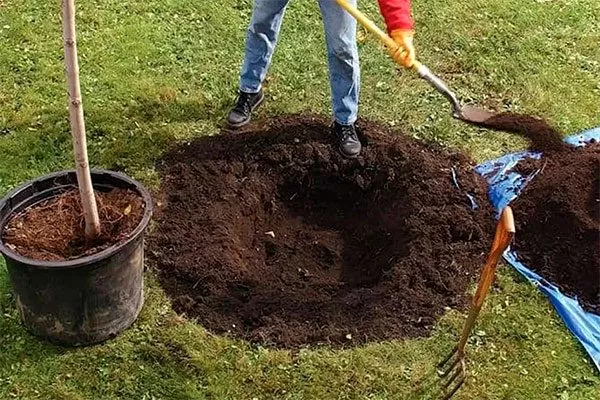
Features of preparing a planting hole for the Aport apple tree:
- The size of the hole depends on the size of the root system or the root ball (if planting a seedling with closed roots). On average, the hole is 60-80 cm deep and about 1 m wide.
- If several seedlings are being planted, an interval of 5-6 m is maintained between adjacent holes.
- The top fertile layer obtained by digging a hole is set aside separately from the rest of the soil.
- A drainage layer of expanded clay, broken brick, or crushed stone is placed at the bottom of the pit. The drainage layer should be 10-15 cm thick.
- To fill the hole, prepare a nutritious soil mixture. The topsoil is mixed with humus or compost (1:1), and superphosphate (100 g) and potassium sulfate (30-50 g) are added.
- Fill the hole one-third full with the prepared soil mixture, and add soil on top to prevent the seedling's roots from getting burned when in contact with the fertilizer.
- A support 1.5-2 m high is driven into the hole, 15 cm from the center.
Planting dates
The Aport apple tree is planted in spring or fall. The choice depends on the regional climate. In the south, fall planting is preferred, while in regions with winters that are critical for the Aport variety, spring planting is recommended.
Approximate planting times:
- In the spring — from the first ten days of April to the end of May. It's important that the soil warms up to a depth of about 20 cm by planting time, and that sap flow hasn't yet begun.
- In the fall — from the third ten days of September to November. It's important to plant at least a month before the onset of cold weather.
Planting a seedling
It's best to plant apple trees in the morning, evening, or on a cloudy day, as the scorching sun can damage the seedling's delicate leaves. If the weather is sunny, it's recommended to provide shade while the tree is establishing itself. In summer, it's recommended to plant rooted seedlings after a prolonged rain.
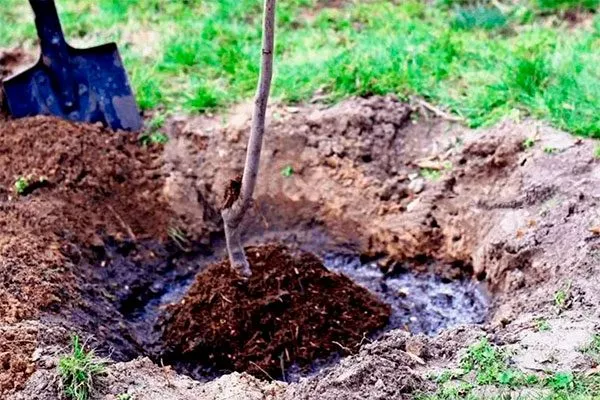
Features of planting the Aport apple tree:
- The day before planting, soak the seedling's roots in water. Immediately before planting, it is also recommended to soak them in a solution of Kornevin or another growth stimulant for a couple of hours.
- The seedling is placed in the hole, spreading its roots along the slopes of the earthen mound. It's best to plant the tree with two people: one person holds it while the other covers the roots with soil. The soil is periodically compacted to remove any air pockets that may form between the roots.
- After planting, the root collar should be 8-10 cm above ground level. Over time, the tree will settle by 3-4 cm, but the grafting site will still be above ground, which will prevent rot.
- A tree trunk is formed around the planted tree, with a small earthen ridge raked around the perimeter to prevent water from spreading during watering.
- The apple tree is watered with warm, settled water. 20 liters is sufficient. Once the water has been absorbed, the area around the tree trunk is mulched with organic matter, such as a mixture of peat and humus.
Care
The Aport apple tree's harvest directly depends on the quality of care. To ensure the tree remains healthy and bears fruit well, it must be regularly watered and fertilized, along with all other necessary agricultural practices.
Watering
The Aport apple tree requires regular watering, but avoid overwatering or waterlogged soil. This can lead to root rot and fungal diseases.
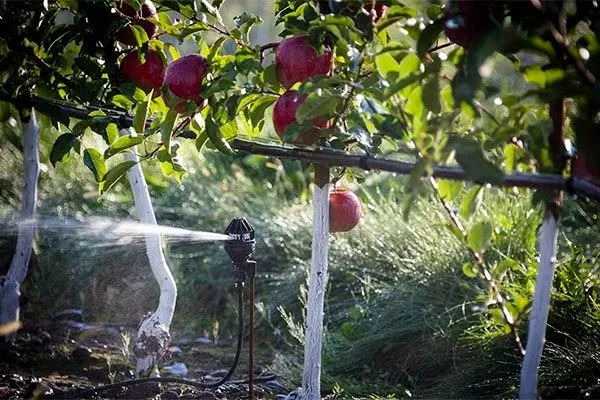
Features of watering the Aport apple tree:
- Young trees (up to 3 years old) are watered 2-3 times a week, and even more frequently in hot weather. The recommended watering rate per tree is 10-15 liters.
- Trees over three years old are watered less frequently, but in hot weather at least once or twice a week. Watering frequency depends on the weather and soil conditions.
- Fruit-bearing trees need to be watered especially during flowering and fruit formation. The recommended watering rate is 40-50 liters per tree.
- If the apple tree grows on soil that retains moisture well, it can be watered less often than trees growing on sandy and light soils.
- It's best to water apple trees in the morning or evening. At these times, moisture evaporates less rapidly. Furthermore, the risk of leaf burn, which occurs when water splashes on them during the day when the sun is too strong, is eliminated.
- Watering apple trees with cold water is not recommended, as it can stress them. It also risks promoting fungal diseases and stunted growth.
Loosening
Loosening is done several times per season; it improves aeration, kills weeds, and helps prevent diseases. Loosening the soil is essential in early spring, several times during the summer, after harvest, and a couple of weeks before frost.
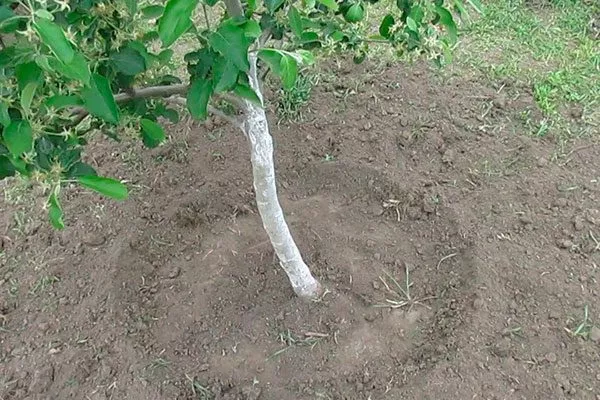
The soil under young apple trees is loosened to a depth of 5-7 cm to avoid damaging the surface roots. Under mature trees, the soil is loosened to a depth of 10-15 cm. After loosening, the soil is mulched with straw, sawdust, or compost.
Top dressing
The Aport apple tree is fertilized 3-4 times per season. It is recommended to alternate between organic and mineral fertilizers. Fertilizing is best done during watering.
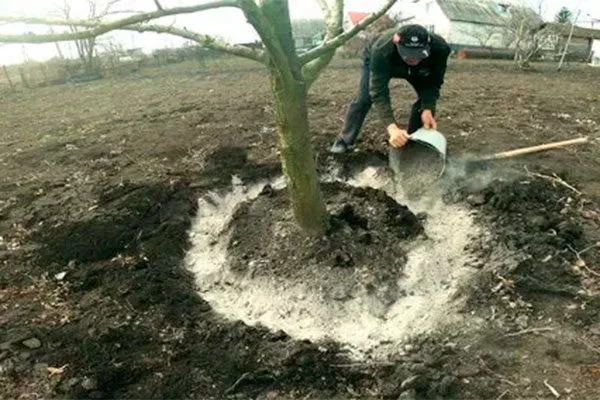
Approximate feeding regime:
- In spring, trees need nitrogen, so urea is added. If the soil is moist, you can simply scatter it around the trunk. Alternatively, you can apply the fertilizer as a solution: dilute 30-50 g of nitrogen-containing fertilizer in 10 liters of water.
- Before flowering, add 5 liters of liquid manure, 2 liters of liquid chicken manure, or mineral fertilizers - 100 g of superphosphate and 60 g of potassium sulfate.
- In summer, phosphorus and potassium are the main nutrients needed. During this period, apply, for example, 50 g of nitrophoska and 5 g of granulated sodium humate, dissolved in 10 liters of water.
- During the fruit ripening period, any nitrogen-free mineral fertilizer can be applied: 30 g of double superphosphate or 20 g of potassium sulfate per 10 liters of water. It is also recommended to feed the tree with wood ash—300 ml per apple tree.
After harvesting, the tree is fertilized with superphosphate and potassium sulfate—30 g of each fertilizer, diluted in 10 liters of water. Stop fertilizing two to three weeks before the first frost.
Trimming
The Aport apple tree requires sanitary, formative, and, as it ages, rejuvenating pruning.
Features of pruning:
- Sanitary pruning involves removing branches growing inward from the crown, old, diseased, broken, frozen and damaged ones.
- Formative pruning creates a specific crown shape and sculpts the tree's skeletal structure, making it resistant to stress. Branches that cross or rub against each other are also removed.
- Rejuvenation pruning is performed on mature trees and involves thinning and shortening branches to improve conditions for the growth of young branches.
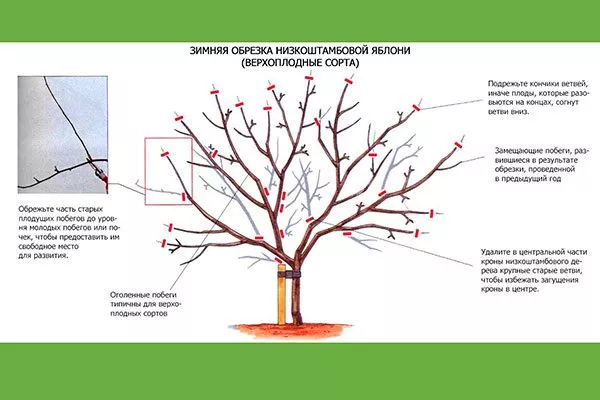
The first pruning is done in the second or third year after planting the Aport apple tree. It is performed in the spring, before buds appear and sap begins to flow.
Shelter for the winter
The Aport apple tree requires winter protection due to its limited frost resistance. It is recommended to mulch the area around the tree trunk with compost or manure. Sawdust and hay are not recommended, as they may harbor rodents that can damage the tree's bark.
The apple tree's root collar is wrapped in a breathable material, such as agrofibre or even just burlap. If the tree is young, it's recommended to insulate its entire trunk by wrapping it in a breathable covering material and securing it with twine.
It's best to use white insulation for the trunk, as it reflects sunlight well. Avoid using film or roofing felt, as they don't allow air to pass through and can cause bark rot.
Pest and disease control
The Aport apple tree has good immunity, but under unfavorable circumstances it can be affected by various diseases, most often fungal.
The Aport variety can be affected by:
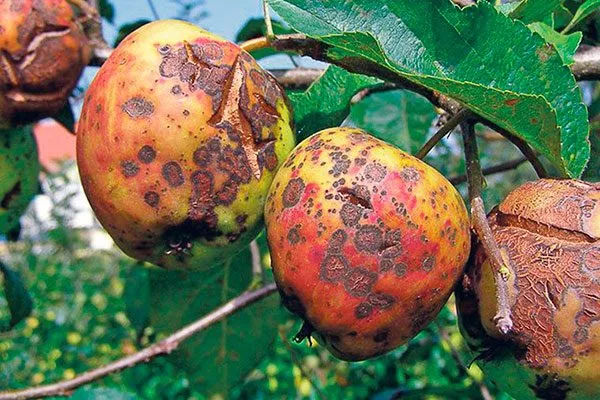
- Scab. As a preventative measure, treat the tree with urea (700 g diluted in 10 liters of water) or copper sulfate (50 g per 10 liters of water). Alternatively, spray the apple tree with a wood ash solution (250 ml poured into 10 liters of boiling water).
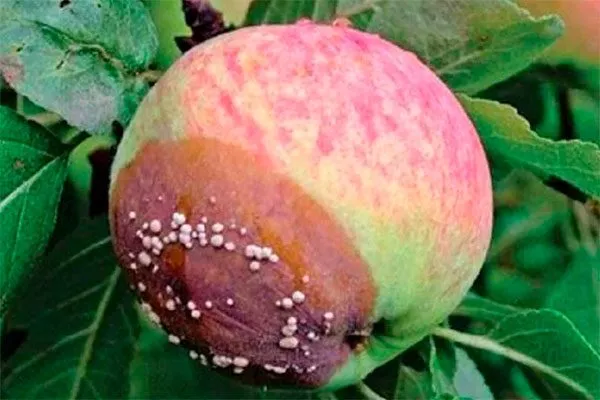
- MoniliosisAnother name for this disease is fruit rot. To combat this disease, use colloidal sulfur—100 g diluted in 10 liters of water. You can also use a malathion suspension—50 g per 10 liters of water.
- Tinder fungus. Before it hardens, it should be cut off with a knife; when it hardens, chop it off with an axe. The damaged area should be treated with a copper sulfate solution—100 grams diluted in 10 liters of water—and then the cut should be coated with oil paint.
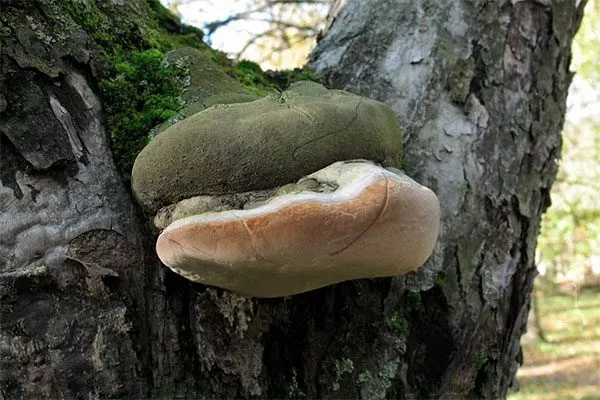
The Aport apple tree is susceptible to various pests, most commonly green aphids and codling moths. Insecticides are used to control them, but no later than two weeks before harvest. Various folk remedies and biological preparations, such as Fitoverm, are also used.
Harvesting and storage
Apples are harvested only in dry weather. When picking, be careful not to remove the stems or rub off the natural waxy coating. Fruits are picked from the lower branches first, then from the upper ones, to avoid damaging them. The harvested apples are carefully placed in boxes, sprinkled with sawdust.
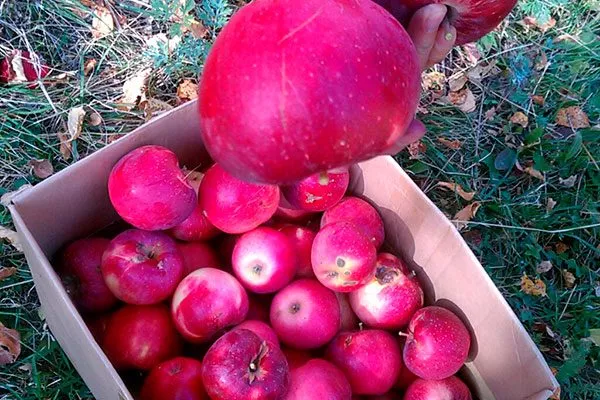
Aport apples are stored in a cool room at a temperature of 0 to +4°C. Optimal humidity is 90–95%. The maximum shelf life of the fruit is six months. The longer the apples are stored, the worse their flavor and aroma become. Therefore, the optimal shelf life is up to three months.
Reviews
The Aport apple tree is a true classic and a worthy choice for any garden. Unfortunately, the cultivation of this remarkable variety is limited by its frost resistance. However, gardeners living in regions with mild and warm winters can fully enjoy all the delights of this unique variety.