
Aphrodite is a winter-hardy and high-yielding apple variety, ideal for growing even in colder regions of the country. The tree is resistant to scab and other diseases and requires virtually no winter shelter. The fruits are large, juicy, with a pleasant sweet flavor, store well, and are suitable for both fresh eating and processing.
Origin
Breeding work in our country began in the 1920s and 1930s, but it only reached widespread use in the mid-20th century. The main goal of researchers was to create varieties resistant to common fungal diseases, particularly scab, one of the most dangerous infections.
In the 1970s, the All-Russian Research Institute of Fruit Crop Breeding bred seedling number 814, which carried the Vf gene, providing resistance to scab.
In 1981, using open pollination, breeders Z. M. Serova, V. V. Zhdanov, E. A. Dolmatov, and E. N. Sedov developed a new variety, named Aphrodite, based on this variety. It is currently undergoing testing and has not yet been included in the State Register.
The appearance of the tree
The plant is characterized by vigorous growth and, when naturally cultivated, can reach 8-10 m. However, in gardens, its height is usually limited to 4-5 m through pruning, which facilitates care and harvesting.
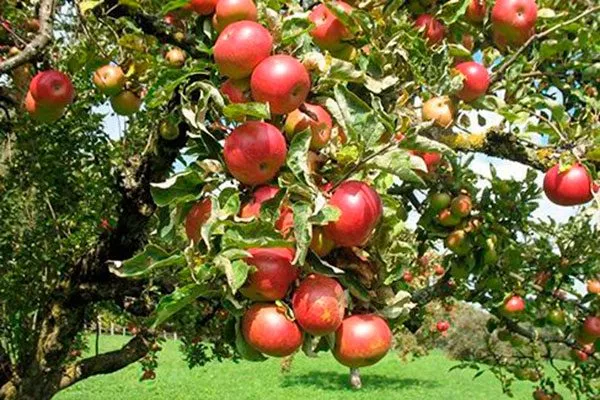
Distinctive features:
- Crown – medium density, round or broadly oval.
- Escapes – Long, arched leaves extend from the trunk at a right angle. They are covered with smooth, green or greenish-brown, shiny bark, which may be slightly pubescent in places. With age, the bark darkens, cracks, and partially peels off. Fruiting occurs on simple and compound rings.
- Leaves - Medium-sized, oval or ovoid, dark green with a possible slight yellow tint. The leaf surface is matte, leathery, and dense, with pronounced corrugations and wrinkles.
The upper surface is sparsely pubescent, while the underside is more prominently pubescent, but not excessively so. The venation is coarse, and the leaf margin is serrated, with a characteristically elongated and curled tip. - Root system – well-branched, with a taproot, deep and securely anchoring the tree in the soil, making it resistant to strong gusts of wind.
Description of fruits
The apples are medium-sized – only a few specimens reach a weight of 150-160 g, while the bulk of the crop weighs about 115-130 g.
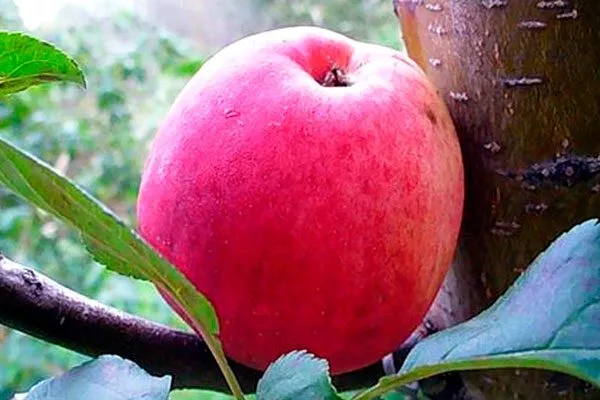
Other characteristic qualities:
- form - round, slightly flattened, sometimes with slight asymmetry;
- ribbing – weakly expressed, often almost unnoticeable;
- skin – dense, but not rough - cracks easily when pressed, at the same time smooth and shiny, with a thin, slightly rubbed-off oily coating;
- coloring – in ripe fruits it is light green-yellow, but almost the entire surface (up to 85-90%) is covered with a bright blush: reddish-crimson, ruby or scarlet, with a blurred-lined pattern;
- subcutaneous points – light gray, clearly visible.
Chemical composition of fruits:
- P-active substances (catechins) – 368 mg;
- Vitamin C (ascorbic acid) – 6 mg;
- total sugar content – 12.5%;
- pectins – 9.2%;
- titratable acids – 0.43%.
The flesh is white, juicy, crisp, fine-grained, dense, yet quite fragile. Delicate pinkish veins may appear when ripe.
Characteristics of the apple tree
Aphrodite, bred by domestic breeders, has gained popularity not only in Russia but also abroad. Gardeners are drawn to this variety for its many positive qualities.
Taste and uses
The apples are sweet and sour. On a professional tasting scale, they received a 4.4 out of 5 possible points for their harmonious taste and appearance, with a pleasant dessert nuance. Thanks to the pleasant balance of acids and sugars, the fruit is excellent for both fresh consumption and cooking.
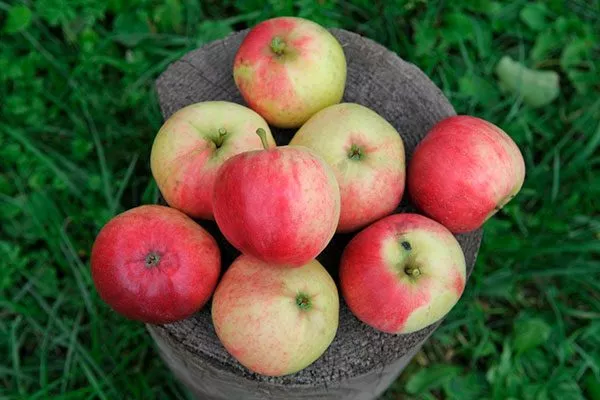
The fruits are versatile: they can be used to make aromatic compotes, jams, preserves, and marmalades, as well as juices, dried fruits, and apple chips. They are also great baked—remaining juicy and delicious—and are also perfect for filling pies and strudels.
Pollination
This variety is self-sterile and requires pollinators. For full fruiting, it requires the presence of other apple varieties with similar flowering times. They should be planted no more than 10 meters apart.
Ripening time, fruiting and productivity
This variety is characterized by early maturity and stable yield, regardless of seasonal weather conditions. The tree produces its first apples as early as the third year after planting. It is an early winter variety: fruit is harvested between September 15 and 20.
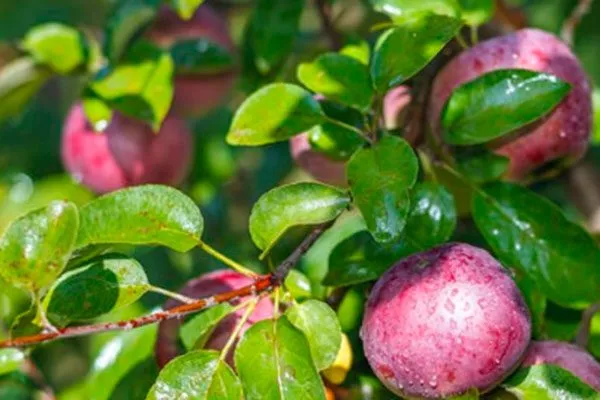
Aphrodite is considered a high-yielding variety, although its fruit production is inferior to recognized leaders like Antonovka. However, this apple tree is noted for its rapid productivity growth.
By the age of 8-10, a single tree can consistently produce up to 150-160 kg of fragrant and juicy apples without much care. In some cases, yields can reach as high as 225 kg per plant—a result recorded in the Voronezh Region.
Winter hardiness, immunity and growing regions
This variety exhibits high frost resistance and tolerates harsh winters well. However, prolonged exposure to temperatures below -37 to -43°C (more than 2-3 weeks in a row) can cause serious damage to the tree.
Furthermore, the crop is sensitive to sudden temperature fluctuations, especially alternating periods of severe frost and thaw. Despite this, with proper care, it can be successfully grown not only in the central part of the country but also in colder regions.
Due to its resilience and undemanding nature regarding soil composition, Aphrodite can often be found in the following regions:
- Central Russia;
- Volga region;
- Moscow region;
- Ural;
- northern regions of the Russian Federation;
- Bashkiria;
- Ukraine.
The plant exhibits moderate resistance to diseases and pests, including normal resistance to scab. To minimize the risk of infection, it is important to follow basic care guidelines.
Subspecies and rootstocks
Aphrodite is primarily grown on vegetative rootstock, although dwarf and semi-dwarf varieties are also used. On these rootstocks, trees grow somewhat shorter—usually 4-6 m—but their winter hardiness and resistance to fungal diseases are reduced.
Planting an apple tree
Aphrodite can be planted in both spring and fall. Fall planting is best done after the leaves have fallen—around late September or early October.
In spring, the optimal time is when the threat of recurrent frosts has completely passed, but the buds have not yet blossomed and the sap flow in the trunks has not begun, that is, from about the end of March to mid-April.
Basic conditions:
- The apple tree prefers open, well-lit areas, but it is important that the place is protected from drafts that can damage the young trunk and leaves.
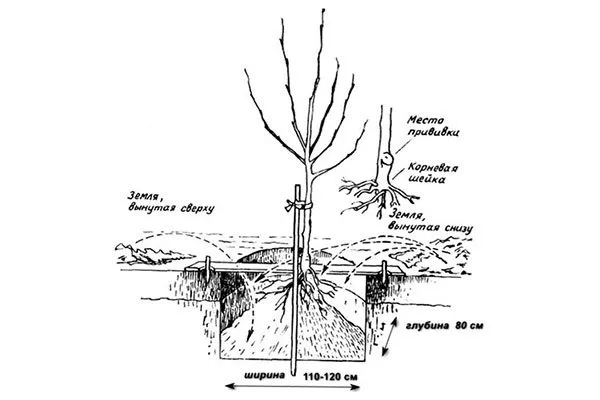
Do not place the tree where the groundwater level is closer than 2-2.5 m, or near open water bodies, wells, swampy lowlands, or floodplains where meltwater accumulates in the spring. - Prepare the planting hole in advance—3-4 weeks before planting, or even better, in the fall or early spring. The hole should be approximately 80-90 cm deep and have vertical walls.
Place a fertile topsoil layer mixed with fertilizer on the bottom, then add drainage material—crushed brick, gravel, vermiculite, or nut shells. Add 30-40 liters of water and let it settle and become moist. - When planting, immediately dig in a support stake for tying the tree. If there are two, either side can be used; if there is only one, the north side is best. The supports can be removed only after 3-4 years of fruiting.
- Place the apple tree so that the root collar is 5-8 cm above the ground, otherwise the tree may root too high, which will negatively affect the properties of the rootstock.
- Before planting, inspect the roots, remove any dry or damaged ones, straighten them, and place them on a drainage mound. Then carefully cover the roots with soil, compacting the root ball with your hands but without applying too much pressure.
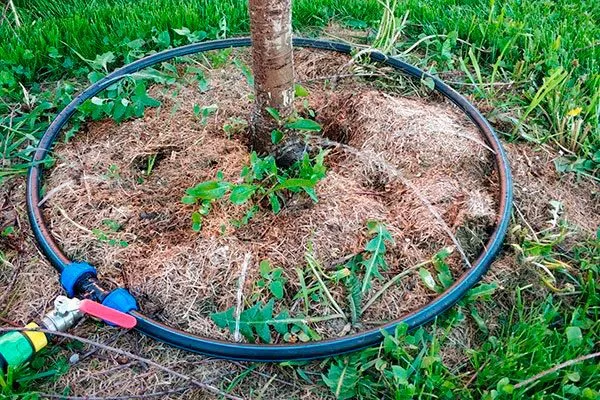
After planting, water the surface with 40-50 liters of water and mulch with humus, chopped grass, manure or other suitable material to retain moisture.
Care instructions
To ensure full growth and a good harvest, apple trees require care throughout their entire life cycle. Key agricultural practices include:
- Watering. Water the plant infrequently, but if there has been no rain for more than 10 days, water the tree twice a day (morning and evening), using 30-50 liters of water. Young seedlings should be watered approximately every two weeks during the first year until fruiting begins; after that, watering is not necessary.

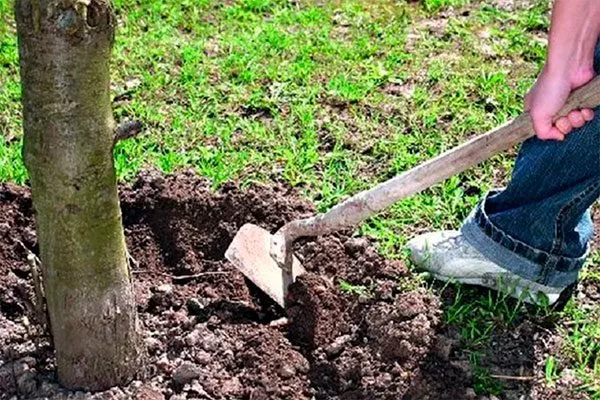
- Soil care. To ensure a bountiful harvest, maintain your tree regularly. Regularly loosen and weed the soil around the trunk. Twice a year, hill up the area around the trunk, removing weeds, root suckers, and other plant shoots.
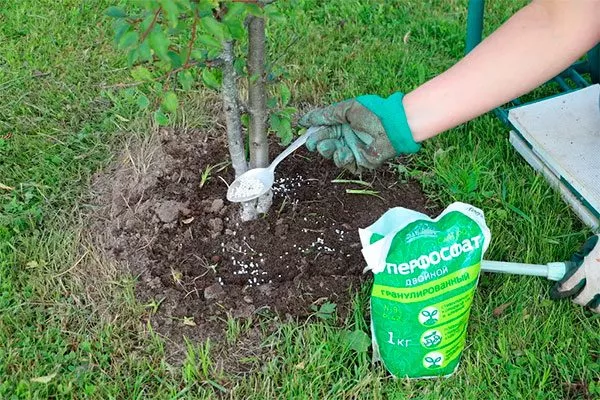
- Top dressing. There's a standard fertilization schedule for fruit trees. Apply in the spring (March-April), early summer, fall (late August-September), and after harvest.
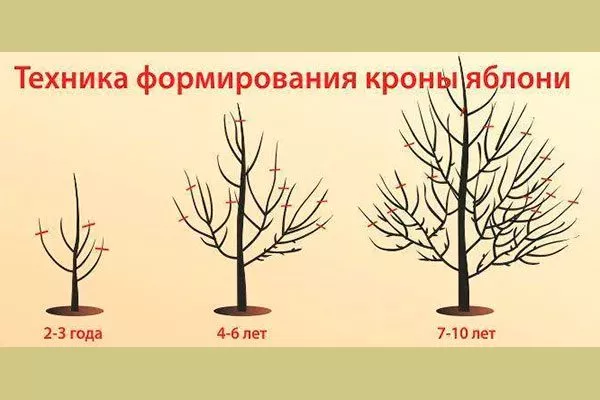
For fertilizing, use organic matter—manure, bone meal, bird droppings, compost—as well as mineral supplements containing phosphorus and potassium. Be sure to consider the age and size of the tree. - Pruning and crown shaping. The Aphrodite apple tree is not prone to excessive thickening, so pruning is not very difficult.
When growing from seed, form tiered scaffold branches in the first year, spacing them out sufficiently. Subsequently, maintain the shape by pruning shoots and the central basal shoot.
Start rejuvenating your tree when it's 15-18 years old, removing 2-3 old branches to stimulate new growth. Prune away dead, diseased, and damaged branches twice a year.
Despite good immunity, with improper care or unfavorable conditions the crop can be exposed to various problems:
| Disease/Pest | Symptoms | Methods of struggle |
| Scab | Olive-brown spots on leaves and fruits, cracks in the skin of apples. | Spraying with Bordeaux mixture (1%) in early spring and after flowering. |
| Powdery mildew | White powdery coating on leaves, shoots and ovaries. | Treatment with fungicides (Topaz, Skor), pruning of affected areas. |
| Fruit rot | Brown spots on fruits, rot with grey spore pads. | Removing infected specimens, using Homa or Bordeaux mixture. |
| Apple aphid | Curling and yellowing of leaves, sticky coating, weakening of shoots. | Use of tobacco infusion, ash or insecticides (Iskra, Actellik). |
| Medyanitsa (codling moth) | Damaged ovaries and fruits, worm bites, unripe apples falling off. | Setting up traps, spraying with Lepidocide or Fitoverm during the budding phase. |
| Rodents (in winter) | Damage to the bark and cambium at the base of the trunk. | Tying the trunk with burlap, spruce branches, treating with solid oil, sawdust with kerosene. |
Collection and storage
Pick apples in mid- to late September. Do this in dry weather to ensure the fruit is clean and undamaged. Carefully remove them from the branches, stems included.
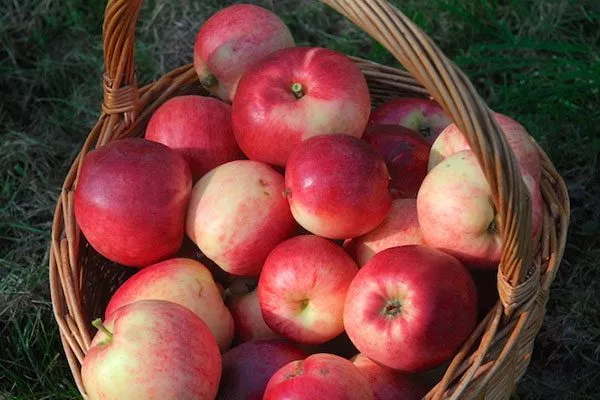
Store the harvest in a cool, well-ventilated area with a temperature of approximately 0-4°C and a relative humidity of 85-90%. Under these conditions, they will remain fresh for up to 3 months. However, if you create optimal conditions, the shelf life can be extended by approximately 1-2 weeks.
Pros and cons
Reviews
Aphrodite combines reliability and ease of care with excellent fruit, making it an excellent choice for gardeners. The tree bears fruit reliably, demonstrating good frost and disease resistance. It thrives in a variety of climates and delivers a high-quality harvest even with minimal attention.