
"Winter Pomegranate" is a relatively new dwarf variety that has already proven itself to be a success. It will save space in your garden, provide a bountiful harvest, and delight you with its snow-white spring blooms. A description of the variety, planting and care tips, and much more useful information are below.
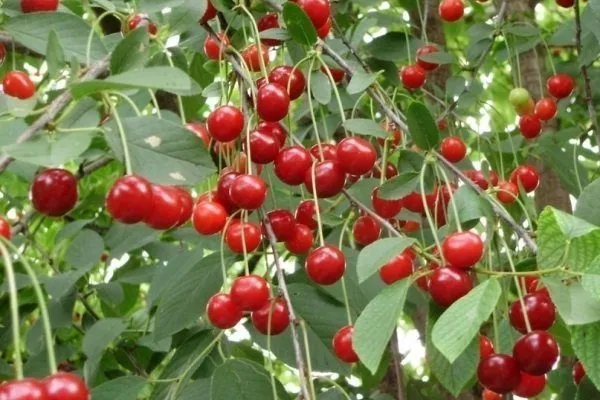
Winter Pomegranate variety
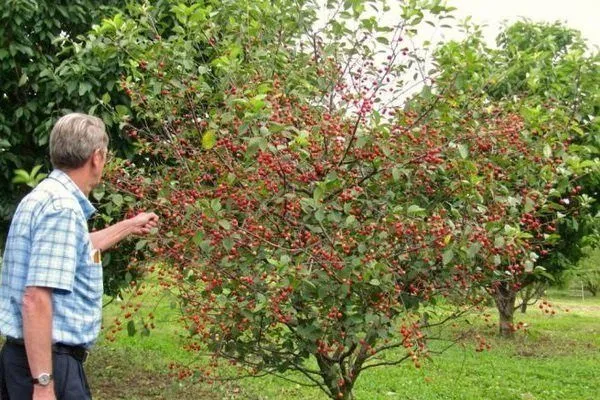
"Winter pomegranate" stands out among dwarf trees for its good yield
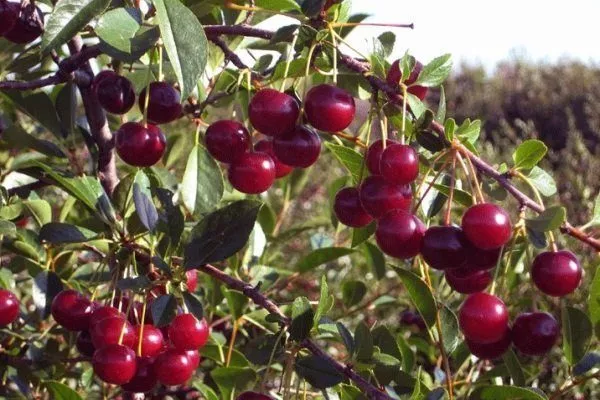
Winter Pomegranate berries finally ripen by mid-August
Description of the Winter Garnet cherry
This variety is the result of breeding sand and steppe "Canadian" cherries. These two varieties are characterized by their undemanding soil conditions and tolerance to temperature fluctuations. "Winter Garnet" inherited all these qualities.
Those taking their first steps in gardening should pay attention to this variety. It will forgive minor gardening mistakes and will not leave you without a harvest.
Tree
Cherry is a low-growing bush with upright shoots. It reaches a height of no more than 2 m in highly fertile soils, while in less fertile soils, its height ranges from 150 cm to 180 cm. This short stature significantly facilitates tree care and makes harvesting convenient.
The optimal climate for growing cherries is sharply continental, meaning regions with harsh winters and hot summers. Uncovered, cherries can withstand temperatures down to -45°C, but such extreme temperatures still negatively impact yield. In cold, low-snow winters, it's advisable to insulate the trunk.
This variety is considered an ornamental. Cherry blossom lovers will not regret planting it in their garden. In May, numerous delicate white-pink flowers bloom.
The "Grenade" doesn't require pollinators to set fruit, as the plant does this perfectly well on its own, being self-fertile. Interestingly, 25-40% of fruit set even without bee assistance, but this figure is also influenced by weather and tree care.
The first small fruits appear in the third year after planting. However, patience is required – full harvests begin in the fifth to seventh year. The yield per tree is 10 kg.
Fruit
The fruits ripen in the second half of summer—by the end of July or the beginning of August. Ripe fruits hold well on the branches for a long time, and can hang until October. They are small, weighing no more than 4 g each. The color of the fruits changes as they ripen, from ruby to a deep, rich burgundy. Ripe fruits are almost black. The pit is very small. The flesh is sweet with a slight tartness, without astringency. It's best not to rush harvesting. Unripe fruits are very tart, so they should be picked when the coloring darkens.
Advantages and disadvantages
The advantages include:
- small size of the tree;
- self-fertility;
- undemanding in care;
- frost and drought resistance;
- good yield;
- high resistance to diseases and pests;
- excellent taste;
- no berry shedding.
Landing features
Experts recommend planting all dwarf varieties in the spring. It's best to plant the tree in a sunny location, away from shade from buildings and tall trees. It's not recommended to plant them near conifers, as this can increase the risk of infection.
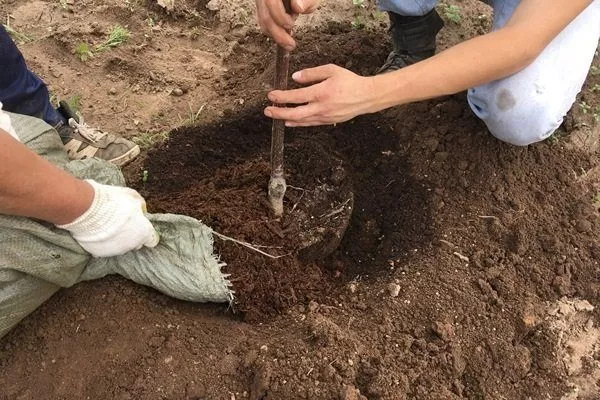
Although the "Winter Pomegranate" isn't picky about soil, it thrives in loose, well-drained, and breathable soil. These soil types include loamy and sandy loam, which require fertilization, or clay soils with added sand, such as chernozem.
- ✓ The optimal soil pH should be in the range of 6.0-6.5 to ensure better absorption of nutrients.
- ✓ The depth of groundwater should not exceed 1.5 m to prevent rotting of the root system.
Preparation
The best planting material is a one- or two-year-old seedling. While the plant is young, it easily adapts to the region's climate and takes root more quickly.
The root system is carefully inspected before planting. Broken branches and dry, rotten roots are trimmed with pruning shears. The plant is checked for pests. If any are present, it is treated with suitable insecticides. Before planting, the root system is soaked in water or a growth stimulant solution for 10 hours.
The planting hole is prepared in advance in the fall. The selected area is dug over, cleared of weeds and roots, and manured. Then, a hole is dug. The hole's depth should be equal to half the seedling's size. The topsoil is mixed with 300 grams of superphosphate and 1 cup of wood ash, and this mixture is added to half the hole. This mixture is left to sit until spring.
Planting stages
Follow these instructions when planting a seedling:
- The ground is dug up and a mound is formed.
- A peg is driven into the center of the hole and the seedling is tied to it.
- The roots are leveled over the embankment.
- Cover with soil and compact well.
- At a distance of 60 cm from the trunk, the soil is loosened in a circle, making a small mound.
- Pour in 1-2 buckets of warm water, depending on the soil moisture.
Caring for Winter Pomegranate
To obtain a harvest from a tree, proper care is provided, which includes proper watering, timely fertilization, and tree pruning.
Watering
Watering frequency depends on the weather. During rainy periods, simply loosening the soil is sufficient to prevent the roots from suffering from oxygen deprivation.
During dry periods, during flowering and ripening of fruits, water regularly, pouring 2-3 buckets of water under each tree.
Top dressing
In the first year, no fertilizer is applied, provided that the soil was previously enriched before planting.
| Fertilizer type | Time of application | Efficiency |
|---|---|---|
| Nitrogen | Early spring | High |
| Organic | Summer | Average |
| Potassium-phosphorus | Autumn | High |
Next, the first feeding is done before flowering, using nitrogen-containing fertilizers. In the summer, organic fertilizers are applied to the tree trunks (twice) at three-week intervals. After harvesting, the soil's mineral balance is restored using fertilizers rich in potassium, phosphorus, and calcium.
Trimming
The tree requires sanitary and formative pruning. Crown shaping begins immediately after planting. All branches within 50 cm of the ground are removed from the trunk.
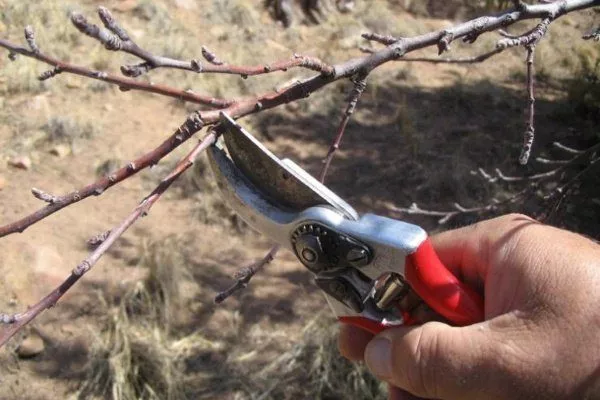
To promote growth, prune annually in early spring before the sap begins to flow. At this time, remove all broken and dried branches. Treat the cuts with garden pitch or dust with ash.
No more than 10 branches are left on the tree, which should be located symmetrically on both sides of the trunk. All shoots growing inward are pruned.
Diseases and pests
"Winter Pomegranate" is distinguished by its strong immunity to various diseases and is practically unaffected by insect attacks, especially if grown away from other crops.
In most cases, insects migrate to cherry trees from neighboring trees. To minimize infestation, several preventative measures are taken:
- In spring the trunks are whitewashed.
- Aphids will not disturb the plant if it is treated with Oleokuprit before bud break and with a solution of Karbofos before flowering.
- "Aktara" provides good protection against weevil larvae.
- In autumn, the tree trunk circle is dug up and cleared of plant debris.
Cherry trees are susceptible to moniliosis, or moniliosis blight. However, this fungal disease rarely affects the variety, and only if neighboring trees are already infected. Therefore, if the fungus has taken hold on other crops in the garden, be sure to treat the cherry tree with Fitosporin-M after it has finished flowering and begins actively forming fruit. This will not only help save some of the harvest but also prevent the death of the tree itself.
The disease can be recognized by the following signs:
- dry, darkened branches appeared on the tree;
- half-dried foliage;
- soft areas on 3-year-old shoots;
- mummified fruits on branches.
If a tree is sick, the key is to act quickly. Part of the harvest can be saved if treatment is started promptly, that is, during the active flowering period. Treatment should be carried out in dry, windless weather. If it rains after spraying, the beneficial effect will be negated.
Berries from an infected tree are unsuitable for storage; the most you can do with them is make compote or jam.
Treatment is carried out as follows:
- The crowns of the diseased tree are treated with a 3% solution of Bordeaux mixture before the buds appear.
- At the same time, the trunks are whitewashed with a lime solution, adding a small amount of copper sulfate and an antifungal agent.
- Before flowering, spray the crown with a 0.4% solution of "Zineb"; if you missed the time and did not carry out the treatment, then be sure to treat the flowering tree with a 1% solution of "Topsin-M".
- Until the plant has fully finished flowering, repeat the Topsin-M treatment no more than twice, with a two-week interval. After flowering, do not use chemical treatments.
To reduce the risk of moniliosis in the garden, follow these rules:
- the tree trunk circle is regularly cleared of weeds, plant debris, and fallen fruits;
- carry out regular pruning - thin out the crown;
- In the spring, each tree is carefully examined - diseased and dry branches are cut out, if there are mummified fruits left on the branches, they are also removed;
- do not allow mechanical damage to the bark; if there are wounds or cracks, clean the area and coat it with garden pitch to prevent fungus from settling and growing;
- the plant is planted so that their branches do not touch each other and there is free space between them;
- When a disease is detected, diseased branches are cut off, capturing 15 cm of healthy area, and burned.
"Winter Pomegranate" is a disease-resistant variety. Its versatility is also worth remembering. Looking to taste fresh, sweet cherries, stock up on juice, jam, or preserves, or make homemade liqueurs? "Winter Pomegranate" is your variety.