
The Zhukovskaya cherry variety is very popular among gardeners and homesteaders. It's prized for its low maintenance and high yield. However, it's important to know some growing tips for this variety to ensure you get the desired harvest.
History of variety selection
The variety was developed by S. V. Zhukov and E. N. Kharitonova, employees of the Michurin All-Russian Research Institute of Genetics and Breeding. They sought to create a cold-hardy, disease-resistant, and productive cherry variety. In 1947, the Zhukovskaya cherry was approved for cultivation.
The regions of zoning of this variety are Central, Central Black Earth, Lower Volga, and Middle Volga.
Characteristics of the variety
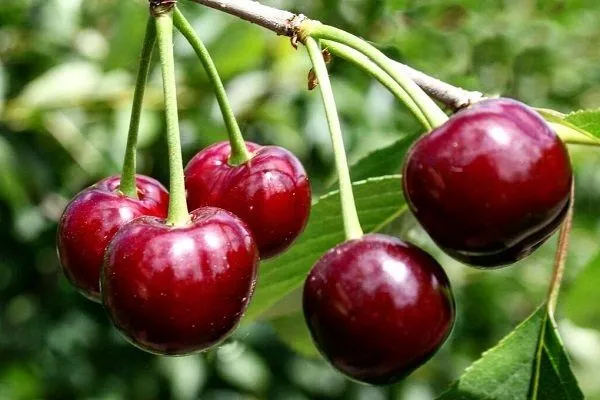
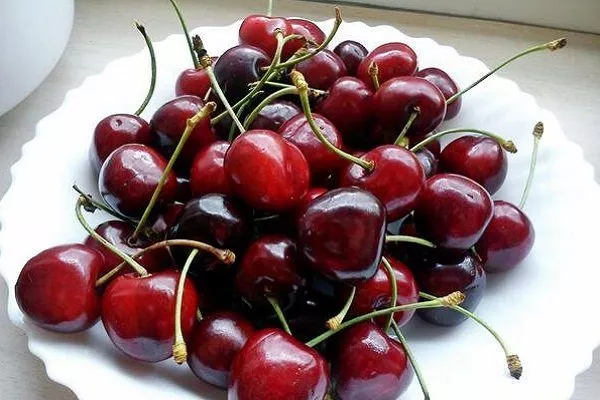
The tree is medium-sized with a compact crown. The fruits are dark red, weighing 3.5-4.0 g. Zhukovskaya berries have juicy flesh with a sweet and sour flavor, more like cherry.
Winter hardiness. The Zhukovskaya cherry is well-adapted to the climate of central Russia. The variety has average winter hardiness, so in the central region the tree survives winter well, but in northern Russia there is a risk of frost damage to the cherry buds.
Resistance to diseases and pests.The Zhukovskaya cherry is resistant to most diseases common to cherries. It is resistant to coccomycosis and ring spot.
Pollination.The Zhukovskaya cherry variety is self-sterile. This means it will produce a bountiful harvest only if there are pollinating trees nearby. These include the following cherry varieties:
- Lyubskaya;
- Vladimirskaya;
- Griot of Ostheim;
- Apukhtinskaya;
- Youth.
Ripening of berries and yield. The tree begins bearing fruit in its fourth year and reaches its peak yield by the age of 10. Regarding harvest timing, the Zhukovskaya cherry ripens in mid-July in the central regions. The variety's yield is variable. During a poor season, even with proper care, the tree will yield no more than 4 kg of fruit. However, under favorable weather conditions, up to 12 kg of berries can be harvested.
Scope of application. The berries need to be picked when they are fully ripe, then they can be used in a variety of ways: eaten fresh or used for making preserves and desserts.
Advantages and disadvantages of the variety
The main advantages of the variety are:
- undemanding to agricultural technology;
- productivity;
- The berries are highly tolerant of mechanical harvesting, which allows for the cultivation of cherries in industrial conditions.
The following can be highlighted as disadvantages:
- self-infertility;
- large bone size;
- the likelihood of buds freezing in the spring.
Landing features
Despite its low maintenance, Zhukovskaya requires certain planting guidelines. This will ensure good growth and development, as well as excellent fruiting later on.
Timing of planting seedlings
For the Zhukovskaya variety, planting is acceptable as in the spring, and in autumn, but with a caveat:
- In the central part of the country, autumn planting should be done no later than mid-October. This way, the seedlings will take root well before the onset of frost and will survive the winter without problems.
- Spring cherry planting in the central regions takes place from early to mid-April. By this time, the snow has usually completely melted and the ground has warmed up. Later, the fruit trees begin to sap. Zhukovskaya cherry saplings planted late grow weak and produce a poor harvest.
- For southern regions with short, mild winters, fall planting is more suitable. Zhukovskaya can be planted until mid-November. The air is still warm, the soil is sufficiently moist and not frozen, so the seedling will adapt easily.
Selecting and preparing a site
For the Zhukovskaya cherry tree, choose a site that receives full sun but is sheltered from the wind. This is especially important for young seedlings, which can be damaged by windy weather.
Select a location according to the following recommendations:
- The groundwater table should be no higher than 1.5 meters from the ground surface. Lowlands and swampy areas are unsuitable.
- A young sapling needs space, as close proximity to other trees inhibits its growth and development. The distance from the neighboring tree should be approximately 4 meters.
- Zhukovskaya grows well in loose, sandy loam soils; loams are also suitable. The pH should be neutral or slightly acidic.
- ✓ The soil pH level should be strictly within 6.0-7.0 for optimal nutrient absorption.
- ✓ The depth of groundwater is at least 1.5 meters to prevent rotting of the root system.
Heavy clay soil can be improved by adding 20 kg of peat and sand per square meter. To reduce acidity, use slaked lime (300 g per square meter).
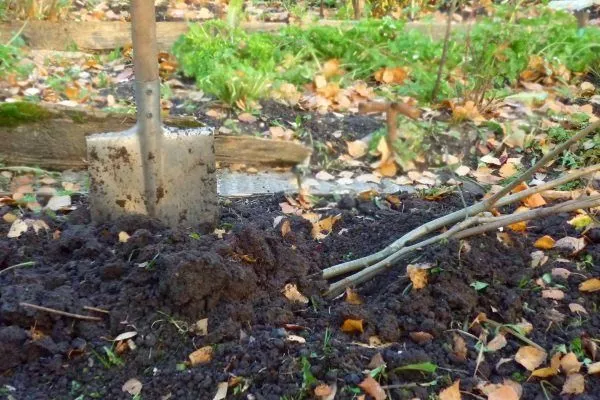
Once the planting site has been selected, it's time to prepare the hole. For spring planting, it's best to do this in the fall. This will allow the fertilizer to rot over the winter and enrich the soil with micronutrients. If you plan to plant in the fall, prepare the hole in early summer.
The action plan for preparing the landing site is as follows:
- Dig a hole with the following parameters: width – 80 cm, depth – 50 cm. This space is necessary for comfortable placement of roots.
- Drive a stake a little further from the center of the hole, on which the seedling will subsequently rest.
- Take half the soil you dug, add a bucket of compost, 2 cups of wood ash, and 250 g each of superphosphate and potassium sulfate. Mix the soil thoroughly, pour it into the hole, and water with 10 liters of water.
- Cover the hole, for example, with a sheet of slate, and wait for the planting moment.
During this time, the soil will acquire the desired structure and density, and become saturated with nutrients. If the hole hasn't been prepared within the specified timeframe, do so at least three weeks before planting.
How to select and prepare planting material?
Since Zhukovskaya can easily be confused with cherry trees in appearance, seedlings should be purchased in specialized stores or nurseries.
The following signs will help you choose healthy planting material:
- The seedling should be 1-2 years old. At this stage, the tree already has a strong root system with maximum survival rates.
- The trunk is straight, not curved, without growths, cracks, or other damage. The bark is smooth and elastic.
- There are no signs of rot or root damage. The cut roots are white.
Before planting, the seedling must be properly prepared. To do this, soak the tree's roots in water with Kornevin for 6 hours.
Planting cherry trees
Once the hole is completely ready, start planting:
- Remove the cover from the pit.
- Loosen the soil mixture at the bottom of the hole and form a mound in the center.
- Place the seedling with its roots on the mound and spread them out over the surface of the mound. Keep in mind that the root collar should be 5 cm above ground level.
- Cover the roots with potting soil and compact it. After the soil settles, add more soil until the hole is completely filled.
- Form a watering hole around the tree and pour in 20 liters of warm water.
- Once the liquid has been absorbed, mulch the hole using peat, sawdust or dry grass.
If you didn't plant the seedling in the fall, bury it until spring. Find a spot that receives minimal sun exposure to ensure snow cover lasts as long as possible:
- Make a hole 40 cm deep and the length of the seedling.
- Place the seedling at an angle so that its crown faces south.
- Cover the roots and half the trunk with soil and water. If snowfall is low in your area, cover the seedlings with spruce branches.
Cherry tree care Zhukovskaya
To ensure the seedling's survival and proper development, it requires specific care during its initial period. This will directly impact the tree's future fruiting.
Top dressing
If all recommended fertilizers were applied at planting, no additional fertilizing will be necessary for the next two years. After that, the tree should be fertilized three times a year, starting in mid-spring and continuing through late summer, according to the following schedule:
- In late April or early May, before flowering, prepare a mixture of urea and potassium sulfate (2 tablespoons of each), dissolving them in 10 liters of water. After watering, inject about 30 liters of the prepared mixture under the trunk.
- In early July, when fruit is forming, apply 25 liters of nitrophoska solution under each tree after watering. Prepare the solution at a ratio of 3 tablespoons per 10 liters of water.
- In August, after the harvest, apply 35 liters of a mixture of potassium sulfate and superphosphate (2 tablespoons per 10 liters of water) to moistened soil under each tree. You can replace chemical fertilizers with ash, 1.5 kg per cherry tree.
- In the first year after planting, apply 50 g of ammonium nitrate in early spring to stimulate growth.
- In the second year, add 30 g of superphosphate and 20 g of potassium sulfate in the fall to strengthen the root system.
Features of feeding Zhukovskaya cherry:
- Avoid using nitrogen-containing fertilizers in the fall. Superphosphate with potassium compounds is beneficial for cherry tree development. Apply them in the fall, as they take a long time to break down. After the snow melts in the spring, the fertilizer will dissolve completely.
- Fertilize annually if your site has poor, sandy soil. Rich soil requires little or no fertilizing.
- Reduce the soil acidity under your cherry trees with lime fertilizer according to the instructions (every 5 years). This will help prevent blossom and fruit drop.
Watering
A mature tree doesn't suffer from lack of moisture. However, in dry summers, to ensure juicy and large berries, cherries need to be watered 2-3 times a month.
The Zhukovskaya variety is drought-resistant, and a mature tree requires almost no watering, with the exception of certain periods:
- 1 week before flowering;
- after flowering;
- with the beginning of fruit ripening;
- after the harvest has been collected.
Young seedlings require a specific watering schedule: 3-4 times a month, 20 liters per tree. Reduce watering during frequent rainfall, as over-watered soil can cause root rot.
To water the tree, dig a circular trench 40-50 cm from the trunk. Add 20-30 liters of water, depending on the tree's size.
Soil care
The problem with the Zhukovskaya cherry tree is the constant growth of root suckers. These suckers rob the main trunk of micronutrients needed for crown development and fruit production. This also applies to weeds, which can cause diseases and insect attacks. Regular weeding of the trunk area and removal of root suckers will prevent these problems.
It's important to mulch the soil around the trunk, sprinkling it with a layer of sawdust, peat, or straw about 5 cm thick after weeding. This will help prevent moisture loss and significantly reduce the growth of new weeds.
Pruning and crown shaping
To ensure proper development and fruiting, cherry trees require pruning to create a lush crown. The Zhukovskaya variety is recommended to be pruned in a sparse, tiered fashion. This is done as follows:
- Prune the seedling without branches, about 60 cm above the bud. The remaining buds will produce actively developing shoots.
- If the seedling has lateral branches, select the three largest ones, which will form the skeletal layer. The branches should be arranged around the trunk at a 45° angle.
- Shorten the conductor (central branch) by almost 20 cm, and the skeletal shoots by a quarter of their length. Cut the remaining branches to a ring.
- Remove branches below 45-50 cm of trunk length to ensure proper trunk formation.
- To make the trunk thicken faster, pinch off the standard shoots that have grown during the summer.
- Place the next tier 60 cm higher than the bottom one.
There should be 2-3 branches left for each tier. When the crown is fully formed, the trunk will have 5-8 thick, strong branches.
For mature cherry trees, thinning pruning is sufficient. This involves removing uneven, competing, and diseased branches. This will improve airflow and light penetration, which will positively impact the yield.
In the fall, carry out sanitary pruning, during which remove branches with signs of damage.
Preparing for winter
The Zhukovskaya cherry tree has moderate frost resistance. Therefore, it's important to properly insulate it, especially for young seedlings.
Wood can be damaged and injured by frost, and roots can suffer from lack of snow.
Any breathable material is suitable for insulating a young tree. This could include burlap, thick fabric, or straw. Wrap these around the trunk and skeletal branches. Mulch the root zone for insulation.
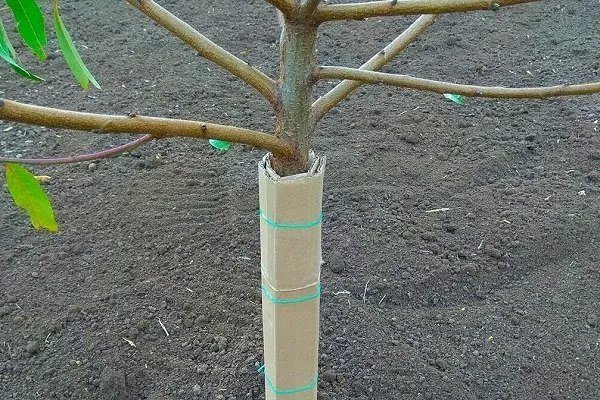
For a mature tree, simpler measures will suffice. Add a 10-15 cm layer of manure (or compost) to the tree's trunk. Combined with the snowfall, it will reliably protect the roots from frost.
Diseases and pests
Despite its resistance to common cherry ring spot and coccomycosis, the Zhukovskaya variety is susceptible to other diseases that are dangerous to stone fruits:
- Monilial burn. It occurs due to prolonged dampness and manifests itself in the drying out of shoots with buds, resinous cracks in the bark and deformation of the fruit.
For treatment, affected branches are removed. Cracks and cuts are coated with garden pitch. A Horus solution (3 g of substance per 10 liters of water) is used for medicinal treatment. - Scab. It appears as brown spots on the leaf blades; over time, the fruits crack, become deformed, and lose their flavor.
To treat scab, use Nitrofen (200 g per 10 liters of water). Spraying is done in early spring. - Clusterosporiasis. This is a fungal disease in which dark brown spots appear on the surface of leaf blades, shoots and flowers, the affected tissue dries up and falls off, and the fruits do not ripen.
Treatment is carried out twice by spraying with a 5% copper sulfate solution before bud break and after the leaves fall. - Cherry weevil. The insect feeds on buds as they begin to swell. Females lay eggs inside the ovaries, and the emerging larvae destroy the fruit.
For treatment, the tree is sprayed with Karbofos (70 g of the substance is dissolved in 10 liters of water). - Cherry shoot moth. This is an insect whose caterpillars damage trees by eating leaves, buds, and flowers, leaving a light web on the damaged areas.
To kill eggs and larvae, treat the tree with DNOC according to the instructions before bud break. After bud swelling, spray with Metaphos or Karbofos to get rid of the caterpillars.
Harvesting and storage
The fruits ripen at the end of July, starting around the 20th, and they ripen almost simultaneously. If the summer was cold and rainy, the ripening period may shift.
Pick the berries in dry weather. Pick them with the stems and sort them immediately, storing the firm, whole berries and processing the bruised ones directly.
To preserve Zhukovskaya cherries, it's best to use containers or other storage containers in which the berries can be stacked in a layer up to 5 cm thick. Humidity of 85% and a temperature of 8 to 10 °C will keep the fruit fresh for two weeks.
A popular method for storing cherries is deep freezing. The berries can be stored this way for up to a year.
Gardeners have long appreciated the Zhukovskaya cherry for its virtues: flavor, nutritional value, ease of care, and high yield. The berries of this tree are not only excellent for preserves but also help boost the body's immune system.