
The Vstrecha cherry is a dwarf variety with a hybrid form. This makes it suitable for cultivation throughout virtually all of Russia. It requires little care, is disease- and frost-resistant, and produces fruits that are more sweet than sour. If proper cultivation practices are followed, bountiful harvests can be harvested annually.
History of selection
The hybrid is considered the brainchild of Ukrainian breeders. Its origin story is characterized by an extremely long period of research and experimentation. Development of the variety began in 1966, but it was only added to the State Register of Ukraine in 1995.
For nearly 30 years, various "parents" were used, but ultimately the choice fell on the Lyubsky variety and the Kyiv-19 hybrid (a cross between a cherry and a sweet cherry). Only this cross was able to achieve the desired result. The originators were Valentina and Nikolai Turovtsev.
Description of the culture
The meeting is characterized by gigantic fruits for a cherry, but the tree, despite its dwarfism, grows quite large.
The appearance of the tree
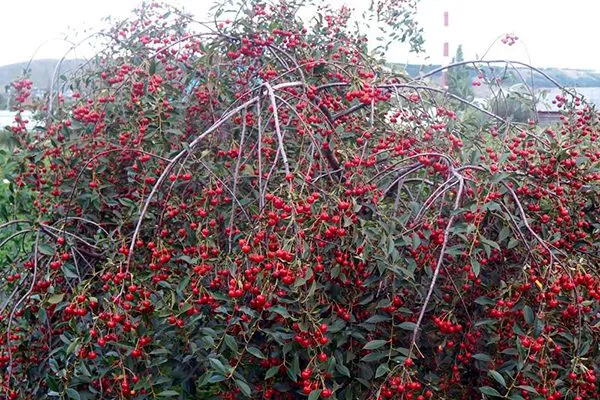
The hybrid is a bush-like plant capable of bearing fruit for 18-20 years. Characteristic features:
- height – varies from 200 to 250 cm;
- crown – spherical;
- number of branches – multiple;
- shoots - drooping type;
- leaves - pointed, green;
- the shape of the leaf blade is oval, with serrations along the edges;
- The foliage is peculiar in that it is turned upwards on the front side due to the central vein.
Fruits and their taste characteristics
Cherries are considered dessert berries. They have the following characteristics:
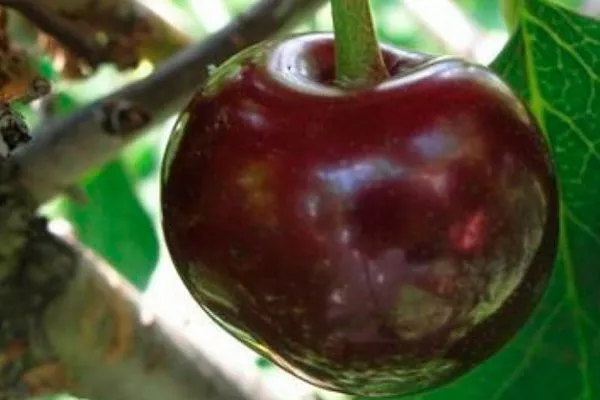
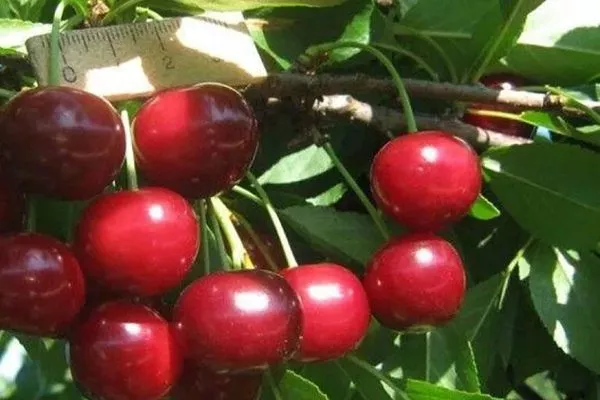
- size – large, weight about 10-15 g;
- shape - slightly flattened;
- surface – glossy;
- skin type – thin but strong, so it does not crack;
- the stone is small in size and easily separated from the pulp;
- skin color is dark burgundy, flesh color is red;
- juiciness – increased.
Features of taste qualities:
- aroma – distinct cherry;
- taste – reminiscent of cherry;
- the main taste is sweet and sour;
- sugar content – 11.6%;
- tasting score: 5 out of 5.
Characteristics
When choosing a cherry variety, it is important to consider characteristics such as resistance to adverse factors, ripening period, fruiting characteristics, and yield.
Drought resistance, winter hardiness
Being a hybrid, Vstrecha has a high level of drought tolerance—the bush easily tolerates hot weather and dry soil, but it still requires watering. Fruit juiciness and yield depend on this. Exposing the root system to standing water is undesirable, as this can lead to mold and fungal diseases.
Frost resistance is average – shoots and roots do not freeze at temperatures of -25 degrees.
Where can it be grown?
Cherries are intended for cultivation in moderate and warm climates. However, with careful pre-winter preparation, they can be grown in harsher conditions—as far north as Siberia, the Urals, Kalmykia, Orenburg, and elsewhere. The optimal temperature range for good fruiting and bush development ranges from 15 to 25 degrees Celsius.
Pollination, flowering period and ripening time
This variety is partially self-fertile, but without pollinators nearby, the yield will be significantly reduced. Therefore, plant cherries of similar height and flowering period nearby, such as Lyubskaya, Shalunya, Samsonovka, and Primetnaya. Sweet cherries (Valery Chkalov, etc.) are also suitable.
The bush blooms in late April or early May, depending not only on the region but also on current weather conditions. Harvesting begins after June 20th.
Productivity, fruiting
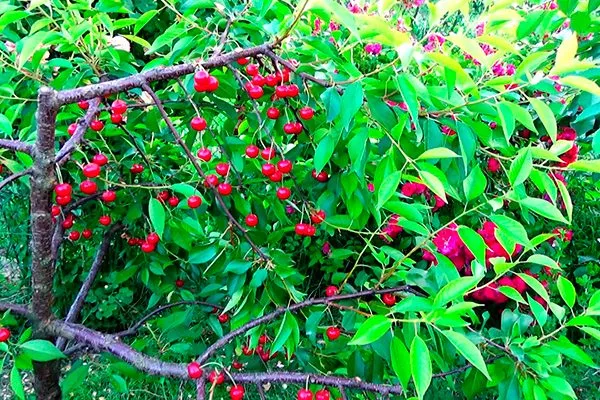
The first fruiting begins in the third year after planting. It is continuous, with no berry-free period. The yield is very high—a single tree can yield 23 to 27 kg.
Application of berries
Dessert cherries are used to make desserts, mousses, pastilles, marmalades, compotes, juices, liqueurs, and wines. The berries are easily frozen and dried without losing their flavor or nutritional properties.
Resistance to diseases and pests
Despite its hybridity, this variety is not particularly resistant to diseases and pests—its immunity is only average. Therefore, seasonal preventative treatments are essential.
What plants are allowed and prohibited to be planted next to cherry trees?
The following shrubs and trees are considered the best neighbors:
- plums;
- cherries;
- cherry plum;
- blackthorn;
- elder;
- grape;
- rowan;
- honeysuckle;
- hawthorn.
Neighbors that can grow at a distance of 1.5-2 m:
- black, red and white currants;
- raspberry;
- gooseberry;
- sea buckthorn.
Crops strictly prohibited for neighboring areas:
- pears;
- apple trees;
- apricots;
- peaches;
- birches;
- maples;
- oaks;
- linden trees;
- any conifers;
- nightshades (tomatoes, eggplants, peppers, etc.).
Advantages and disadvantages
It's not for nothing that the meeting is compared to elite cherries, because it has a huge number of positive qualities:
But there are also negative aspects:
Landing features
Planting procedures are standard, but the specific needs of the variety must be taken into account. For Vstrecha, the following aspects are important:
- The optimal time for planting is autumn, when frosts are 1.5 months away. It's best to avoid spring planting, as there's a risk of recurrent frosts, which will kill the seedling.
- The area should be well-lit. Sunlight has a positive effect on the quality of the berries, so the bush can be in the shade for a short time, but it should receive at least 7 hours of sun.
- Groundwater level – from 5 m.
- The soil must be drained and fertile, with a neutral acidity. Acidic soils are strictly prohibited, which is why it is undesirable to lay spruce mulch material.
- The seedling should be 1-2 years old and 50 to 60 cm tall.
- ✓ The soil pH level should be strictly within 6.5-7.0 for optimal nutrient absorption.
- ✓ It is mandatory to have a drainage layer at least 20 cm thick to prevent water stagnation.
Subsequent care of the culture
The care procedures are based on several key nuances:
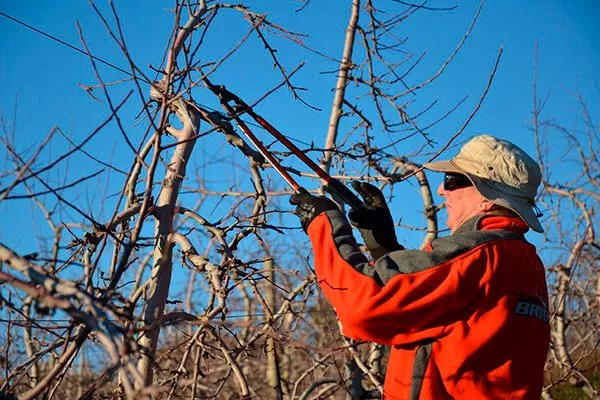
- Sanitary pruning is essential twice a year. In the spring, remove all shoots and leave only the 5 to 10 most viable ones. This is done before the sap begins to flow.
- Frequent watering isn't necessary—three to five times during the growing season is sufficient, depending on weather conditions. One bush requires 20-30 liters of water.
- Due to their moderate frost resistance, bushes need to be carefully prepared for winter, especially in regions with harsh climates. To do this, first whitewash the trunks and lower branches, then earth up the trunk and spread compost around the trunk as mulch. The thickness of the layer depends on the climate—the colder the climate, the thicker it should be. On average, it's 10 to 20 cm.
Fertilize the Vstrecha tree in the standard way for dwarf cherries.
Diseases and pests, methods of control and prevention
Dwarf cherries, under unfavorable conditions and without preventative treatments, as well as if agricultural practices are violated, are susceptible to pest infestations and diseases. What to watch out for:
| Problem | Signs | Treatment/control methods |
| Moniliosis | Drying of leaves and branches, formation of grey growths and rotting of berries. | Spraying with Cuprozan or Bordeaux mixture. |
| Coccomycosis | Formation of brownish round spots on the foliage, leaf shedding, death of the bush. | Treatment with copper oxychloride or Bordeaux mixture. |
| Anthracnose | Formation of brown spots on berries. | Use of the drug Poliram. |
| Weevil | Formation of holes in leaves and ovaries. | Treating bushes with Actellic or Fufanon. |
| Sawfly | Gnawing off the top layer of leaves and causing them to fall off. | Application of Kemifos. |
| Aphid | Curling and drying of leaves. | Spraying with Fitoverm or Fosfamide. |
- ✓ The first signs appear on the flowers, which turn brown and wither, creating a “burn” effect.
- ✓ Gray sporulation pads, arranged in concentric circles, form on the fruits.
Preventive measures include thinning shoots to prevent thickening, removing fallen leaves/branches, loosening the soil, and treating with Bordeaux mixture or fungicides/insecticides.
Reviews
The Vstrecha cherry is a dwarf hybrid with average immunity and disease resistance. However, it is renowned for its large, sweet berries, excellent yields, and early fruiting. The key is proper care and avoiding agricultural errors.