
Vladimirskaya Cherry is a century-old cherry variety and one of the most popular in Russia, producing mid-season fruits. The Vladimirskaya variety is characterized by frost resistance, high yield, and excellent berry flavor, as well as excellent transportability.
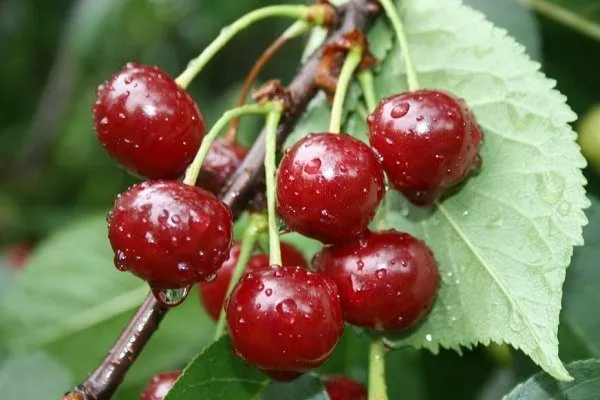
Vladimirskaya cherry
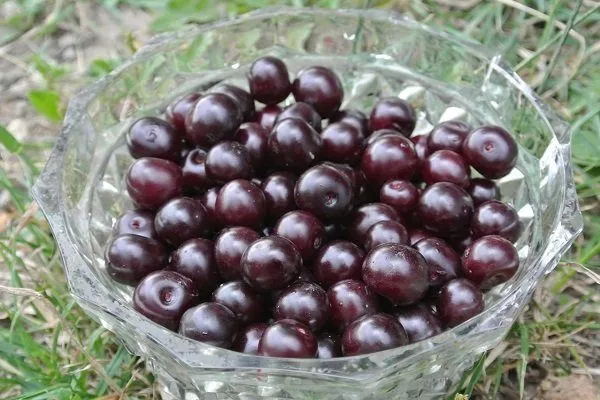
Vladimirskaya cherry is dense, juicy, and has a pleasant sweet and sour taste.
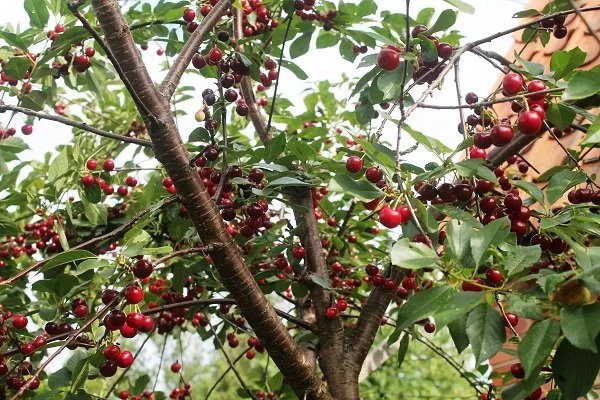
Vladimirskaya cherry is frost-resistant
Description of the variety
The Vladimirsky variety has been around for over three centuries. The variety, with the characteristics we're accustomed to today, emerged in 1993 as a result of crossing the Vladimirsky cherry with the Lyubsky variety.
Description of the tree and its fruits:
- Bushes Multi-stemmed trees, 2.5-5 meters tall. When grafted, they become single-stemmed trees.
- Stem and the main branches have grey peeling bark, which has longitudinal cracks.
- Crown round, spreading, weeping.
- Young shoots yellowish-brown, drooping.
- Leaves medium-sized, dull, have a rich dark green color.
- Flowers medium, saucer-shaped, white.
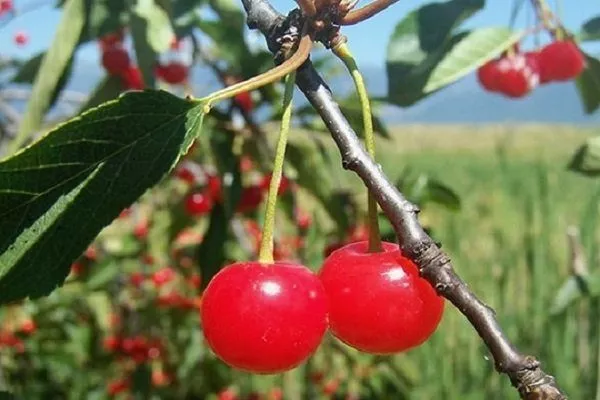
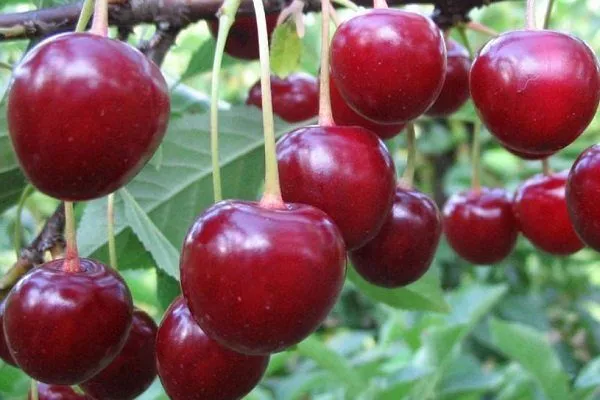
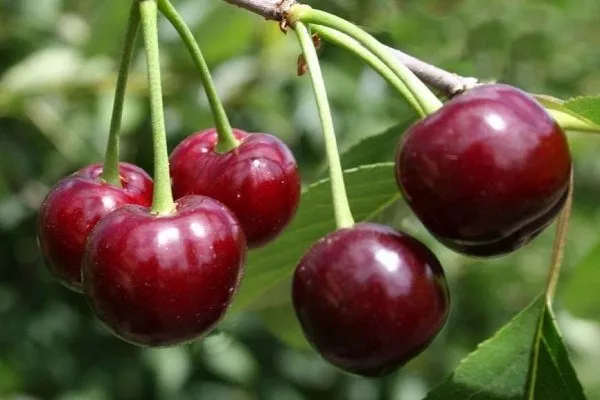
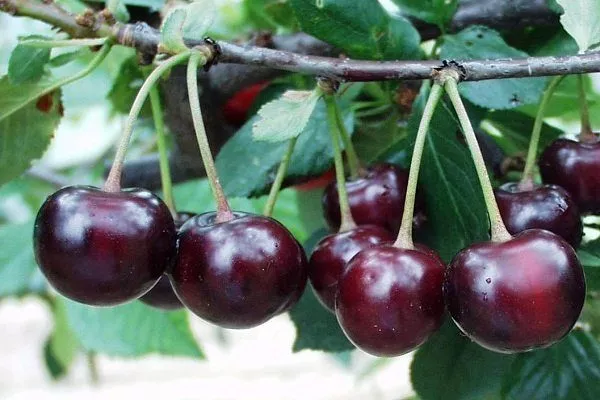
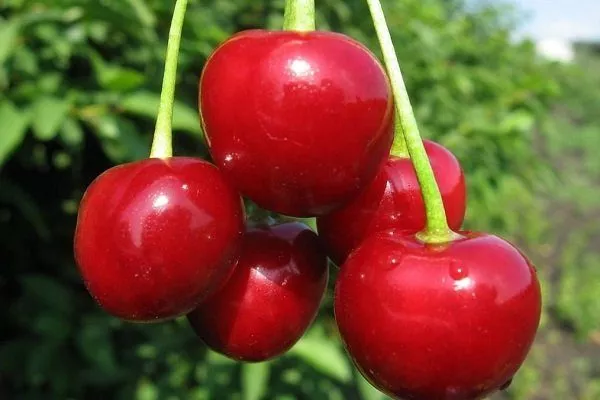
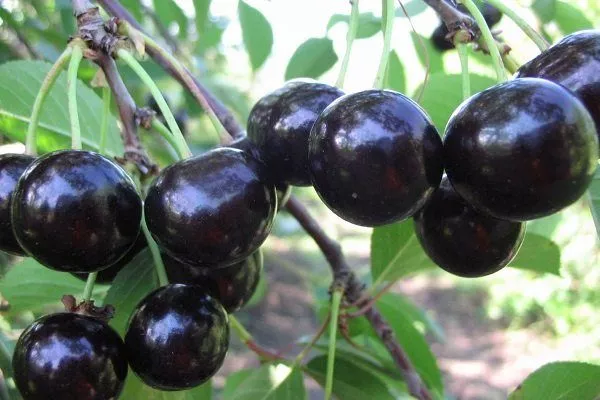
- Fruit Vladimirskaya cherries are small to medium-sized, weighing between 2.5 and 3.4 grams. The cherries are flat-rounded. The skin is black and red with numerous gray spots.
The flesh is dark red, dense, and juicy, with a pleasant sweet-and-sour flavor. The further south the cherry-growing region, the higher the sugar content.
Types of varieties
| Name | Disease resistance | Flowering period | Fruit size |
|---|---|---|---|
| Roditeleva | High | April-May | Small |
| Vyaznikovskaya | Average | May | Average |
| Gorbatovskaya | High | April-May | Large |
| Dobroselskaya | Average | May | Average |
| Izbyletskaya | Low | May-June | Small |
The Vladimirskaya cherry variety is still popular today, with many regions cultivating their own varieties and forms.
The following varieties of Vladimirskaya are known:
- Roditeleva (Parental);
- Vyaznikovskaya;
- Gorbatovskaya;
- Dobroselskaya;
- Izbyletskaya.
Characteristics of the variety
A distinctive feature of this cultivar is its rather sparse canopy and the shape of the leaves themselves, seemingly folded along the central vein. The smooth, dark green leaf blades are 80-90 mm long and half that wide.
The elongated, oval leaves with a pointed tip have biconvex, serrated edges and are attached to the shoots by small, strong, reddish petioles. The Vladimirskaya cherry is a mid-season variety. The flavor and quality of the berries depend on the region and growing conditions.
Resistance to adverse factors
Vladimirskaya cherry's cold tolerance is considered good, but low temperatures (-30°C) during the winter can damage fruit buds, resulting in reduced yields. This quality hinders the spread of this cherry in the northern regions of central Russia.
The yield of Vladimir cherry depends on weather conditions and growing region. Overall, the variety's productivity ranges from moderate to good. In central Russia, a bush produces 25 kg of fruit, while further north, it yields 5 kg per bush. Pollinators are essential for high yields.
Gardeners believe that growing this variety in the south is problematic – it has low drought tolerance, which requires preventative treatment and good care.
Growing regions
Vladimirskaya is a variety of Common Cherry (Prunus cerasus), accepted by the State Register in 1947. This variety is recommended for planting in the following regions:
- Central District;
- Central Black Earth District;
- in the North-West;
- Middle Volga region.
Pollinators, flowering and ripening period
| Name | Pollination method | Cold resistance | Ripening period |
|---|---|---|---|
| Rastunya | Insects | High | July |
| Pink Amorel | Insects | Average | June-July |
| Turgenevka | Insects | High | July |
| Zhukovskaya | Insects | Average | July |
| Vasilievskaya | Insects | High | June-July |
| Lyubskaya | Insects | Average | July |
| Black morel | Insects | High | July |
Cherry trees can bloom very profusely in spring, which is not an indication of a bountiful harvest. The key to a high yield is good pollination of the cherry tree or shrub by insects or a pollinating plant.
The Vladimirskaya cherry variety is self-sterile and requires pollinators from two or three varieties. Therefore, it requires the presence of a specific cherry variety:
- Rastunya;

- Amorel pink;
- Turgenevka;
- Zhukovskaya;
- Vasilievskaya;
- Lyubskaya;
- Black morel.
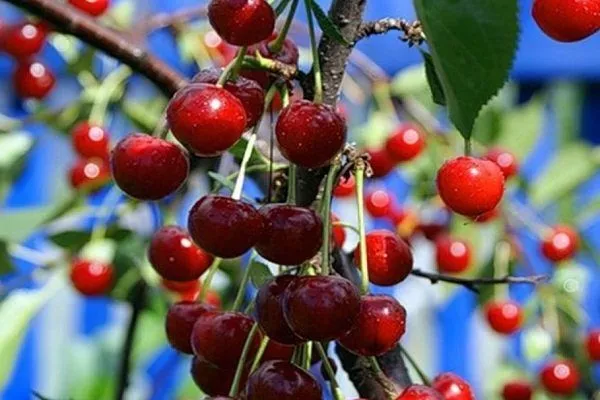
Productivity, fruiting and taste qualities
The grafted Vladimirskaya cherry tree begins bearing fruit no earlier than two years after planting, while ungrafted trees of this variety bear fruit for four to five years. In central Russia, a single Vladimirskaya cherry tree yields over 20 kg of cherries.
This variety doesn't typically ripen in large numbers. The fruits are small to medium-sized, depending on climate and weather conditions, and are ready for harvest between July 10th and 25th. They weigh 2.5-3.5 g. They are round, slightly flattened at the lateral seam.
The crater is shallow. The color is burgundy, almost black, with gray speckles under the skin. The flesh is firm, dark red, and juicy. The flavor is sweet with a slight tartness.
According to the chemical composition, fruits grown in northern latitudes (St. Petersburg) contain:
- dry matter 16.4%;
- free acids 1.7%;
- total sugars 10.9%;
- ascorbic acid 26.6 mg/100 g raw weight.
Berries grown in the Krasnodar region (Maikop) contain:
- dry matter 18.5%;
- free acids 0.67%;
- the amount of sugars is 11.46%;
- ascorbic acid 4.6 mg/100 g.
Application of berries
The fruits score highly on the tasting scale due to their excellent flavor. This variety is versatile and suitable for producing high-quality processed products (frozen fruit, dried fruit, jam, and compotes).
Advantages and disadvantages
The merits of the Vladimirskaya cherry variety have been proven over the years. But, of course, there are also disadvantages.
| Advantages | Flaws |
| The following advantages of the variety are highlighted:
| There are 6 disadvantages:
|
Landing features
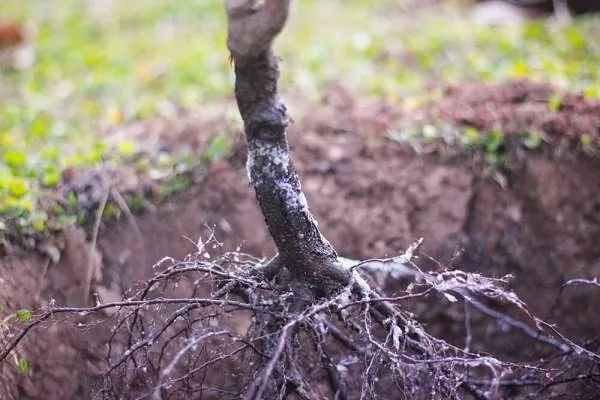
The best time to plant cherry trees is in the spring. To do this, dig up seedlings purchased in the fall or store them in a basement, covering the roots with damp sawdust. Cherries should be planted with a pollinator. The root system should be well-branched and fibrous.
- ✓ Soil pH should be between 6.5-7.0 for optimal growth.
- ✓ The depth of groundwater is at least 1.5 meters from the surface.
The roots should be at least 30-35 cm long and light to the touch. They should not be swollen or damaged. The size of the hole depends on the soil; the more fertile the soil, the shallower the hole. In temperate climates, on heavy loamy soils, holes 1 m in diameter and 70-80 cm deep are suitable.
When planting cherries, add the following to the hole:
- 10 kg of humus;
- 60 g superphosphate;
- 60 g of potassium chloride.
When planting, the cherry tree's root collar should be 5-8 cm above the ground. Before planting, soak the roots in a growth stimulant for several hours.
Optimal timing
Container-grown cherries, meaning those with a closed root system, can be planted throughout the spring and summer, but no later than a month before the onset of frost. The best time for planting cherries in spring — the first half of April.
In warmer regions, this will be early in the month; in colder regions, it will be closer to the end. It's important to plant before the buds open and when the soil has warmed. Plants planted at the optimal time will establish themselves better and be more resilient to various weather conditions.
Choosing a landing site
Cherry trees are heat-loving plants, so planting should begin with choosing a site—the sunniest part of the garden. When planting multiple saplings, leave 3-4 meters between the holes to prevent the overgrown bushes from interfering with each other.
The planting site should be well-ventilated; cherries do not tolerate stagnant cold air. They dislike marshy, cold, and acidic soils, lowlands, and high groundwater levels. Cherries do not grow well in sandy soils.
What can and cannot be planted next to Vladimirskaya cherry
The Vladimirskaya cherry does not tolerate the proximity of such trees and bushes:
- pear;
- apple;
- black currant;
- red rowan;
- raspberry;
- sea buckthorn;
- gooseberry.
The best neighbors for her are:
- cherries (without which pollination is impossible);
- plums;
- cherry plum;
- elder;
- grape;
- rowan.
Diseases and pests of the variety, measures to combat them
The main reason for the cherry's disappearance was the emergence of new fungal diseases previously unknown in our country. Vladimir cherry is not immune to these diseases. They develop rapidly, especially in damp and cool summers.
- CoccomycosisThe onset of coccomycosis can be identified by dark red spots appearing on the leaves. Within a few days, the spots turn brown, sometimes even tan. The affected leaf tissue dies and falls out, forming holes.
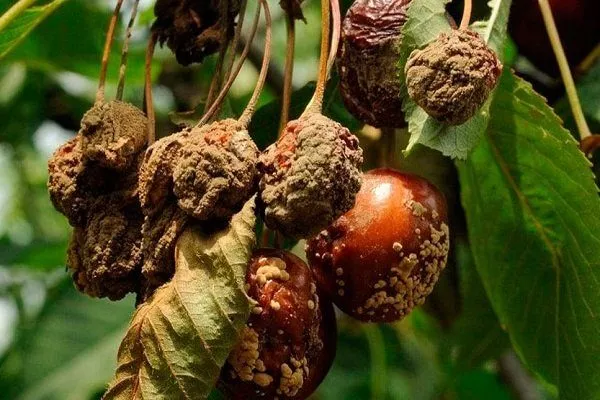
Spraying the green cone (during bud formation) with a 3% Bordeaux mixture solution helps. At the end of flowering, use chemicals such as Skor, Topsin-M, Oxychom, and Ordan. - MoniliosisSigns of this problem include grayish growths on the bark and fruit. Cherries begin to rot. Spraying with a 1% Bordeaux mixture is necessary.
- AnthracnoseWhen this disease appears, dull spots appear on the fruit, followed by small bumps. Over time, the cherries dry out. Spray with "Oxychom" until the fruit blossoms.
Insects can also cause significant damage to a tree, including death:
- Cherry aphid. Aphids are usually detected when the initial damage has already occurred, and the tips of young shoots, along with deformed foliage, are twisted into a tight tube. Their bodies are no more than 2.5 mm in size.
The universal and popular product "Iskra" will help. It contains not only substances that are deadly to cherry aphids, but also easily digestible potassium, as well as other compounds beneficial to weakened plants. - Cherry fly. Fruit is damaged by the larvae of a small fly that lays eggs on the berries. Signs of pest infestation include darkened or already rotten berries that easily separate from the pit and fall from the tree.
For small infestations, use sweet traps and sticky tape after flowering. If there are numerous cherry flies, it's best to use chemical pesticides like "Iskra" or "Karate." - Cherry pipe twister.A small (8 mm) golden-green beetle that eats away the pistil and stamens of flowers, and its larvae, emerging from eggs laid on the fruit, spoil the cherries.
When they are detected, the drugs "Aktara", "Karate", "Iskra" are used.
It is important to correctly identify the cause and find ways to combat it, this will help save the cherry tree.
It is important to carry out preventive measures against the occurrence of diseases and pests in the following way:
- inspect the garden and remove diseased branches;
- treat the cut areas with garden pitch;
- collect all the fruits completely, without leaving any on the branches;
- fallen fruits should be burned or buried deeply (50 cm);
- carry out preventative spraying against fungal diseases using copper sulfate or Bordeaux mixture;
- use trapping belts and snares;
- get rid of ants by pouring boiling water over the anthills (they are carriers of aphids);
- carry out digging of the tree trunk area;
- remove weeds around trees and clear away fallen leaves in the fall.
- Carry out the first spraying with a 3% solution of Bordeaux mixture before the buds open.
- The second spraying is carried out after flowering, using copper-based preparations.
- The third spraying should be carried out in the fall, after harvesting, to destroy overwintering forms of pests and diseases.
Reviews of the variety
A review of Vladimirskaya cherries can be seen in the following video:
The right approach to cherry tree care will help you grow the wonderful Vladimirskaya variety, which will delight you with its high yield and unique flavor for many years to come. Care, feeding, and spraying have a significant impact on cherry tree health.