
The Vita cherry is a dwarf variety and is especially popular with owners of small garden plots. This cherry has excellent agronomic characteristics, tolerates frost well, and produces high yields.
History of selection
The Vita cherry is a hybrid variety bred domestically, specifically for harsh climatic conditions. Authors: M. G. Isakova and N. I. Gvozdyukova. The variety was developed around the 2010s at the Sverdlovsk Horticultural Breeding Station. This cherry was added to the State Register in 2019.
This variety was created by crossing the cherries Rodnichok x (Effective x Surprise x Rossoshanskaya Black x Large-fruited). It is recommended for cultivation in a wide variety of regions of the country, including the Volga-Vyatka, Central Black Earth, Far East, West Siberian, Central, Ural, and other regions.
Description of the tree
This shrub-type dwarf cherry tree grows 1.7-2 m tall. It has a moderately dense crown. The tree is low-growing, upright, not spreading, and well-foliated. Branches are straight, medium-sized, and gray.
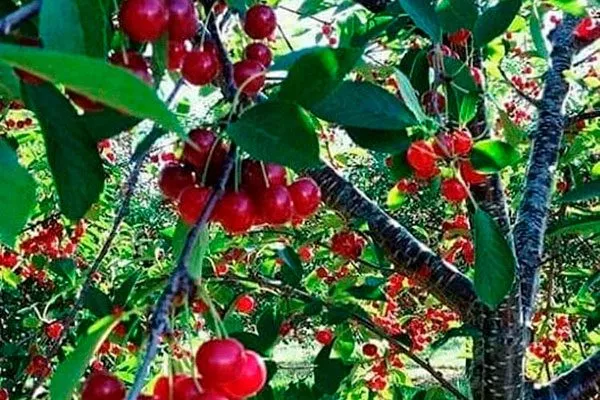
The leaves are dark green, with double-crenated edges, and obovate in shape. The flowers are white and appear on clusters of 4-5 flowers.
Description of fruits
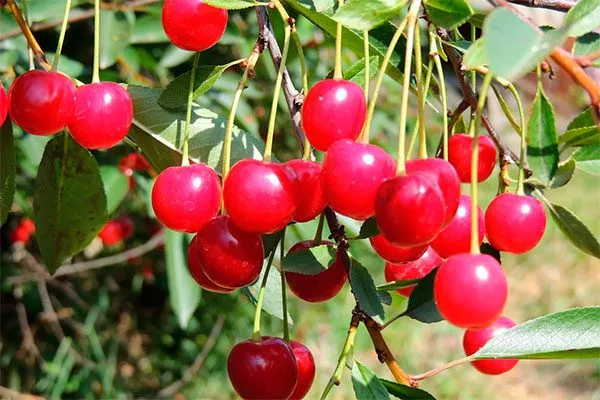
This variety produces large fruits, with an average berry weight of 4 g. The fruits are round and dark red. The skin is medium-thick and firm, and the flesh is juicy and tender. The juice is light red, with small seeds.
Taste
The taste of the fruit harmoniously combines sweet and sour notes.
Characteristics and composition of fruits:
- Dry matter - 16%.
- Sugar - 9%.
- Acids - up to 2%.
- Tasting score: 4.8.
Ripening time
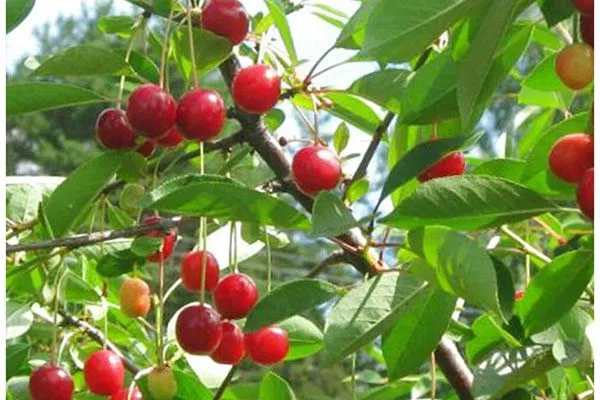
The Vita cherry is an early-ripening variety. It is relatively early-bearing, beginning to bear fruit three to four years after planting. The fruits ripen in the second or third ten days of July. The fruiting time depends on the regional climate.
Productivity
The Vita cherry tree is quite productive for its size. When grown in large quantities, over 25 centners can be harvested from one hectare. A single tree can yield up to 10 kg of cherries.
Self-fertility
The Vita variety is partially self-fertile. It can bear fruit without pollinators, even in harsh climates. However, to produce a full harvest, this cherry tree requires pollinators. The Chernokorka and Samsonovka varieties are considered the best for this purpose.
Frost and drought resistance
This variety was bred specifically for the harsh climate typical of most regions of Russia. This cherry can withstand temperatures down to -40°C. It has moderate drought tolerance, so it requires careful care.
Pros and cons
Before planting the dwarf Vita variety in your garden, it is useful to evaluate all the benefits of such a decision.
The Vita variety has no particular disadvantages, except for the risk of fungal diseases.
Landing features
Vita cherry trees are planted in the spring to avoid subjecting young seedlings to harsh conditions. Trees planted in the spring have time to strengthen and establish themselves over the summer, which helps them survive their first winter safely.
- ✓ Soil pH should be between 6.5-7.5 for optimal growth.
- ✓ The groundwater depth must be at least 1.5 m to prevent root rot.
Subtleties of planting the Vita variety:
- The planting site should be well-lit; dwarf cherries do not tolerate shade. Elevated sites are the best option.
- The recommended planting pattern is 2.5 m between adjacent holes and 3.5 m between rows. Dense planting is strictly contraindicated for cherries, which are susceptible to fungal infections; the trees require good air circulation.
- Before planting, the soil is dug over, fertilized, and the necessary components are added—fertilizers, as well as components that adjust the soil's looseness and acidity. The Vita cherry grows best in sandy loam and loamy soil; the soil should be loose and fertile.
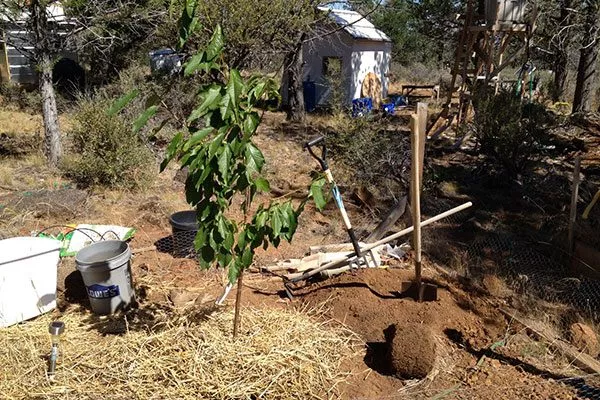
- The planting hole is about 80 cm deep. Drainage is added to the bottom, followed by a mixture of fertile soil, compost, wood ash, and mineral fertilizer. The hole, filled with the soil mixture, is left to rest for three weeks, after which the tree is planted according to the standard pattern. It is recommended to tie the seedling to a pre-installed support using soft twine.
Care
The Vita cherry tree is quite hardy and tolerates frost well, but it requires regular care to produce good yields.
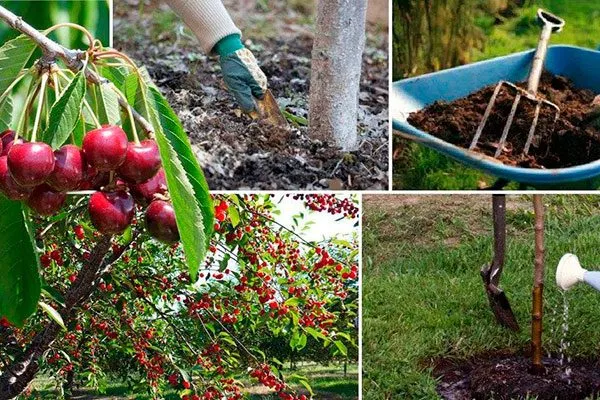
How to care for the Vita cherry tree:
- Water. Shrub cherry trees should not suffer from either a lack or excess of moisture. Water the plant as needed—when the top layer of soil dries out; if the soil is still damp, postpone watering. Warm water is recommended for watering.
The Vita cherry tree requires increased water during the growing season, fruit set, and ripening. On average, a mature cherry tree is watered four times per season. The final watering is done in the fall, known as a moisture-recharging watering. - Feed. Cherry trees are fertilized up to four times per season, no more. The first application is a nitrogen-rich fertilizer, applied during bud formation. In summer, the plant is fed with potassium and phosphorus fertilizers, and in autumn, organic matter, peat, or rotted manure are also added.
- Trim. Bush cherry trees don't require formative pruning; they only require sanitation, which involves removing damaged, diseased, dead, or frozen branches. All cuts are treated with garden pitch.
Diseases and pests
The Vita cherry tree has fairly good immunity, but unfavorable circumstances—bad weather, improper care, and widespread infections—can cause damage to the crop.
| Method | Efficiency | Period of application |
|---|---|---|
| Insecticides | High | Before flowering and after harvest |
| Traditional methods | Average | Throughout the season |
The Vita variety is most often susceptible to moniliosis and coccomycosis. These and other diseases can be prevented with copper-containing products, such as Bordeaux mixture, copper sulfate, and others.
Among pests, slime flies and aphids pose the greatest threat. They can be controlled with both insecticides and traditional methods.
Application
Ripe berries are very attractive and suitable for fresh consumption, cooking, baking, and preserving. These cherries can also be used to make various liqueurs and homemade wines.
Harvesting
Harvesting takes place in dry weather. Berries' ripeness is determined not only by their color and taste, but also by the stem—if it separates easily from the fruit, harvesting is ready. Otherwise, the berries are allowed to ripen further. Various harvesting tools are typically used to speed up the harvesting process without compromising quality.
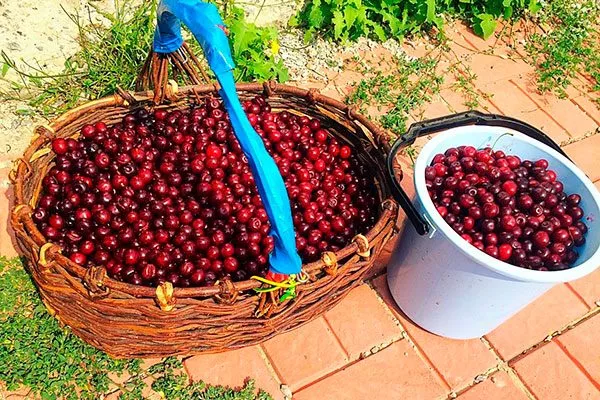
The harvested cherries are transferred to boxes lined with waxed paper or fabric and stored in the cellar. The berries can be dried and frozen, packaged in bags or glass jars.
Reviews
The Vita cherry is an ideal variety for garden plots in regions with frosty winters. By planting two or three trees in your garden, you can provide yourself with not only fresh cherries but also winter preserves.