
The Turgenevka cherry is prized by gardeners for its high yield and frost resistance. Understanding the variety's characteristics and planting techniques will help you grow a healthy, vigorous cherry orchard.
History of selection
The Turgenevka cherry variety was developed at the All-Russian Research Institute of Fruit Crop Breeding. Scientists based their development on the Zhukovskaya cherry, which boasted excellent flavor but was not winter-hardy.
A disease- and frost-resistant variety was developed from selected Zhukovskaya cherry seedlings using open pollination. The new variety has been zoned for cultivation in the Central and Southern regions.
The Turgenevka variety has been included in the State Register of Breeding Achievements of the Russian Federation.
Description of the variety
The tree's appearance resembles a pyramid, 3-3.5 meters tall, with its apex downward. A medium-dense crown lifts up straight shoots with cone-shaped, deflected buds. The leaves are dark green, narrowly oval, with a sharply pointed tip and double-serrated margins.
The inflorescence contains four flowers, the open corollas of which reach 24 mm in diameter and are tightly joined. The flower has a goblet-shaped calyx and strongly serrated sepals.
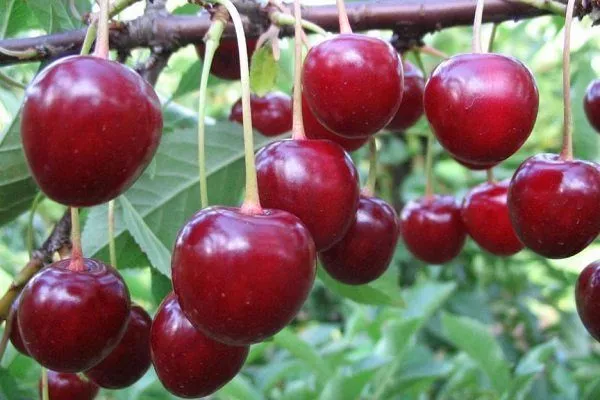
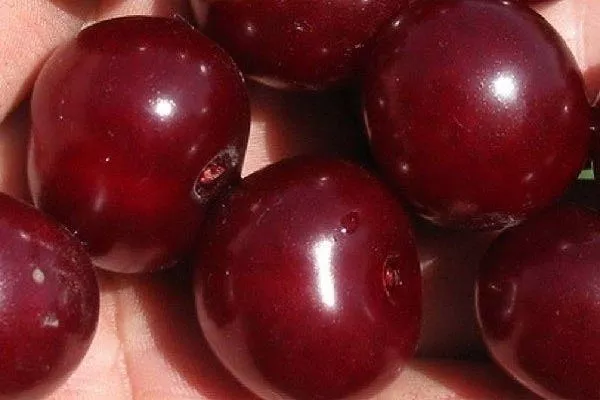
The fruits are large, broadly heart-shaped, dark red in color, weighing 5 g. The pulp is juicy, sweet and sour, dark red in color, with an easily separating stone.
Main characteristics
Breeders have succeeded in creating a variety that meets most gardeners' needs. Its resistance to natural conditions, ease of care, early ripening, and high yield have ensured the widespread use of the Turgenevka cherry.
Drought resistance and winter hardiness
The Turgenevka cherry variety is moderately drought-tolerant. In hot weather, trees require periodic watering. During the flowering period, watering should be especially careful—at least 15 liters of water per plant.
The trees are highly winter-hardy. Spring frosts and sudden temperature fluctuations reduce the future harvest.
Pollination
| Name | Disease resistance | Flowering period | Productivity |
|---|---|---|---|
| Favorite | High | Mid-May | 15-20 kg |
| Youth | Average | Beginning of May | 10-15 kg |
| Lyubskaya | Low | End of April | 5-10 kg |
| Melitopol joy | High | Mid-May | 20-25 kg |
The Turgenevka cherry is a partially self-fertile variety, but for a better harvest it is recommended to plant cross-pollinating varieties next to it:
- Favorite;
- Youth;
- Lyubskaya;
- Melitopol joy.
Flowering period and ripening time
In the Central region of the Russian Federation, the Turgenevka cherry is one of the first to ripen:
- flowering May 12-15;
- fruits ripen on July 5-15.
Productivity and fruiting
Trees begin bearing fruit 4-5 years after planting. This variety produces regular and abundant yields:
- from a young tree - 10-12 kg;
- from a mature cherry tree - 20-25 kg.
Areas of use of berries
The fruits are used fresh, processed into juice, and used to make compotes, wine, tinctures, syrups, cordials, fruit drinks, and jam.
Ripe cherries contain:
- sugar 11.17%;
- acids 1.51%;
- dry soluble substances 16.2%.
Tasters rate the sweetness of fresh berries at 3.7 points on a 5-point scale.
Resistance to diseases and pests
Turgenevka is resistant to diseases, but if there is a prolonged cold and rainy season, it may be susceptible to fungal diseases (coccomycosis and moniliosis).
Advantages and disadvantages of the Turgenevka cherry
The main advantages of the variety:
- large fruits;
- high yield;
- frost resistance.
Disadvantages of the variety:
- the level of winter hardiness of flower buds does not withstand frosts below -35° C;
- If the harvest is collected prematurely, the berries will not gain sweetness.
Planting and care features
Planting and caring for the Turgenevka cherry tree doesn't require any special skills. Following simple farming techniques will yield a bountiful harvest of delicious and juicy berries.
Deadlines
In areas with cold winters, use spring plantingThe seedling gets more time to adapt to the new conditions before winter sets in.
It is recommended to plant cherries in the spring between April 20 and May 20. Gardeners in the southern regions can plant cherries from April 10 until May 10.
It is recommended to plant Turgenevka in the fall in the second half of September, but no later than October 10. Planting cherry trees It is better to do it on a cloudy day.
Selecting a location and soil
Cherry trees are best planted in a sunny, draft-free location. Sandy loam soils with a neutral pH are ideal. A water table of 1.5 meters is ideal.
- ✓ Soil pH should be between 6.5-7.0 for optimal nutrient absorption.
- ✓ The depth of groundwater is at least 1.5 m to prevent root rot.
What crops can and cannot be planted next to each other?
Can be planted next to the Turgenevka cherry tree:
- grape;
- rowan;
- hawthorn;
- cherries;
- honeysuckle;
- elderberry.
Bad "neighbors" will be:
- apple;
- pear;
- apricot;
- raspberry;
- currant;
- sea buckthorn.
You should not plant plants near Turgenevka whose crowns create shade and whose roots draw a lot of useful substances from the soil.
Preparation of planting material
The variety of a seedling can only be determined once the tree reaches its full height. Therefore, it's best to purchase planting material from nurseries or other reputable sources.
Features of choosing cherry seedlings:
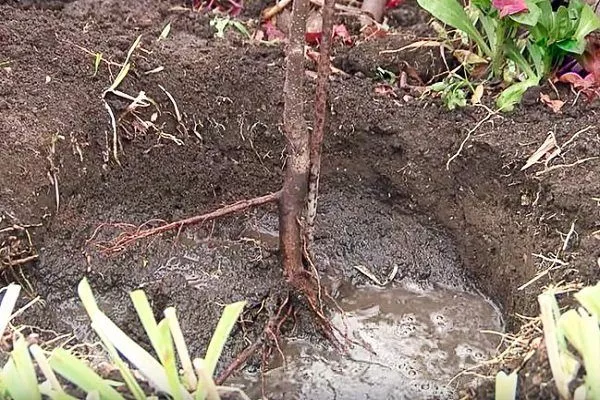
- Young trees should be 100-120 cm tall.
- The root system is 20-30 cm in diameter.
- If the roots are completely dry and the cut on the skin is dark, it is better to choose another specimen.
- If green fibers and moist tissue are visible at the cut site, this indicates its viability.
Before planting, proper preparation of trees is required:
- Soak the seedling's roots in water the day before planting. This will activate biological processes.
- After 24 hours, remove the seedling from the water and inspect the roots. If you find any damaged parts, trim them off with pruning shears.
Landing
Preparations for planting cherry trees begin several weeks in advance. This begins with earthworks, stakes, and fertilizer.
The process of planting Turgenevka is very simple to perform:
- 2-3 weeks before planting, make a planting hole 85 cm wide and 45 cm deep.
- Mix the soil pulled out of the hole with:
- humus (1 bucket);
- superphosphate (200 g);
- potassium fertilizer (50 g);
- wood ash (400 g).
- If the soil is acidic, add 200 g of limestone. If it's clayey, add a bucket of river sand.
- Return the mixture to the hole to form a mound.
- On the day of planting, place the seedling on the mound and cover it with soil. Firm the soil, leaving the root collar above the surface.
- Form a ridge of earth around the edges of the tree trunk circle to prevent water from spreading.
- Water the tree and mulch the hole.
- Tie the seedling to a stake.
Care Features
To ensure a good harvest of the Turgenevka cherry tree, it's important to pay attention to watering, apply fertilizer regularly, and remember to prune it regularly.
Watering
Turgenevka cherry trees don't like overwatering or prolonged drought. Maintain a constant soil moisture level for young seedlings—10-15 liters of water per plant. During the dry season, water mature trees periodically with 30-60 liters of water.
The roots grow faster than the crown, so direct the water along the edges of the tree trunk circle.
Weeding
Regularly clear the tree trunk area of any unwanted plants and ensure that no crust forms on the surface of the soil, as this prevents oxygen from reaching the soil.
Weeds compete for water and food and carry diseases.
Fertilizers
To maintain soil fertility and provide plants with nutrients, fertilize periodically. Use different nutrient application schedules for seedlings and mature trees.
Fertilizing young seedlings:
- In mid-April, apply foliar fertilizer with urea (carbamide). Dissolve 20 g of urea in 10 liters of water and spray the crown.
- After flowering, apply foliar feeding with Ideal. Dissolve 5 ml of solution in 1 liter of water and spray until the seedling is completely wet.
- In September, apply autumn root feeding. Apply 3 tablespoons of superphosphate and 1.5 tablespoons of potassium chloride per 1 cubic meter of trunk circle.
- In the first year after planting, apply 50 g of ammonium nitrate in early spring.
- At the beginning of summer, carry out foliar feeding with a urea solution (20 g per 10 l of water).
- In autumn, add 30 g of superphosphate and 20 g of potassium chloride during digging.
Fertilizing mature trees:
- Apply spring root feeding in mid-April. Apply ammonium nitrate at a rate of 20-30 g per 1 cubic meter of the tree trunk circle and cover with a bucket of water.
- After flowering, apply foliar fertilizer with Ideal, just as you would for seedlings. Spray the crown until completely wet. For dosage, see the instructions for the product.
- After flowering, apply root fertilization with "Yagodka." Dilute 20-30 g of the product in 10 liters of water.
- After fruiting, apply a summer root fertilizer. Prepare a mixture of 3 tablespoons of superphosphate and 2 tablespoons of potassium chloride. Dilute it in 10 liters of water. One mature tree will require 35 liters of the prepared mixture.
- In September, apply autumn root feeding: 3 kg of compost, 3 tbsp. superphosphate, 1.5 tbsp. potassium chloride, 10 liters of water.
Trimming
In early spring, the seedling carry out the first pruningTo establish a sparse, tiered crown, the fresh wound is treated with garden pitch.
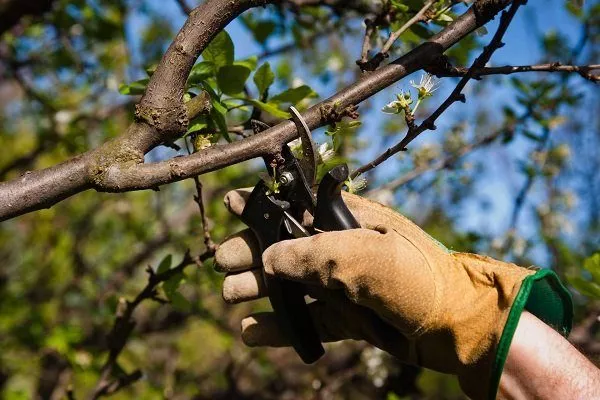
Mature trees are pruned in the spring to shape the crown. Summer pruning removes dead shoots. Root suckers are also removed.
Preparing for winter
In the fall, prepare the tree for winter:
- Dig up the soil around the tree trunk to a shallow depth.
- Mulch the tree trunk circle with a layer of peat mixed with sawdust.
- After the leaves fall, water the tree to replenish moisture. Give a young tree 8 liters of water, and an adult 15 liters. A moist root system will survive the winter more easily.
- Wrap the trunks and main branches with burlap or paper. This will protect them from frost and rodents.
Protection from diseases and pests
Daily tree inspections will help you spot any diseases or pests early. Timely intervention will ensure the tree continues to grow normally.
Preventive treatment
During the budding stage, spray the cherries with Bordeaux mixture as a preventative measure. You can buy a ready-made mixture or make your own.
How to prepare 1% Bordeaux mixture:
- Dissolve 100 g of copper sulfate in 1 liter of water, mix thoroughly and bring the volume to 5 liters with cold water.
- In another container, dissolve 100 g of lime in 1 liter of warm water, stir and bring the volume to 5 liters with cold water, strain.
- Add copper sulfate to the strained lime milk and mix well. Use the mixture immediately (do not store it).
Protection from diseases
The Turgenevka cherry tree is disease-resistant. However, under unfavorable conditions, there is a risk of developing dangerous diseases:
| Disease | Signs | Time of appearance | Processing tool |
|---|---|---|---|
| Gum flow | There is a thick translucent liquid on the trunks | All season | Clean the affected tissue down to healthy wood and treat with a 3% solution of ferrous sulfate. |
| Rust | Rust spots on leaves | All season | Spray with Hom (40 g per 10 liters of water, 2-5 liters of solution per tree) |
| Fruit rot | Rotting spot with white or cream-colored bumps | June-July | Collect and destroy affected fruits, spray with 1% Bordeaux mixture in early spring and late autumn |
| Coccomycosis | Brown spots on the outer side of the leaves, yellowing of the leaves | All season | Treat with Oxyhom (20 g per 10 l of water) 3-4 times with an interval of 2 weeks |
| Moniliosis | Drying of leaves, flowers and fruits, death of shoots | All season | Spray with Skor (2 ml per 10 liters of water), cut off the affected shoots and 15 cm of the healthy part and burn them immediately. |
| Clusterosporiasis | Large spots on the leaves, where holes form | All season | Spray with Ridomil (10 g per 4 l of water), Fitosporin (15 ml per 10 l of water) 3-4 times at intervals of 2 weeks |
Pest control
Regular tree inspections will help detect pests early. Prompt treatment will minimize damage:
| Pest | What does it look like? | When does it appear? | How can I help? |
|---|---|---|---|
| Cherry aphid | The leaves at the tops of the shoots are curling up | May-June | Spray with Fufanon (10 ml per 10 liters of water) |
| Cherry fly | Black spots appear on the fruits, then they begin to rot. | May-June | Spray with Actellic (2 ml per 2 liters of water) |
| Cherry slime sawfly | Leech-like larvae are visible on the leaves. | June-August | Spray with Confidor (1 ml per 10 liters of water) |
| Cherry shoot moth | Young leaves and buds are damaged | All season | Spray with Karbofos (60 g per 8 l of water) |
| Yellow plum sawfly | A small black insect appears on cherry blossoms. | May-June | Spray with Confidor (1 ml per 10 liters of water) |
| Winter moth | The leaves are covered with cobwebs | September-October | Spray with Confidor (1 ml per 10 liters of water), webs and nests along with pests are collected and destroyed |
Harvesting
Ripe berries are picked in the morning during dry weather between June 5th and 15th. It's best to pick the fruit with the stem attached. If the cherries are not fully ripe, they won't be sweet, and if they are overripe, they will quickly fall to the ground.
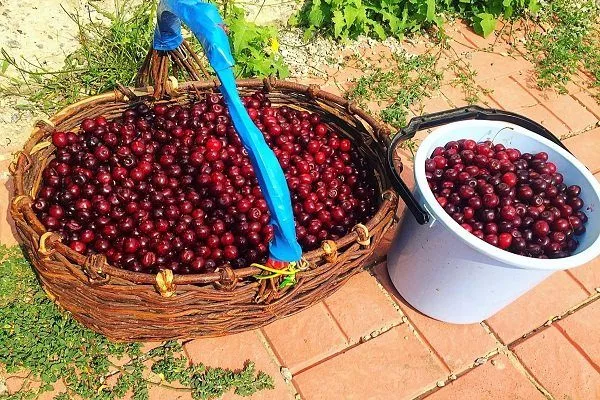
The harvest can be stored in a basket or sieve at temperatures from 0°C to -1°C and a relative humidity of 90-95% for 15 days. In hermetically sealed plastic bags, the harvest will last up to 1.5 months, and in the freezer even longer.
The Turgenevka cherry variety is highly regarded by gardeners in Central and Southern Russia. Its abundant yields and winter hardiness are valuable varietal advantages, protecting farmers from the vagaries of variable weather.