
The Tsarevna cherry belongs to the felt variety, which is now classified in the genus Prunus and the Rosaceae family. The only similarity with cherries is the type of fruit. However, gardeners still refer to felt cherries as cherries. Tsarevna is distinguished by its high resistance to adverse conditions and excellent yields.
History of selection
"Tsaritsa," as it's known to many, is the result of the work of specialists from the renowned VNIIR Institute—V.P. Tsarenko and N.A. Tsarenko. Its origins date back to 1977, and it can be considered a gem of Siberian cherry breeding. It was developed using two types of cherry: the felt hybrid "Summer Beauty" and the local sugar cherry variety "Rubinovy Voshot."
External characteristics of the cherry variety Tsarevna
The local Siberian climate was taken into account when developing this variety, so the cherry thrives and produces fruit in northern regions. It is also successfully grown in the central and central parts of Russia, as well as in the south.
Tree
| Name | Frost resistance | Drought resistance | Ripening period |
|---|---|---|---|
| Princess | High | High | End of July |
| Fairytale courtyard | Average | High | Mid-July |
| Ocean breeze | High | Average | Beginning of August |
| Triumph | Average | Average | End of July |
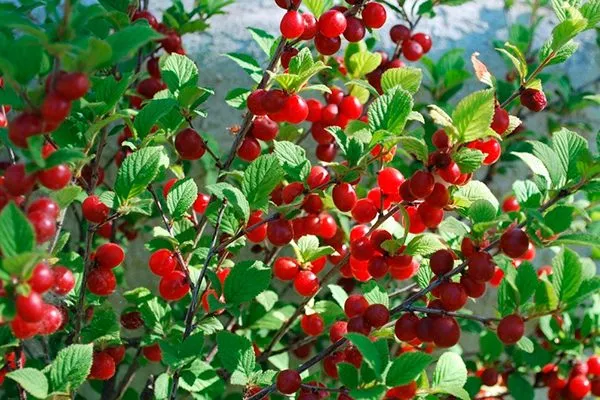
The royal cherry tree is a low-growing shrub, reaching a height of barely 140 cm, but more often 100-120 cm. The tree also has other characteristics:
- crown shape – wide, oval and spreading, without strong thickening;
- shoots – erect, brownish-red, pubescent;
- branches growing from the main shoots – are distinguished by a brown-gray tint, the presence of lighter lenticels and peeling bark;
- kidneys – small in size, located in groups in the leaf axils;
- foliage – oval, elongated, small in size, slightly concave, pubescent and corrugated.
Flowers
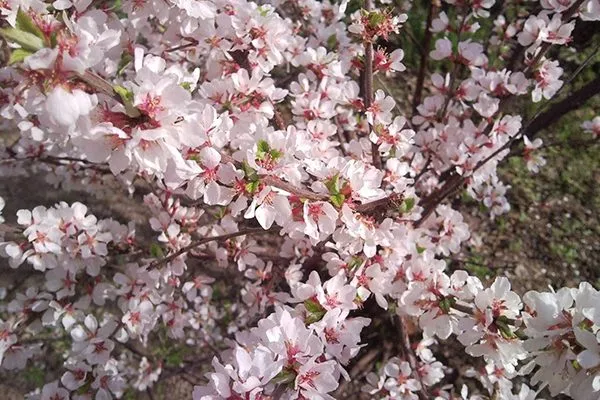
During budding, flowers emerge with loosely arranged, snow-white petals. They are medium in size, measuring approximately 2-2.5 cm in diameter when they open. Other characteristics:
- form - saucer-shaped;
- number of petals – 5 units;
- stamens – 24 pcs.;
- pistils – 1 pc.;
- features of the pistil – distinguished by its pubescence;
- stigma – located on top of the anthers;
- cup – elongated-oval, pubescent, anthocyanin colored.
- inflorescences – one contains no more than 2 flowers.
Fruit
The fruits of this cherry variety are a valuable source of nutrients for the human body, as confirmed by scientific research. They are rich in vitamins C, B1, and A, contain beneficial P-active substances, and are also rich in minerals, including phosphorus, potassium, sodium, iron, and manganese.
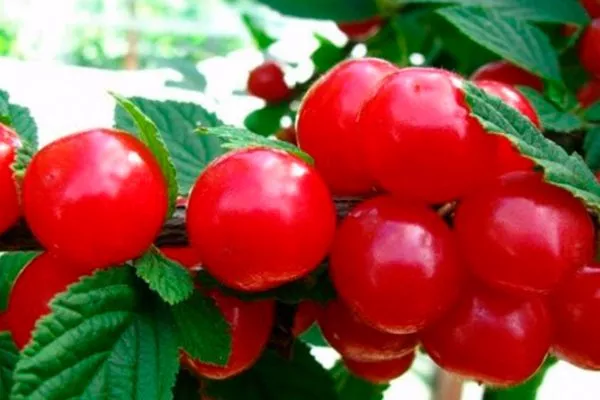
There are a lot of berries on one tree – almost every branch is covered with fruits, which have the following characteristic features:
- size - large, reaching 1.5-1.7 cm in diameter, weighing 3.5-4 g;
- form - ovoid, slightly irregular, as the top is slightly beveled;
- peduncle – very short (0.7-1.0 cm), which creates the impression that the shoots are covered with berries;
- features of the peduncle – there is a slight beak, the funnel is deep;
- abdominal suture – in the form of a strip, clearly expressed, which is rare for felt cherries;
- fruit surface – glossy and fleecy at the same time;
- color - the skin is bright pink-orange, the pulp and juice have a light red tone;
- bone – small, weighs about 0.17-0.19 g, which is one part in 20;
- bone shade – light brown, difficult to separate from the pulp;
- pulp – juicy and dense consistency, but with slight fibrousness.
Cherries have a pleasant sweet and sour taste, as evidenced by a tasting score of 3.8 out of 5. They contain 18 mg of ascorbic acid per 100 g of berries, with sugars predominating over acids: sugars comprise 8.0-8.2%, while acid is only 0.65-0.67%.
A distinctive feature of this variety is its semi-dry separation from the stalk, making mechanical harvesting impossible. These characteristics limit its commercial cultivation.
Characteristics
The Tsarevna possesses truly regal characteristics, making it beloved by gardeners. It's especially important that cultivation doesn't pose any significant problems, but it's important to familiarize yourself with the growing instructions beforehand.
Resistance to drought and frost
It stands out for its exceptional resistance to extreme conditions: the cherry tree can withstand severe frosts and is not afraid of drought. However, it does not thrive in excess moisture. The tiny size of the shrubs requires covering with snow during the winter months.
Pollination characteristics, flowering time and maturity period
This cultivar is unable to self-pollinate, so it requires the presence of other cherry trees nearby. The varieties "Skazochny Dvor," "Okeanskiy Briz," and "Triumph" are excellent for this purpose. The Queen's bloom lasts for a couple of weeks, beginning around mid-spring, and the harvest begins in late July, when all the fruits are ripe at the same time.
Early maturity and productivity
Despite its small size, Tsarevna produces astonishing yields—up to 9-11 kg per bush. And that's the minimum. Native plants begin to bear fruit in the fourth year of planting, while grafted specimens begin bearing fruit the following season.
Scope of use of berries
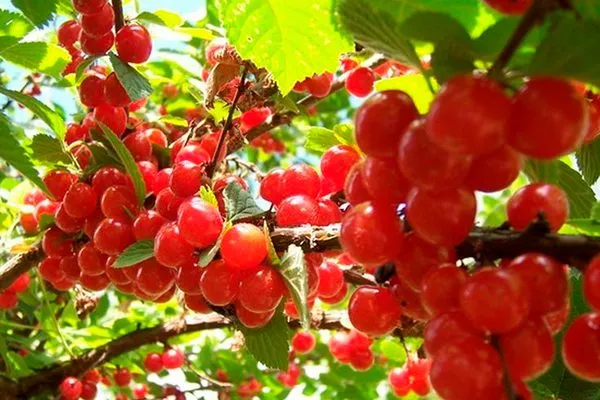
It is ideal for all types of processing: from fresh consumption to canning, confectionery, and the creation of wine drinks.
Resistance to diseases and pests
The plum cherry tree has good health and is resistant to many diseases, including coccomycosis, but is susceptible to the pathogens of clesterosporium and moniliosis – the latter can seriously threaten trees grown in wet soils.
Regarding insects, they rarely visit the tree, but there is a threat from rodents, which can attack the Queen in winter. Therefore, it is recommended to protect the trees with protective netting and poisoned bait to repel potential pests.
Advantages and disadvantages
According to reviews from experts, gardeners, and consumers, this cherry variety has a number of advantages, including:
However, among the few disadvantages, it is worth noting the tendency of the fruits to decrease in size when the bushes are overloaded with crops and the need for additional protection against moniliosis, which may require gardeners to take extra care.
Nuances when planting the Tsarevna cherry variety
The bush is suitable for planting both during the spring awakening and after the leaves have fallen and the winter cold has yet to set in. This is the ideal time to give it a chance to establish itself before the frosts arrive. In spring, planting should be done before the buds begin to swell.
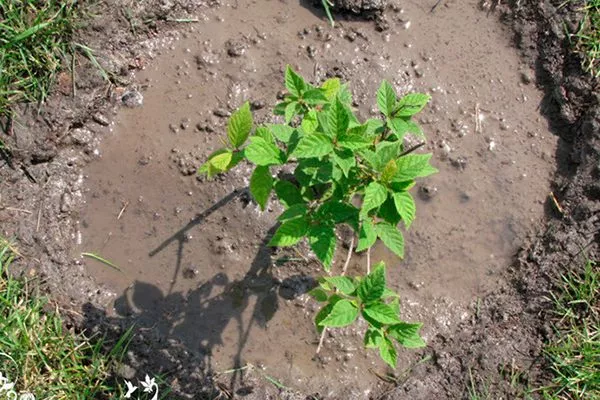
Individual varietal requirements for planting:
- Regions with shallow groundwater pose a risk for the plant due to the risk of root rot from excess moisture. Such areas, where water accumulates, are unsuitable for the successful development of felt cherry, which requires:
- good lighting;
- soil with good drainage;
- loam or sand;
- soil rich in humus and neutral.
Critical soil parameters for planting- ✓ The depth of groundwater must be at least 1.5 m from the surface.
- ✓ The optimal soil pH for the Tsarevna cherry is 6.5-7.0.
- The bush does not tolerate shade, and planting it next to large trees such as apple or pear trees is not advisable.
- Cherry combines well with southern sweet cherry or cherry, as well as with other crops resistant to moniliosis to prevent infection.
- To get fruits of the Tsarevna variety, you need to plant a couple more felt cherry bushes of different varieties nearby.
- Before planting, improve the soil with fertilizers in the following proportions per 1 sq. m:
- no more than two or three buckets of humus compost, excluding fresh manure;
- up to 700-800 g of lime for acidic soils;
- up to 50-55 g of phosphorus fertilizers;
- up to 25-35 g of potassium compounds.
- The root collar should not be planted too deeply.
Subsequent care of the culture
Initially, after planting the Tsarevna cherry tree, until it establishes itself, no additional fertilization is required. In subsequent years, after flowering, the soil around the spreading crown is enriched again:
- one bucket of natural organic fertilizer;
- 65-75 g of phosphate substances;
- 25 g nitrogen compounds;
- 20-25 g of potassium-containing preparations.
Cherry trees easily survive dry weather; watering is best done only when there has been no precipitation for a long period of time, with humidity being especially critical during the ripening period.
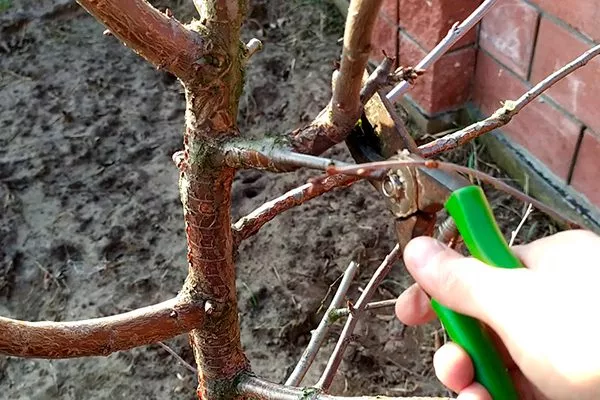
Pruning rules:
- Pruning of the shrub can be carried out either regularly every year or as a rejuvenating procedure, repeated every five years, which coincides with the fruiting period of individual branches.
- Carrying out rejuvenating pruning has a positive effect on the lifespan and fertility of the plant.
- If pruning is done once a year, it's best to leave about 9-11 strong shoots. If the branches have grown more than 65 cm in a year, they should be cut back by about a third.
- It's important to prevent the crown from becoming too dense. This process involves careful pruning: the goal is to create light transparency in the core of the crown and at the base of the main branches, as well as removing some lateral shoots all the way to the base. These measures stimulate the development of new, young shoots.
The Tsarevna cherry variety is known for its resistance to winter cold. However, for successful overwintering, spring applications of potassium- and phosphorus-rich fertilizers are recommended, along with generous watering after leaf fall.
To prevent rodent attacks on trees, it's essential to use proven methods. Installing wire mesh around the base of the trunk or laying spruce branches will help prevent damage. Placing poisoned bait or pieces of cloth soaked in kerosene effectively repel pests thanks to their intensely unpleasant odor.
Diseases and pests, methods of control and prevention
Some of the common ailments of the Tsarevna cherry are fungal diseases:
- Moniliosis. It is recognizable by yellowed leaves and dried-out shoots. A one-percent solution of Fundazol is effective against it, and removing dead parts of the tree prevents its spread.
- Pocket disease. The appearance of seedless fruits, resembling a small sac, indicates so-called pocket disease. Treatment involves pruning the affected areas and treating them with fungicides. Prevention involves careful selection of the planting site and regular treatment of the branches with copper-containing products.
Reviews
The felt cherry "Tsarevna" can become a true garden highlight during its flowering period, delighting the gardener with a bountiful harvest of delicious berries. However, keep in mind that the fruit must be harvested immediately, as this variety doesn't have a long shelf life. When growing, be sure to spray it preventatively and protect the bush from rodents.