
The Shokoladnitsa cherry was developed in 1996 by crossing two varieties—Lyubskoy and Shirpotreb Cherny. It was developed by Russian breeders at the All-Russian Research Institute of Selective Fruit Crops. From its parents, the hybrid inherited its dark color, rich flavor, frost resistance, self-fertility, and short stature.
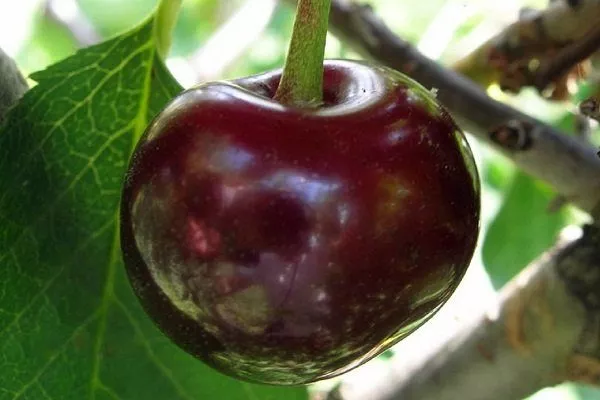
Cherry Chocolate Girl
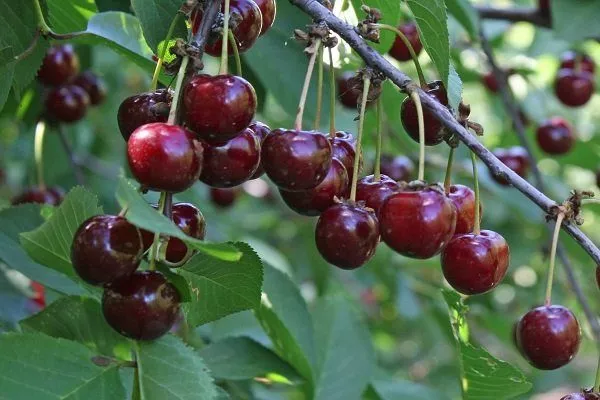
The Shokoladnitsa cherry is frost-resistant.
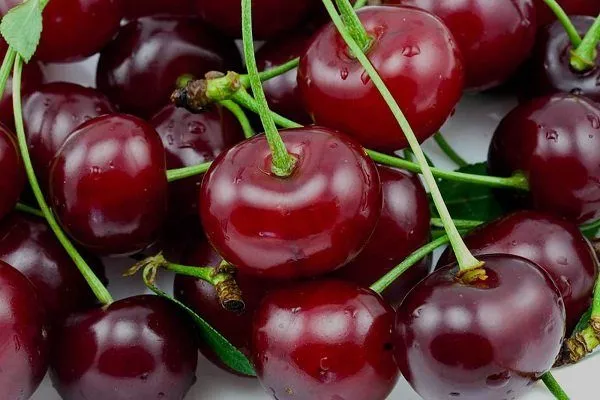
The Shokoladnitsa cherry has a rich taste
Description of the variety
The chocolate tree is a low-growing species with a maximum tree height of 2 to 2.5 meters.
The trunk bark is brown or brownish-gray. The crown is medium-dense with upright branches. The apex is blunt, giving the appearance of an inverted triangle upon examination.
Characteristic features of the variety:
- Straight shoots Covered with brown bark with a grayish bloom, they produce cone-shaped buds up to 4 mm long, which are pressed tightly against the branches.
- Foliage Formed from buds, it is characterized by a light shade underneath and dark green above. The leaves have a matte surface and a regular oval shape. The apex is blunt, and the base is slightly pointed.
A distinctive feature is the bi-serrated margin (the main teeth have smaller elements). The average petiole length is 1 cm 5 mm. - Petals The white flowers are loosely arranged. A single inflorescence contains approximately three flowers, indicating a high yield. The calyx bears serrated sepals.
- Berries They weigh 3-4 grams and have an average size of 18 x 16 cm. The shape of the fruit is wide, flattened and round with a yellow seed inside (its weight is no more than 10% of the total weight).
The colour when ripe is a rich dark burgundy, turning black at the final stage of ripening. - Peduncle The fruit ranges in length from 32 to 36 mm. The flesh is medium-dense, making it easy to separate from the pit, and is dark red in color.
Characteristics of the variety
If agricultural practices are properly organized and the tree is properly cared for, then the Shokoladnitsa cherry variety will meet its stated characteristics.
Resistance to adverse factors
The Shokoladnitsa cherry is considered a heat-loving fruit tree, but at the same time it easily tolerates winter frosts.
It's not fussy about drought, as it has a well-developed root system. Its strong bark makes it resistant to cold winds.
Growing regions, hardiness
The variety grows best in the southern regions, but can also adapt to the central part of Russia.
These areas include:
- Smolensk;
- Tula;
- Bryansk;
- Moscow;
- Vladimirskaya;
- Ryazan.
The Chocolate tree is considered hardy, as it can withstand frosts down to -20°C. If the temperature drops, gardeners recommend covering the plant from the underside of the trunk for the winter.
Pollination, flowering and ripening period
Hybrid cherry is included in the group of self-fertile crops, therefore it is fertilized by its own pollen and can grow far from other fruit trees.
To increase yield, it is recommended to plant Shokoladnitsa next to crops such as Griot (sweet cherry), Sklyanka, and Vladimirskaya cherry. The distance between them should be at least 2 meters.
The variety begins to bloom in mid-May, and the fruits fully ripen after July 20. The first harvest can be collected after 4 or 5 years from planting.
Productivity, fruiting and taste qualities
A single mature tree can produce 11 to 12 kg of fruit. When grown commercially, Shokoladnitsa cherries yield a maximum of 95-97 c/ha, with an average yield of 76-78 c/ha, making it a medium-yielding variety.
The fruits have a sweet and sour taste with a slight degree of bitterness, like cherries.
Peculiarities:
- sugar content – 12.4%;
- acid – 1.6%;
- professional assessment of sweetness by tasters – up to 4 points.
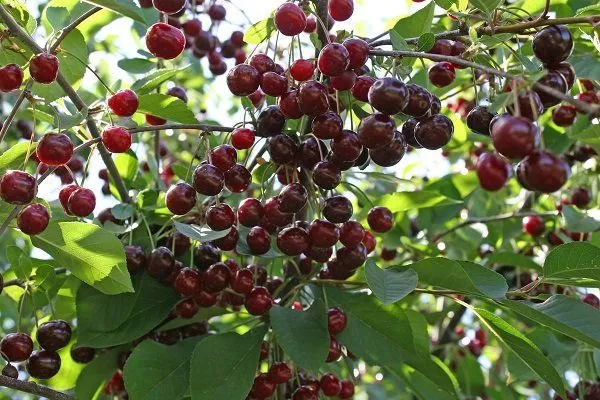
Application of berries
This variety is considered versatile due to its excellent flavor. Areas of use:
- compotes and drinks;
- liqueurs, wine;
- jams, preserves, marmalade, jelly;
- baby puree, marshmallow;
- sweet pastries;
- sauces.
Ripe berries can be frozen and dried. Fresh berries can be stored at temperatures up to 6°C for up to 3 days without the stem and 10 days with it.
Advantages and disadvantages of the variety
Over the more than 20 years of its existence, Shokoladnitsa has been appreciated by gardeners and large farmers, and the following advantages of the variety are noted:
- compactness, which saves space and simplifies the process of maintenance and harvesting;
- resistance to frost and drought;
- rapid ripening of berries;
- self-pollination;
- richness of color and taste, sweetness;
- unpretentiousness.
Agronomists also identified some disadvantages:
- pest and disease control treatment required;
- average yield indicators;
- the desire of birds to eat tasty berries.
Landing features
The Chocolate Tree adapts to any soil, but it must be loose (to allow plenty of oxygen) and neutral. Slightly alkaline soil with a pH of 7.0 is ideal.
Landing features:
- The variety does not tolerate stagnant moisture., therefore groundwater must pass at least one and a half meters from the surface.
- If the soil is clayey and sticky, the roots will suffocate. In this case, it's necessary to add humus, black soil, turf soil, or peat to the planting site. The amount should be sufficient to create a loose structure.
- The hole is not made according to the parameters of the root system (unlike other varieties), and deeper and wider by 15-30 cm. The main roots are from 20 to 40 cm long, thin ones - up to 70 cm.
- Loose soil is prepared to a depth of at least 55 cm, in diameter 3 m.
Choosing a landing site
Cherry loves warmth and lots of light, so the area for Shokoladnitsa is chosen to be spacious (without tall trees nearby).
If the crop is kept in the shade, the yield and sweetness will decrease, and the risk of fungal pathogens will increase.
It is not advisable to plant Shokoladnitsa next to pine needles and apple trees.
Selection and preparation of planting material
It's best to buy seedlings from trusted sellers—specialty stores or close friends. There are some guidelines for choosing planting material that should be followed:
- Ask the seller about the age of the shoot - it should be a maximum of 2 years old, this can be determined by the height: an annual plant should reach 80 cm, a biennial - 1 m 20 cm;
- inspect the seedling - a healthy plant has no damage, broken roots, or spots; buds should form on the shoots if you are making the purchase in the spring;
- Measure the length of the roots - for one-year-old cherries it is 22-28 cm, for two-year-olds - 33-36 cm.
- ✓ The optimal diameter of the seedling trunk should be at least 1 cm to ensure good survival.
- ✓ The presence of at least three well-developed roots at least 20 cm long guarantees better rooting.
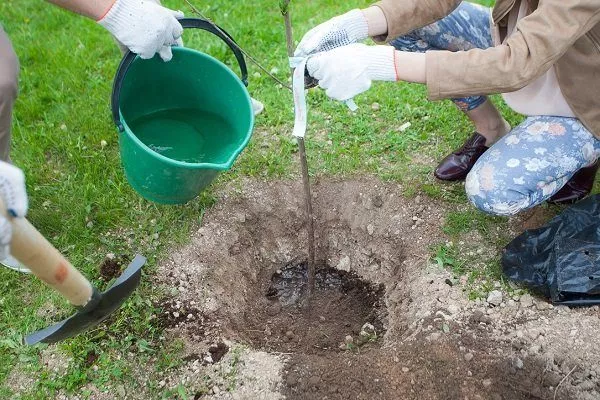
If you bought an escape in autumn, it must be prepared by doing the following:
- In the garden plot, bury the seedling in the soil so that only the top remains above the surface.
- Before frost sets in, cover the plant with 1-2 layers of agrofibre. Leave it there until the first snow melts.
As soon as stable warm weather sets in (+
Reproduction
Chocolate tree can be propagated in two ways: by grafting and cuttings. To grow a shoot for grafting, collect the seeds in the summer, selecting the largest ones.
Be sure to check them for any voids. Afterward, soak them in a weak solution of potassium permanganate for a couple of hours and rinse. Then follow the instructions:
- Place the seeds in low wooden boxes.
- Sprinkle with moistened sawdust and leave until October, periodically watering with warm water.
- Transplant the seeds into open ground. If severe frosts are expected, cover the area with branches or other material.
- In spring, you'll see sprouts. Thin them out, removing weak ones and leaving at least 20 cm between them.
- Fertilize the soil in the spring and water the plant throughout the summer.
- After a year, graft the cuttings using the standard method.
How to propagate the Shokoladnitsa cherry tree by cuttings:
- Take cuttings in late June or early July, when they are actively growing. Cut the shoots from healthy, fully formed trees. The shoots should be 10-12 cm long.
- Prepare a container 15-20 cm high. Fill it with a mixture of equal parts peat and sand. Lightly spray with a weak solution of potassium permanganate and moisten with warm water (avoid stagnation of water, as this will prevent the cuttings from rotting).
- Plant the shoots in the soil mixture at a distance of 7-8 cm from each other and a depth of 3 cm.
- Cover the box with plastic wrap and place it in a well-lit area, but do not expose it to direct sunlight.
- Once the first roots appear (this is noticeable), open the container periodically for 3-5 hours. Gradually increase the time; this helps harden the plant.
- In the fall, dig in the cuttings and replant them in the spring.
Diseases, pests of the variety and measures to control them
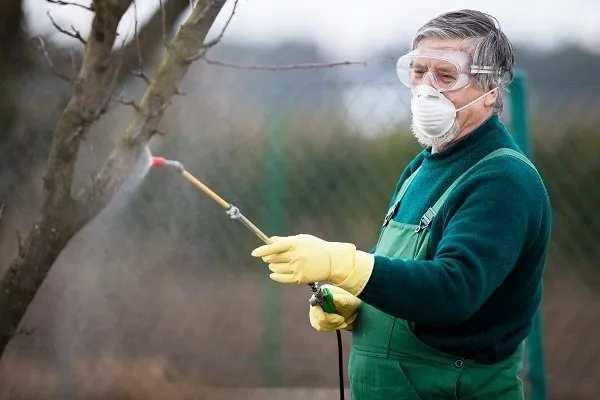
Shokoladnitsa isn't susceptible to all the diseases and pests that affect cherry trees, but there are some that are common to this variety, so preventative treatment is necessary. If you follow all the rules, the variety's resistance to pests and diseases increases.
| Name of disease/pest | Signs | Treatment/control methods | Preventive measures |
| Coccomycosis | It manifests itself as brown spots on the leaves above and a light pink coating underneath. As a result, the leaves fall off (fruit is not affected). | Cut off the affected branches, treat the cut with a solution of 1% copper and 3% iron sulfate, spray with Bordeaux mixture (3%) twice after 14 days. | Digging the trunk circle. |
| Hollow spot | It is characterized by red, then brown spots on the leaves, followed by dryness and holes. Fruits, buds, shoots, and flowers are destroyed. | Similar to coccomycosis. | |
| Moniliosis | Characterized by severe drying out of flowers and branches, then the fruits. A fuzzy, grayish coating forms on the berries. | Treatment with fungicides (Topaz, Skor, Fundazol). | In spring, careful digging of the soil is required. |
| Rust | Red spots on leaves, framed by a rusty edge. | If detected after flowering, use the drug Hom; after picking the berries, use 1% Bordeaux mixture. | Do not plant coniferous crops nearby. |
| Cherry weevil | Localized on flowers, ovaries, leaves, buds. | Spray with Karbofos twice with an interval of 7 days. | In the fall, remove old bark. If insects are found in the spring, shake them off and destroy them. Pre-treat with a solution of 150 ml of chamomile infusion, 10-13 liters of water, and 60 grams of brown laundry soap. |
| Aphid | The presence of small insects that stick to leaves, buds, and young growth. | Preparations Inta-Vir, Fitoverm. | Spray with an infusion of tobacco or laundry soap. Avoid overuse of nitrogen fertilizers. |
| Cherry moth | The moth caterpillar attacks the entire tree. | Treatment with Karbofos. | Loosen the soil more often. |
Reviews of the variety
The Shokoladnitsa cherry is an excellent choice for lovers of sweet berries with a subtle tartness. Planting one or two trees near your home will ensure that everyone in your family enjoys these dark fruits year-round.