
The Shchedraya cherry is a high-yielding steppe variety suitable for desserts. It is easy to grow, delicious, and capable of delighting gardeners with its consistent harvests for many years.
History of selection
The Shchedraya or Maksimovskaya cherry was developed through the work of Sverdlovsk breeders. Various cherry varieties, including the Ideal variety, were used in the selection of the new variety.
The Shchedraya variety was bred in 1959, but it wasn't added to the State Register until 1985. It is zoned in West Siberia. It later spread throughout Russia, as well as to Belarus, the Baltics, and Ukraine.
What does a tree look like?
The Shchedraya cherry tree is a bush-type variety. It is quite low-growing, reaching a maximum height of 2 meters. The crown is wide and upright, with upward-facing branches. The shoots are slender and dark brown. The bark is cracked and brown.
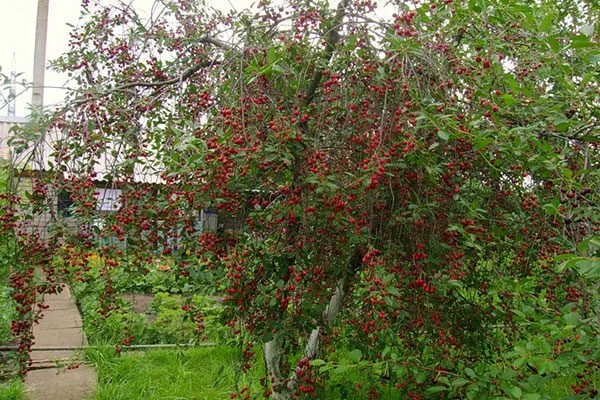
The branches have medium foliage. The leaves are elongated, glossy, and dark green. The leaflets are obovate, with pointed tips. The flowers are medium-sized, white, and borne in clusters of 3-4.
Fruit
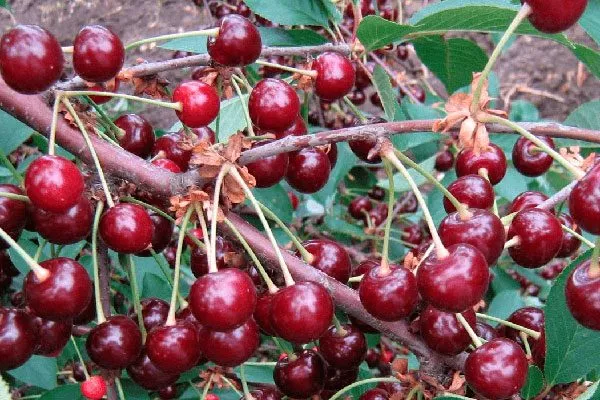
The fruits are attractive, glossy, and medium-sized, with a diameter of about 17-18 mm. They are round, slightly compressed at the sides. The average weight is 3.2 g, with a maximum weight of 5 g. The color is dark red.
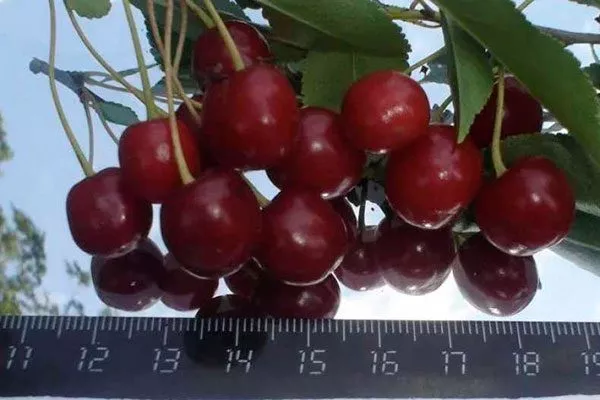
The flesh is juicy and fairly firm. The stone is round, weighing 0.27 g. Separation from the pulp is moderate. Fruit separation is dry.
Taste qualities
The fruits are table-worthy, slightly tart and aromatic. The fresh fruit has a tasting score of 4.4.
Composition of the fruits of the Shchedraya variety:
- sugar - 6.7%;
- fruit acids - 1.5%;
- ascorbic acid - 13.2 mg/100 g;
- vitamin P - 318.2 mg/100 g.
Characteristics of the variety
The Shchedraya variety has fairly good agronomic characteristics, allowing it to be grown without any particular difficulties in various regions of Russia.
Specifications:
- Productivity — 13-17 kg.
- Lifespan of a tree — 30 years and more.
- Drought resistance - good.
- Frost resistance — high, up to -45 °C.
- Self-fertility — partial. 7-20% of ovaries form independently. To increase yield, the variety requires pollinators. The maximum distance is 40 m.
- Flowering time. Flowers appear in late spring or early summer.
- Ripening periods. They depend on the growing region. In central regions, they ripen in August-September. The fruits ripen gradually, not all at once.
- Application. The fruits are eaten fresh and processed to make juice, jam, wine, and preserves.
- Disease resistance Quite high. The variety is almost immune to clasterosporium.
This variety tolerates dry air and high temperatures well. However, it is very cold-resistant, surviving temperatures as low as -40°C.
Both the wood and buds are resistant to low temperatures. The greatest dangers for the Shchedraya cherry tree are strong cold winds and frost buildup on the crown.
Advantages and disadvantages
Before planting the Shchedraya cherry tree in your garden or summer cottage, it's helpful to familiarize yourself with all of its advantages. It's also important to be aware of all of this variety's drawbacks to determine whether it's suitable for your needs.
Landing
The tree's entire lifespan, including its growth, development, and fruiting quality, depends on proper planting. It's important to choose a good planting site and high-quality planting material, as well as to follow the planting procedures.
- ✓ Check the root system for rot and mechanical damage.
- ✓ Make sure that the seedling has at least 3 well-developed branches.
Landing features:
- Purchase of seedlings. For planting, select one- or two-year-old seedlings that are free of defects and damage, with well-developed roots. Seedlings purchased in the fall can be dug into the garden for the winter. They are laid in trenches 30 cm deep, leaving only 10-15 cm above the surface.
- Disembarkation times. The best time is early spring. The ideal time is April, when cherries are planted before the buds open.
- Landing site. It should be well-lit, preferably on the south or southwest side of the garden. Lowlands, marshy areas, and windy areas are not recommended.
- Neighborhood. Avoid nearby apple trees. Cherry, rowan, and grapevine are considered good neighbors. Elderberry, planted nearby, will protect the tree from aphids. The distance to tall trees should be at least 5 meters, and to short trees, 2-3 meters.
- Soil. The optimal option is dry sandy loam soil.
- Preparing the soil. In the fall, the area is dug over, adding lime (for deoxidation). For each square meter of soil, add diluted manure (10 liters), potassium sulfate (50 g), and superphosphate (100 g).
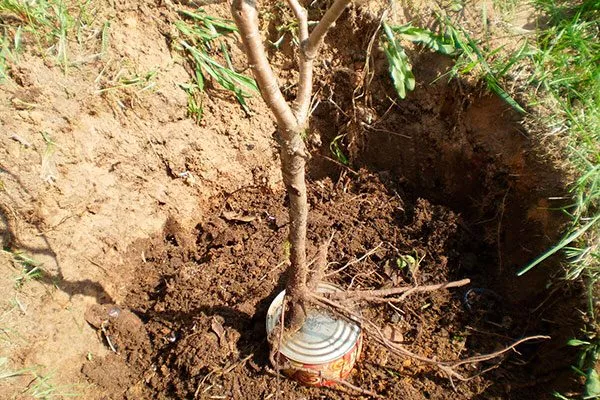
- Preparing the pit. It is prepared 2-3 weeks before planting. The size is 40x40 cm, the depth is about 50 cm. Half the hole is filled with compost, to which mineral fertilizers are added.
- Landing The procedure is standard. Afterwards, the tree is watered, and the area around the trunk is mulched with peat, sawdust, and tree bark.
- ✓ Ensure a distance of at least 3 meters between trees to ensure adequate lighting and ventilation.
- ✓ Mulch only after the soil has warmed up to +10°C.
Care
The Shchedraya cherry is not a fussy variety, but to achieve the yields its name suggests, it does require some care. The tree requires watering, fertilizing, pruning, loosening, and preventative spraying.
- Watering. Despite drought tolerance, water stress is not recommended. Young trees are watered frequently, whenever the soil begins to dry out. The recommended water intake for a young tree is 20 liters, while for a mature tree it's 30-40 liters. Larger trees are watered three times per season—when the tree finishes blooming, when the fruit ripens, and before wintering.
- Fertilizer. Fertilizers are applied starting in the third year after planting. In the spring, as soon as the snow melts, nitrogen is added, and in the fall, superphosphate or potassium sulfate is added. Organic matter is added every two years. Liming is applied to the soil every five years.
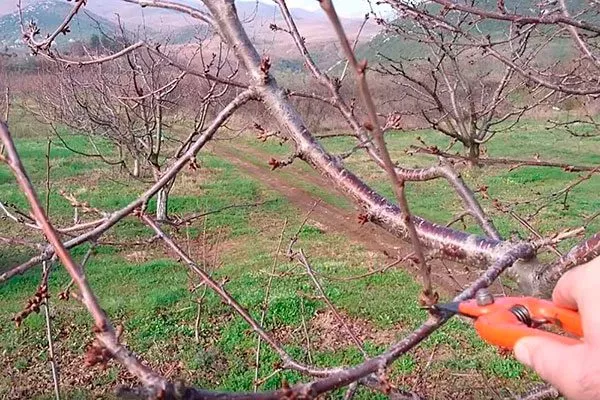
- Trimming. The tree requires sanitary and formative pruning, which is performed in early spring after bud break. A 5-year-old tree's crown, once formed, should have approximately 10-15 skeletal branches. Later pruning is performed only for thinning purposes. One-year-old shoots are not pruned.
- Preparing the tree for winter. Cherry trees are prepared for winter only after the leaves have completely fallen. Then, the area around the tree trunk is carefully dug over, a moisture-replenishing watering is performed, and the soil is mulched with a thick layer of peat, sawdust, and straw. In regions with very harsh winters, bush cherries are covered with spunbond, after bending the branches down.
Diseases and pests
The Shchedraya cherry tree has excellent immunity, but under unfavorable conditions it can be affected by fungal infections such as moniliosis or coccomycosis. Among pests, the most dangerous are cherry aphids and slimy sawflies. Problems most often arise in cold and damp weather.
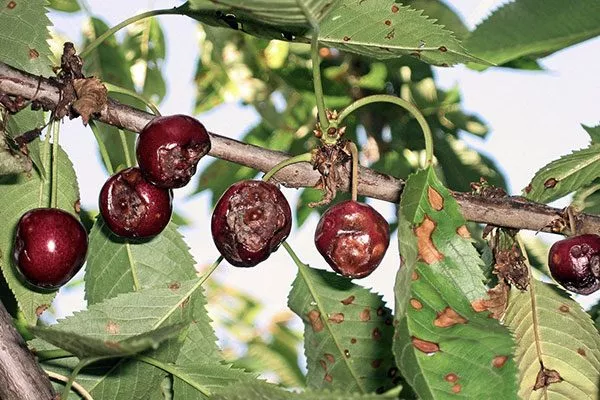
It is recommended to collect and burn affected leaves. Before flowering, treat the tree with copper oxychloride, and after harvest, with a 1% Bordeaux mixture. Spray not only the plant but also the soil. Cherry trees should also be sprayed with insecticides according to the schedules prescribed for fruit trees.
Reviews
The Shchedraya cherry was popular during the Soviet era for good reason. This tasty and productive variety was widely grown in collective farm orchards and private gardens. Even today, despite the abundance of competitors and new, interesting varieties, the Shchedraya variety remains popular, grown in summer cottages and is also ideal for commercial cultivation.