
With limited garden space, creating a full-fledged cherry orchard can be challenging, and at best, only two or three trees will be possible. Therefore, gardeners strive to choose a versatile, productive, and winter-hardy cherry variety. Radonezh is considered one of the best such varieties.
History of selection
The variety was developed in 1987 at the Bryansk Experimental Station of the All-Russian Lupine Research Institute. To create it, breeders crossed the II-L and Kistevaya cherries. The authors are A. L. Astakhov, M. V. Kanshina, and L. I. Zueva. It was added to the State Register in 2002.
Description of the culture
Radonezh is a tree-like cherry variety. Gardeners often prefer this variety, especially in the more northern regions of the country.
Tree
A medium-sized plant, reaching a maximum height of 3 m if not pruned in spring to form a standard. Key characteristics include a short, rounded-oval trunk and a medium-density, slightly upright crown.
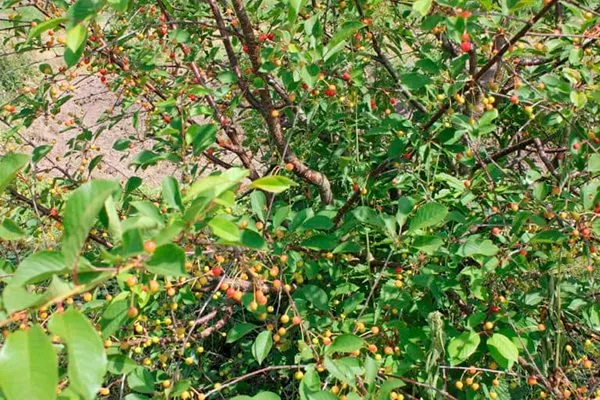
The branches are thick, the buds are relatively small, and the leaves are dark green with a glossy surface, slightly curved inward at the edges, serrated, and pubescent. The petioles are short, dense, and of medium thickness. The flowers are medium-sized, forming inflorescences typically consisting of six flowers.
Fruit
They have a pleasant sweet flavor with a slight tartness and weigh between 4 and 5 grams. They are round in shape, with medium-dense, delicate flesh. The stem is long, making harvesting easy, especially for ripe and overripe fruits.
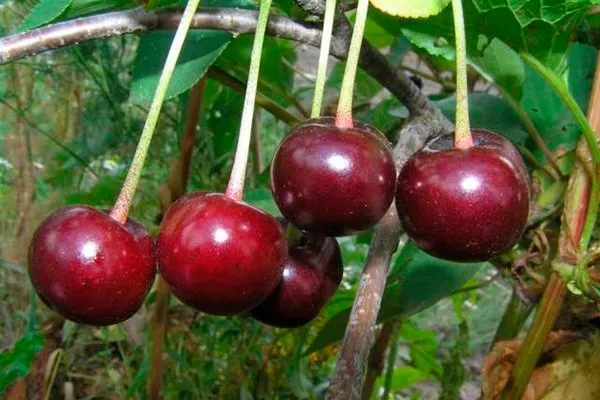
The flesh is dark red. The pit makes up approximately 6% of the cherry's total weight and is easily removed.
The composition includes a number of useful elements:
- P-active compounds: catechins, flavones and leucoanthocyanins.
- Anthocyanins, which are responsible for the color of the pulp and are capillary-binding elements.
- Coumarins.
- Iron in an amount from 1 to 3 mg.
The tasting score is 4.2 points, which indicates high quality and taste characteristics.
Characteristics
To get a sense of the variety, it's important to consider its basic qualities. It has many positive characteristics.
Drought resistance, winter hardiness
It has high frost resistance. This property allows it to successfully survive spring frosts, even during the flowering period, minimizing potential damage.
Pollination, flowering period and ripening time
This variety is partially self-fertile, so to achieve the stated yield level, suitable pollinators must be nearby. Without the right pollinators, yields can drop significantly, as the variety can pollinate only 40% of its flowers on its own.
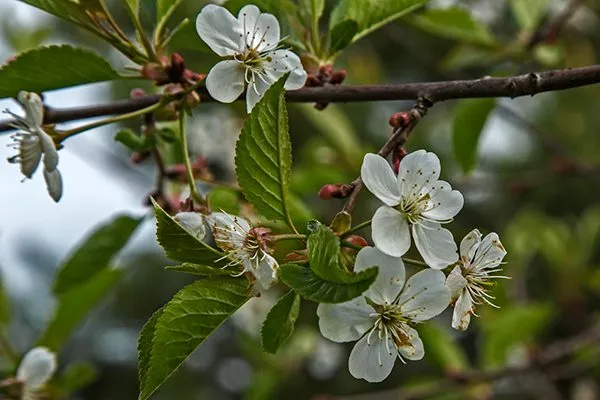
Use the following varieties as pollinators: Lyubskaya, Vladimirskaya, and Turgenevka, whose flowering period coincides with the budding of Radonezh. It bears fruit on one-year-old growth, and during the flowering period, inflorescences appear on new shoots. Flowering occurs in May, and the first berries ripen by the end of June.
Productivity, fruiting
This is an important criterion determining demand. The yield ranges from 50 to 70 centners per hectare, depending on the tree's age and care. The minimum yield occurs in the fourth year after planting.
Application of berries
They have versatile uses, being excellent for fresh consumption and preserves. They have excellent flavor characteristics, which expands the range of possible uses for the harvest.
Berries are used in compotes, jams, juices, and preserves. They are also frozen and dried. All kinds of preserves can be made using berries, both seeded and pitted.
Transportability
The berries have average transportability. For more efficient long-distance transport, pick them when they're not yet fully ripe. This is because, once fully ripe, the cherries easily separate from the stem, and without it, they can lose juice more quickly.
Climate conditions
Adapted to the central regions of the country with moderate climates, the plant exhibits resistance to temperatures down to -25°C and spring frosts (buds can withstand short-term temperature fluctuations down to -5°C, with losses of approximately 30%).
Resistance to diseases and pests
It is immune to fungal diseases such as moniliosis and coccomycosis. To increase resistance, regular preventative treatments with copper-containing products are recommended.
Advantages and disadvantages
It has a number of advantages and disadvantages that are important to consider before planting a seedling in your garden. The Radonezh cherry has the following advantages:
Among the disadvantages, gardeners note sensitivity to spring frosts, demanding care, the need for pollinators, dependence of yield on care, and demanding lighting.
Landing features
For a successful planting, it's important to consider all the nuances and features. Follow these recommendations:
- Recommended timeframes. For optimal planting, spring is preferable, as frequent frosts in autumn pose a risk of damage. Fall planting is only permissible in southern regions, and all work must be completed by early November.
- Selecting a location and preparing the soil. A sunny spot in the garden with a groundwater level of at least 2.5 m is ideal. Leave a distance of at least 3 m between plantings.
- Neighborhood with other cultures. For a successful neighboring crop, plant this crop near grapes, cherries, hawthorn, and Nevezhinskaya rowan. Avoid next to apples, pears, blackthorn, plums, cherry plums, and apricots.
- Selection and preparation of planting material. Root condition is a key factor when choosing seedlings. They should be strong and undamaged. Seedlings 1-2 years old are considered ideal. Before planting, prepare the planting material by placing it in furrows with the crown facing south. Water, surround it with spruce branches, and leave it until spring.
- ✓ The seedling planting depth should be such that the root collar is 5-7 cm above the soil level.
- ✓ The distance between trees should be at least 4 m to ensure sufficient space for the root system to grow.
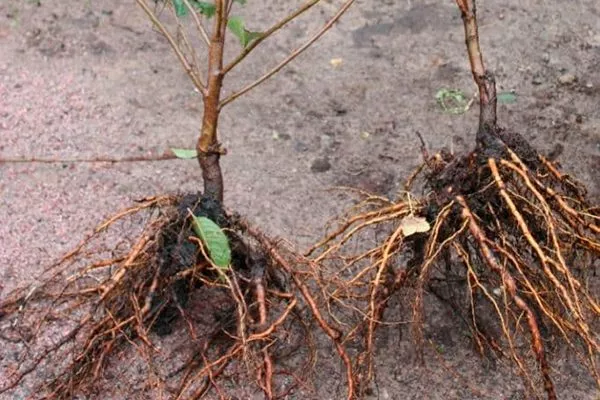
Landing rules:
- Apply organic and mineral fertilizers in the fall.
- Install the support peg.
- Place the seedling on the north side of the stake.
Cover the roots with soil, form a tree trunk circle, water and mulch.
Subsequent care of the culture
Cherry tree care involves a number of agricultural practices. A small investment of time and attention will yield bountiful harvests.
The following recommendations will help you effectively care for the crop:
- Watering. Depending on rainfall, water 2-3 times in southern regions and 1-2 times in northern regions. Start watering in the second half of summer, when water consumption is highest. If the summer is wet, do not water the plant from August until leaf fall to prevent shoots from fully ripening.
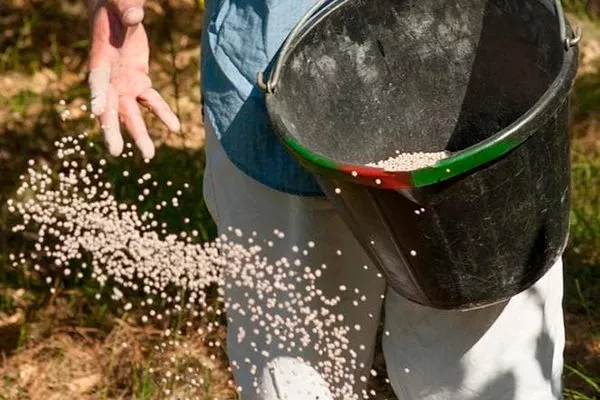
- Top dressing. Apply the main fertilizer in the fall, either by plowing or digging. In the second half of summer, apply a phosphorus-potassium fertilizer to increase frost resistance. The amount of fertilizer depends on the age of the plant.
- Trimming. Perform the first pruning immediately after planting to reduce water evaporation. If planted in the fall, prune the seedling in the spring before bud break. In subsequent years, shape the crown, thin it out, and prune it for easier maintenance and cleaning.
- Loosening. Perform the procedure near the tree trunks at a distance of 12-15 cm, and further away at a distance of 20-25 cm.
- Mulching. Mulching young trees can speed up fruiting and increase yields by 50%. Apply mulch sparingly to avoid drying out.
Preparing for winter
Winter preparation is especially necessary for young trees, including rodent protection. Before the onset of frost in the fall, surround the trunks of young trees with burlap or paper, such as that found under sap boxes.
- Perform a moisture-charging watering at the end of October to increase winter hardiness.
- Insulate the trunk of young trees with burlap or special covering material before the onset of stable frosts.
- Place poisoned baits around trees to deter rodents.
Diseases and pests
Despite its resistance to diseases and pests, this variety can still become infected or be attacked by pests. The table lists potential problems and their management methods:
| Insect/Disease | Problem | Prevention | Treatment |
| Bark beetle | Eats holes in the bark. | Injection of the Bi-58 preparation into the holes created by the pest using a syringe. | Treatment of affected areas with Bi-58 using a syringe. |
| Moniliosis | Development of the disease until the buds open. | Timely application of contact fungicides before bud break. | Burning of affected areas and repeated treatment with fungicides. |
| Coccomycosis | Accompanied by the appearance of small red dots on the leaves. | Spraying with Bordeaux mixture.
| Treatment with Bordeaux mixture or systemic fungicide, burning of damaged leaves. |
| Clusterosporiasis | Affects shoots, leaves and fruits, leading to a decrease in the sugar content of fruits and their weight. | Spraying with Horus and Bordeaux mixture. | Pruning of infected shoots and collection of affected fruit, followed by their destruction outside the plot. Subsequent treatment with fungicide solutions containing triazole compounds and copper compounds. |
Reviews
The Radonezh cherry is considered easy to grow, making it quite simple. Gardeners appreciate this variety for its many characteristics and positive qualities. It's important to follow the recommended cultivation practices to ensure the tree produces a high yield and maintains a strong immune system.