
Gardeners often struggle to find a cherry variety that offers strong immunity and high yields. Among the many varieties, the Putinka variety is particularly popular. It boasts numerous positive characteristics, is easy to care for, and requires minimal attention.
Origin
Developed by crossing Prevoskhodnaya Venyaminova and Anthracite. It was created in 2013 and subsequently adapted for cultivation in the Central Black Earth Region. The authors of the selection are Kolesnikova A. F., Gulyaeva A. A., Dzhigalo E. N., and Mosina R. V.
Description of the Putinka cherry
When creating a garden landscape design, it's important to consider not only characteristics such as frost resistance and weather resistance. Visual aspects should also be considered.
Height and dimensions of an adult tree
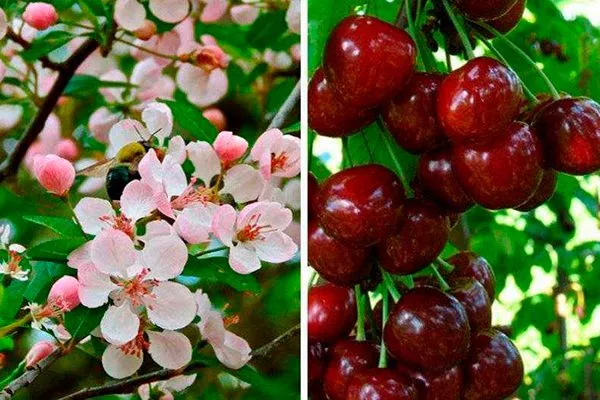
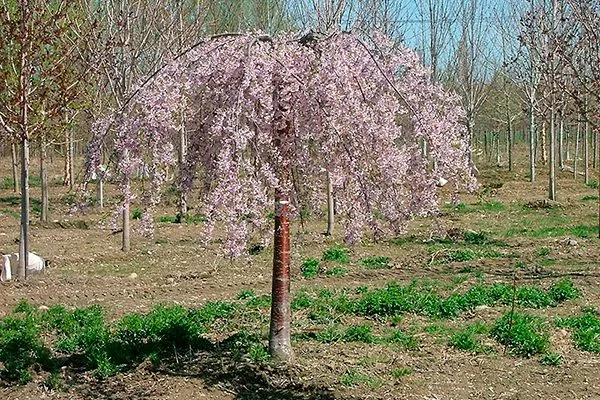
It reaches a height of up to 3 m. The crown is characterized by medium density and an upright shape. The shoots are arched and leafless. The crown diameter typically ranges from 1 to 1.5 m. The leaves are rounded, tapering gently at the tips, flattened and curved downward.
The leaves are light green, and the surface is smooth and matte, with visible wrinkles. The plant produces small white-pink flowers, collected in umbel-shaped inflorescences.
Description of fruits
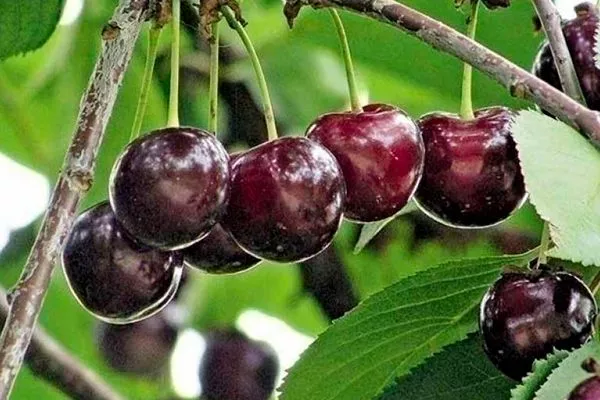
This variety is classified as a large-fruited variety with uniform berries. They are distinguished by their broad, round shape and smooth, medium-firm skin, a dark red, almost burgundy hue. The average weight is approximately 6 g, but some specimens can reach 7 g.
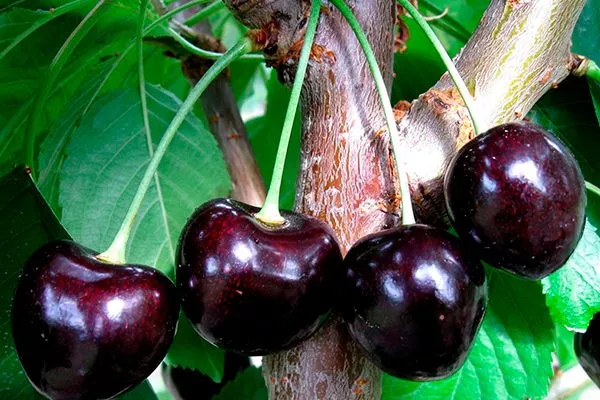
The pulp is exceptionally juicy, with a light and subtle tartness and a predominantly sweet flavor. The pit is easily removed. The tasting score is 4.6 points. The fruits are rarely sun-baked.
Main characteristics
Before planting a seedling in your garden, study its basic characteristics. This will help determine how much care it requires, what kind of yield it will produce, and so on.
Drought resistance, frost resistance
It exhibits high frost resistance. In case of spring frosts, up to 25% of flower buds may be lost. In winter, with proper care, the risk of freezing is minimal. For optimal development, moderate climates are preferred, as flower buds are sensitive to sudden temperature changes.
In regions with significant temperature fluctuations, providing special cover is recommended. The crop tolerates short-term droughts well, but requires additional watering during prolonged periods without rain. This is essential for producing a large quantity of fruit.
Productivity
The fruits ripen relatively late, in late July and early August. The plant begins bearing fruit in the fourth year after planting, producing a high yield of 8 to 12 tons of juicy berries per hectare.
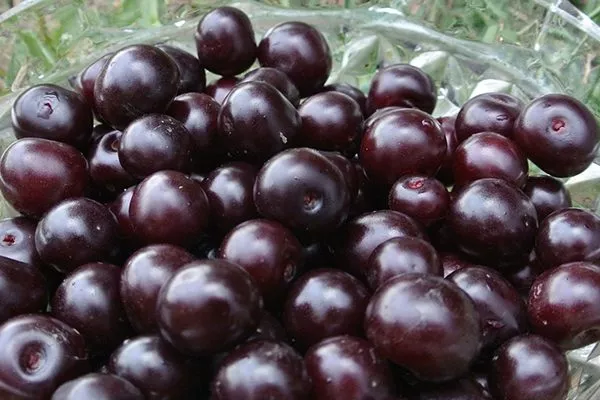
Fruiting intensity depends on growing conditions, with the best results achieved in sunny locations in regions with mild winters, which helps preserve flower buds even during frosts.
Putinka is a universal variety, and its fruits are suitable for various purposes:
- preparations and drying;
- canning and preparation of jams and preserves;
- juices;
- baking fillings;
- preparation of homemade alcoholic beverages;
- adding to meat dishes;
- making pastila or candied fruit.
Disease resistance
It exhibits low susceptibility to coccomycosis and moniliosis. These diseases can cause significant crop losses, tree death, and threaten to spread to the site. Eliminating these diseases is not a trivial task, and treatment requires multiple treatments.
Flowering time
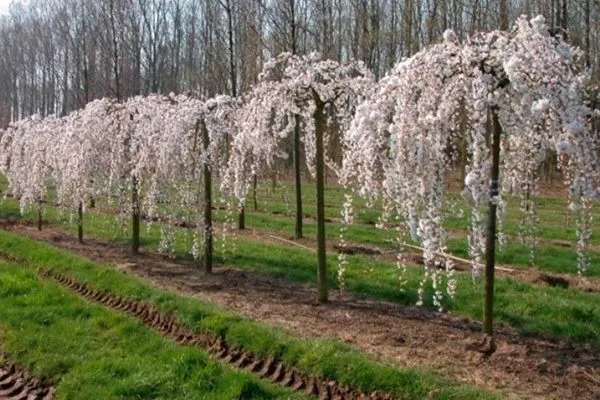
It delights with its flowering in May, lasting from a week to two weeks, depending on weather conditions. In cloudy weather, this process can be extended. Flowering times vary depending on the specific growing region.
Fruiting periodicity
It begins bearing fruit in the fourth year after planting. Ripening times are considered mid-season. The cherries are resistant to falling from the branches as they ripen, and they are resistant to sunburn. This facilitates harvesting, which is carried out as the berries ripen, rather than waiting for them to ripen all at once.
Pollination and pollinators
Pollination usually occurs naturally, with the help of bees—they land on flowers and distribute pollen throughout the garden. Some varieties are capable of pollinating with their own pollen; they are called self-fertile. This is possible due to the flower's unique structure, where the pistil and stamen grow at the same height.
Favorable conditions for growing
It thrives in southern and temperate climates, making it suitable for the southern parts, Central and Black Earth regions.
For successful cultivation, it is recommended to select sunny and fertile sites, avoiding waterlogged areas. Plants should be planted in groups, 3-4 meters apart.
The best neighbors
The following crops are allowed to be planted near Putinka: plum, apricot, cherry, rowan, and hawthorn. When choosing varieties, choose low-growing varieties, no more than 3 meters tall.
Avoid close proximity to the following plants: tomatoes, peppers, eggplants, oak, birch, linden, black and red currants, and honeysuckle. They may have an adverse effect.
Advantages and disadvantages
Before planting a seedling in your garden, familiarize yourself with the crop's pros and cons. Putinka has the following advantages:
- high productivity;
- excellent presentation and taste of fruits;
- resistance to coccomycosis and moniliosis;
- partial self-fertility.
Among its shortcomings, gardeners point out its average frost resistance. It continues to bear fruit in colder regions, but don't expect maximum yields, as some flower buds may die during cold periods.
Landing rules
Planting a plant in your garden is a simple process, but following the correct timing and procedures will ensure successful establishment. Follow these guidelines:
- Recommended timeframes. The best time for planting outdoors is mid-April. In summer and fall, planting is best done in southern regions, but in temperate climates and northern areas, it's best to avoid this period to allow the cherry tree time to harden before winter and prevent it from dying.
- Selecting a location and preparing the soil. Choose well-lit, sunny sites with fertile, moisture-free soil. Before planting, dig a hole 50 cm deep and 60 cm in diameter. Add 1 kg of superphosphate, 20 kg of well-rotted manure, and 200 g of slaked lime to the bottom of the hole.
- Landing. Fill the planting hole almost halfway with soil and fertilizer. Carefully lower the seedling, pre-soaked in water, into the hole, taking care to protect the roots. Fill the hole to the brim with soil and mulch the area around the tree trunk.
- ✓ The optimal soil acidity for Putinka cherry should be within the pH range of 6.5-7.0.
- ✓ The depth of groundwater should not exceed 1.5 m to prevent rotting of the root system.
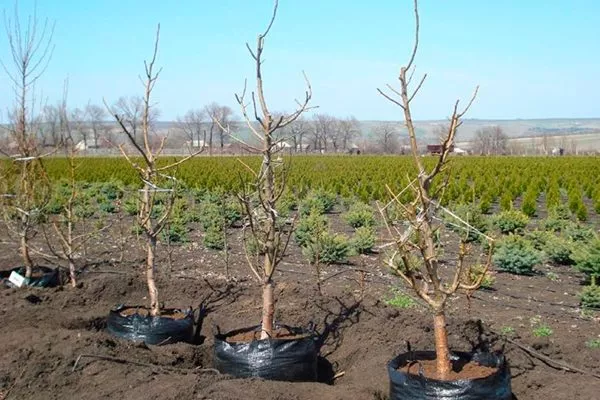
Water immediately after the procedure. To avoid exposing the roots, pour water into the trench around the seedling, not under the trunk.
Care Features
It has few growing conditions. To achieve a good harvest, follow these basic care guidelines:
- Watering. It tolerates short-term droughts well, but does not tolerate stagnant water. Water moderately; during hot months, apply 10-15 liters of warm water around the trunk circle weekly.
Carry out this procedure in the evening to minimize water evaporation. Provide additional watering during flowering and fruit set. During high summer temperatures, water the plant during the ripening period, no later than two weeks before harvest, to prevent cracking. - Top dressing. This is done primarily in the fall, before the onset of cold weather. Spread compost, bird droppings, and manure around the trunk. Use mixed mineral-organic fertilizers: sodium humate, humophos, and peat-ammonia mixtures.
In spring, feed the crop with nitrogen to stimulate the growth of green mass and good flowering. - Trimming. A dense crown can negatively impact fruit yield, so thin and prune branches longer than 40 cm annually, ensuring even sunlight penetration into the crown. Perform sanitary pruning in the fall, when the cherry tree enters dormancy, to minimize damage.
- Preparing for winter. It tolerates moderate frosts well, but winter protection is recommended for young trees. Provide generous mulch around the trunk to protect the roots from freezing.
Cover the trunk with spruce branches and wrap it in non-woven material or light-colored burlap for additional protection from rodents.
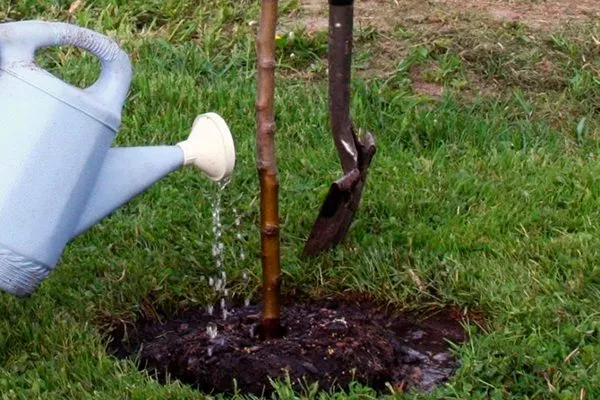
Perform care procedures to ensure that the crop remains healthy and does not die.
Diseases and pests
It can be susceptible to various diseases and pest attacks. Here are some common problems and methods for controlling them:
- Coccomycosis. This fungal disease causes small red spots to appear on the leaves. Apply fungicides regularly, starting in the spring before flowering. Remove affected leaves and collected fallen debris.
- Moniliosis (gray rot). Gray spots appear on the berries, which eventually develop into rot. Remove affected fruits after harvesting. Treat the tree with fungicides in the fall and spring.
- Cherry aphid. They chew holes in leaves and chew at the edges. Use insecticides, such as pyrethroid-based ones. Inspect the tree regularly and eliminate pests.
- Leaf roller. The insect feeds on leaves, causing leathery folds to form. Apply insecticides or oil-based products. Inspect regularly and destroy the caterpillars.
- Spider mite. It spins a fine web on the underside of leaves, causing them to turn yellow and fall off. Use acaricides and spray the plant with water.
Follow sanitary pruning guidelines, removing diseased and damaged branches. Collect and destroy fallen leaves and fruit. Feed the cherry tree moderately, avoiding excess nitrogen. Maintain adequate soil moisture to prevent waterlogging.
Methods of reproduction
There are several ways to increase the number of seedlings. Gardeners use the following propagation methods:
- Seeds. Remove the seeds from ripe berries and wash away the pulp. Store them for several months in a humid, cool environment to stratify. Then sow the seeds in the ground in early spring or fall. Once the seedlings have grown, transplant them to their permanent location.
- Division. After the leaves have fallen in late autumn or early spring, divide the rhizome into several parts with healthy roots and plant them separately.
- Rooting cuttings. In early summer, cut healthy six-month-old or one-year-old shoots and place them in moist, well-prepared soil for rooting. Once the roots have formed, transplant the cuttings to their permanent location.
- Graft. Select a strong rootstock with a good root system. Prepare a Putinka scion. Make a cut or "tongue" on the rootstock and scion, and join them together. Secure the scion and treat it with wax to protect against infection.
| Method | Time to first fruiting | Preservation of varietal characteristics |
|---|---|---|
| Seeds | 5-7 years | No |
| Division | 3-4 years | Yes |
| Rooting cuttings | 4-5 years | Yes |
| Graft | 2-3 years | Yes |
The choice of propagation method depends on personal preference and specific conditions. Seed propagation ensures diversity, while vegetative methods preserve the genetic characteristics of the parent plant. Grafting can be useful for preserving varietal characteristics.
Reviews of the Putinka cherry variety
The Putinka cherry is an easy-to-grow variety with excellent flavor. It requires little special care and is resistant to diseases and pests. Even novice gardeners, with proper care, can achieve high yields.