
The Yenikeeva Pamyati cherry tree boasts numerous unique characteristics. Even novice gardeners can easily grow this undemanding plant. It requires minimal care and rewards with a bountiful harvest of delicious, juicy, large berries.
History of selection and region of breeding
It was created by scientists from the Institute of Horticulture of the State Scientific University, located in Moscow. The breeders crossed the Zhukovskaya cherry and the Korinka cherry. In 1995, it was submitted for state testing. The scientists who developed the variety included Kh.K. Yenikeev, A.M. Mikheev, S.N. Satarova, V.S. Simonov, and A.I. Evstratov.
The appearance of the Yenikeev Memory cherry tree
Cherries are not only a source of fruit but also a decorative element in the garden. Below is a description of the crop's appearance.
Tree
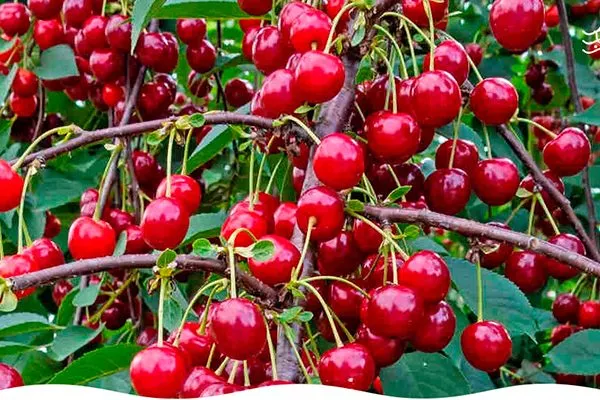
The plant is medium-sized, reaching 3-3.5 m in height. Other characteristics:
- The crown is of medium density and has a spherical configuration.
- The trunk and branches are covered with dark gray bark.
- With age, the bark turns brown and becomes covered with microcracks.
Structure of leaves
The foliage is dark green. Other leaf characteristics:
- Reaches large sizes.
- It has an obovate shape with a pointed tip.
- It has a matte surface on the outside and is characterized by a double-serrated edge.
- The leaves are folded along the central vein.
What do the flowers look like?
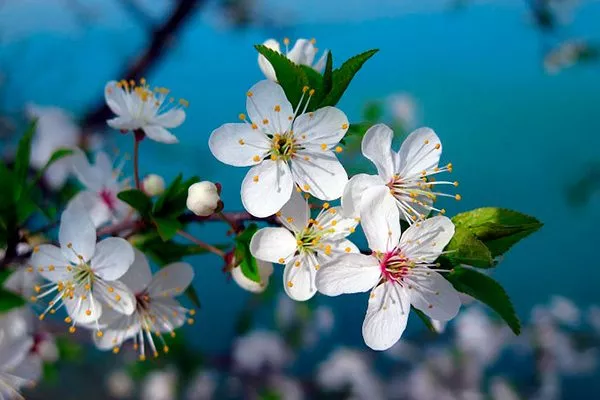
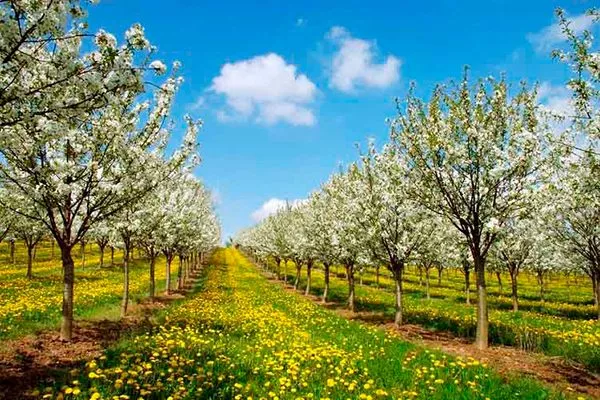
The flowers are distinguished by their white petals, which are loosely arranged, slightly corrugated, and broadly oval. The corolla is small and flat, the pistil is short, and the stamens are usually numerous.
Fruits and taste
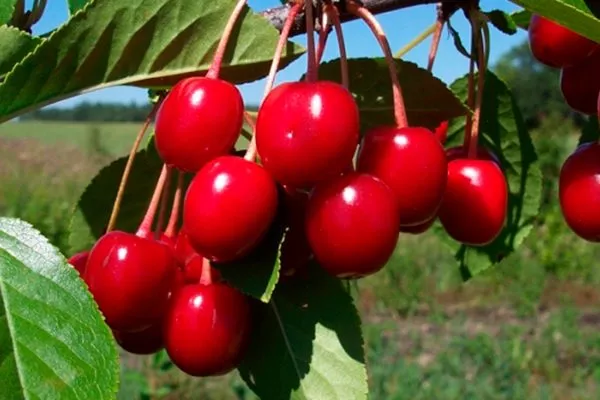
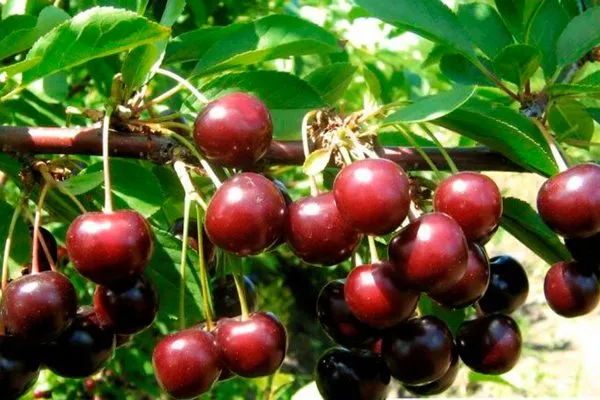
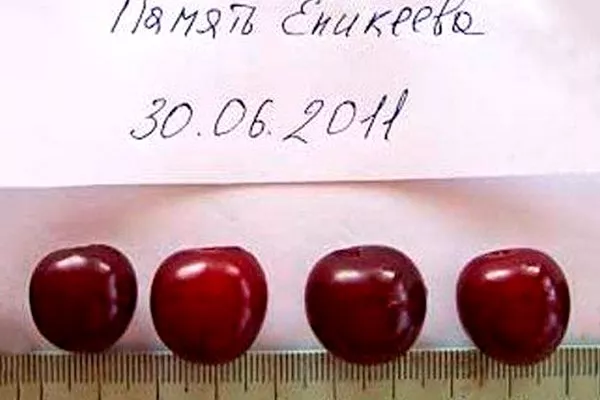
Large cherries have a broad, heart-shaped form and are covered with thin, dark-red skin. Other characteristics of the berries:
- The average weight of one fruit is from 4.7 to 5 g.
- The dark red flesh is quite juicy and has a medium density consistency.
- They have a dessert-like, sweet and sour flavor. In southern regions, they may acquire a sweeter taste.
- They are versatile and can be used fresh, processed into jam, preserves, liqueurs, wine, juice, jelly, frozen and dried products.
- 100 g contains 52 kcal of energy, 13 mg of vitamin C, 10% sugars, 16.3% dry matter and 1.4% acids.
- The tasting score is 4.8 points out of 5 possible.
Characteristics of the variety
The crop has numerous characteristics. It's important to study them to avoid problems in the future. Below are the characteristics of the Yenikeeva Pamyati variety.
Frost resistance of the variety
Winter hardiness is rated as average, but this is sufficient for successful cultivation in central Russia and even in cooler regions such as Ukraine and Belarus. The tree exhibits good tolerance to subzero temperatures.
In some cases, winter protection may be necessary, but this applies to young seedlings. Growing this variety, even with protection, is not recommended in northern regions of Russia.
Self-fertility and the need for pollinators
It is self-fertile, so additional pollination from insects or other trees is not required for fruit formation. In this case, the yield may be slightly lower. To maximize yield, plant one or two cherry trees nearby for cross-pollination.
Ripening and fruiting
Fruiting begins in the fourth year after planting, but the maximum yield is achieved after five years. Thanks to the early ripening period, the fruits can be harvested as early as late June or early July, with all ripening occurring simultaneously.
Productivity
It is distinguished by its high yield, reaching 46.4 centners per hectare. On average, one tree produces 10 to 15 kg of cherries per season.
Resistance to pests and diseases
Resistance to coccomycosis is high. The variety is also resistant to other diseases. Insects rarely attack the crop, especially if its condition is carefully monitored.
Growing regions
In 2001, the Yenikeeva Memory cherry was approved for use in several areas. These include:
- Smolensk;
- Bryansk;
- Vladimirskaya;
- Moscow;
- Tula;
- Ivanovskaya;
- Kaluga;
- Ryazan.
The variety is suitable for cultivation in the northern parts of Belarus and Ukraine.
Planting and care
When selecting a seedling, carefully inspect its roots, paying attention to the absence of damage and their overall health. Follow these recommendations:
- Choose one- or two-year-old seedlings. Place them in a root growth stimulator for several hours before planting.
- Good lighting is essential for optimal growth. Insufficient sunlight can negatively impact flavor.
- Choose a site near a fence, building, or shelter to increase winter hardiness. The tree should be protected from strong winds. The planting hole should be at least 2 meters from the building.
- Neutral and loose soils are preferred. If soil preparation is required (improving structure, increasing fertility, liming, etc.), do it well in advance. Amend acidic soil annually with organic fertilizers and ash.
- The variety does not tolerate stagnant water in the roots, so the groundwater level should be at least 2 m.
- If there is no suitable place, create an artificial elevation at least 50 cm high to avoid water stagnation.
- The optimal planting time is spring, especially for bare-root seedlings (April). Plant closed-root trees from April to September.
- When planting several trees, keep a distance of 3 m between them.
- ✓ The soil pH level should be strictly within 6.0-7.0 for optimal nutrient absorption.
- ✓ The depth of the fertile layer is at least 40 cm to provide the root system with the necessary elements.
Watering the plant once a week is sufficient during dry summer periods. The total number of waterings per season should be at least three. In early October, perform a moisture-replenishing watering to increase winter hardiness, followed by loosening, cleaning the soil, and mulching.

Standard fertilizing includes nitrogen-containing preparations in the spring, organic fertilizers during flowering and fruit set, and potassium-phosphorus mixtures before winter. To prevent fungi and increase winter hardiness, apply 100-150 g of potassium sulfate diluted in 10 liters of water.
Methods of reproduction
The crop can be propagated by grafting, specifically by budding. Follow the instructions:
- Select healthy, strong branches for rootstock and healthy buds for grafting, preferably from the growing tip.
- Make T-shaped or birch-shaped cuts on the rootstock and bud. The cuts should be even and clean.
- Cut a small shield-shaped bud with a trimmed base. Open the rootstock's bark and insert the shield-shaped bud into the cut. Tie the graft with a soft bandage to ensure a firm seal.
- After grafting, monitor the healing of the graft. Make sure the rootstock does not produce any extra shoots; remove them if necessary.
Keep the soil around the graft moist, but avoid overwatering. When the time is right, remove the protective material from the graft.
Prevention and treatment
It has a moderate susceptibility to fungal diseases such as coccomycosis, epiphytoty, and moniliosis. These pathogens can affect both the plant's branches and leaves, as well as its fruits. To prevent infection, carry out preventative treatments with copper-containing compounds in early spring. One of the most effective options is a 3% copper sulfate solution.
Among pests, rodents and cherry weevils pose a particular threat. To combat weevils, the following is recommended:
- Digging up the soil under the tree, since most pests overwinter in the soil.
- Cleaning the trunks from old bark in the fall and whitening the trunk and shoots with lime.
- Application of special insecticides at the beginning of bud break and immediately after flowering.
- In early spring, before the buds open, treat with a 3% solution of copper sulfate.
- After flowering, apply fungicides Strobi or Skor according to the instructions.
- In the fall, after the leaves have fallen, treat the soil and trunk with a urea solution (500 g per 10 l of water).
Advantages and disadvantages
Before planting, weigh the pros and cons to avoid potential problems. This variety has the following advantages:
Among the disadvantages, gardeners note average resistance to coccomycosis.
Gardeners' reviews
The Yenikeeva Memory cherry tree holds a place of honor, earning recognition among gardeners thanks to its numerous characteristics. It has gained popularity due to its self-fertility, excellent flavor, and high frost resistance. Proper care is essential to ensure the plant develops fully and produces good harvests.