
The Ogonyok cherry belongs to the group of felt varieties, but unlike others, it produces large berries, which is particularly attractive to gardeners and consumers. This variety was recently reclassified—it now belongs to the plum genus, not the cherry genus, as was previously believed. It is suitable for cultivation in all regions of Russia, from the south to the north.
History of selection
Felt cherries originate from Eastern countries, from where the first seedlings were brought to Russia. It is generally accepted that Michurin himself brought them here, and that he imported not a specific variety, but a wild plant.
Based on this wild cherry and the Early Pink cherry, the Ogonyok variety was developed on the territory of the Far Eastern Research Institute of Agriculture of the Soviet Union.
Description of the culture
Cherries are shrubs with a compact crown and surprisingly large fruits. Sugar content reaches almost 12%, and acidity is only 1%. The pulp also contains tannins (no more than 0.3%) and dry matter (only 14%), and the tasting score is 4.5 points.
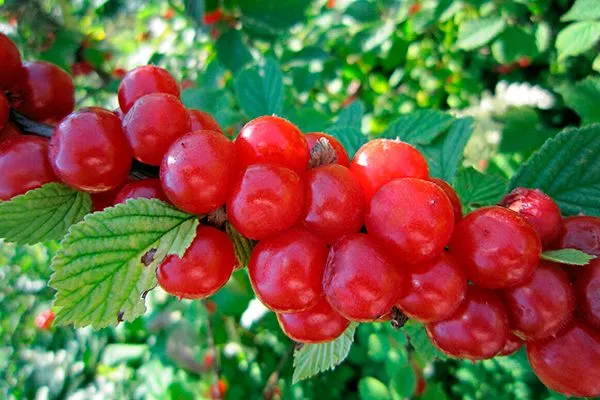
Tree
You can recognize the Ogonyok variety by the appearance of the bush:
- The height reaches 200-220 cm, and the crown diameter varies from 150 to 180 cm. It is characterized by increased density and spreading, and has a broad ovoid shape.
- Current-year shoots are dark brown, while perennials are dark gray. The bark is heavily peeling. Fruiting begins on branches between one and four years old. Branching is medium.
- Fruit buds are quite small and pressed tightly against the branches. They form on current-year shoots, bouquet branches, and even short branches (about 4-5 cm). They are located along the entire length of the shoot, with the growth bud located at the very end, along with the fruit buds.
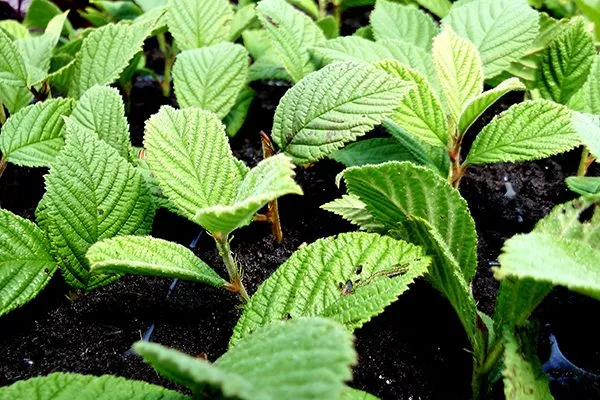
- The leaves are characterized by an inverse ovate shape, medium size, and corrugated texture. Their color is unusual—greenish-gray, with a felt-like pubescence.
- During flowering, buds emerge with oval, light pink petals that close in a medium-open position. The calyx is tubular-cylindrical, with the pistil positioned 3 mm above the stamens.
- The root system does not go deep enough - only 30-35 cm, so the bush can be planted at a high groundwater level, but not less than 50-70 cm from the ground surface.
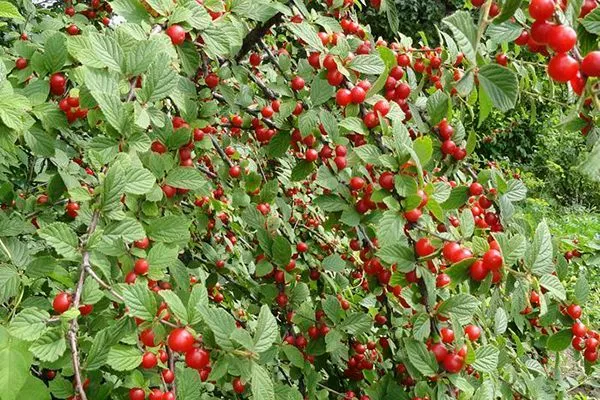
Fruit
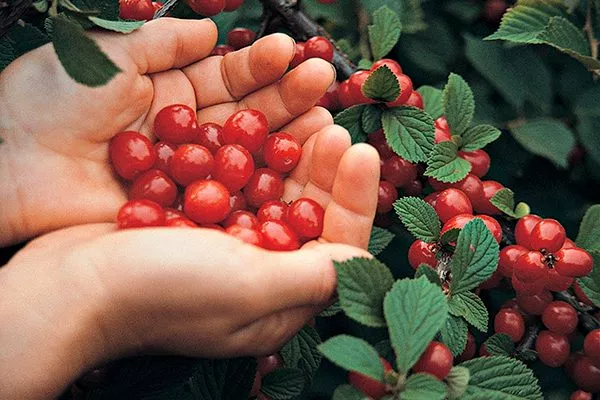
The fruit's size is reflected in its size—each berry weighs between 2.5 and 4.0 g, which is unusual for felt-type cherries. Other characteristics:
- form - flat-rounded;
- seam – clearly expressed;
- skin surface – has a slight pubescence, smooth;
- funnel – is distinguished by its small depth, but significant width;
- peduncle – shortened;
- peel color – pale red;
- pulp shade – blood red, very rich;
- tone of juice after squeezing – pink;
- skin thickness – thin, impossible to separate from the pulp;
- pulp structure – thick;
- bone – medium in size, its weight is 1.5-1.6 g, does not separate from the pulp;
- taste - sweet and sour;
- aroma – clearly expressed.
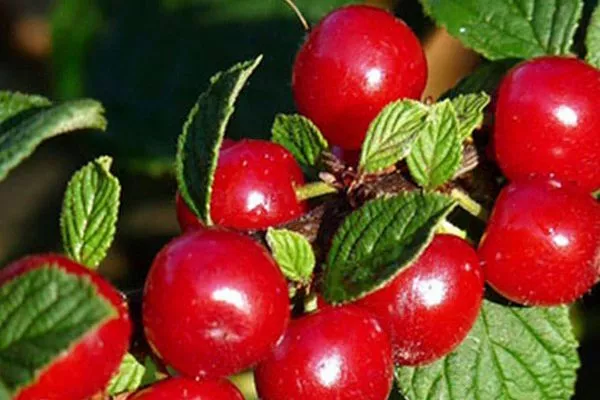
Felt cherry Ogonyok: a list of the main characteristics
Ogonyok is considered demanding to grow, but this doesn't apply to all aspects of cultivation. Therefore, pay attention to the variety's characteristics.
Drought resistance and winter hardiness
This is a winter-hardy cherry tree that can easily withstand temperatures as low as -25 degrees Celsius. If the thermometer reading drops below that, you'll need to insulate the trunk.
This variety thrives in dry summers, as heat can damage the fruit's appearance, as it dries out quickly anyway. To prevent this, simply provide additional irrigation.
Pollination, flowering period and ripening time
Due to the different levels of stamens and pistils, the bush requires pollinators. A mandatory requirement is that the flowering period must coincide. Any felt or common cherry can be used, but not only – Ogonyok is pollinated by plums, apricots, cherry plums, peaches, blackthorn, etc.
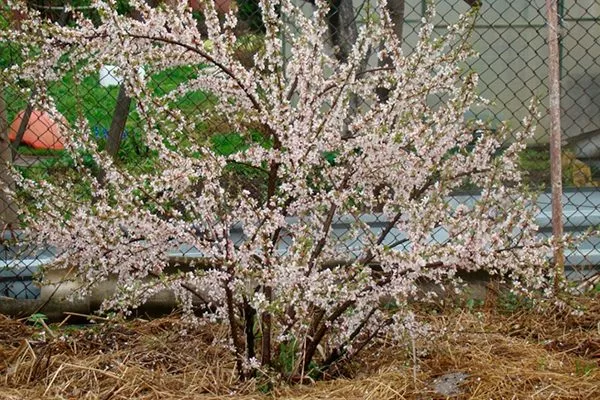
The bush blooms after May 20th and ends by early June. However, the exact timing depends on the climate and current weather. Harvesting can begin in mid-June.
Productivity, fruiting
Fruiting begins in the second or third year after planting (earlier in the south, later in the north). Therefore, the variety is considered early-bearing. The yield is high – a single bush can yield approximately 14-16 kg by the fifth year. Before this, a young tree will only yield 4-7 kg.
Application of berries
This variety is versatile—the fruits are eaten not only freshly picked but also used for winter preserves, such as jam, jellies, and compotes. The pulp produces a rich, thick juice. When preserving Ogonyok cherries, it's important to keep one key characteristic in mind: the shelf life of canned berries should not exceed three months.
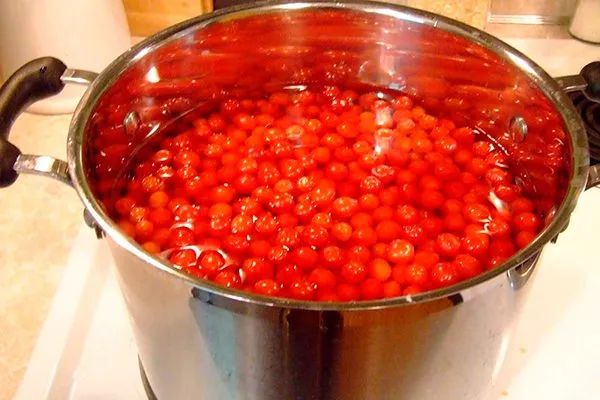
The reason for this is that it is impossible to roll up pitted fruits, which, over time, begin to release hydrocyanic acid.
Landing features
The Ogonyok cherry, distinguished by its ability to adapt to unfavorable weather conditions, thrives due to its low maintenance. Increasing the fruiting yield of this variety is possible through simple agronomic techniques, including planting and care guidelines.
- ✓ Soil pH should be between 6.0-6.5 for optimal growth.
- ✓ The distance between bushes should be at least 2 meters to ensure sufficient space for the root system to grow.
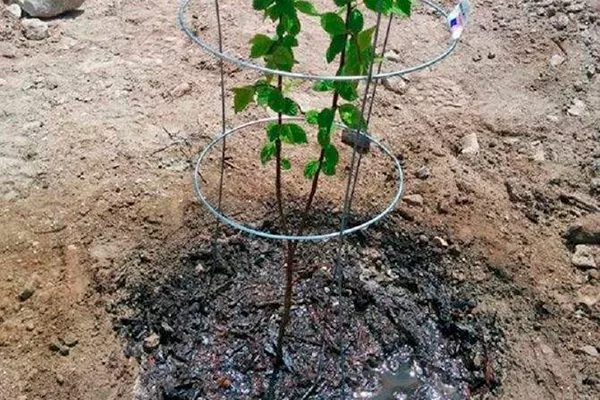
Features to consider:
- The ideal time to transplant seedlings outdoors is during the spring months of March and April. It's critical that the ambient temperature remains at least 10 degrees Celsius to prevent frost damage to the young plants.
- When choosing a planting site, keep in mind that the Ogonyok cherry prefers sunny areas away from direct wind. Although this variety adapts to acidic soils, moderately acidic soils are ideal, as they will ensure more vigorous growth and a bountiful harvest.
- Other crops that favorably complement felt cherry include common cherries, cherry plums, peaches, plums, blackthorns, sweet cherries, herbs, and low-growing flowering perennials. These plants can be useful pollinators.
- Some other plants are not recommended for planting next to each other. For example, low-growing, spreading fruit bushes, as well as tall apple, pear, and quince trees, are not suitable neighbors for the felt cherry. Solanaceous crops such as tomatoes, peppers, and eggplant should be avoided.
These recommendations are based on plant compatibility and their interactions. Neighboring certain crops can improve pollination and yields of felt cherry, while undesirable neighbors can compete for resources or create unfavorable conditions for growth and development.
Subsequent care of the culture
During the first two years after planting, the plant will not require additional fertilizer, as the minerals already contained in the planting hole will be sufficient. From the beginning of the plant's third year, regular fertilizing can begin:
- The first feeding occurs after the tree has finished flowering. Compost or humus (8-10 kg) with the addition of nitrogen-containing components (25-35 g), phosphate (65-75 g), and potassium sulfate (15-25 g) can be used as fertilizer.
- In anticipation of winter, phosphorus and potassium fertilizers are added to the soil.
- It is recommended to lime the soil every five years to prevent it from becoming acidic, which can negatively affect the health of the cherry tree.
The Ogonyok cherry variety is considered an easy-to-grow plant. Care includes regular soil loosening, weed control, and irrigation during dry periods. Despite its apparent simplicity, timely pruning is crucial, especially for long-lasting fruit production:
- Standard pruning is performed each spring before the buds swell, leaving 12-16 of the strongest branches.
- Once every five years, rejuvenating pruning is carried out: excess skeletal branches are removed, the central part of the crown is thinned out to improve ventilation and lighting, which allows for an additional 8-11 years of fruiting.
Harvesting and storage conditions
The mass harvest is carried out in dry, warm weather to prevent the cherries from spoiling and leaking juice. The fruits are susceptible to crushing during picking, so they must be picked very carefully to avoid injury. Harvesting and storage guidelines:
- If you plan to store the berries for several days, harvest them when they're slightly unripe. This way, the berries will be picked whole from the bush.
- Ripe fruits are collected in the summer, in a small, shallow container.
- The berries are carefully picked. You can do this by hand or use garden shears to cut the stems off the shoots.
- Unlike regular cherries, which have stems attached to the fruit and can be picked along with the fruit or left on the tree, felt cherry stems remain attached to the branch. As a result, the fruit cannot be stored for more than 1-2 days. Berries remaining on the tree serve as food for birds.
Methods of reproduction
It reproduces successfully using several methods:
- Seed. Sowing seeds is one of the most time-consuming yet simple methods for preserving the parent shrub's traits. Seedlings from kernels are adapted to the climate of their origin and begin bearing fruit at 3–4 years of age.
- Cuttings. Cuttings should be taken as shoots of the second or third stage of branching. Within a month, successfully rooted specimens begin to form roots. Seedlings grown from green shoots begin to bear fruit in their third year, while cuttings from linified branches begin to bear fruit in their second year.
- By layering. At the beginning of the growing season, take a healthy one-year-old shoot, place it in a hole, cover with moist soil, and secure it with a staple. After the shoot has firmly rooted in the fall, cut it from the parent plant and transplant it to a new location. If the shoot isn't rooted well enough, leave it in the ground until spring.
Seedlings grown from cuttings begin to bear fruit during the second or third year of their life.
| Method | Time to first fruiting | Complexity |
|---|---|---|
| Seminal | 3-4 years | Low |
| Cuttings | 2-3 years | Average |
| Layering | 2-3 years | High |
Diseases and pests
This variety is characterized by excellent resistance to coccomycosis, but moniliosis can destroy the plant. This cherry tree is often attacked by harmful insects, such as aphids. Occasionally, gardeners encounter brown mold, caused by the Monilinia fungus.
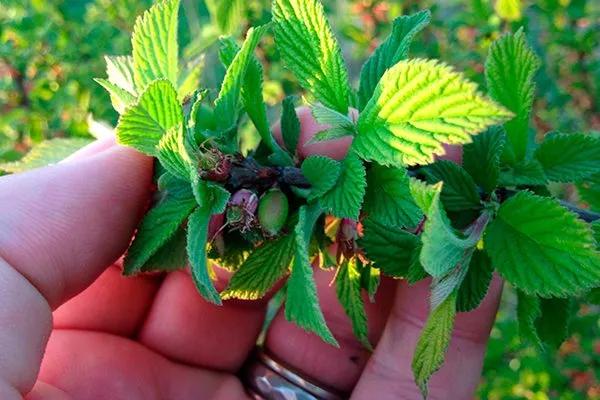
In this cherry variety, this disease manifests early, during flowering, causing the drying of not only the buds but also the leaves, and in some cases even large branches. Furthermore, rotting formations containing spores are observed on the ripening berries.
Even with relative disease resistance, this cherry variety still requires regular preventative measures against fungal infections and insect pests. It is recommended to spray the tree with fungicides and insecticides at least three times during the growing season, at intervals of one week to one and a half months.
Pros and cons
Its main advantage is its high yield and compact bushes. This cherry tree not only produces delicious, juicy berries but is also used in landscape design. The variety tolerates frosts well, and seedlings root quickly.
Disadvantages include poor drought resistance and the inability to store fruits for a long time.
Reviews
The Ogonyok cherry is a felt-like variety, but produces fairly large fruits. It boasts excellent flavor and versatility, but the pits release toxic substances over time, making it impossible to preserve for long periods. The only solution is to preserve the pitted cherry without the pits.