
Cherries are a demanding crop, and their health requires attention starting in early spring. As soon as the snow melts, gardeners begin spraying to prevent diseases and pests. Let's learn how, with what, and for what reasons to treat cherries in the spring.
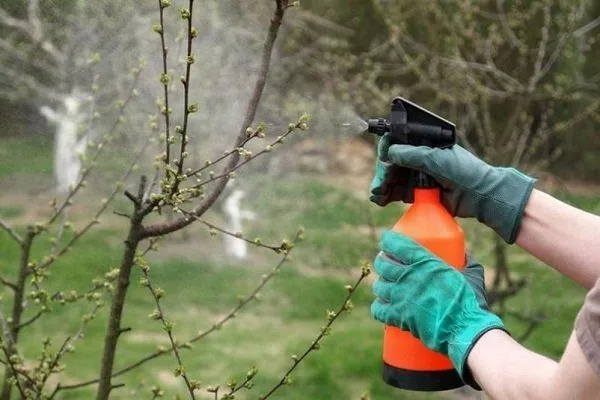
Spring treatment against diseases and pests
It's recommended to spray cherry trees three times in the spring. It's important to consider not only the calendar, but also weather conditions and the condition of the buds.
First spraying
Trees are sprayed for the first time around the second half of March. The main criteria for starting the treatment are the absence of snow and stable temperatures of 5 to 6°C. Spraying is carried out before bud swelling.
- ✓ The air temperature must be consistently above +5°C for at least three days before treatment.
- ✓ The soil around the tree must be completely cleared of snow and ice to ensure access to the root system.
Before the procedure, cracks in the bark are sealed with garden paste, and damaged areas are removed.
The main objectives of the first spraying are to prevent fungal and infectious infections and to destroy insects overwintering under the bark.
The crown and soil, previously loosened, are sprayed with the following agents:
- A 3-5% solution of ferrous sulfate. To prepare it, dissolve 300-500 g of powder in a bucket of water.
- Bordeaux mixture or 5% urea solution.
Urea should never be used after bud break, as it can cause burns to young leaves.
The first treatment should not be carried out prematurely. If the snow has not melted, or if it is raining or foggy, spraying will be ineffective.
Second spraying
The second treatment, "green cone," is carried out after the buds have swollen and burst, but before the leaves have emerged. The best time for spraying is in April. However, it's important to consider the condition of the buds and the weather—it's not recommended to spray the trees in rain or slush.
The second spraying is designed to combat fungal diseases and pests preparing to reproduce. The tree is sprayed with fungicides and insecticides—preparations for pest and insect control, respectively.
Preparations for the 2nd treatment:
- Bordeaux mixture 3% - against fungi;
- “Fufanon” or analogues – against cherry moths;
- "Lepidocid" or other biological preparations - against various cherry pests.
The treatment solution can be prepared by mixing insecticides and fungicides, which will simplify the agricultural task.
Third spraying
To protect cherry blossoms from insects and diseases, a third preventative treatment is recommended during budding. Spraying is typically done in May; the exact timing depends on the weather, climate, and the condition of the buds.
- ✓ The buds should be well formed but not yet opened.
- ✓ The weather must be dry and windless for uniform application of the preparations.
Preparations for the third spring treatment:
- copper sulfate solution;
- drug "Horus".
Once the tree has blossomed, treatments become dangerous. Spraying is only necessary when there is widespread insect or disease infestation. Only biological or natural products are used.
After flowering, the cherry tree loses much of its strength and its immunity weakens. Once the tree sheds its petals, it is recommended feed with complex preparations.
Cherry processing products
To combat cherry tree pests and diseases, use products that are less hazardous to both humans and the tree. Safer products and various folk remedies are preferred. Chemical poisons are used in exceptional cases.
Chemicals
In spring, two groups of sprays—fungicides and insecticides—should be used on garden trees. During this period, treatments are preventative in nature, protecting the tree from all potential threats.
Popular drugs:
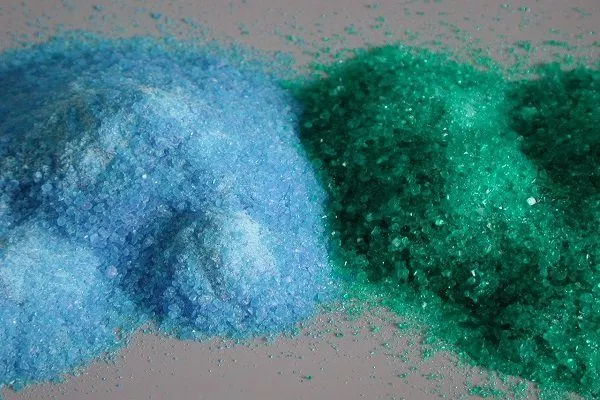
- Copper sulfate. There are two varieties: copper and iron. It's an excellent antifungal agent. It prevents scab, moss, and lichen growth, and protects against cherry aphids.

For spraying, use 1-3% and 5% solutions of copper and iron sulfate, respectively. - Urea. An antifungal agent with a pest control effect. Use a 5% solution.
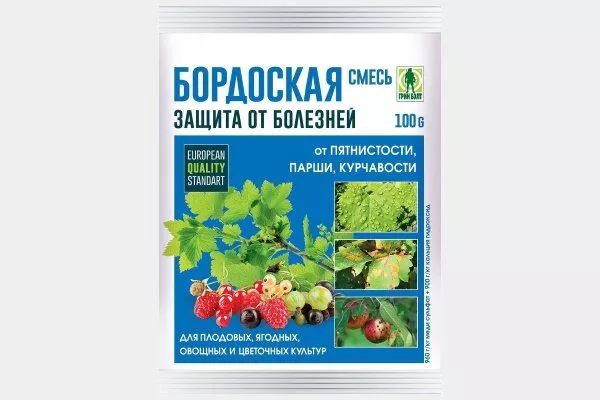
- Bordeaux mixture. A universal remedy – helps protect trees from aphids and fungal infections.
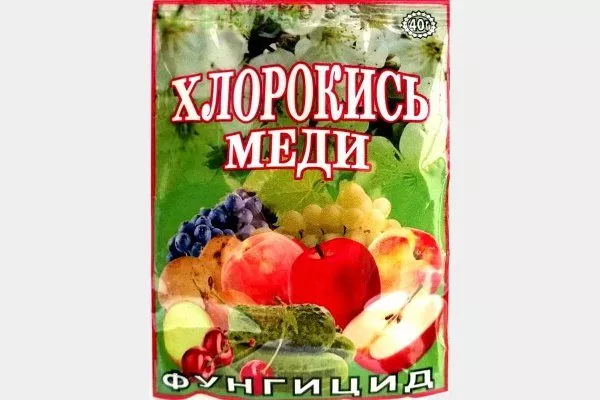
- Copper oxychloride. Today, this product is sold as various fungicides, including Skor, Horus, and others. It is effective against all fungal diseases.
- KarbofosA universal insecticide used against a variety of pests. The recommended dosage is 80 g per bucket of water.
- Fufanon. A universal product that kills most cherry and sweet cherry tree pests. Dosage: 10 ml per 10 liters of water.

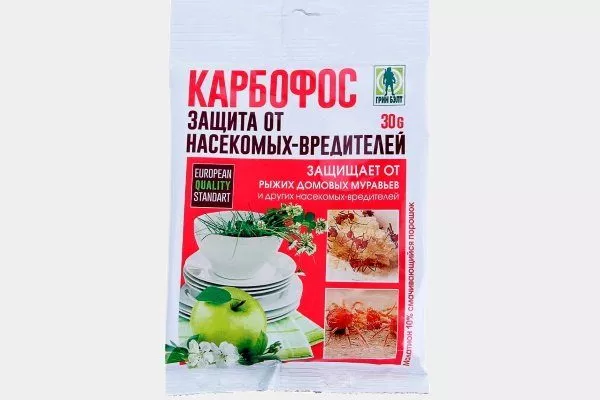
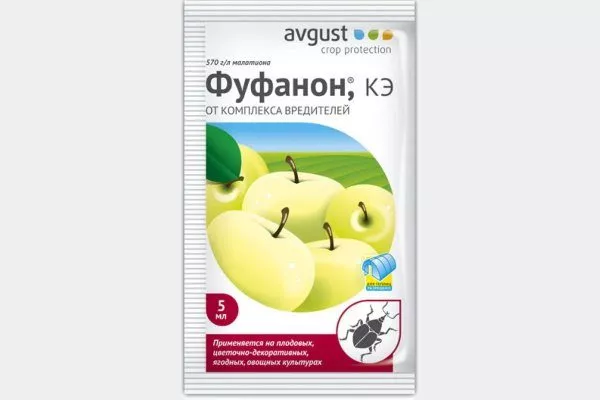
The use of the chemical preparation "Karbofos" requires not only caution, but also serious reasons, as it destroys pests and beneficial insects that pollinate trees.
Folk remedies
Gardeners favor traditional methods for their affordability and safety. These treatments are inexpensive and pose no danger to humans or beneficial insects.
The downside of folk remedies is their relatively low effectiveness. They are usually used preventatively, before widespread tree damage occurs.
Popular remedies:
- Tobacco infusion. Pour a bucket of water over half a kilogram of dried tobacco leaves and let it steep. After two days, boil the infusion and let it steep for 24 hours. Then mix a liter of the infusion with a bucket of water and add 40 grams of grated laundry soap.
Apply the resulting solution to the tree's crown and the soil around the trunk. Instead of tobacco leaves, you can use dry tobacco dust or wood ash. - Pepper decoction. Pour a liter of boiling water over 100 g of dried hot pepper pods. Simmer for 2 hours, then let steep for another 2 hours. Strain the infusion, add water to make 10 liters, and spray the crown with the solution.
- Other infusions. A wide variety of herbs and vegetables can be used for spraying. For example, they can be prepared from:
- chopped onion or garlic - 600 g per 10 l;
- wormwood – 400 g per 10 l;
- chamomile flowers – 150 g per 10 l.
In spring, sow strongly scented flowers and plants under your cherry trees—cork lilies, nasturtiums, fennel, and dill. In summer, they'll repel unwanted visitors.
How to treat cherries against diseases?
Among the many diseases that affect fruit trees, some pose the greatest threat to cherries. This is not only due to their danger, but also due to their prevalence. Preventative spring spraying can help prevent these diseases from developing early.
Scab
A common fungal disease that affects leaves and fruits. Infection results in yield loss. When infected, leaves become covered with brownish-olive spots with a velvety texture. Yellowish circles appear around the spots.
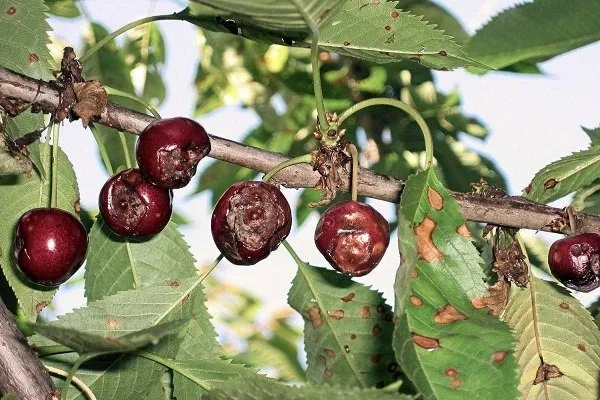
Later, fungal spores migrate to the fruit, causing it to crack before ripening. The disease is especially common after heavy rainfall.
How to fight:
- In spring, before the buds open, the area around the trunk is treated with Nitrofen.
- The second stage involves treatment with a 1% Bordeaux mixture. Cherry trees are first sprayed when the buds begin to open, then again after flowering.
To prevent scab infection from recurring the following year, treatment with Bordeaux mixture is carried out in the summer, after harvesting the fruits.
Moniliosis
This disease, better known as fruit rot, is caused by a fungus. Symptoms include withering leaves, unripe fruit that mummifies, softened areas appear on shoots, and cracked bark. On large trees, affected and healthy parts can be clearly distinguished.
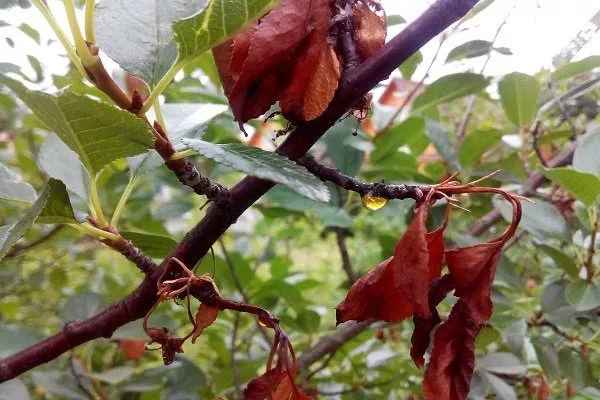
Branches infected with moniliosis dry out. Some even turn black. The berries, as they ripen, rot and become covered with a whitish-gray coating.
How to fight:
- Before the buds swell, spray the cherry tree with 3% Bordeaux mixture.
- Before flowering, treat the tree with a 4% solution of "Zineba." If you weren't able to spray the cherry tree before flowering, do so during the budding stage. Use a 1% solution of "Topsin" for this purpose. It can also be used for subsequent sprays.
- Immediately after the petals have fallen, treat the tree with Horus.
If the cherry variety is resistant to moniliosis, then no further spraying will be necessary during the season.
Brown spot
This fungal disease is also called phyllostictosis. Small brown spots with dark borders and black dots appear on the leaves. If the infection is severe, the leaves dry up and fall off.
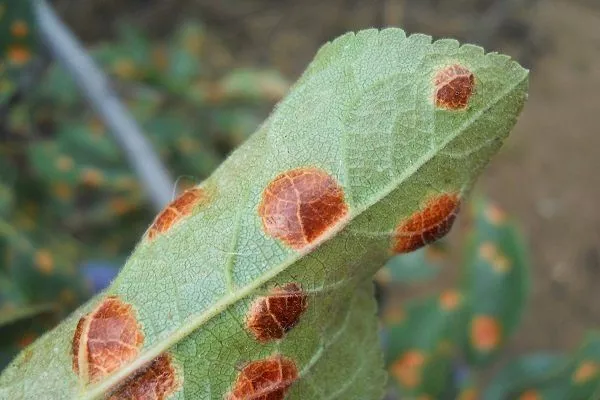
How to fight:
- Spray the tree with 1% copper sulfate before the buds open.
- In the “green cone” phase or during the budding period, use Bordeaux mixture.
- After flowering, treat the trees again with 1% Bordeaux mixture, and two weeks after flowering, carry out another spraying.
Clusterosporiasis
Another name for this fungal disease is holey spot. The microorganism attacks almost all above-ground parts of the plant—buds, leaves, flowers, ovaries, fruits, and even woody shoots.
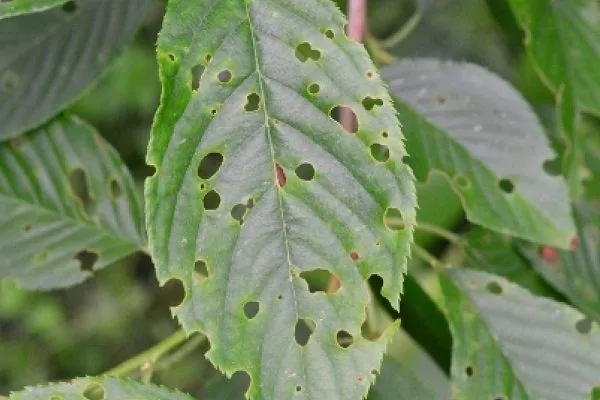
The disease is easily recognized by the multiple holes in the leaves. Small reddish-brown and crimson spots initially appear on the leaves, which then enlarge and become perforated. The fruit becomes spotted and mummified. The bark of the affected tree cracks, oozing gum.
How to fight:
- In spring, before the leaves emerge, spray the cherry tree with a 3% solution of copper sulfate or Bordeaux mixture. Treat not only the crown but also the trunk and the soil beneath.
- When the cherry tree has finished blooming, spray it with Horus, Kaptan, Signum or Topaz, and after a couple of weeks, repeat the treatment with Bordeaux mixture.
Coccomycosis
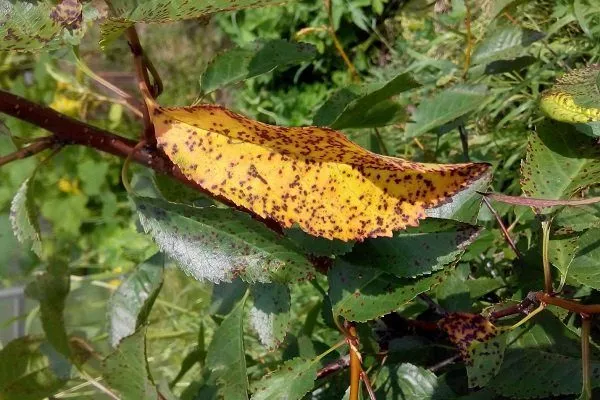
This is a dangerous fungal disease that causes tree leaves to become covered with reddish-brown spots and then die. The leaves of affected trees fall long before autumn. Fruit, even if it ripens, becomes covered with brown spots and mummified.
How to fight:
- First, before the buds swell, spray the cherry tree with copper-containing preparations - Bordeaux mixture or copper sulfate.
- At the “green cone” stage, spray the tree again with copper preparations, or even better, copper oxychloride.
- During the budding period, use more serious preparations, such as Topaz, Horus, etc.
How to treat cherry trees against pests?
To ensure a healthy harvest, insect control must begin early in the spring, well before visible damage appears. In the spring, cherry trees are primarily sprayed with general-purpose insecticides.
Biological pest control products, such as "Actofit" and "Bitoxibacillin," are gaining popularity among gardeners. These biological products contain microbacteria, fungi, or viruses that combat harmful insects.
Cherry moth
This is one of the most dangerous pests of stone fruit trees. If left untreated, the cherry fruit fly can destroy 95% of the crop. The fly has a black, pointed body with an orange shield. The insect reaches 5 mm in length and has transparent wings with dark transverse stripes.
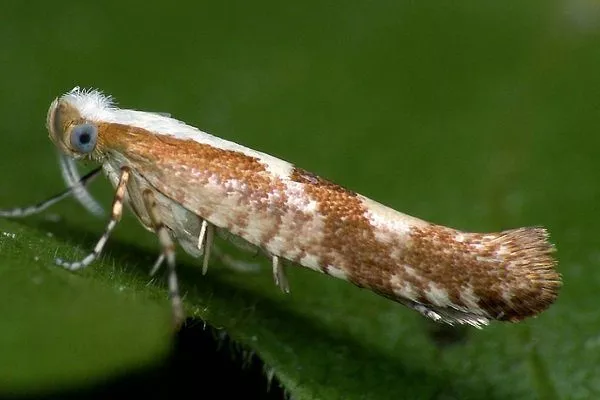
The fly doesn't eat the fruit itself; it lays eggs in it. As a result, larvae develop inside the fruit, eating away at the pulp. Affected fruit is unfit for consumption or processing.
To combat the cherry fly, preventative measures are used: before its appearance, the tree is sprayed with any universal insecticide, for example, "Karbofos".
Spraying procedure:
- Insecticide treatment is carried out immediately after flowering, as soon as the flowers shed their petals.
- A second spraying is required only if the fly becomes active.
Weevil
This is a small, crimson-brown beetle with a long trunk. It is often called the elephant beetle or the pipe-roller beetle. It attacks all stone fruit crops, but especially cherries.
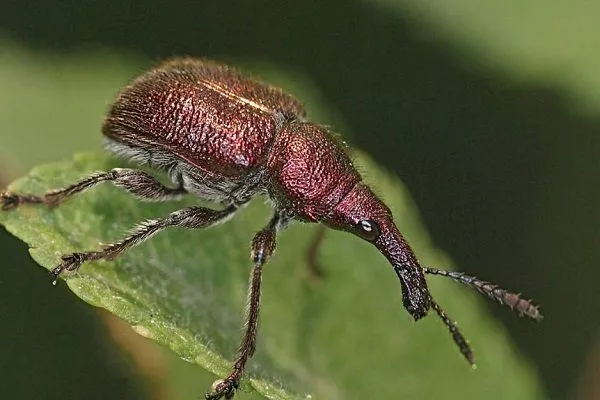
Beetles emerge from the soil in early spring, when the buds swell. During flowering, they emerge en masse. The beetles eat away the buds, leaves, flowers, and later, the ovaries. If there are many weevils, the leaves don't have time to grow, and the tree dies.
In May, females lay eggs in the fruit pulp. White larvae eat the fruit from the inside. Each female lays up to 150 eggs.
How to fight:
- Weevil control begins at the "green cone" stage. The tree and trunk are sprayed with contact and stomach insecticides such as Actellic, BI-58, Confidor, Decis, Calypso, and others.
- The second spraying is carried out immediately after the petals fall. Use any effective insecticide.
Slimy sawfly
This is a small insect with transparent wings. The sawfly's body length is 4-5 mm. Adults do not feed on cherries; it is the larvae that cause the direct damage. They are covered in mucus, resemble leeches, and reach a length of 10-11 mm.
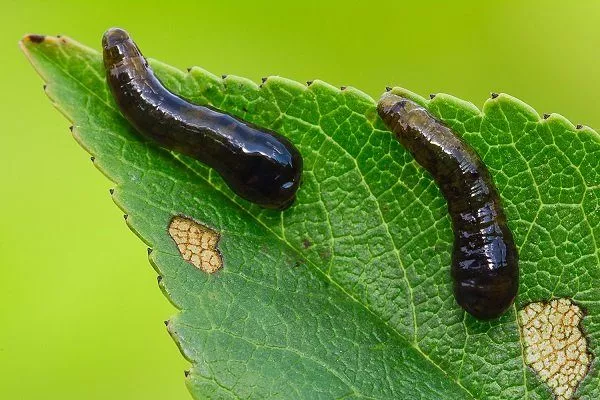
The larva lives for 2-3 weeks. Over the summer, two generations of the pest develop. The larvae feed on the leaves of cherry, sour cherry, and other fruit trees. A distinctive feature of sawfly larvae is that they cling tightly to the leaves and eat them down to the veins.
To control larvae, low-toxic chemical and bacterial insecticides based on toxic bacteria are used. The latter are contact and stomach insecticides and provide long-lasting protection to the tree.
Effective drugs against sawflies:
- "Aktara";
- Inta-Vir
- "Calypso";
- Confidor.
Spraying is carried out during bud break. The interval between treatments is three weeks.
Hawthorn
The pest is a butterfly with white wings and dark veins. It poses no threat to the tree; its offspring are the pest. The hawthorn caterpillars rapidly consume the leaves, buds, and flower buds of the cherry tree, causing irreparable damage. The hawthorn moth is especially active in damp weather.
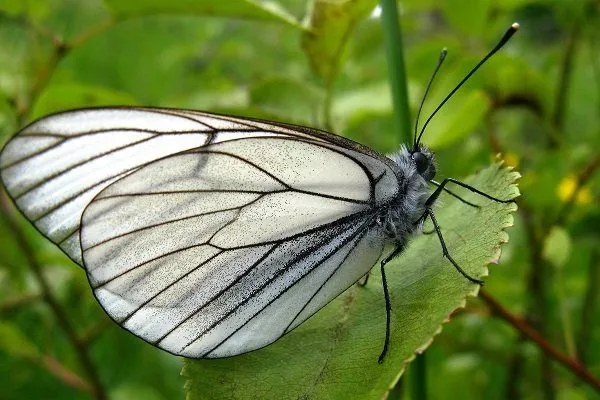
The most effective way to control caterpillars is preventative spraying with chemicals:
- The first treatment is carried out early in the spring, as soon as the snow melts. Urea mixed with copper sulfate is used first. This solution kills overwintered pests. 0.5 kg of urea and 0.1 kg of copper sulfate are diluted in 10 liters of water.
- Before and after flowering, the cherry tree is sprayed with insecticides - Altar, Accord, Inta-Vir.
Cherry aphid
This small insect reaches 3 mm in length and is black in color. Aphids feed on leaf sap. Affected leaves curl, and shoots become deformed. Several generations are produced per season. Aphids cause the greatest damage during the fruiting period.
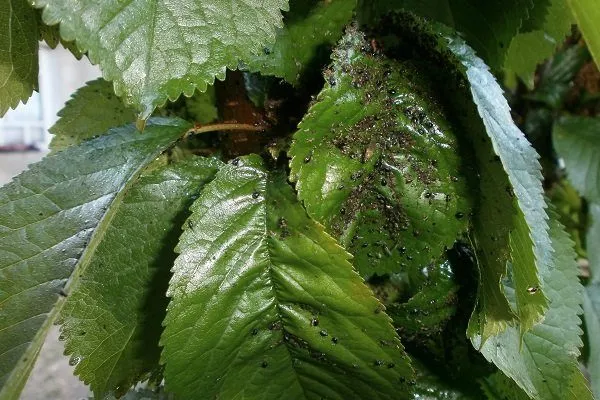
Cherry trees need to be treated for aphids several times per season. The first spraying is done before bud break. The tree is then sprayed with Fufanon, Kemifosos, and Karbofos. If necessary, treatment is repeated after flowering.
There are a variety of spring treatments for cherry trees—chemical, biological, and folk remedies. Universal products with a broad spectrum of action are preferable.