
The Nord Star cherry has received positive reviews from experienced and novice gardeners, who noted its low maintenance and numerous characteristics. With proper care, this plant enjoys robust health and high yields.
History of selection and region of breeding
Its origins lie in Minnesota, USA, where the variety arose from a cross between two different species. The parents were the Lotovaya cherry and a seedling grown from the seed of an unknown species brought from Serbia in 1918.
It was included in state variety testing in 1985. It is widely distributed in the southern and central regions of Russia, Belarus and Ukraine.
Description of Nord Star cherry
For a more detailed understanding of the plant, it's recommended to focus on the tree's key distinguishing characteristics and the fruit's flavor. A botanical description is provided below.
Height and dimensions of an adult tree
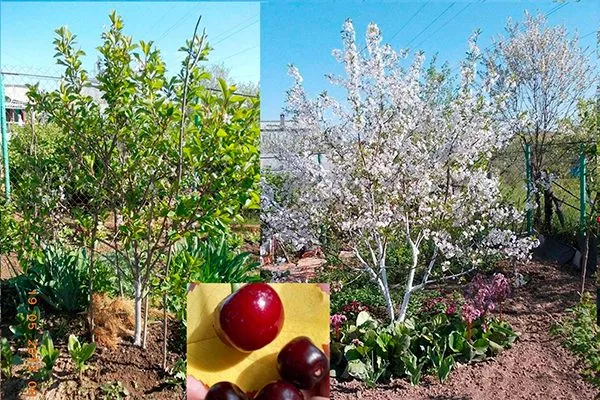
A low-growing, compact tree with a dense, broad, rounded crown. Other characteristics:
- The trunk and branches have dark brown bark.
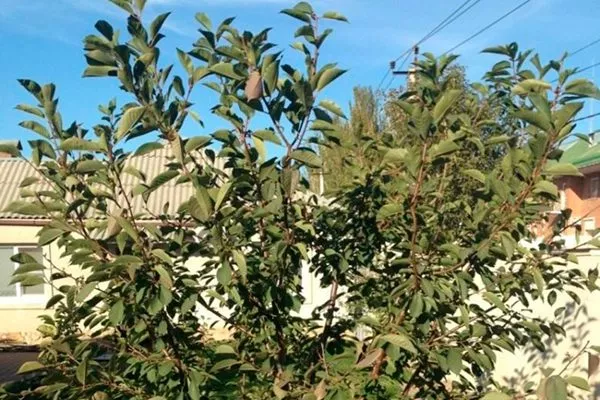
- The leaves are narrowly oval, small in size and shiny.
- The plant exhibits maximum active growth at a young age, becoming moderate after the start of fruiting.
- ✓ Dark brown bark with a characteristic shine, especially noticeable on young branches.
- ✓ Narrow oval leaves with a distinct shine, which distinguishes this variety from others.
Description of fruits and taste
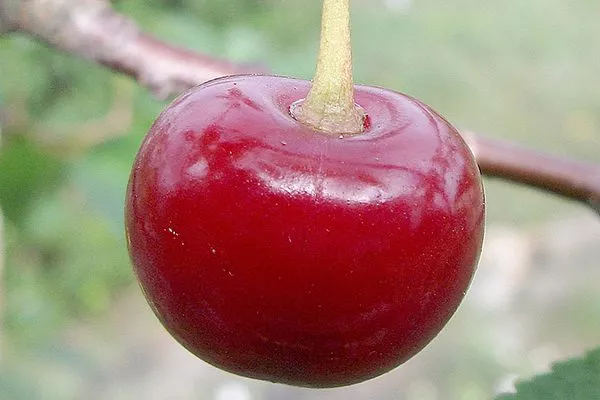
They have a round or broadly round shape and weigh 4-4.5 g. They have the following distinctive features:
- They have a thin and shiny skin, colored dark red.
- The flesh is reddish, fibrous, and juicy. It has a delicate texture.
- The taste is sweet and sour, with acid predominating.
- The stone is round, medium-sized, and easily separated from the pulp.
- During the ripening process they do not fall off and do not bake in the sun.
- They are characterized by low density, which affects their shelf life and transportability.
Application of berries
They are most often used for technical processing, which allows for the production of high-quality canned products. Fully ripe berries are suitable for fresh consumption. They are used in desserts, fruit salads, compotes, baked goods, and more.
Main characteristics
The plant is attractive during flowering, not only providing juicy berries but also decorating the garden. Below are the characteristics of the plant.
Drought resistance, frost resistance
It exhibits high drought tolerance, easily surviving extended periods of hot summer weather. It is characterized by excellent frost resistance and belongs to hardiness zone 5, so it can withstand temperatures ranging from -32 to -40°C.
Ripening period of cherry varieties
This is a late-ripening variety. The berry ripening process begins in July-August. Fruiting is mixed, so the main crop develops on branches of various ages.
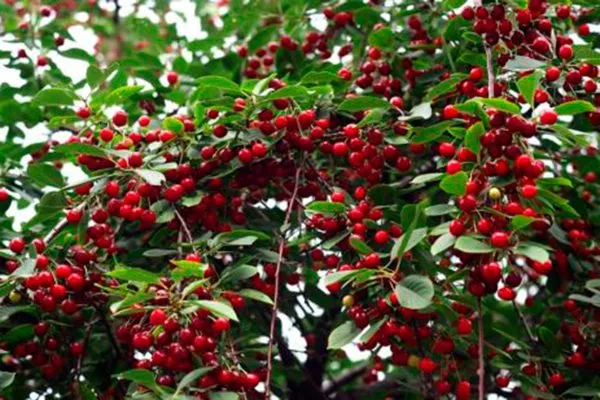
The main harvest occurs on branches 1-3 years old. This emphasizes the importance of proper pruning and care to ensure effective fruiting.
Productivity
Grafted trees begin bearing fruit 2-3 years after planting. Peak fruit production occurs at 4-5 years of age. A mature tree yields 15-25 kg.
Pollinator species, best neighbors
This variety is partially self-fertile. For maximum productivity, it is recommended to grow it in mixed plantings with other varieties. The following varieties are ideal pollinators: Oblachinskaya, Nefris, and Meteor.
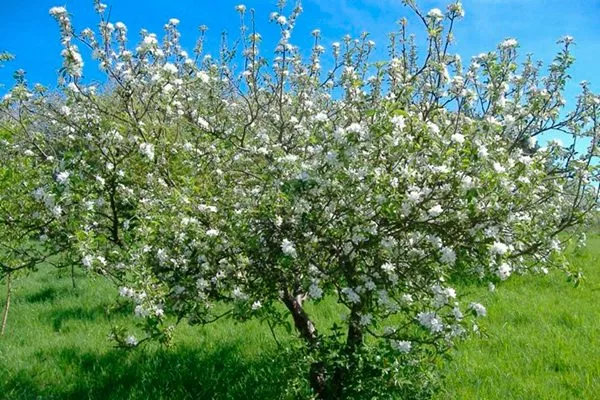
In terms of flowering time, it is considered a mid-season variety, beginning in May. This is an important factor when choosing pollinators and planning planting to ensure effective pollination and a good harvest.
Advantages and disadvantages
Nord Star has its strengths and weaknesses. The variety has many advantages:
Planting and caring for cherries
The planting process is straightforward. Keep the following points in mind:
- Recommended timeframes. Seedlings are rooted in either spring or fall, depending on the region's climate. In temperate climates, mid-April is the optimal time for planting. Fall planting is not recommended in these climates due to the risk of winter frost.
In southern latitudes, fall planting is possible. Do this a month before the first frost, preferably in mid-October. - Selecting a location and preparing the soil. Prefers sunny sites but does not tolerate close groundwater. The soil should be fertile and well-drained. Remove weeds and improve the soil composition by tilling in compost or manure.
- Landing. Place seedlings in a 2x3 m pattern to ensure optimal light coverage. For commercial plantings, stick to a 3x4 m pattern.
- ✓ The seedling planting depth should be such that the root collar is 5-7 cm above the soil level.
- ✓ The distance between seedlings when planting should take into account not only the 2x3 m scheme, but also the future growth of the root system in order to avoid competition for nutrients.
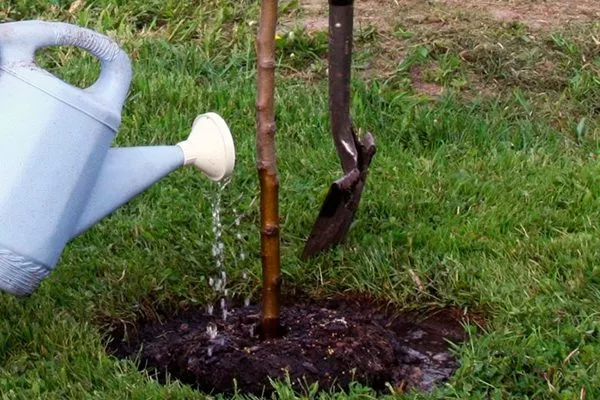
Caring for young plants includes regular watering, weeding, loosening the soil and pruning to shape the crown.
During the fruiting period, ensure ample watering. Sanitary pruning is necessary to remove broken, diseased, and dried branches. For young plants, shorten the main branch to 60 cm and the side branches by 1/3. Prune every spring before buds appear. Maintenance includes weeding, loosening the soil, and mulching.
Preparing for winter
Begin the main pre-winter preparation at the end of October. To do this, gently press the branches against the trunk and wrap them in straw, tree tops, or burlap. Protect the root system from winter frosts by covering it with snow: form a small snowdrift around the trunk.
Young seedlings require more careful protection, as they have a harder time withstanding winter frosts. Therefore, in the first year after planting, in addition to the basic cover, mulch the trunk with peat or sawdust.
Diseases and pests
The crop is often susceptible to fruit rot, coccomycosis, and moniliosis. For treatment, apply tank mixes of fungicides starting when buds form. Effective insecticides for controlling pests (such as rhizomes, sawflies, scale insects, cherry fruit flies, and cockchafers) include Enzhio, Aktara, or Horus.
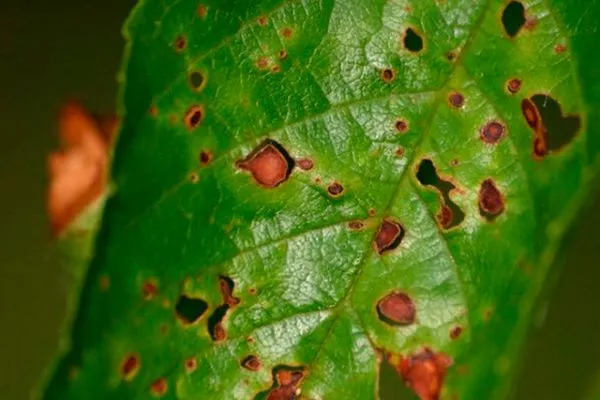
Pay special attention to controlling May beetles, which are the main pests of this crop. When you notice the first insects, treat the trunk and roots with Anti-May beetle, Prestige, or Aktara.
Methods of reproduction
The crop is propagated by various methods. At home, vegetative propagation and grafting are commonly used. There are also other methods:
- Seeds. Sow the seeds in open ground in the fall. In the spring, thin out the sprouting seedlings and grow them until fall, providing care including watering, fertilizing, loosening the soil, and weed removal. The following spring, plant them under a cultivated scion.
- By vaccination. This method allows you to grow one cherry variety using the root system of another. Grow rootstock from the seed of a winter-hardy variety, onto which you graft a scion of a cultivated variety. This method is effective and can be implemented in a variety of ways: copulation, splitting, side cutting, and under-bark cutting.
- Green cuttings. Carry out this procedure in June, when the shoots are actively growing. Use a container with drainage holes filled with a mixture of peat and sand. Place the cut and prepared cuttings in soil and transfer them to the greenhouse. After the cuttings have rooted, open the plastic wrap to allow air to air out and harden off.
- Root shoots. Select two-year-old root suckers with a developed root system and branched above-ground portions. Prune the suckers in the fall, preserving them in the ground. In the spring, dig up the shoots and select the strongest ones. Plant them in their permanent location, leaving the weaker ones to grow further in the garden bed.
Choose the most suitable method for increasing the number of seedlings.
Harvesting and storage conditions
Harvesting occurs in early August or late July and occurs in several stages. The main indicator of ripeness is a rich red color. The berries easily separate from the bush, stems included. For storage, use wooden boxes or baskets, stacking the berries in one or two layers.
After harvesting, store the harvest in the refrigerator or in a cool place. The shelf life is no more than a month. At room temperature, berries spoil quickly, losing their flavor and quality within a week.
Reviews of the Nord Star variety
The Nord Star cherry is a suitable choice for those just starting out in gardening. It requires minimal care, requiring only regular watering, occasional fertilizing, and pruning. Timely care directly impacts the yield.