
Breeders continue to develop new varieties of fruit trees, so choosing the right one isn't always easy. The Natalie cherry has remained a favorite among experienced gardeners for many years. Beginning gardeners have also appreciated the positive qualities of this low-maintenance crop.
Origin and zoning
In 1979, scientists V. P. Tsarenko and N. A. Tsarenko developed the felt cherry at the VNIIR Far Eastern Experimental Station. During the breeding process, they decided to pollinate the Leto cherry blossoms with a mixture of pollen from three different varieties: Krasnaya Sladkaya, Ogonyok, and Damanka. Following successful testing, Natalie was added to the State Register of the Russian Federation in 1997.
Description of the plant
The crop is grown not only for its tasty and healthy fruits. Beekeepers cultivate it as an excellent source of honey, and landscape designers use it to create decorative compositions and hedges.
Pollination
This self-sterile variety requires cross-pollination for successful pollination. To ensure a good harvest, it is recommended to plant other cherry varieties with similar flowering times nearby, such as Tsarevna. This is important for cross-pollination and attracting pollinating insects.
- ✓ The distance between plants for pollination should be no more than 50 meters.
- ✓ The flowering time of pollinators should coincide with the flowering of the Natalie cherry tree with an accuracy of 2-3 days.
Drought resistance, winter hardiness
It is distinguished by its high winter hardiness, able to withstand temperatures down to -40°C. A distinctive feature is the resistance of its flowers to recurrent frosts, reaching temperatures down to -3°C. The plant exhibits drought tolerance but reacts negatively to excess moisture.
Ripening time and flowering period
Flowering typically occurs between May 10th and 18th. The plant is characterized by abundant and prolonged blooming, lasting approximately 10-15 days. Ovaries form on both annual shoots and perennial branches, bouquet twigs, and fruiting shoots.
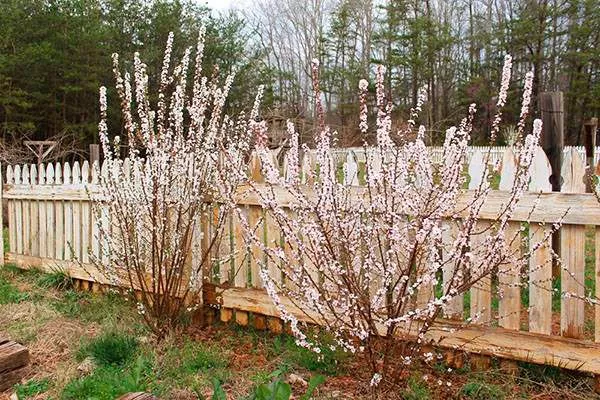
The peduncle is short, and the flowers sit practically directly on the shoots. The fruits ripen simultaneously, beginning in the second ten days of July.
Productivity, fruiting
Grafted seedlings begin bearing fruit in the second year of growth, while for own-rooted specimens this period begins in the third or fourth year. They are characterized by high yields, with each bush averaging 9 kg.
Application of berries
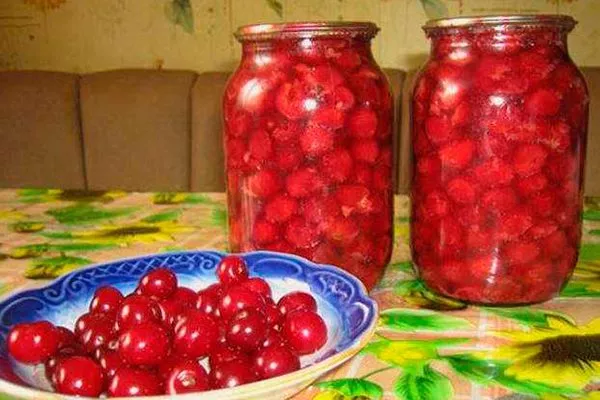
Ripe berries are suitable for fresh consumption. They are used in various processing methods. They are used to make exquisite treats, desserts, original dishes, compotes, juices, mousses, and jellies. This provides ample opportunity for culinary creativity.
Resistance to diseases and pests
It has high resistance to coccomycosis and is relatively resistant to clasterosporium. It can be significantly susceptible to monilial blight, a fungal disease that attacks the plant during flowering.
The appearance of the tree
The shrub grows vigorously, reaching a height of up to 180 cm. The crown is broadly oval and moderately dense. The straight, thick branches are covered with gray, flaky bark, decorated with light-colored transverse lenticels. One-year-old shoots have a brown tint with noticeable pubescence.
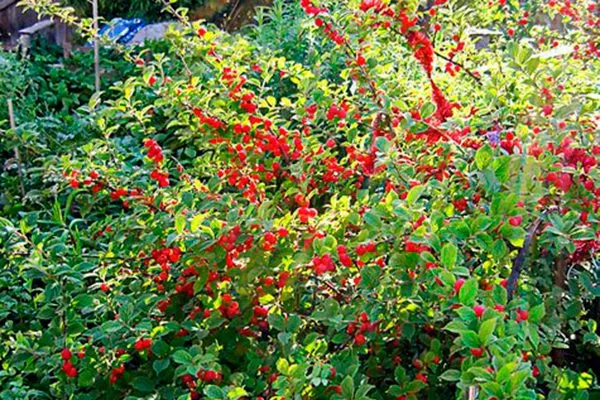
The leaves are green, pubescent, elongated-oval, and have a wrinkled (corrugated) texture. The leaf blade is approximately 6 cm long and 4.3 cm wide, with a pointed apex and base, and a serrated margin. The petiole is green, 7 mm long, and medium thick.
Fruits and their taste characteristics
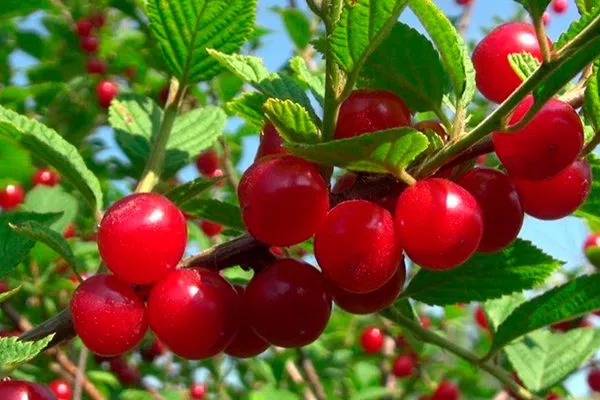
They are impressive in size, often reaching 1.8 cm. Ripe, juicy berries average approximately 4 g or more in weight. They are broadly oval in shape, with a slightly tapered top. The dark red skin is decorated with a noticeable ventral suture in the form of a simple stripe. The skin is slightly pubescent.
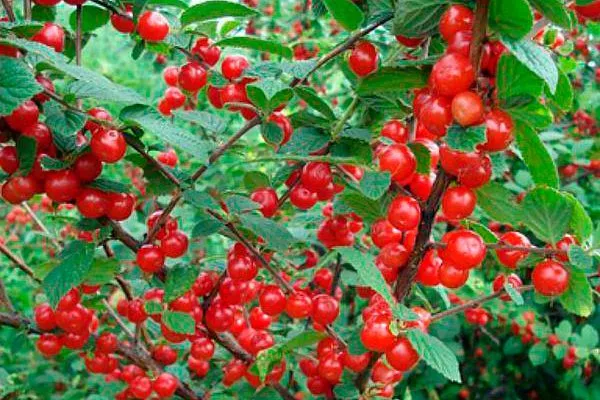
The pulp is a rich red color and is characterized by a dense, cartilaginous, and juicy consistency. The berries produce a red juice. The pulp always contains a small seed, usually weighing about 0.20 g.
Landing features
Early spring is considered the best time to plant. Plants thrive well when planted in the fall (plant in September). Choose a well-lit location with neutral soil. Peat, sandy loam, and loam are ideal.
The plant doesn't tolerate wet soil, so choose sites without standing water and with groundwater that doesn't rise too close to the surface. Choose one- or two-year-old seedlings for planting.
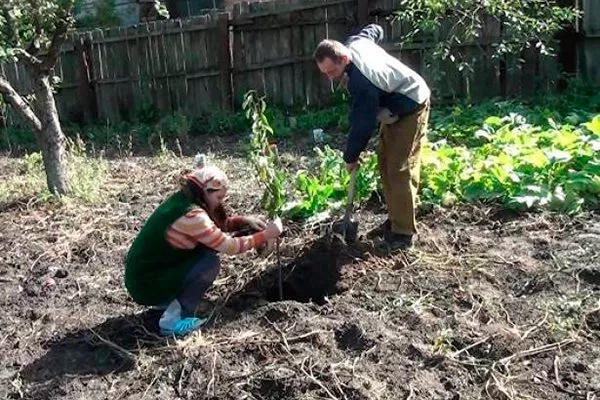
Before the procedure, trim the roots of young plants by about 20 cm. Dip them in a clay-water slurry. Then follow the instructions:
- Dig a hole 60 cm wide and 50-80 cm deep.
- Place a mixture of humus and fertile soil, supplemented with slaked lime and complex fertilizer, at the bottom of the hole.
- Place the seedling in the hole, making sure that the root collar is not too deep.
Fill the hole with prepared soil, then carefully compact the soil and water (approximately 20-40 liters of water per 1 bush).
Subsequent care of the culture
The Natalie felt cherry is easy to maintain, requiring standard care. It tolerates drought well but does not tolerate excessive soil moisture. Watering is especially important during flowering and fruit ripening. Apply approximately 30 liters of water around the trunk.
After flowering, add compost or other organic fertilizer to the soil at a rate of 5-7 kg per square meter. Add mineral complexes with phosphorus (70 g), nitrogen (30 g), and potassium (20 g). Every five years, apply lime supplements (200-300 g per square meter) to prevent soil acidification.
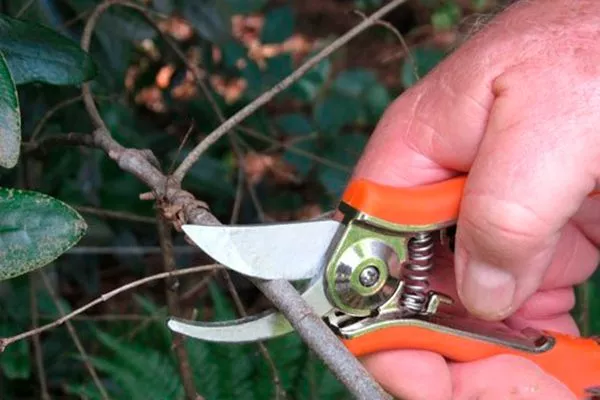
In the year of planting, shorten shoots by 1/4 to form scaffold branches. On mature bushes, leave 10 to 12 strong shoots, thinning the crown regularly to avoid dense growth. Shorten young shoots by 1/3 if they exceed 60 cm in length. Perform rejuvenating pruning on perennial bushes.
Diseases and pests, methods of control and prevention
The crop's high level of inherited immunity successfully prevents the diseases coccomycosis and clasterosporium. However, appropriate preventative measures are necessary to ensure complete protection.
- Carry out the first treatment with copper sulfate before the buds open at a temperature of at least +5°C.
- The second treatment is after flowering, using broad-spectrum fungicides.
- The third treatment is in the fall, after harvesting, to destroy overwintering forms of pests and diseases.
To prevent various diseases, carry out systematic preventive measures:
- In spring, before the buds open, treat the trees with a solution containing copper sulfate (100 g per 10 liters of water).
- Perform sanitary pruning regularly.
- Collect and destroy fallen leaves.
Protect the crop from pest attacks, which are especially dangerous for felt plants:
- grape mite;
- scale insects;
- aphids;
- leaf rollers;
- codling moth.
Reproduction
Increasing the number of seedlings yourself is quite simple. Use this convenient propagation method:
- Cuttings. The best time to take cuttings is early summer, when the plant is actively growing. Choose healthy, six-month-old or one-year-old shoots. Take cuttings about 15-20 cm long with several buds. Leave only the top leaf and remove any excess buds.
Treat the cuttings with a root stimulant and trim the lower ends. Plant the cuttings in prepared soil or a container with a growing medium. Once rooted, transplant the cuttings to their permanent location. - Seeds. Collect the seeds in late summer after the fruits have ripened. Soak them in water for several hours to remove the pulp. Store them in the refrigerator for 2-3 months to stratify. In the spring, sow them in containers with nutritious soil and cover with plastic wrap.
After the seedlings emerge, transplant them into individual pots. Once they reach a certain height and are strong enough, plant them in the ground.
Both of these methods allow for successful propagation of the crop, providing new specimens of this variety.
Advantages and disadvantages
In the felt cherry family, the Natalie variety holds a well-deserved place among the leaders, boasting a number of advantages. Key features include:
Among the disadvantages, gardeners point out the following: sensitivity to humidity, inconvenience during harvesting, reduction in berry size with high yield, low transportability, self-sterility.
Gardeners' reviews
The early-ripening Natalie variety is successfully grown in both the temperate climates of central Russia and the harsh Siberian regions. Its main advantages include high yields, winter hardiness, and low maintenance. Felt cherry will delight you with its bountiful harvests, even with basic farming practices.