
The Lyubskaya cherry has earned the acclaim of many amateur gardeners who appreciate its tart fruit. It is versatile and drought- and disease-resistant. With proper care, it can achieve maximum yields.
History of selection
Its origins are unclear, but the variety initially gained popularity in the Kursk region, and was later grown throughout the country. In 1947, it was added to the State Register.
Description of cherries
In the Moscow region, the Lyubskaya cherry tree exhibits characteristics different from those in the North Caucasus. It is prone to random mutations. Plants can vary in yield, shape, size, and quality of fruit.
- ✓ Tendency to random mutations, which can lead to changes in yield, shape and quality of fruits.
- ✓ Self-fertile, but to increase yield, planting next to other cherry varieties is recommended.
Height and dimensions of an adult tree
This medium-sized plant doesn't exceed 2.5 m in height. However, it has other characteristic features:
- The greyish-brown bark shows pronounced cracks.
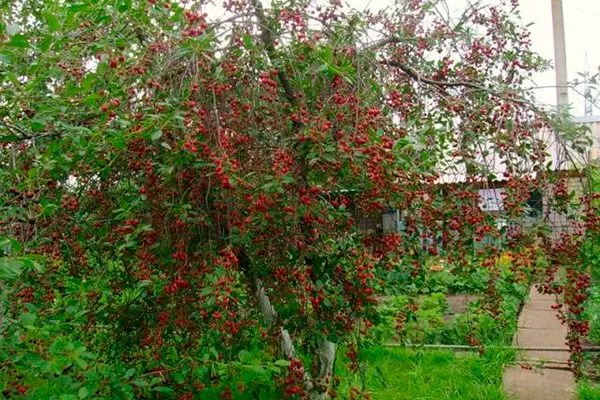
- The crown is not very dense and has a spherical configuration. It is formed by several drooping and curved branches.
- The bush is covered with dense, tapering oval leaves with pointed tips. They are dark green and dull.
- The edges of the leaf blade are serrated, with small yellowish-brown veins present.
Fruits and their taste characteristics
The berries deserve special attention. They're easy to recognize:
- On shoots they form singly or in pairs, less often in clusters of 3-4 pieces.
- They are characterized by large sizes, reaching a weight of 4-5 g.
- They have a rounded configuration and are colored dark red.
- Numerous subcutaneous points are present.
- The pulp is tender and very juicy, has a dark red color.
- The juice has a light red or red tint.
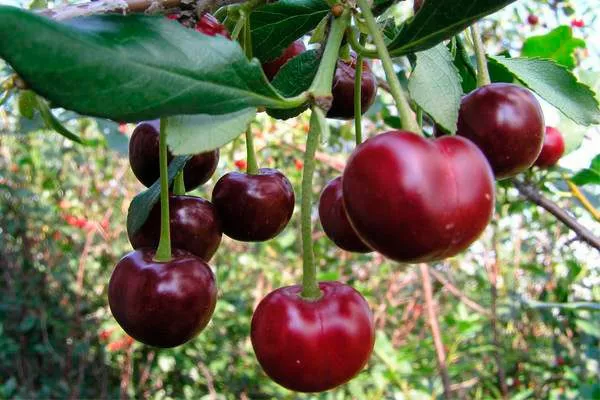
The taste is characterized by sweet and sour notes, which largely depend on the growing region and the weather conditions of the current season.
Main characteristics
Although the crop isn't known for its distinctive flavor, it's widely grown in various regions. This is due to several characteristics of the variety.
Uses of berries
They are widely used in cooking for various dishes and canning. Several ways to use them:
- Ideal for jam, preserves, and marmalade, their sweet and sour flavor can be used to create preserves.
- They are used to make refreshing juices, compotes, and other drinks. The acidity adds an interesting flavor.
- Suitable for making wines, their intense flavor imparts a rich aroma.
- Can be frozen for later use. Frozen berries are great for baking, smoothies, and other dishes.
- They are added to salads or processed to make fruit sauces for meat dishes.
- They go great with ice cream, yogurt and other desserts.
Berries are used in a variety of culinary experiments, adding a bright taste and aroma to various dishes.
Flowering time
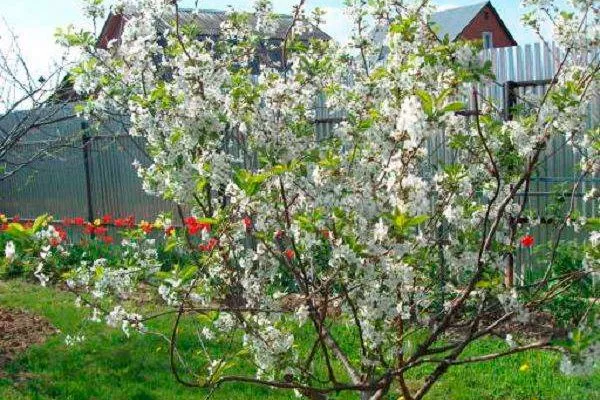
Flowering begins in late May and lasts for 5-8 days. Cherries ripen simultaneously, varying depending on the region—from late July to mid-August.
Drought resistance, frost resistance
While not particularly drought-tolerant, cherry trees can survive several days without watering during hot periods. During periods without natural moisture from precipitation, watering at least once a week is recommended.
Climate conditions
A mature tree can easily withstand temperatures as low as -30°C. To prevent potential negative effects of cold, it's recommended to cover young trees. This helps protect them from potential damage, ensuring more successful growth in the future.
Productivity
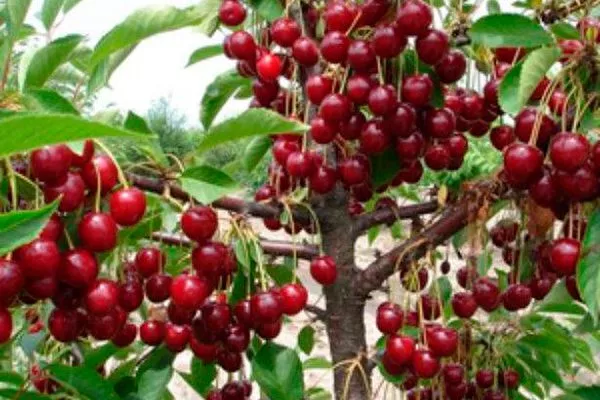
Shows favorable results. With proper care, one can expect to get approximately 10-12 kg of fruit per tree. The highest yield can reach an impressive 35-50 kg per plant.
Fruiting periodicity
It begins bearing fruit just two years after planting. It demonstrates rapid productivity growth, delivering good yields. The crop is subject to random mutations, and its fertility is highly dependent on proper care and growing conditions.
Self-fertility and pollinators
Lyubskaya is a self-fertile variety, so pollinators are needed for pollination. To increase yield, gardeners recommend planting the tree near other cherry varieties: Zhukovskaya, Lotovaya, Molodezhnaya, Plodorodnaya Michurina, Vladimirskaya, and Anadolskaya.
Advantages and disadvantages
It is one of the best industrial varieties for the central zone. It boasts numerous advantages:
Among the disadvantages, gardeners note a sour taste and the possibility of sunburn on the trunk.
Favorable conditions for growing and planting
Proper care ensures high yields, while lack of attention can affect the fruit yield. For optimal planting, carry out the procedure in early spring before bud break. This will allow the tree to establish itself better.
- ✓ The seedling planting depth should be such that the root collar is 5-7 cm above the soil level.
- ✓ The distance between seedlings should be at least 3 meters to ensure sufficient space for the growth of the root system and crown.
A one-year-old seedling should have a central shoot approximately 80 cm tall, while a two-year-old should be no more than 1.1 m tall. Check that the root structure is well-developed. If the planting material was purchased in the fall, dig it in, prepare the planting hole, and plant it as early as possible in the spring.
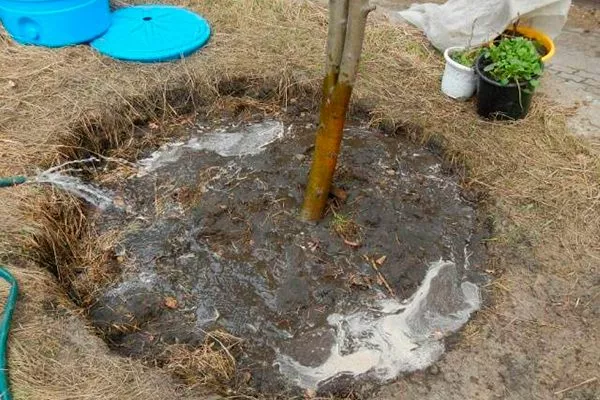
Choose a sunny spot on a gentle western slope. The groundwater level should be at least 2 meters above the surface. The soil should be neutral and fertile, ideally light loam. Before planting, soak the roots in water for 3 hours or more.
Step-by-step algorithm:
- Dig a hole measuring 60x60 cm.
- Prepare a fertile soil mixture by adding 10 kg of humus and 50 g of potassium and phosphorus fertilizers to the topsoil. Add lime to acidic soil and sand to clay soil.
- Form a mound of soil in the center of the hole and place the seedling on it, carefully spreading out the roots. Gently compact the soil.
- Form a ridge of earth around the bush and add 30-40 liters of water.
Mulch the soil to retain moisture.
The best neighbors
Although small in size, Lyubskaya requires adequate light, so don't obscure it with tall, densely canopied trees. Plant various stone fruits nearby. Avoid close proximity to oak, maple, linden, and birch, as they can compete for water and nutrients.
Care Features
Provide the plant with proper and consistent care, including regular irrigation. Provide sufficient water during the spring shoot formation, flowering, and berry ripening periods. Water the plants at least once every 3-4 weeks, providing each with at least 30 liters of water.
Carefully but thoroughly loosen the soil three times a year: in spring, summer, and fall. Use a mulch made from sawdust and peat to retain moisture. Fertilize the tree no sooner than two years after planting. Add organic matter in the fall after digging the soil around the trunk.
In spring, the plant requires nitrogen fertilizer to stimulate foliage growth, and in summer, feed it with mineral microelements. Pruning should be done in spring before bud break and in autumn after leaf fall. Remove all old, damaged, diseased, and deformed shoots.
Harvesting and preserving crops
To prevent birds from being attracted to the berries, harvest the entire crop at once. When transporting berries, remove them from the tree with the stems attached. Fruits without stems should be processed within 24 hours.
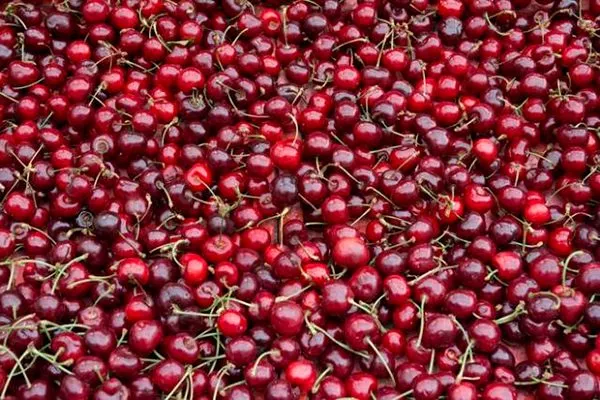
Store the harvested crop at temperatures between 0 and -1°C with humidity around 85%. Under these conditions, the shelf life is approximately 10 days.
Preparing for winter
To protect against winter cold, covering is recommended only in the north, while in the south and central regions of the country it is optional. For insulation, use spruce branches or special agrofibre. Add a layer of peat mulch at least 30 cm thick around the trunk.
Diseases and pests
Lyubskaya is susceptible to pests and fungal diseases, which can significantly reduce yields and even lead to plant death. The table below lists common problems, solutions, and prevention methods:
| Disease/Pest | Symptoms | Methods of control |
| Coccomycosis | Dark spots on leaves, formation of holes, grey coating on the back side, leaf fall in summer. | Spraying with copper-containing preparations, iron sulfate after leaf fall. |
| Molinia | The bush has a burnt appearance, flowers and shoots are wilting, branches are drying out, and fruits are rotting and falling off. | Pruning of affected branches, treatment with a copper-containing preparation |
| Cherry sawfly | The leech-like larvae chew mucus-covered holes in the leaves. | Treatment with insecticides, for example, Aktelik. |
Reproduction
The best and most effective method for propagating the Lyubskaya variety is grafting. This method ensures reliable results.
The process includes several stages:
- Select a healthy and suitable rootstock to serve as the grafting base. Young saplings of the same cherry variety are typically used.
- Select the appropriate grafting method. You can use lateral branches or buds. The rootstock and grafting pieces should be of compatible thickness to ensure good contact.
- Make angled cuts on the rootstock and graft to ensure a good connection. A "tongue" or "eye" cut is commonly used. Make sure the cuts are clean and even.
- Place the graft on the rootstock so that the cuts align well. Then tie them together to ensure a secure connection. Flexible material or special grafting clips are typically used for this.
- Treat the graft with garden pitch or special clay. This will help prevent infection and create favorable conditions for healing.
Monitor the grafted plant, regulate its growth, remove excess shoots, and provide the necessary care. The graft should begin to integrate and develop, which will be visible by the new shoots and leaves.
Reviews of the variety
The Lyubskaya cherry tree is easy to grow. Regular watering and occasional fertilizing are sufficient to ensure it remains strong and thrives. A minimum of attention and care will allow you to grow a regularly fruiting plant. The pit is easily removed, and the flesh retains its shape during cooking.